
Shamian Island Guide: Things to Do, How to Get There, and Practical Tips
Shamian Island is one of my top recommendations for first-time visitors to Guangzhou. It’s filled with a variety of photo-worthy architecture from the late 19th and early 20th centuries that reflects both Chinese and Western influences. It’s also small enough that you can explore all of it on foot.
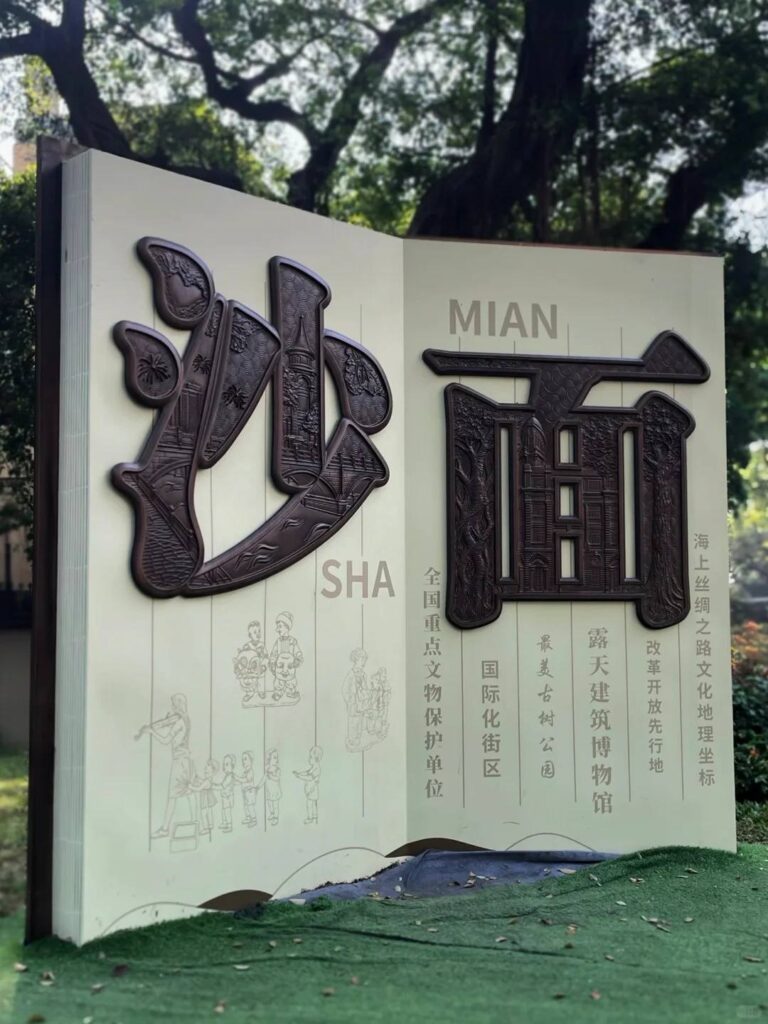
The British and French concessions, districts administered by foreign powers, were formally established on Shamian Island in 1861. Around 150 European-style buildings from this time still stand on the island. If you’ve visited Shanghai’s Bund, some of the concession-era architecture may look familiar, but Shamian is much smaller, quieter, and greener.
The island is also close to Yongqing Fang, Shangxiajiu Pedestrian Street, and other popular sites in Guangzhou’s historic center, so you can visit several of them on the same day. After your walk, head into one of the surrounding neighborhoods for dim sum or traditional Cantonese snacks.
Here’s how I’d plan a visit to Shamian Island:
How to Get to Shamian Island
Shamian Island is in Guangzhou’s historic center and is easy to reach by metro.
Take Line 1 or Line 6 to Huangsha Station and exit the station through Exit F. From there, cross the pedestrian bridge to the island.
A taxi or DiDi ride is also convenient if you’re going outside of the morning and evening rush hours. Search for “Shamian Island” or “沙面岛” in the app.
Read More: Public Transport in China – Guide to Metro, Bus and How to Pay
Admission
Free.
How Long to Spend on Shamian Island
Plan on one to two hours to walk the main streets and see the historic buildings, or more time if you’re especially interested in architecture or photography.
On clear days, the best lighting is during late afternoon (roughly 3 to 5 p.m.), when the light comes through the trees and brings out details in the walls, windows, and columns.
Practical Tips
- There are restaurants and cafés on the island, but the selection is fairly limited, and prices tend to be higher than in the surrounding neighborhoods.
For more options, head to Link Plaza Liwan above Huangsha Metro Station, or try one of the nearby Cantonese snack shops. - With so much greenery, mosquitoes and other insects are common, especially when the weather is warm or humid, so bring insect repellent.
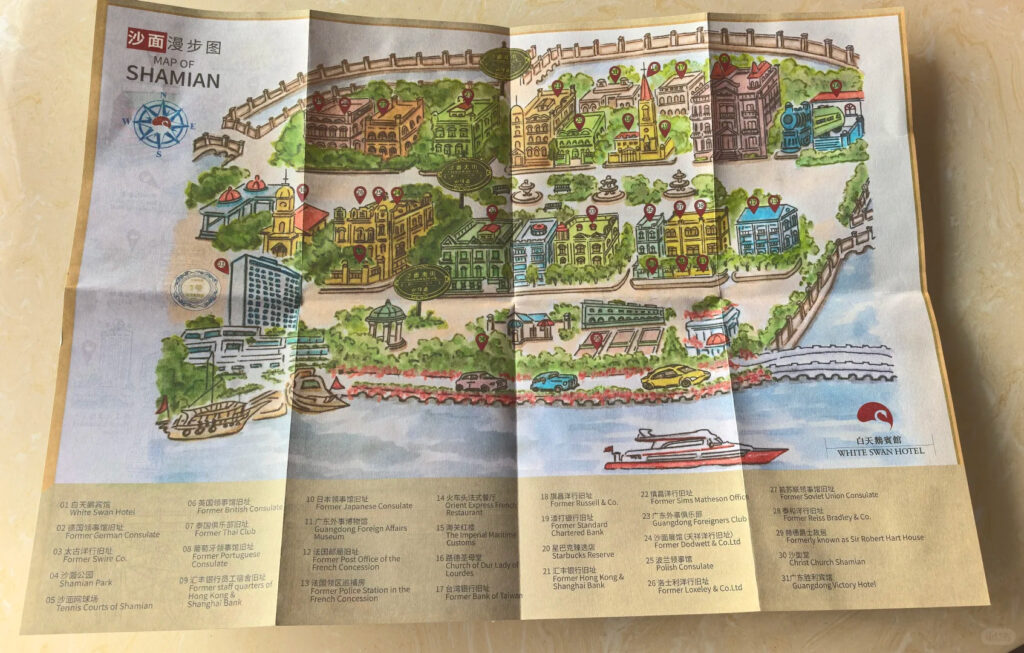
- You don’t need to set aside a full day for Shamian. Many of Guangzhou’s older neighborhoods and attractions are nearby, so you can see Shamian and several other sites in the historic center on the same day.
For a full day of sightseeing, I’d follow this route:
Chen Clan Ancestral Hall → Liwan Lake → Xiguan’s traditional neighborhoods → Yongqing Fang → Shamian Island → Guangdong Customs House → Yanjiang West Road → Sacred Heart Cathedral → Beijing Road → Dafo Temple
This is an ambitious itinerary, so if you want a more relaxed day, make Sacred Heart Cathedral your last stop and save Beijing Road and Dafo Temple for another day.
History of Shamian Island
Shamian and Sacred Heart Cathedral are two of the best places in Guangzhou to see surviving architecture from the 19th and early 20th centuries. The island has changed considerably, but its tree-lined streets and historic buildings still give you a sense of the final decades of the Qing dynasty, when it was divided into British and French concessions.
Under the Canton System, official maritime trade between China and Western merchants was centered in Guangzhou from the mid-18th century until 1842. After the First Opium War, the 1842 Treaty of Nanjing opened five treaty ports, including Guangzhou, to British trade.
After China’s defeat in the Second Opium War, the British and French concessions on Shamian were formally established in 1861. The island later became home to foreign consulates, trading companies, banks, churches, and private residences.
The Qing dynasty and the concession era are both long over, but around 150 European-style buildings still stand. As you walk around, you’ll see Baroque-style buildings, Gothic churches, and former consulates from several countries.
What to See on Shamian Island
Shamian Christian Church
Shamian Christian Church (沙面基督堂) dates back to the mid-1860s. It was established by the Church of England to serve the island’s British community.
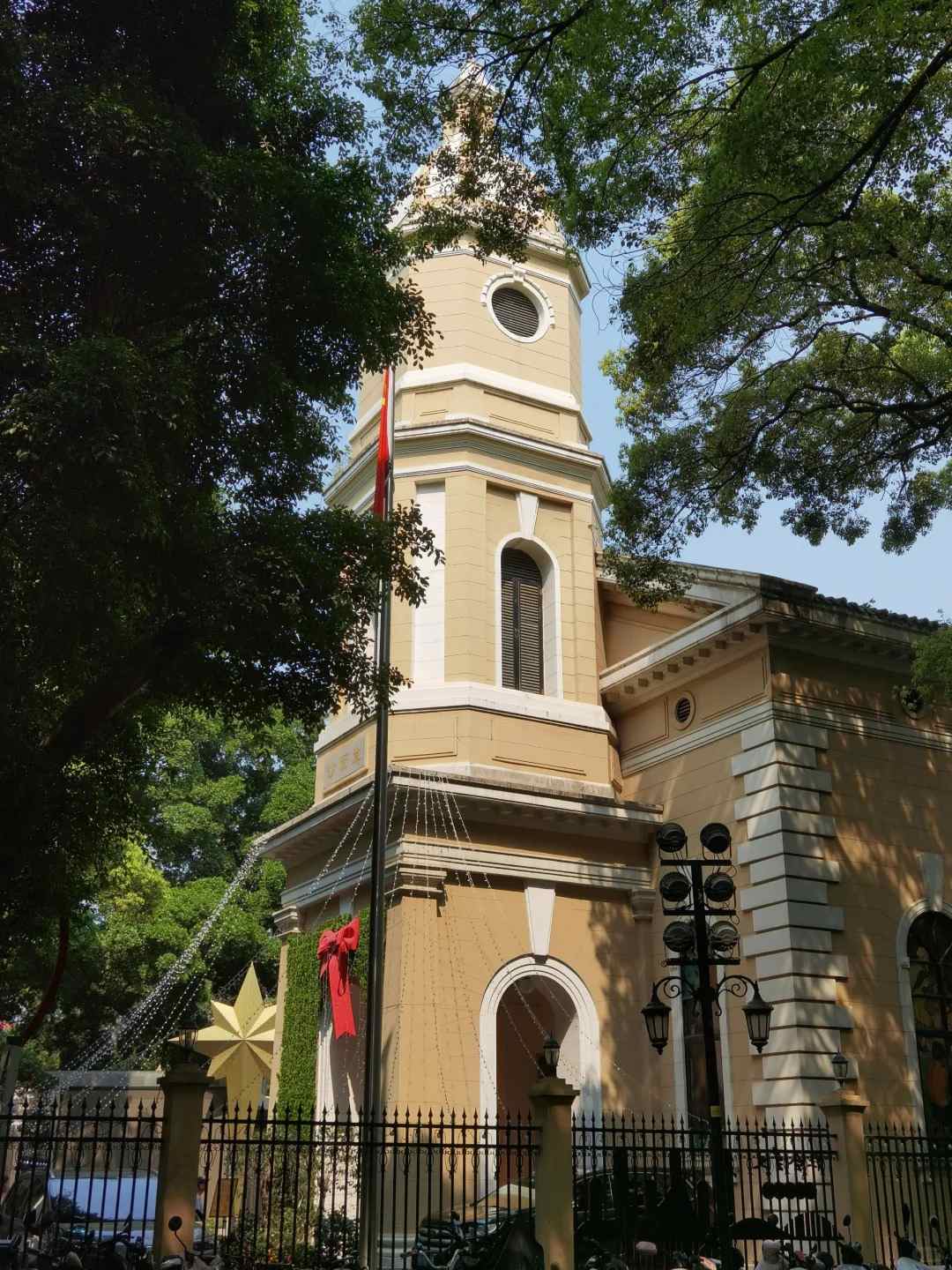
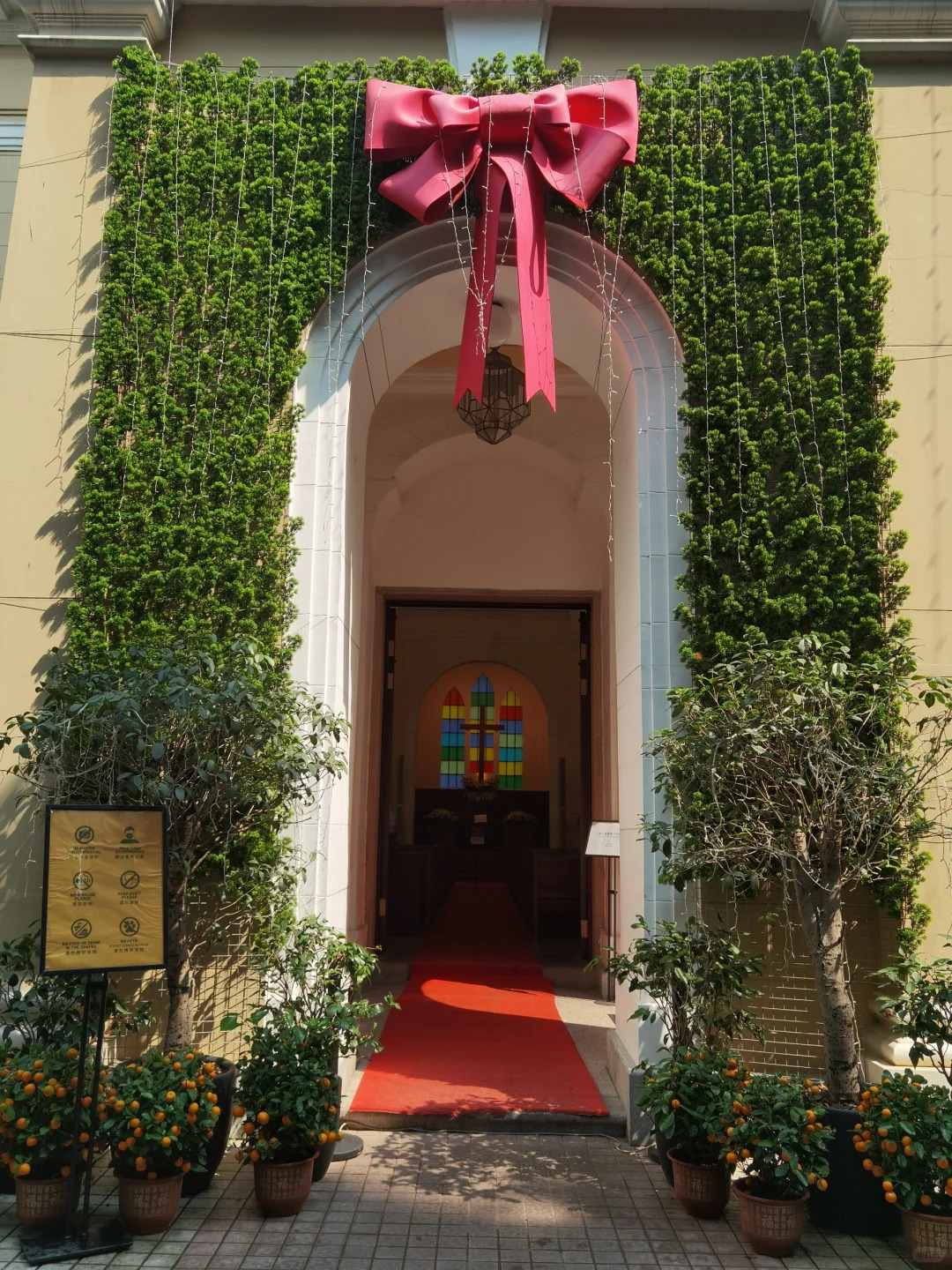
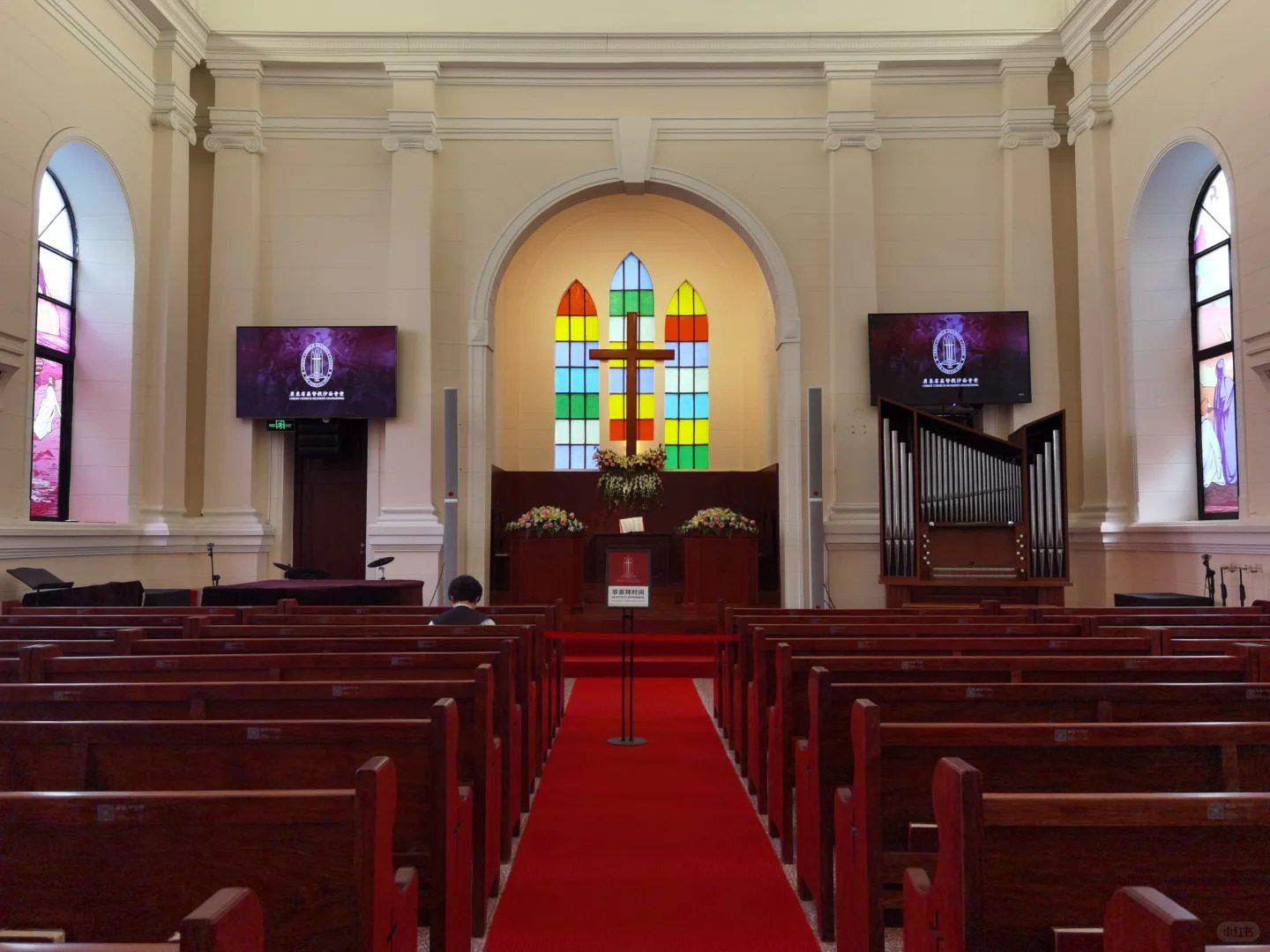
The small Protestant church has a simple European design that is noticeably plainer than the more ornate Catholic churches nearby. Like nearby Sacred Heart Cathedral, it has been damaged and rebuilt over the course of more than a century. The church was bombed by the Japanese military during World War II and later restored before resuming worship in the early 1990s.
More than a century ago, the church mainly served foreign residents of the concession, but today, it serves a local Christian community. Anglican services are still held here every Sunday, but visitors can also enter at other times. Though Shamian has changed over time, the church holds special meaning for many local residents and is a popular spot for wedding photos.
A Roman-Inspired Starbucks
You can find a Starbucks almost anywhere, but some locations fit their surroundings better than others, which are the ones I’m most likely to stop at when I travel.
On a trip to Japan, I came across a very peaceful Starbucks on the rooftop of Miyashita Park in Shibuya. The shop itself was not unusual, but it was tucked away in one of Tokyo’s busiest neighborhoods, giving people somewhere quiet to sit in the middle of Shibuya. A few steps from Shamian Christian Church, the Starbucks on Shamian Island has a similar appeal, with a beautiful Roman-inspired courtyard.
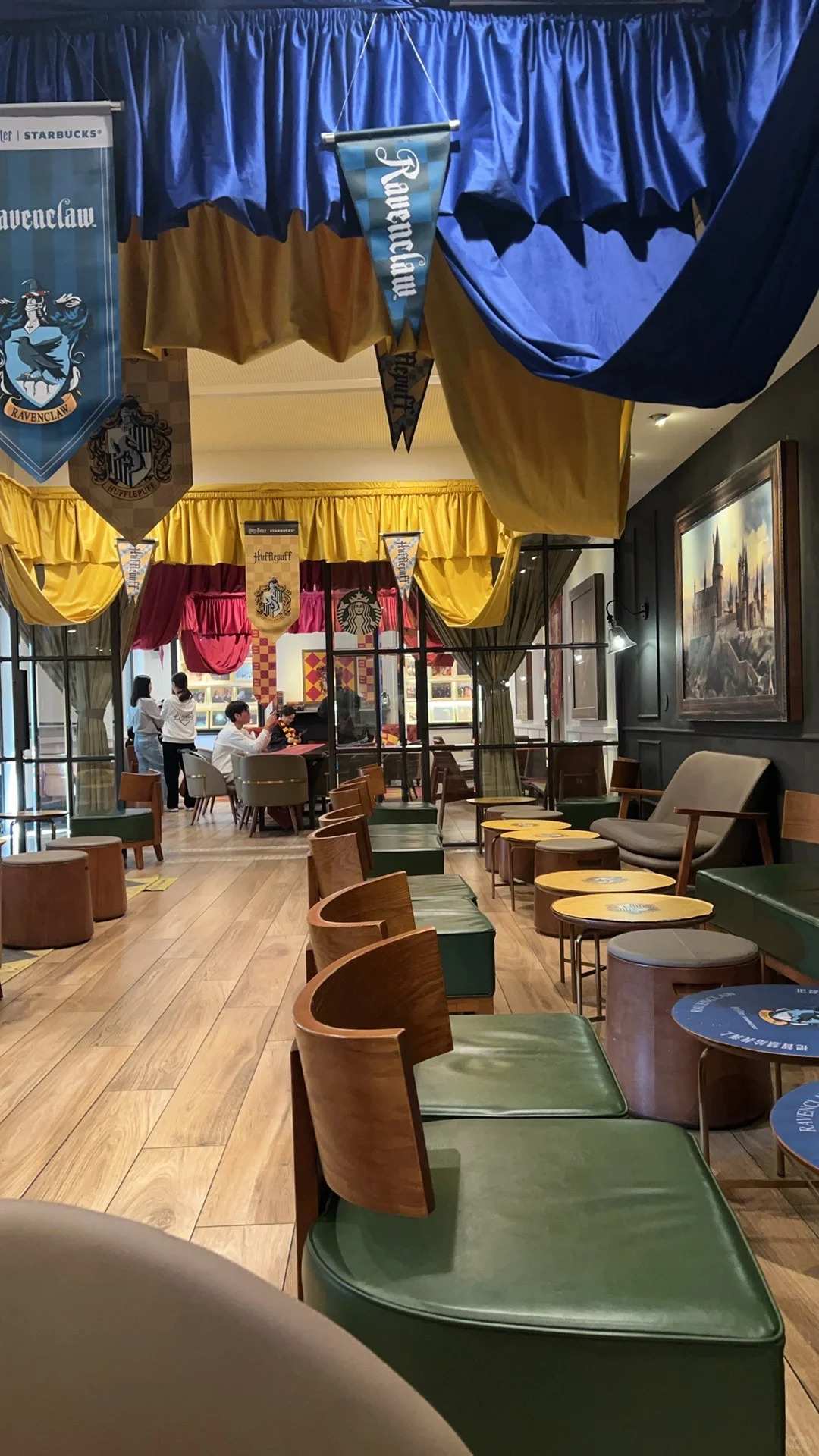
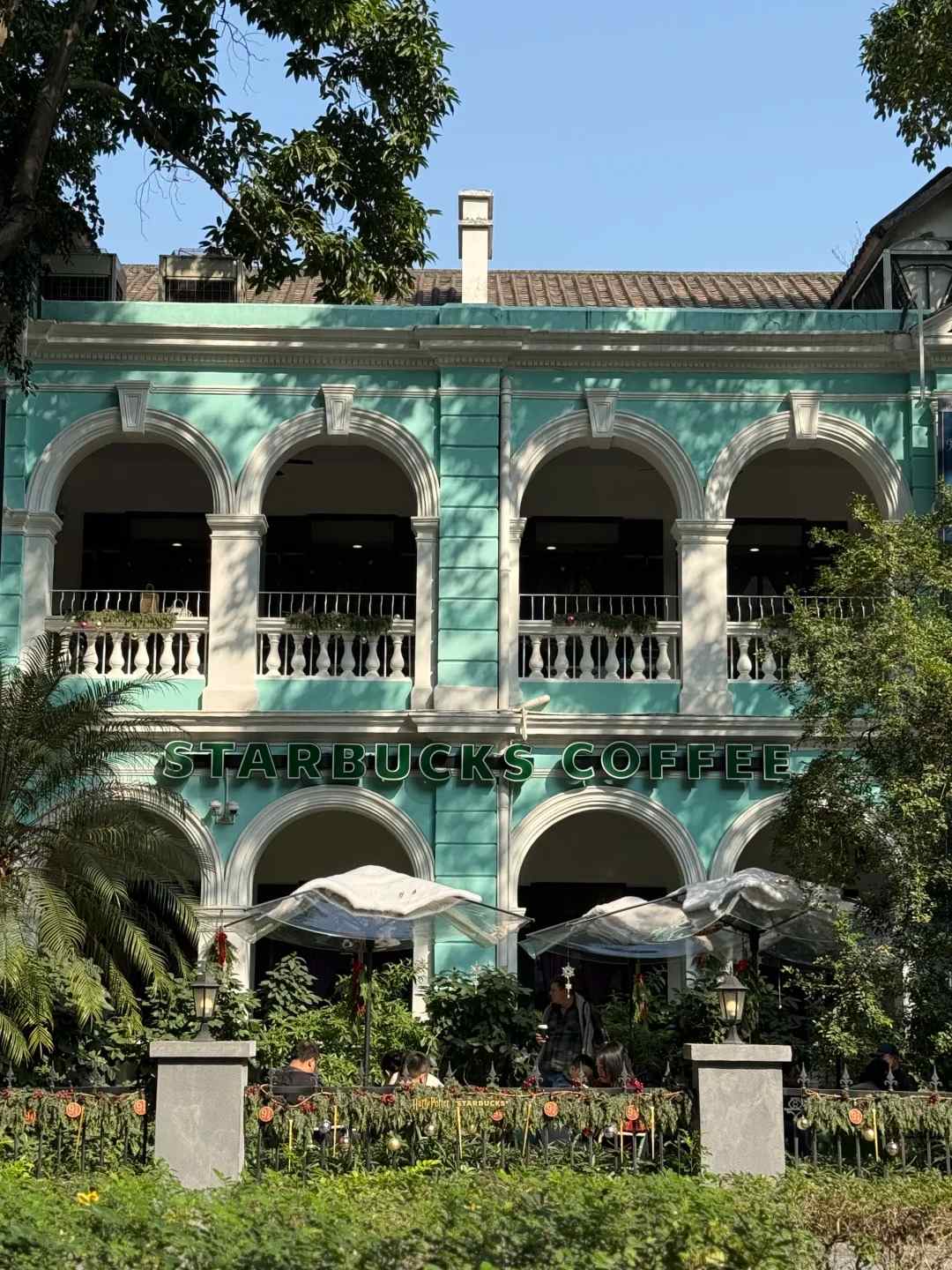
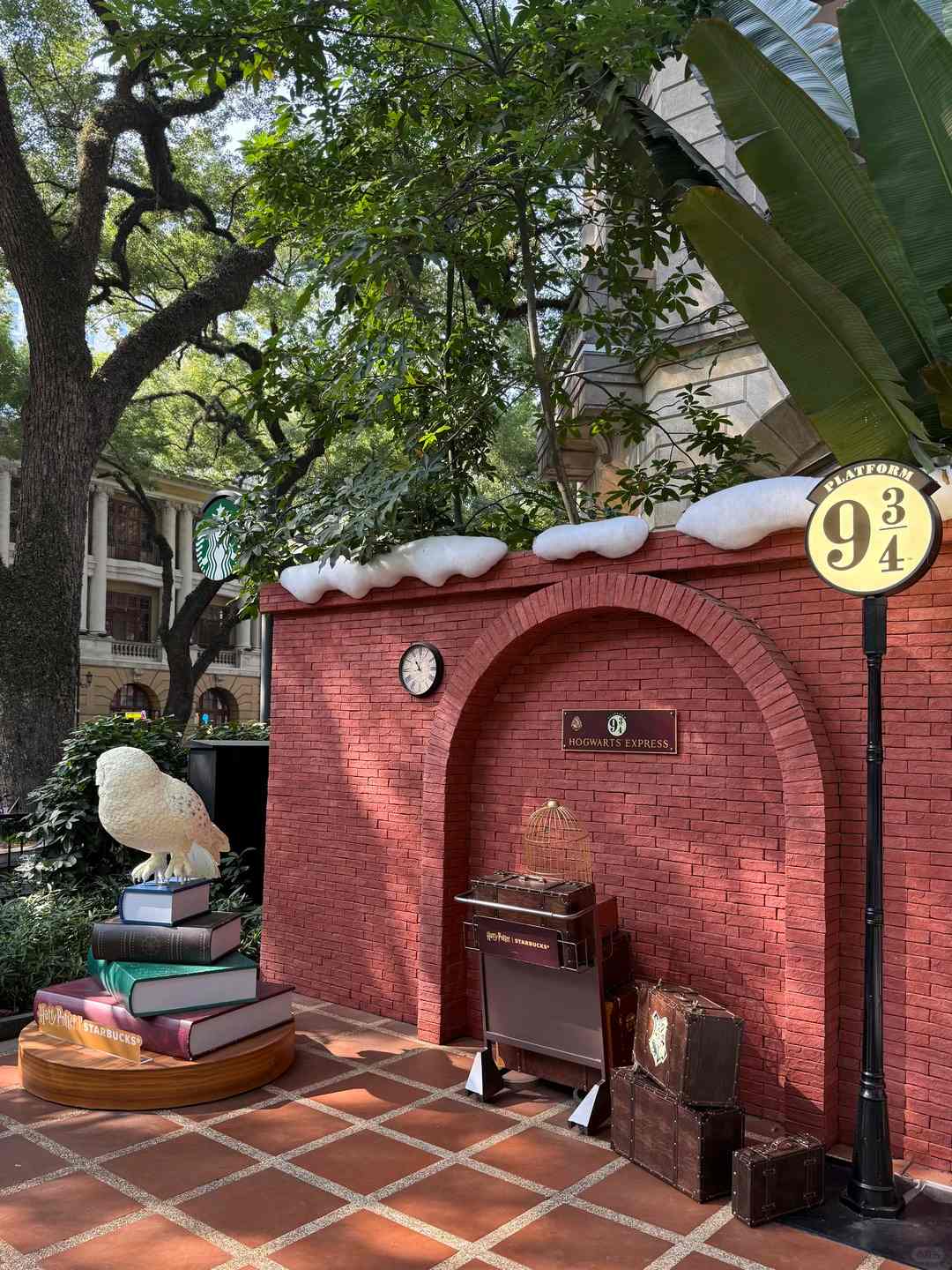
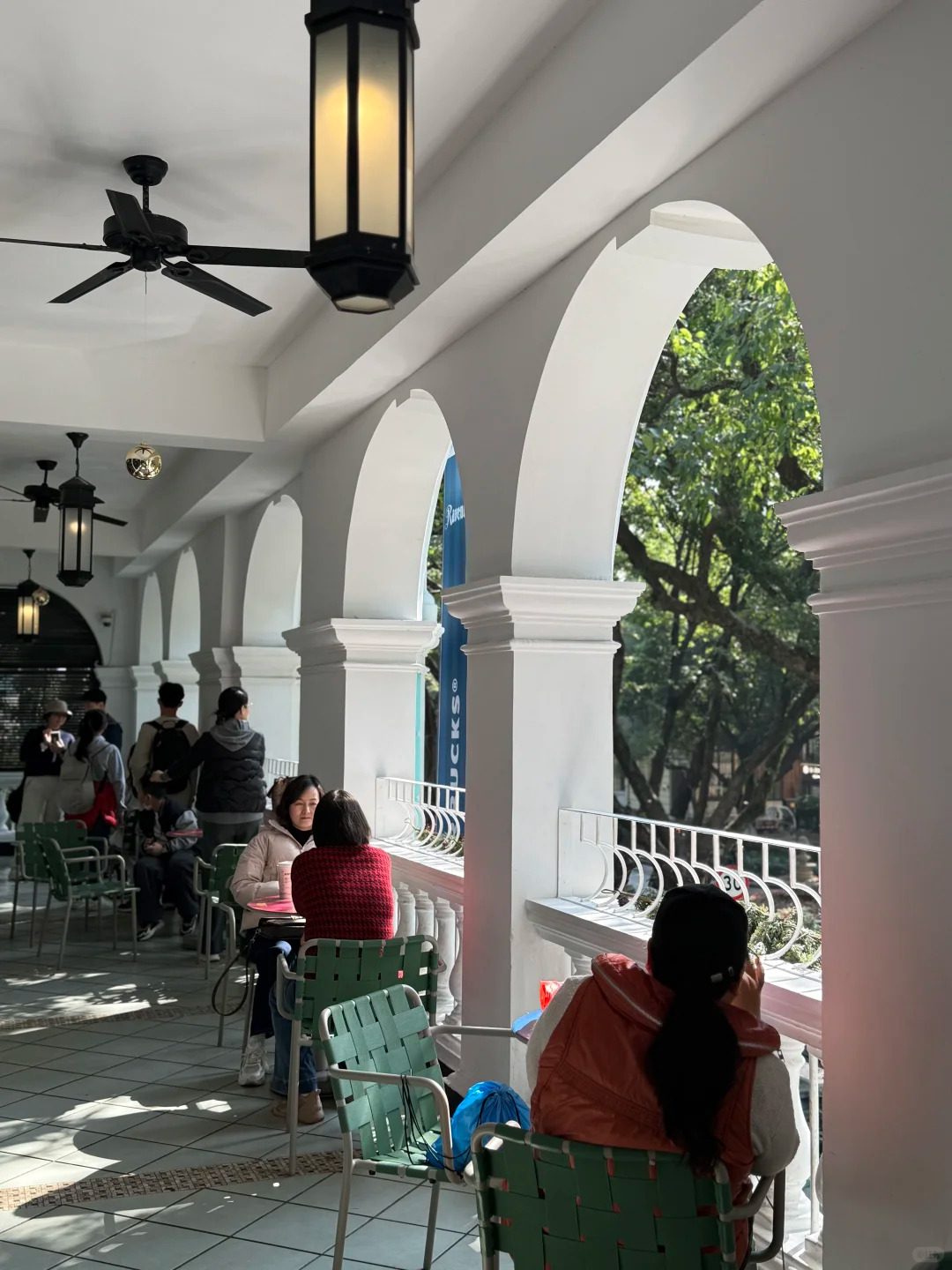
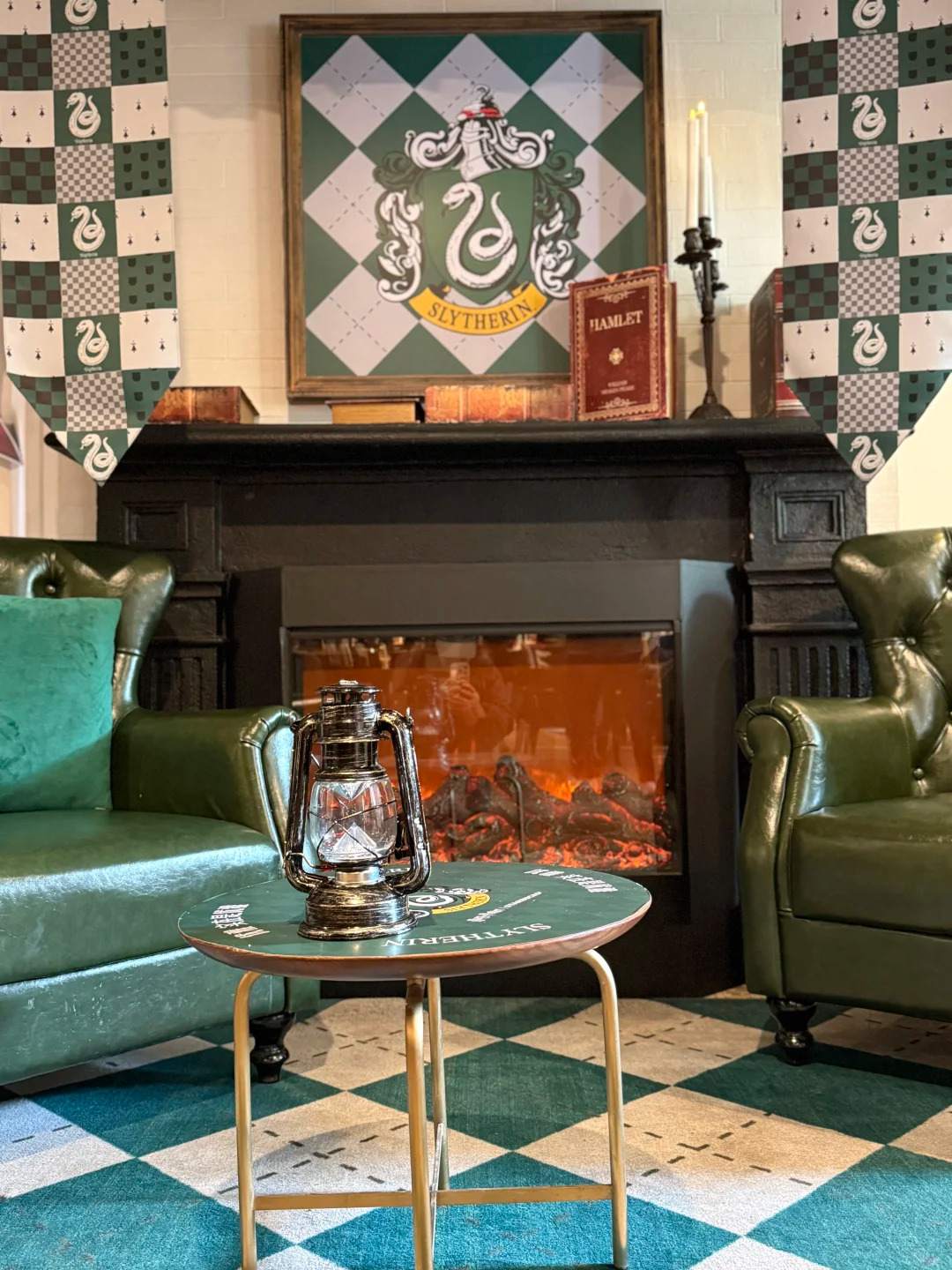
Continue walking toward the Catholic church, and you’ll find another café nearby. It’s more enclosed than the Starbucks and resembles some of the old consulates on the island. The two cafés are different, but both are great places to stop for a coffee inside a historic building.
Former Bank Buildings
Part of what makes Shamian’s buildings so interesting is seeing how their uses have changed over time. Since the mid-19th century, most of their exteriors and layouts have remained largely unchanged. The people and institutions occupying them, however, have changed many times.
Because Shamian was divided into British and French concessions, many of these buildings were once used as homes and offices for foreign residents. Today, some have been converted into shops, cafés, and other commercial spaces. The Starbucks mentioned above is one example.
After the Qing dynasty ended and foreign powers gradually withdrew, Shamian took on a different role during the early years of the Republic of China. Banking expanded quickly during this period, and financial institutions gained influence. Several former bank buildings still stand on the island, including those of HSBC, the Bank of Taiwan, and other financial institutions.
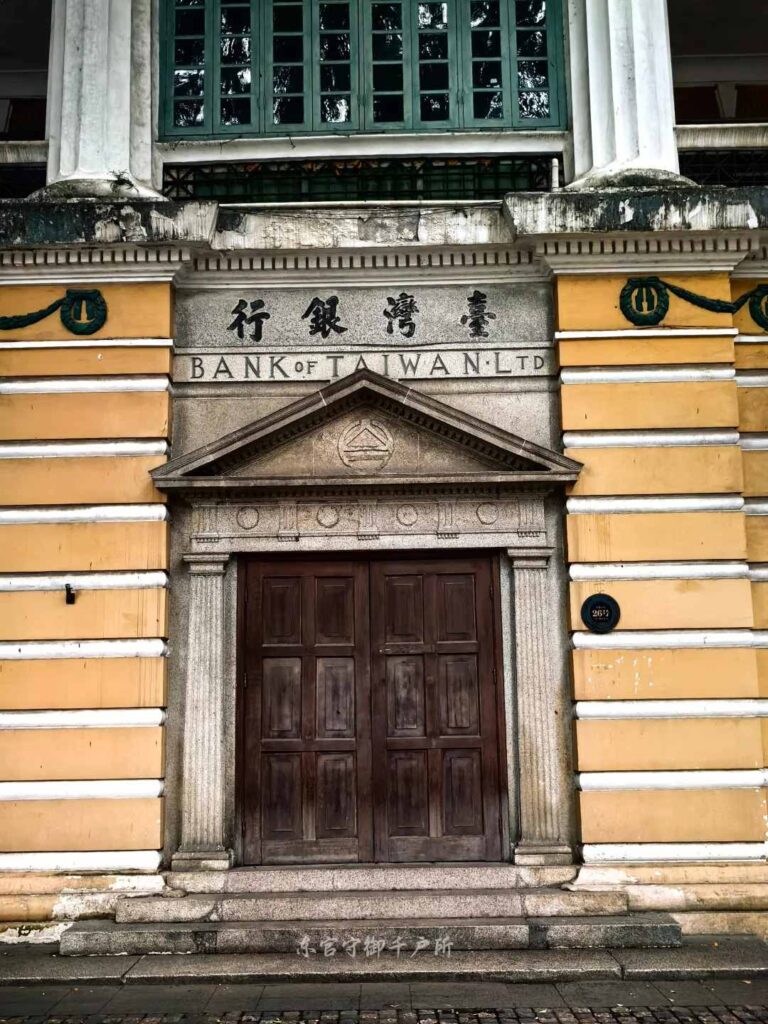
Some of these former bank buildings still look a lot like they originally did and remain closed to visitors. One notable exception is the former International Banking Corporation building, which has been converted into a commercial complex. The name International Banking Corporation may not be recognizable today, but Shamian Island’s financial history remains relevant even a century later, as this bank was connected to the institution that later became Citibank.
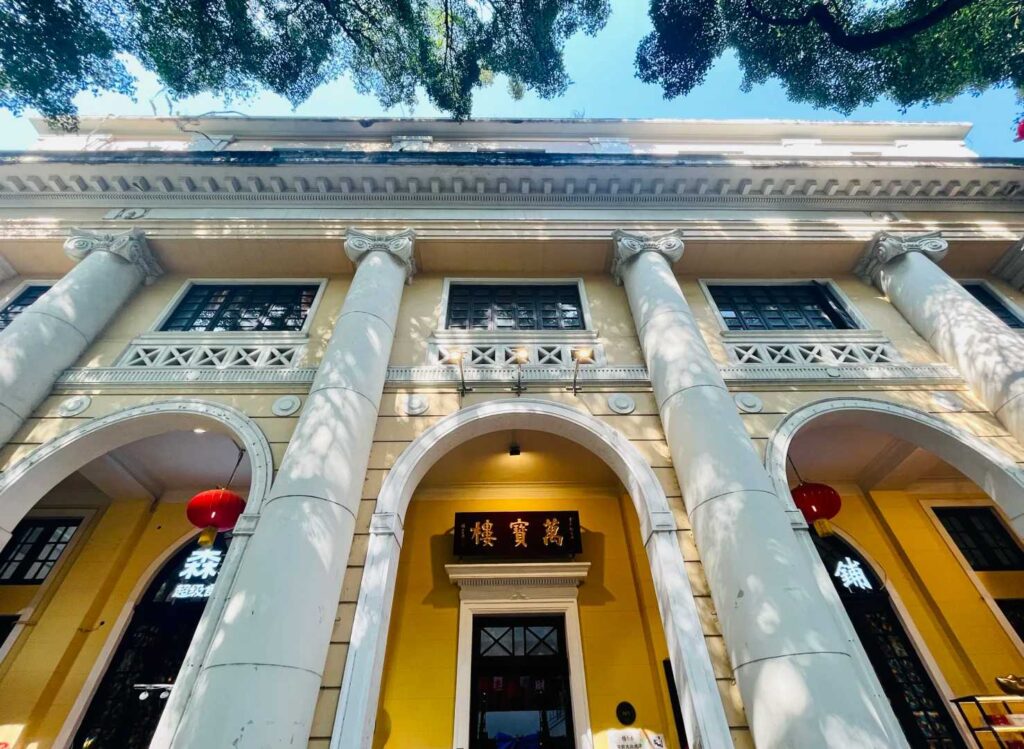
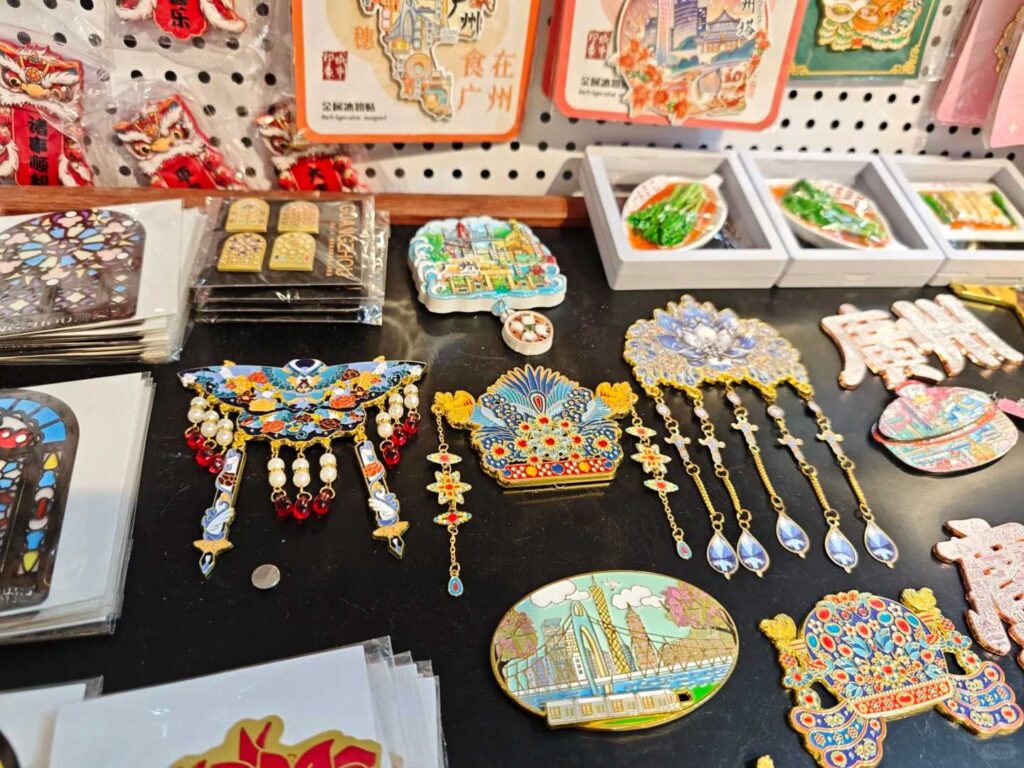
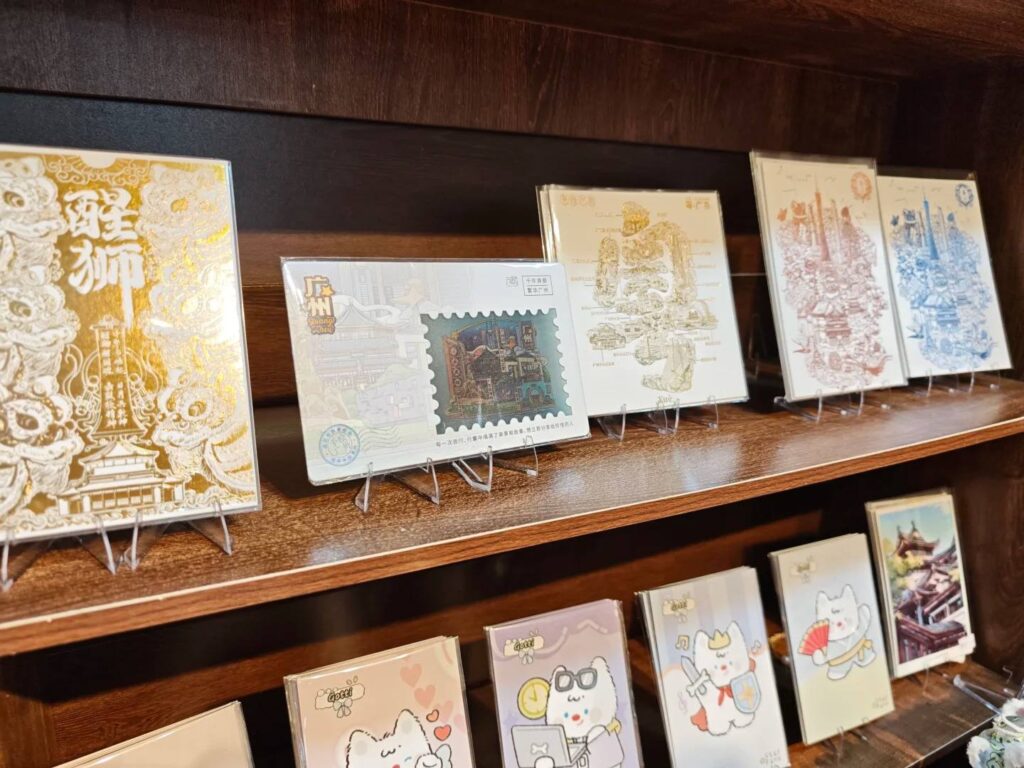
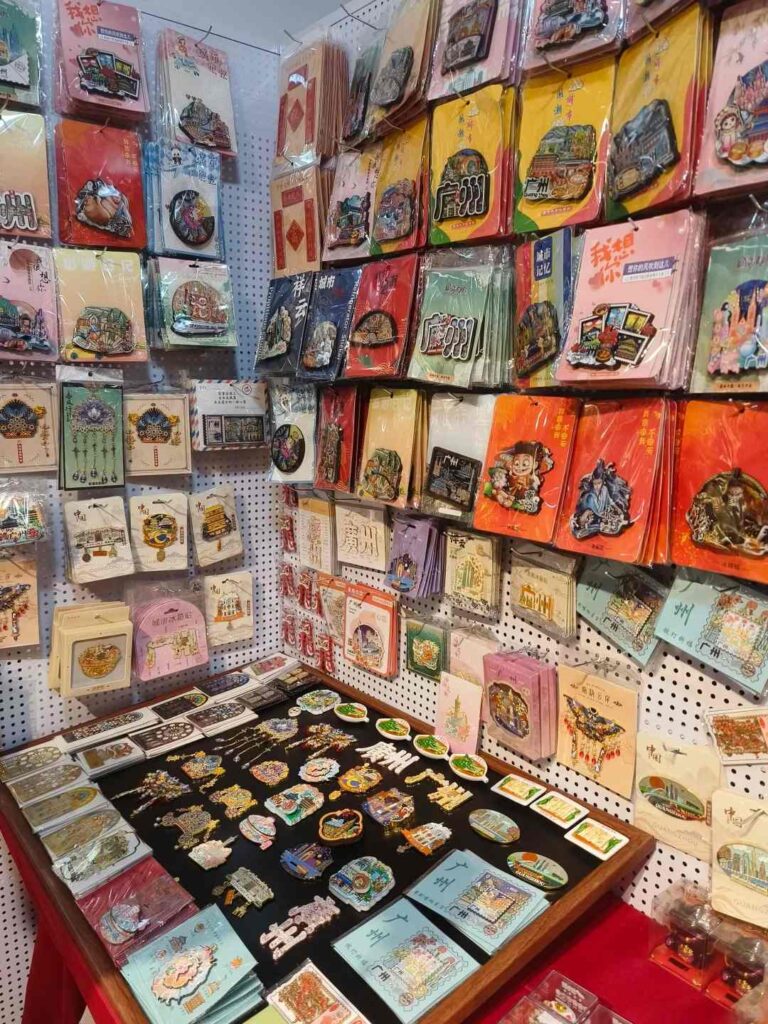
Most of the shops here sell souvenirs and other small gifts. It’s worth a look inside, and you may find something interesting to take home.
Our Lady of Lourdes Chapel
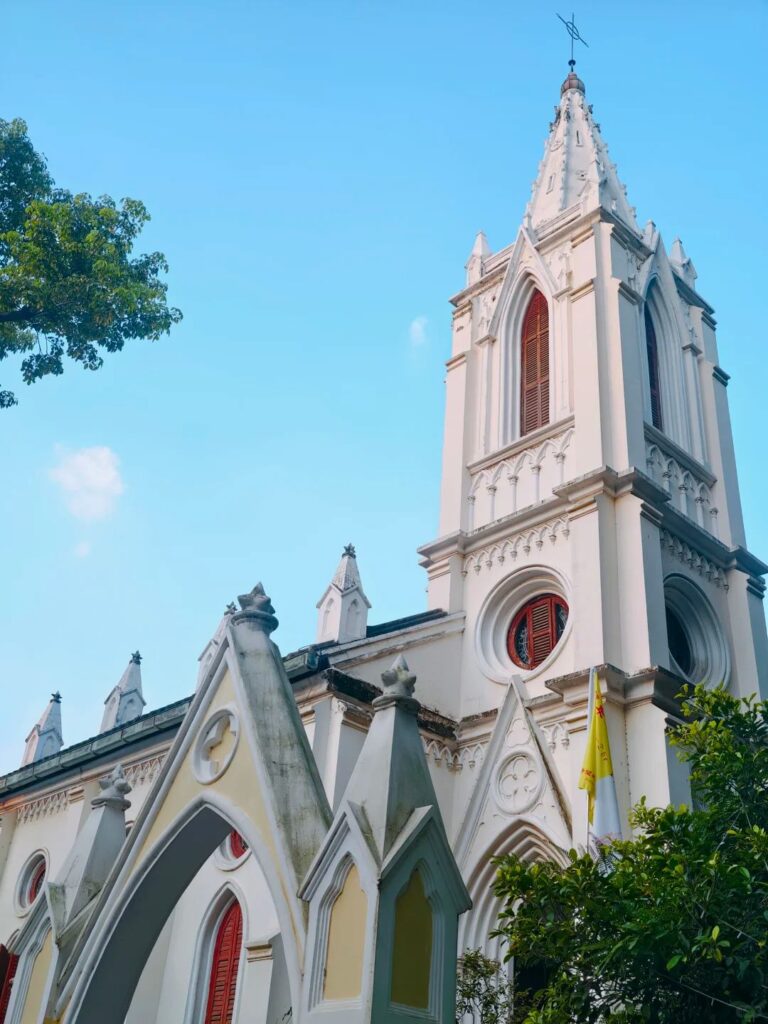
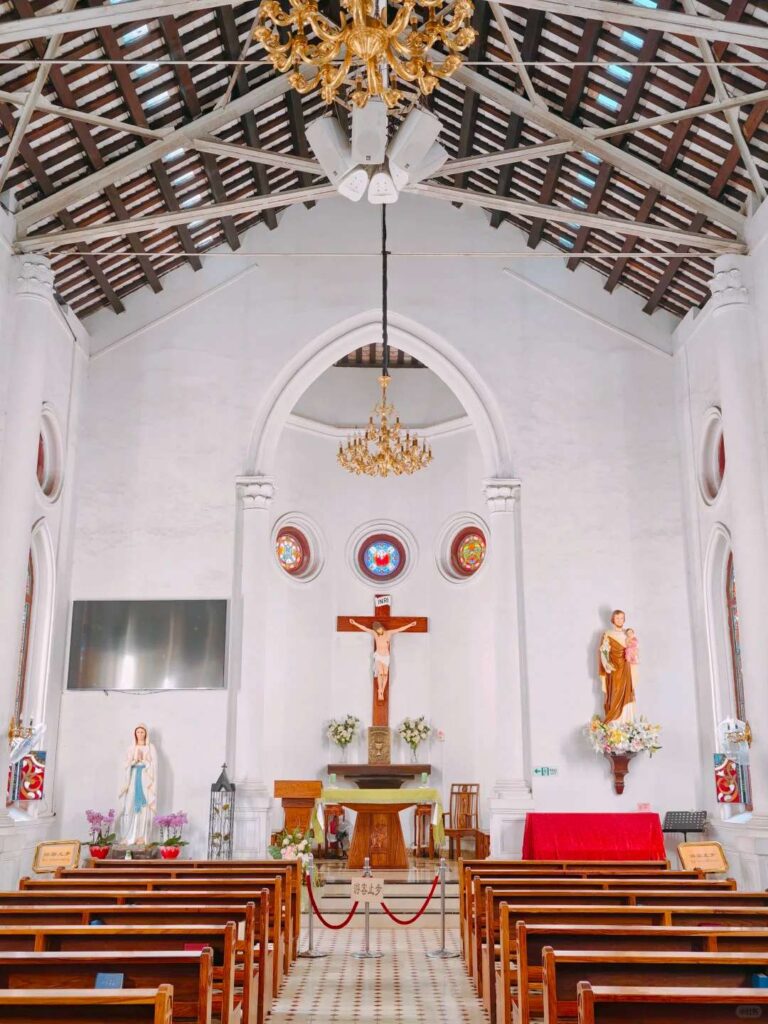
Continue along the main road from Shamian Christian Church, and you’ll spot a steeple above the trees. This is Our Lady of Lourdes Chapel (沙面露德圣母堂), a small Catholic chapel built in 1890 for the Catholic community connected with the French Consulate in Guangzhou.
If you’ve already visited Sacred Heart Cathedral, you’ll notice how different the two are and the much smaller scale of Our Lady of Lourdes Chapel. Sacred Heart was a large project supported by substantial funding from Emperor Napoleon III of France and donations from French Catholics. Our Lady of Lourdes is also quieter and tucked away from the busier parts of the island.
The exterior is simple, with Gothic details including a pointed-arch entrance, a thin steeple, and stained-glass windows. In the garden, you’ll also find a grotto with a statue of Our Lady of Lourdes, after whom the chapel is named.
It’s still used for worship, so opening hours vary depending on services and other church activities. If the doors are open, enter quietly and don’t take photos during a service.
Former Consulates
Because Shamian was divided into British and French concessions, it was home to numerous consulates and government offices. You can still see the former British, French, Soviet, and German consulates, along with several others. You’ll also see the former French barracks and the former Guangdong Customs Club.
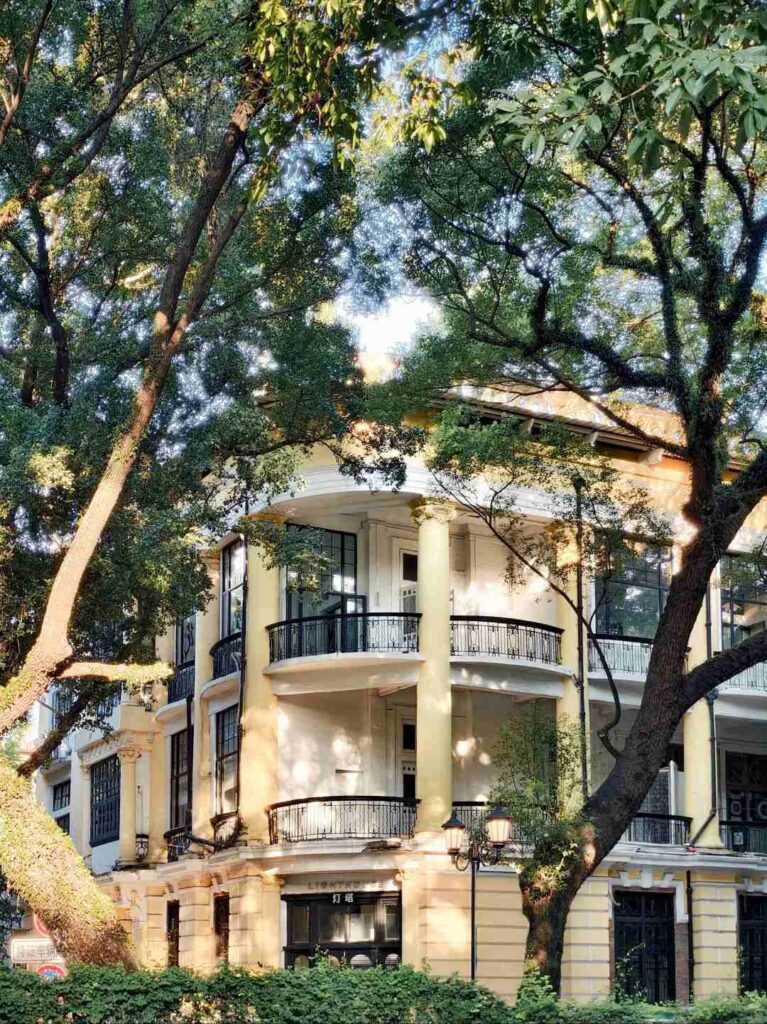
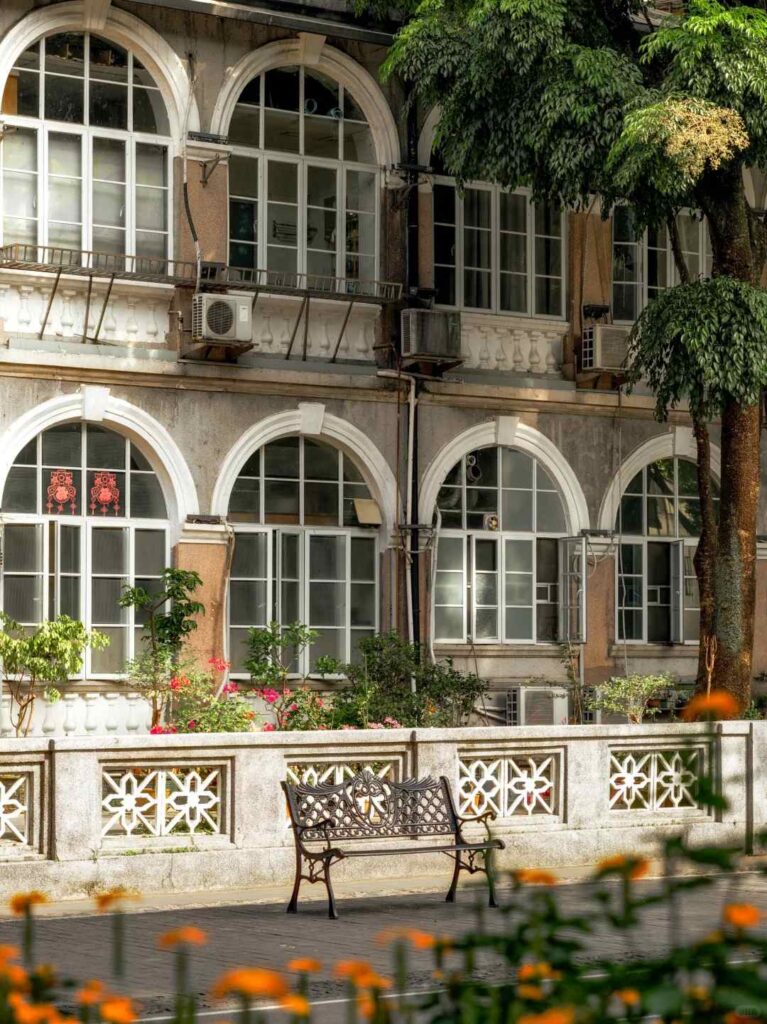
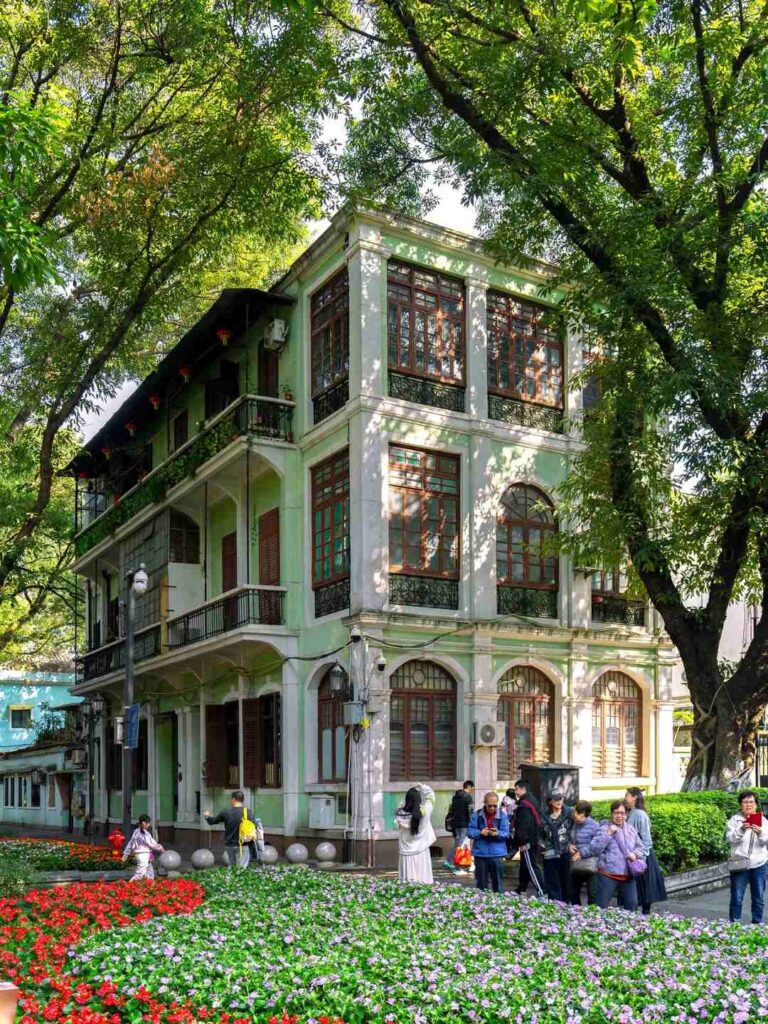
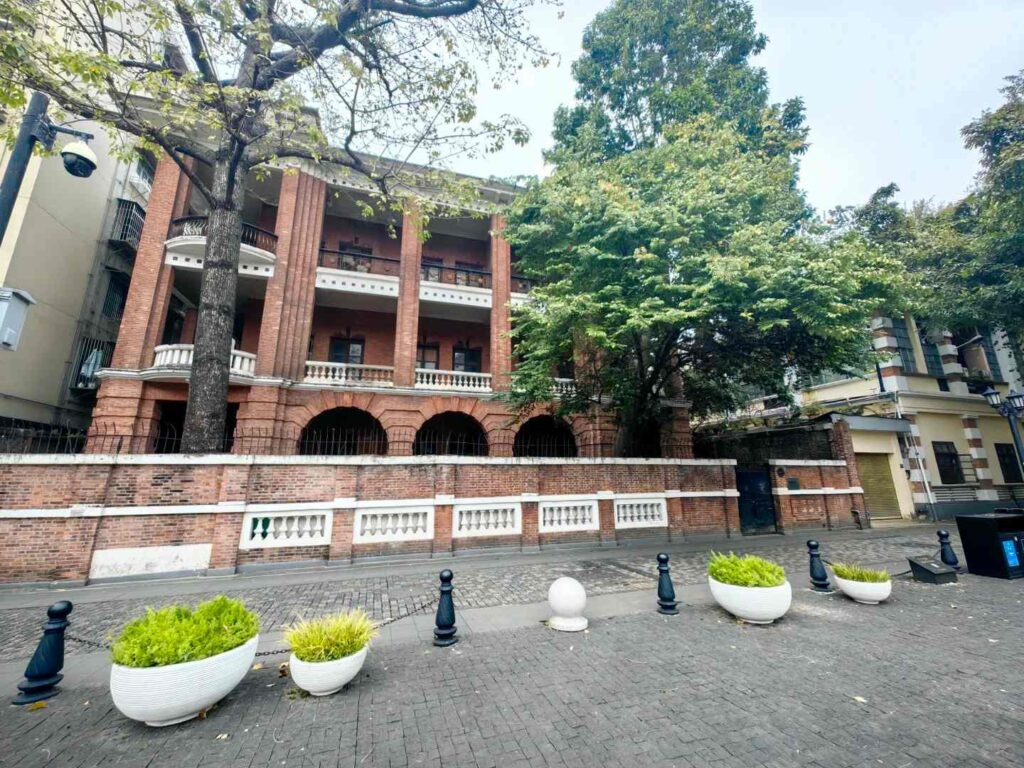
Today, many of these buildings are privately owned, so you can’t go inside most of them. Even from the street, though, the details of their historical architecture are easy to see, including unique doors, windows, columns, and exterior walls that are unique from one building to the next.
Walking Through Shamian Island
The late Qing dynasty, the British and French concessions, and Guangzhou’s past as a treaty port may all feel distant to visitors today. But even if you’re not visiting specifically for this history or to see the old churches, Shamian is definitely still worth exploring on foot.
Shamian is like a small park, but with European-style buildings and trees along the streets that are more than a century old. There are long, covered walkways, stone benches to rest along the way, and often a nice breeze through the trees. This is a good place to slow down and enjoy your surroundings without a set route.
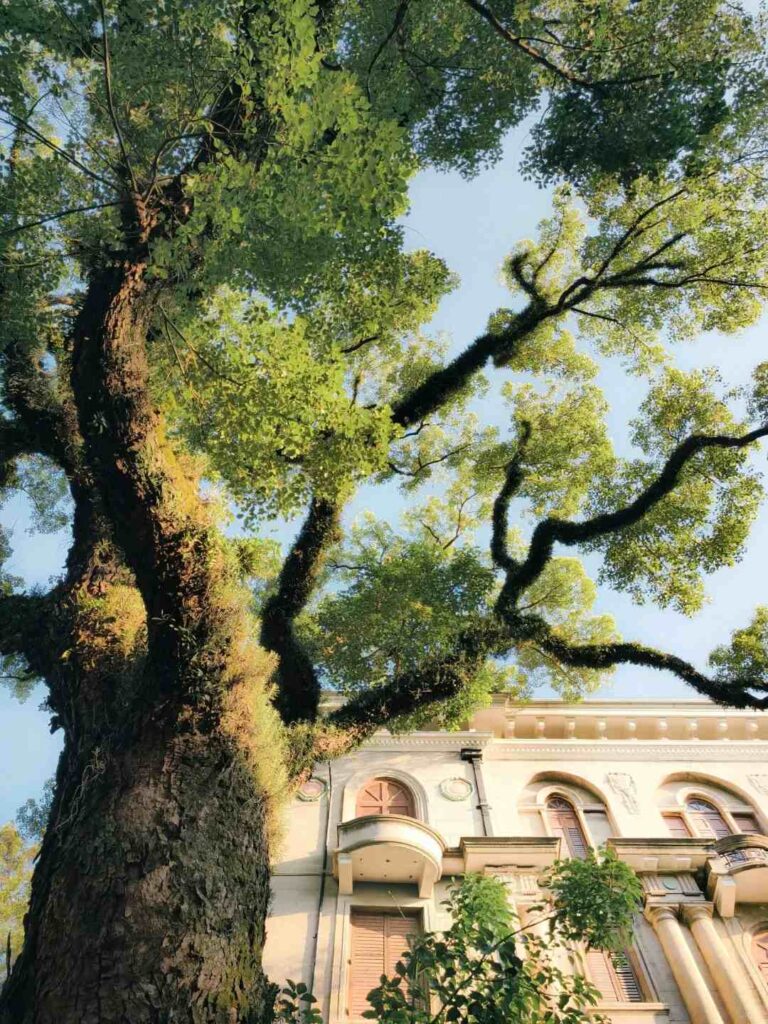
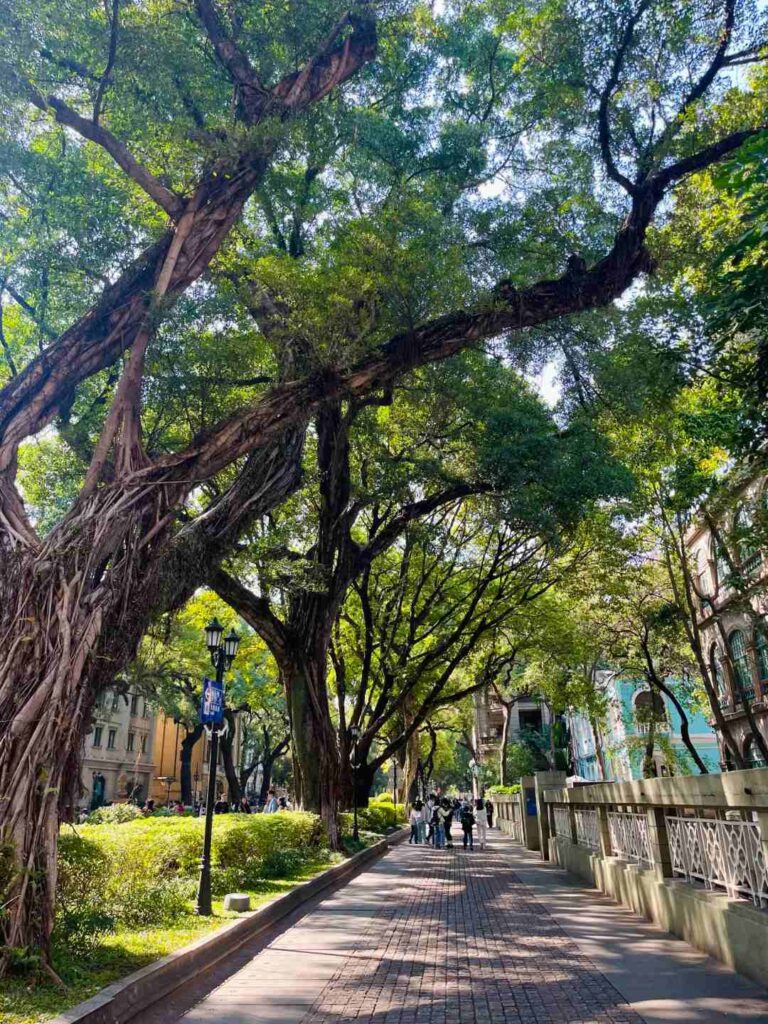
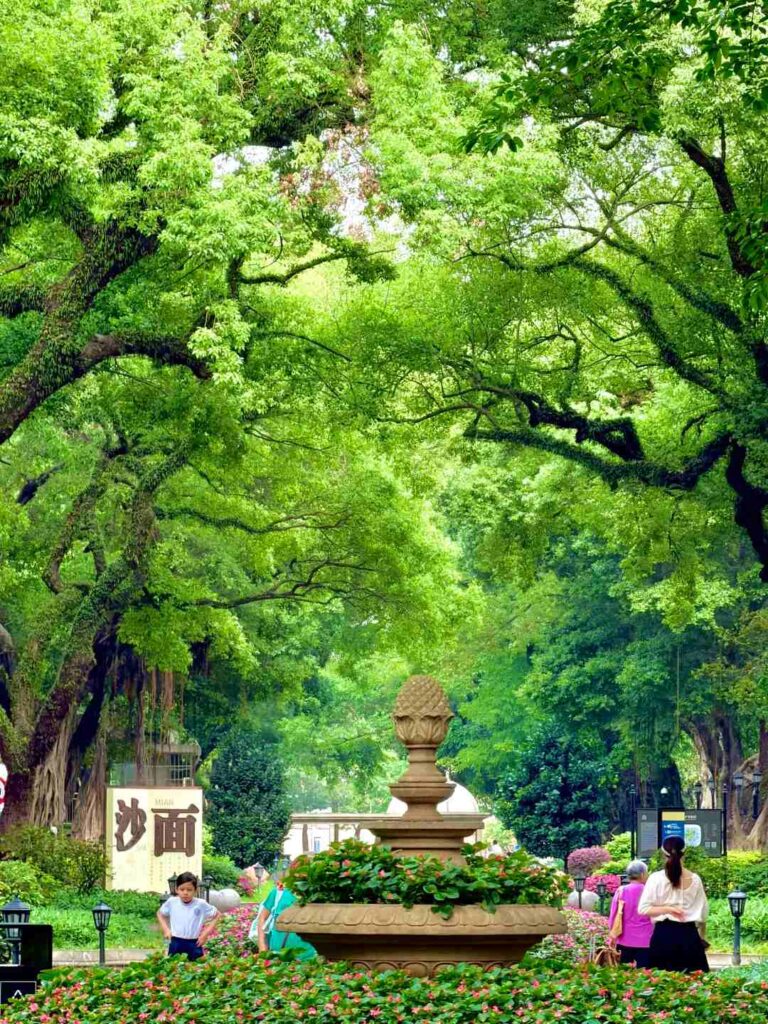
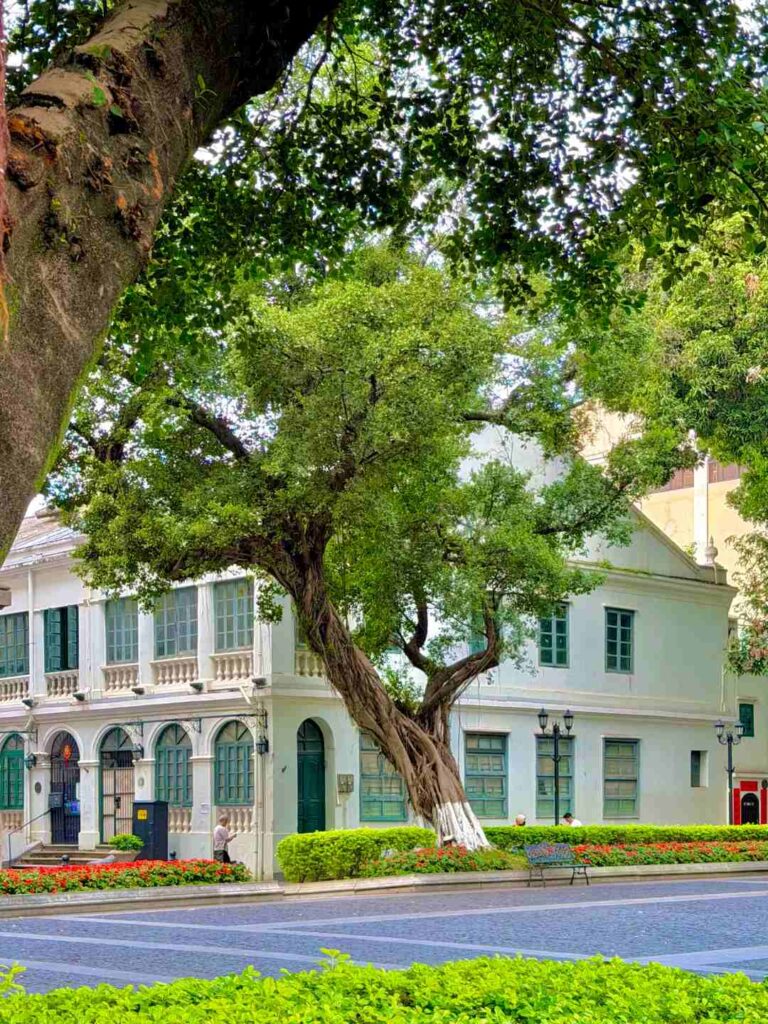
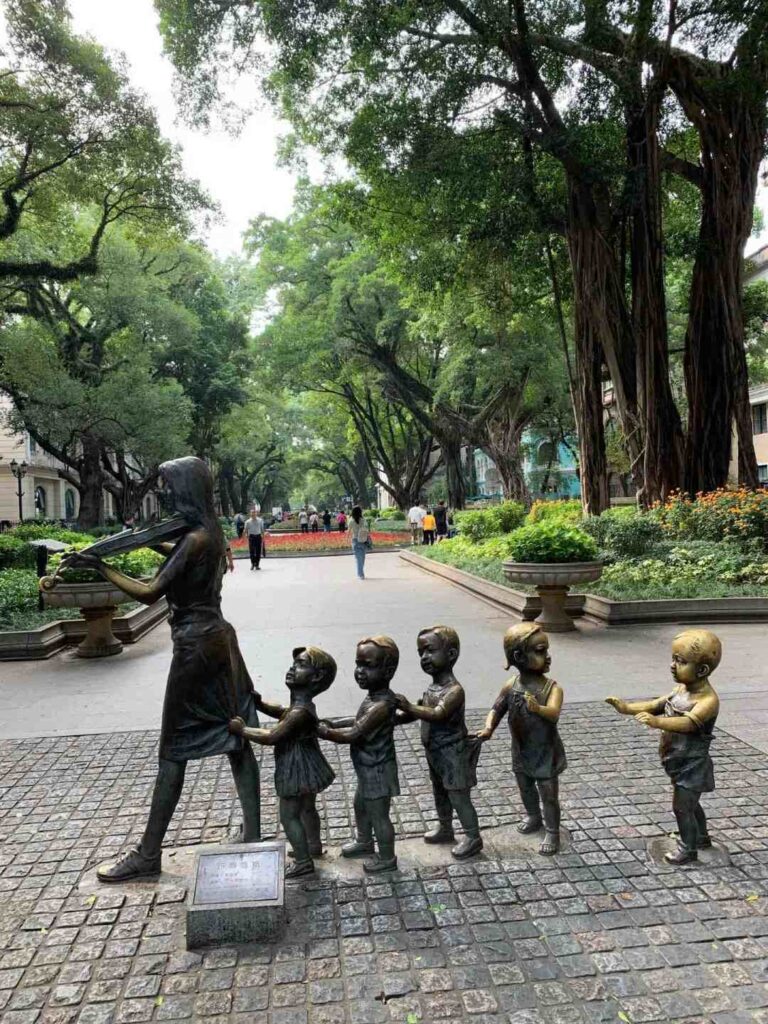
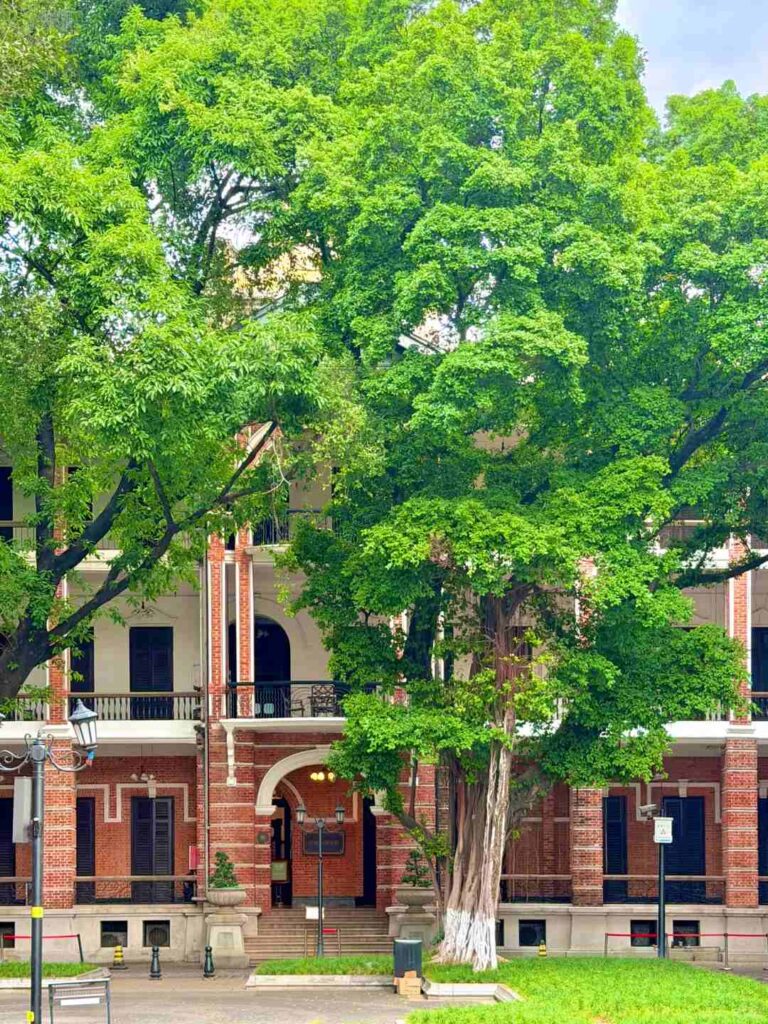
Around 150 historic buildings stand close together, and many still look much like they did in the last century. The people who lived here often tried to recreate architectural styles from their home countries, which is reflected in many of the surviving buildings. More than a century later, visitors can walk these same streets and, even without knowing the details of Shamian’s history, appreciate the old buildings, shady walkways, and slower pace.
Where to Eat Nearby
There are cafés and restaurants on Shamian Island, but the surrounding neighborhoods have many more options. The places below are all close to stops on the sightseeing route described earlier.
Huangsha Metro Station: Link Plaza Liwan
For the biggest range of choices without going too far, head to Link Plaza Liwan above Huangsha Metro Station. It has far more restaurants than Shamian Island, so it’s a good option if everyone in your group wants something different.
Near Sacred Heart Cathedral: PAIX!
When I visited Shamian Island, I went to the PAIX! location beside Sacred Heart Cathedral. I tried the torch-shaped soft serve, the Apple Americano, and a latte made with single-origin espresso from Panama.
Liwan Lake: Panxi Restaurant
Panxi Restaurant (泮溪酒家) is a well-known Cantonese restaurant beside Liwan Lake. It is known for its dim sum and Cantonese dishes, and the traditional Lingnan garden is part of the experience.
Come here for a full sit-down meal rather than a snack. It can get busy, so plan to spend more time here than you would at a more casual noodle shop.
Lychee Bay
Around Lychee Bay, look for traditional snacks such as vegetarian “roast goose,” which is made from seasoned bean curd sheets. You’ll also find sweet water chestnut drinks and crispy fish skin.
Yongqing Fang
When I visited, a few places I found around Yongqing Fang included Wu Cai Ji Noodle Shop (吴财记面家), Apo Beef Offal (阿婆牛杂), and Enning Ice Cream Shop (恩宁雪糕行).
Wu Cai Ji is a spot for noodles and fried wontons. Try Apo Beef Offal for a quick snack and Enning Ice Cream Shop for dessert.
Beijing Road Pedestrian Street
Beijing Road has a variety of snack shops, dessert stores, and casual restaurants, so you’ll have lots of choices for things to eat while you explore.
The area is busier and more commercial than the neighborhoods around Liwan Lake and Lychee Bay. You’ll have more options here, but if traditional Cantonese food is your priority, I’d eat in one of Liwan’s older neighborhoods instead.
Final Thoughts
Shamian is small, but filled with Western-style buildings in a range of architectural styles. Its surviving buildings reflect Guangzhou’s history as a treaty port and the period when Shamian was divided into British and French concessions.
If you need a break from busy days of sightseeing, I recommend a quiet stroll on Shamian Island under the trees and past the old buildings. And because Shamian is close to several of Guangzhou’s main old-city sites, it’s easy to visit the island and the surrounding area on the same day, which is what I suggest doing if it’s your first trip to Guangzhou.
Read More:
Guangzhou Travel Guide: A 4-Day Itinerary for Sights, Food, and Culture
Where to Stay in Guangzhou
Guide to Visiting Canton Tower


