
Guangzhou Travel Guide 2026: A 4-Day Itinerary for Sights, Food, and Culture
Visiting Guangzhou often feels like visiting several cities, and the unique contrast between old and new is one of the reasons it’s so enjoyable to explore. On Shamian Island, old banyan trees shade colonial-era buildings and European-style arcades, while the riverside tram shows you the modern skyline, including the famous Canton Tower.
Food is an important part of Guangzhou’s culture, and it’s one of the best ways to get a feel for the city. This historic trading city is one of the easiest places in China to plan your day around meals, so come hungry!
You can enjoy a 6 a.m. yum cha breakfast to see how the city wakes up. Late at night, try a bowl of creamy double-skin milk pudding for a simple and authentic treat.
In this guide, I’ll walk you through my 4-day, 3-night Guangzhou itinerary, including which apps to set up, what to see, and where to eat. I’ll also include vegetarian-friendly stops along the way.
Table of Contents
- Preparing for a Trip to Guangzhou
- Best Time to Visit Guangzhou
- Getting Around Guangzhou
- Where to Stay in Guangzhou
- Guangzhou Itinerary Overview: 4 Days and 3 Nights
- Guangzhou Day 1 Itinerary: Food Around Ximenkou and an Evening Walk through Yongqing Fang
- Guangzhou Day 2 Itinerary: Beijing Road, Dafo Temple, and Canton Tower
- Guangzhou Day 3 Itinerary: Shamian Island and Xiguan Culture
- Guangzhou Day 4 Itinerary: Guangxiao Temple and Departure
- Best Places to Visit in Guangzhou
- Guangzhou Travel FAQs
Preparing for a Trip to Guangzhou
China has different entry rules depending on what country your passport is from. At the time of writing (May 2026), China offers visa-free entry along with a 240-hour visa-free transit policy for some eligible travelers. Always check the latest official rules before your trip to see which option applies to you.
Regardless of which policy you use to enter the country, check at least one month before your trip that your passport will still be valid for long enough to meet China’s entry requirements (no less than 3 months).
If your current phone plan offers reasonably priced international roaming, you do not need to do anything extra. Roaming generally lets you access the websites and apps that are restricted in mainland China.
If not, to get internet access in mainland China, you have two main options:
If you’re traveling to Guangzhou or anywhere else in China, I wouldn’t skip travel insurance. Getting around China is overall convenient, but delays can still happen. High-speed trains, cross-border buses, and connecting flights can all be affected by weather, traffic restrictions, or operational delays, so to keep a delay or emergency from complicating a carefully planned trip, buy travel insurance before you go.
One option is SafetyWing’s Nomad Insurance Essential. It can be useful for travelers with busy itineraries because:
- It covers medical and travel emergencies in more than 180 countries, including China.
- It has a $0 deductible, so you do not have to meet a deductible before filing a claim.
- It’s flexible. SafetyWing lets you buy a policy even after your trip has already started. So if you are already in Guangzhou, halfway through morning tea, and realize you forgot to buy insurance, you can still sign up online for the rest of your trip.
Before your trip, download these apps and set them up in advance so you can use them as soon as you arrive.
Amap (Gaode Maps)

If you only download one map app for mainland China, make it Amap. Google Maps is not very reliable here.
Amap works well for walking routes, metro and bus directions, and ride-hailing. You can also book rides directly in Amap, so you don’t have to switch between apps.
Download: App Store | Google Play.
Read More: How to Use Amap in China
Alipay and WeChat Pay
Alipay and WeChat Pay are the two main mobile payment apps in mainland China.
Both now let visitors link foreign credit cards, including Visa, Mastercard, and other major card networks.
Download:
Alipay: App Store | Google Play
WeChat: App Store | Google Play
How to Set Them Up
The exact wording on the app’s interface may vary slightly depending on the version you have, but in general, follow these steps:
- Open the app and go to the “Me” tab in the bottom-right corner.
- Choose “Add Bank Card” or “Bank Cards.”
- Enter your card number and personal details.
- Complete the SMS or bank verification, and your card should be ready to use.
Payment Tips
For many linked foreign cards, purchases under RMB 200 avoid the extra platform service fee.
If your card charges foreign transaction fees, consider getting or using a card that has cashback perks for overseas purchases to help offset some of the extra cost.
Didi via Wechat or Amap Ride-Hailing
I usually book rides through Didi Mini Program on Wechat or Amap, because both of them have built-in ride-hailing features. They work well enough that I don’t bother downloading a separate taxi app.
Download:
Amap: App Store | Google Play
WeChat: App Store | Google Play
Meituan can be used to look up restaurants, read reviews, make reservations, and check for dining discounts.
You don’t need to download an app — just use Meituan right inside WeChat via their Mini Program.
Best Time to Visit Guangzhou
The best months to visit Guangzhou are October to December and March to May when the weather is usually mild enough to walk around comfortably.
Months to avoid:
- July and August. Guangzhou is hot and humid in summer, and it can feel hotter than 40°C/104°F.
- January and February are usually busy because of Chinese New Year, and some shops and restaurants close for the holiday.
Read More: Essential Things to Do Before Traveling to China
Getting Around Guangzhou
Guangzhou’s metro system is extensive and easy to use. You can reach most major attractions by metro, so for most first-time visitors, it’s the easiest way to get around.
These are the metro lines you are most likely to use as a visitor:
- Line 1: An east-west line through the older part of the city. It stops at Gongyuanqian Station, which is convenient for Beijing Road Pedestrian Street.
- Line 3: A key north-south line connecting Tianhe with older parts of Guangzhou.
- APM Line: Good for sightseeing around Zhujiang New Town. It connects Canton Tower with the Tianhe Sports Center area.
You don’t need to memorize these lines. Once you have Amap set up, it’s easy to find the best route from wherever you are.
Metro Tickets and Fares
Option 1: Set up the “乘车码” (Transit Code) in Alipay or WeChat, then scan it at the gates when you enter and exit. This is the easiest option for most visitors.
Option 2: Buy a single-journey ticket from a ticket machine. Metro fares start at RMB 2 and increase with distance. Most rides within the city center cost around RMB 5–8.
Taxis and Ride-Hailing
Taxi fares start at RMB 12 for the first 3 kilometers.
I book rides through Amap, which is often easier than hailing a taxi on the street, especially if you don’t speak Chinese. It also helps avoid any misunderstandings, since the route is shown in the app.
Buses
Fare: RMB 2
Payment: Use the Transit Code in Alipay or WeChat.
I wouldn’t recommend buses for first-time visitors unless you’re comfortable navigating local routes in Chinese. The metro is much easier.
Where to Stay in Guangzhou
Where you stay in Guangzhou can make a big difference on your trip. Each part of the city has its own vibe and advantages, so it helps to think about what kind of trip you want before you book your hotel. And picking a good location can save you a lot of time and from having to cross the city a lot.
pick the right area
Area | What it’s like | Best for | Why stay here |
|---|---|---|---|
| Yuexiu / Liwan | Older, more historic parts of the city with some of Guangzhou’s best food. | Best for travelers who want food, history, and a more local feel. | Close to places like Yongqing Fang, Shangxiajiu, and Beijing Road, with lots of dim sum spots and old-school local restaurants nearby. |
| Tianhe (especially around Zhujiang New Town) | Guangzhou’s modern business and shopping district. | Best for visitors who want shopping, a modern city, or a convenient business area. | Well-connected by metro, close to Canton Tower, and packed with large malls. |
| Haizhu (especially around Pazhou) | A major exhibition and business area not far from Canton Tower. | Best for business travelers and trade show visitors. | Good transport links, a newer city environment, and newer hotels. |
| Panyu (especially around Chimelong) | The area around Guangzhou’s main theme parks. | Best for families traveling with kids. | A good choice if you plan to spend more than one day at places like Chimelong Safari Park. |
If food is one of your main reasons for visiting Guangzhou, Yuexiu or Liwan are the areas that I recommend to best enjoy the city’s famous food culture. I’d look for a hotel around Xihua Road, Chen Clan Ancestral Hall, or Shangxiajiu Pedestrian Street. From dim sum and sweet soups to roast meats, street snacks, and late-night eats, you’ll eat well all day.
If you prefer a more modern side of the city, or if you plan to do a lot of shopping, I recommend Tianhe, particularly Zhujiang New Town, Tiyu Xi, Shipaiqiao, and Linhexi. This part of the city is easy to get around, well-connected by metro, and full of large malls, so it’s a very convenient place to stay.
I recommend staying near Ximenkou Metro Station for easy access to the metro and lots of places to eat close by. It’s a convenient location, with malls, supermarkets, and Xihua Road Food Street nearby. Guangxiao Temple is also within walking distance.
Guangzhou Itinerary Overview: 4 Days and 3 Nights
Here’s an overview of how I’d organize 4 days and 3 nights in Guangzhou.
Arrival in Guangzhou
An Evening in Ximenkou
Arrival and Check-In
Getting into central Guangzhou and checking in will probably take up much of the afternoon, so don’t put too much on your itinerary for the first day.
- Hotel area: near Ximenkou Metro Station
Food Around Ximenkou
After checking in, explore the area around your hotel and try a few classic Guangzhou dishes. If any of these dishes sound good, copy the Chinese name into your map app to find a good place to eat.
- 毓彤齋 Vegetarian claypot rice.
- 米香源腸粉 steamed rice noodle rolls, or cheung fun
- 广一汤馆 chicken offal soup
- 新疆正宗沙漠玉石烤羊肉 Xinjiang-style lamb skewers
- 沙湾甜品食馆 double-skin milk pudding and fried milk custard
- 沪上酥铺 (中山六路店) buttery nian gao, or sticky rice cake
Explore Yongqing Fang at Night
Come here to see Moon Bridge lit up at night and browse a few small shops.
- Moon Bridge The Lights are typically on from 7:00 PM to 9:30 PM
- Shopping Browse a few boutiques, including BONELESS.
Old Guangzhou Culture and Canton Tower Views
Liwan → Beijing Road → Tianhe
A Local Breakfast in Old Liwan
Walk to Yixiang (驿巷) for a more local, everydaybreakfast. Afterwards, stop by Longjin Market. Here are some options for places to eat:
- 泉记肠粉 Steamed rice noodle rolls, vegetarian options available
- 金宝美食店 wontons and pork knuckle noodles
- 斋烧鹅 Vegetarian “roast goose”
- 蛋卷王 Opens after 9:00 a.m.
- 黄记米糕 A soft, slightly sweet traditional snack
- 明记小吃店 beef offal and beef brisket
- 点都德茶楼 yum cha and dim sum
- Longjin Market (龙津市场) A local open-air market with very affordable fruits and vegetables.
Beijing Road and Dafo Temple
Walk around Beijing Road Pedestrian Street and visit Dafo Temple.
- Dafo Temple’s vegetarian buffet A good lunch option if you don’t eat meat.
- Visit Dafo Temple
- Beijing Road Pedestrian Street
A Riverside Tram Ride
From Beijing Road, head to Wanshengwei, then take the tram for views along the river.
- Go to Wanshengwei Tram Station Take the tram toward Canton Tower
- Liede Bridge South Station You can get off to take a closer look at the shell-shaped landmark. (Optional)
Canton Tower and the Tianhe Shopping District
Ttry to get to Haixin Bridge and Canton Tower around sunset, then, continue to Tianhe for dinner and shopping.
- Haixin Bridge – A great spot for photos. The world’s largest curved-beam pedestrian bridge
- Tianhe shopping route Suggested route: Fashion Tianhe → Grandview Mall → Parc Central → TeeMall
- Dinner: He Xiaodong Noodle House You can ask for a vegetarian option.
European Architecture and Xiguan Culture
Sacred Heart Cathedral · Shamian Island · Liwan
Sacred Heart Cathedral and the Old Riverside District
Walk through one of Guangzhou’s older neighborhoods, then follow the river past several historic buildings.
- Breakfast: Jianji Noodle Shop (坚记面店) Try the longevity yi mein at this Michelin-listed neighborhood noodle shop.
- Visit Sacred Heart Cathedral One of the few Gothic cathedrals in the world built almost entirely from stone.
- Yanjiang West Road walking route Aiqun Hotel → Xinhua Hotel → Canton Customs House → Nanfang Building → Renmin Bridge
Shamian Island & Xiguan Culture
Start with Shamian’s European-style architecture, then move on to Liwan to experience Xiguan history and classic architecture.
- Shamian Island A former foreign concession with more than 150 European-style buildings.
- Grab a light lunch or coffee on the island.
- Liwan Museum Visit Jiang Guangnai’s former residence and a traditional Xiguan mansion.
- Liwanhu Park One of Guangzhou’s largest man-made lake parks.
Dinner: Liwan Teahouses
- Hongyisu Vegetarian Teahouse (红艺素) A vegetarian place known for its black truffle dishes.
- Baiweixian Dim Sum – 百味鲜靓点皇 (宝源路店) Try the jumbo shrimp dumpling, abalone siu mai, and roast goose.
Guangxiao Temple and Departure
Guangzhou → Next destination
One Last Morning in Guangzhou
Spend your last morning in Guangzhou with breakfast nearby, then a visit to Guangxiao Temple.
- Youshishen Noodle House- 友食神面家(光塔店)
- Visit Guangxiao Temple
- Check out of the hotel Check out by noon.
Afternoon: Departure
- Leave Guangzhou Leave Guangzhou and head to your next destination.
Guangzhou Day 1 Itinerary: Food Around Ximenkou and an Evening Walk through Yongqing Fang
Once you’ve reached the city and dropped off your bags, make food your first stop.
First Stop: Food Around Ximenkou
Mi Xiang Yuan Rice Noodle Rolls (米香源肠粉)
The rice noodle rolls here are thin, tender, and satisfying. They don’t skimp on the fillings, so one order is enough for a light meal.
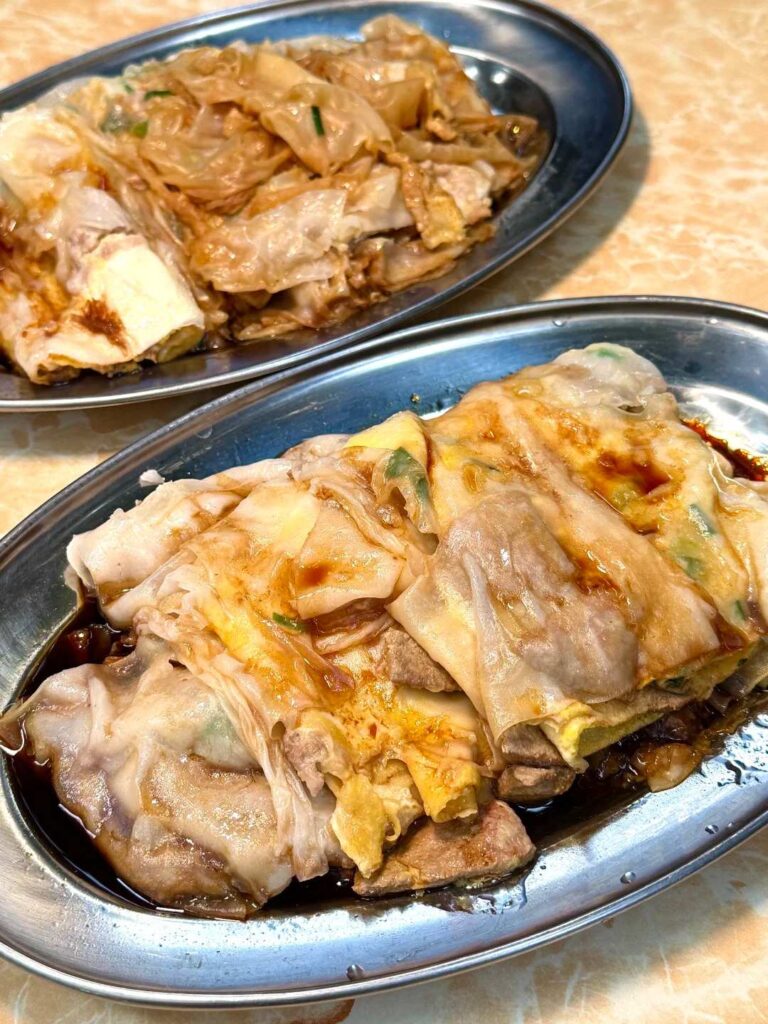
I also recommend their seasoned soy sauce, which is a good balance of sweet and savory. It doesn’t cover up the rice flavor of the noodles, just makes them taste a little sweeter.
Guangyi Soup House (广一汤馆)
Guangyi Soup House is best known for its chicken offal soup (鸡杂汤). People in Guangzhou like to say, “You can skip the meat, but not the soup.” For many locals, it’s the best place to get an inexpensive but comforting bowl of soup.
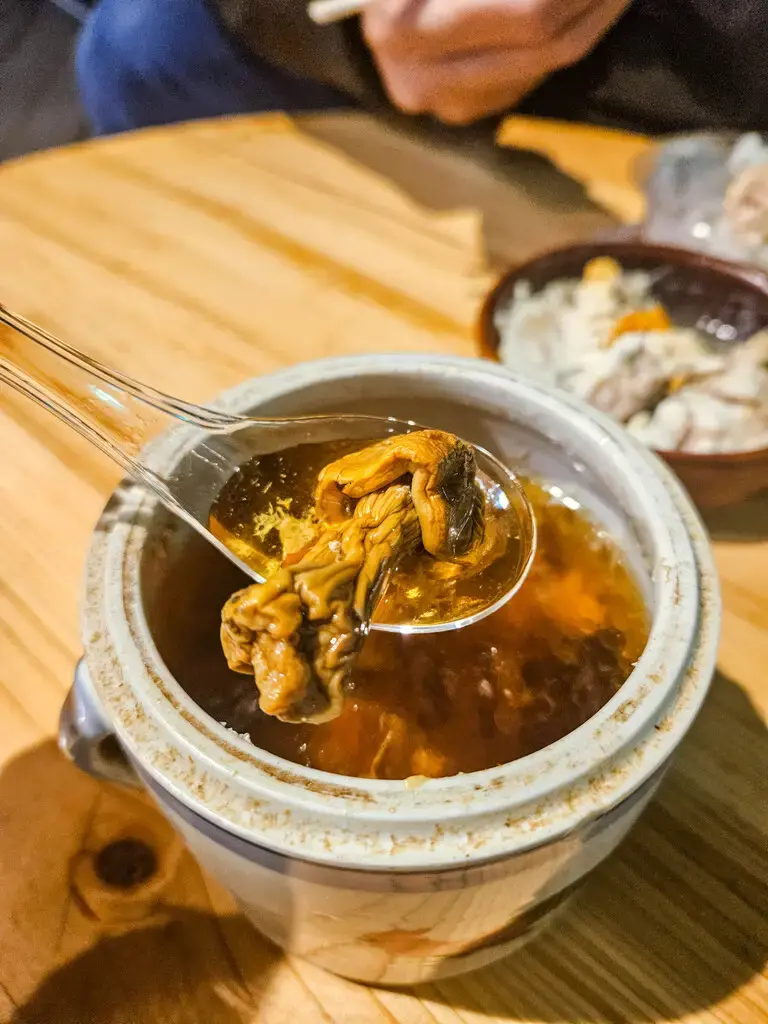
When I last visited, I got there too late, and the chicken offal soup had already sold out. I went with the agaricus mushroom soup instead, a light and slightly sweet mushroom broth.
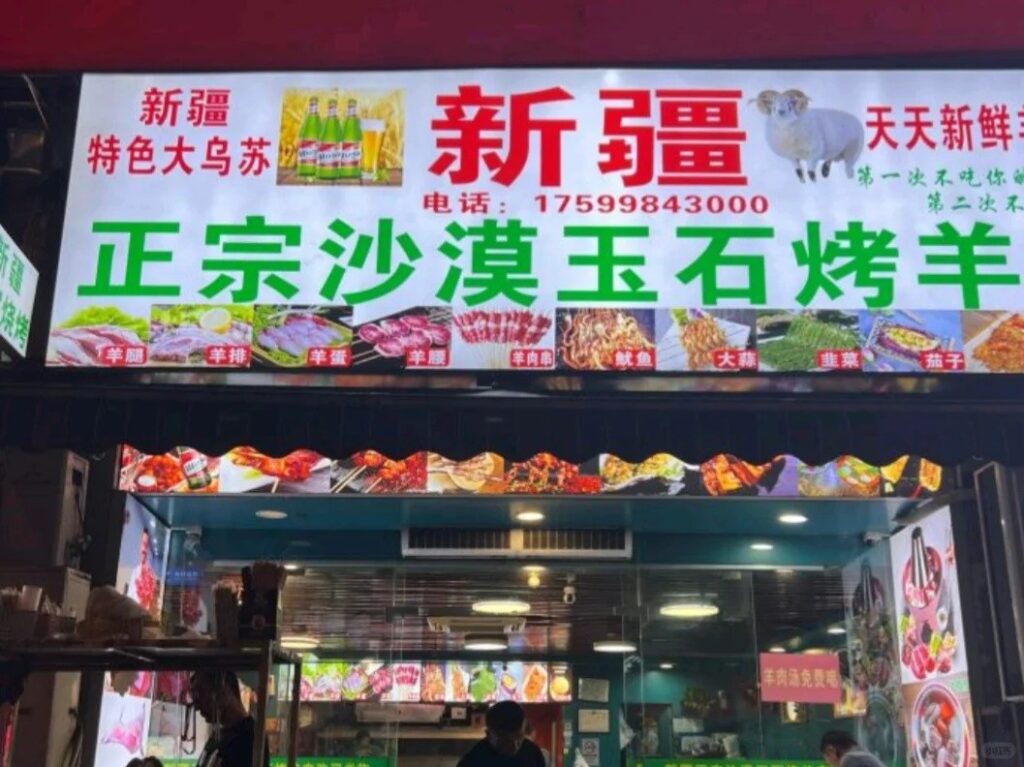
Authentic Xinjiang Desert Jade Grilled Lamb (新疆正宗沙漠玉石烤羊肉店)
If you want a break from Cantonese food, this Xinjiang-style lamb skewer spot, whose owner and staff are from Xinjiang, is a good choice. I recommend the grilled eggplant and the lamb soup, which they’ll even refill if you want more.

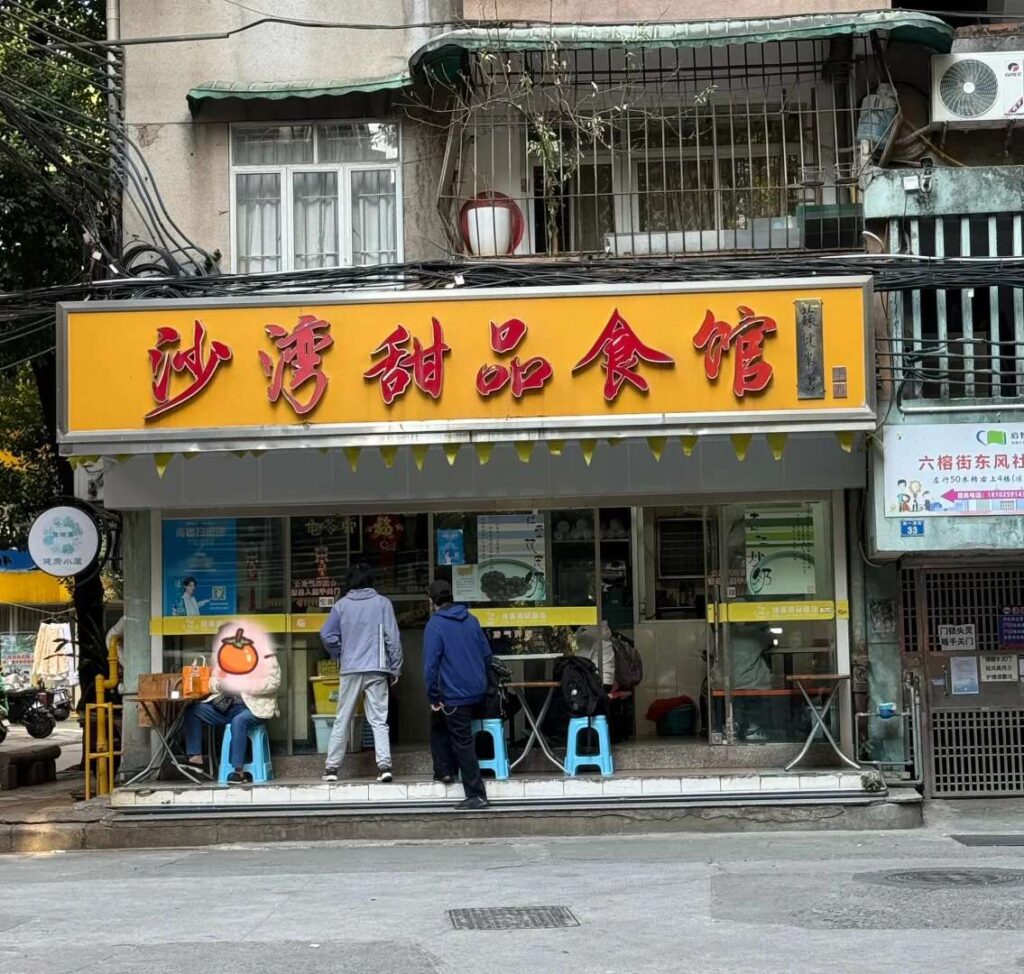
Shawan Dessert Shop (沙湾甜品食馆)
This old-school dessert shop makes its double-skin milk pudding with buffalo milk. The thin milk skin on top is the best part. It’s rich, creamy, and full of dairy flavor.
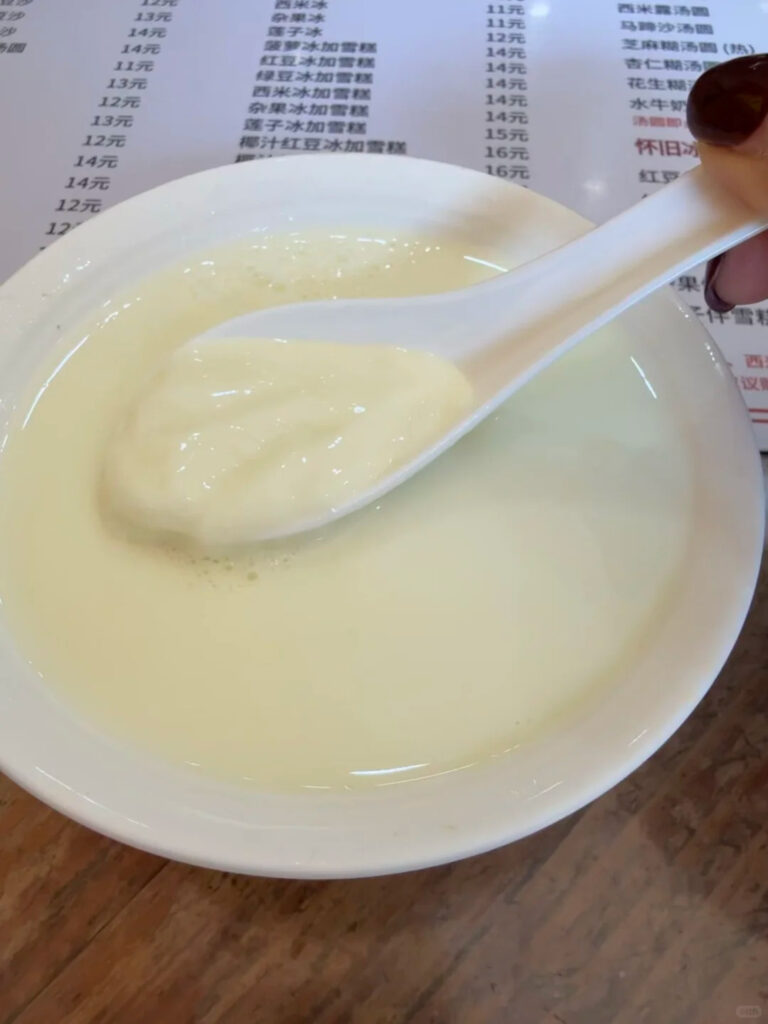
If you prefer a thicker, more custard-like texture, try the stir-fried milk custard, also known as phoenix milk custard. It’s made by slowly stirring egg yolk and milk in a pan until the mixture just sets. It comes out golden and silky-smooth, with a rich egg-and-milk flavor.
Yu Tong Zhai (毓彤·斋)
Vegetarians should make time for this spot near Guangxiao Temple.
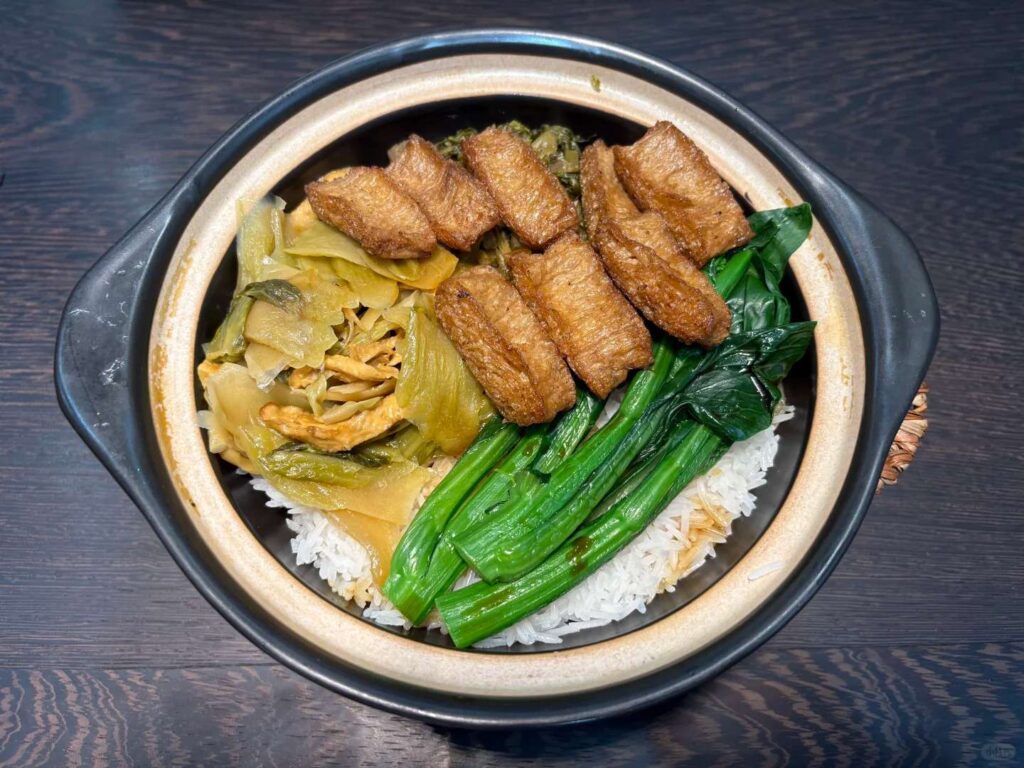
The dish to order is the vegetarian claypot rice, which is filled with a savory mushroom sauce and has a crisp crust on the bottom. It also has pickled vegetables, which keep the dish from feeling too heavy.
Yongqing Fang at Night: Moon Bridge and Small Shops
After dinner, take a taxi over to Yongqing Fang. The old neighborhood has been renovated, but you can still see its Xiguan character in the arcade-style façades and old brick details among the newer cafés and shops.
Moon Bridge is the most photographed spot in Yongqing Fang. Around 7:00 p.m., when the lights come on, the curve of the bridge and its reflection on the water form a full circle, which is where its name comes from.

From the bridge, you can see old arcade-style buildings next to more modern constructions, which is an interesting contrast.
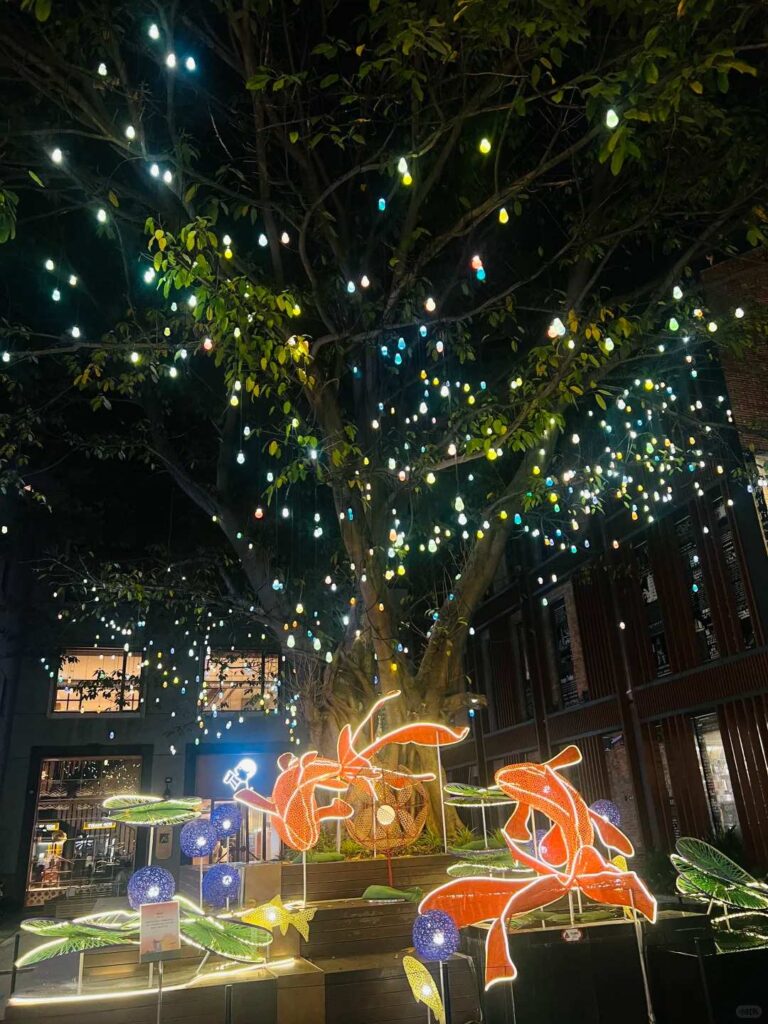
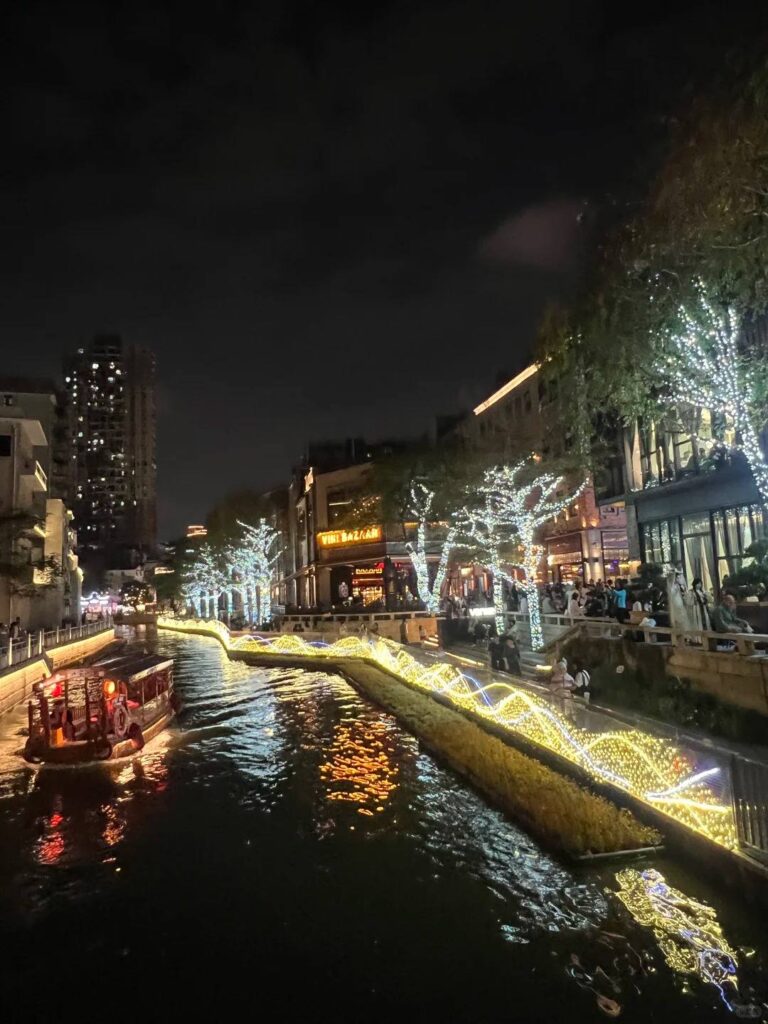
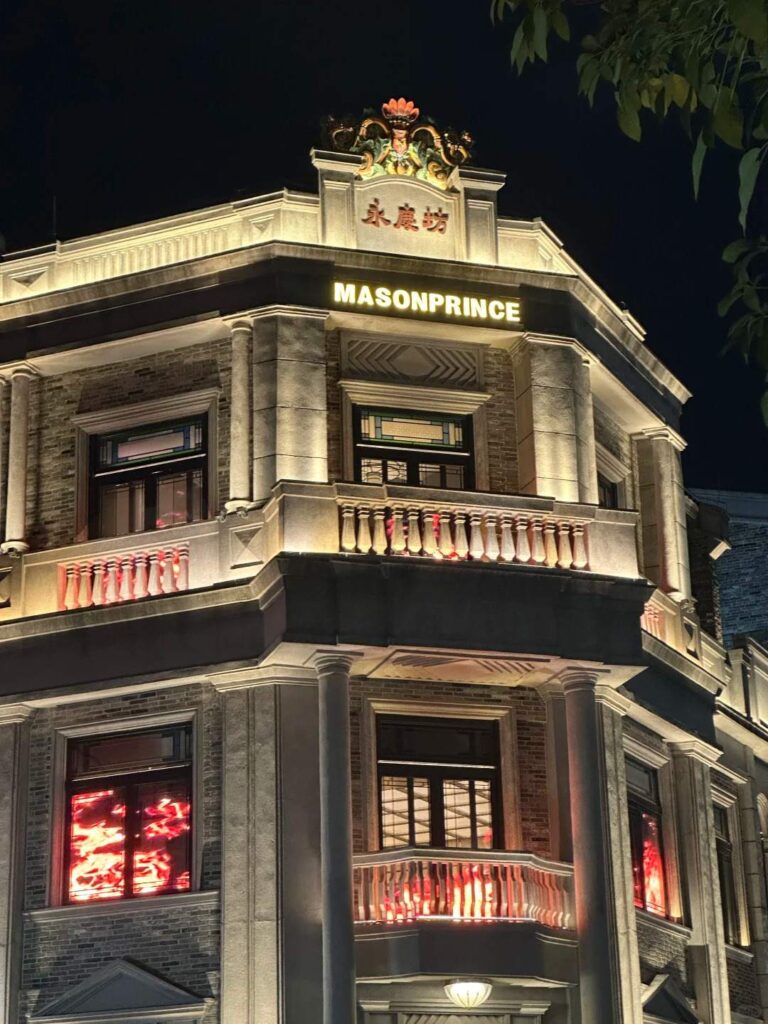
When you need a break from the main street, turn into the smaller lanes and browse the little shops, which sell authentic home goods, accessories, and small gifts that are more personal than the usual tourist souvenirs.


Read More: Yongqing Fang – A Complete Travel Guide
Guangzhou Day 2 Itinerary: Beijing Road, Dafo Temple, and Canton Tower
A Local Morning in Guangzhou: Yixiang (驿巷) and Yum Cha
To get a feel for Guangzhou, start where locals start their day. The Yixiang (驿巷) and Longjin Market (龙津市场) area of Liwan is where many locals shop for groceries, have breakfast, and begin their days.
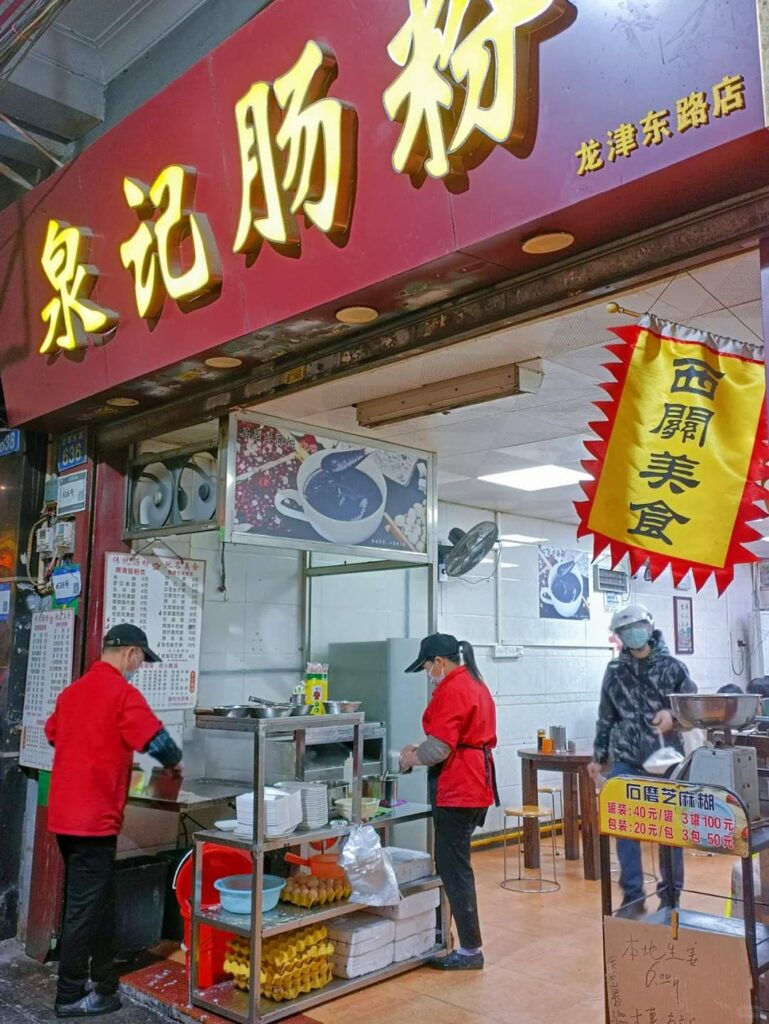
Quanji Rice Noodle Rolls (泉记肠粉)
This rice roll shop in Yixiang still does things the old way, making fresh rice sheets every day from stone-milled rice batter. The sheets here aren’t the thinnest or most translucent, but they have a good texture and you can really taste the rice.
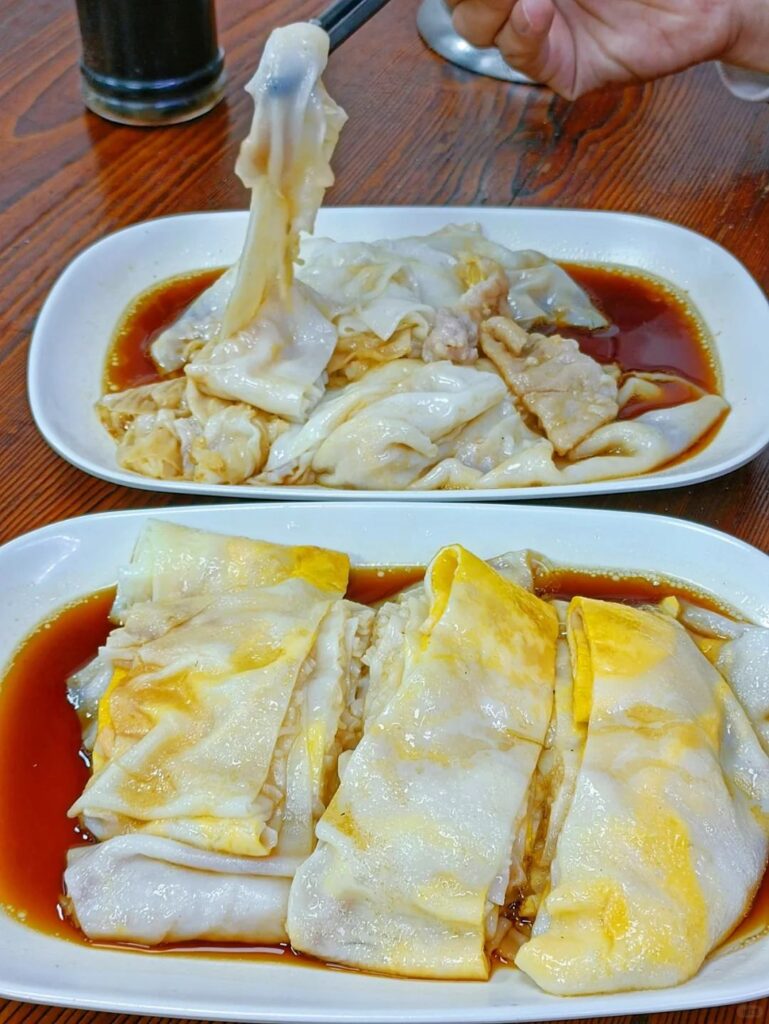
What really stands out is the soy-based sauce poured over the rolls, which is rich with peanut oil and a nutty flavor.
Huangji Rice Cakes (黄记米糕)
This traditional dessert shop near Longjin Market specializes in miba, a griddled rice cake, along with other soft rice cakes.
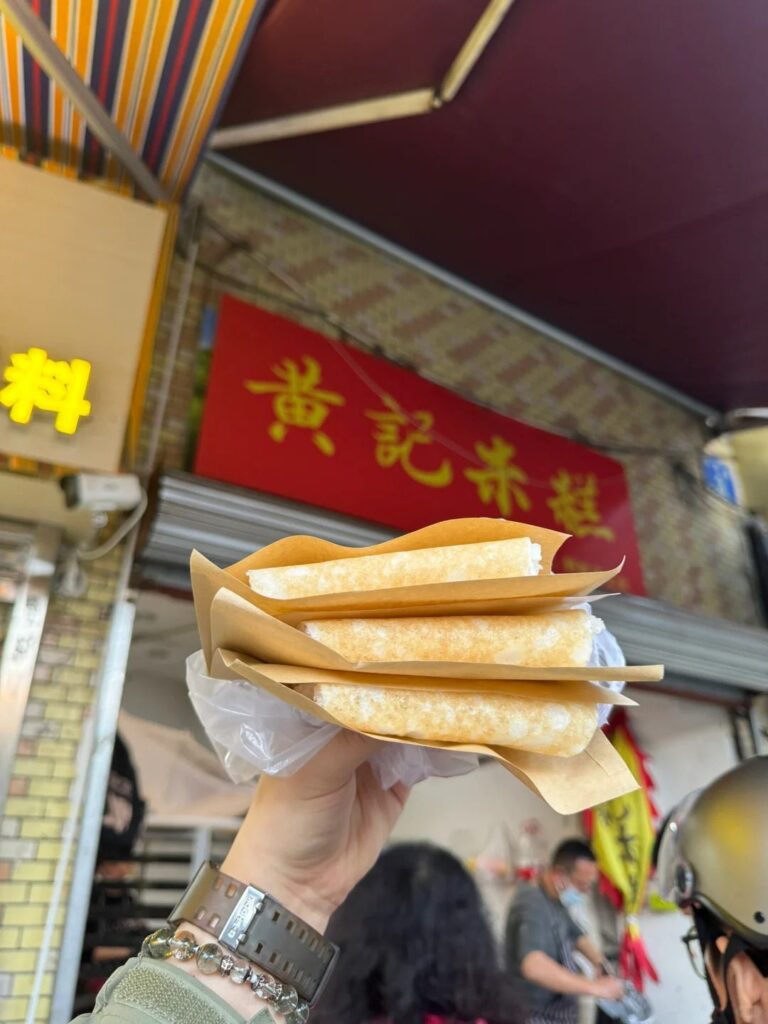
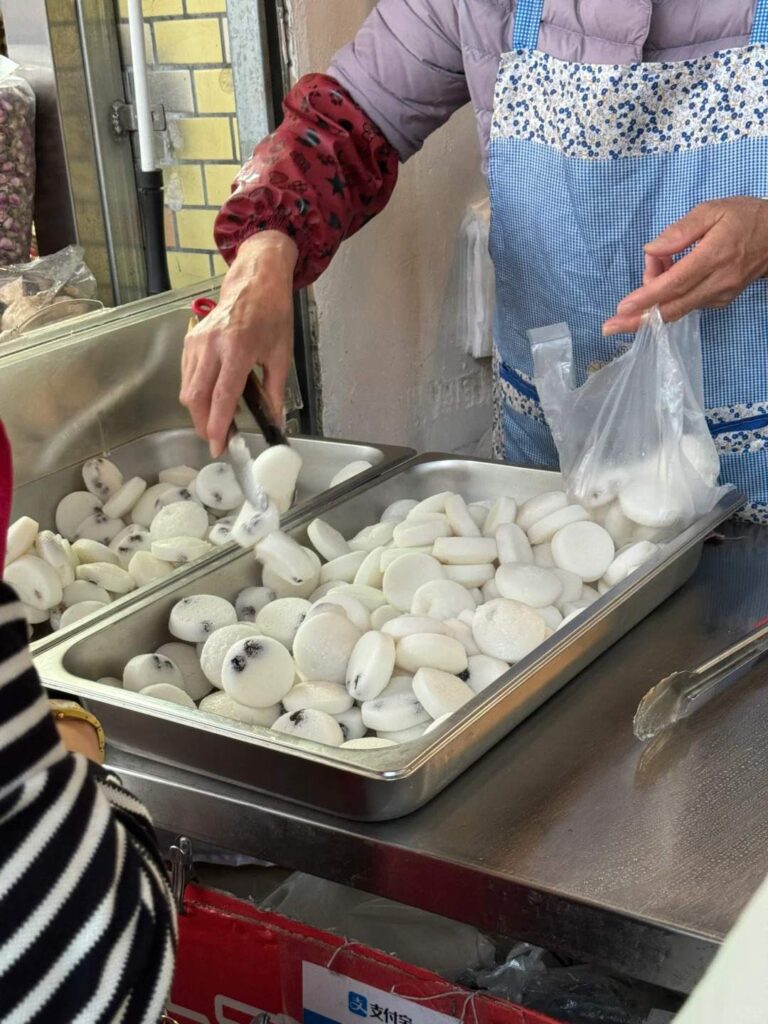
Miba is made from rice batter cooked on a large flat griddle until it sets into a round, lightly crisp cake with toasted edges. The texture is somewhere between a soft steamed rice cake and a crisp-edged griddle cake. The other rice cakes are smaller and more delicate.
Dian Dou De – Dacha Lou location (点都德)
For a taste of old Guangzhou life, start with morning tea. Founded in 1933, Dianduode is a classic place to sit and enjoy the typical Guangzhou yum cha routine: a pot of tea and a few baskets of dim sum. Even though it’s a busy chain, the dim sum here is consistently good.
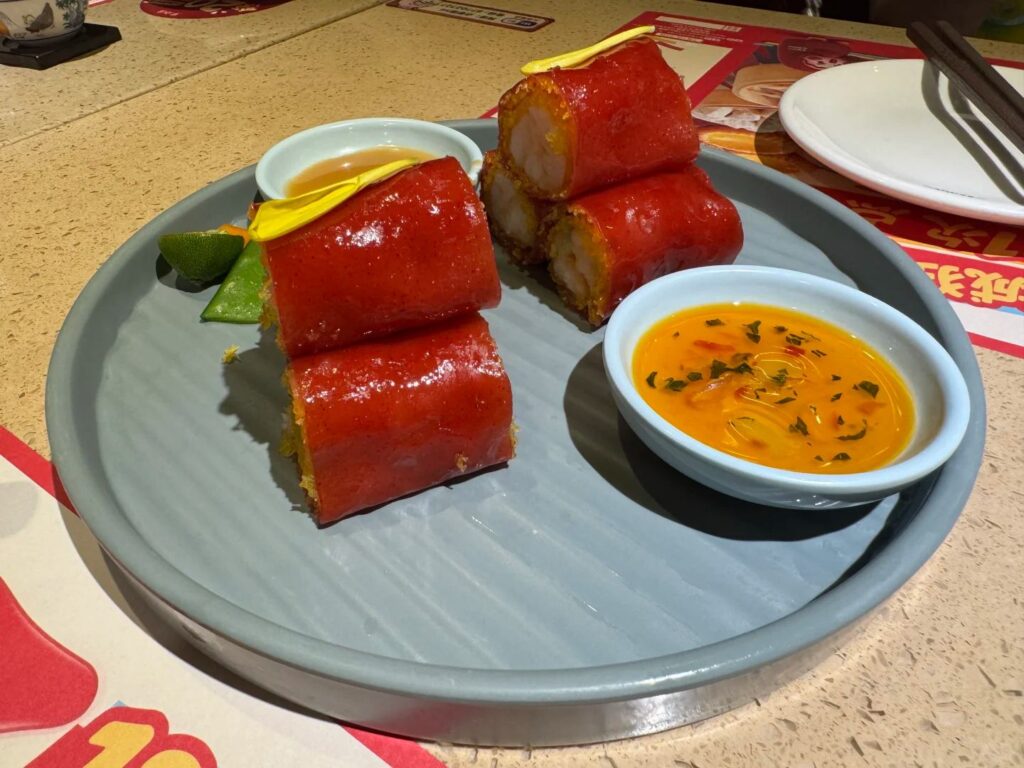
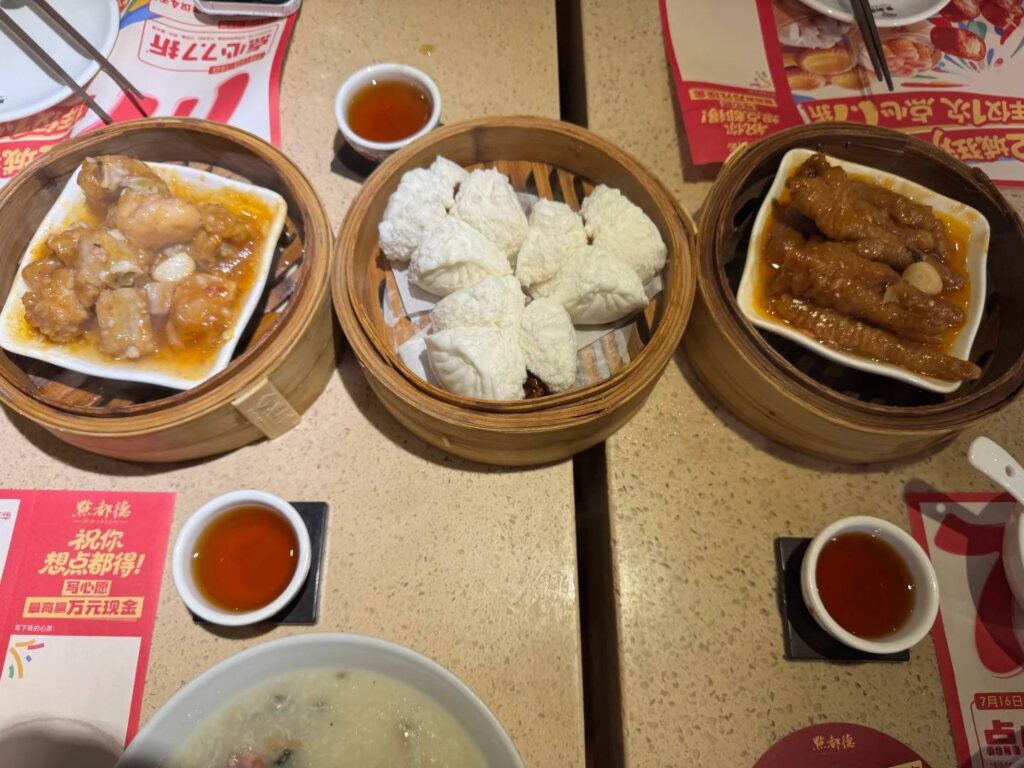
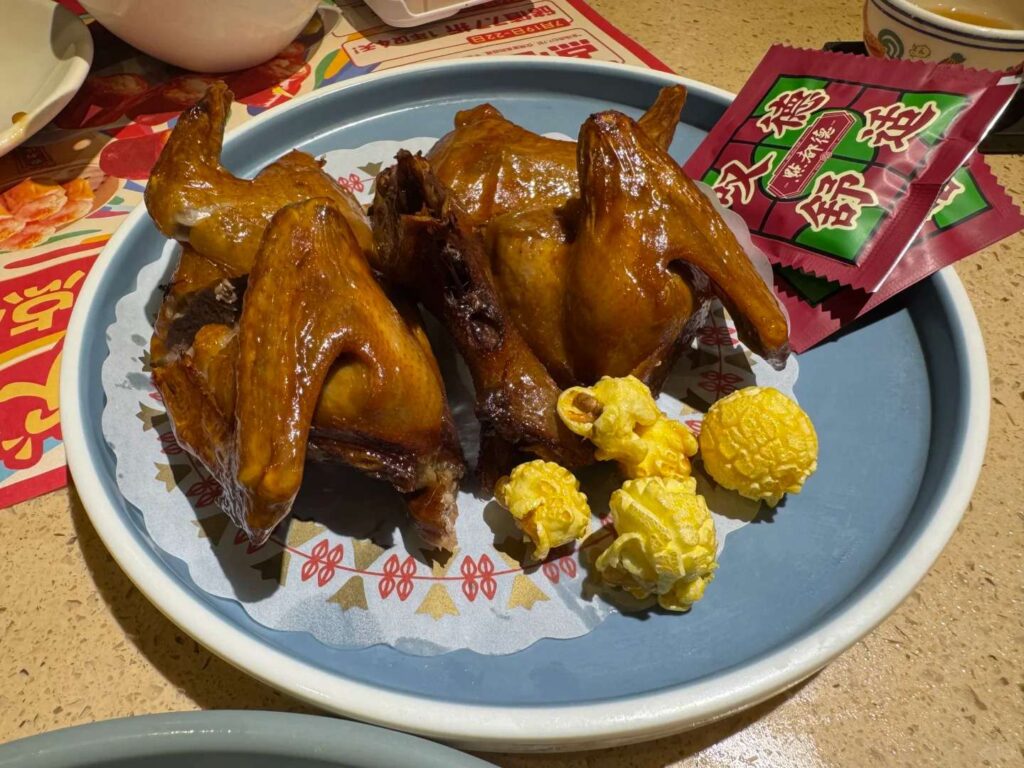
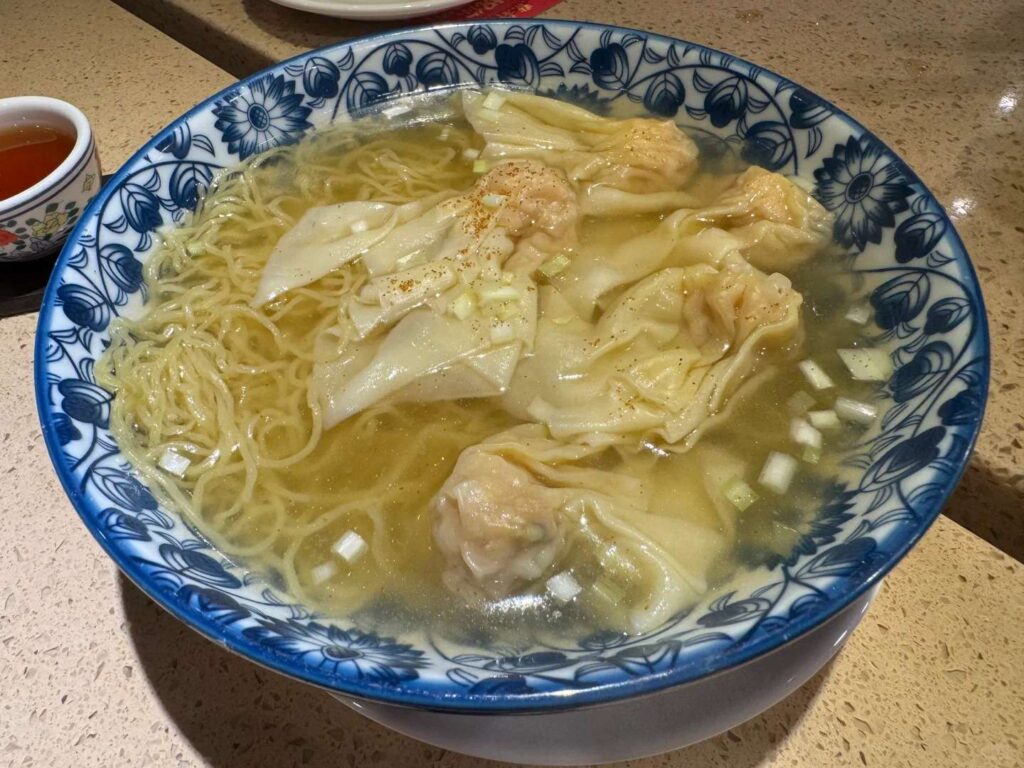
The Longjin Middle Road location also features Lingnan design, with traditional Manchurian windows, patterned floor tiles, and birdcage-style lamps. Walking in feels like stepping into the living room of an old Xiguan mansion, which makes the yum cha experience feel even more authentic.
What to order: signature har gow, shrimp siu mai with flying fish roe, and crispy taro dumplings.
Beijing Road Pedestrian Street
Beijing Road Pedestrian Street is one of Guangzhou’s oldest shopping streets. The area is always lively, with modern malls sitting alongside old local shops. Beneath the glass panels in the pavement, you can still see sections of old road dating back to the Song, Yuan, Ming, and Qing dynasties.


Dafo Temple
Dafo Temple is right next to Beijing Road Pedestrian Street, but the noise of the shopping doesn’t disrupt the peace beyond the temple’s gate. Inside, you’re surrounded by incense and towering trees, which makes for a noticeable contrast to the crowds outside.
The temple’s history goes back more than a thousand years, to the Southern Han period. It was originally known as Xinzang Temple. Although it was destroyed at one point, much of the classic Lingnan layout you see today dates back to the Kangxi era of the Qing dynasty.
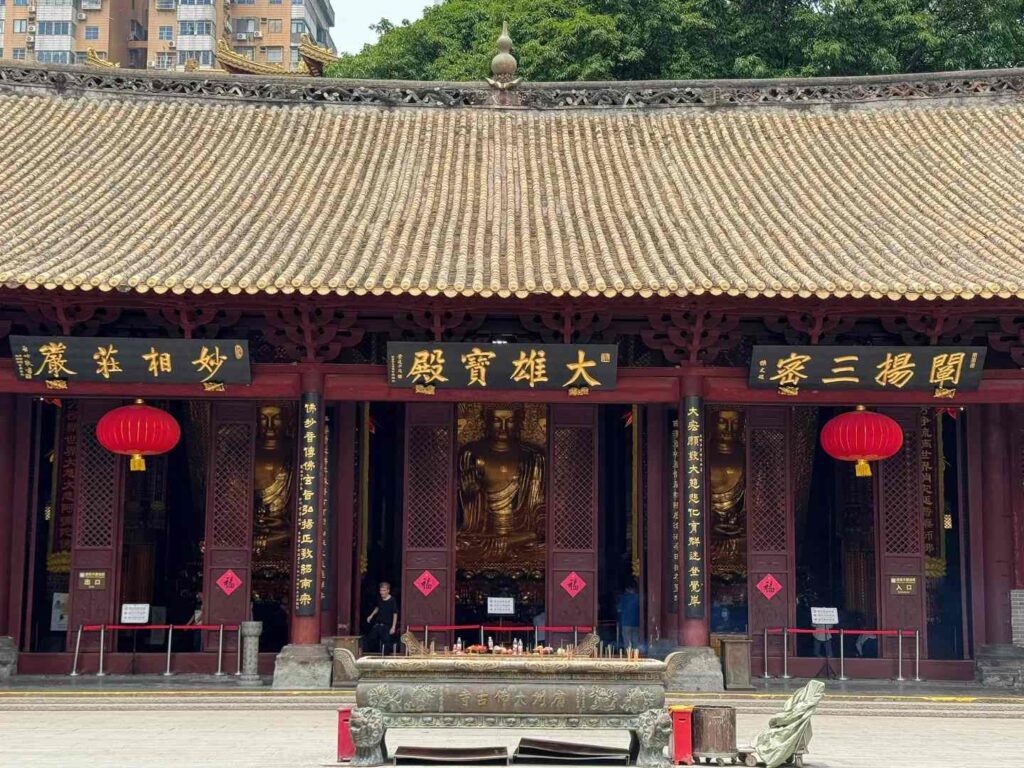
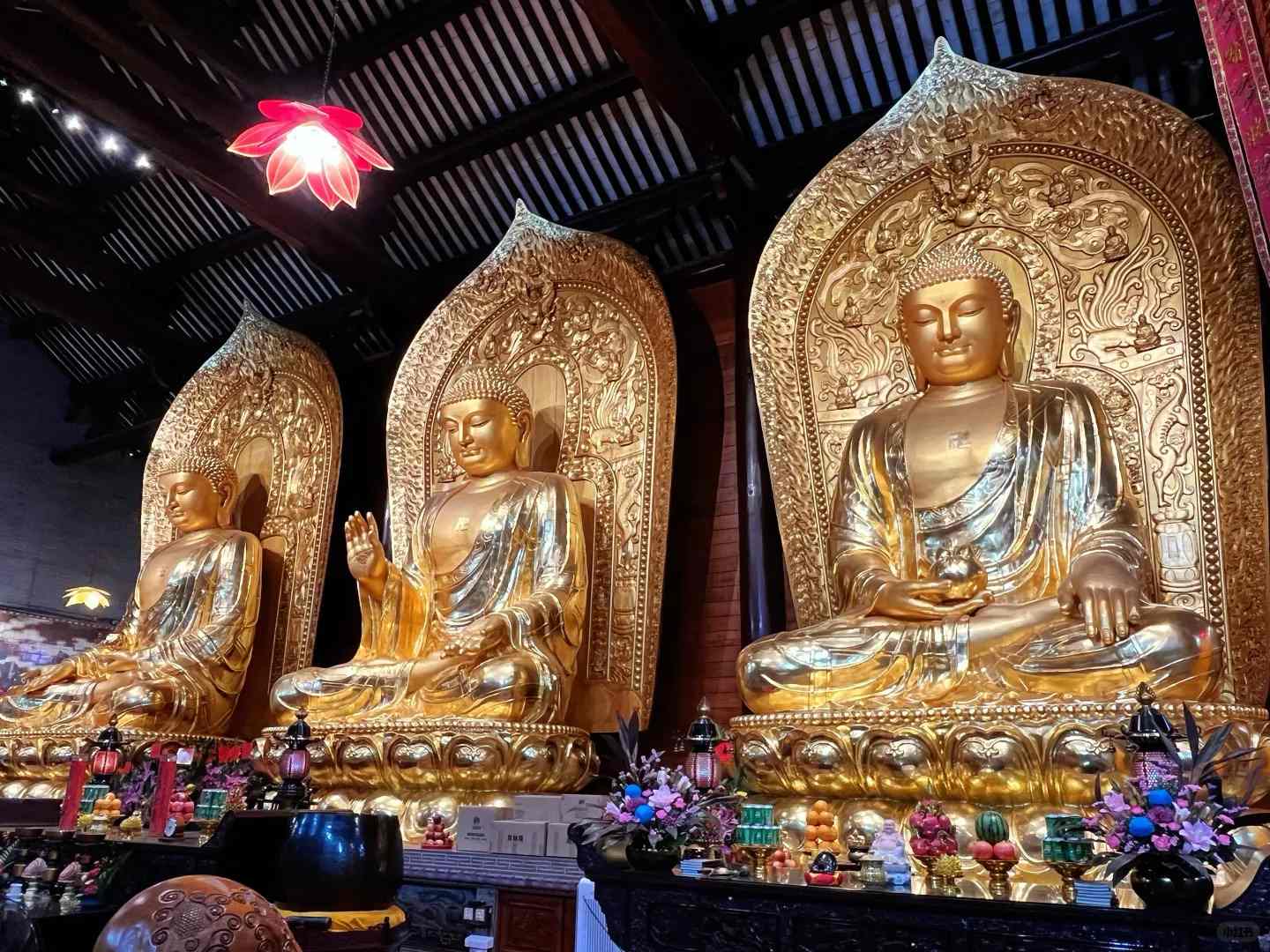
It later came to be known as Dafo Temple, a name inspired by the three massive bronze Buddha statues housed in the quiet Mahavira Hall, each standing around six meters tall.
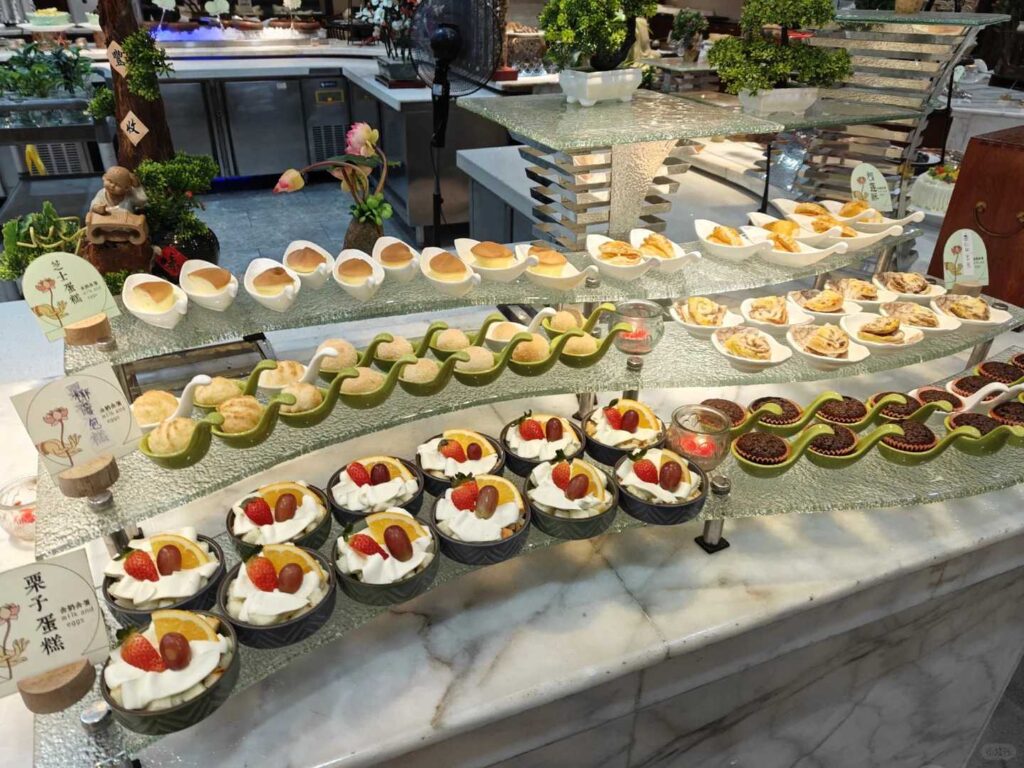
The buffet restaurant inside the temple has a wide range of food, spread across several sections. And if you’re a vegetarian, it’s had one of the best reputations in Guangzhou for years.
You’ll find appetizers, Chinese and Western-style vegetarian dishes, Japanese-style dishes, soups, desserts, and fruit. There are even vegetarian versions of some classic Cantonese dim sum dishes. In addition to the array of food, the restaurant is also enjoyable for its spacious dining area and calm atmosphere.
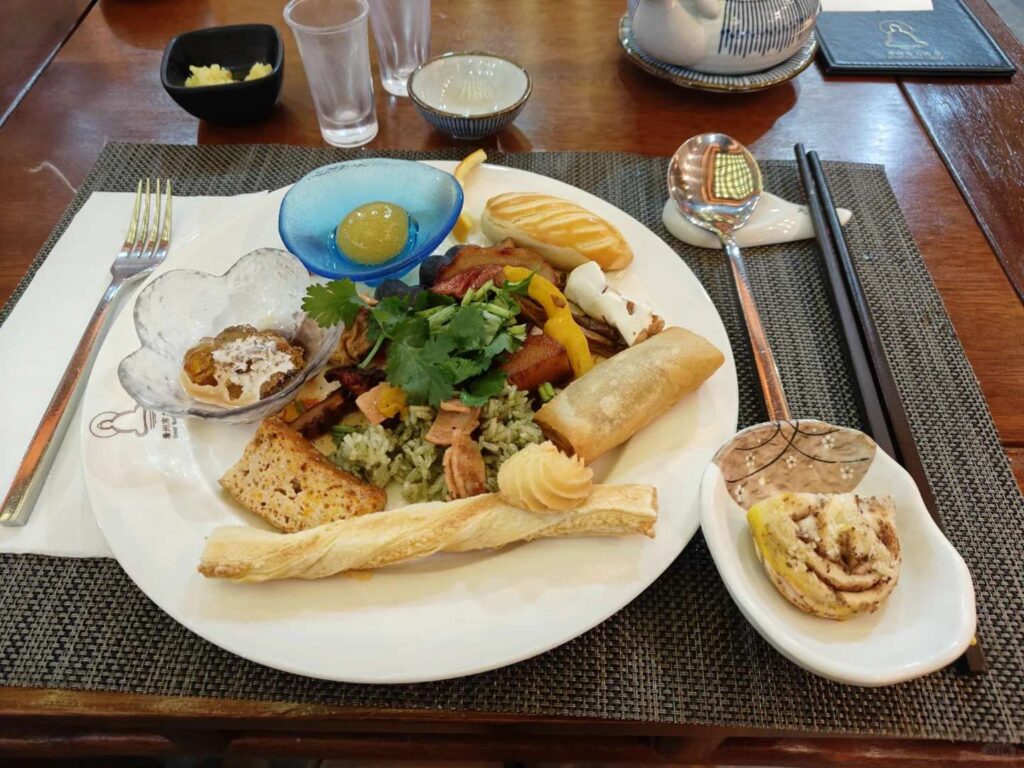
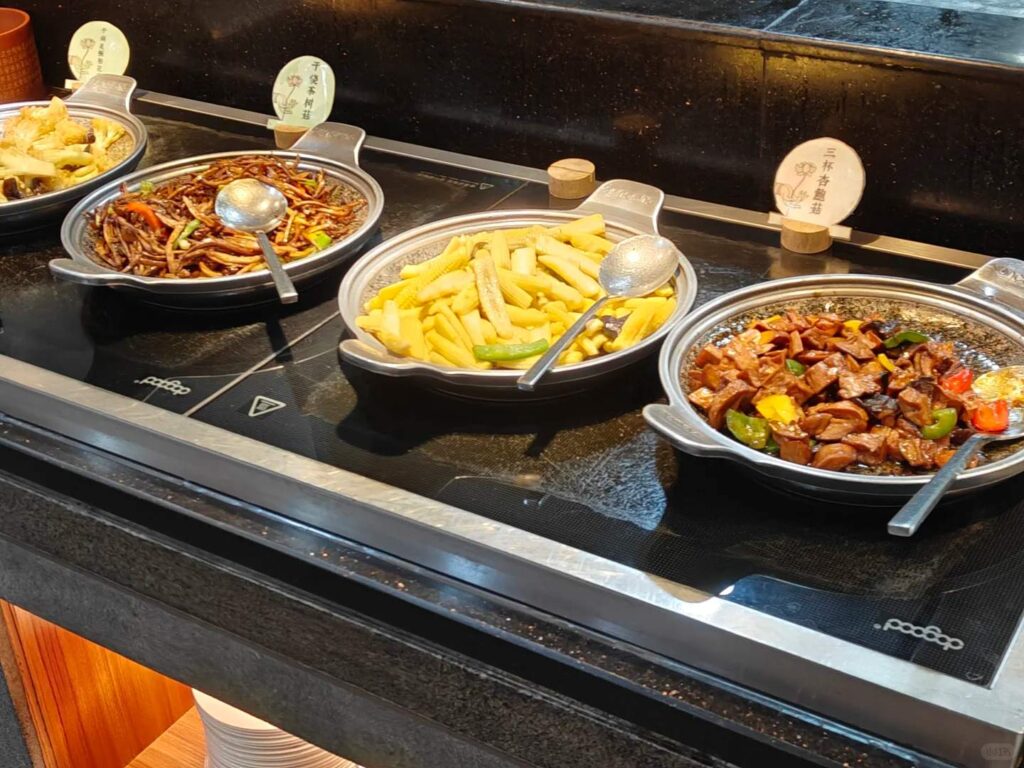
Sometimes they hand out oranges on the way out, which is a small but thoughtful gesture.
Afternoon Highlight: A Riverside Tram Ride to Canton Tower
From Beijing Road, take a taxi over to Wanshengwei Station. From here, you can spend the afternoon riding the Guangzhou tram along one of the Pearl River’s prettiest sections. The route is about seven kilometers in total.
Get on at Wanshengwei Station, and you’ll pass the high-rises of Zhujiang New Town along the way. Because the tram runs so close to the river, the ride feels like a moving observation deck.
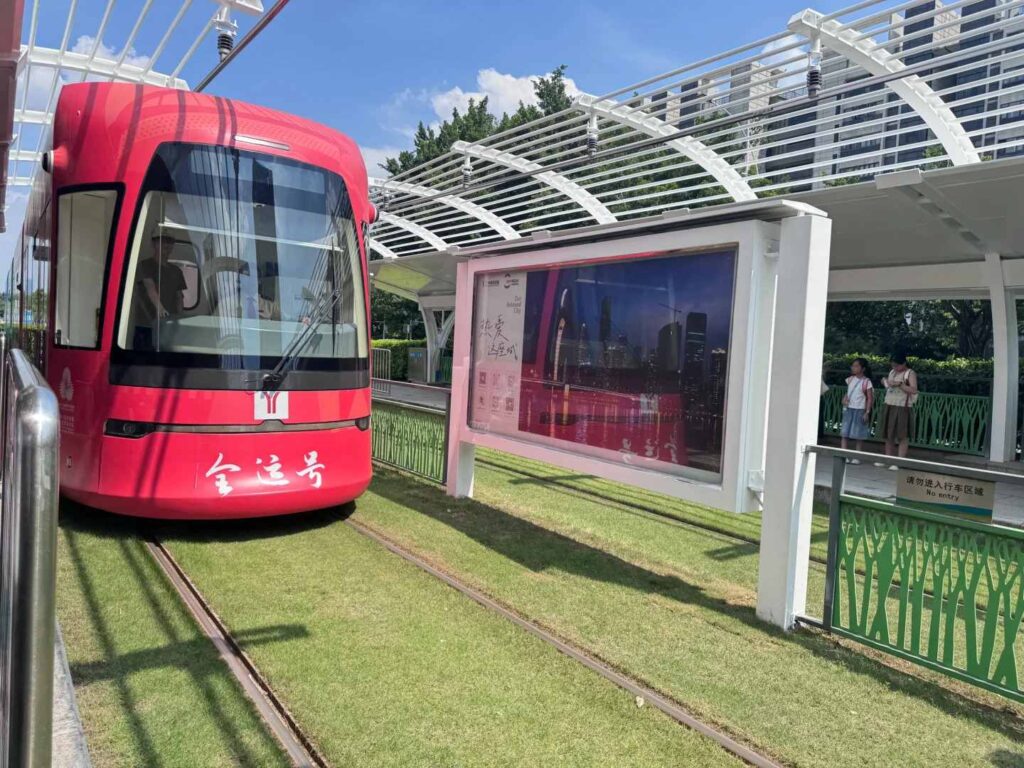
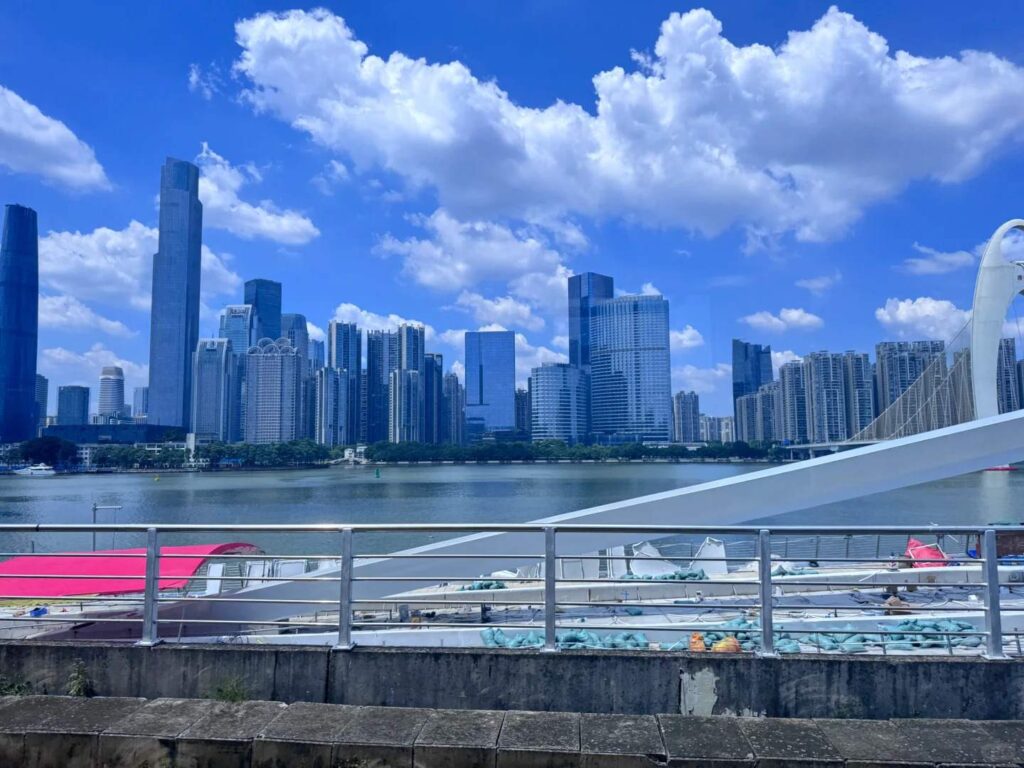
The ride ends near Canton Tower. At 600 meters, Canton Tower is China’s tallest TV tower. Its slim, twisting shape is hard to miss. If you’re interested in architecture, I definitely recommend reading up on the tower’s design before you go.
After getting off, walk over to Haixin Bridge. Its design is said to be inspired by guqin music and silk ribbons moving in the wind. The bridge looks like a ribbon stretched between the two riverbanks, and it gives you a clear view of both Canton Tower and Zhujiang New Town.

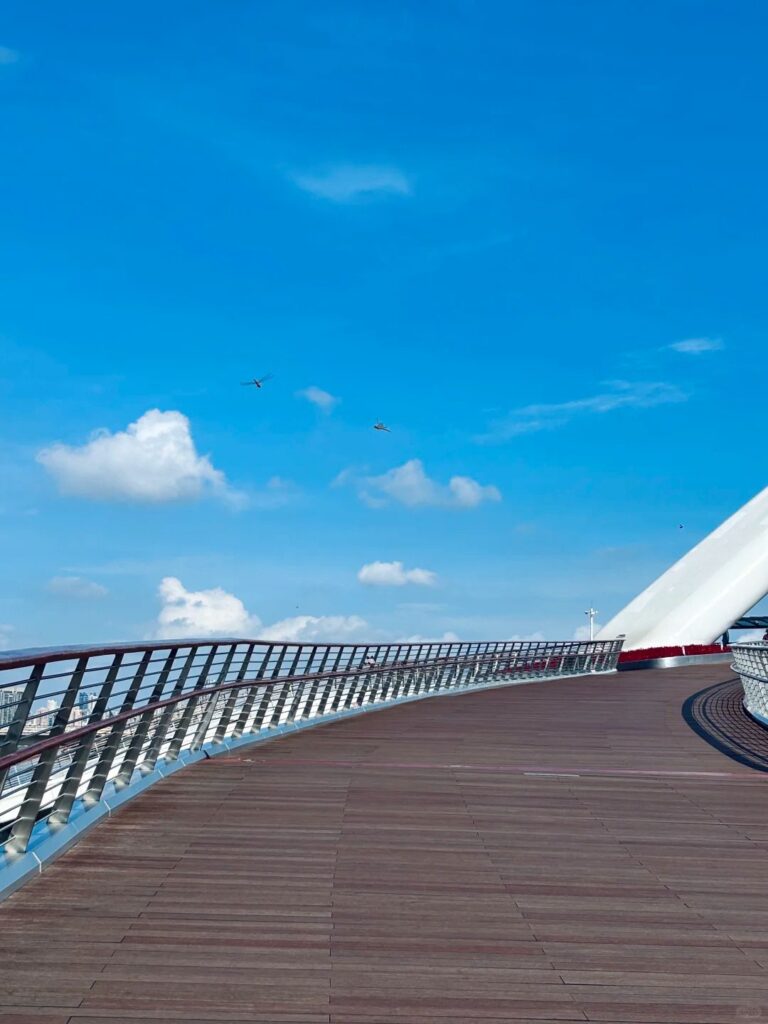
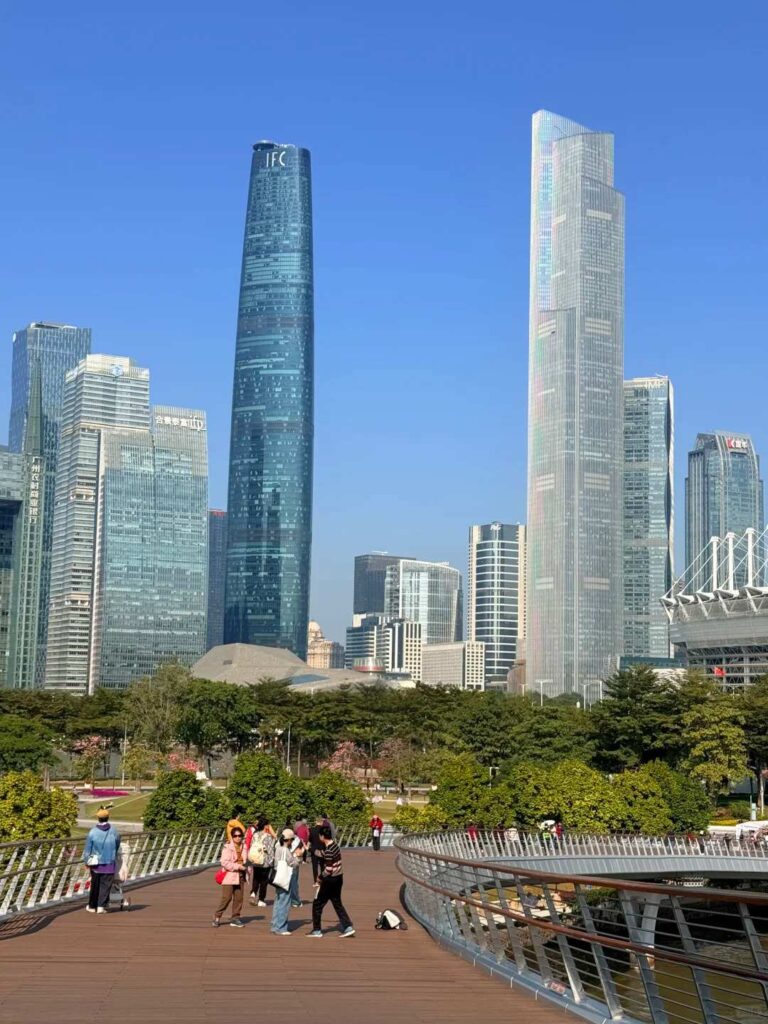
Since I was short on time during my visit, I just appreciated Canton Tower from the outside and enjoyed the skyline views from the tram and Haixin Bridge. For me personally, taking photos from the outside and walking along the Pearl River was enough for me.
That said, if you have more time and want the classic experience of going up Canton Tower, get a ticket for the observation deck and look out over Zhujiang New Town. At night, a Pearl River cruise is another popular way to see the city lights from the water.
Read More: Guide to Visiting Canton Tower
💡Canton Tower Tips: Observation Decks and Night Cruises
If you plan to go up Canton Tower or take a night cruise, know that ticket lines there can get pretty long. I highly recommend booking online, which not only saves time but often also gets you a better price.
🗼Canton Tower Observation Deck Ticket
Go up the tower if you want open views over the city. This option takes you up to the 480-meter observation deck, where you can also try some of the tower’s high-altitude attractions.
🚢Pearl River Night Cruise Ticket
A night cruise is a relaxing option, especially if you want to rest your feet. You’ll see Guangzhou’s skyline lit up from the water.
Evening in Tianhe: Dinner and Shopping
After Canton Tower, take the APM Line to Tianhe Sports Center South Station. Walk out of Exit A, and you’ll be right in Guangzhou’s busiest shopping district.
Tianhe isn’t just a typical shopping district; it has several huge malls packed into one area, making it feel like a city within a city. The area is huge, so it helps to follow this route:
Fashion Tianhe → Grandview Mall → Parc Central → TeeMall
Pro-tip: If you want to do this whole route without rushing, give it at least a full day. If you’re short on time, just pick one or two malls to visit.
If you want a mall that’s easy to navigate and has a good mix of brands, Teemall is a good choice. The AEON supermarket in the basement is a good place to buy souvenirs because it has a wide selection. Their flower-shaped egg tarts are also very good.
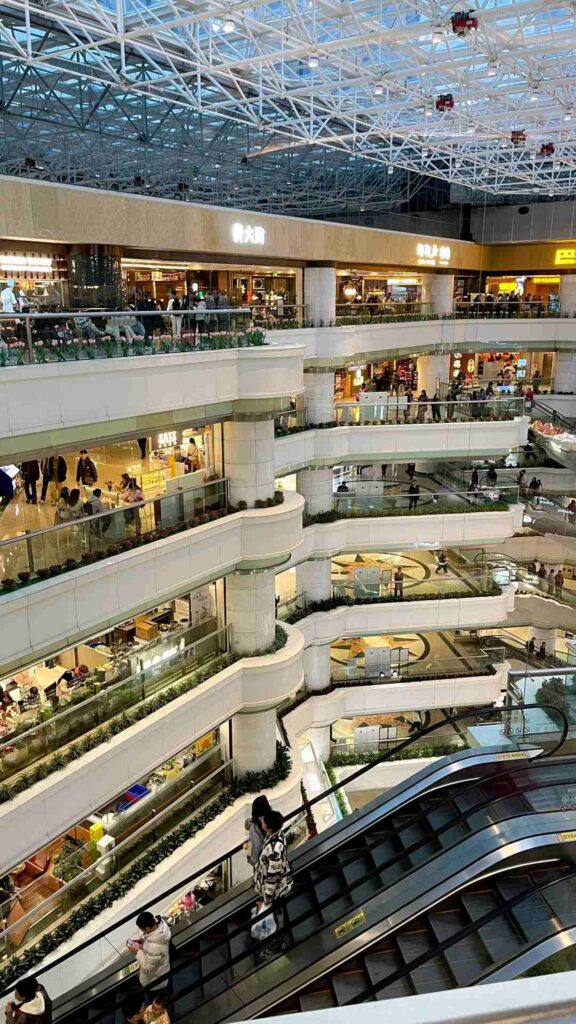
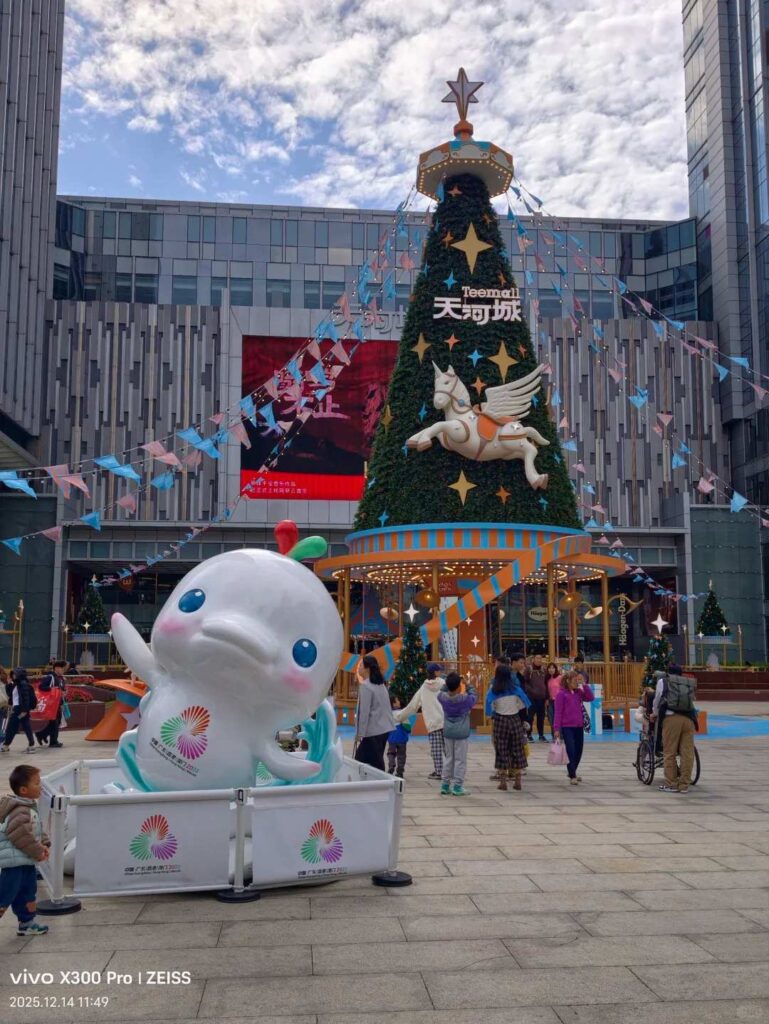
Parc Central is recognizable by its large plaza with fountains and greenery. Like many other places in the city, it looks particularly pretty at night when the lights come on. The shops here are primarily international luxury brands.
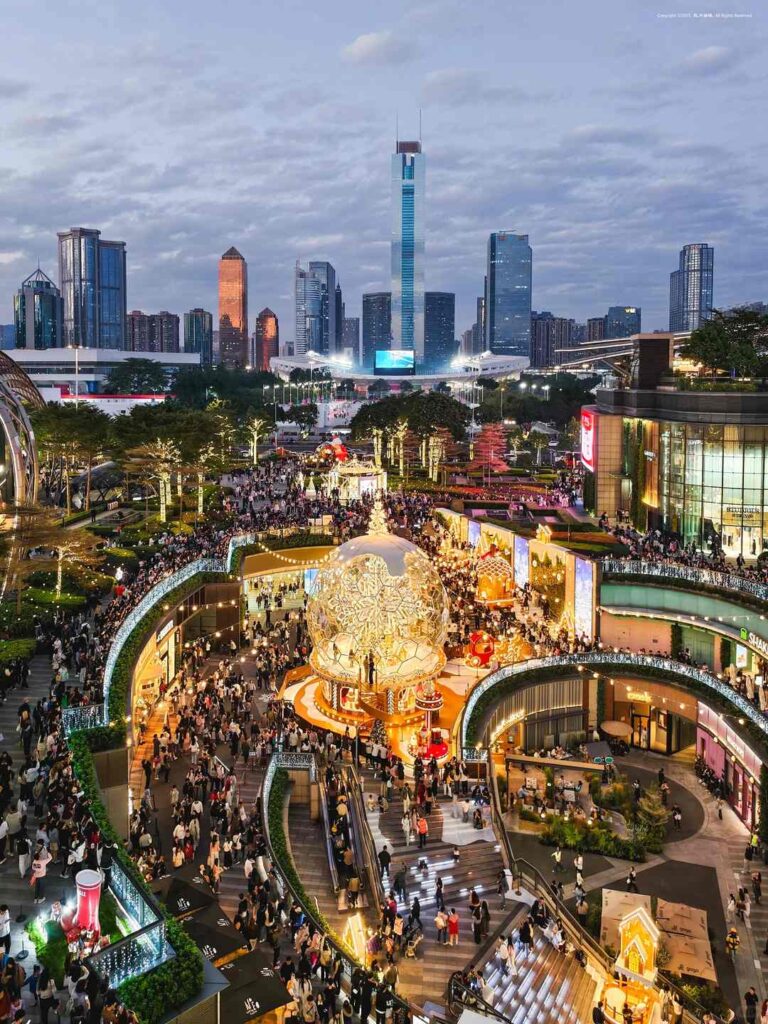
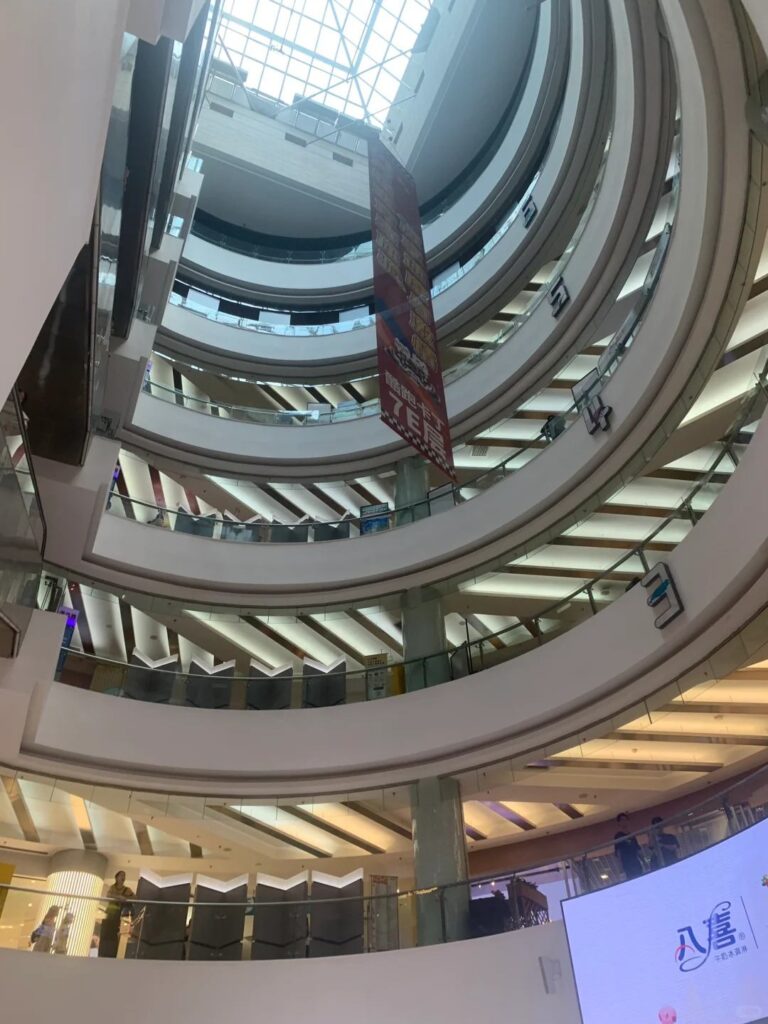
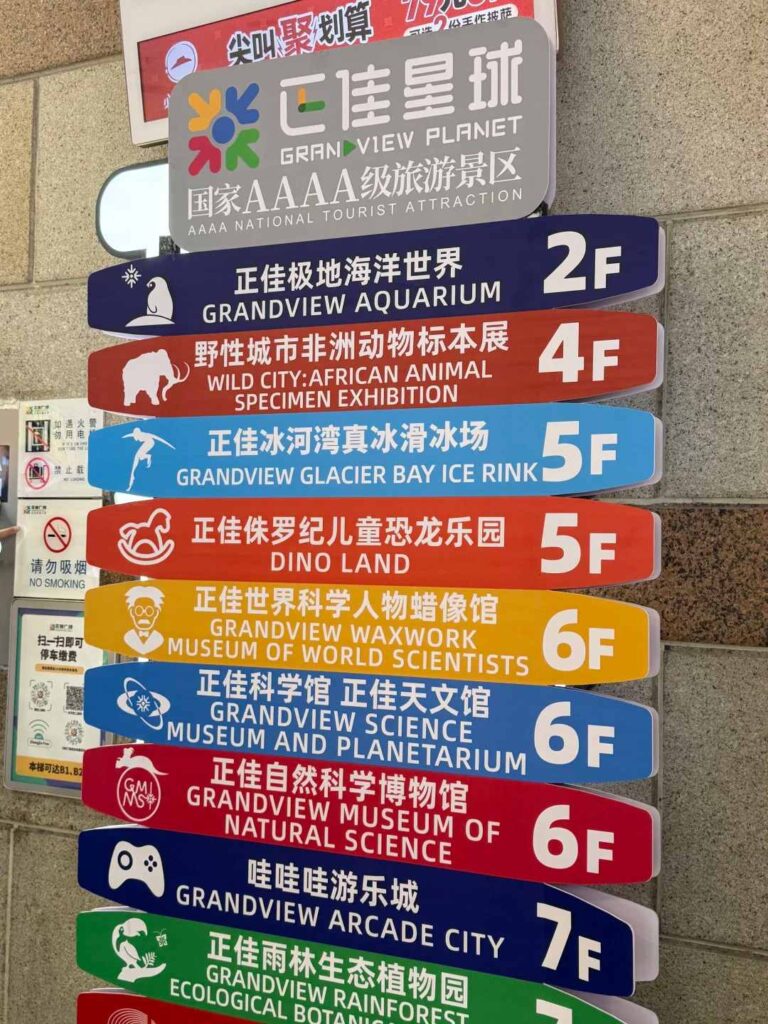
Grandview Mall is much more than a regular mall, with indoor attractions like the polar ocean world and the rainforest. It’s especially enjoyable if you’re visiting with kids, because there’s a lot to keep them entertained.
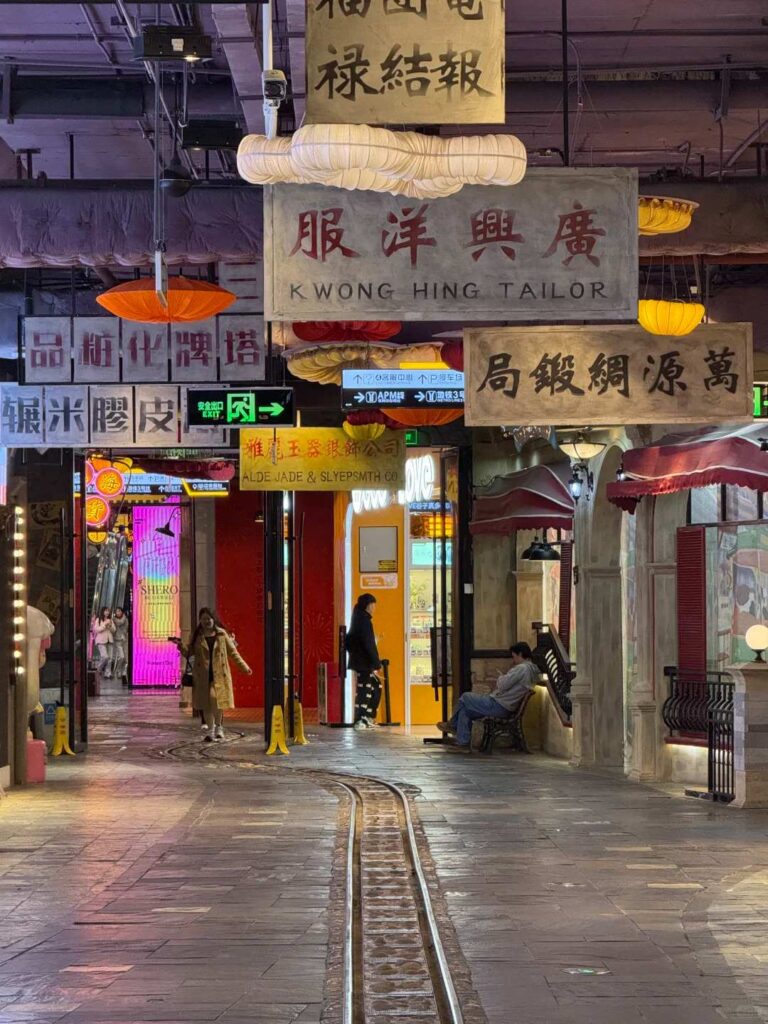
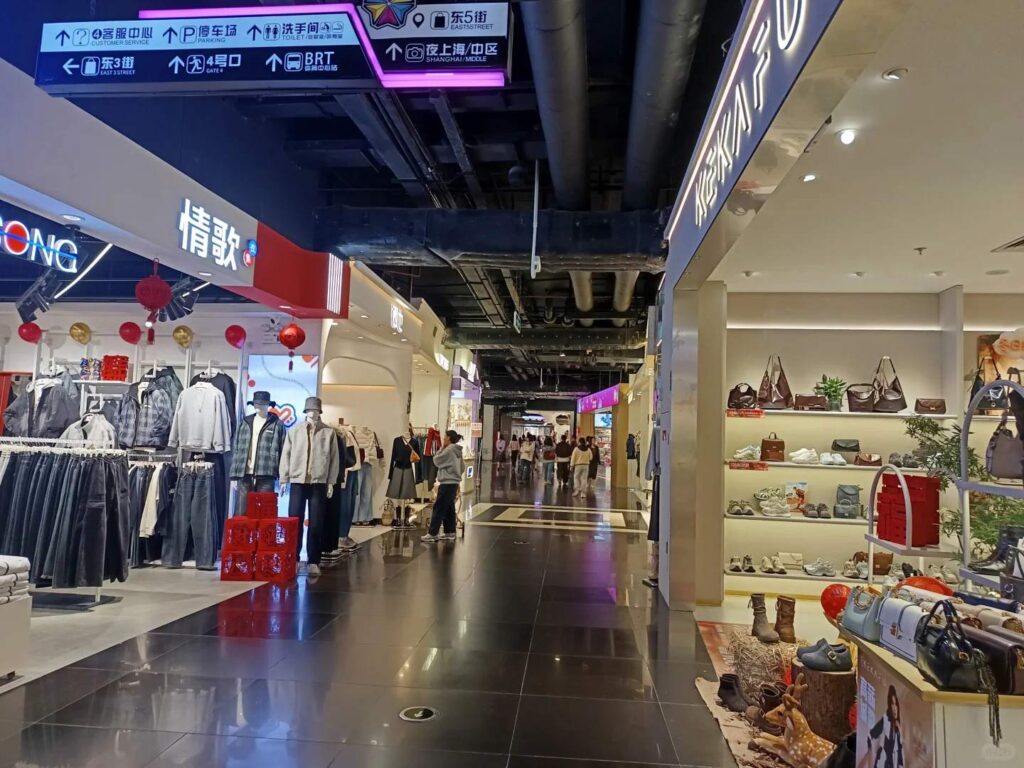
Fashion Tianhe is a huge underground space for shopping and hanging out, with a layout that kind of resembles a maze. Its retro style and neon lights give it a unique atmosphere that’s different from a traditional mall. Most of the shops here sell clothes, accessories, quirky gifts, and snack foods.
Dinner Pick: He Xiaodong Noodle House
Tianhe has no shortage of places to eat. If you want to avoid the usual chain restaurants, head to Tiyu East Cross Street (体育东横街) or the Liuyun neighborhood (六运小区). They’re about a 10- to 15-minute walk from the main shopping area, with small neighborhood restaurants, independent cafés, and places that feel more local. It’s also a popular hangout for young locals.
He Xiaodong Noodle House
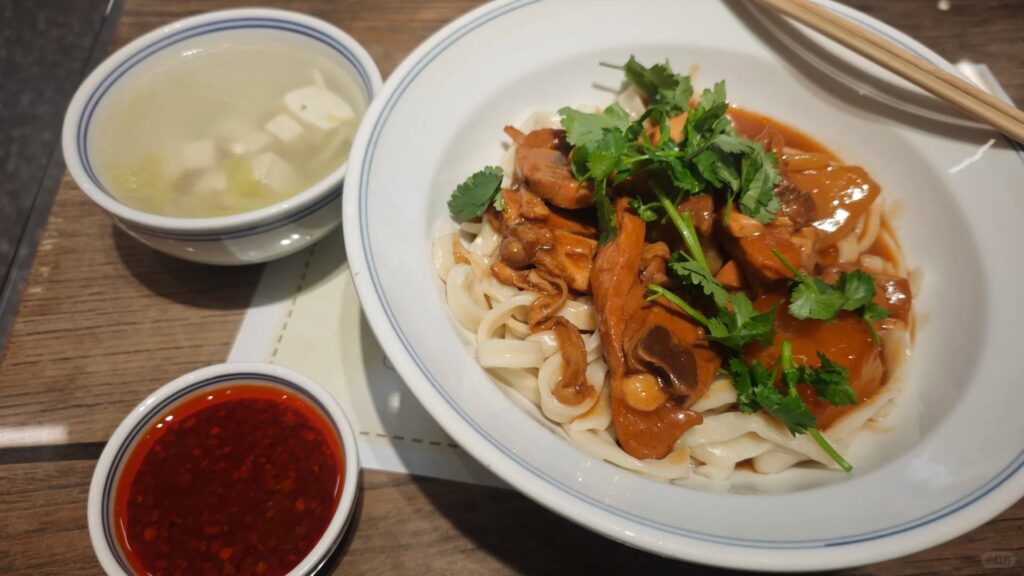
He Xiaodong Noodle House is one of the busier restaurants in the area. It specializes in Shanxi-style noodles and home-style dishes.
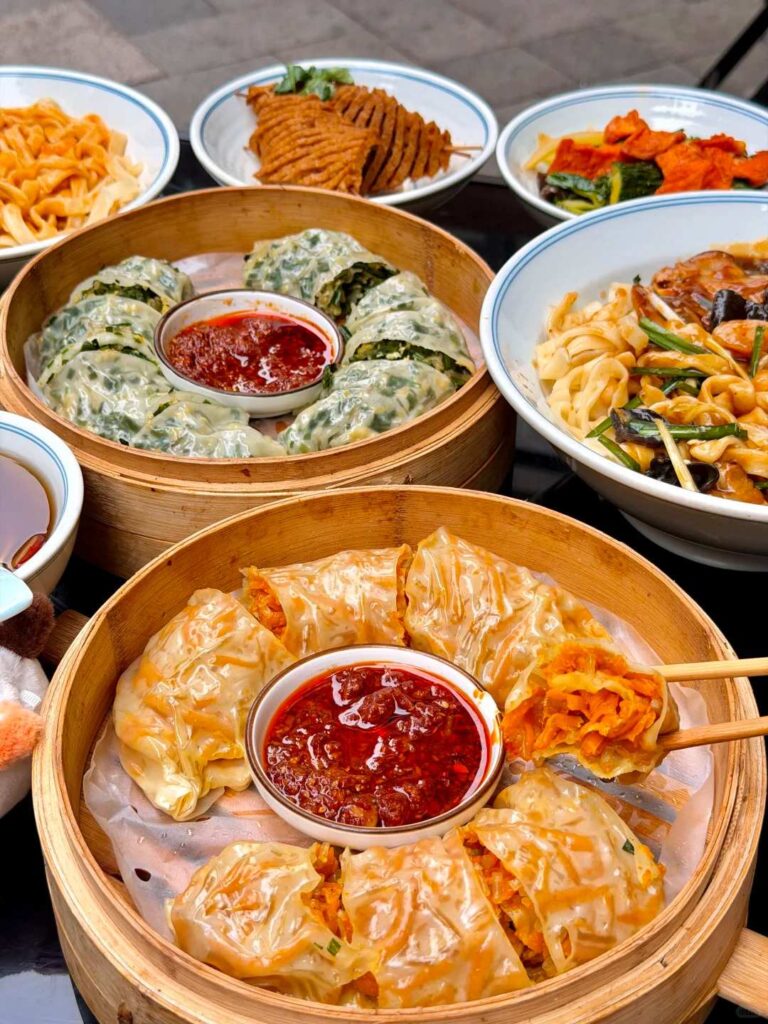
Their cailonglong, a Shanxi-style steamed roll with a thin wrapper and savory filling, comes with two meat-free options: chive and egg, or pumpkin. They’re not too salty or oily and there’s plenty of filling, so they feel light but satisfying.
The noodle dishes are tasty too, which have a good texture. If you’re a vegetarian, let the staff know.
For dessert, try the steamed yellow millet cake, a Shanxi-style sweet. It’s made with yellow millet, red dates, and red bean paste, then finished with osmanthus syrup. It’s sticky, sweet, and fragrant. This was my mom’s favorite dish—she finished one and ordered another to go!
Guangzhou Day 3 Itinerary: Shamian Island and Xiguan Culture
Much of Guangzhou’s old-city character is seen in the blue-gray bricks of Xiguan. You can also see the old city’s history along Yanjiang Road, where old stone columns and historic buildings line the river.
Morning: Sacred Heart Cathedral and Yanjiang West Road
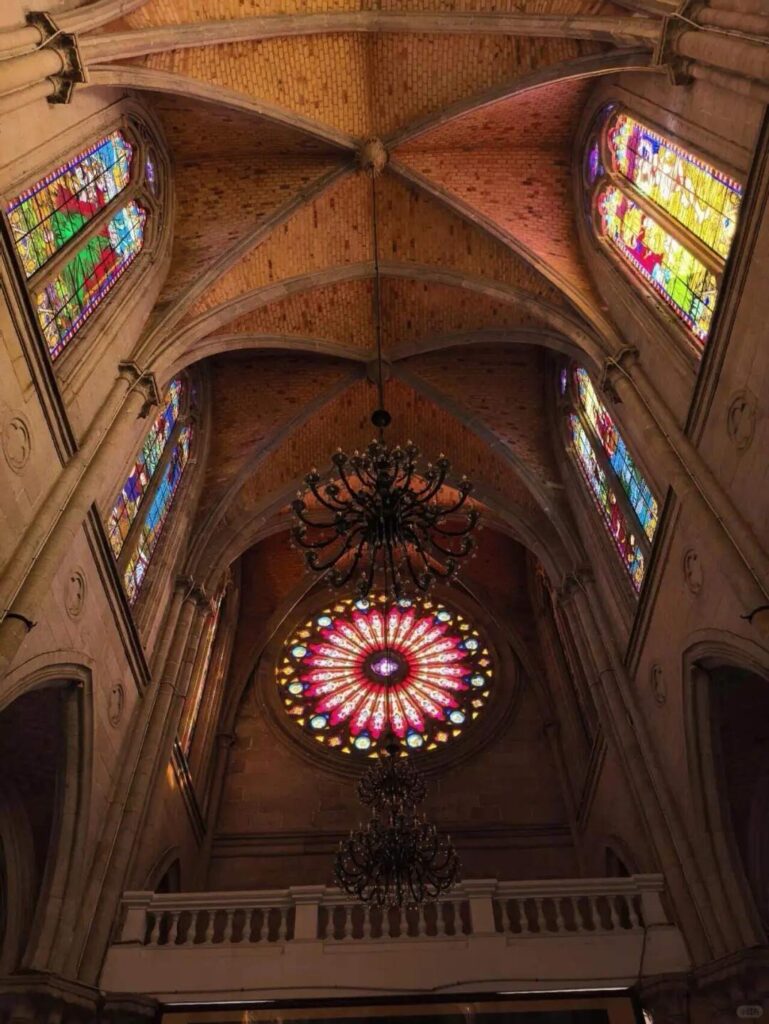
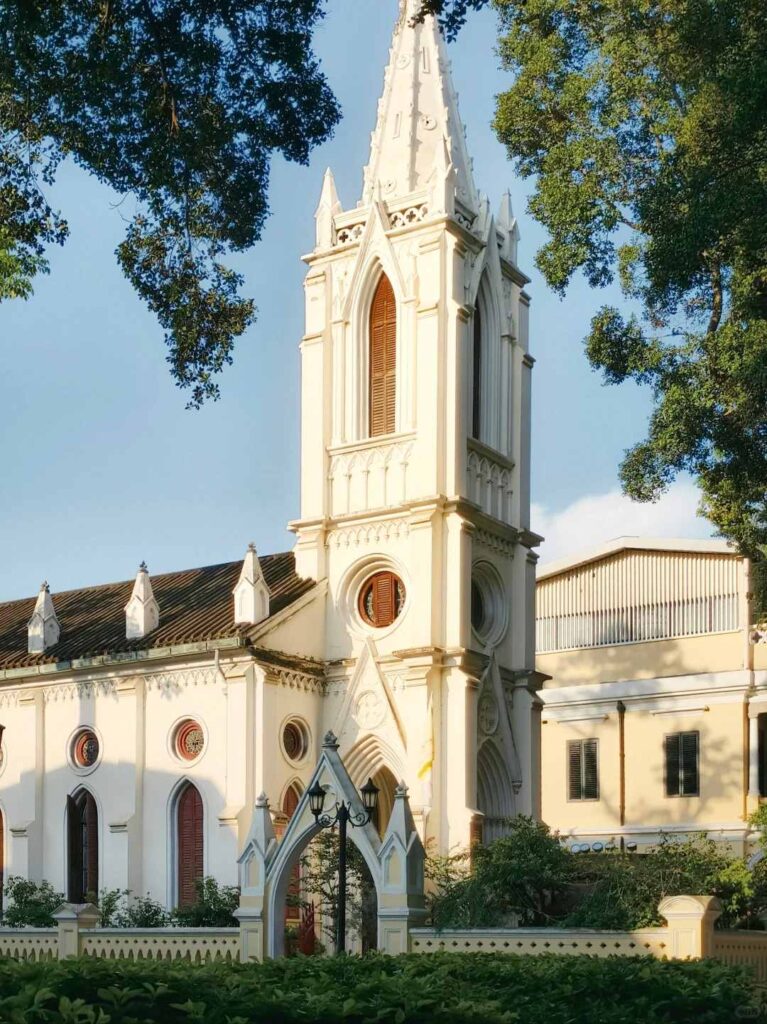
Guangzhou’s Sacred Heart Cathedral, also known as the Stone House Cathedral, is said to be one of the few Catholic cathedrals in the world built almost entirely of stone. Its twin spires rise high above the street, so it’s hard to miss it as you walk through the area. Inside, sunlight filters through the stained-glass windows and casts soft colors across the stone interior.


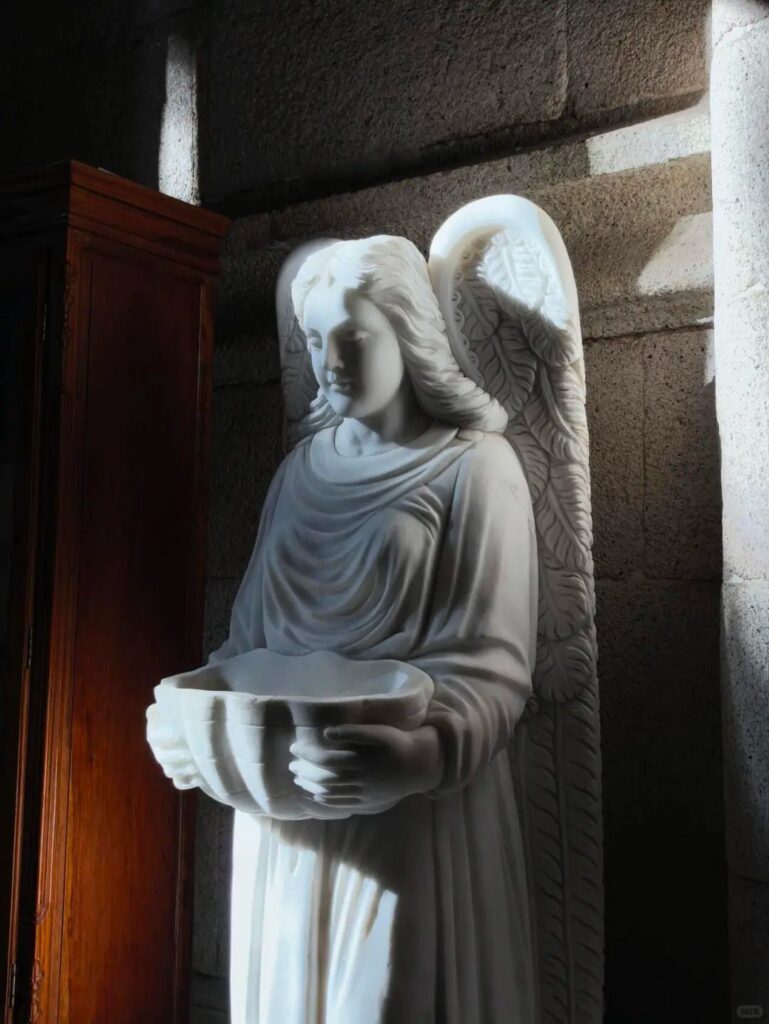
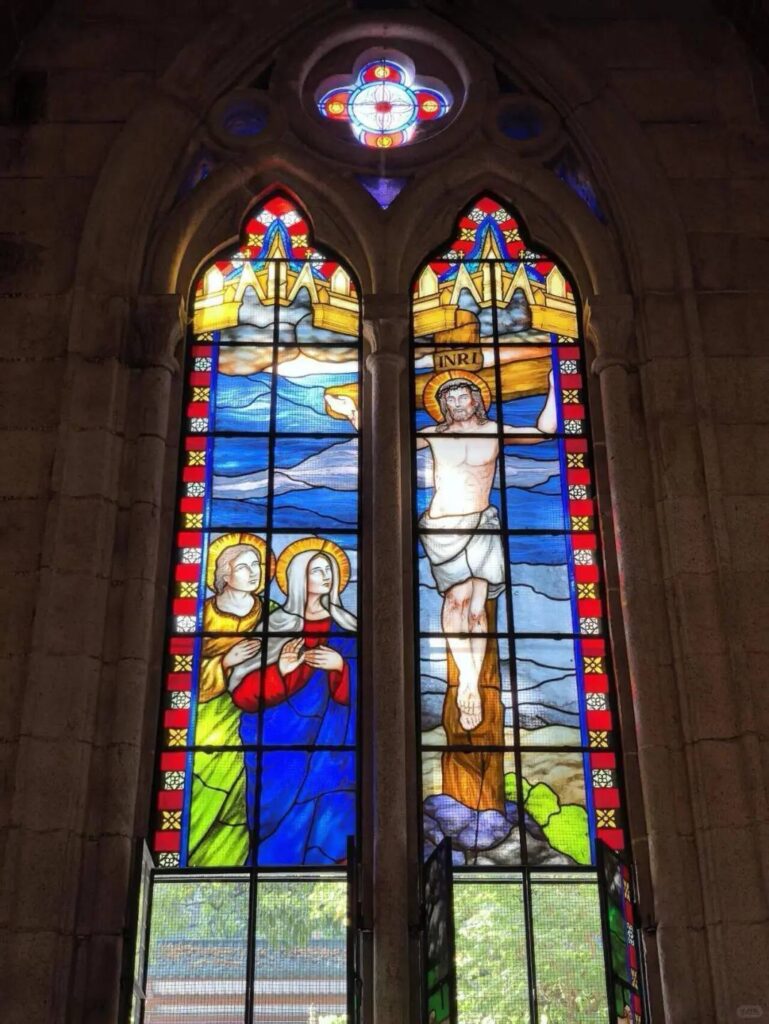
ℹ️ Sacred Heart Cathedral: What to Know Before You Go
- Tickets: Free, no reservation needed.
- Opening hours: Open Tuesday through Saturday with separate morning and afternoon visiting hours. Services are held on Sunday, so avoid visiting during worship times. Closed on Monday.
- Getting there: Take Metro Line 6 to Yide Road Station. From there, it’s about a 5-minute walk.
- Things to know: Take off hats and sunglasses before entering. Flash photography, selfie sticks, and tripods are not allowed.
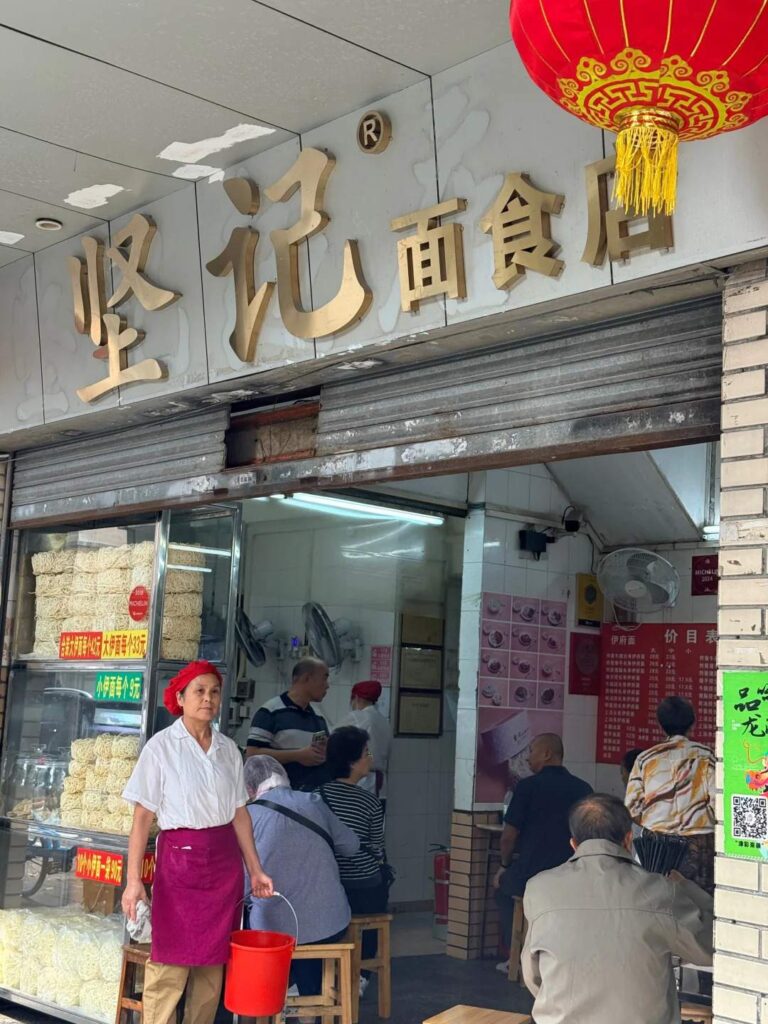
Breakfast: Jianji Noodle Shop (坚记面食店)
For breakfast, I’d head to Jianji Noodle Shop near the cathedral, an old neighborhood noodle shop that has appeared in the Michelin Guide for several years.
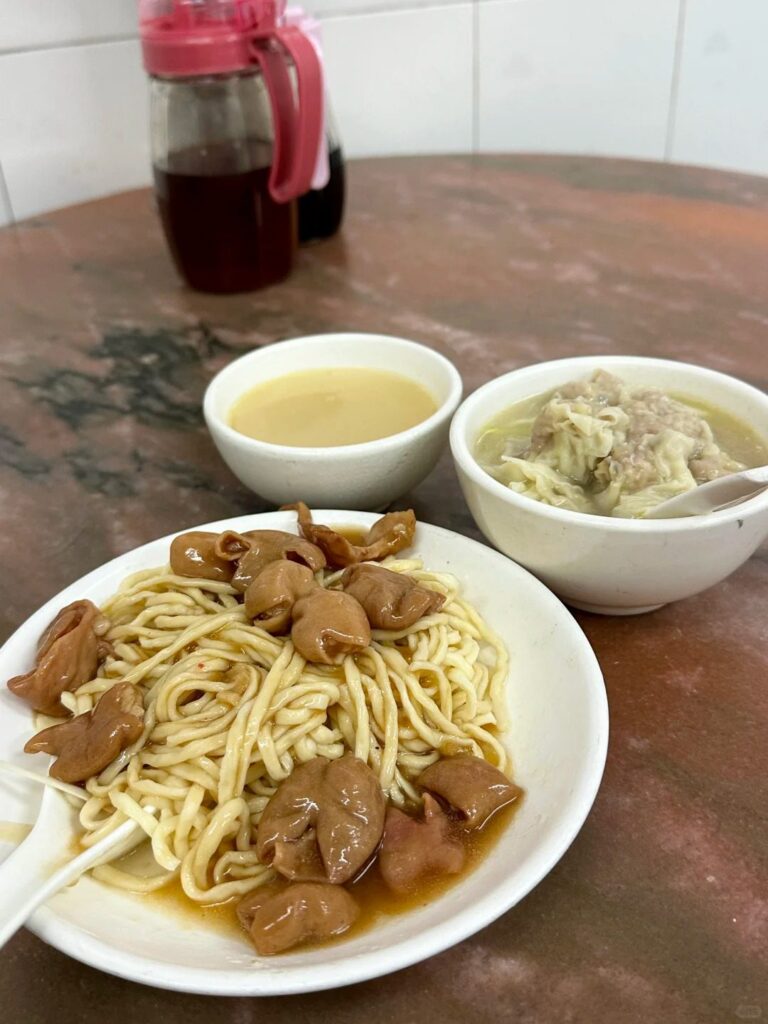
Order the classic longevity yi mein noodles (长寿伊面), which are thick, handmade noodles. The beef brisket is braised until tender, and the wontons are very savory. It’s a great place to get a taste of old-school Xiguan noodles.
Yanjiang West Road
After breakfast, head toward Yanjiang West Road for an easy stroll. Here’s a simple route to follow:
- Aiqun Hotel: Once Guangzhou’s tallest building.
- Xinhua Hotel: A good place to see Guangzhou’s arcade-style architecture.
- Canton Customs House: The former Canton Customs building, now a nationally protected heritage site.
- Nanfang Building: Built in 1922, it’s one of early modern Guangzhou’s landmarks.
- Renmin Bridge: Connects Haizhu and Liwan districts. From the bridge, you can see Shamian Island and the Changdi waterfront along the Pearl River.
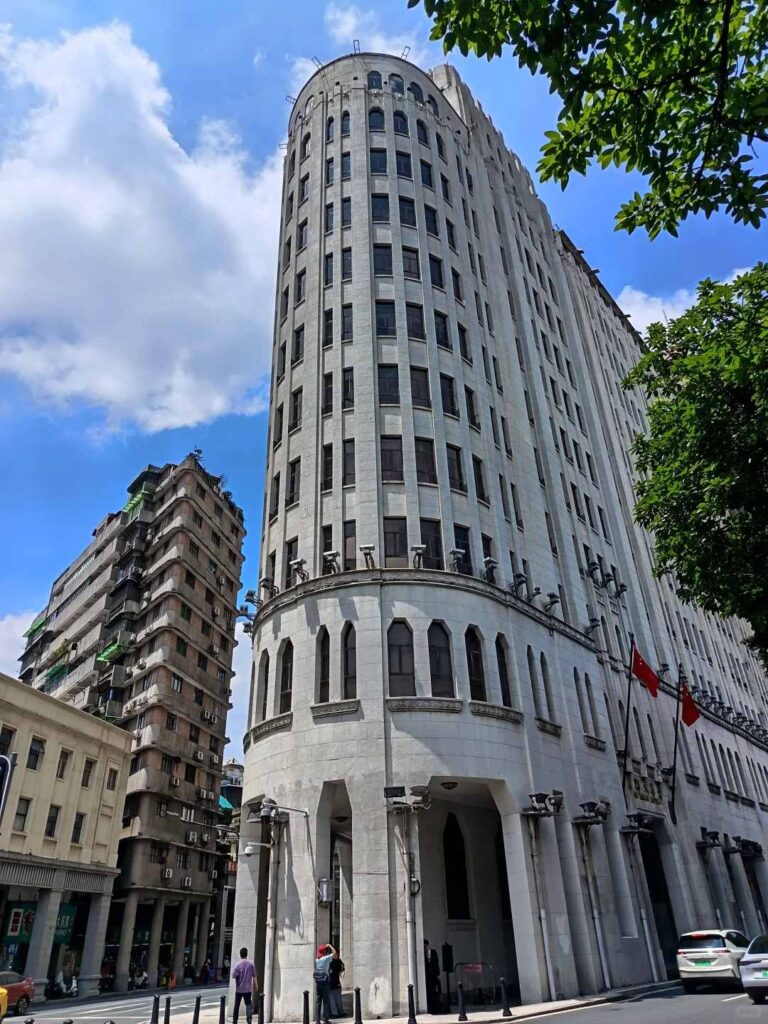
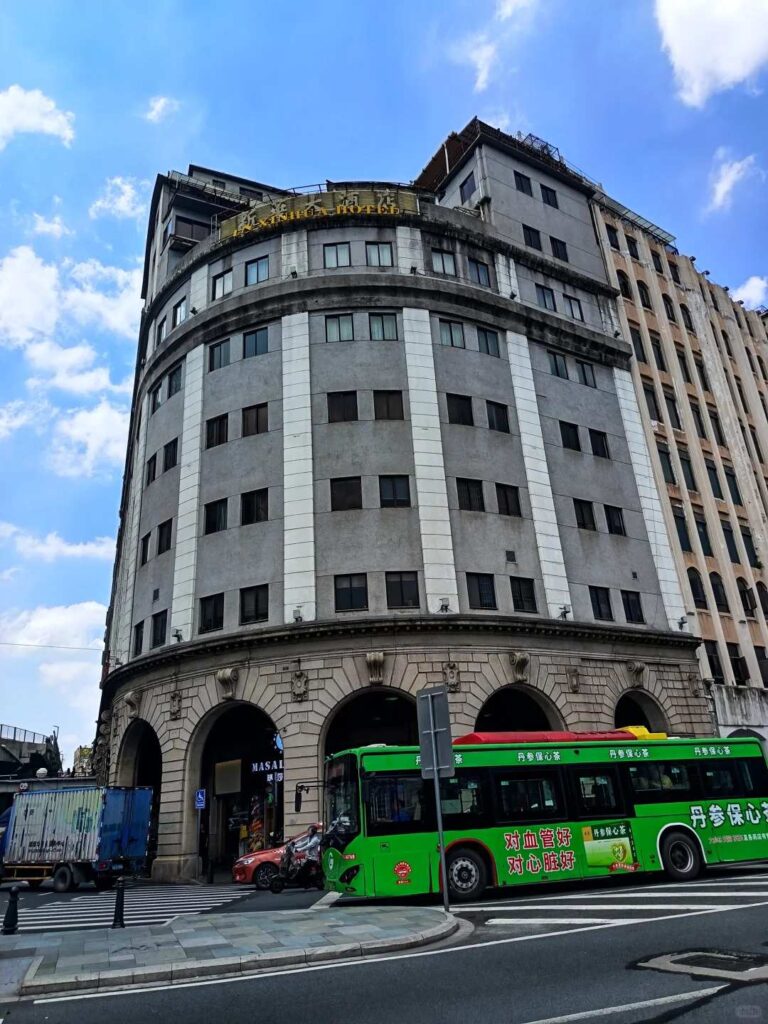
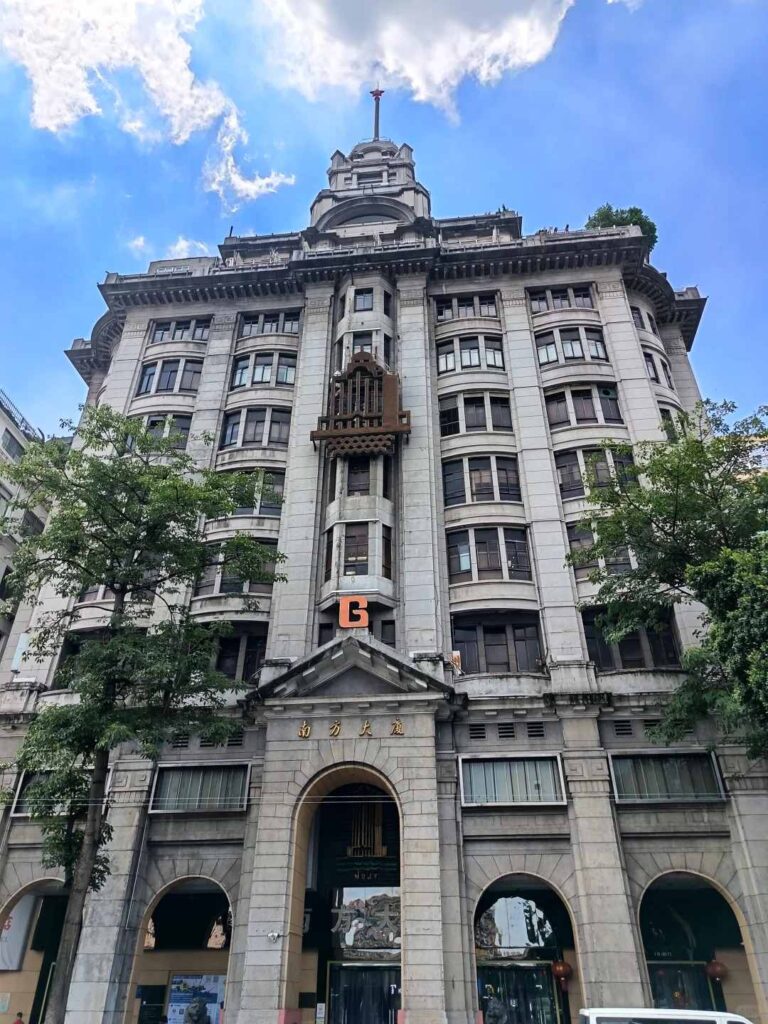
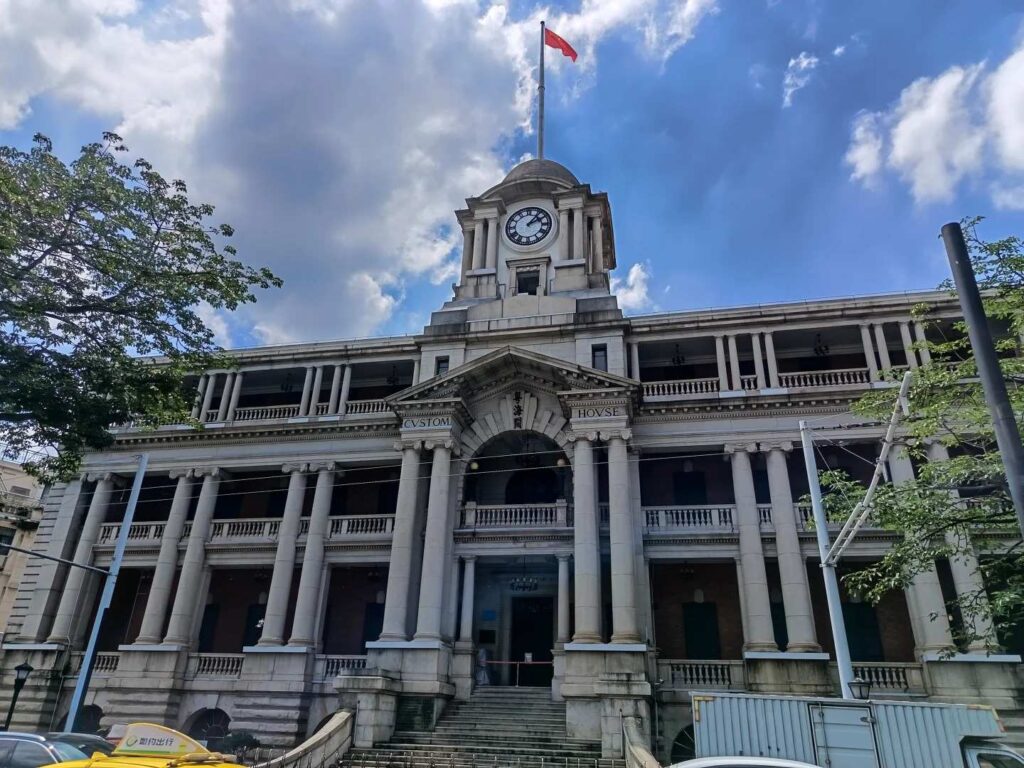
If you follow this route all the way to Shamian Island, plan for about 45 minutes.
If you have the energy, I do suggest walking so you get the best view of the 20th-century buildings that showcase Guangzhou’s history as a trading port. If you’d rather not walk the whole way, you can also use a shared bike.
Shamian Island: Old Trees, Quiet Streets, and European-Style Architecture
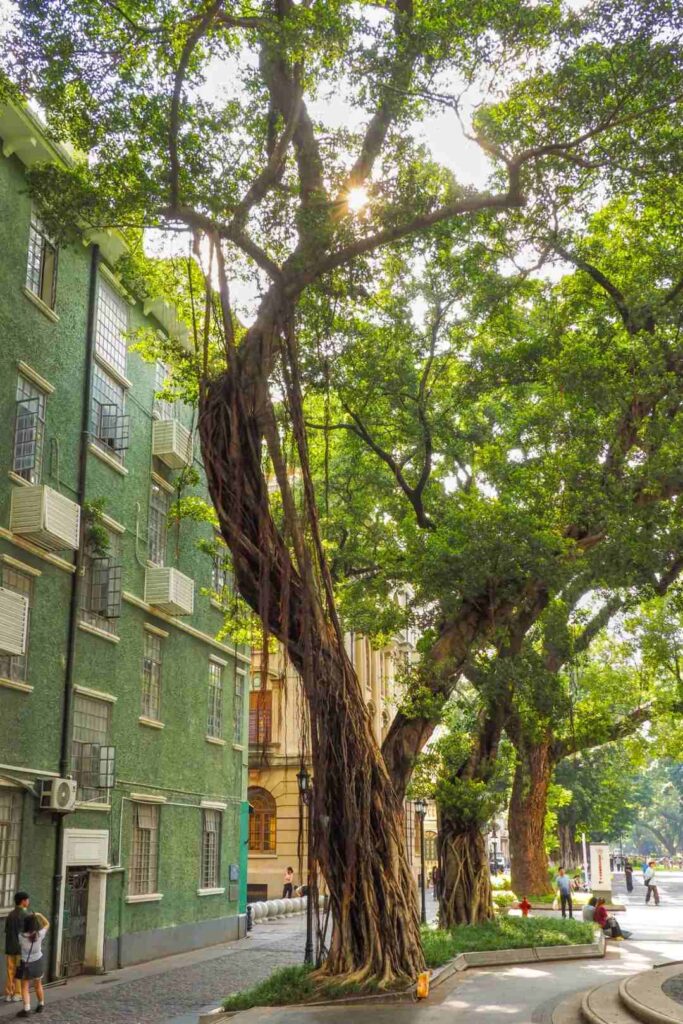
After crossing Renmin Bridge, you’ll reach Shamian Island. The island is tiny, only 0.3 square kilometers. With its old trees and quiet streets, this area is more European in style than almost anywhere else in Guangzhou. It was once a British and French concession, and today, more than 150 European-style buildings still remain.
 Shamian Island
 Shamian Island
 Shamian Island
 Shamian Island
There are also a number of cafés and small restaurants on the island. Grab a seat somewhere by the riverside, order a coffee or a lunch, and slow down for a while.
Afternoon: Liwan Museum and Xiguan Culture
In the afternoon, take a taxi to Liwan Museum. Opened in 1996, Liwan Museum was the first district-run museum in Guangdong.
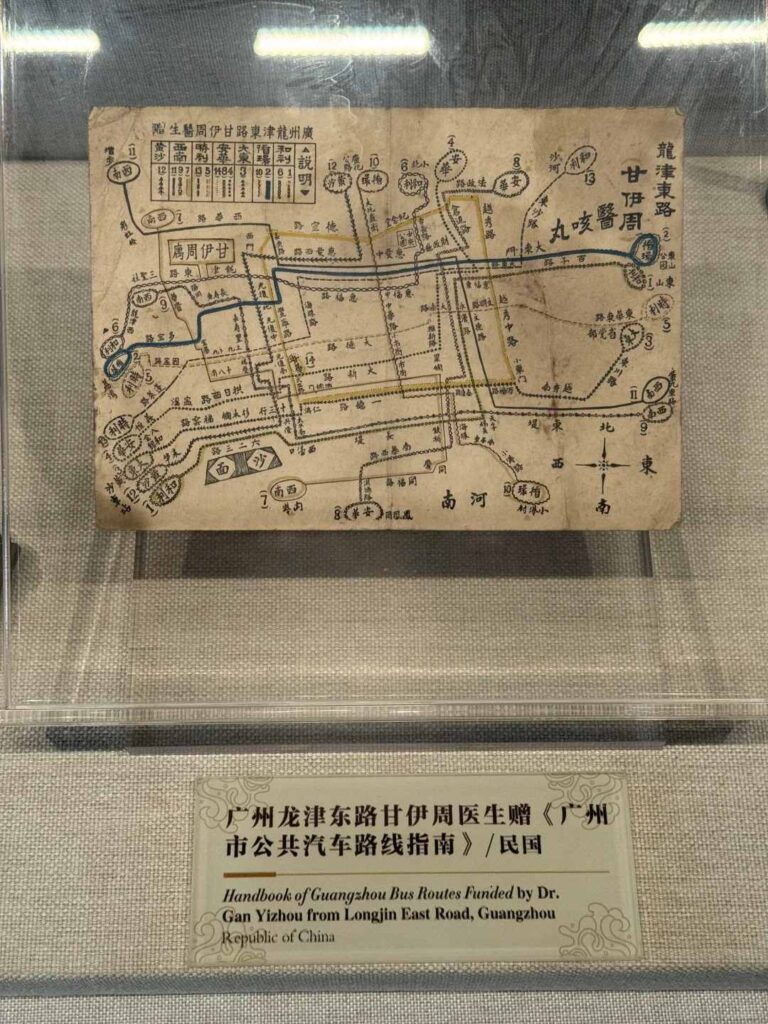
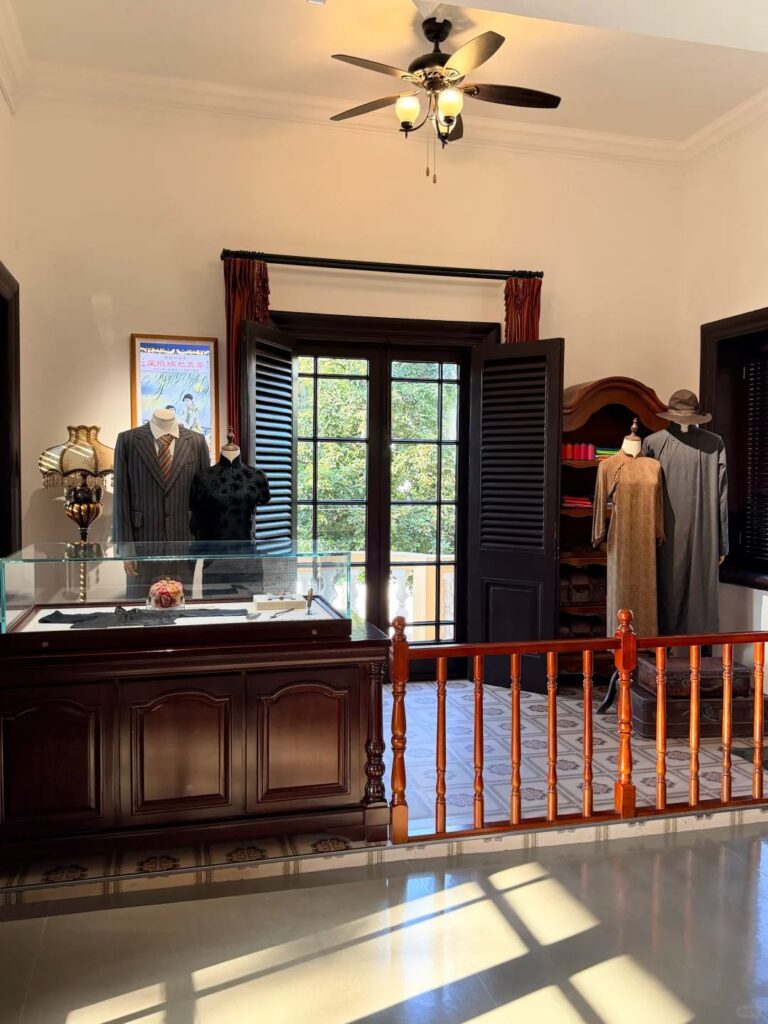
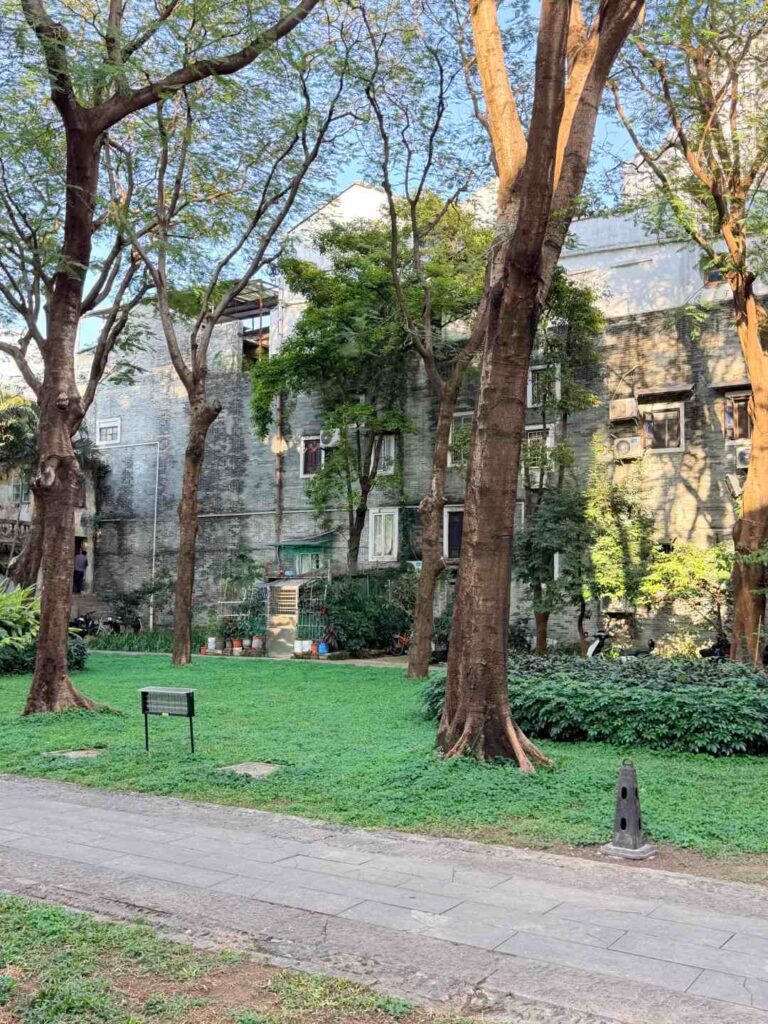
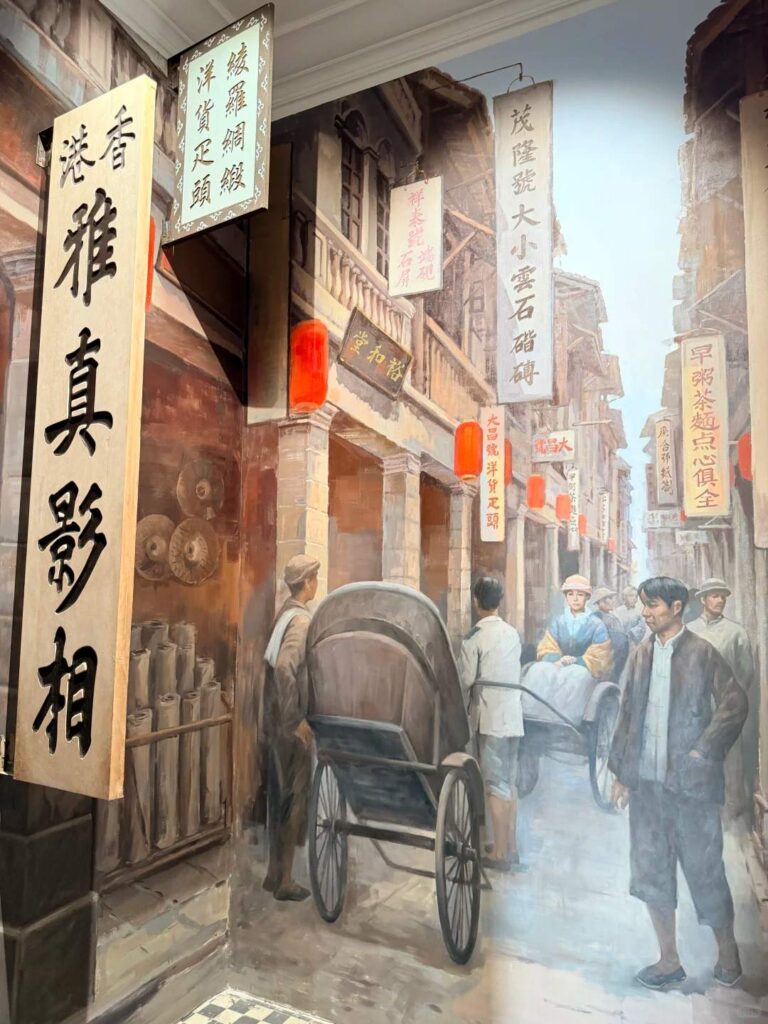
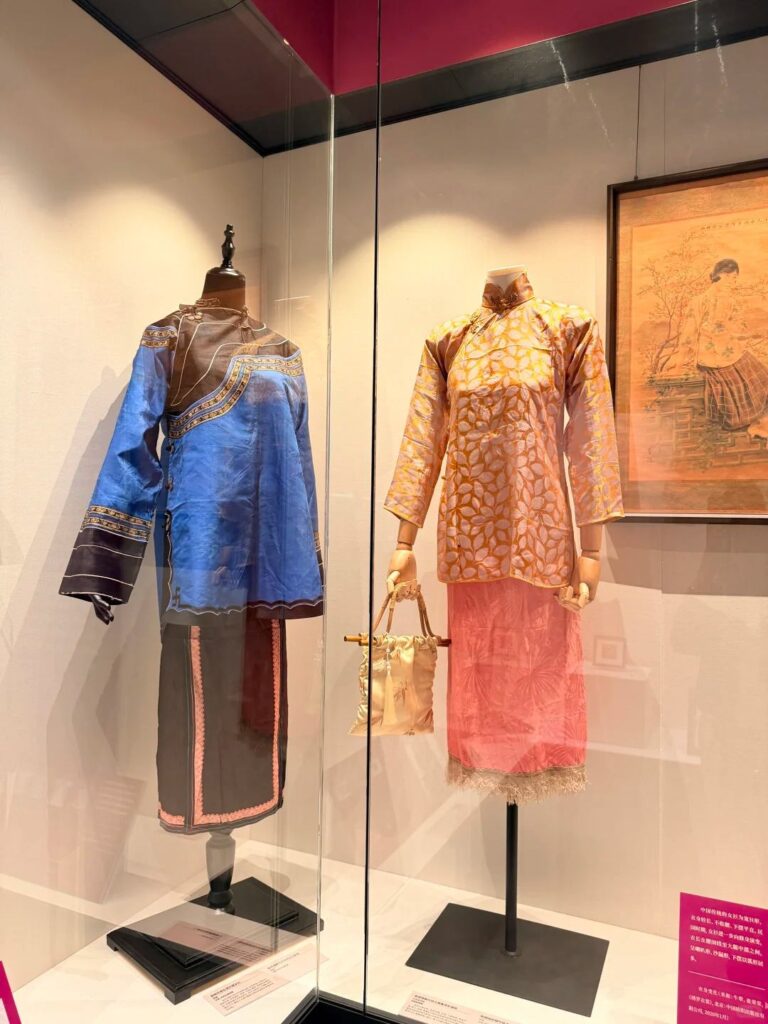
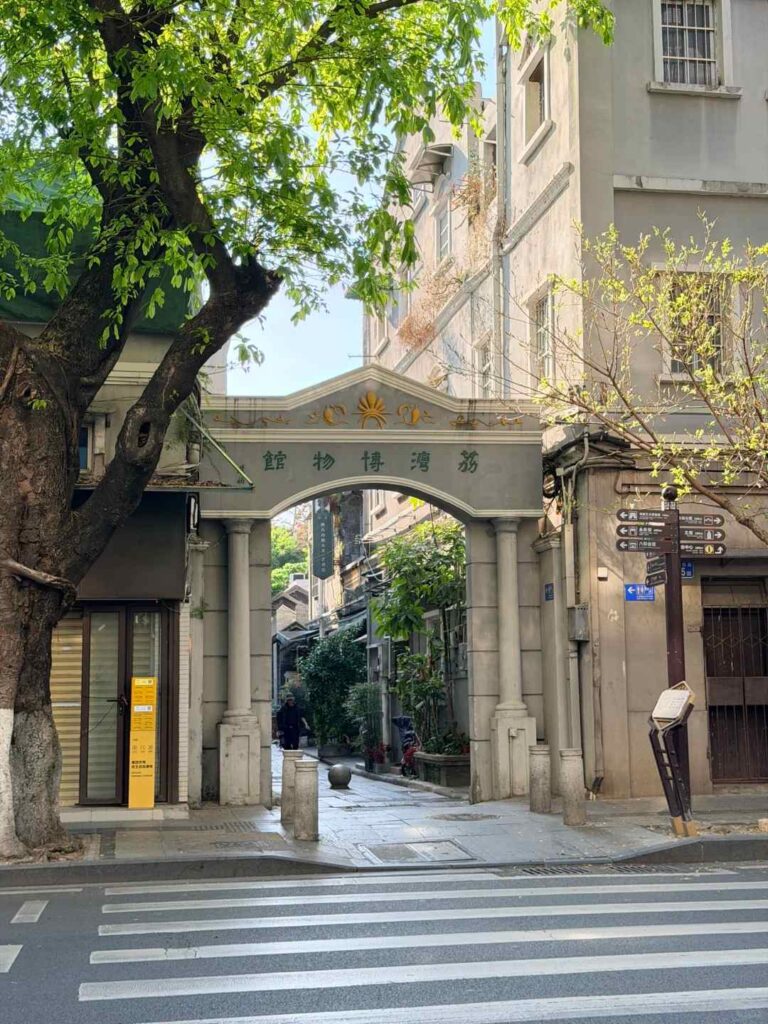
The site was once the Xiguan mansion of the Chen Lianzhong family. Its well-preserved three-part layout gives you a clear look at how traditional Xiguan homes were designed.
Liwan Museum: What to Know Before You Go
- Tickets: 5 RMB.
- Opening hours: Closed on Monday. Open Tuesday through Sunday, 9:00 a.m. to 5:30 p.m.
- Architectural highlights:
- Former Residence of Jiang Guangnai: A three-story brick-and-wood building that combines Xiguan mansion features with Western-style details. It’s open to visitors.
- Xiguan Mansion: Shows traditional Xiguan daily life, with period-style furniture.
- Former Residence of Chen Lianbo: A grand Western-style house that once served as a gathering place for the Liwan Club.
Liwan Lake Park
Liwan Lake Park is a nice stop after the museum. It’s one of Guangzhou’s larger landscaped lake parks. Water covers more than 60% of the park, spread across four lakes: Xiaocui, Yucui, Ruyi, and Wuxiu.
In the Ming dynasty, “Fishermen’s Songs of Liwan Bay” was counted among the Eight Sights of Guangzhou.
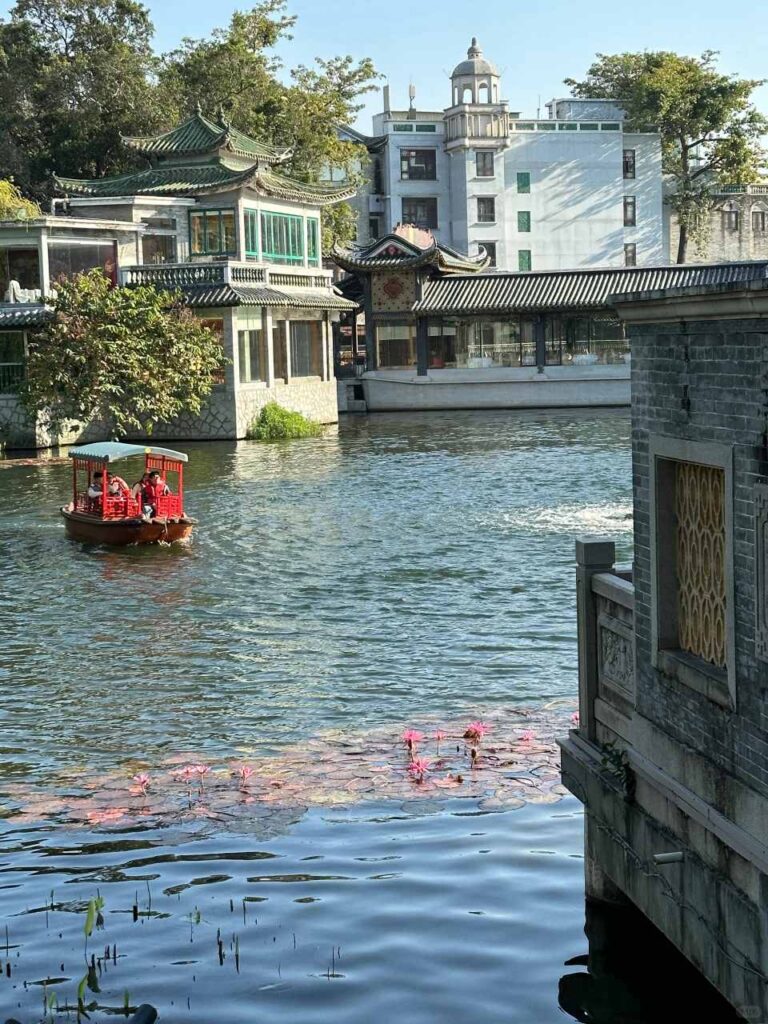 Liwan Lake Park
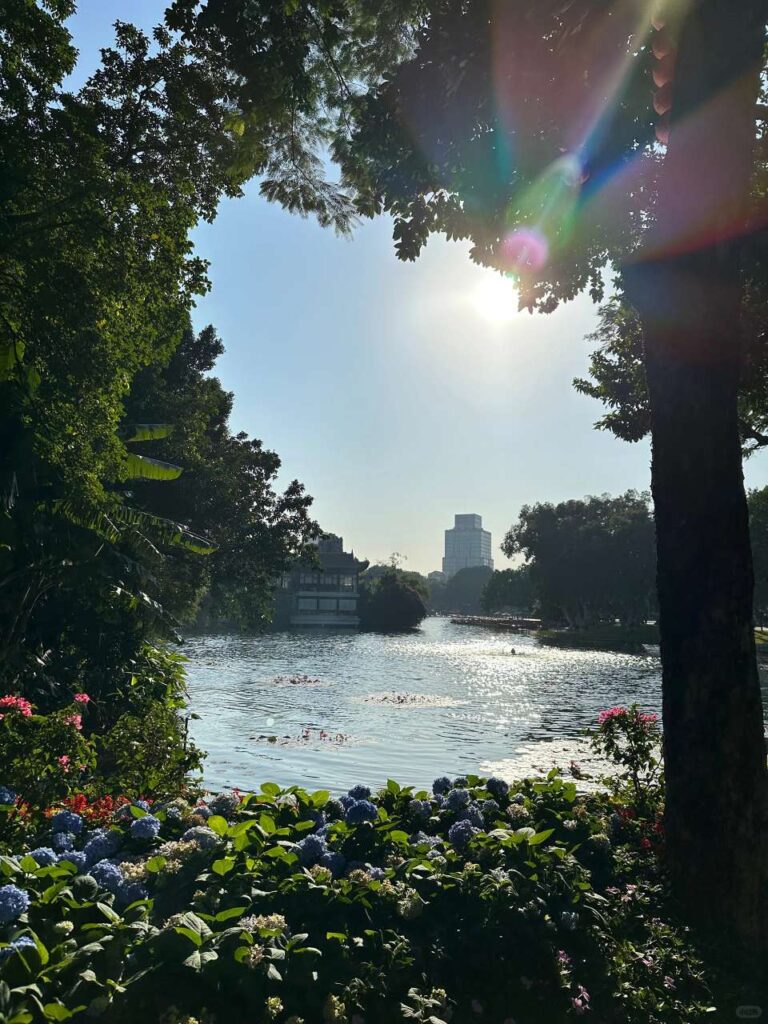 Liwan Lake Park
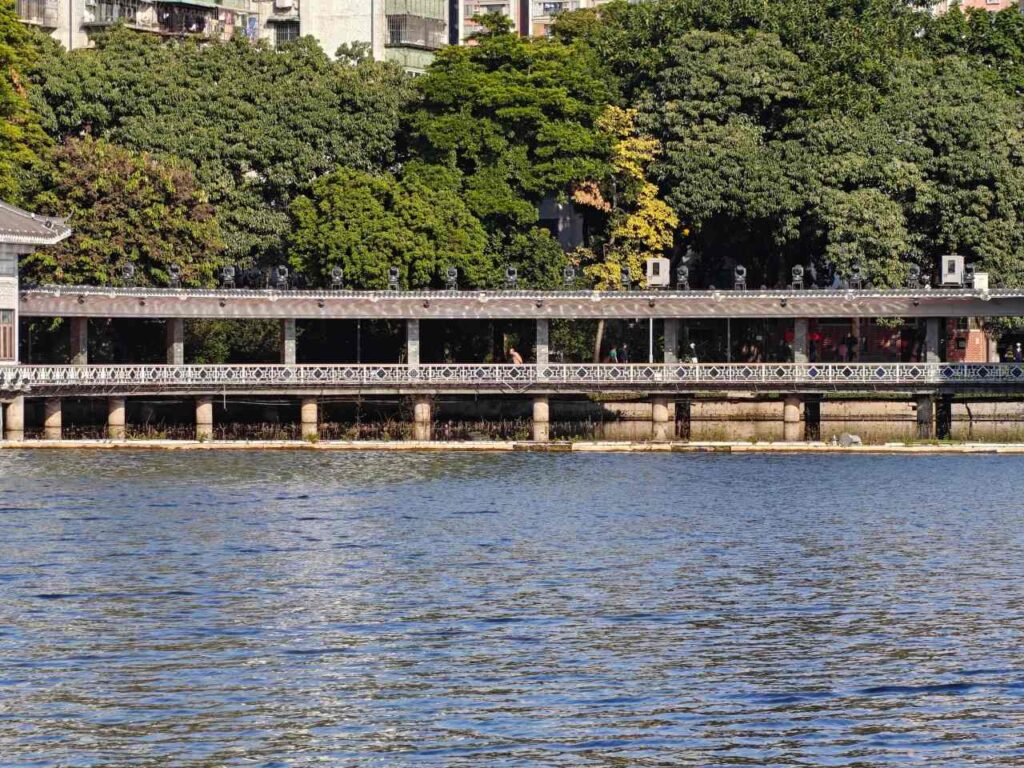 Liwan Lake Park
The best times to visit are morning and around sunset. In the park, you can rent a boat, see seasonal flowers, take photos, and sometimes catch Cantonese opera performances. In the evening, a walk by the water is a quiet way to end the day and enjoy old Guangzhou.
Liwan Lake Park: What to Know Before You Go
- Opening hours: Open year-round.
- Boating: You can rent pedal boats and electric boats.
- Photo spots: Pavilions, small bridges, and towers are all around the lake, so it’s a great place to take photos.
- Flower seasons: Silk floss trees bloom in winter, while bauhinia comes out in spring. These are especially popular times for photographers.
- Nearby stops: Panxi Restaurant and several historic Xiguan buildings are close by, so you can easily visit them together.
Dinner on Baoyuan Road: Two Teahouses to Try
For dinner, you don’t need to go far, as Baoyuan Road has two teahouses that are close to each other and both enjoyable. One is vegetarian, and the other is a more traditional Cantonese spot, which makes it easy if your group has different dietary preferences.
Hongyisu Vegetarian Teahouse (红艺素·素食点心茶楼)
Hongyisu (红艺素) specializes in vegetarian dim sum. There’s plenty of options to choose from, and the dim sum is flavorful and carefully made.
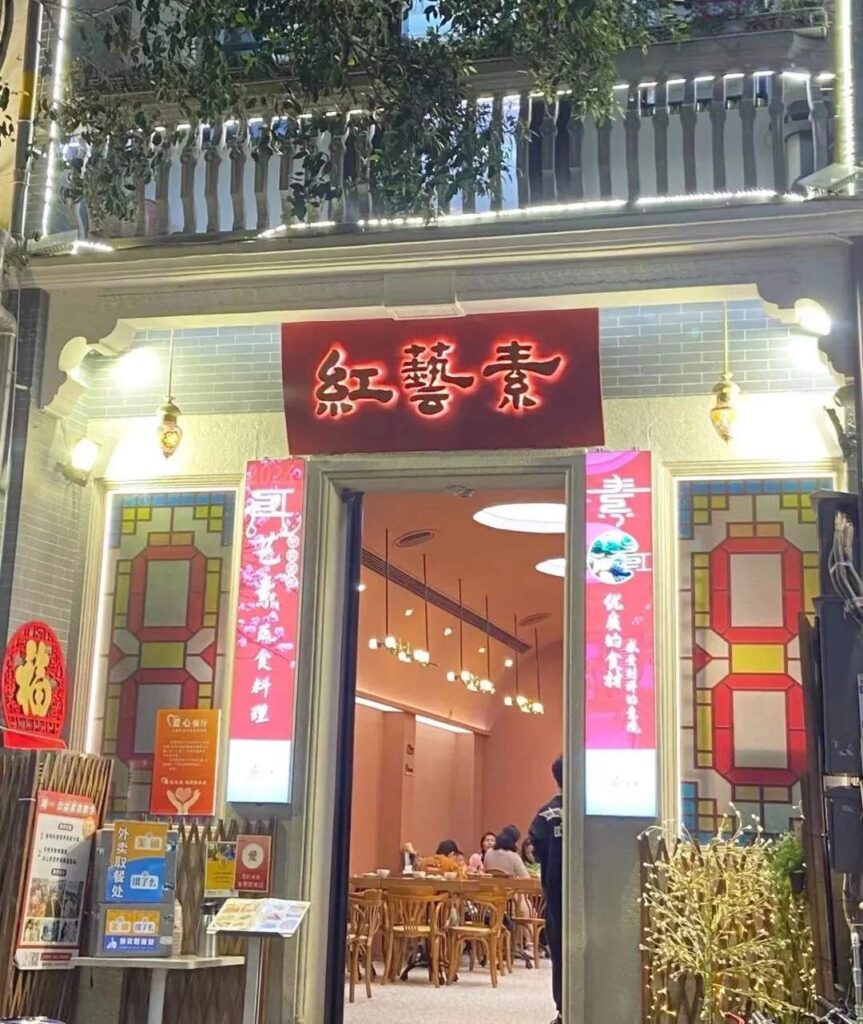
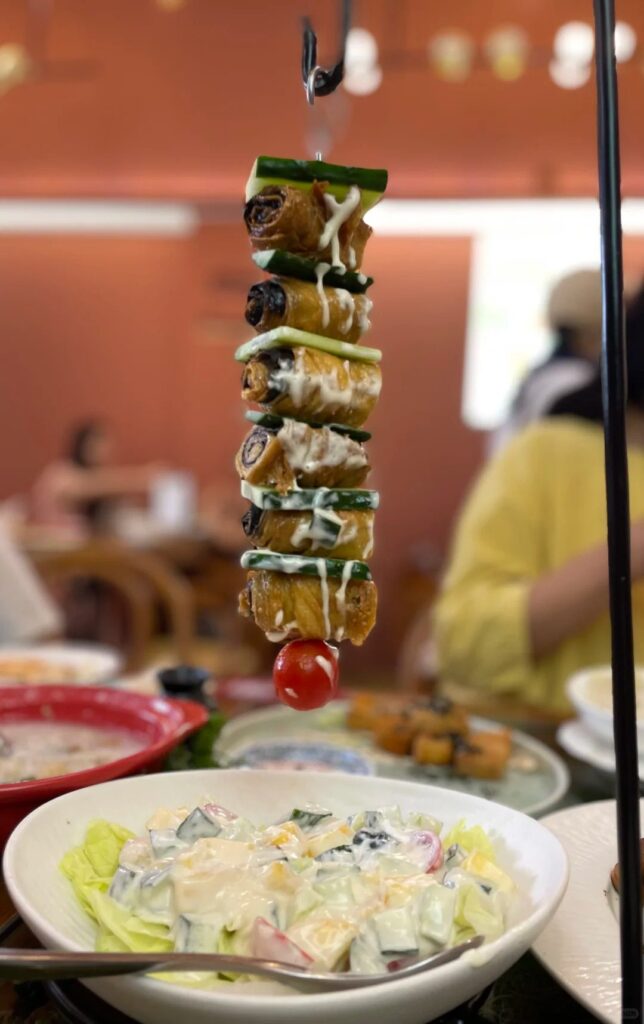
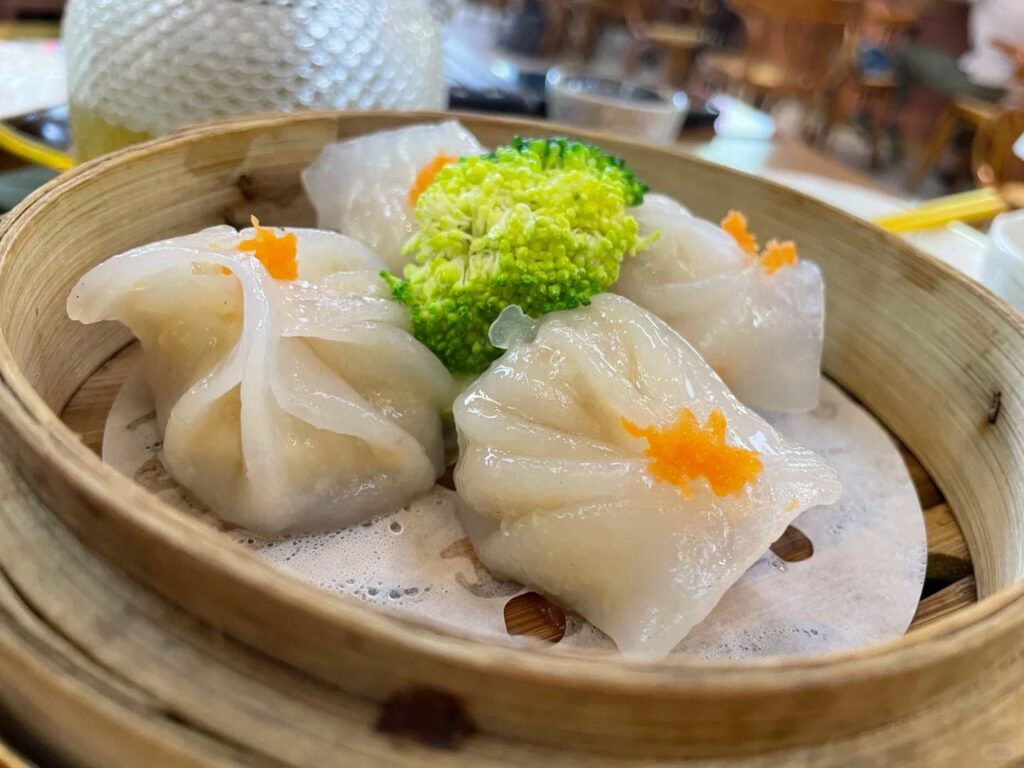
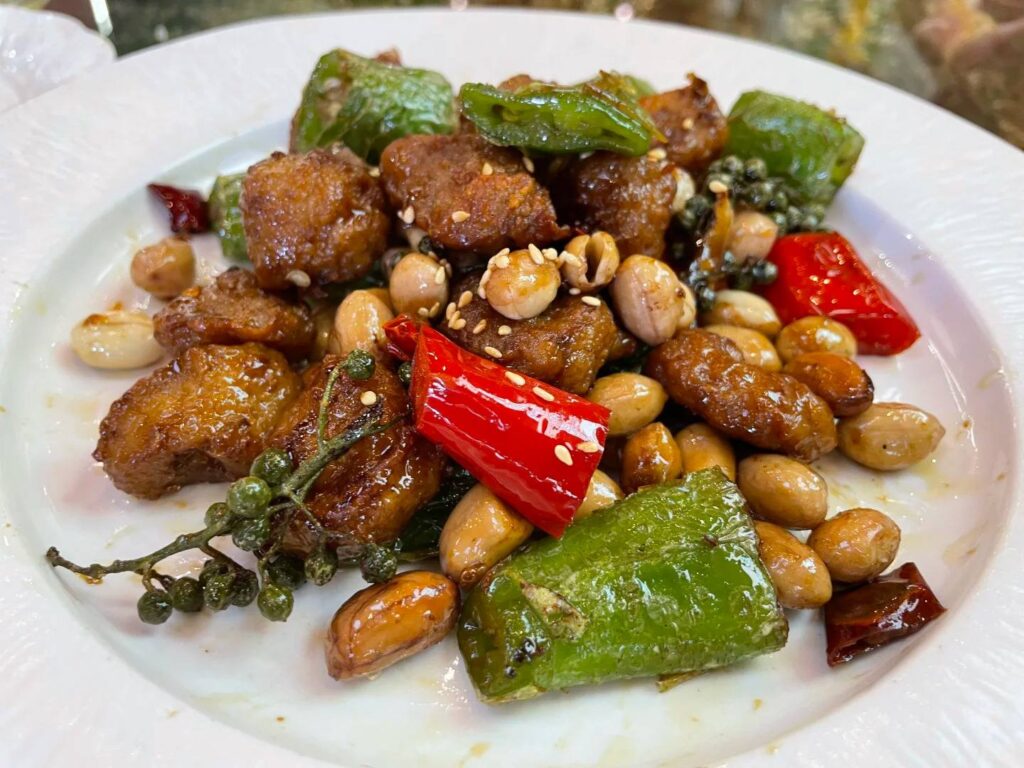
Don’t miss the black truffle siu mai. It’s made with sticky rice, which gives it a chewy, almost dumpling-like texture. The Sichuan-style plant-based dumplings with green Sichuan peppercorns are also very good.
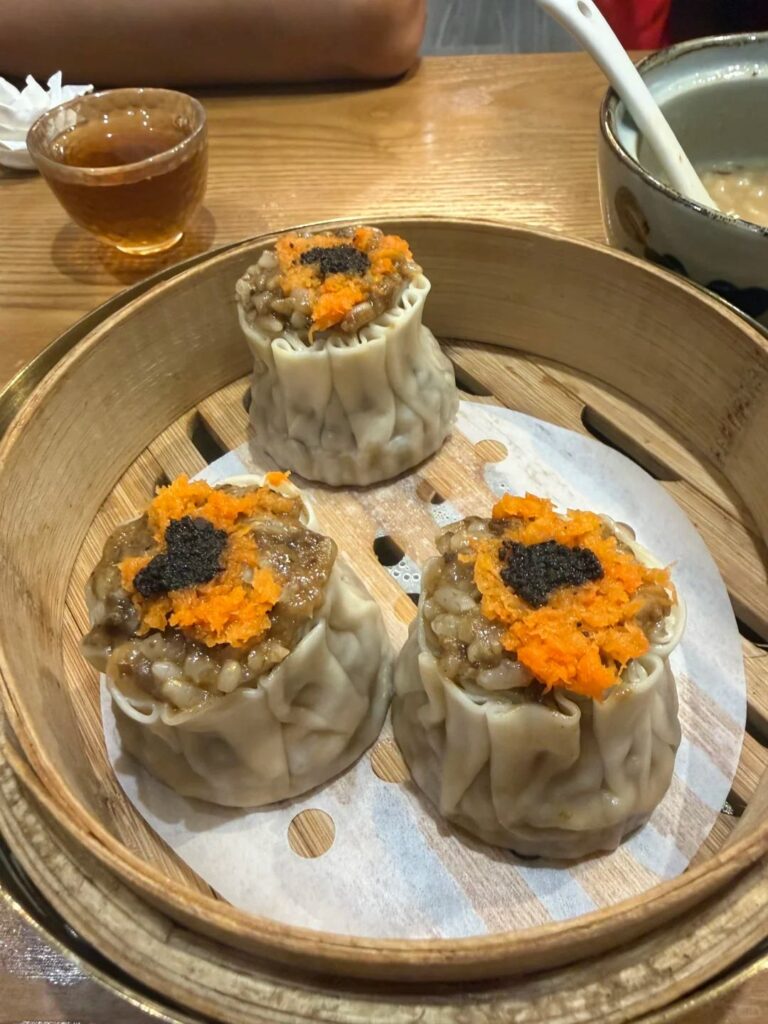
Baiweixian Liangdianhuang (百味鲜靓点皇)
Baiweixian Liangdianhuang ended up being my favorite restaurant of the whole trip. It was the kind of meal that made me want to start planning another trip to Guangzhou.
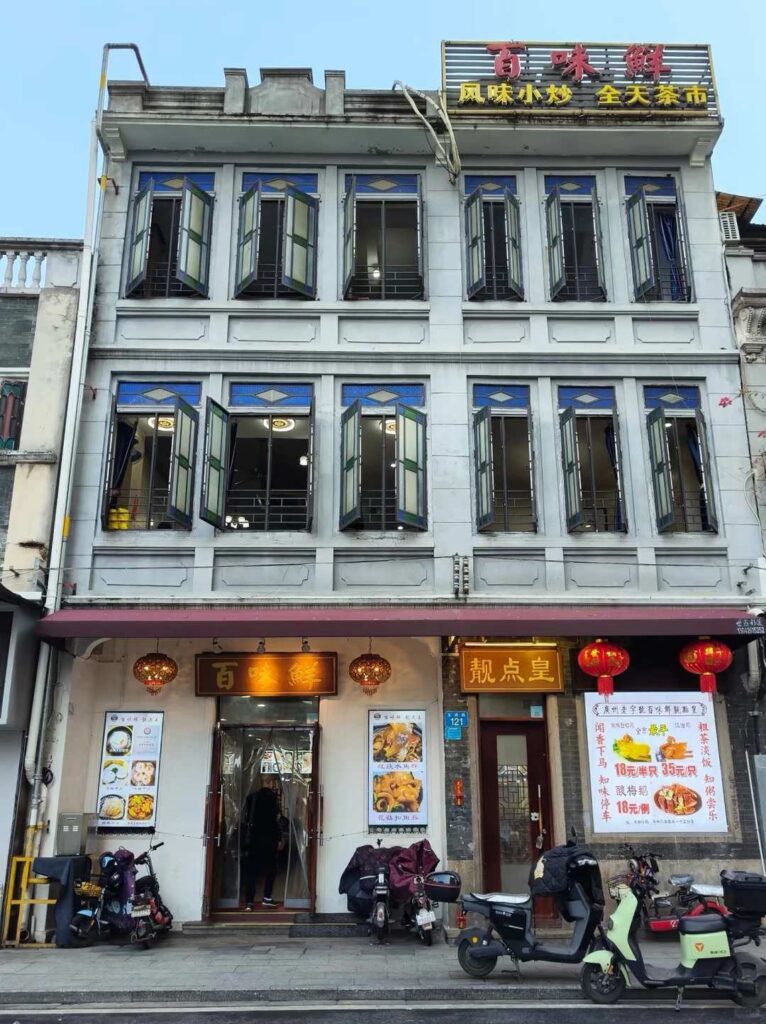
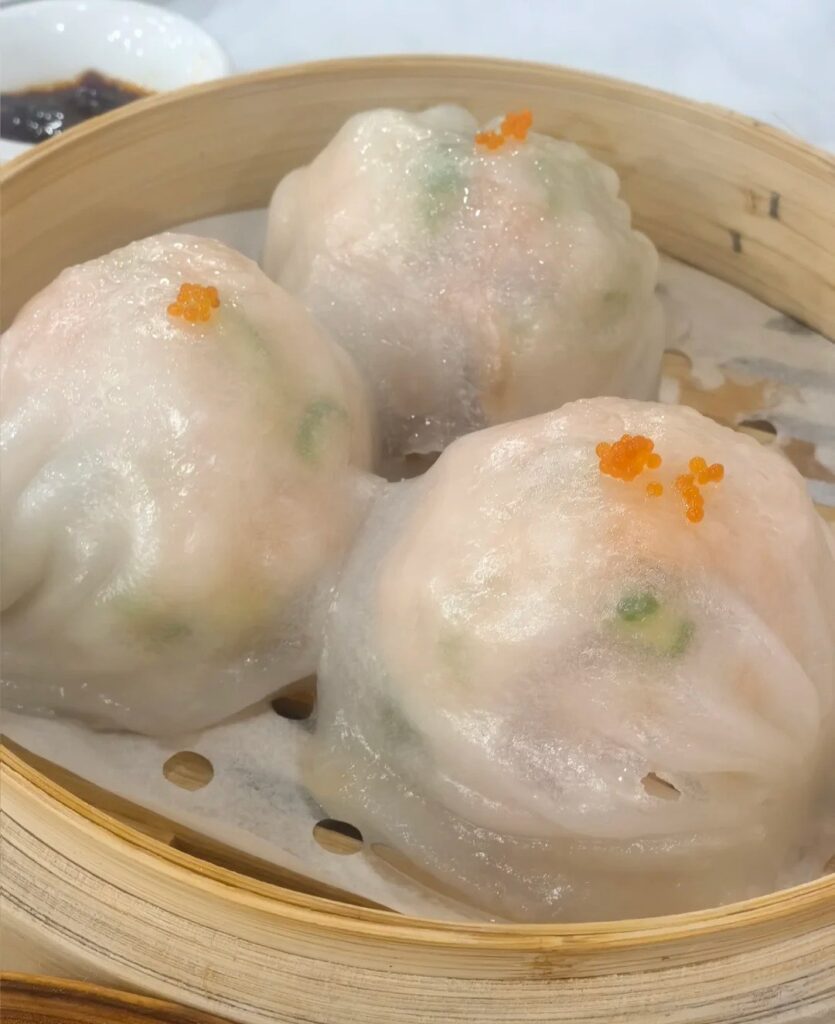

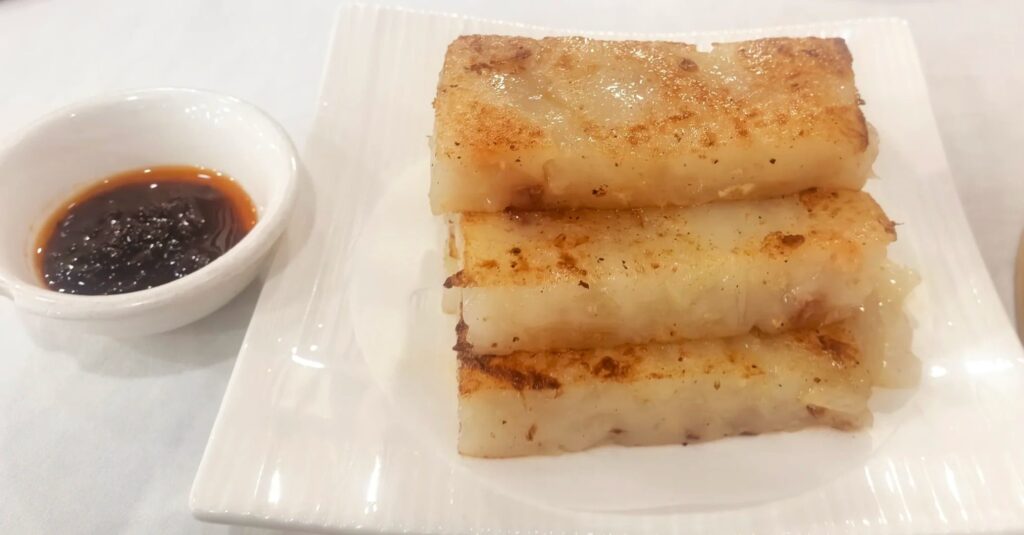
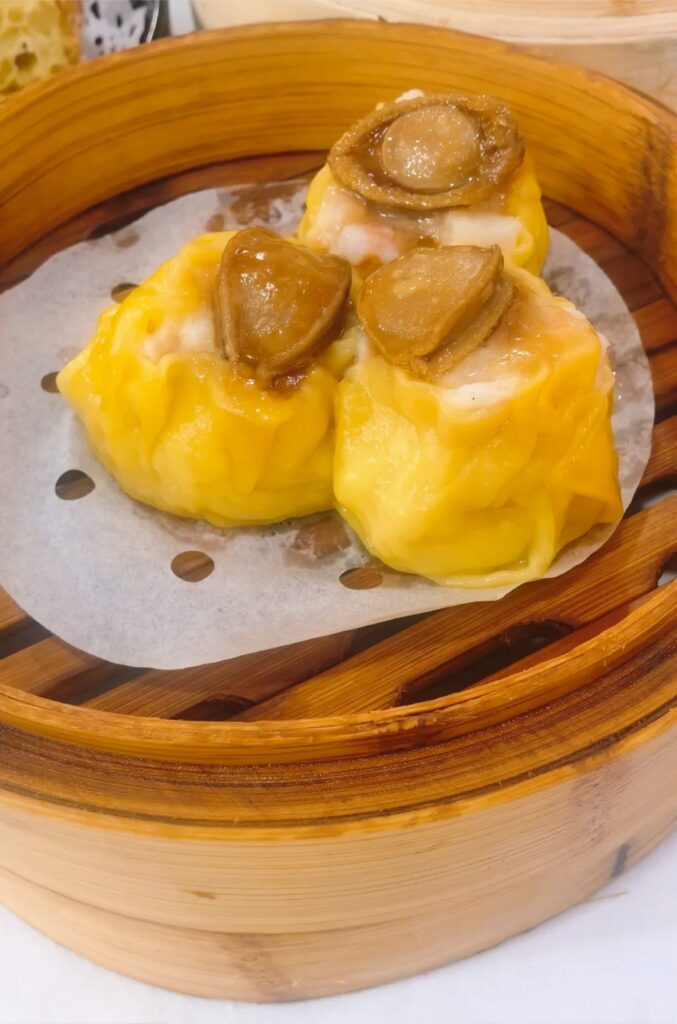
This teahouse serves traditional Cantonese dishes and dim sum. The jumbo shrimp dumpling (虾饺皇) is the dish to order. It’s almost the size of a fist, and when you bite into it, you get a generous mouthful of fresh shrimp that’s incredibly satisfying.
The abalone siu mai (鲍鱼烧麦皇) is also fresh and generously filled, with the natural sweetness you expect from good seafood. If you order the roast goose, ask for the lower quarter (the leg-and-thigh portion), where the skin is crisp, the meat is tender, and the flavor is very savory.
Guangzhou Day 4 Itinerary: Guangxiao Temple and Departure
Start your last morning with breakfast at Youshishen Noodle House (友食神面家) – a plate of Beng Sha Beef Brisket with Bamboo Noodles (崩沙腩竹升面).
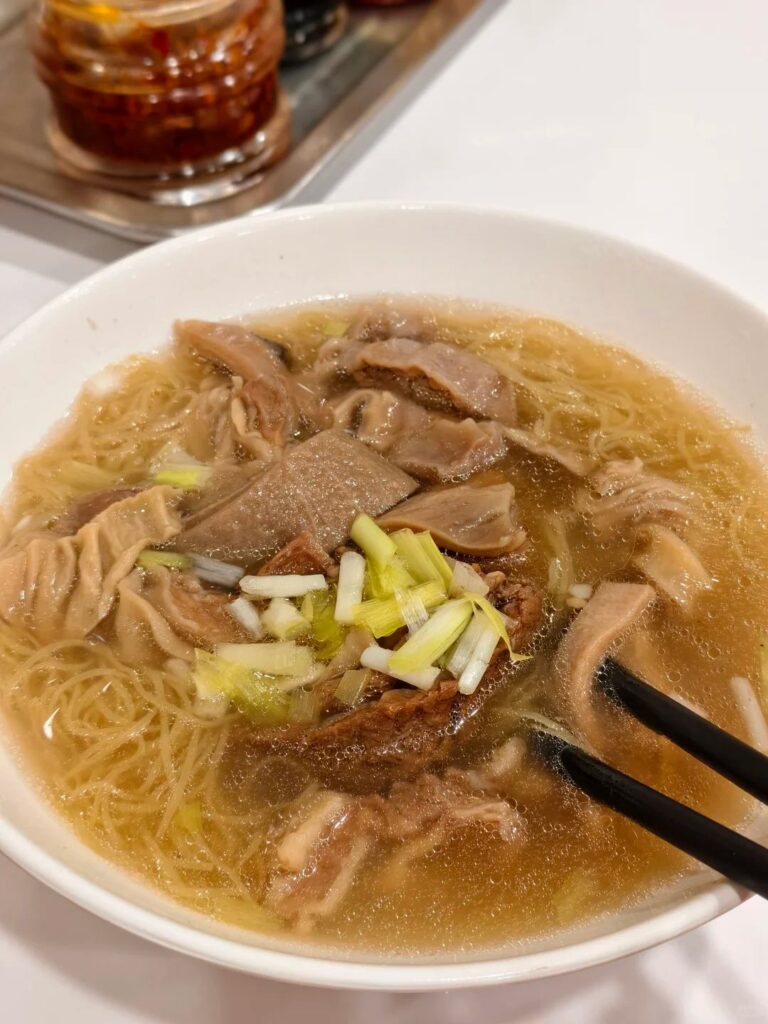
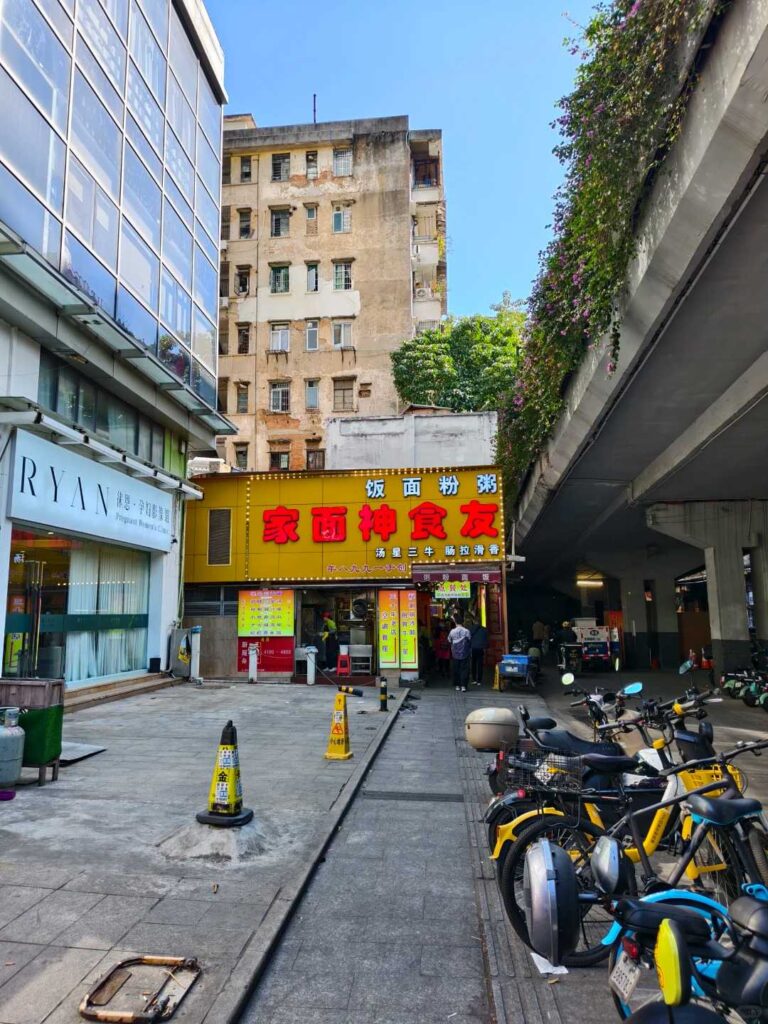
Then, set aside time for Guangxiao Temple. As an old Guangzhou saying goes, “Before Guangzhou, there was Guangxiao.”
This ancient temple dates back more than 1,700 years. It’s one of Lingnan’s oldest and most important Buddhist temples, and it’s where Huineng, the Sixth Patriarch of Zen Buddhism, was ordained as a monk.
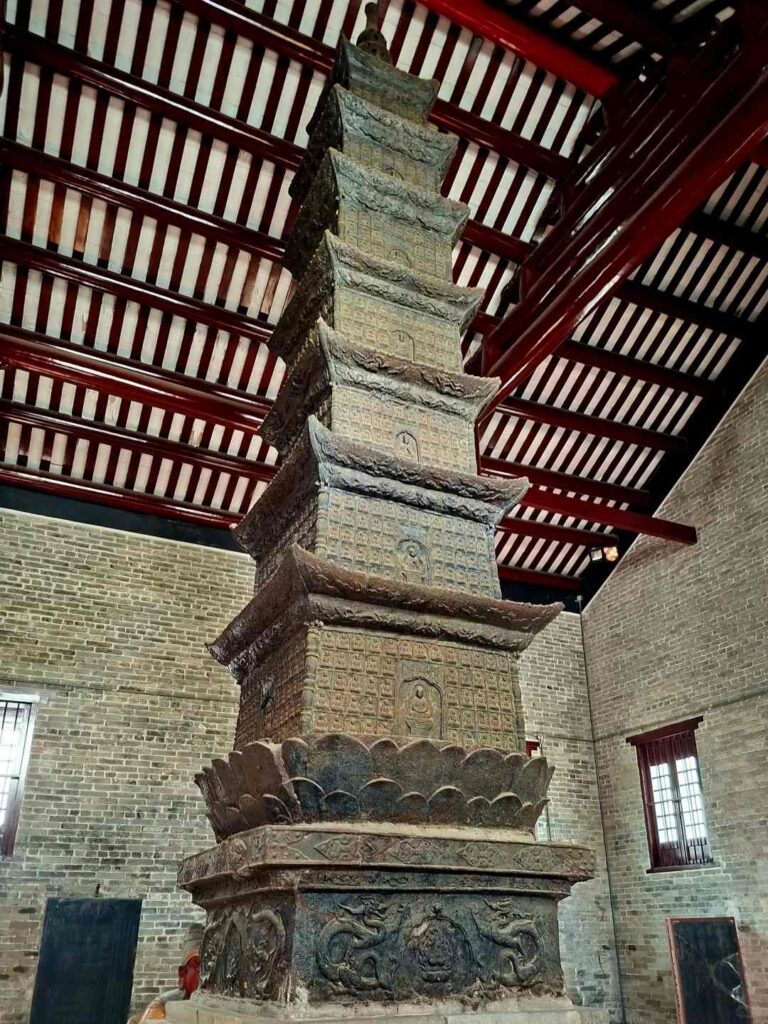
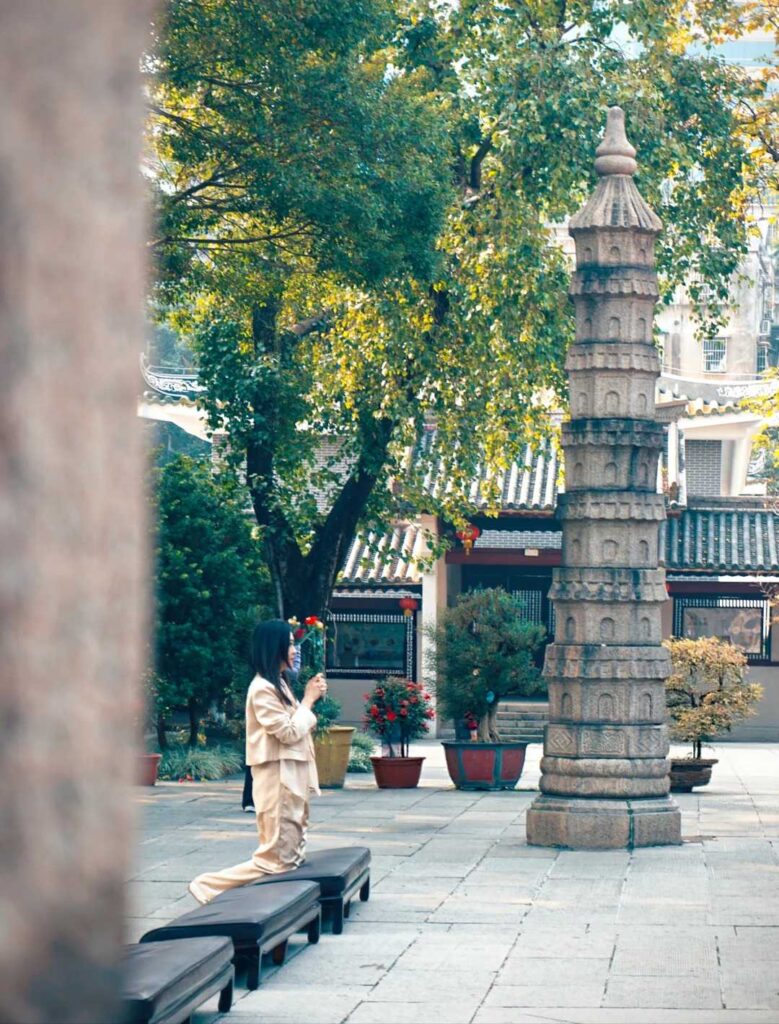
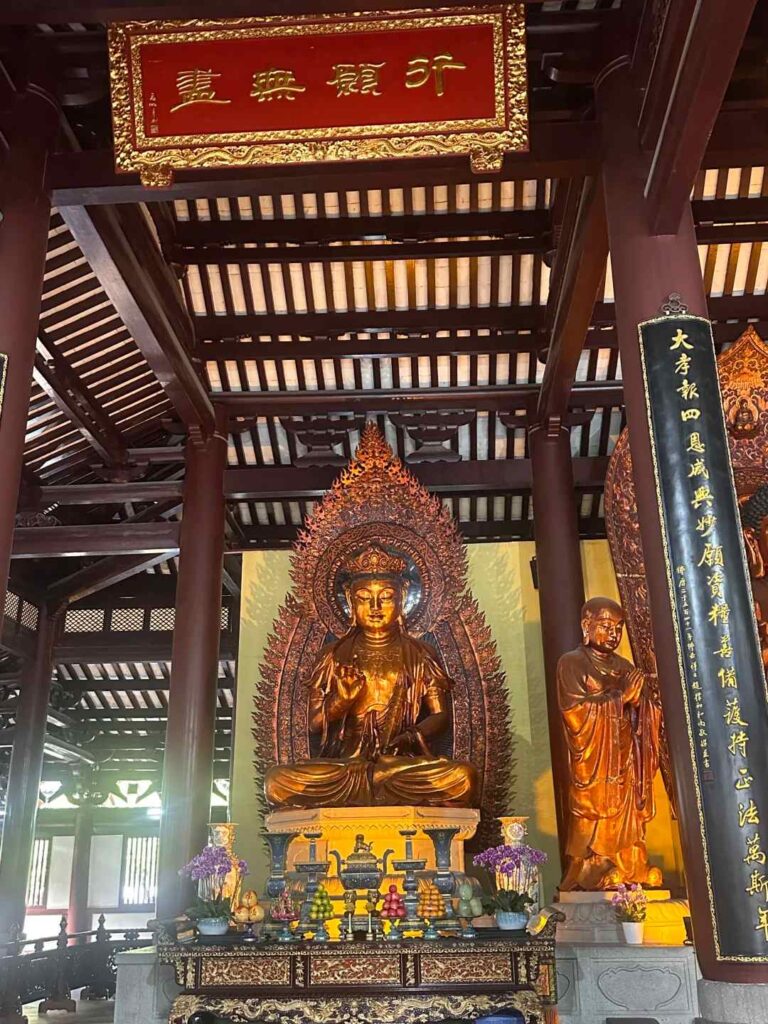
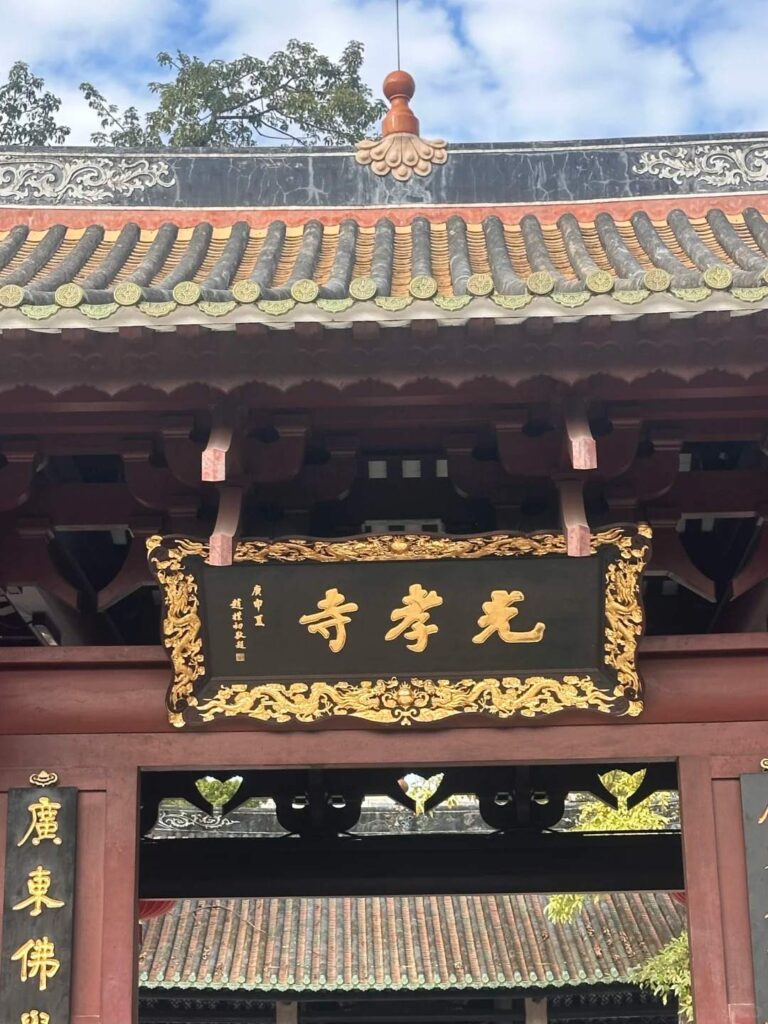
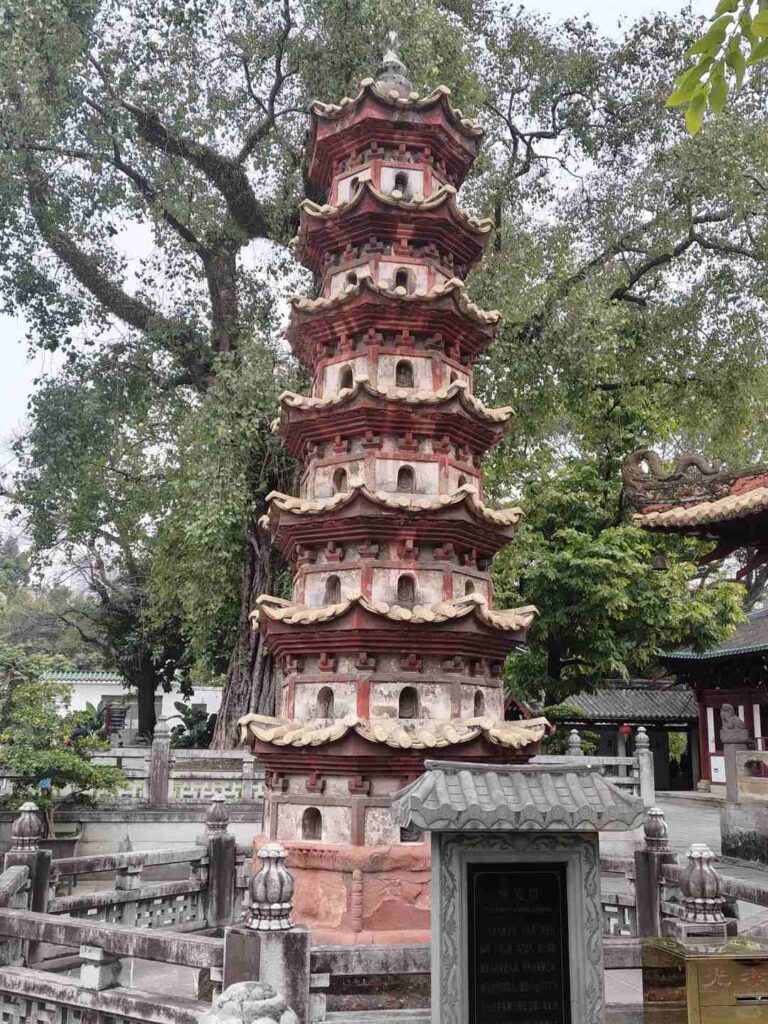
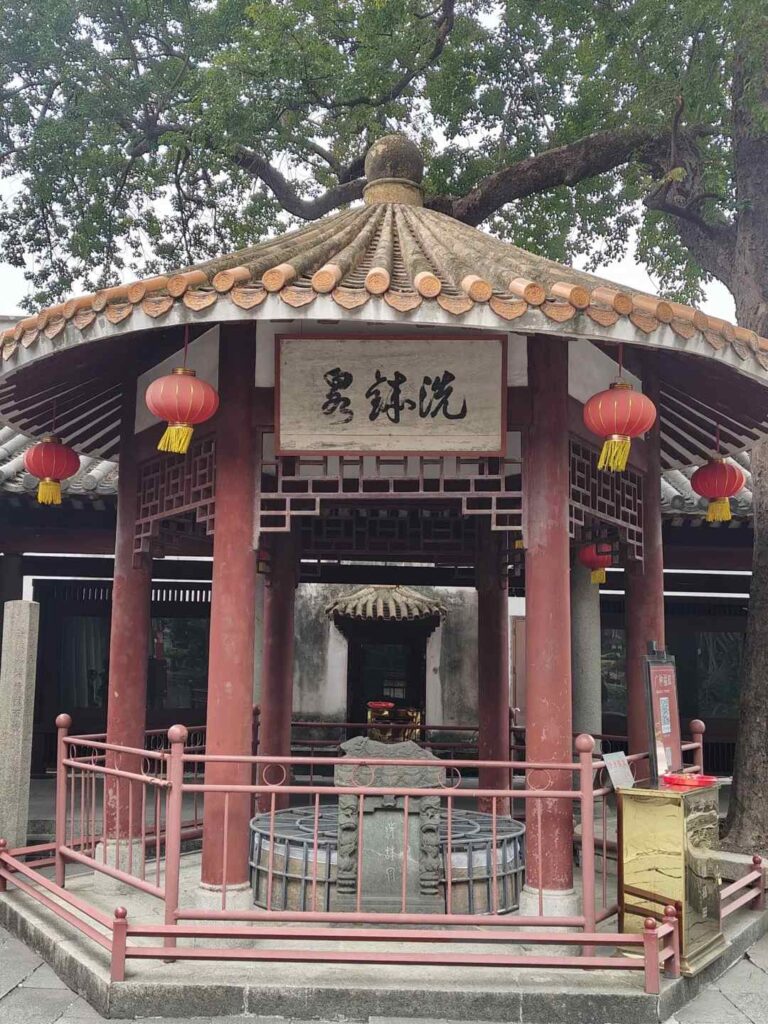
Inside, you can still see the Sixth Patriarch’s Hair Burial Pagoda and bodhi trees. It’s a peaceful place to walk through, especially if you want a quieter final morning in Guangzhou.
ℹ️ Guangxiao Temple: What to Know Before You Go
Opening hours: Daily, 8:30 a.m. to 4:30 p.m.
Tickets: RMB 5. Free for visitors aged 60 and over
Getting there:
- Take Metro Line 1 to Ximenkou Station, then walk about 5–8 minutes.
- Or take Metro Line 2 to Sun Yat-sen Memorial Hall Station, then walk about 10 minutes.
What to See Inside Guangxiao Temple
- Mahavira Hall: One of the temple’s main halls, home to several important Buddhist statues.
- Xibo Spring: Said to have been dug by Bodhidharma.
- Hair Burial Pagoda: A Tang dynasty site linked to Huineng’s ordination as a monk.
- Thousand-Buddha Iron Pagoda: Built during the Southern Han period, with many details still well preserved.
- Bodhi tree: Said to be over a thousand years old. Visitors and worshippers often circle it while making wishes.
For lunch, keep it simple at Ximenkou Plaza, or pick up snacks from the supermarket inside the mall.
After checking out around noon, head to the bus station or Guangzhou South Railway Station, depending on whether you’re taking a cross-border bus or a high-speed train. That wraps up a packed but rewarding Guangzhou itinerary!
Best Places to Visit in Guangzhou
What I like about Guangzhou is how quickly it transitions from old neighborhoods to modern skyline views. Whether it’s your first visit or a return trip, there’s plenty to see.
Here are the highlights from my 4-day, 3-night Guangzhou itinerary. I’ve included where each spot fits into the route, along with a link to the full itinerary and food notes.
| Attraction | Day | Why Visit | Jump to |
|---|---|---|---|
| Shamian Island | 3 | A leafy historic island with European-style buildings, quiet streets, and many photo-worthy spots. | Day 3 Itinerary Details |
| Canton Tower | 2 | Guangzhou’s most recognizable modern landmark, with Pearl River skyline views that are especially good at night. | Day 2 Itinerary Details |
| Beijing Road Pedestrian Street | 2 | A lively pedestrian street with historic road remains, long-running local shops, malls, and snacks. | Day 2 Itinerary Details |
| Dafo Temple | 2 | A peaceful temple stop near Beijing Road, known for its traditional architecture and evening lights. | Day 2 Itinerary Details |
| Yongqing Fang | 1 | A good evening stop for small shops, Moon Bridge, and local snacks. | Day 1 Itinerary Details |
| Ximenkou Food Area | 1 | A good area for rice rolls, soups, local snacks, and casual authentic meals. | Day 1 Itinerary Details |
| Liwan Museum | 3 | Worth visiting if you’re interested in Xiguan mansions, traditional Cantonese daily life, architecture, or local history. | Day 3 Itinerary Details |
| Liwan Lake Park | 3 | A green lakeside break in the old city, ideal for a slow walk, boat ride, or sunset stop. | Day 3 Itinerary Details |
| Guangxiao Temple | 4 | An ancient Buddhist temple that works well for a quiet final morning. | Day 4 Itinerary Details |
Guangzhou Travel FAQs
Here are the key things I’d keep in mind when planning a trip to Guangzhou in 2026.
Read More:
Things to Do in Guangzhou
Guide to Visiting Yuexiu Park


