
Guide to Visiting Yuexiu Park in Guangzhou – Tips, Opening Hours, and Tickets
Yuexiu Park is the largest park in central Guangzhou and one of my favorite green spaces in the city. It sits on Yuexiu Hill and officially opened as a public park in 1927, although the area itself has a much longer history.
What I love most about Yuexiu Park is how lush it is, with a blend of trees, vines, hills, lakes, old walls, and quiet paths. The park is subtropical, green, humid, and a little overgrown, which is reflective of the traditional Lingnan style. Despite being in the middle of Guangzhou, it’s a quiet escape rather than a loud city park.
Yuexiu Park is also full of Guangzhou history, including the Five Rams Stone Statue, linked to Guangzhou’s founding legend, along with the remains of the Ming-dynasty city wall and the Guangzhou Museum, housed inside Zhenhai Tower. The Museum of the Nanyue King Mausoleum and Sun Yat-sen Memorial Hall are nearby as well, so it’s easy to combine several major sights in one outing.
Is Yuexiu Park Worth Visiting?
Yes, especially if it’s your first time in Guangzhou.
The park is in Guangzhou’s old city center, easy to reach by metro, and free to enter. If you plan your route well, you can spend half a day, or even a full day, in this area without crossing town.
One reason Yuexiu Park stands out is that it’s very different from the big parks you may have visited in Beijing or Shanghai. The city of Guangzhou is subtropical, and therefore the park is leafy, humid, hilly, and green all year. It also doesn’t feel like a place just for tourists, as you’ll see locals exercising in the morning, walking with friends, bringing their kids to play, and sitting under the trees chatting. It offers a glimpse into everyday life in Guangzhou, which can be just as memorable as the landmarks.
The nearby Museum of the Nanyue King Mausoleum is another reason to plan your visit around this area. It’s right next to Yuexiu Park and has a variety of unique artifacts. The museum is also built around the excavated tomb itself, so I personally found it more interesting than the Guangdong Museum.
Hours
6:00 a.m.–10:00 p.m.
Admission
Free
How to Get There
By Metro
There are three ways to get there by metro:
- Take Metro Line 2 to Yuexiu Park Station. Use Exit B1 for the main entrance, or Exit A for the West Gate.
- Take Metro Line 2 to Sun Yat-sen Memorial Hall Station. From Exit C, walk to the South Gate.
- Take Metro Line 5 to Xiaobei Station. From Exit A, walk to the East Gate.
By Bus
Many buses stop near Yuexiu Park, but you don’t need to know specific numbers. Just search for “Yuexiu Park West Gate” or “Yuexiu Park South Gate” in Amap (also called Gaode Maps), then choose the most convenient route from wherever you are.
By Taxi or ride-hailing app
A taxi or ride-hailing app is also an easy option. For the destination, enter “Yuexiu Park West Gate” or “Yuexiu Park South Gate.”
Read More: How to Use Amap in China
What to See in Yuexiu Park
Five Rams Statue
The Five Rams Statue is one of Guangzhou’s most recognizable landmarks. Built in 1959, it stands 11 meters tall and was made from 130 pieces of granite.
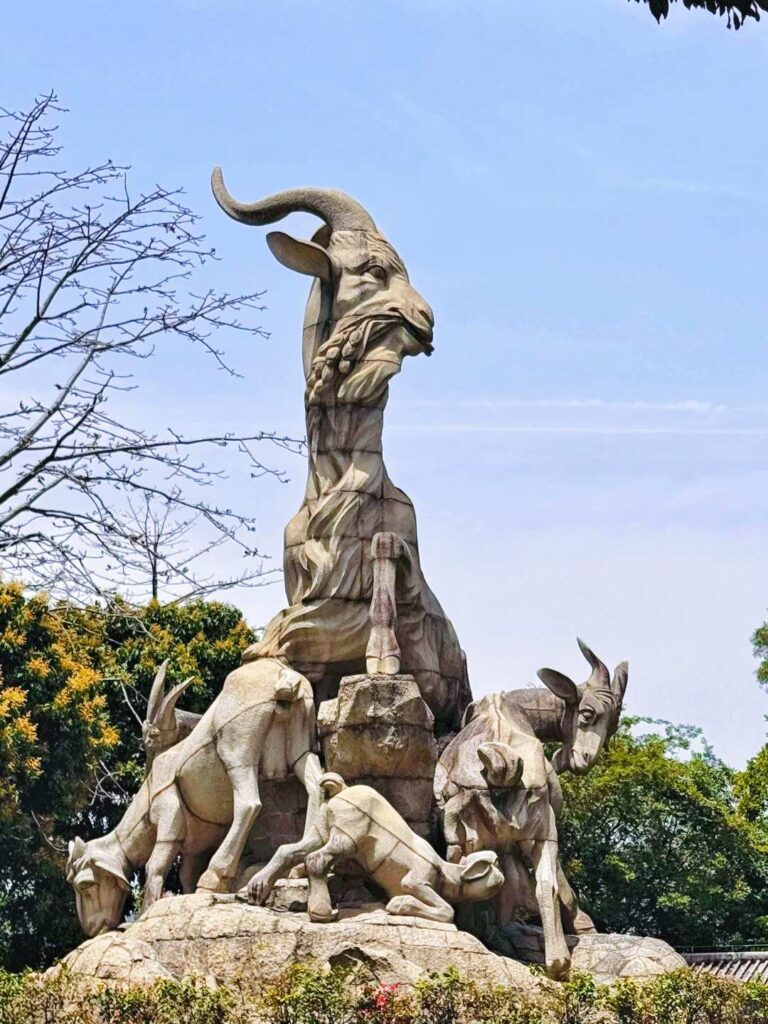
The statue is based on Guangzhou’s founding legend. According to the story, five immortals once arrived here riding five mythical rams, each with a stalk of grain in its mouth. They gave the grain to the local people and blessed the land so it would be free from famine. Afterward, the immortals flew away, and the five rams turned to stone.
The story is usually understood as a symbol of Guangzhou growing from a barren place into a fertile, prosperous city. This is also where two of Guangzhou’s nicknames come from: Yangcheng, or “City of Rams,” and Suicheng, often translated as “City of Grain.”
Zhenhai Tower and the Guangzhou Museum
Zhenhai Tower dates back to 1380, early in the Ming dynasty. Its original name was Wanghai Tower, meaning “Tower Overlooking the Sea.”
The tower is 28 meters tall, 31 meters wide, and five stories high. The first two stories are built from red sandstone, while the upper levels are stone with red exterior walls. You’ll recognize it right away by these red walls and the green roof tiles.
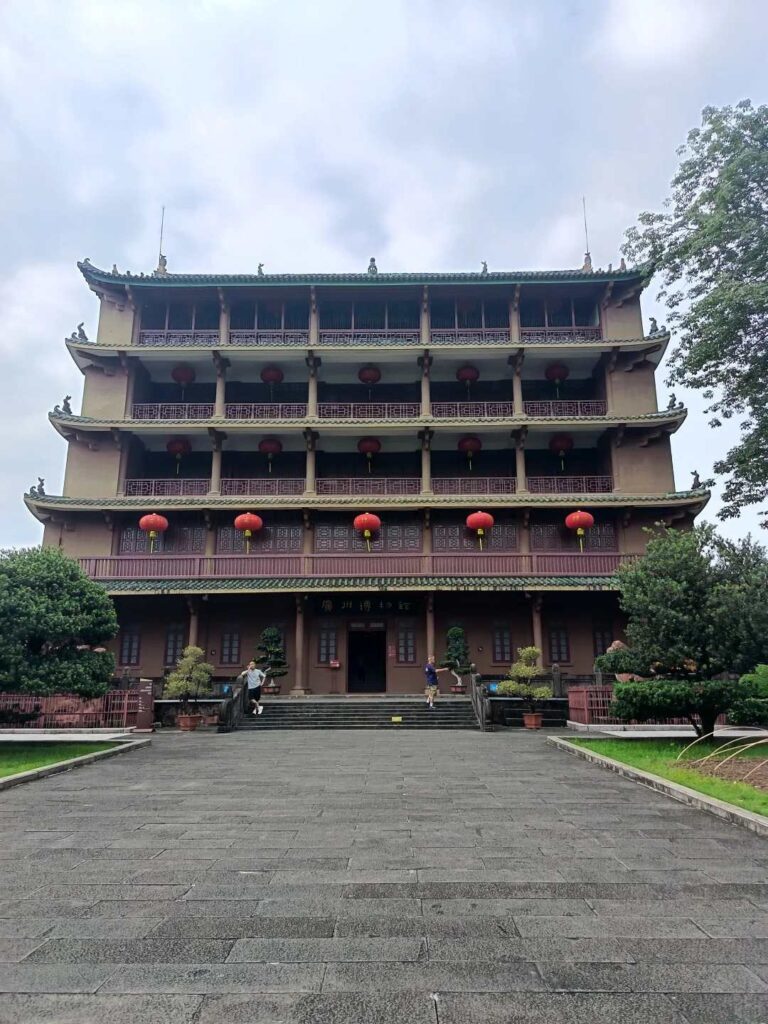
During the Ming and Qing dynasties, Zhenhai Tower was the highest point in Guangzhou’s old city. As trading ships came up the Pearl River toward Guangzhou, people on board could see the tower from a distance. For Western visitors during that era, it was one of Guangzhou’s defining landmarks and often appeared in travel writings and paintings.
Because this was high ground, cannons were placed here for defense. You can still see several of them in front of Zhenhai Tower today, including old iron cannons and later Krupp cannons. They’re an interesting part of the tower’s history, but you don’t need to spend long on this stop.
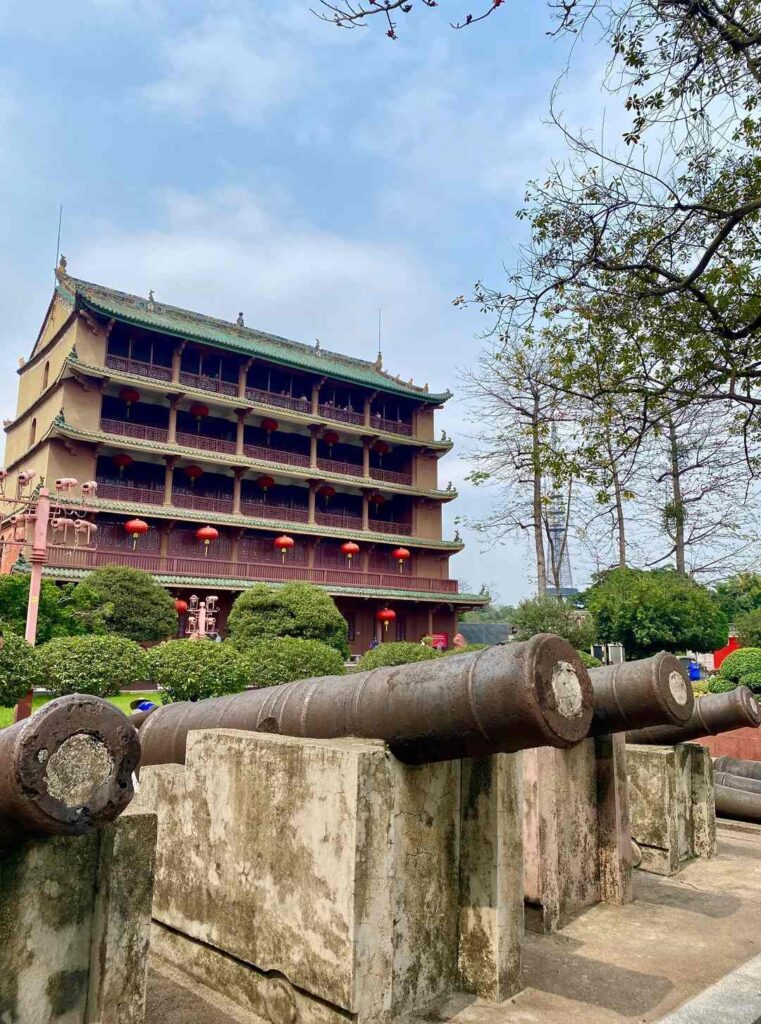
Zhenhai Tower opened to the public as a museum in 1929, making it one of China’s oldest museums. Today, it serves as a branch of the Guangzhou Museum. After visiting, I’d say you don’t need to go inside just for the artifacts, especially if you’re short on time. The collection isn’t very big, so if you’re interested in seeing artifacts, I’d save more time for the Museum of the Nanyue King Mausoleum instead.
That said, if you have time, Zhenhai Tower is still worth a quick look inside. You can climb to the upper levels for a view over Yuexiu Park, and since the ticket is inexpensive, it’s an easy stop if you’re already nearby.
Admission: 10 RMB
Hours: Tuesday–Sunday, 9:00 a.m.–5:30 p.m. Last tickets and entry at 5:00 p.m.
Ming-Dynasty City Wall: Old Trees Growing from the Stone
This section of the city wall was built during the Ming dynasty and once formed part of Guangzhou’s city defenses. The wall is more than 600 years old, and much of it has been damaged or lost over time, so only about 1,100 meters of it remain. The best-preserved section is near Zhenhai Tower.
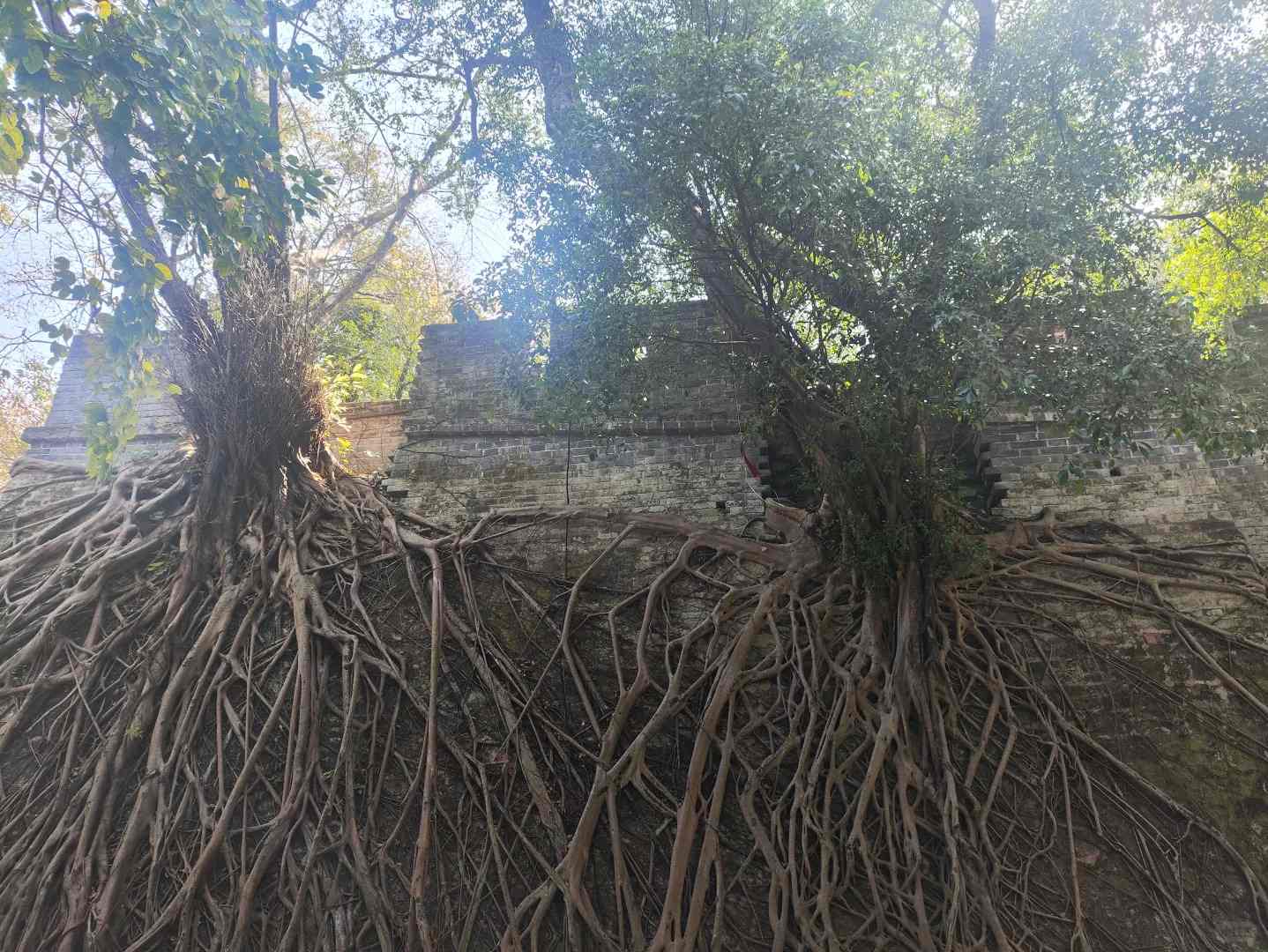
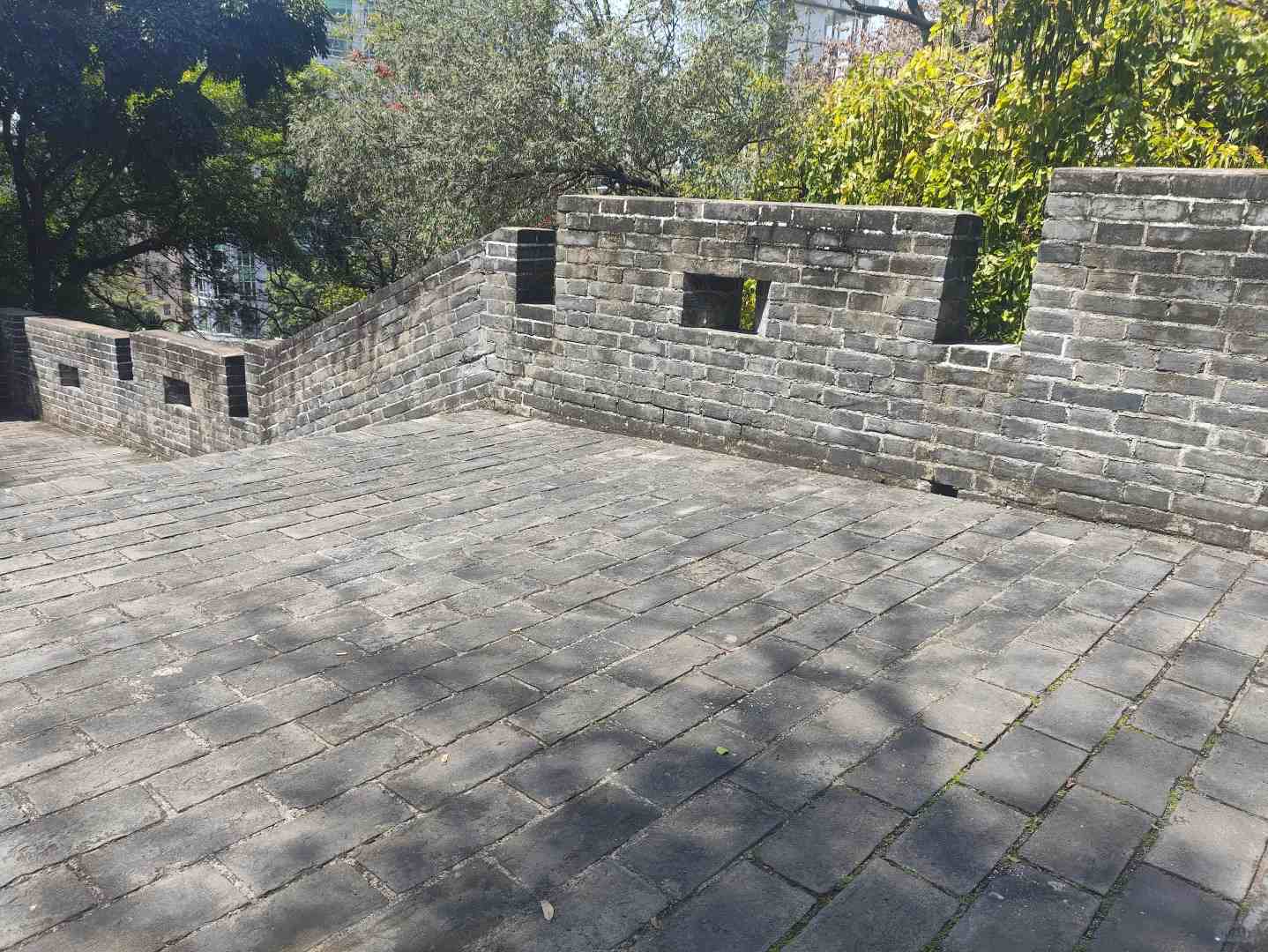
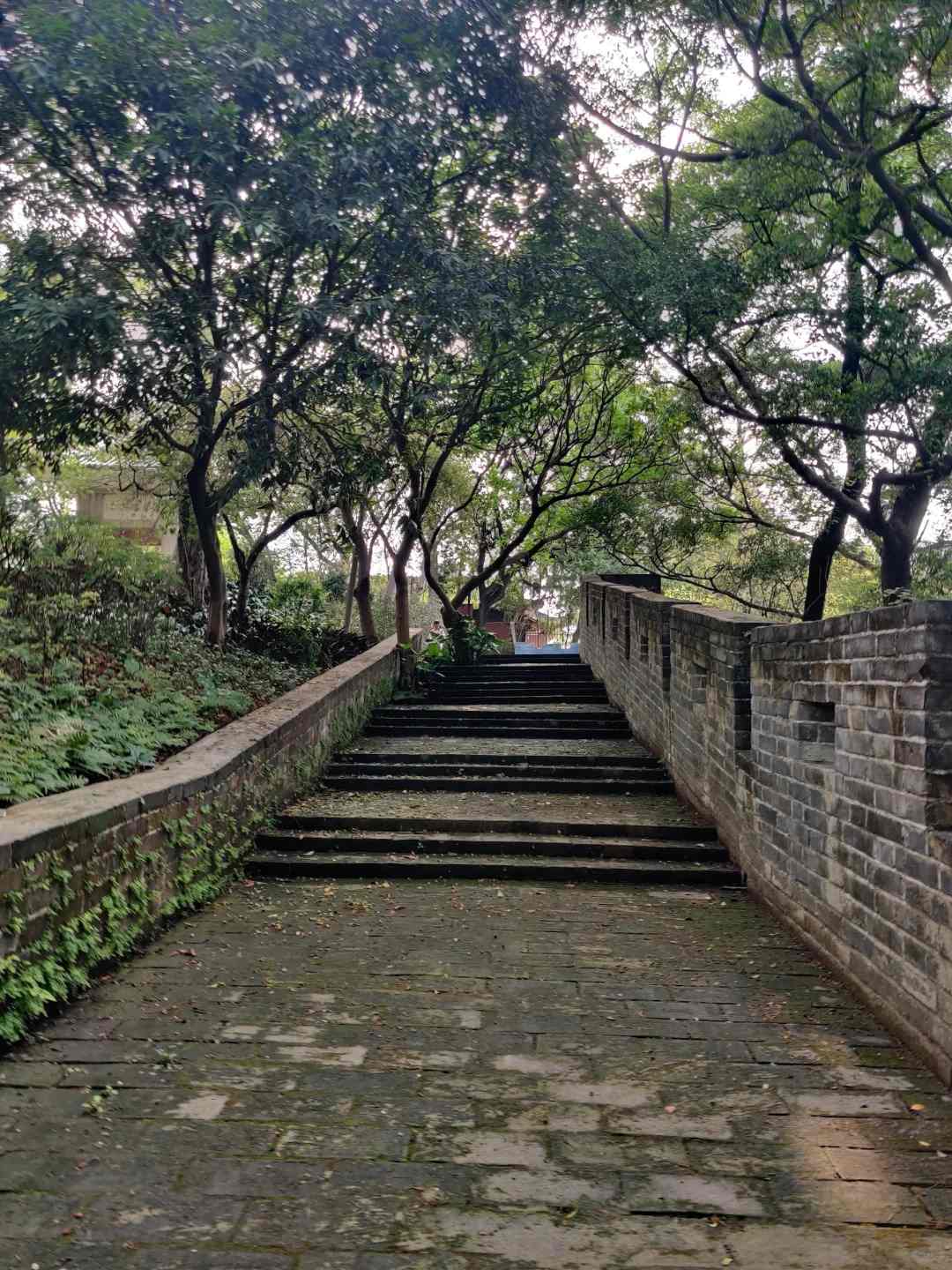
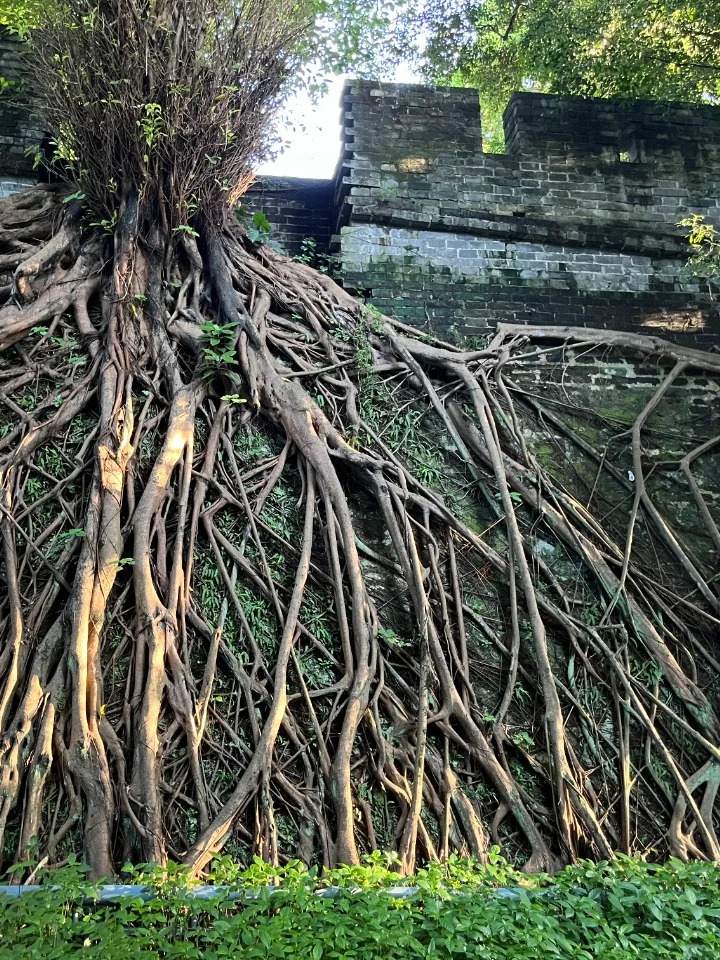
What makes this part of the wall interesting is the old trees growing from the wall itself. Their roots twist around the bricks and stones, almost as if the trees and the wall have grown into one another.
The Sun Yat-sen Monument
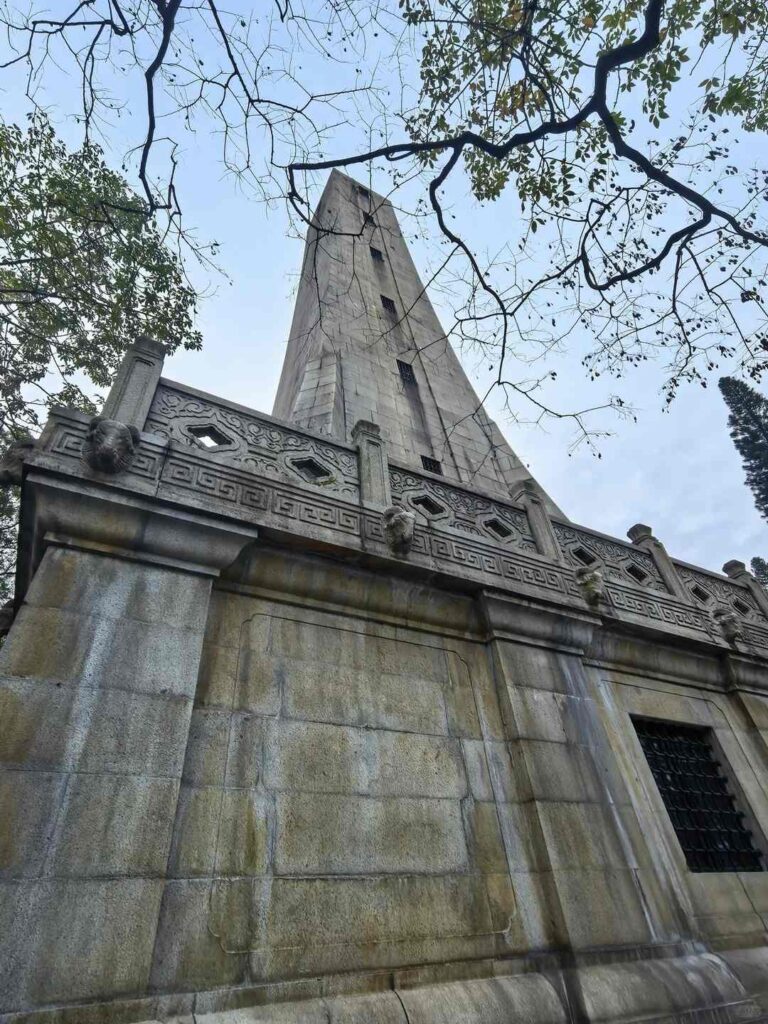
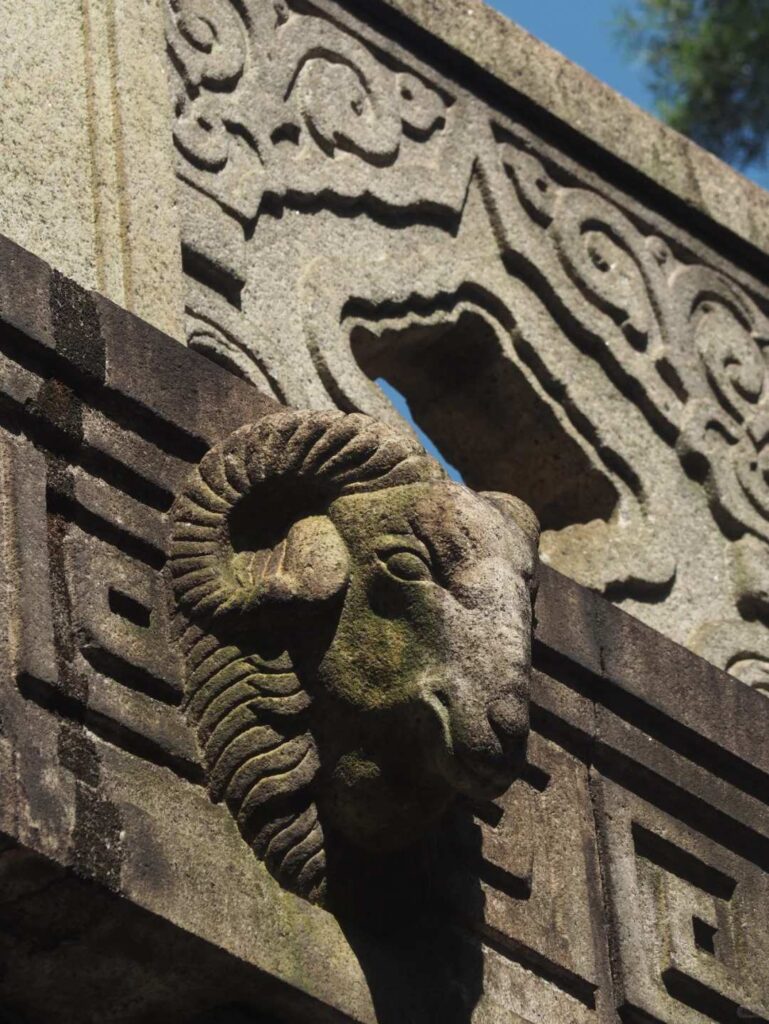
The Sun Yat-sen Monument sits on one of the highest points in Yuexiu Park, so it’s a short uphill walk to reach it. Completed in 1930, the granite monument is about 37 meters tall. It’s not especially decorative, but it has a quiet and serious presence. It was built to honor Dr. Sun Yat-sen, a major figure in modern Chinese history who helped end Qing rule and establish the Republic of China.
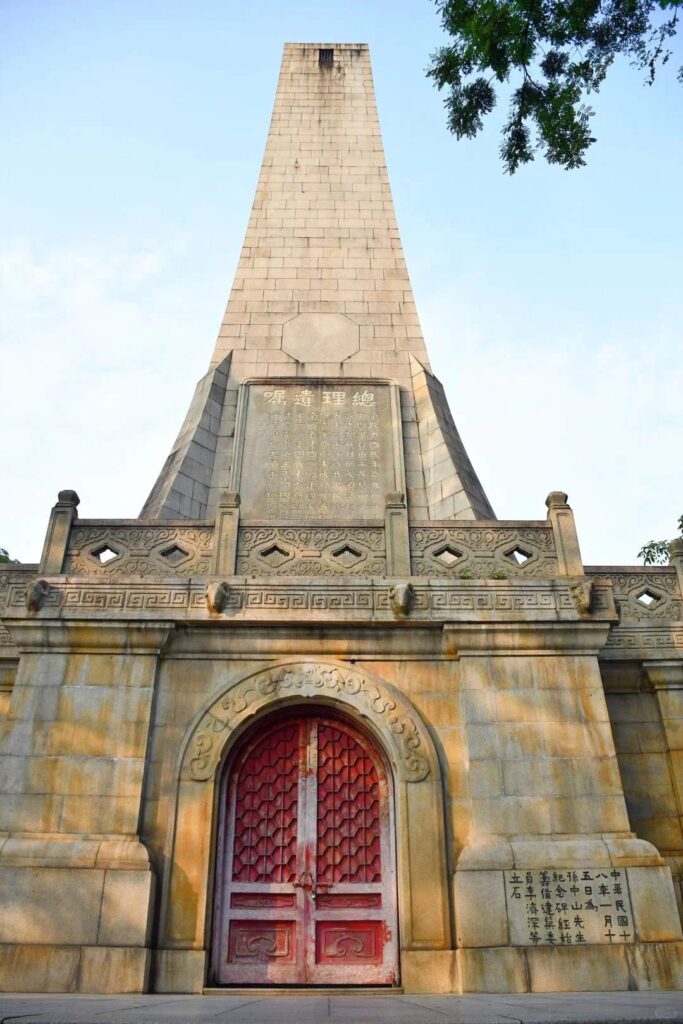
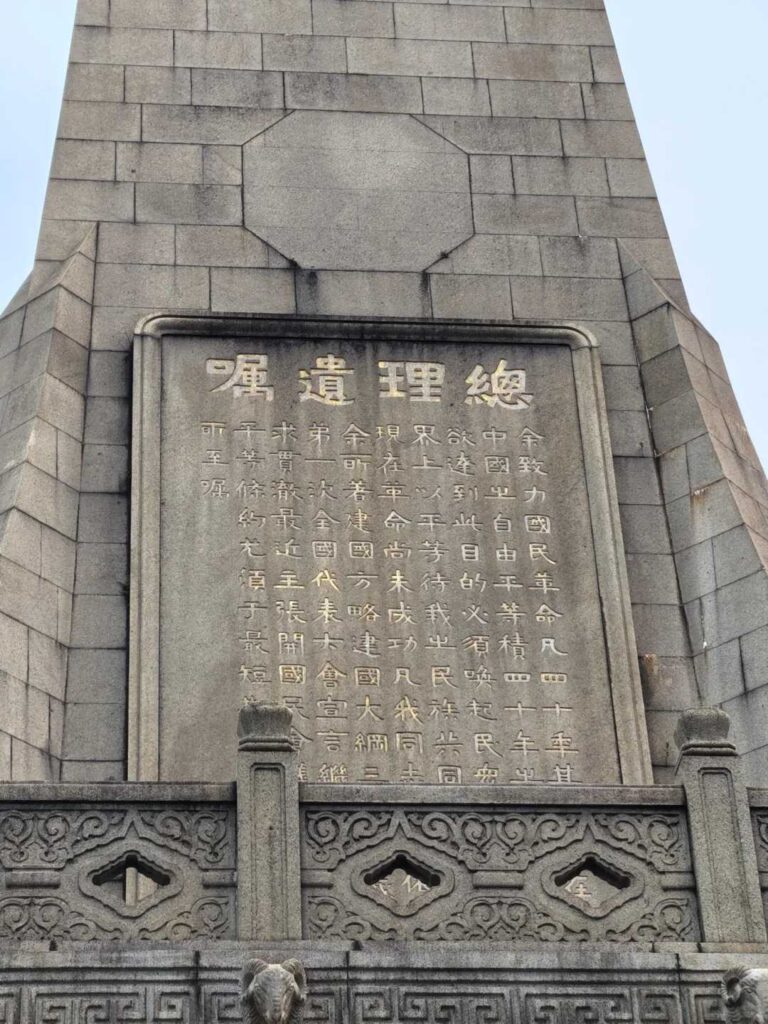
In front of the monument, you’ll see a marble slab carved with Sun Yat-sen’s final testament. If you don’t read Chinese, I suggest using an AI tool to translate it and explain the context if you’re interested.
The Sun Yat-sen Monument also connects to the Sun Yat-sen Memorial Hall at the foot of the hill. Both were designed by Lü Yanzhi, so if you’re already visiting the monument, it makes sense to include the memorial hall too.
I wouldn’t consider the Sun Yat-sen Monument a must-see for every visitor, but if you’re interested in modern Chinese history or want to see the views over the park, I think it’s worth stopping by.
Yuexiu Park’s Three Lakes
Yuexiu Park has three man-made lakes: Beixiu Lake, Dongxiu Lake, and Nanxiu Lake. Each one is unique, but these lakes and the nearby hills give the park much of its character.
Nanxiu Lake is smaller and quieter, with pavilions and a peaceful atmosphere. Beixiu Lake is the largest of the three and more recreational, with a wide stretch of water, small islands, and pavilions, as well as the option to rent a boat.
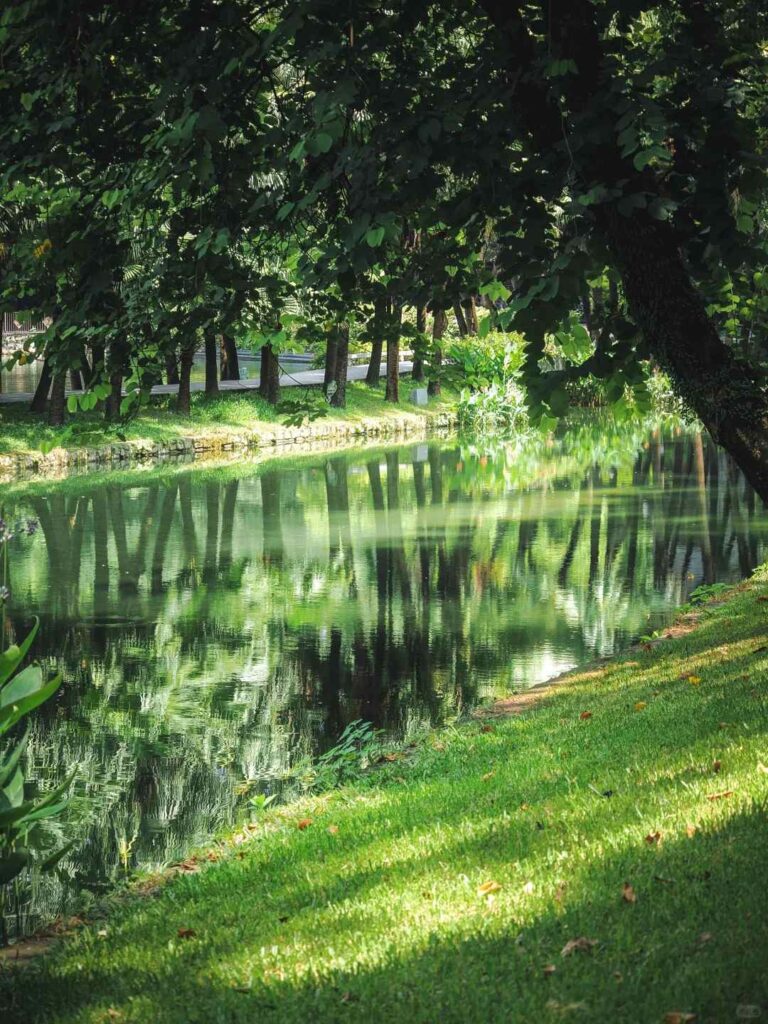
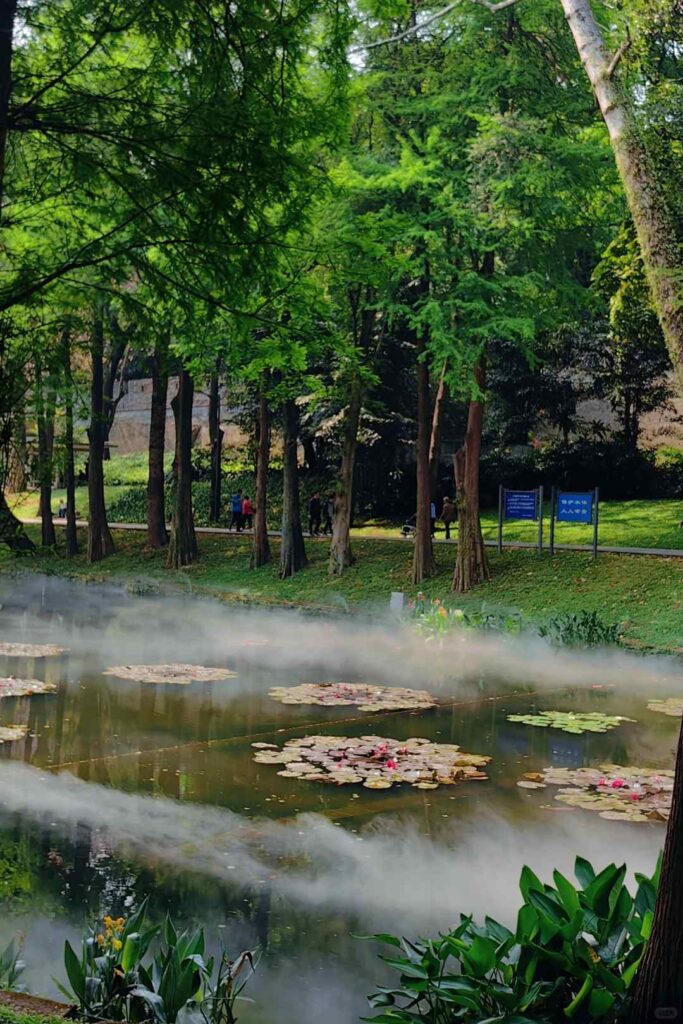
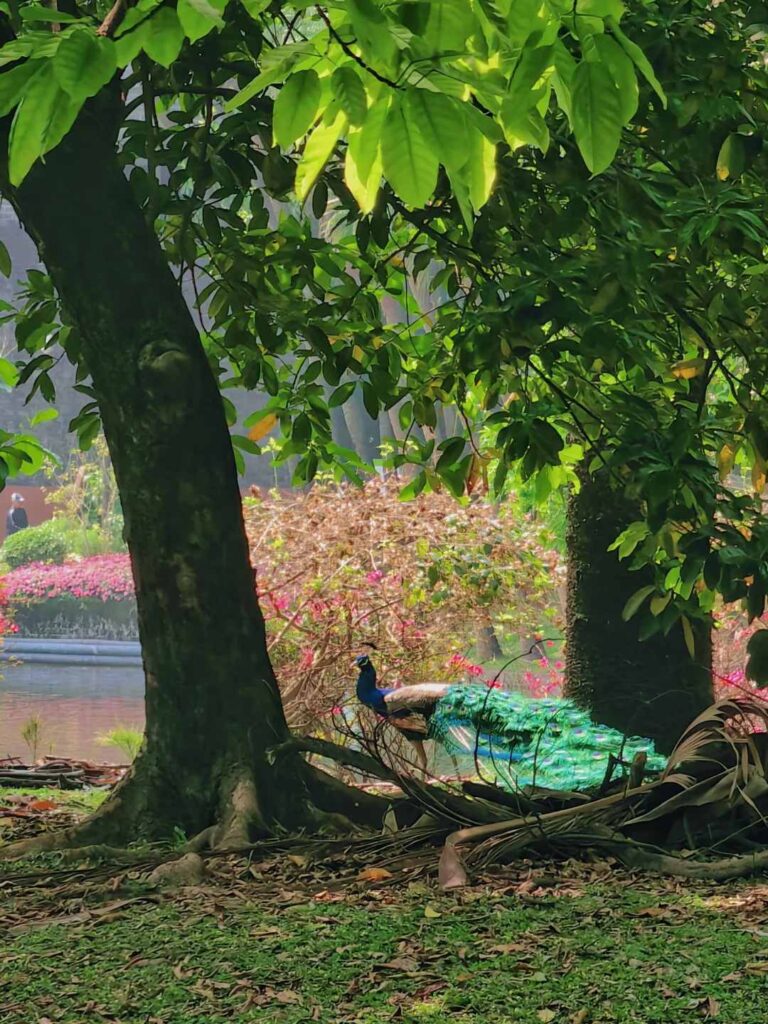
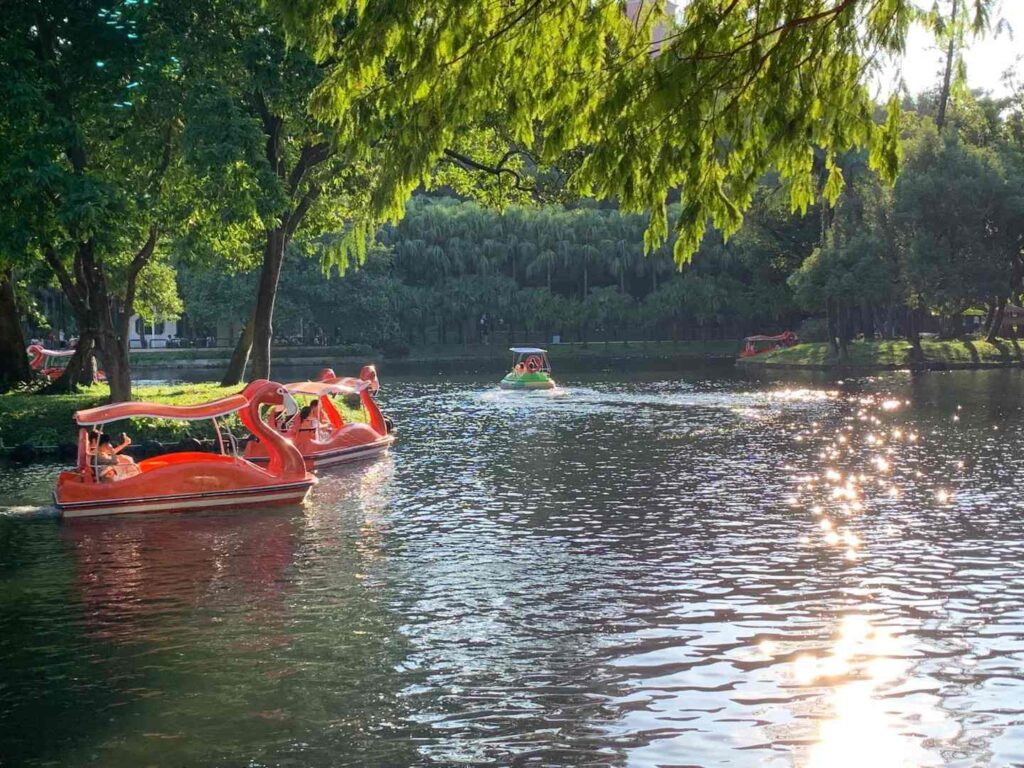
Dongxiu Lake is my favorite of the three. After a recent renovation, Dongxiu Lake now has decorative lighting, fountains, mist effects, and colorful night lights, a scene locals call “Mist Over Dongxiu Lake.” With dense trees lining the water, it’s a lovely place for a slow walk. It’s also a good spot for families with kids who want to go boating.
Historic Archways
There are also several historic archways on Yuexiu Hill. They’re easy to miss if you’re not looking for them, but they offer a glimpse into the park’s older history.
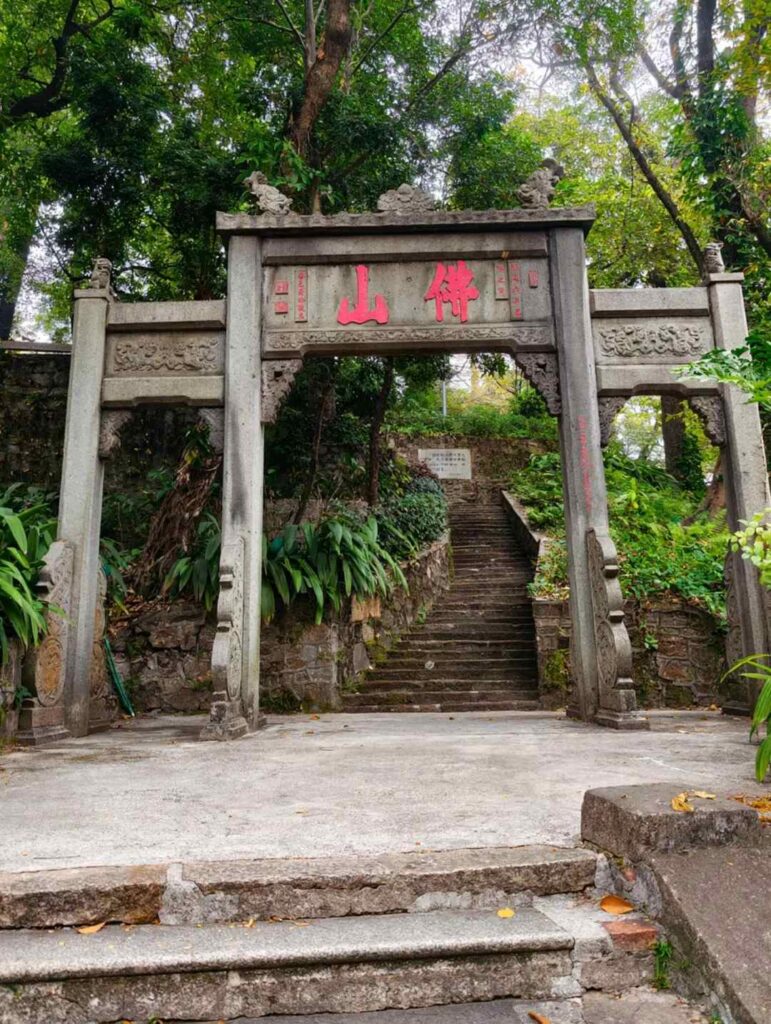
One is the Foshan Archway, first built in 1826, with the characters “佛山” (“Buddha Hill”) carved on the front. The name is tied to the religious buildings that once stood on the hilltop. Around 1405, during the Ming dynasty’s Yongle reign, a Guanyin Pavilion was built where the Sun Yat-sen Monument stands today. It later became a Buddhist temple. By the Qing dynasty, the archway stood here with a name that roughly means “Buddha Hill.”
The Ancient Chuting Archway sits below the Sun Yat-sen Monument. It was first built in 1644 and rebuilt in 1867. “Chuting (楚庭)” was an old name for Guangzhou, so the archway points back to one of the city’s earlier names.

I wouldn’t go out of my way to find these two archways, but look out for them if your walking route takes you past them.
Historical Graves
Yuexiu Park contains several graves linked to Chinese history, including those of Wu Tingfang and his son Wu Chaoshu. Both played important roles in China’s republican and democratic movements.
The park also has the tomb of Zhu Yuyue, the Prince of Tang, who declared himself the Shaowu Emperor in Guangzhou. The city fell only 40 days later, and the Shaowu Emperor and more than ten officials died by suicide. All are laid to rest here, and the site is marked by two stone tablets. The grave of Wang Xing, a Southern Ming general who fought against the Qing when they pushed south, is nearby.


For most international travelers, these names probably won’t be familiar, so I wouldn’t set aside time just to look for these sites, but you might take a look if you happen to pass them while walking through the park.
Museum of the Nanyue King Mausoleum
The Museum of the Nanyue King Mausoleum is not inside Yuexiu Park, but it’s right next to the park’s West Gate, so the two are easy to visit together.
As I mentioned earlier, it’s built around the original tomb itself, so it’s also a visit to an actual archaeological site.
The tomb belonged to Zhao Mo, the second king of the Nanyue Kingdom, who lived more than 2,000 years ago. Nanyue was a local kingdom in the Lingnan region between the Qin and Han dynasties, centered around what is now Guangzhou. Because this was a royal tomb, the scale and craftsmanship are much more impressive than you might expect.
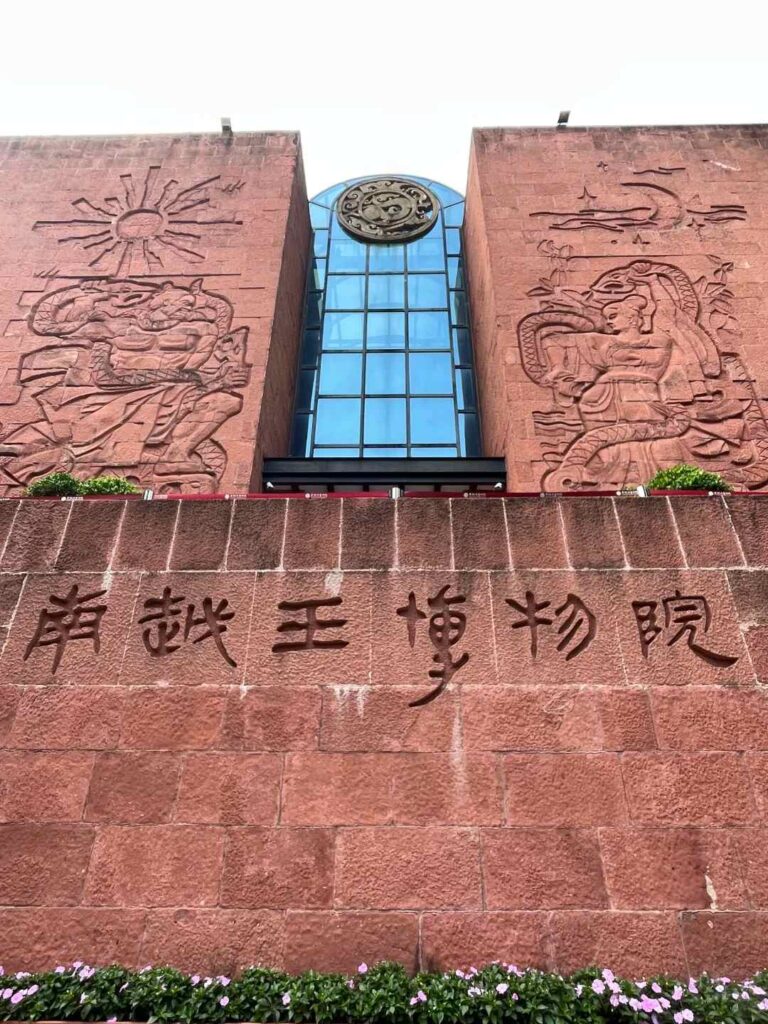
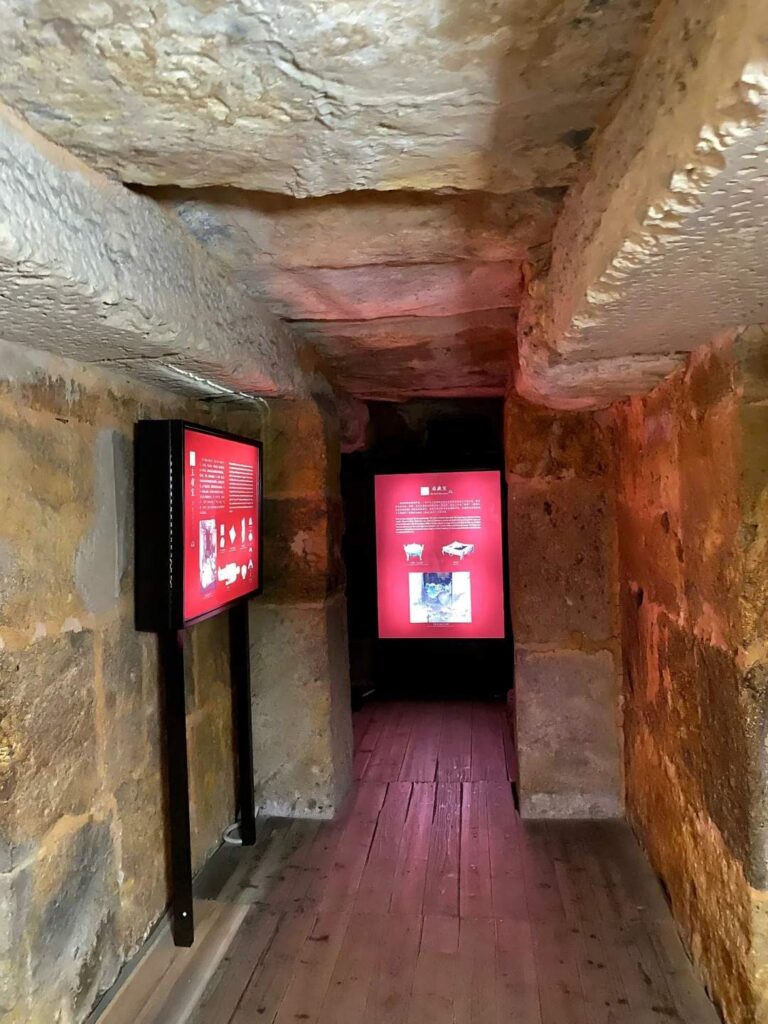
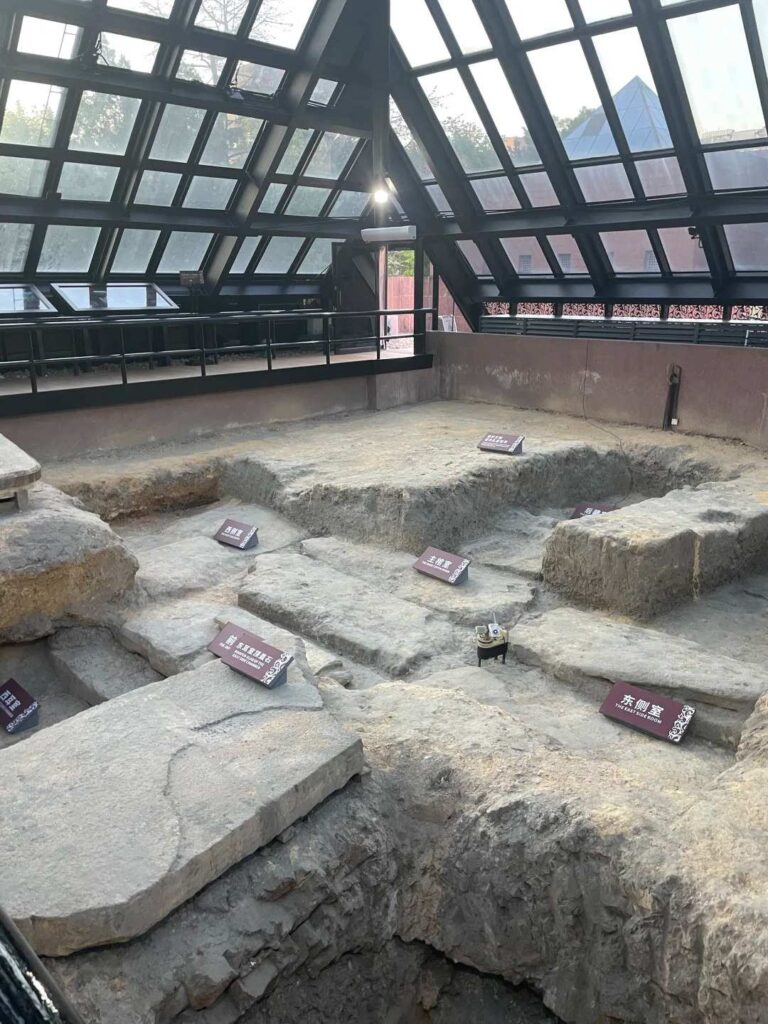
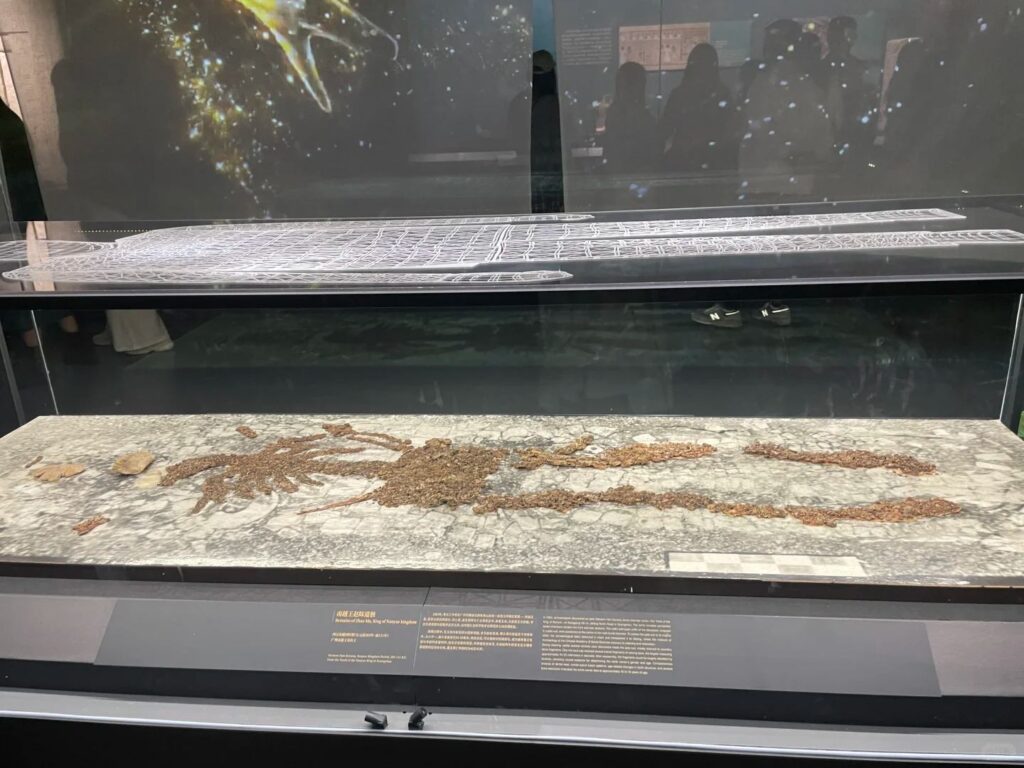
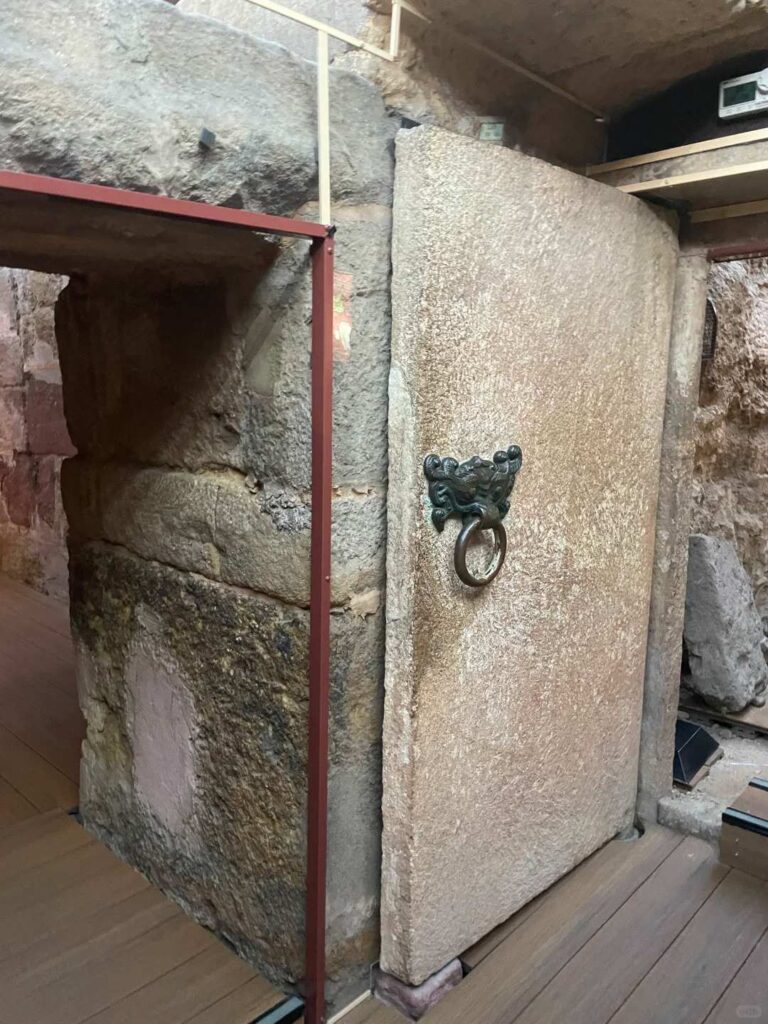
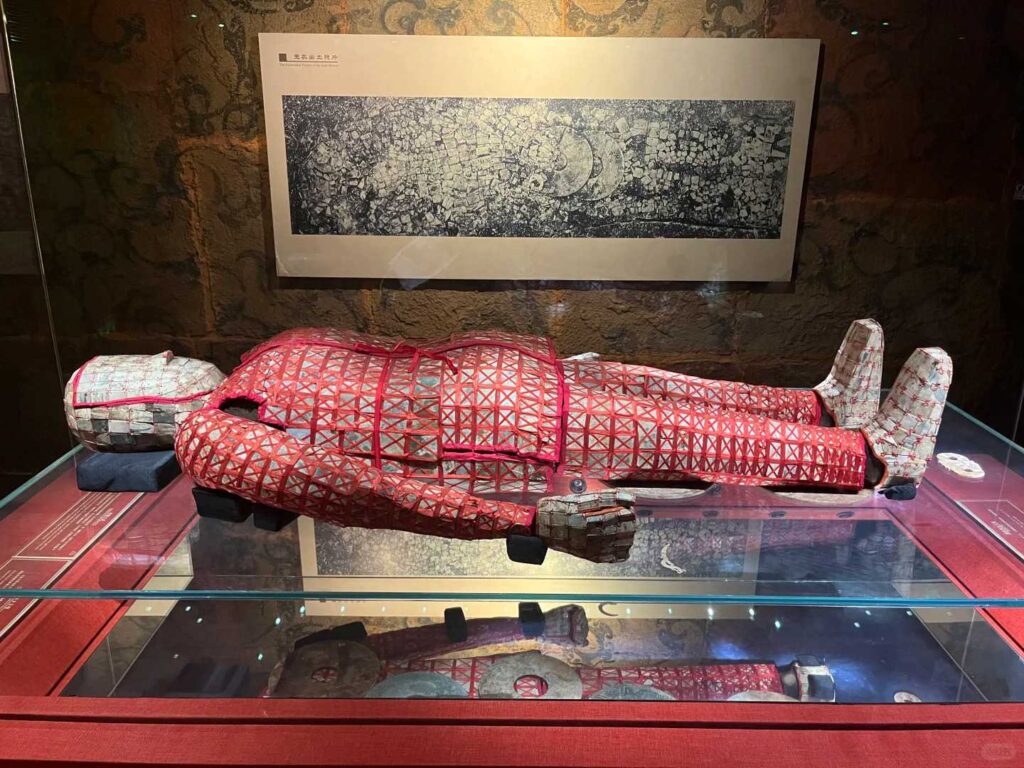
I highly recommend visiting this museum. The highlight is the excavated tomb itself, where you can walk inside and see the royal tomb structure up close. Even without much historical background, it’s much more immersive than looking at artifacts behind glass like in a normal museum.
Hours: Tuesday–Sunday, 9:00 a.m.–5:30 p.m. Last tickets and entry at 5:00 p.m. Closed Monday.
Admission: 10 RMB full price; 5 RMB reduced ticket.
Suggested Walking Routes
The routes below work well if you want to combine Yuexiu Park with the nearby historical sights. Sun Yat-sen Memorial Hall and the Museum of the Nanyue King Mausoleum are near different entrances to the park, so this route links them together.
Classic Route
Sun Yat-sen Memorial Hall Metro Station → Sun Yat-sen Memorial Hall → South Gate of Yuexiu Park → Sun Yat-sen Monument → Ming-Dynasty City Wall → Zhenhai Tower → Dongxiu Lake (optional stop) → Five Rams Statue → West Gate → Museum of the Nanyue King Mausoleum
Pro-tip: Dongxiu Lake is a slight detour on this route. Including it adds about 2 kilometers to the walk, so skip it if you’re short on time or tired.
Family-Friendly Route
If you’re traveling as a family, this route focuses on stops that are more interesting for kids.
Yuexiu Park Station, Exit E → Museum of the Nanyue King Mausoleum → Yuexiu Park West Gate → Five Rams Statue → Ming-Dynasty City Wall → Sun Yat-sen Monument (optional stop) → Zhenhai Tower / Guangzhou Museum → Dongxiu Lake → Jinyin Amusement Park → East Gate → Sun Yat-sen Memorial Hall (optional stop)
A Few Notes About This Route
Sun Yat-sen Memorial Hall is about 1.1 kilometers from the East Gate. If you plan to go there after the park, I’d take a taxi or use a ride-hailing app instead of walking, especially with kids.
The Sun Yat-sen Monument is uphill, so expect a walk. If you’re with older visitors or young kids, I’d skip it unless you’re especially interested in Sun Yat-sen or modern Chinese history.
You can go boating on Dongxiu Lake, and Jinyin Amusement Park is good for kids. Both are family-friendly stops.
Travel Tips
- There are convenience stores and a few small places to eat inside Yuexiu Park, so finding water or snacks isn’t a problem. However, choices are limited, so I’d eat breakfast or lunch before entering the park.
- Mosquitoes are worse in the summer, so bring insect repellent.
- Allow around three hours for Yuexiu Park itself.
- There are gentle slopes and steps throughout the park, so wear comfortable walking shoes.
Read More:
Things to Do in Guangzhou
Where to Stay in Guangzhou


