Yu Garden Travel Guide – Covering Transportation, Routes, Food, and Shopping
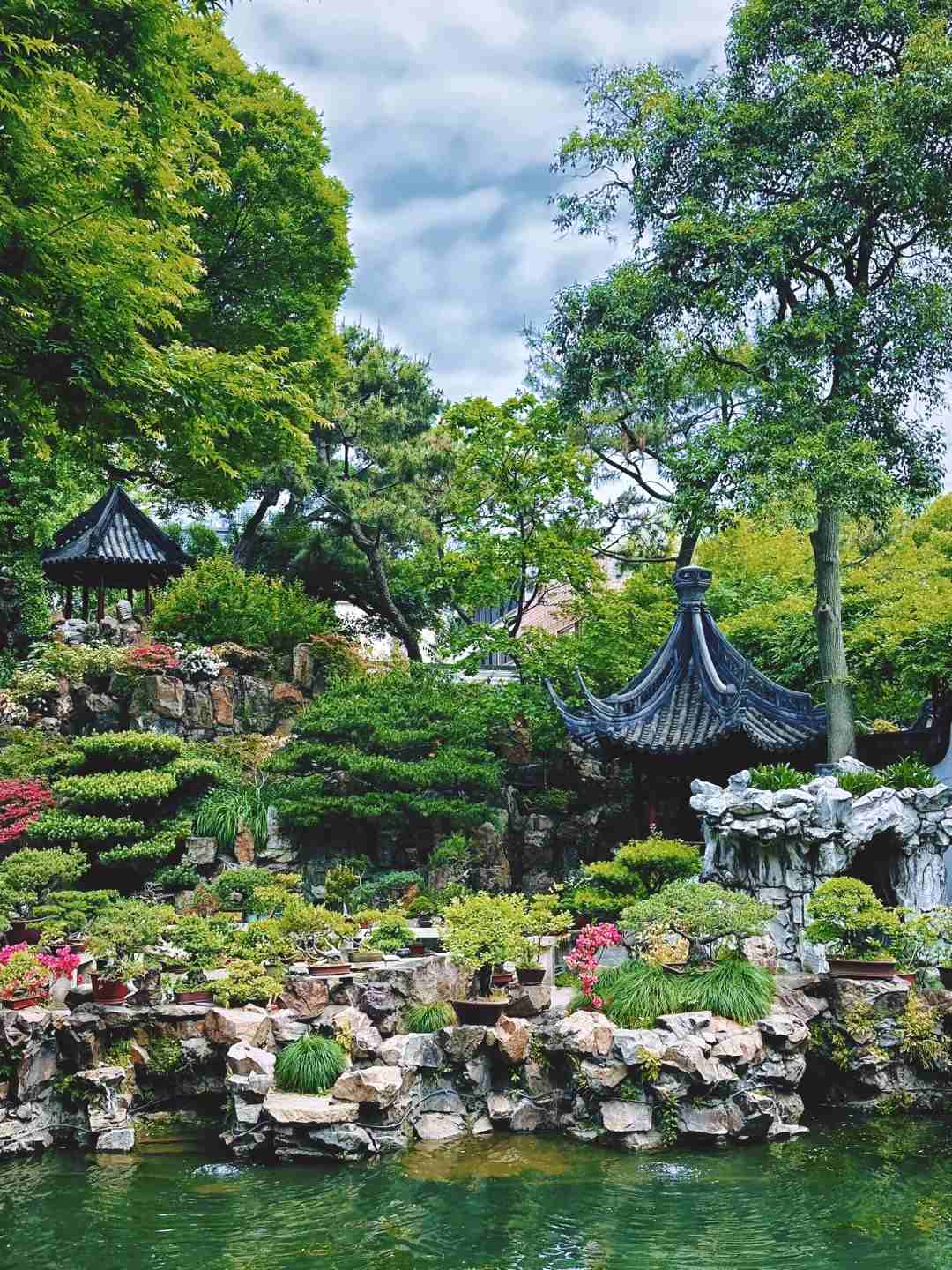
If you want to experience ancient China while in Shanghai, I highly recommend Yu Garden. It is the only well-preserved classical Jiangnan garden in the city center and a must-visit for international tourists. The area includes three places: The Yu Garden (the garden itself), the City God Temple, and the Yuyuan Bazaar. They are very close to each other, so you can easily hit all three.
I personally love it here. I brought my oldest child here in the winter of 2019, and just this past summer, I took my second child to experience it too. To me, it’s not just a famous site, but a 450-year-old slice of history. Below, I’ll give you a detailed breakdown of the area, and I’ve included some historical background to make your visit more interesting.
How to Get There
Subway: Take Line 10 to “Yuyuan Station,” get out at Exit 1, and it’s about a 5-minute walk.
Taxi/Ride-share: Just tell the driver you’re going to “Yuyuan,” (they’ll usually assume the Bazaar area), and it’s easy to find. Taking a taxi in China is very cheap, so unless it’s rush hour, I recommend this option.
Planning Ahead
Yu Garden (Garden area) (Estimated time: 1 hour):
- Tickets: 40 RMB (20 RMB for students/seniors).
- Hours: 9:00 a.m.–4:30 p.m. (last entry at 4:00 p.m), closed on Mondays (except public holidays).
City God Temple (Estimated time: 10–30 minutes):
- Tickets: 10 RMB.
- Hours: 9:00 a.m.–5:00 p.m. (May 1–Sept 30); 8:30 a.m.–4:30 p.m. (Oct 1–Apr 30).
Yuyuan Bazaar (Estimated time: 1–2 hours):
- Tickets: Free, but tickets may be required on certain dates during the Lantern Festival (around Lunar New Year).
- Hours: 9:30 a.m.–10:00 p.m.; lights on: 7:00 p.m.–10:00 p.m. (Summer time).
Suggested Order:
- 3:30 p.m.–4:30 p.m.: Yu Garden
- 4:30 p.m.–5:00 p.m.: City God Temple
- Starting at 5:00 p.m.: Explore the Bazaar and have dinner
- 7:00 p.m.: Take photos of the night scenery after the lights come on
Travel Tip: If you want to see all three areas, follow the schedule above, and you’ll get to see the classical garden in daylight and the view of the Bazaar at night. If you don’t care about the night view, I’d suggest going early in the morning when it’s less crowded. And if you only want the night view, just head there around 6:30 p.m.–9:00 p.m.
Exploring the Yu Garden
The Story of Yu Garden: The history of Yu Garden is quite interesting. It started as a gesture of “filial piety”—a core Chinese virtue rooted in deep respect, devotion, and care for one’s parents and ancestors.
A Ming Dynasty official named Pan Yunduan spent 20 years, plus his family fortune, building a private sanctuary so his father could enjoy his retirement in peace. In Chinese, “Yu“ stands for “peace” and “health,” symbolizing a wish for his parents’ happiness. Although his father passed away before the garden was finished, the designs representing blessings and longevity throughout the garden still reflect their deep father-son bond.
Construction began in 1559, and at its peak, it covered over 70 acres, earning it the title of “Top Garden in Southeast China.” It survived three major periods of destruction throughout history, during the 1842 British occupation, the 1860 Qing army stationing, and the 1937 Japanese fire, so only 30 acres remain today. However, it still preserves core highlights like the Ming Dynasty Great Rockery and the Exquisite Jade Rock.
Famous Spots in the Garden:
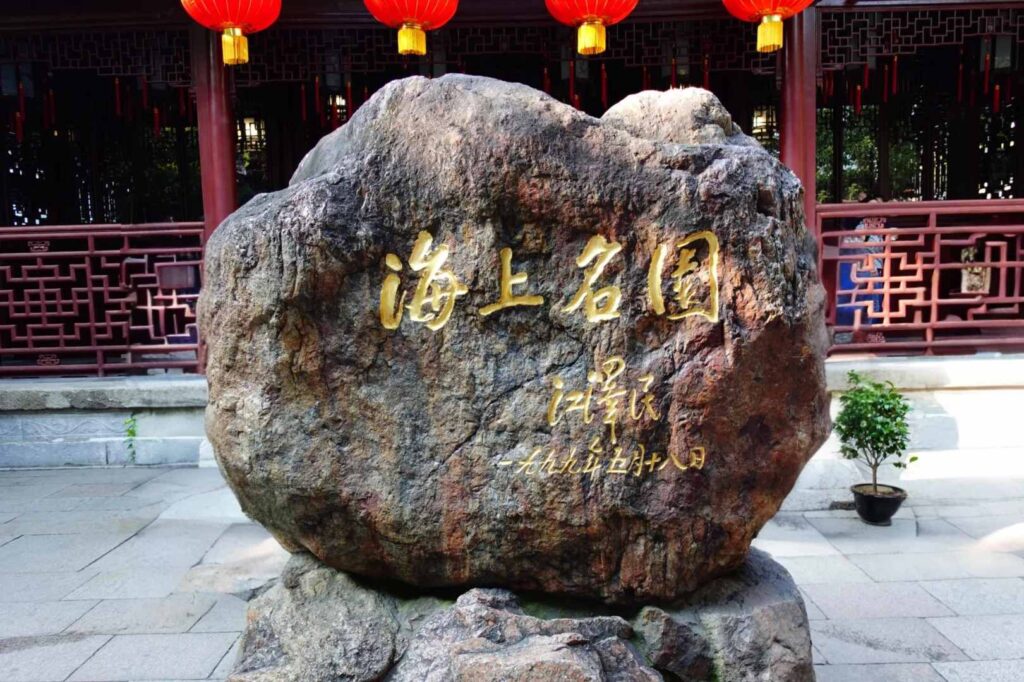
“Famous Garden on the Sea” Inscription: At the entrance, you’ll see a striking inscription that reads “Famous Garden on the Sea (海上名园).” These four characters were handwritten by former Chinese leader Jiang Zemin, which is a notable sign of recognition for Yu Garden. Chairman Jiang was a beloved leader in China who passed away in 2022.
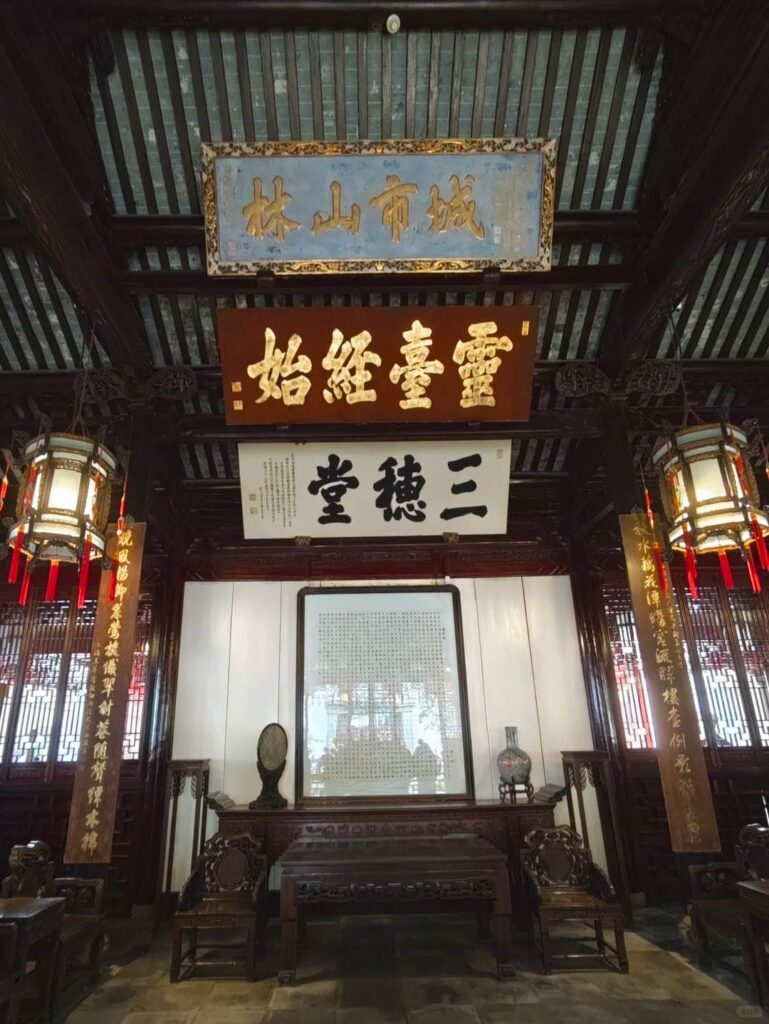
Sansui Hall: This is the main building in the garden. This was once where the owner hosted important guests and where scholars gathered to socialize. At the time, it was considered a top-tier club for scholars. The building today retains the classic beauty of “flying eaves” (upturned corners), and its name symbolizes “success in career” and “a bountiful harvest.”
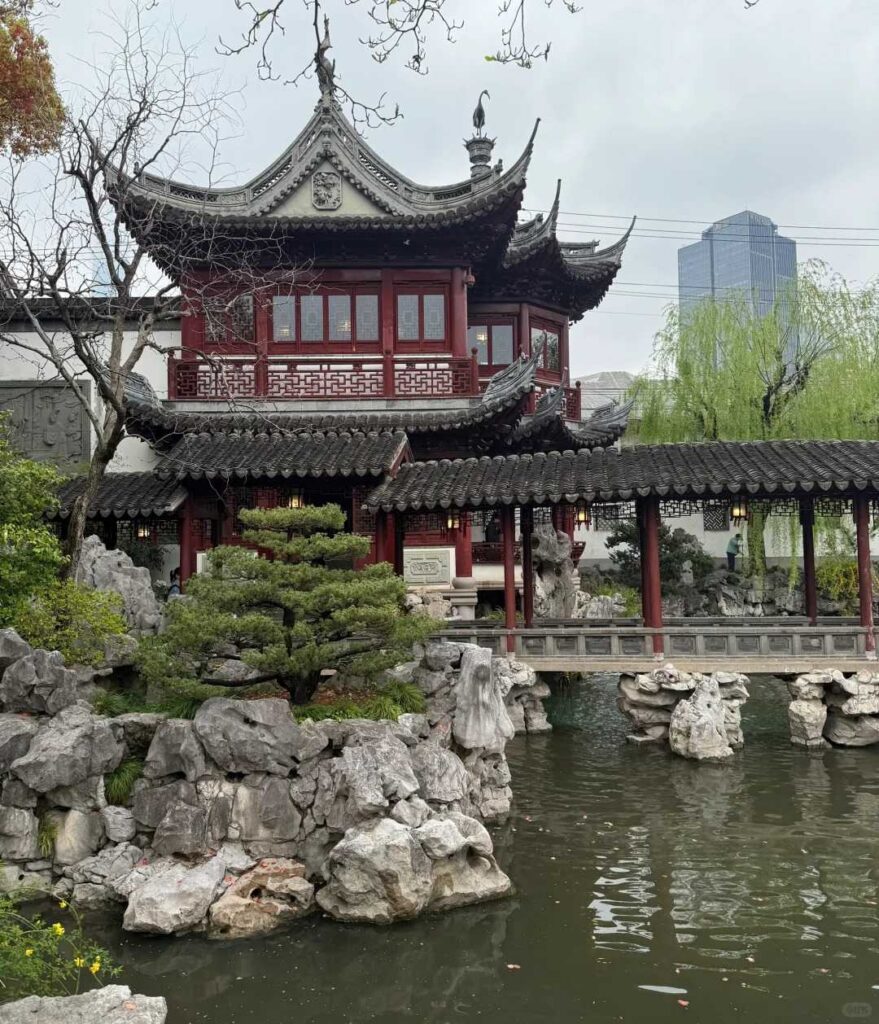
Yangshan Hall and Juanyu Pavilion: This is located behind Sansui Hall. The lower floor is called Yangshan Hall, and the upper floor is Juanyu Pavilion. It’s a winding structure that was rebuilt in 1866, the 5th year of Emperor Tongzhi’s reign. If you catch it during a light drizzle, the view of the misty mountain makes you feel as if you’re inside a painting.
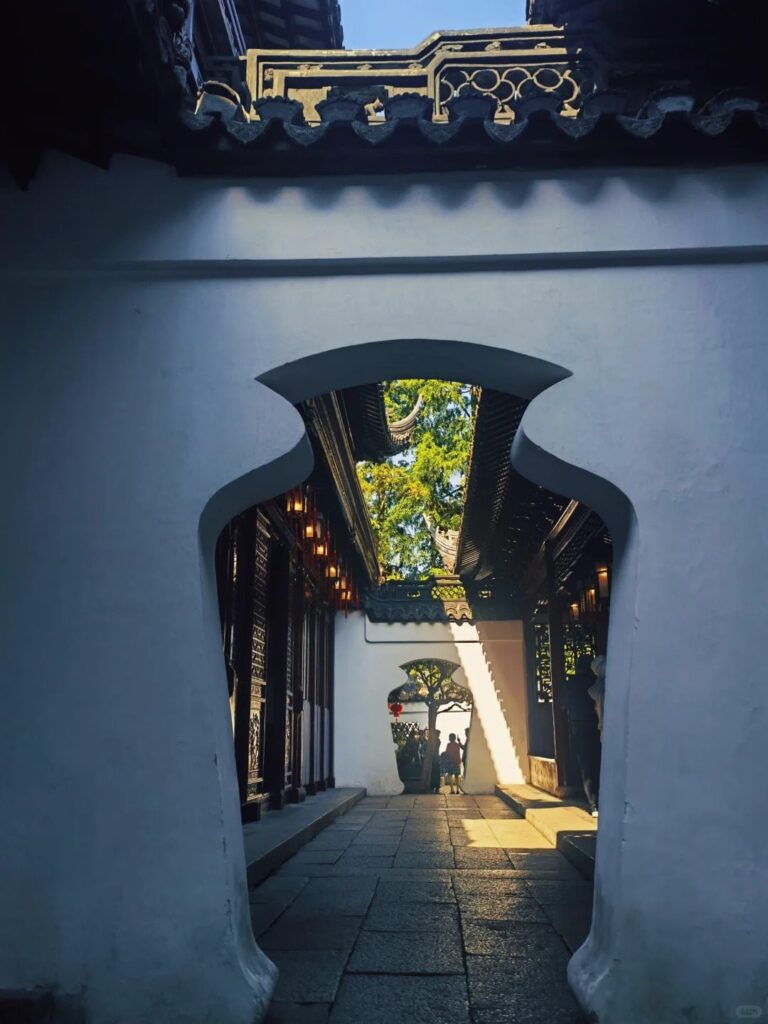
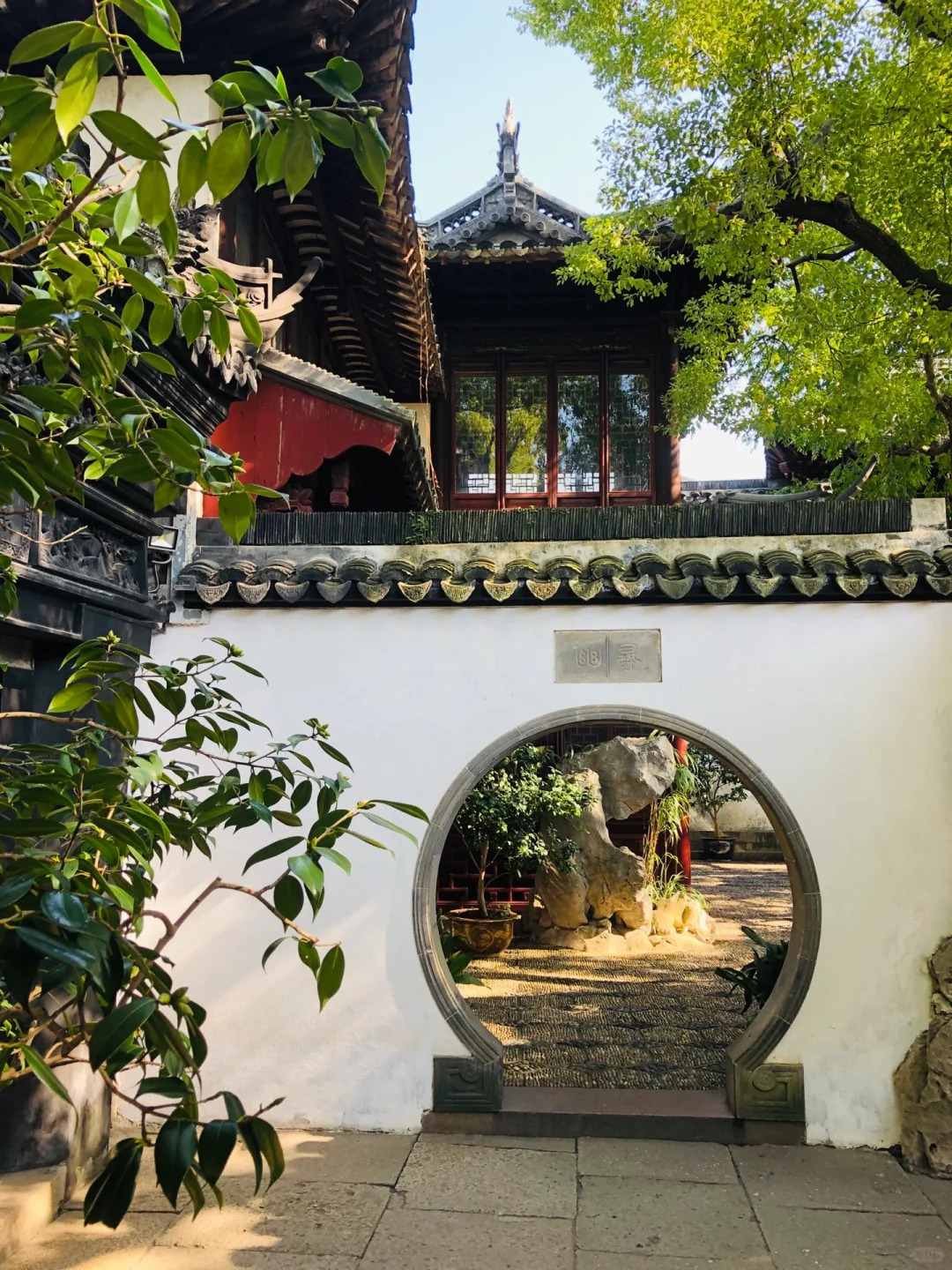
Vase-Shaped Door: After passing through Sansui Hall, you’ll notice a uniquely shaped round door that looks like an elegant vase. This design is called a “Han Vase” or “Guanyin Vase.” In Chinese culture, the word for “vase” (pingzi) sounds similar to the word for “peace” (ping’an), so the door symbolizes “safety and good luck.” It’s a clever design that beautifully frames and connects two areas.
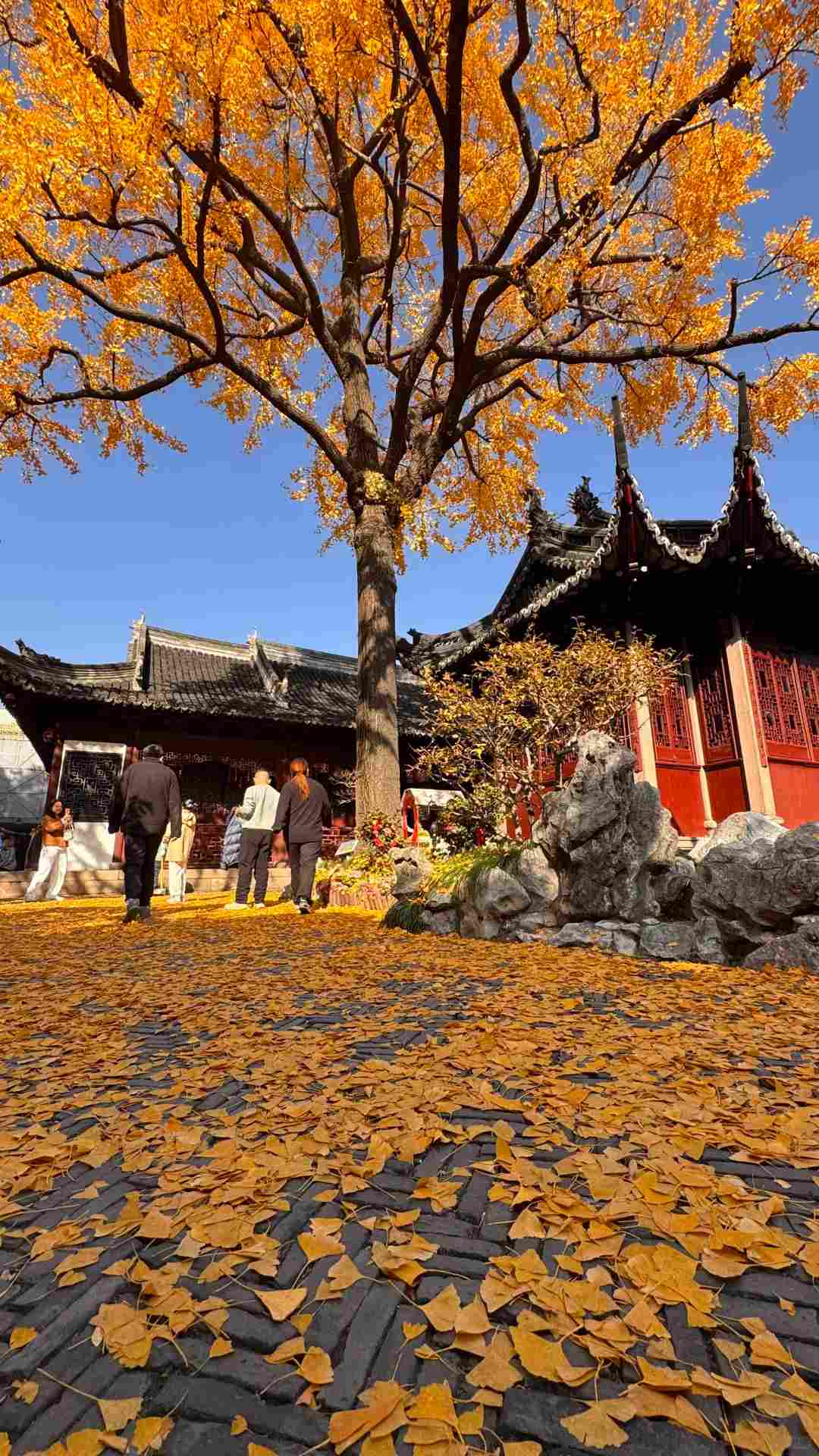
Wanhua Chamber: This used to be a place to worship the Flower Goddess, as its name means “deep among ten thousand flowers.” In front of the building is a 430-year-old ancient Ginkgo tree. It has quietly guarded the garden for centuries, and legend says it was planted by the owner himself. The tree is a lush green in spring and turns golden yellow in autumn, making it one of the most beautiful sights in the garden any time of year.
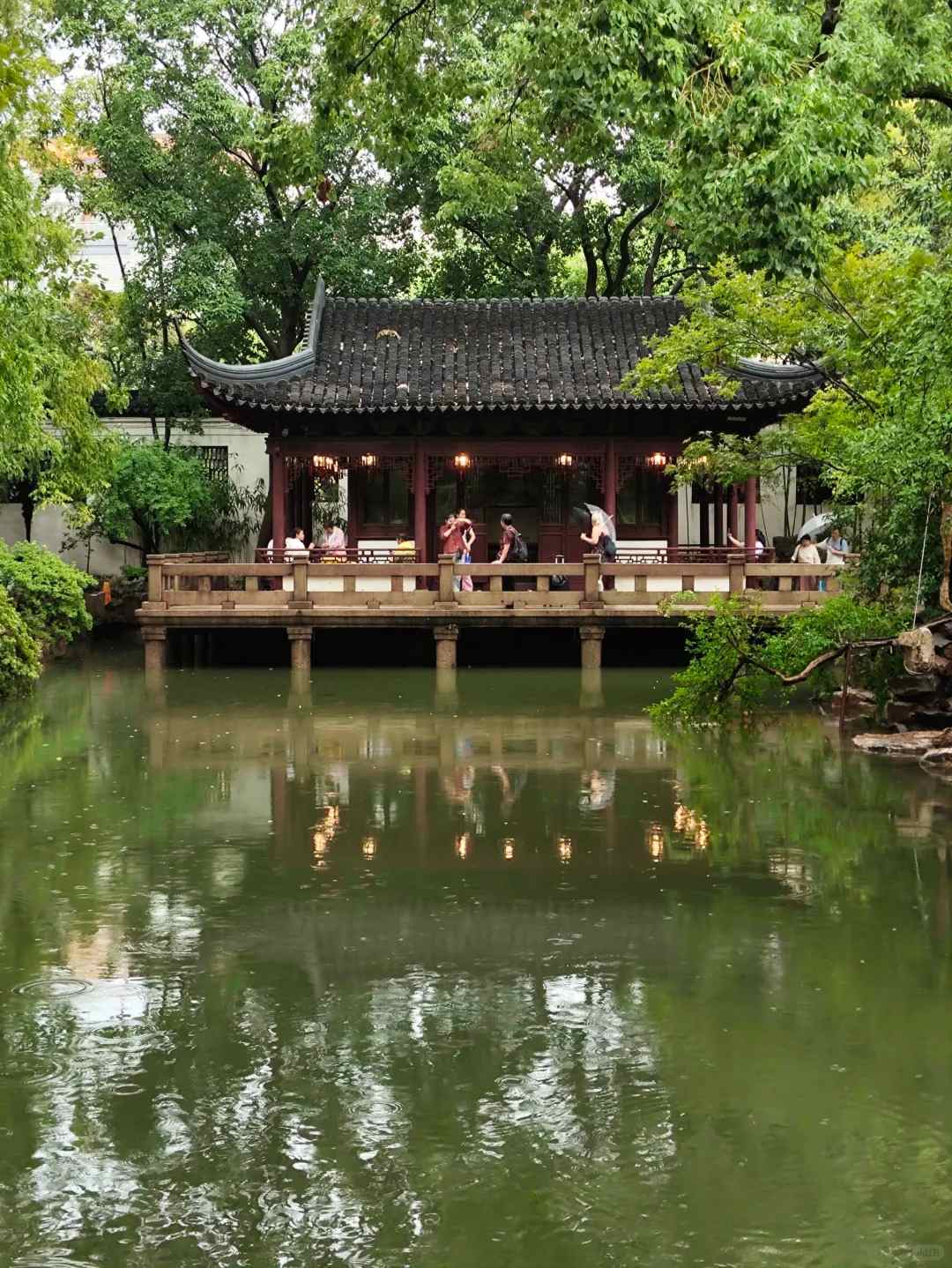
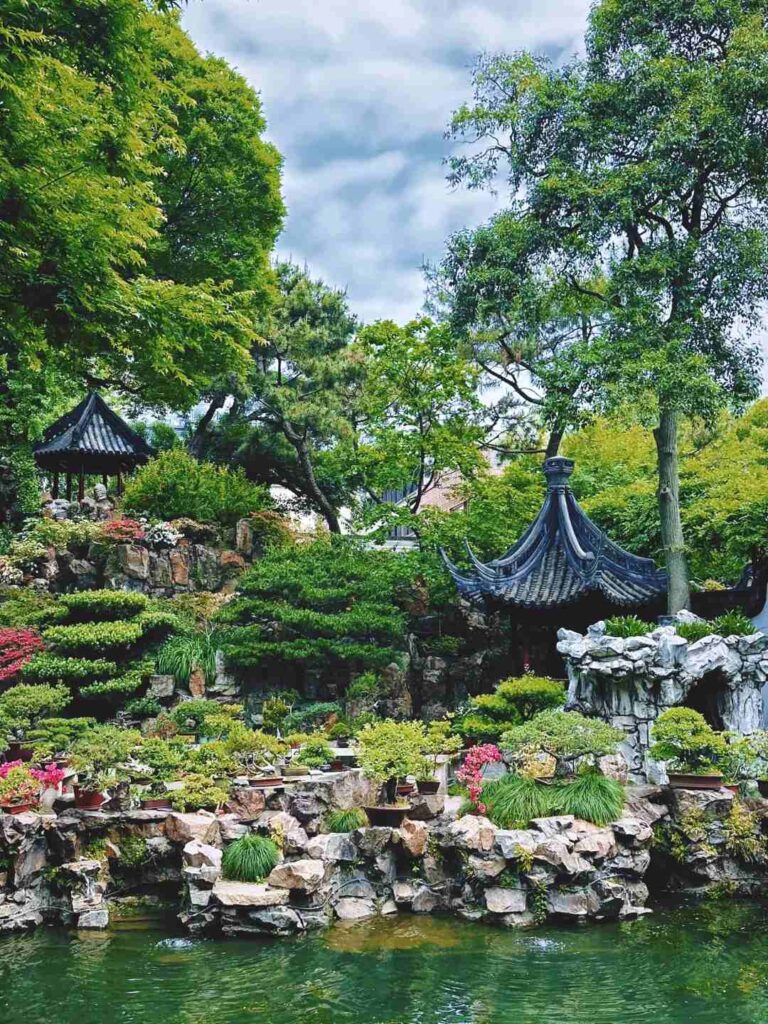
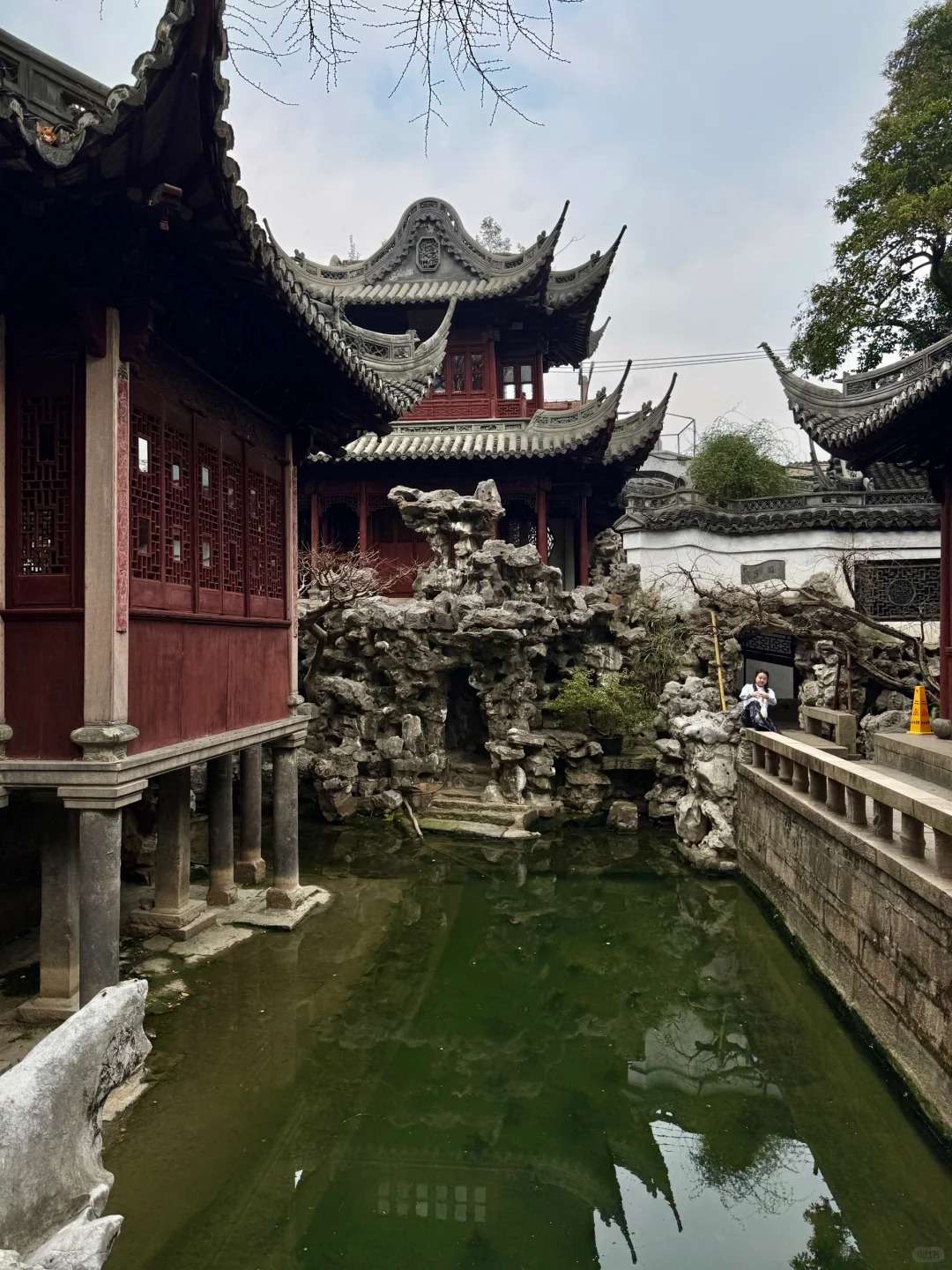
The Great Rockery: This is another one of the garden’s highlights. It’s a masterful rock garden, designed by the famous Ming Dynasty gardener Zhang Nanyang, using about 2,000 tons of yellow stone. Centuries ago, the small pavilion on top was the highest point in Shanghai. If you climbed up, you could overlook the whole garden, and supposedly even see the Huangpu River in the distance.
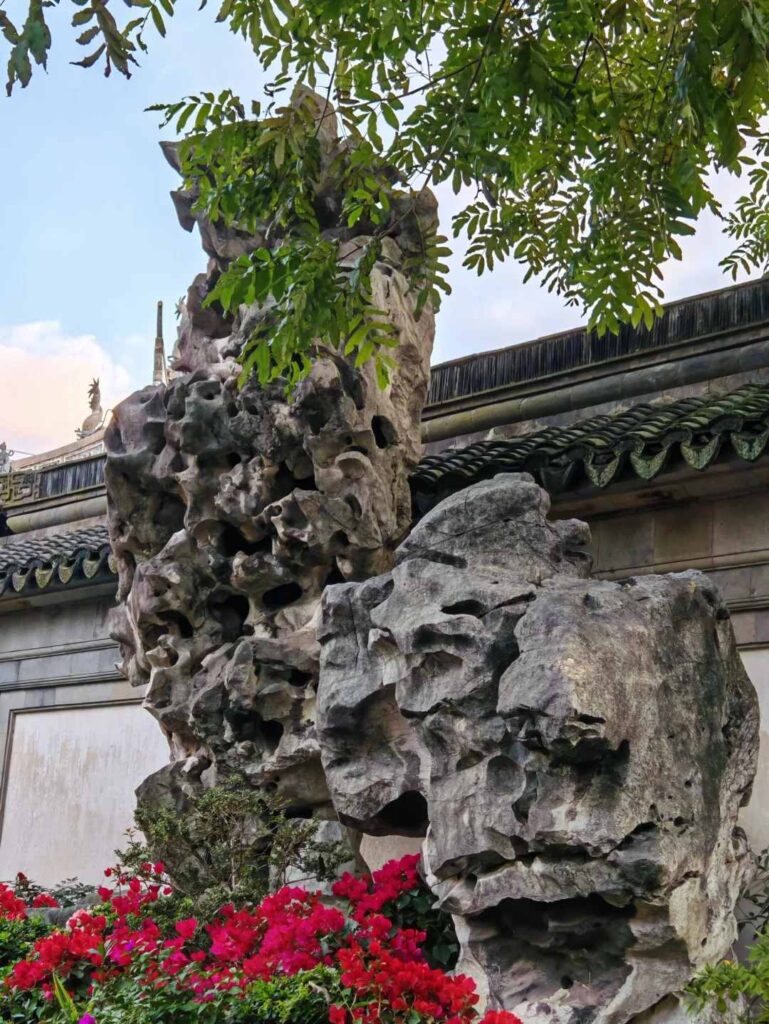
The Exquisite Jade Rock (玉玲珑): This is the garden’s most famous treasure—a legendary “scholar’s stone.” It’s a massive, porous rock that perfectly fits the four ancient standards of beauty: wrinkled, slender, leaky, and transparent. Legend has it that if you light incense at the base, smoke will drift out of every single hole.
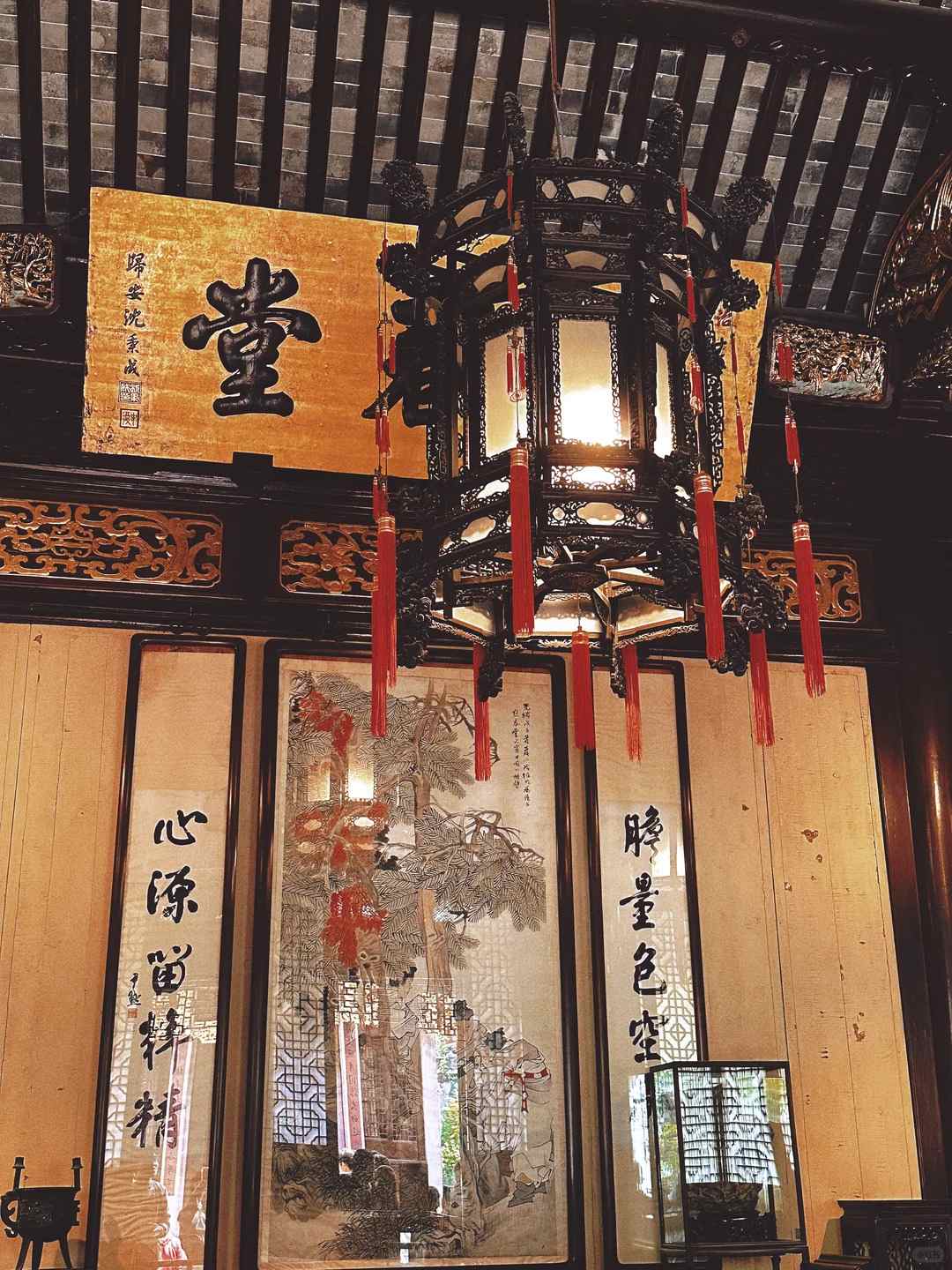
Dianchun Hall (The Rebel Headquarters): In 1853, a local uprising group called the “Small Swords Society” used this hall as their secret headquarters. Today, you can still see some of their weapons and documents on display. There’s a fascinating contrast between the room’s exquisite gold-plated wood carvings and its history as a place for rebellion.
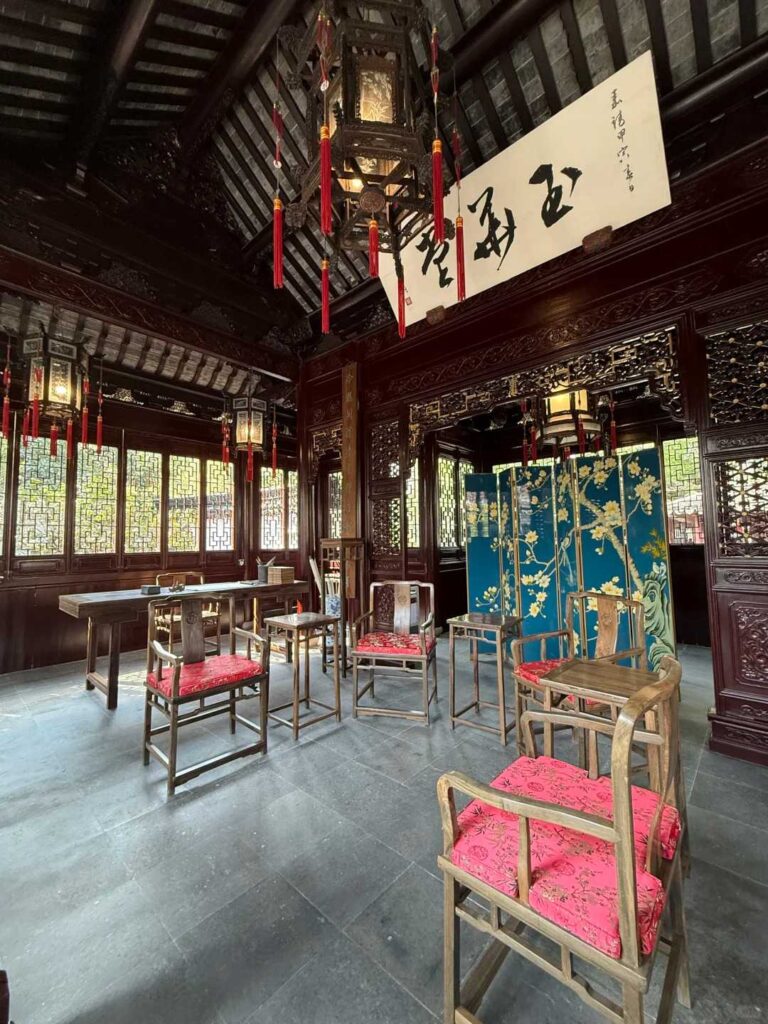
Yuhua Hall (The Owner’s Study): Step into the private world of the garden’s creator, Pan Yunduan. This was his personal study for reading and writing. The room remains elegantly decorated and still features an original rosewood desk from the Ming Dynasty.
The Ancient Stage: Built in the late 19th century, this is the cultural heart of Yu Garden and a perfect fusion of Qing Dynasty artistry and engineering. The front of the stage is intricately carved with patterns like “dragons playing with a pearl” and “lions with silk balls.” And on the ceiling is a stunning, sunken dome that looks almost like a peacock opening its tail.
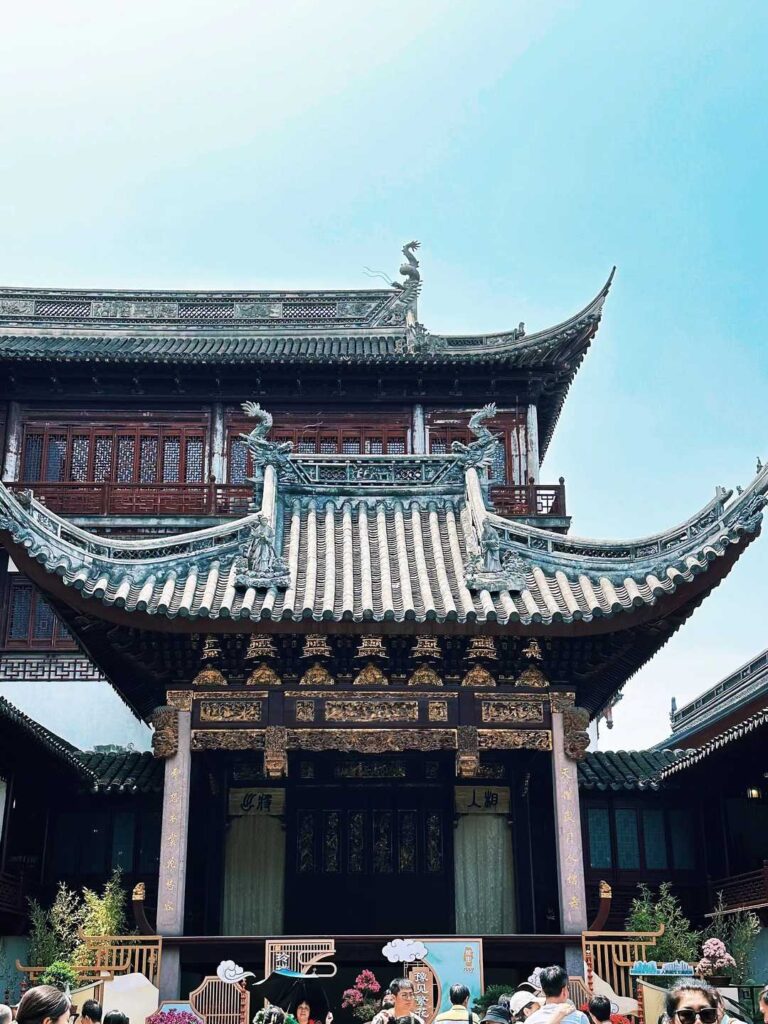
In ancient China, these were called zaojing (algae wells). They depict water plants, which served as a symbolic prayer to protect the wooden building from fire. This design isn’t just for decoration. It uses acoustic principles to create echoes and a natural amplifier, reflecting sound waves so that opera performances carry powerfully throughout the courtyard without the need for modern speakers.
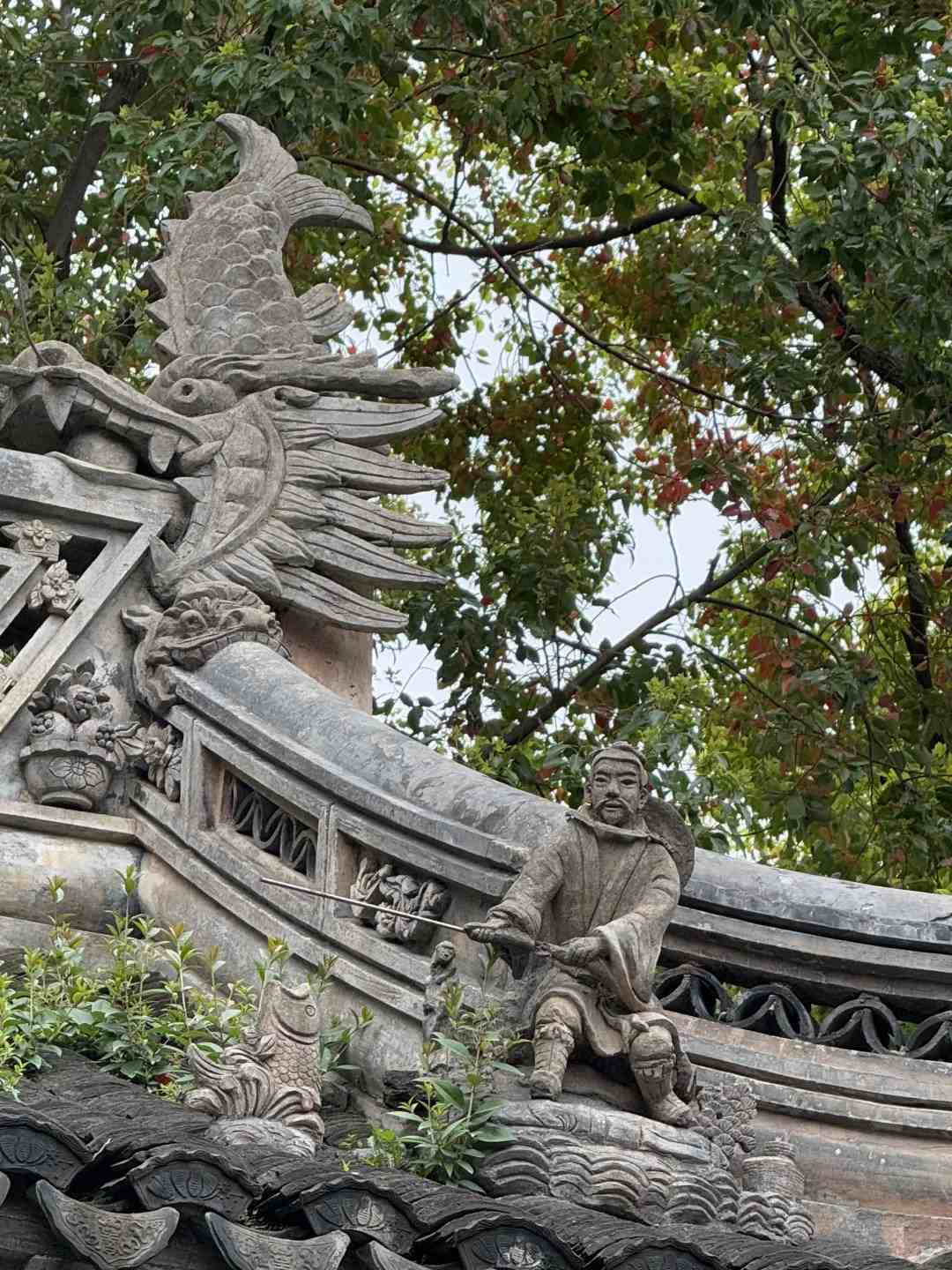
The Brick Carving Gate: Before entering the Inner Garden ahead, you’ll pass through this incredible gateway. It’s essentially a 3D picture carved into blue stone, featuring detailed scenes of birds, flowers, and mythical figures. Two stone lions stand guard at the entrance, adding to the unique atmosphere.
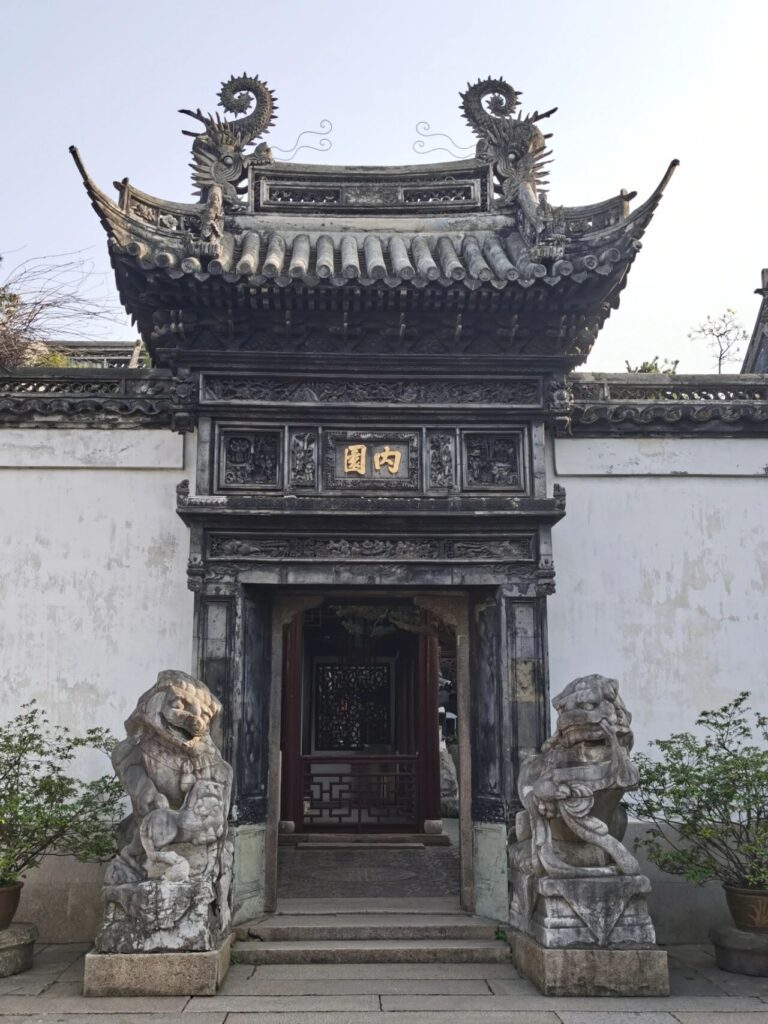
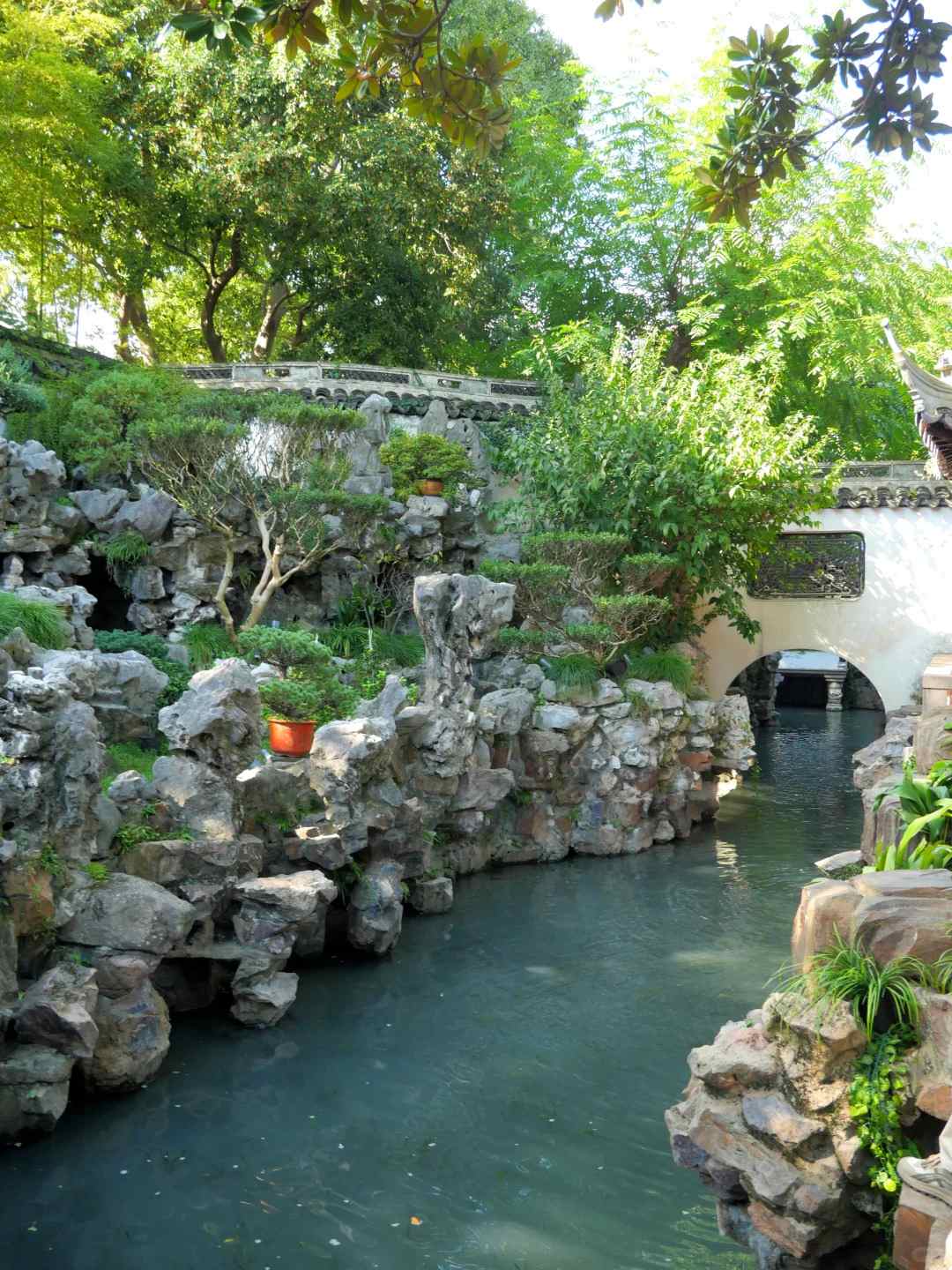
The Inner Garden: Think of this as a garden within a garden. Though small, it’s considered the essence of the entire site, packing halls, pavilions, and ponds into a clever layout.
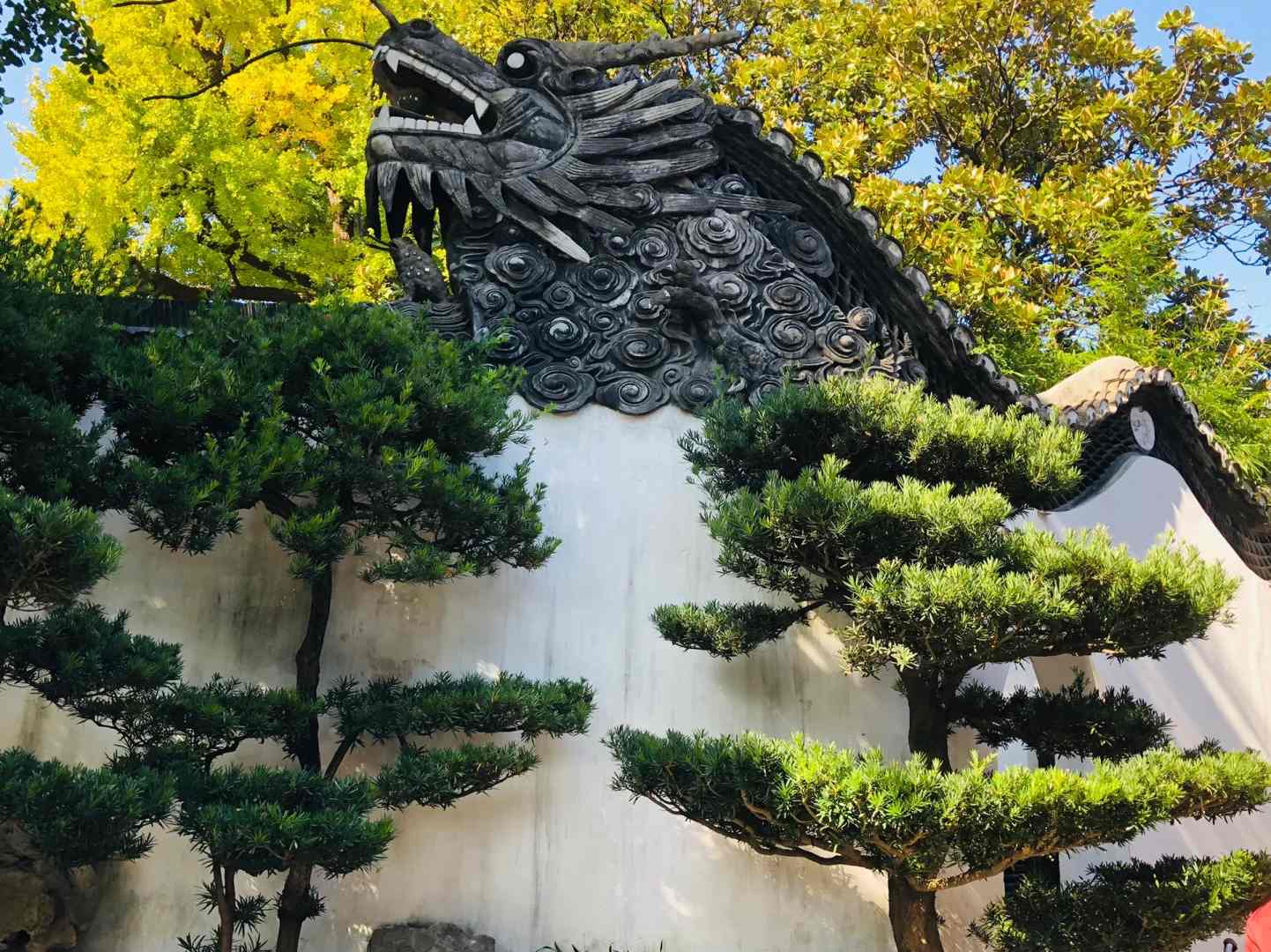
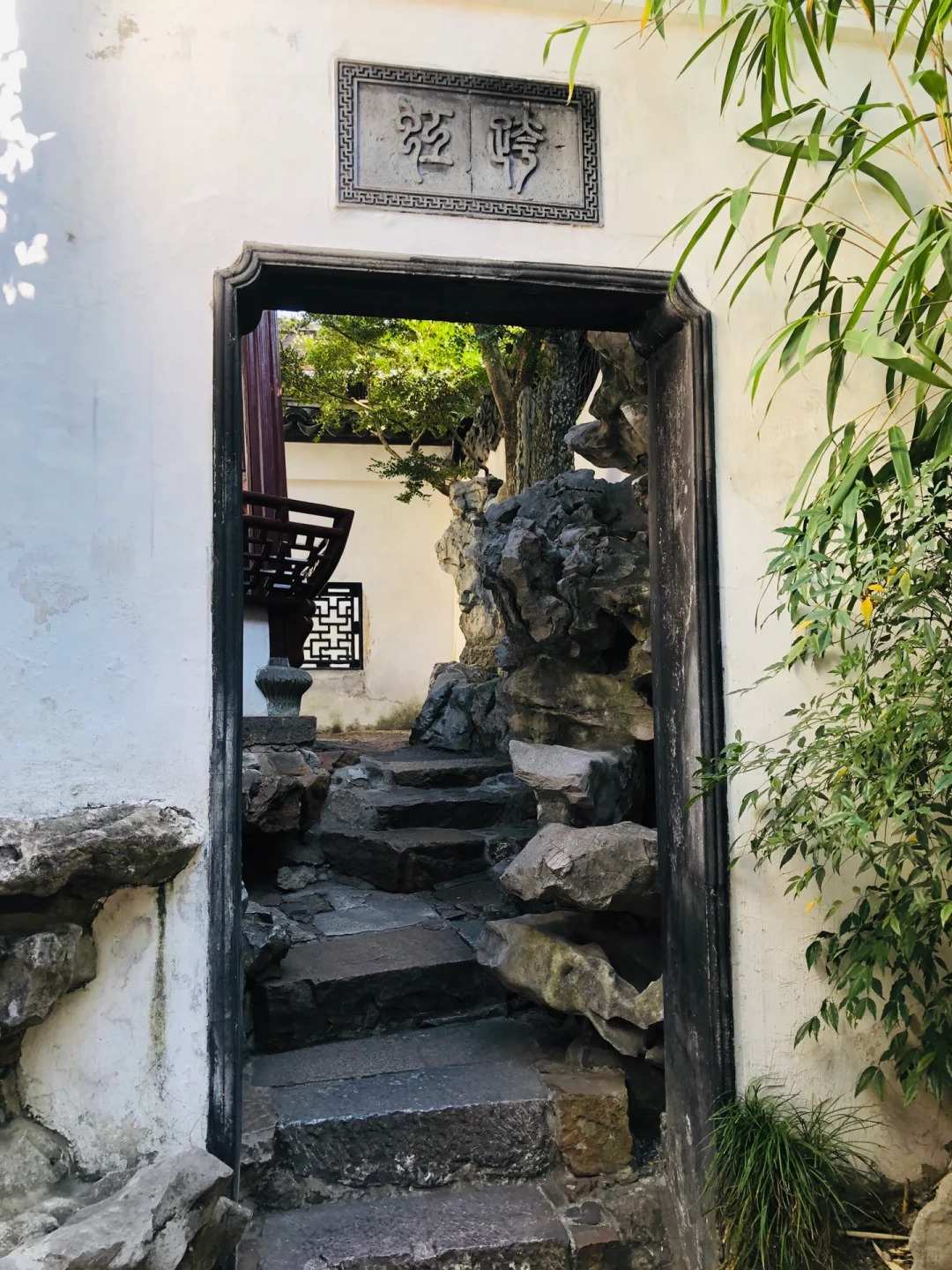
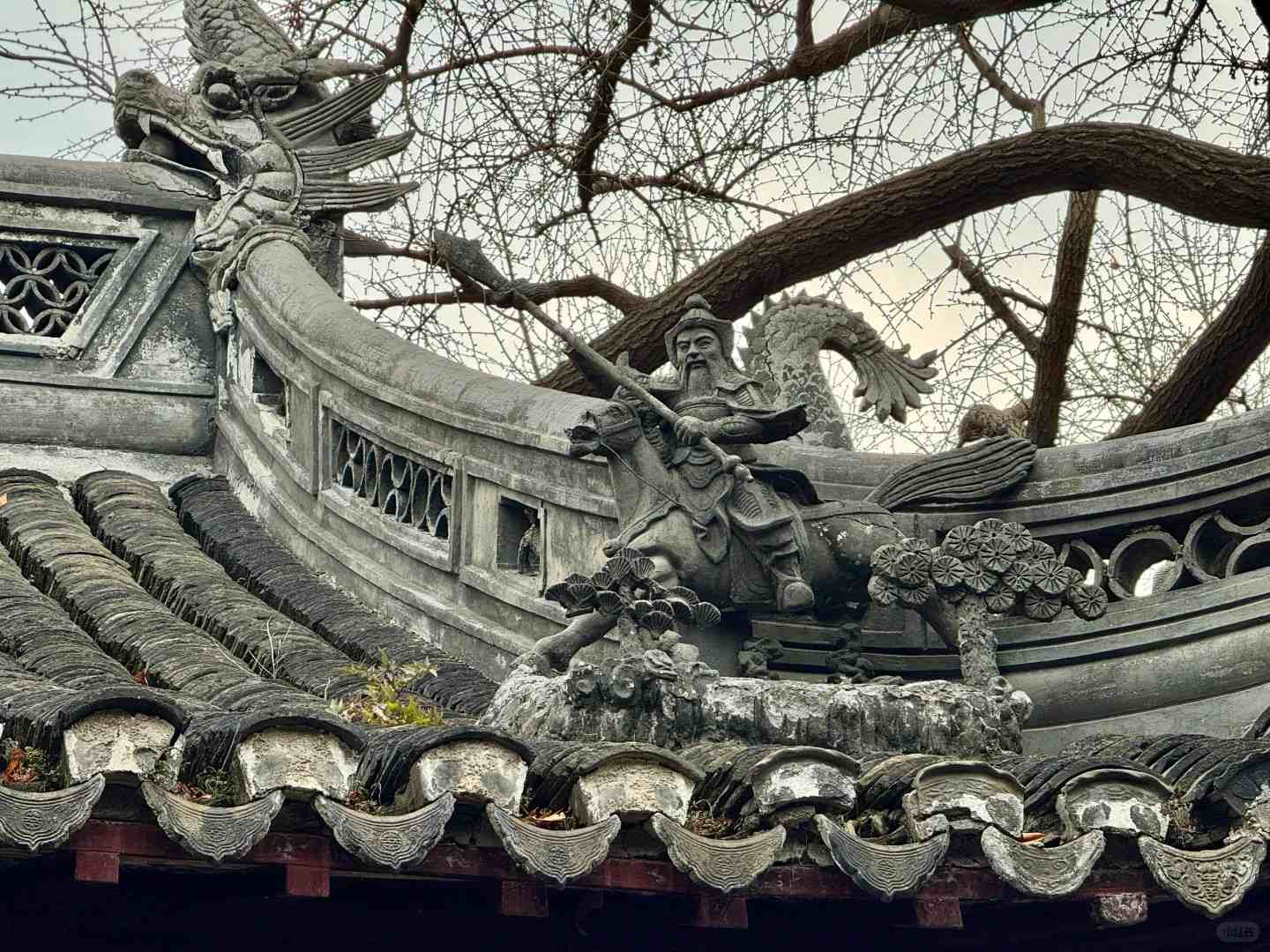
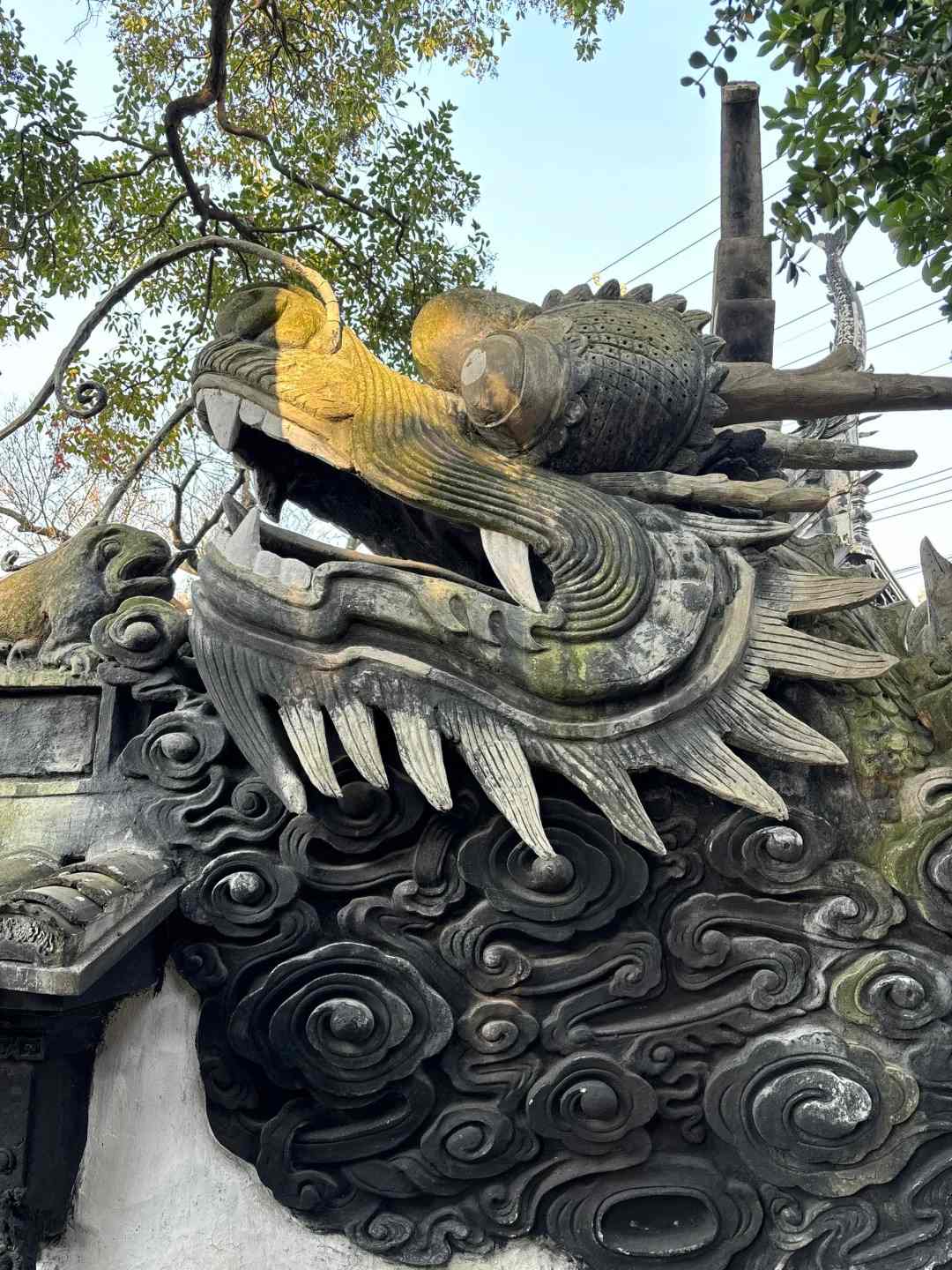
Cloud-Crossing Dragon Walls: This is a fan favorite, especially for kids! The tops of these white walls are shaped like dragons flying through the clouds. Challenge your kids (or yourself!) to find the dragon holding a “dragon pearl” in its mouth—it’s one of the most popular spots for a photo.
The Nine-turn Bridge (The Zig-Zag Bridge)
This iconic bridge leads you to the historic Mid-Lake Pavilion tea house.
In Chinese culture, it’s believed that evil spirits can only move in straight lines, so its winding design effectively “traps” bad energy, ensuring only peace reaches the center. This is the ultimate spot for a panoramic shot of ancient architecture reflecting off the water, and it’s pure magic at night.
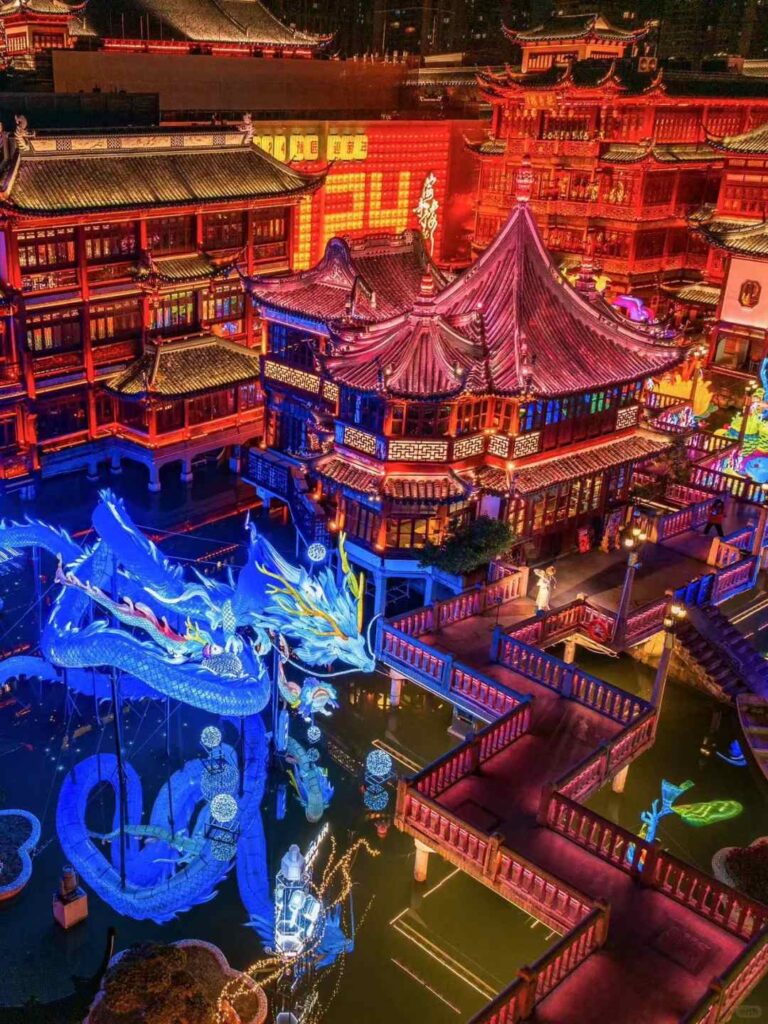 The Nine-turn Bridge
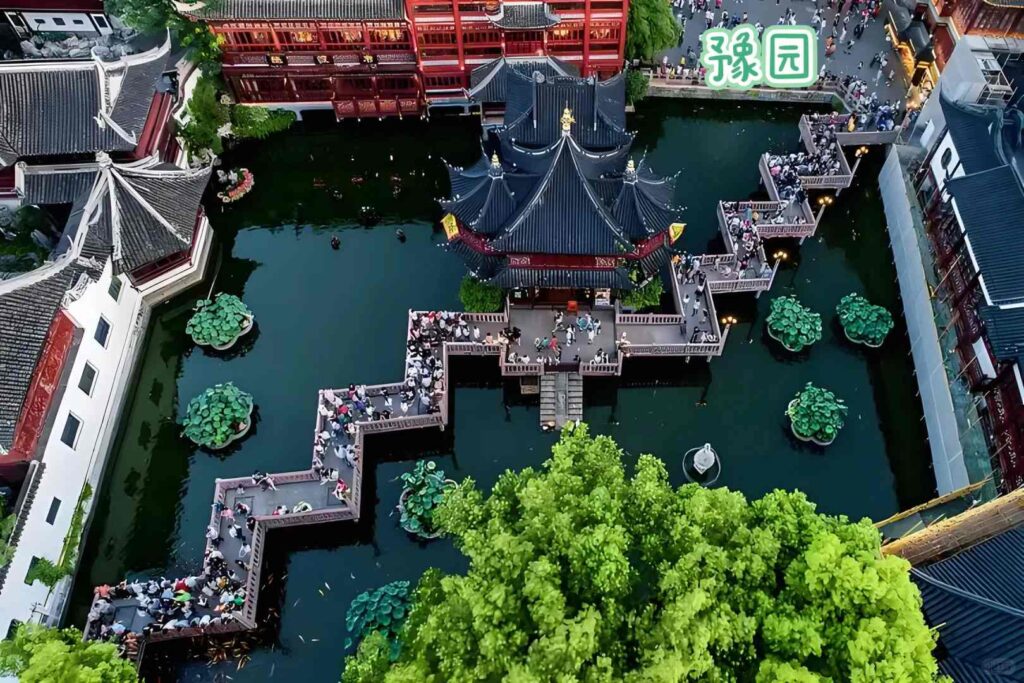 The Nine-turn Bridge
Yuyuan Bazaar: Soak Up the Energy
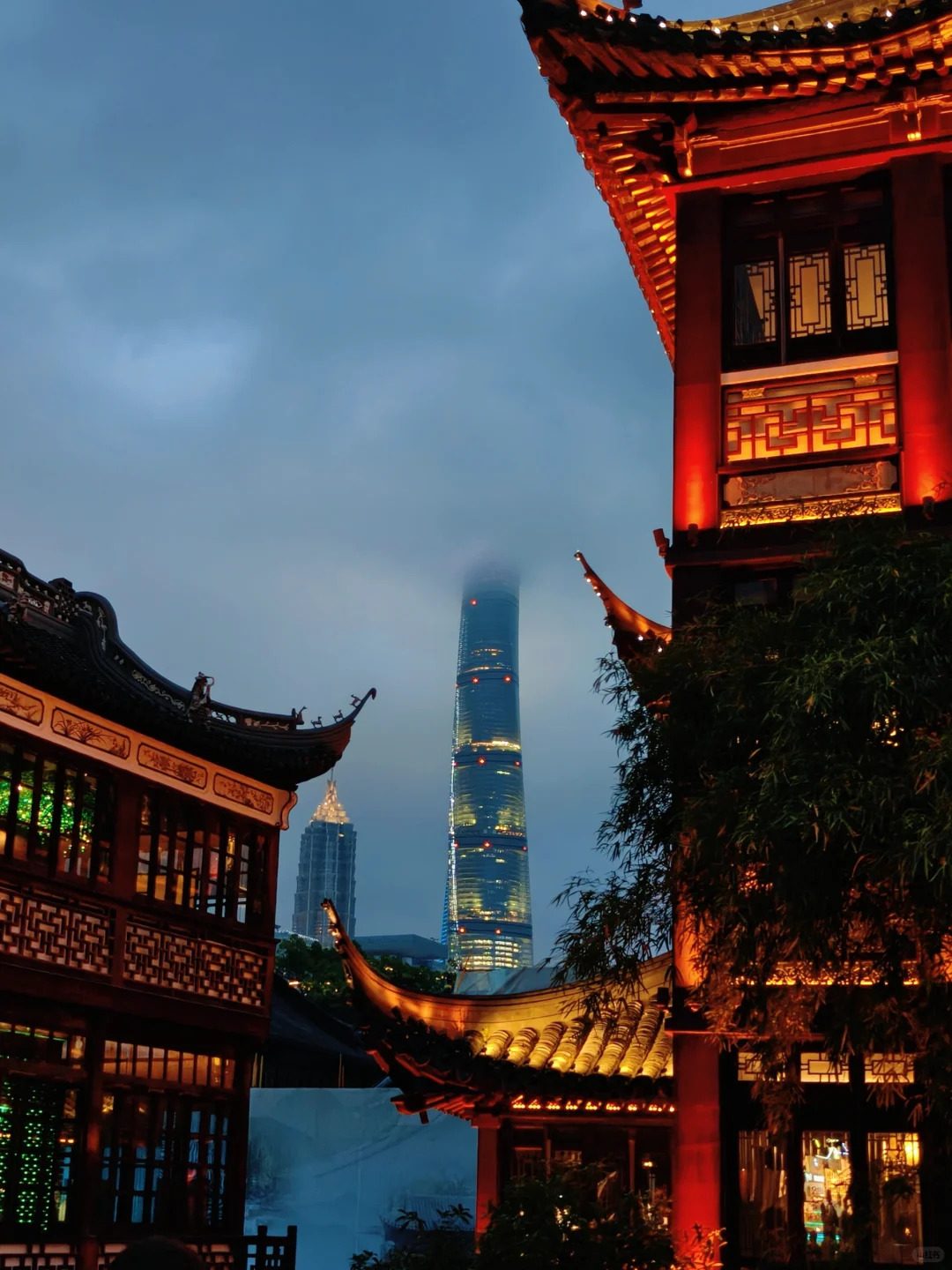
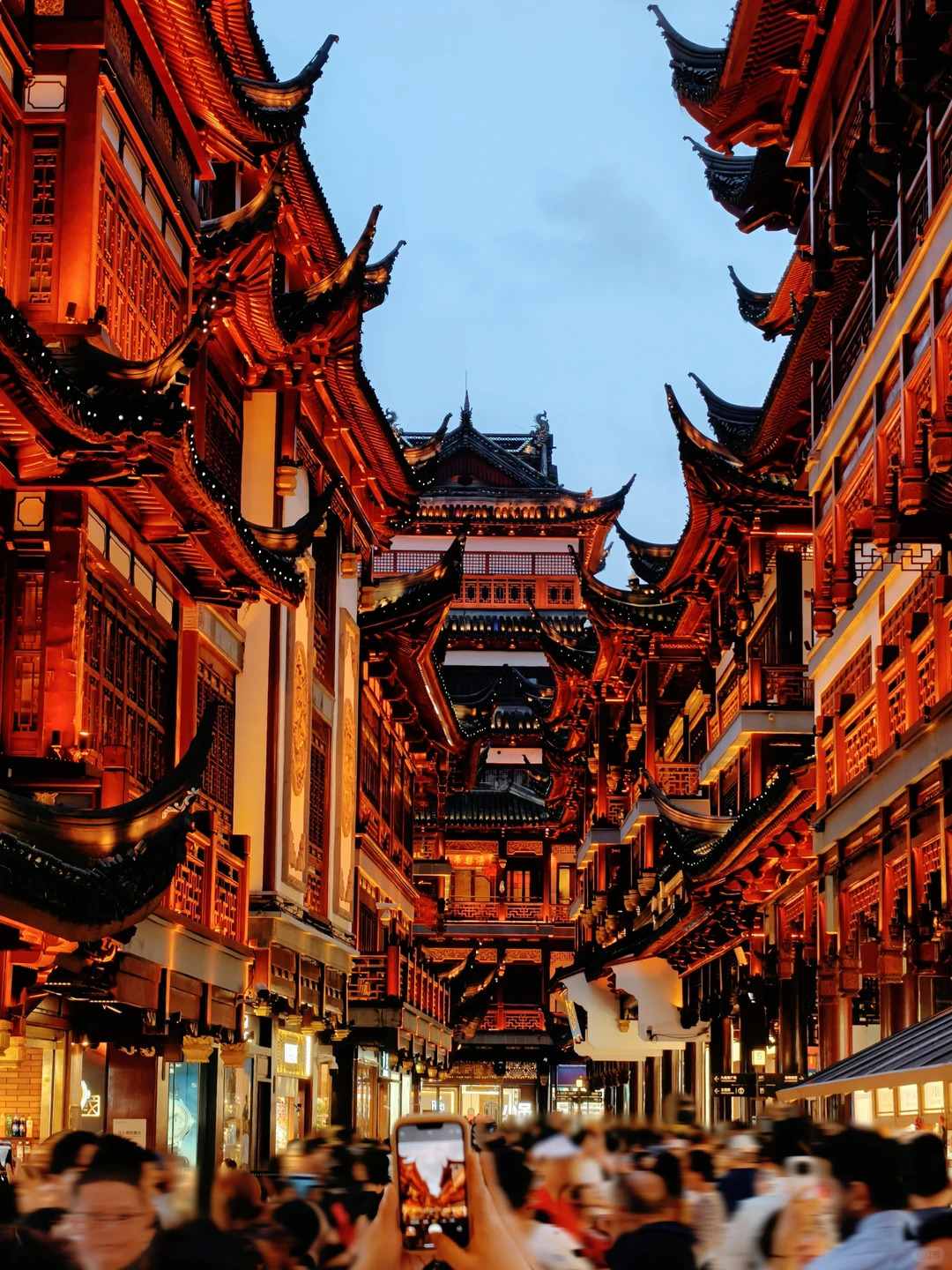
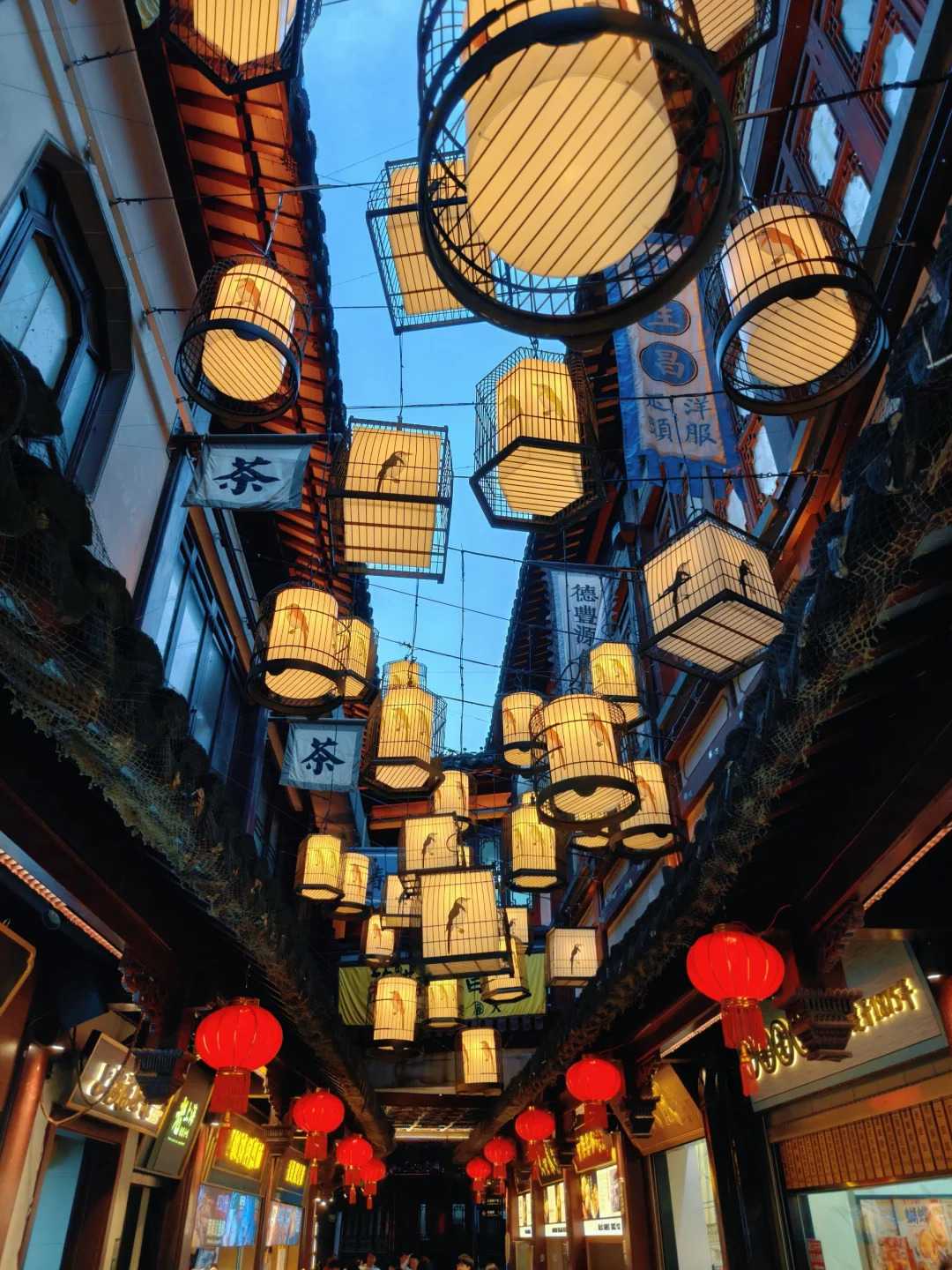
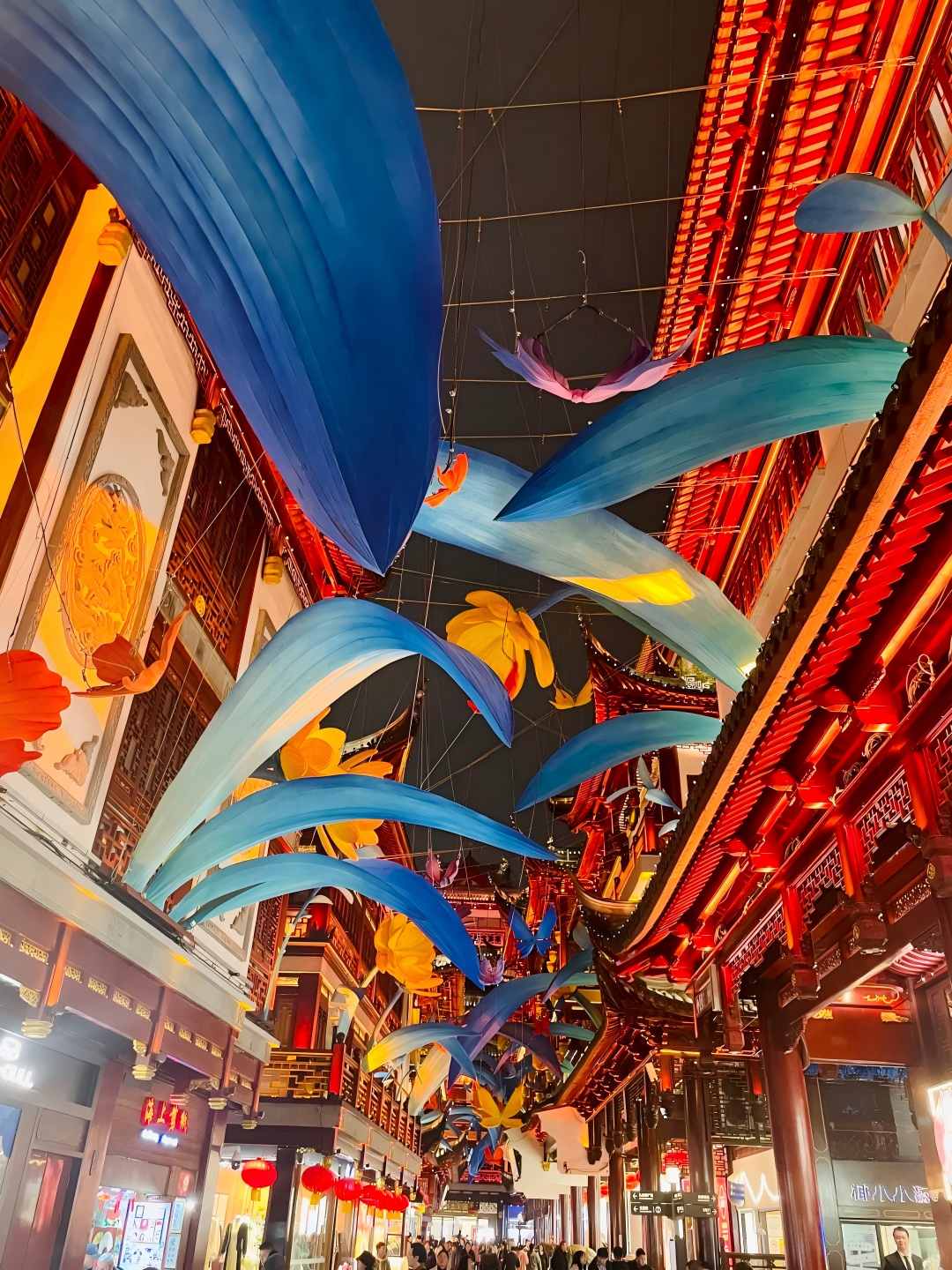
Just across the bridge is the bustling Yuyuan Bazaar. After quiet reflection at the classical garden, it’s time to dive into vibrant local life. The Bazaar is a feast for the senses, satisfying taste buds, shopping cravings, and beautiful views all at once.
Must-Try Local Flavors (A Foodie’s Checklist)
I highly recommend trying these local treats:
- Nanxiang soup dumplings (xiao long bao): Famous for their paper-thin skin and savory broth.
Pro tip: To eat like a local, nibble a small hole first to sip the hot broth before dipping it in vinegar. - Ningbo tangyuan: Soft, chewy rice balls filled with fragrant black sesame. They are sweet, comforting, and not overwhelming.
- Snack around: Don’t miss the crab-roe tofu, spiced beans, or refreshing pear syrup candy. You can sit down in a classic restaurant or just grab-and-go from the various stalls.
Shopping & Souvenirs
The streets are lined with shops selling authentic Chinese goods like silk scarves, traditional garments called qipaos, intricate Chinese knots, and hand-cut paper art. It’s a fantastic place to pick up a one-of-a-kind gift.
The City God Temple
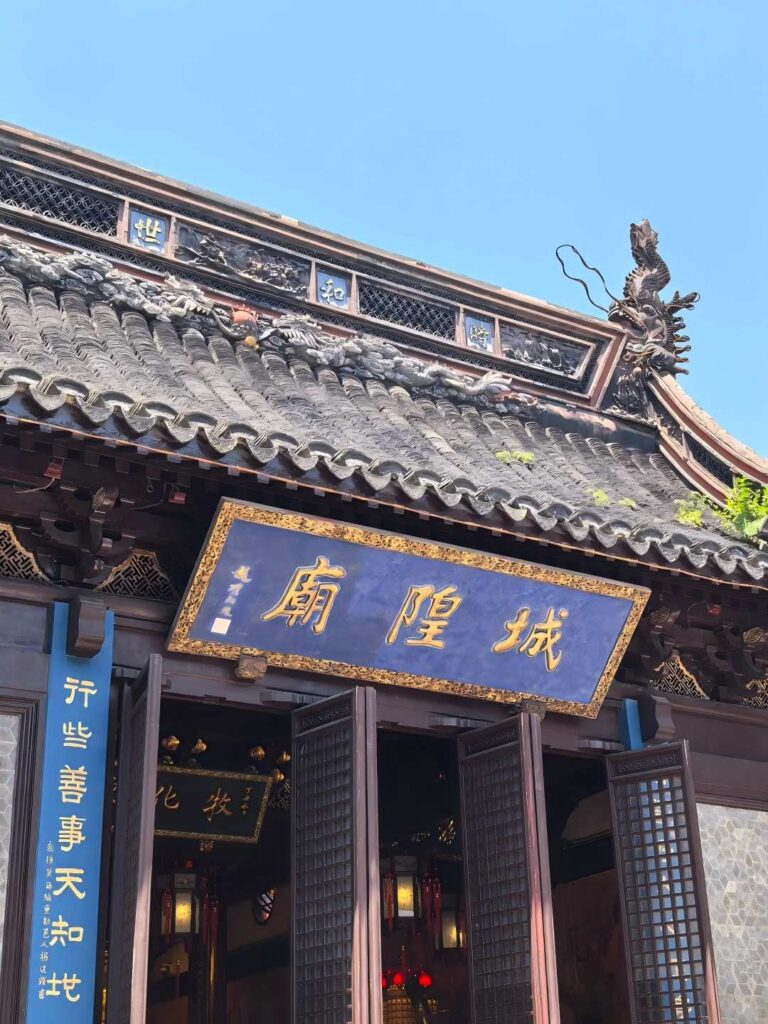
If you have time, step inside this temple dedicated to the protector of the city. Many locals come here to pray for peace and safety. The scent of incense and the meditative atmosphere offer a rare, close-up look at traditional folk beliefs.
Don’t Miss: The Night View
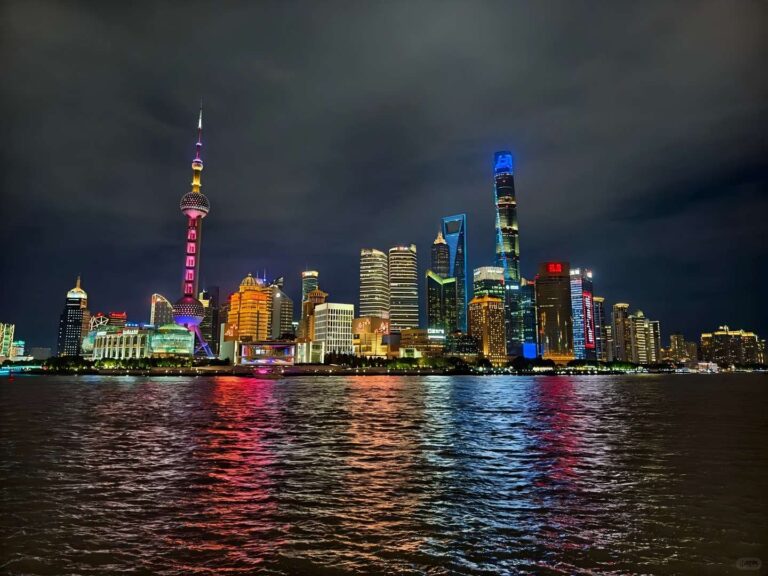
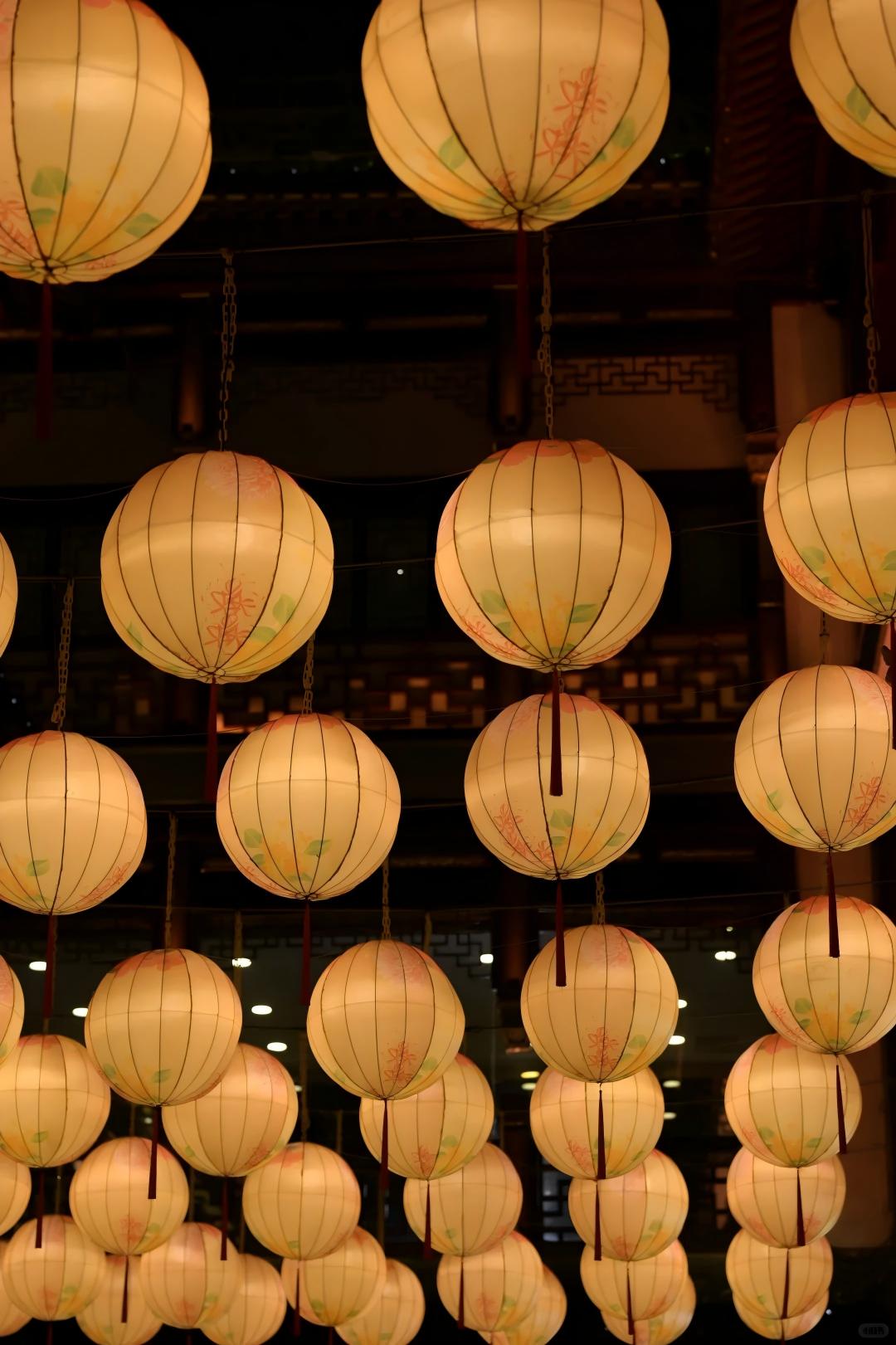
I personally recommend staying until evening. When the lights flick on one by one, a golden glow outlines the rooftops. It is a dreamlike experience that feels entirely different from the daytime.
Wrapping Up
This covers my personal guide to the Yu Garden area. I hope it helps you navigate the 450-year-old history and vibrant local life of this Shanghai gem.
If you have any questions or need specific tips for your adventure, please feel free to leave a comment or shoot me an email, and I’ll get back to you as soon as possible.
I hope you have an amazing time in Shanghai!