Jing’an Temple: A Thousand-Year-Old Temple in the Heart of Shanghai
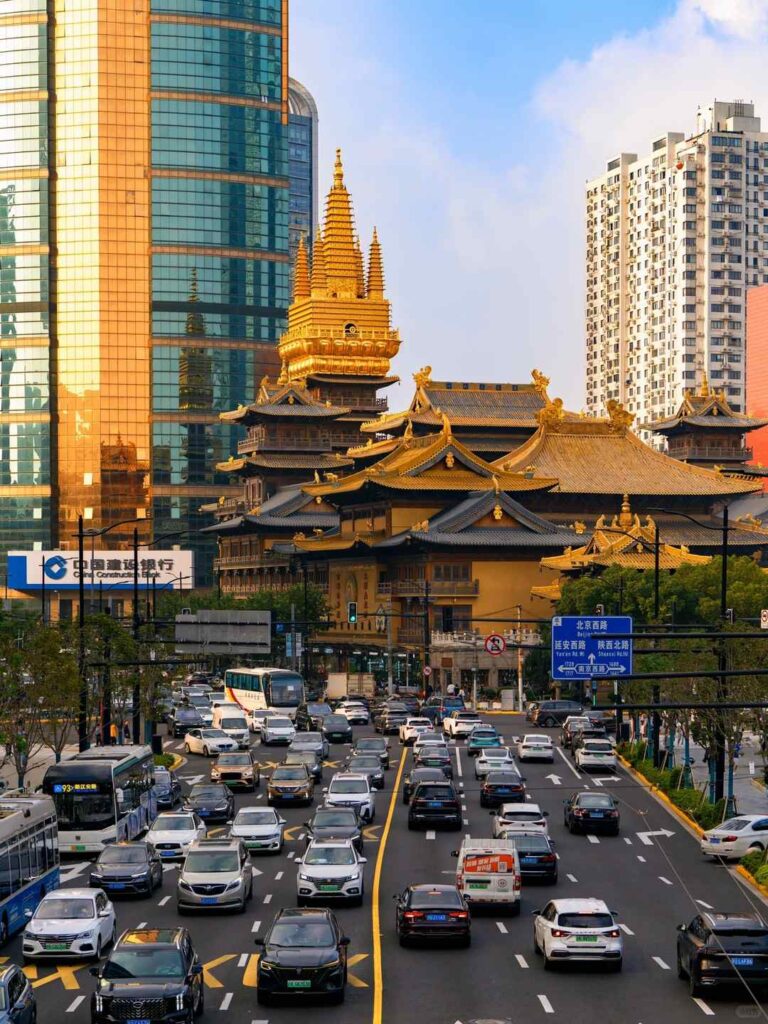
Jing’an Temple is one of the most prominent landmarks in central Shanghai. Located on West Nanjing Road, it’s surrounded by shopping malls, office buildings, and some of the busiest streets in the city. The contrast of the temple’s golden rooftops with nearby skyscrapers makes the view particularly unique.
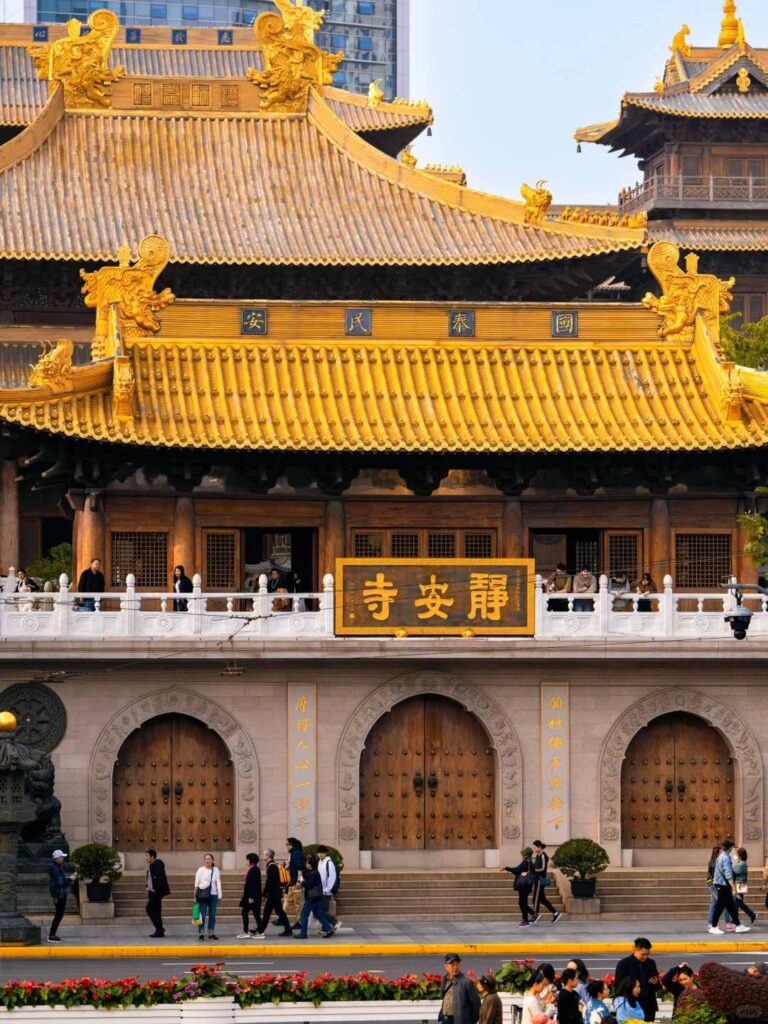
Jing’an Temple is also very easy to fit into a day of sightseeing in downtown Shanghai. If you’re already planning to visit places like People’s Square, Nanjing Road Pedestrian Street, Yu Garden, the Bund, Xintiandi, or Lujiazui, adding the temple to your itinerary is convenient. Even if you only have half an hour, I recommend adding it to your itinerary.
Most people will spend around 30 minutes to an hour here. If you enjoy temple architecture and halls or plan to explore the surrounding neighborhood afterward, you could easily stay beyond that.
An Active Temple
One of the things that makes Jing’an Temple stand out is that it isn’t just a historic site, but an active place of worship. Every day, visitors and worshippers come here to burn incense, bow before the Buddha, and pray.
As you walk through the temple grounds, you’ll see people standing quietly with their palms pressed together, while others kneel in prayer. The temple is a more meaningful stop than some of the other sightseeing spots, because it is a part of the daily lives of many citizens of Shanghai. For international visitors, that can be one of the most memorable experiences when visiting the city.
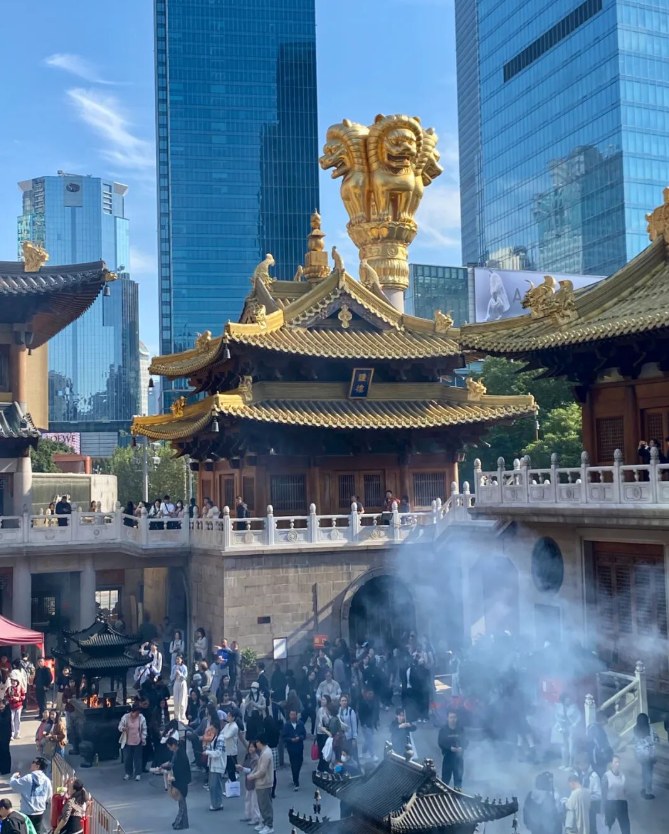

Many people visit the temple as a demonstration of faith, but in China, not everyone who visits a temple would call themselves Buddhist. Many come to offer incense and pray for peace, safety, health, or good fortune as an act of tradition, respect, or comfort. Jing’an Temple offers a calm and welcoming environment that is inviting for visitors of any religion.
History of Jing’an Temple
Jing’an Temple dates back to 247 AD, when it was first established under the name Hudu Chongxuan Temple. It didn’t officially become known as Jing’an Temple until 1008, during the Northern Song dynasty. It also wasn’t originally built on its current site, having been relocated to today’s location during the Southern Song dynasty.
Like many historic temples in China, Jing’an Temple has been damaged and rebuilt many times over the centuries. It endured wars, fires, and significant cultural changes that reshaped Shanghai around it. Most recently, it suffered severe damage in a 1972 fire, after which reconstruction began in 1984, and the temple reopened to the public in 1990. Most of what visitors see today comes from that restoration.
Architectural Highlights
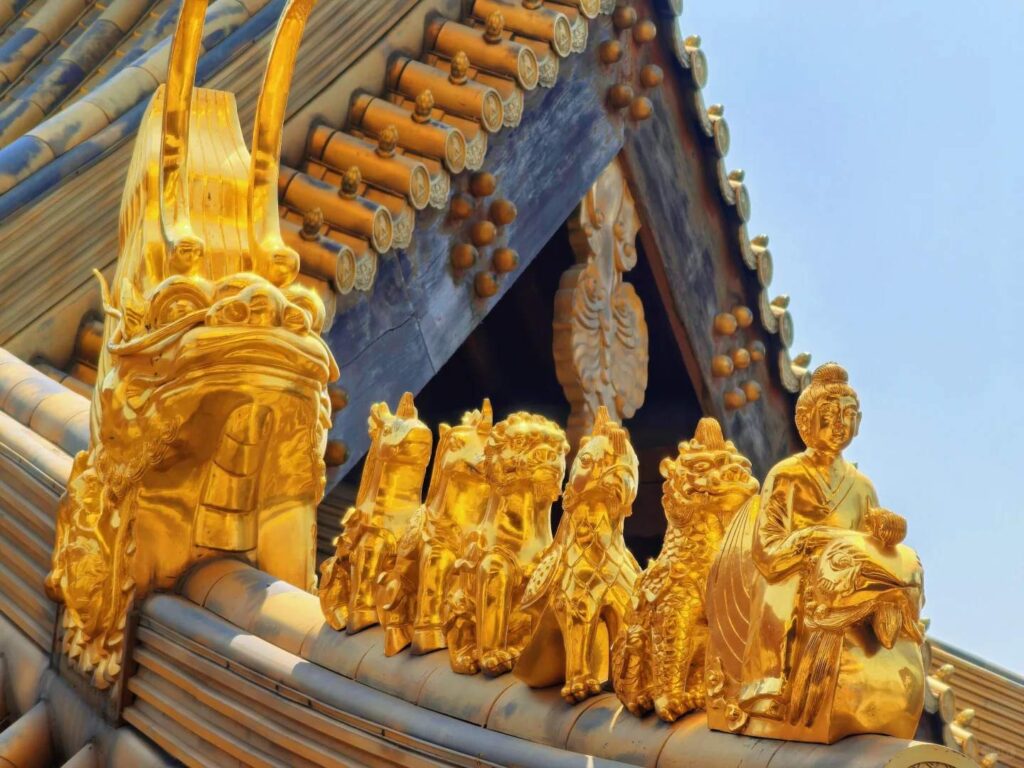
The first thing you will notice about Jing’an Temple is the roof. As soon as you leave the metro station, you’ll spot the bright golden tiles, especially in contrast to the malls, offices, and traffic in the surrounding area.
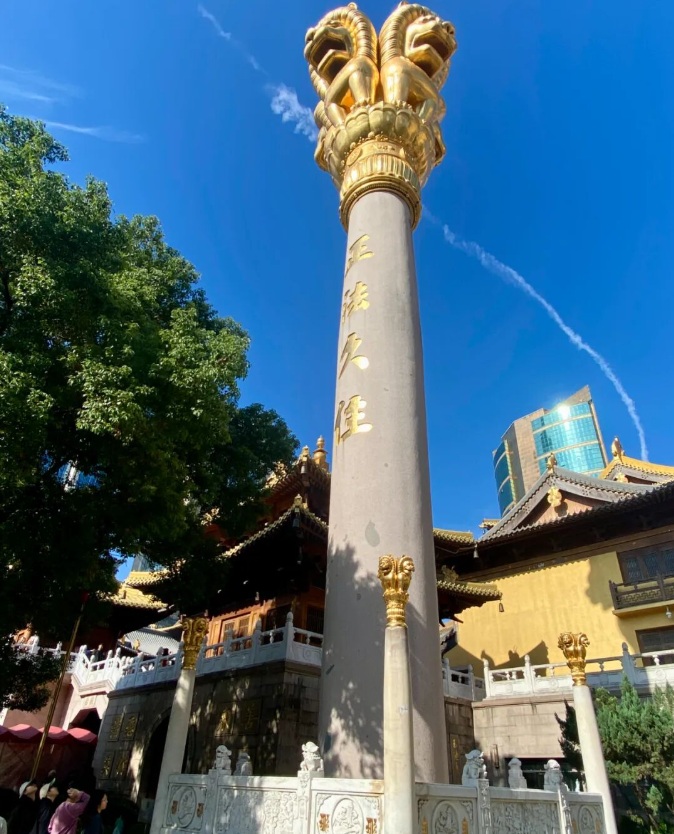
Just outside the main entrance on the east side stands a tall stone pillar carved with the Diamond Sutra.
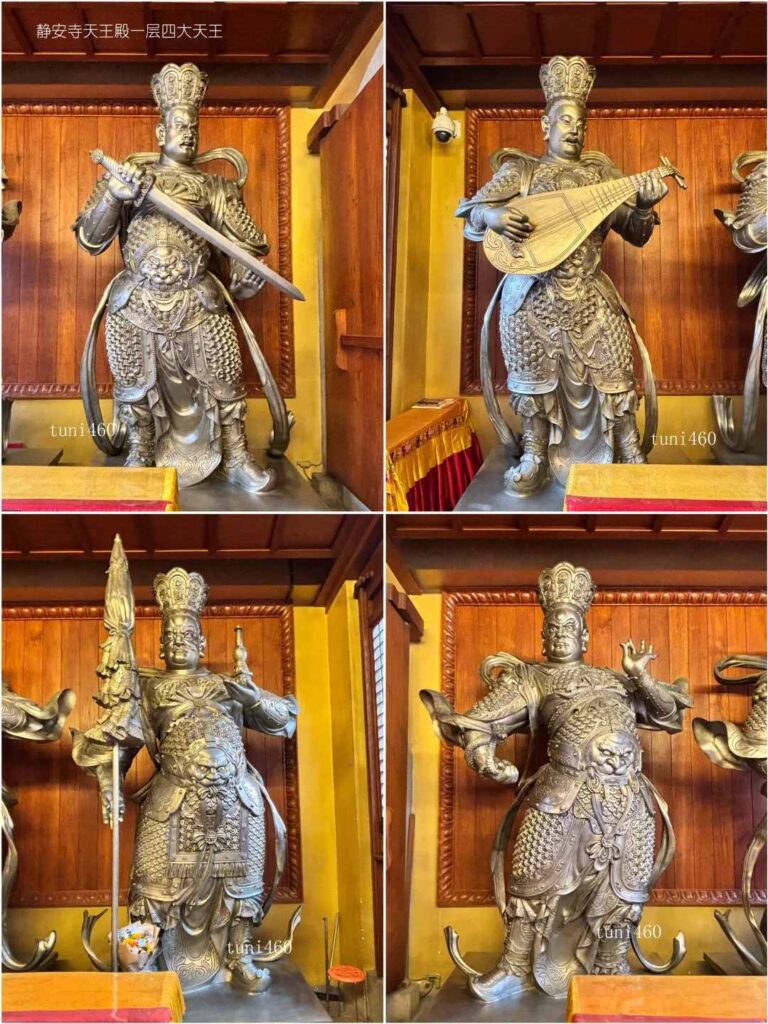
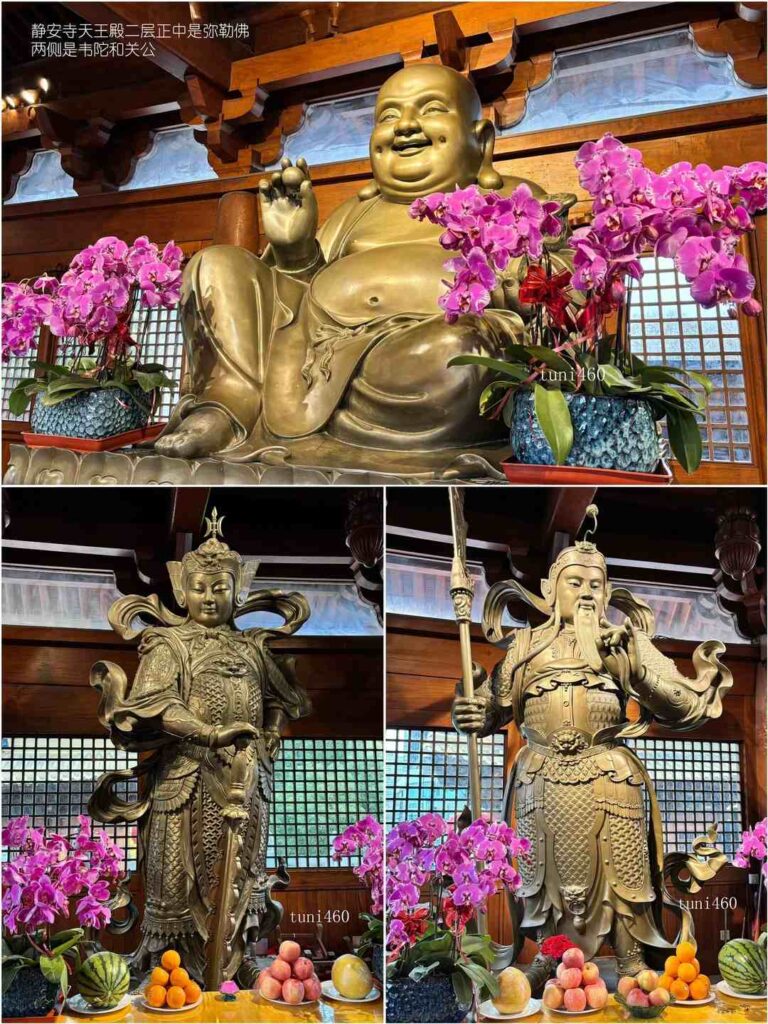
Instead of having a separate gate and Hall of the Heavenly Kings, as is traditional, Jing’an Temple’s design is distinctive for its combination of both into a single two-story structure. The lower level features the Four Heavenly Kings. The upper level houses Maitreya, the Buddha associated with compassion, joy, and the future, and Skanda, a protective deity regarded as a guardian of the temple and the Buddhist faith.
The smaller details, however, are what make the temple rich in meaning and design. The roofs and eaves are adorned with Buddhist imagery, including dragons, elephants, lotuses, and dharma wheels. Much of the main structure was built using Burmese teak, and parts of the temple are finished with gold leaf, giving it an appearance that is both solemn and ornate.
Once inside, the temple opens up gradually along its central axis. The Hall of the Heavenly Kings is followed by the bell tower, the drum tower, the Mahavira Hall, and the Three Saints Hall. It’s easy to see that the layout is orderly and balanced, which adds to the dignified atmosphere.
The Mahavira Hall is the part of Jing’an Temple visitors usually want to spend the most time in. It is supported by 46 large Burmese teak columns, which give you a sense of the scale of the building. Inside, there are silver statues on both sides of the hall, including figures of the Buddha’s ten major disciples and ten bodhisattvas. Even if you’re not familiar with the religious context, the craftsmanship and size of the statues are very impressive.
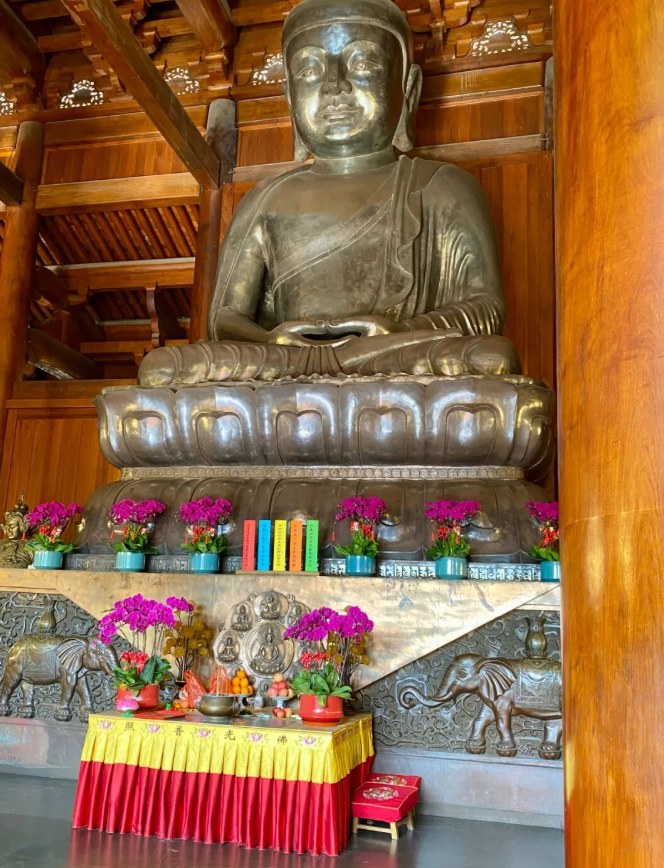
What many visitors remember most is the temple’s remarkable Shakyamuni statues, representing the historical Buddha and the founder of Buddhism. One is a massive pure silver statue weighing 15 tons. Another, carved from a single piece of white Burmese jade, stands 3.87 meters tall, weighs 11 tons, and is one of the largest jade Shakyamuni statues in China. According to accounts of the temple’s history, the statue was so large that part of a wall had to be removed to bring it inside.
Other Cultural Relics to Look For
If you continue along the covered walkways, you’ll come across several other ritual objects and Buddhist artworks. These include a Peace Drum made from a single piece of cowhide, a Peace Bell weighing 7.3 tons, and a 5-ton Guanyin statue carved from the trunk of an ancient camphor tree. When the bell is struck, its sound is said to linger for several minutes..
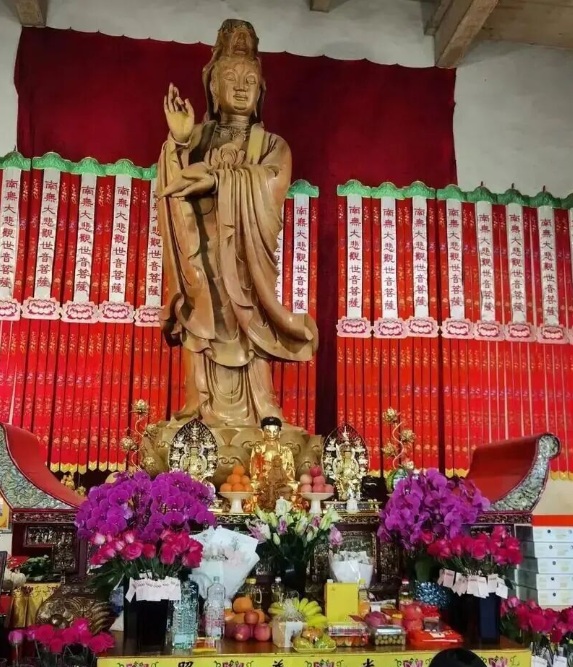
For visitors who want more context, there is also a small exhibition hall inside the temple. It contains calligraphy, paintings, cultural artifacts, and a bronze bell from the Ming dynasty, offering a bit more background on both Jing’an Temple’s history and the Buddhist culture connected to it.
Festival Events
If you happen to visit during a major Buddhist holiday, Jing’an Temple is especially lively. Special ceremonies are held at certain times of year, including the ritual bathing of the Buddha statue. In the past, the temple also hosted an annual fair on the eighth day of the fourth lunar month, a tradition that helped shape the surrounding neighborhood for many years. It’s another reminder that Jing’an Temple has long been connected not just to religion, but to everyday life in this part of Shanghai.
Visitor Etiquette and Tips
Even if you’re not religious, you’re unlikely to feel out of place here. Jing’an Temple is welcoming to casual visitors, and as long as you keep your voice low and are respectful toward people who are there to worship.
Inside the halls, avoid flash photography and be mindful of personal space so you don’t interrupt anyone who is praying. You don’t need to dress formally, but clothing that feels neat and modest is a better fit for the setting.
Most of the signs and explanations inside the temple are in Chinese, but for most visitors, the experience comes from taking in the architecture, the scent of incense, and the atmosphere of the temple.
Admission
Admission is approximately 50 RMB. Incense is extra and costs around 10 RMB, although prices can vary, especially on public holidays.
Opening Hours
The temple is open from 7:30 a.m. to 6:00 p.m. On busier days, particularly when more people come to burn incense and pray, it may open earlier.
Getting There
Jing’an Temple is located at 1686 West Nanjing Road in Jing’an District, Shanghai.
The easiest way to get there is by metro. Jing’an Temple Station is served by Lines 2, 7, and 14, and the temple is only a short walk from the station.
Nearby Places to Add to Your Walk
After your visit, there are lots of things to do in the area. Jing’an Park is right next to the temple and is nice for a short walk or a break. The neighborhood is also one of Shanghai’s best-known shopping districts, with places like Jiuguang Department Store, Reel Mall, and Jing’an Kerry Centre all nearby, along with lots of cafés and restaurants.
If you want to combine the temple with more local experiences, continue on toward Yuyuan Road and then in the direction of the Paramount area. This part of Shanghai is interesting because of how it brings different sides of the city together: a historic temple, modern shopping streets, and older neighborhoods. After visiting Jing’an Temple, it’s a great area to explore.
Read More:
Things to Do in Shanghai
Where to Stay in Shanghai
Zhujiajiao Day Trip from Shanghai