
Baiyun Mountain in Guangzhou: A Complete Travel Guide for First-Time Visitors
While exploring the old neighborhoods shows you what everyday life is like in Guangzhou, Baiyun Mountain shows you a very different side of the city that I highly recommend you make time for. The scenery here is lush and full of Lingnan character, and it’s a great place to slow down for half a day or even a full day.
I lived in Guangzhou for about ten years and visited Baiyun Mountain once or twice every year. Like the city itself, it kept changing over that decade, with better facilities and new attractions. This guide is based on my own trips, and I hope it will help you to plan your own visit to the park.
Why visit Baiyun Mountain?
Baiyun Mountain is one of Guangzhou’s best-known attractions and holds China’s highest official tourism rating (5A). The park is famous for its wide views over Guangzhou and is one of the city’s best places for photos of the skyline.
It’s also part of over 2,000 years of Guangzhou’s history, and many well-known figures have been associated with it over the centuries. Today, you can still visit temples such as Nengren Temple and Shuangxi Temple, along with sites linked to famous people such as Sun Yat-sen and Zhou Enlai.
Its best-known peak is Moxing Ridge, which stands 382 meters above sea level and has traditionally been celebrated as Lingnan’s highest peak. There are also several lookout points around the mountain, including Guanyun Pavilion. After rain, clouds often settle around the peaks as the sky clears, which is where the name Baiyun, or “white cloud,” comes from.
The area has gentle hills, dense woodlands, and well-maintained walking trails. It’s not an especially hard hike, but if you plan to walk up and back down, you’ll still want to set aside most of the day.
Things to Know Before You Go
Bring a portable charger if you have one. You can easily spend several hours here, and if your phone dies in China it’s a real hassle because you need it for payments, maps, and just about everything else.
Wear sneakers or other comfortable walking shoes. If your kids plan to play in the water, pack water shoes too.
During the summer, bring a hat. Much of the route is shaded, but there are some sections in direct sunlight.
Since it’s damp here in the summer and fall, there are lots of mosquitoes, so bring bug spray.
Bring enough water, but try not to overpack. You can buy drinks on the mountain, though they cost a little more than they do outside the park.
You can buy food, snacks, and fruit at Summit Plaza, and the prices are reasonable, so there’s no need to carry much food with you.
How to Get Baiyun Mountain
1, Take Metro Line 11 to Yuntai Garden Station and use Exit C2
From the station, it’s about an 800-meter walk to Baiyun Mountain’s South Gate. You’ll pass Yuntai Garden on the way, and it’s worth a quick stop if you have time before heading up the mountain.
Yuntai Garden
Yuntai Garden is a large garden best known for its seasonal flower displays. It was inspired by Canada’s Butchart Gardens, with fountains and big floral displays throughout, so it’s great for a short walk and photos.
Admission: RMB 10
2, Take a taxi or rideshare straight to the South Gate.
This is the easiest option if you’d rather skip the extra stop and start walking right away.
Entering Baiyun Mountain
Baiyun Mountain has several entrances, which can confuse first-time visitors. If you’re not sure where to start, use the South Gate, which is the main entrance. It’s the easiest entrance for most visitors because it’s closer to central Guangzhou, with a metro station and several bus stops nearby and easy access by taxi or a ride-hailing app. If you’re planning to take the cable car, this is also the side to use, since it both leaves from and returns here.
Tickets
- Baiyun Mountain admission: RMB 5
- Moxing Ridge admission: additional RMB 5
Baiyun Mountain Map
Baiyun Mountain doesn’t offer a very detailed English map, and most of the ones you’ll find online are pretty basic route maps. This isn’t a big deal though because Amap is usually enough to get around, and the main signs inside the park are in both Chinese and English. If you stick to the main route, you should be just fine.
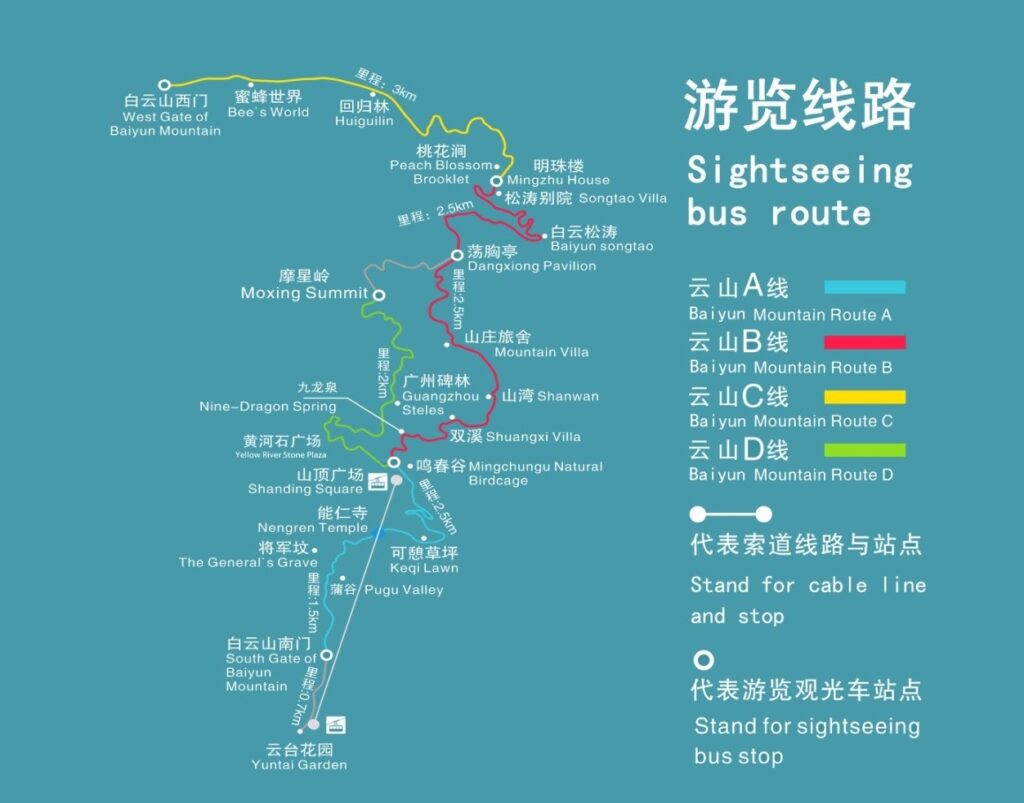
Two Routes I Recommend
1) Cable Car + Sightseeing Shuttle Route
This route begins and ends at the South Gate.
This is the better choice if you’re short on time, traveling with kids, or want an easier hike.
2) Full Hiking Route
This route begins at the South Gate and finishes at the West Gate.
This route is more demanding and usually takes three to four hours. The full walk is about 10 kilometers in total. This is the route I’ll focus on later in the guide.
Going Up by Cable Car or Sightseeing Shuttle
Step 1: From the South Gate to Summit Plaza (1.5 km)
From the South Gate, you have two options:
- Cable car: RMB 25 per person
- Sightseeing shuttle: RMB 20 per person
A few things to know:
Summit Plaza isn’t the actual summit of Baiyun Mountain, but rather a stopping point with a few shops selling food, snacks, and drinks. There is even a KFC there.
The cable car station isn’t inside the park itself. It’s just a short walk from the South Gate and easy to find if you follow the signs.
Step 2: From Summit Plaza to the Moxing Ridge Entrance
From Summit Plaza, you can take the sightseeing shuttle to the Moxing Ridge entrance. The fare is RMB 10.
Step 3: Head Up to Moxing Ridge
- Admission: RMB 5
- The ticket includes the elevator ride to the top.
Once you reach the Moxing Ridge entrance, you can take the elevator straight up to the summit at no extra charge.
Going Back Down the Same Way
If you want to take the sightseeing shuttle or cable car back down, you’ll need separate tickets for the return trip. Fares are the same as on the way up.
The return route goes roughly like this:
- Take the elevator down from the top of Moxing Ridge to the entrance.
- Take the sightseeing shuttle from Moxing Ridge back to Summit Plaza (RMB 10).
- From Summit Plaza, take either the shuttle or the cable car back to the South Gate area.
Going back down the same way wouldn’t be my first choice, however. If you have enough energy, I’d suggest walking back down instead. I personally think it’s more enjoyable than riding back down because the trail is shaded and has streams and quieter stretches of trail along the way.
If you’re visiting with kids and want more time by the streams, or if you’d like to add the zipline to your visit, I’d recommend heading down via the West Gate instead. You can still take the sightse
The Full Hiking Route
When I visit Baiyun Mountain, this is the route that I prefer, at least when I have the energy. Walking both up and down gives you more time to enjoy the scenery, and reaching the top feels far more rewarding when you’ve made the climb on foot.
This is the specific hiking route I recommend:
South Gate → (1.5 km) → Summit Plaza → (0.5 km) → Stele Forest → (1 km) → Moxing Ridge → Dangxiong Pavilion → (2 km) → Peach Blossom Ravine → (1.5 km) → Reservoir → (0.5 km) → Bamboo Garden → West Gate
Use this route as a guide, but also keep Amap open as you go so you always know where you are. On Baiyun Mountain, the trail branches off in a few places, and different paths lead to different sights along the mountain. You can adjust your route as you go depending on your energy and what you most want to see, so there’s no need to follow my recommended route exactly.
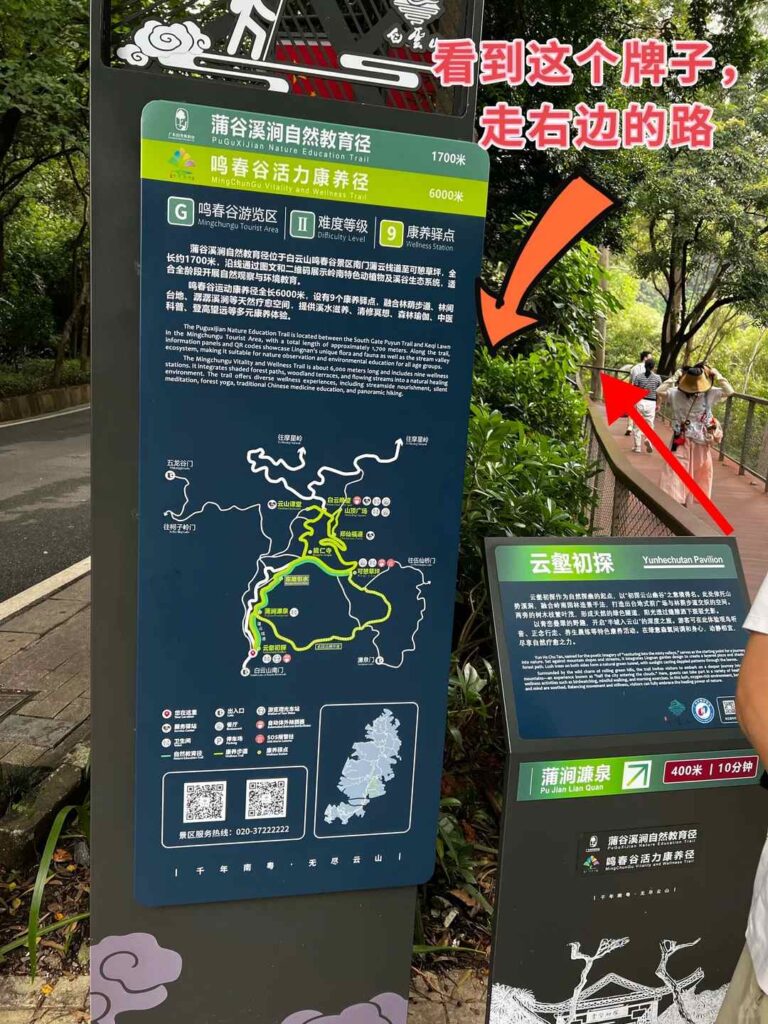
Start at the South Gate and take the Pugu Stream trail first.
After entering through the South Gate, follow the main road. A few minutes later, you’ll come to a fork with a sign for the Puguxijian Nature Education Trail (浦谷溪涧自然教育径). When you get to the fork, don’t take the path on the left. Instead, cross the suspension bridge on the right and continue along Puquan Road.
I definitely recommend going this way, because it’s one of the prettiest parts of the route, with an almost tropical environment. Though you’ll be walking uphill, there’s shade nearly the whole way (much cooler temperatures), plus little bridges and small waterfalls along the path.
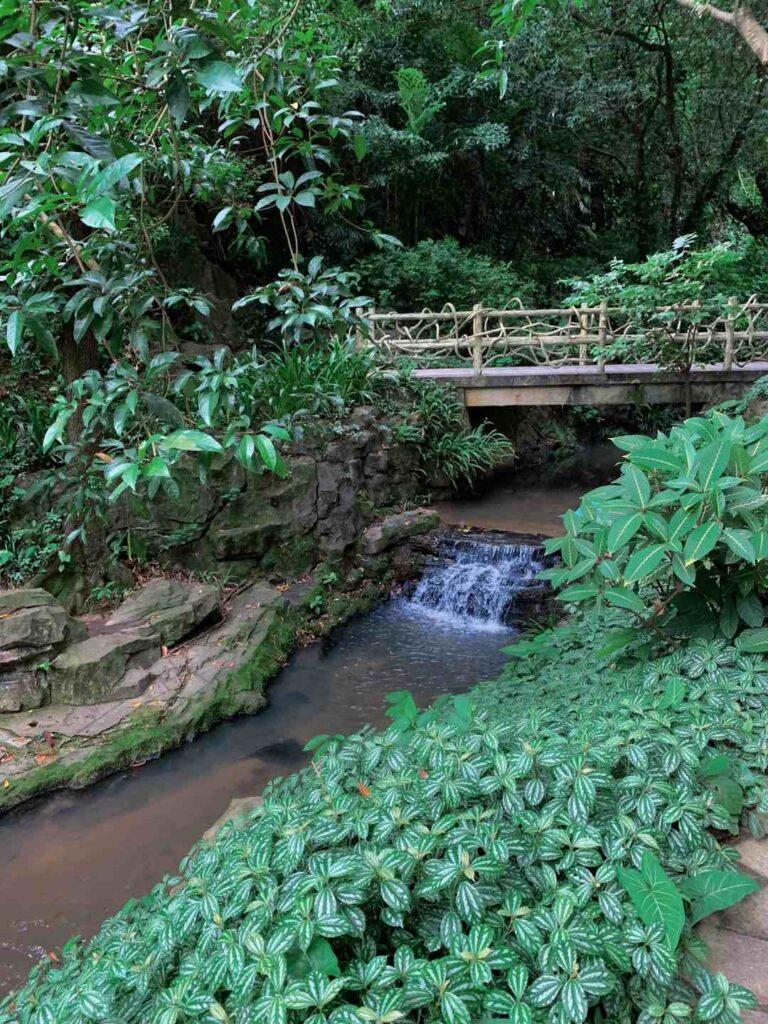
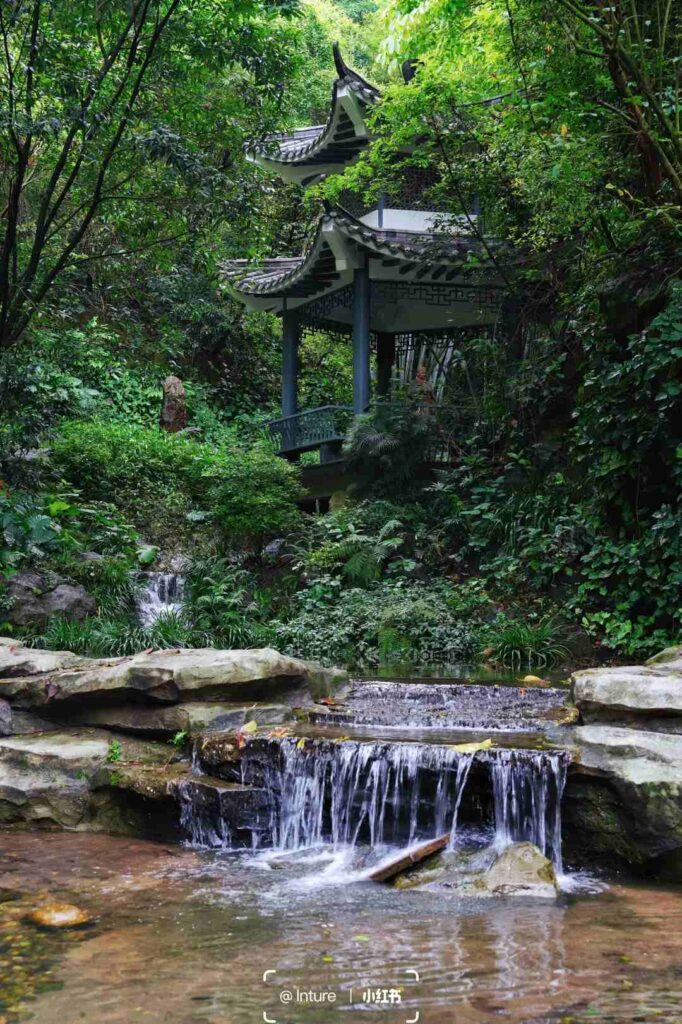
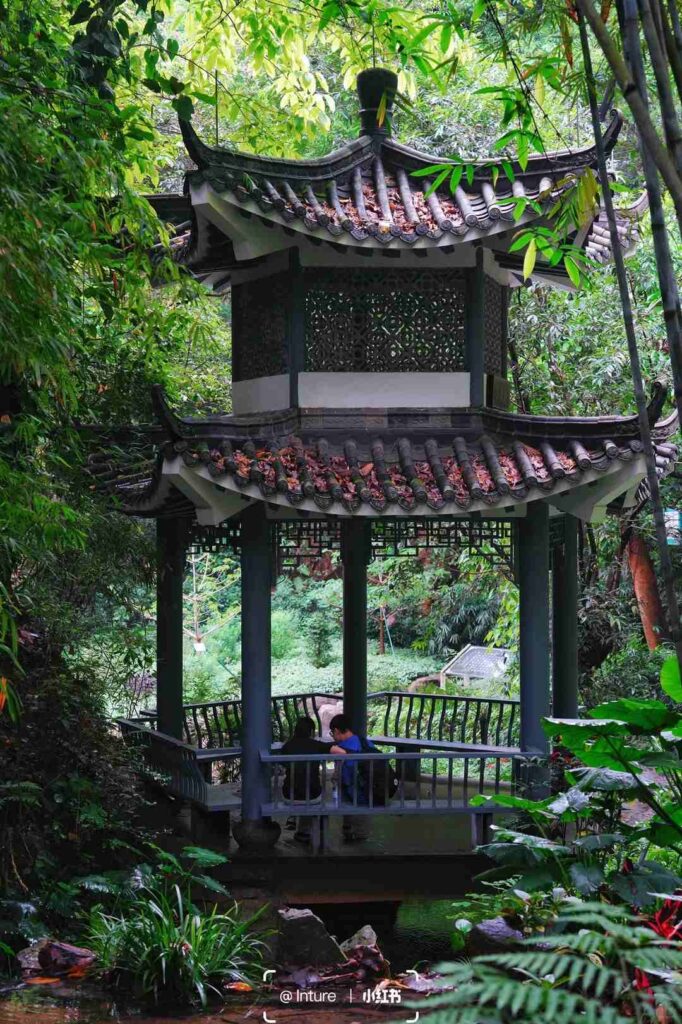
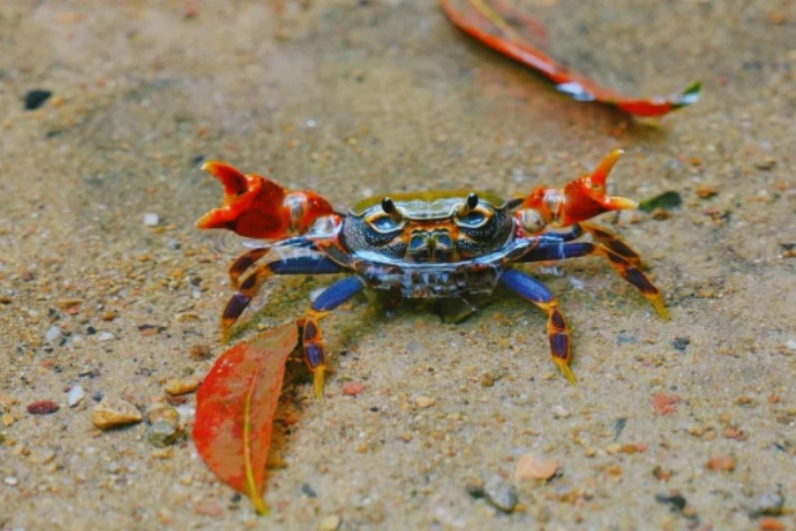
This part of the walk is especially lovely in summer. You can stop and wade in the stream along the way, which kids usually love. They can also look for tiny fish in the water, and my daughter once even spotted a little crab!
Pro-tip: If you’re worried about missing the turn, just search for “Pugu” in Amap and follow the directions.
Nengren Temple
If you continue uphill along this route, you’ll eventually reach Nengren Temple.
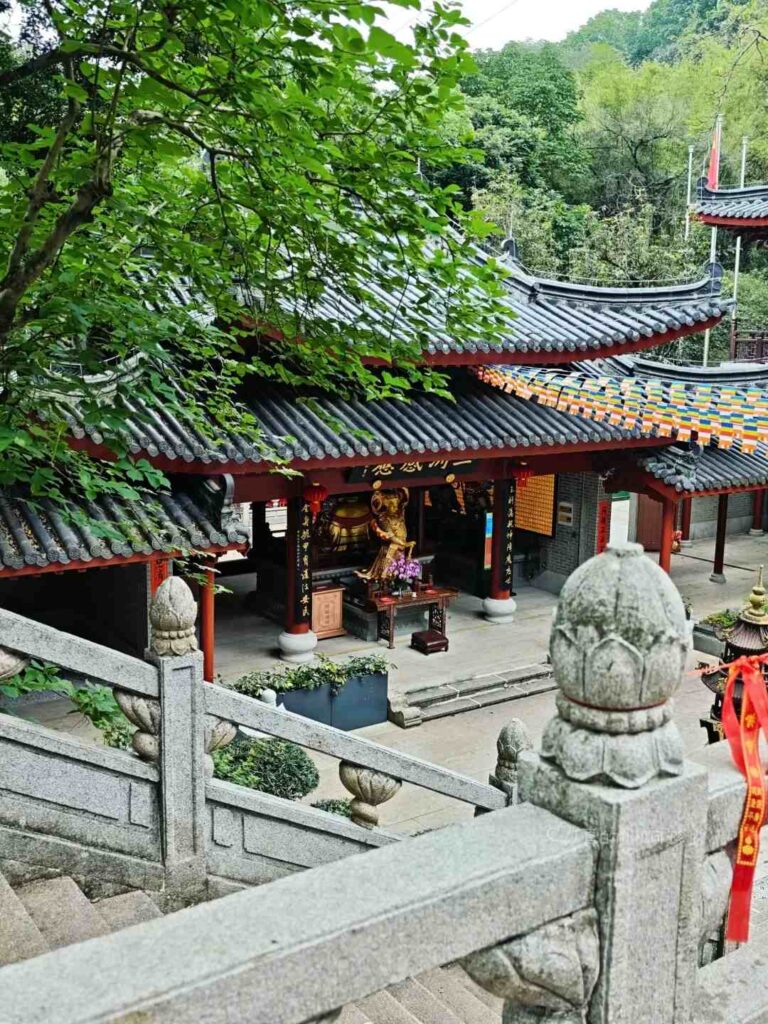
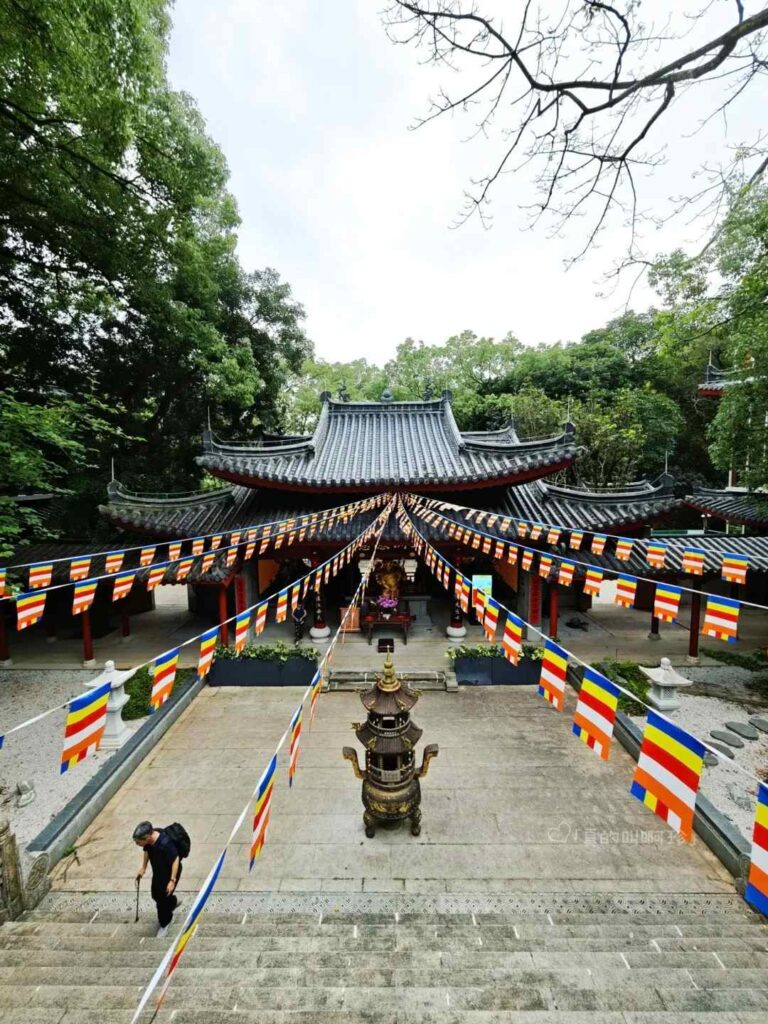
Nengren Temple was first built in 1824, and is one of the best-known Buddhist temples in Lingnan. Inside, the archway is inscribed with the words “Buddhist Realm (佛境),” and the plaque above the main gate bears calligraphy by writer Su Manshu.
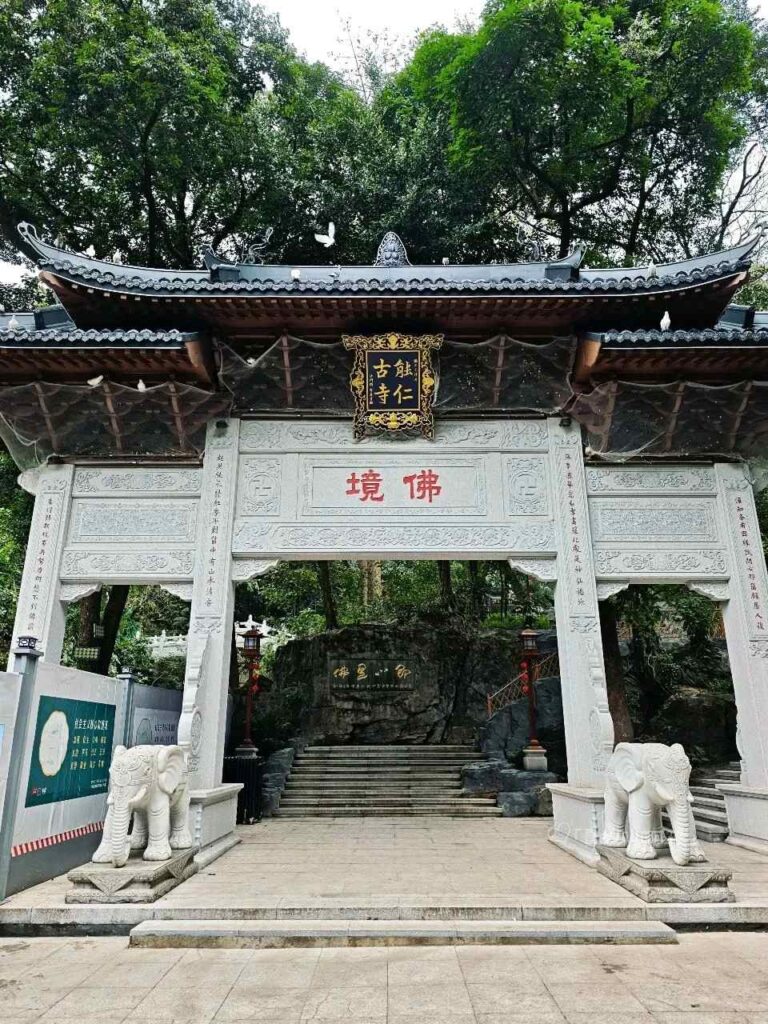
The temple has undergone numerous renovations, especially after it was destroyed during the war in 1938. It was later rebuilt in its original style in 1993, and then reopened in 1995. There have been further restorations in recent years, but the temple is still peaceful and reflective of its original character.
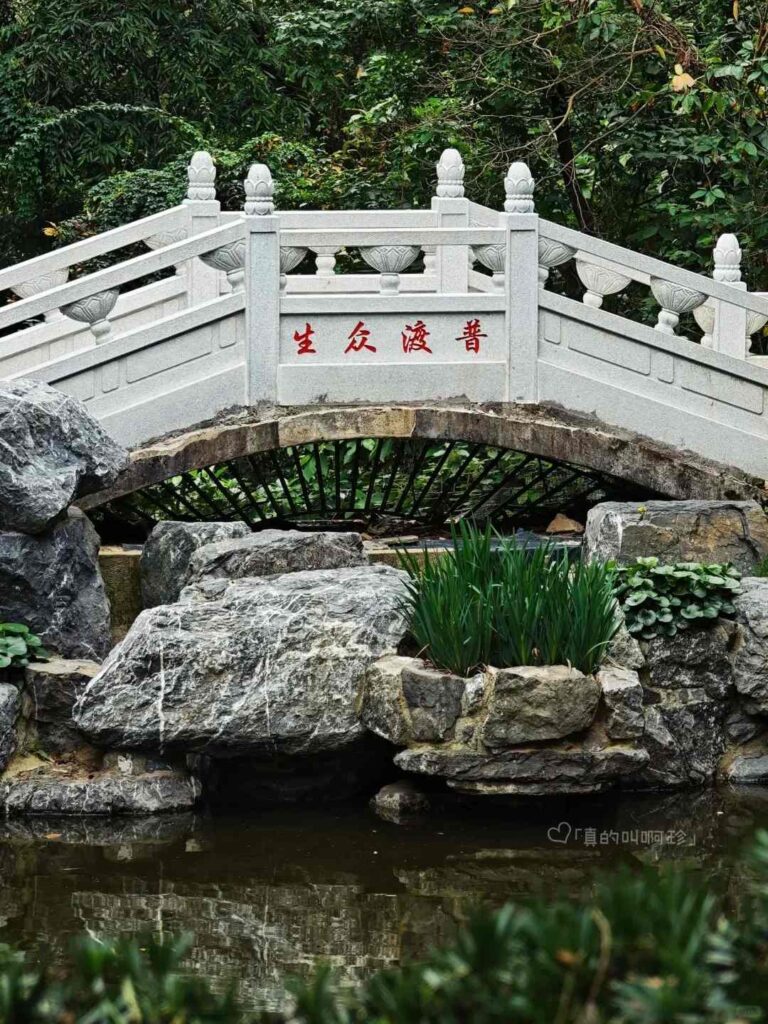
Inside, there are several Buddhist halls, including the Mahavira Hall, Ciyun Hall, and Sixth Patriarch Hall. In front of the halls, Ganlu Well and Hupao Spring are also worth a look. The atmosphere is quiet and solemn, and if you’re interested in history, temple architecture, or local culture, you’ll enjoy spending some time here. For photos, the best spots are the main temple gate and the area around the stone monument in front of the halls.
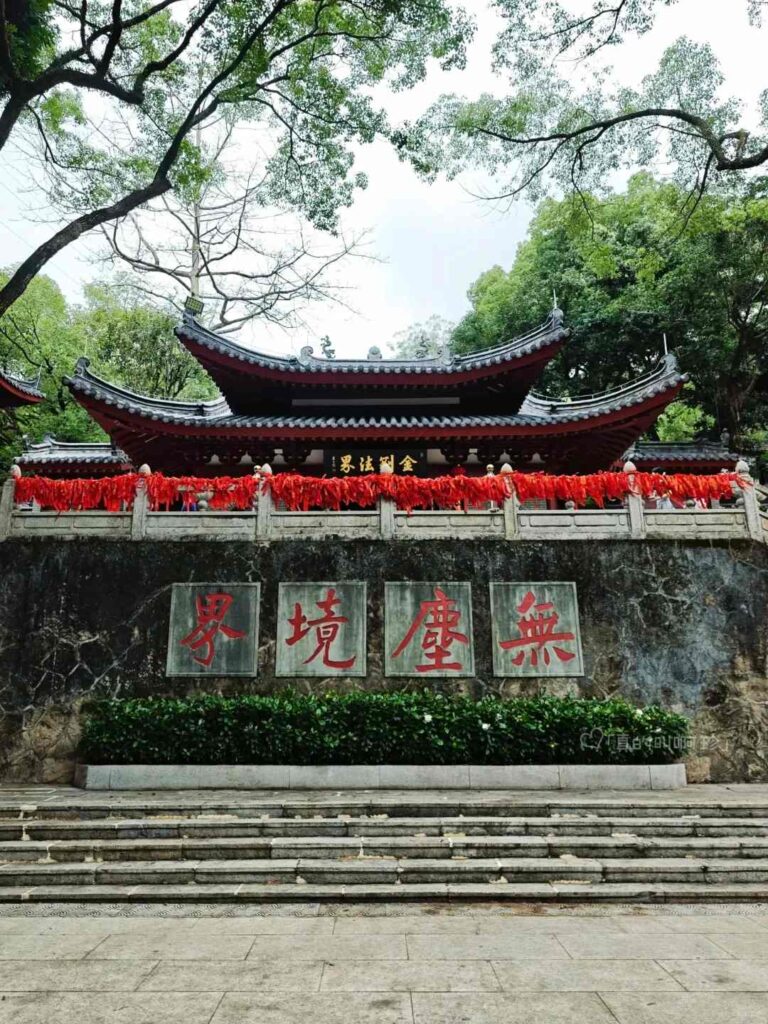
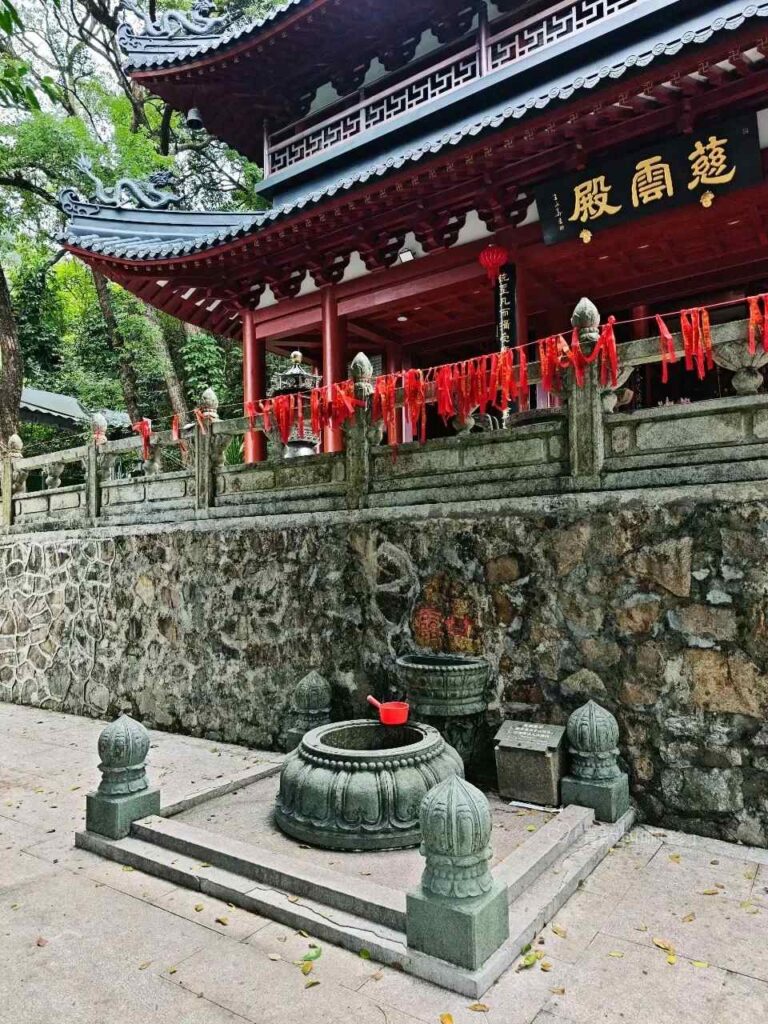
Leave through the back gate of Nengren Temple beside Ciyun Hall, and continue uphill along the stone steps, and you’ll arrive at Summit Plaza.
When you arrive here, you’ll see an open view of Guangzhou spread out below. It’s a great place to stop for photos, take a break, or pick up some fruit or snacks. Prices here are quite reasonable and not much higher than at the bottom of the mountain.
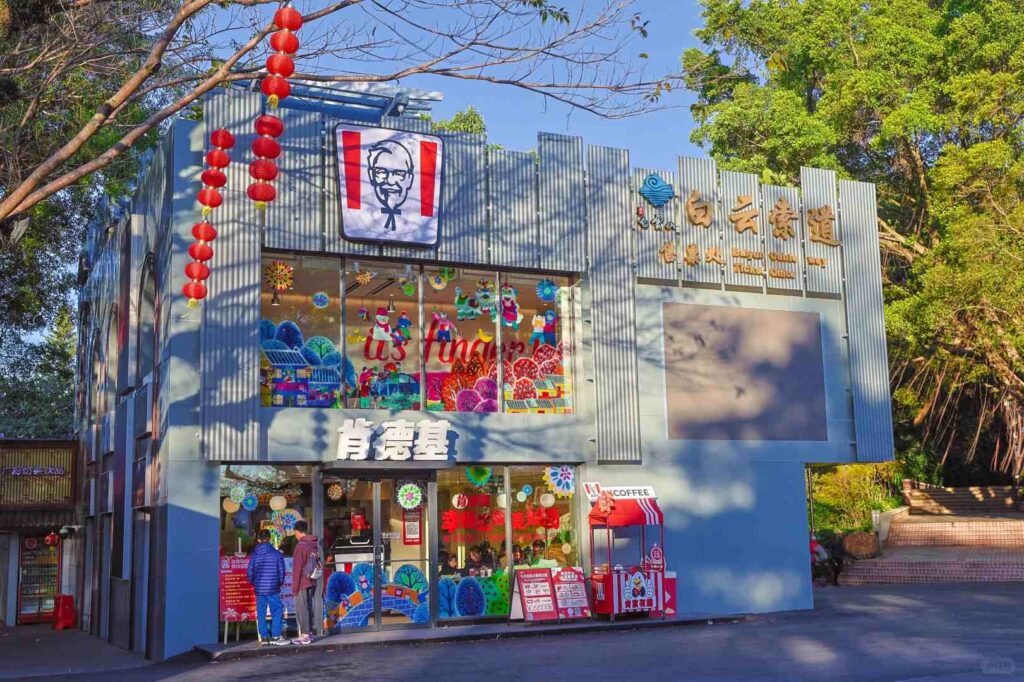 Summit Plaza
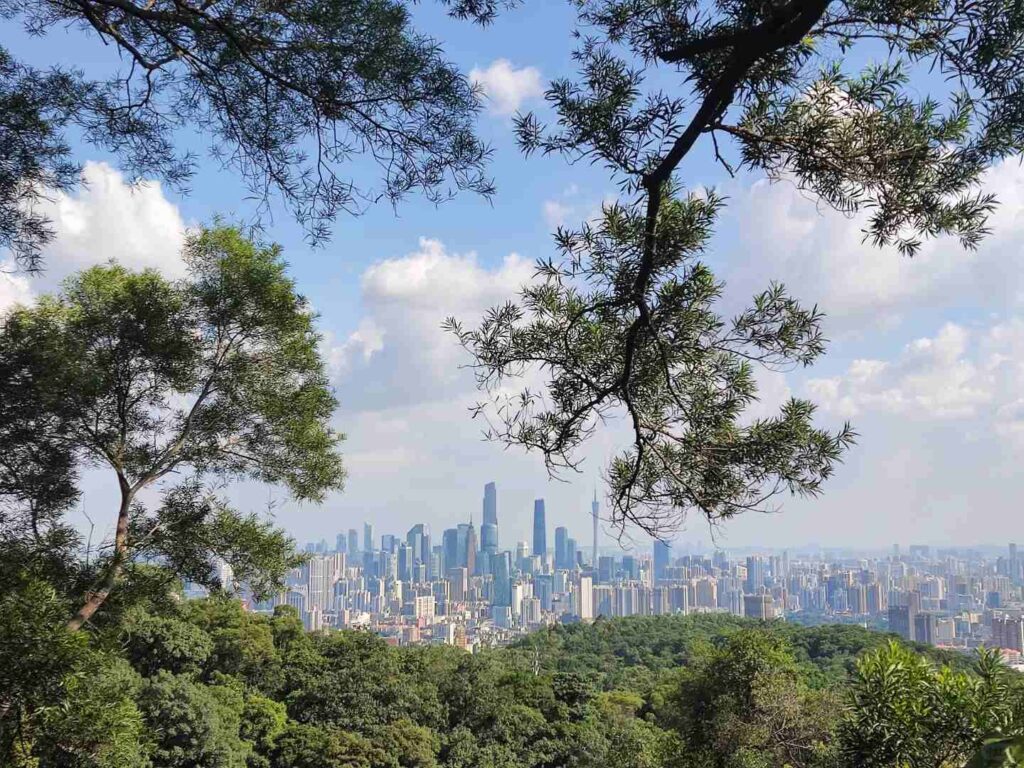 Summit Plaza
If you’re already starting to feel tired by this point, you can switch to the sightseeing shuttle here and continue up to Moxing Ridge.
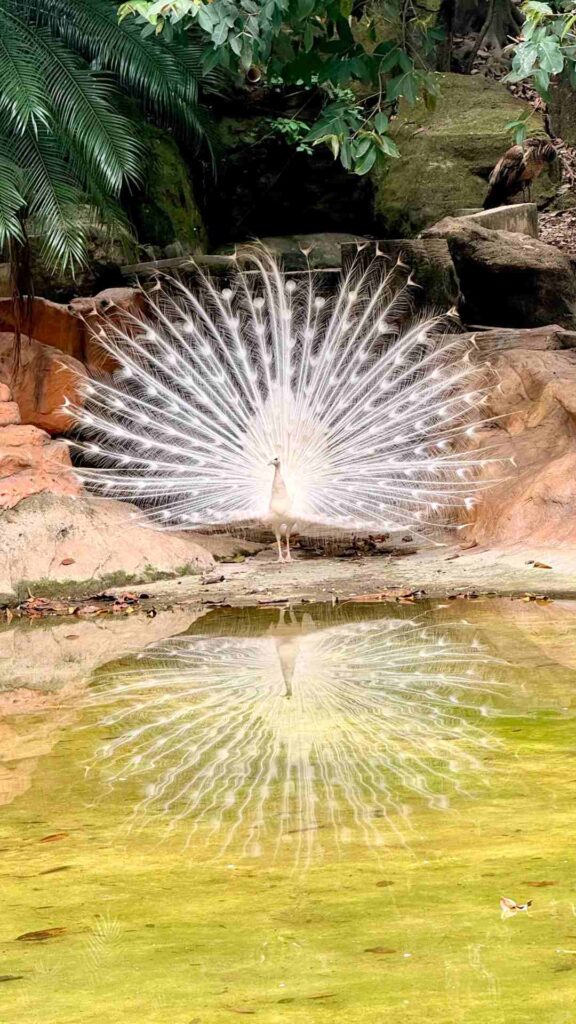
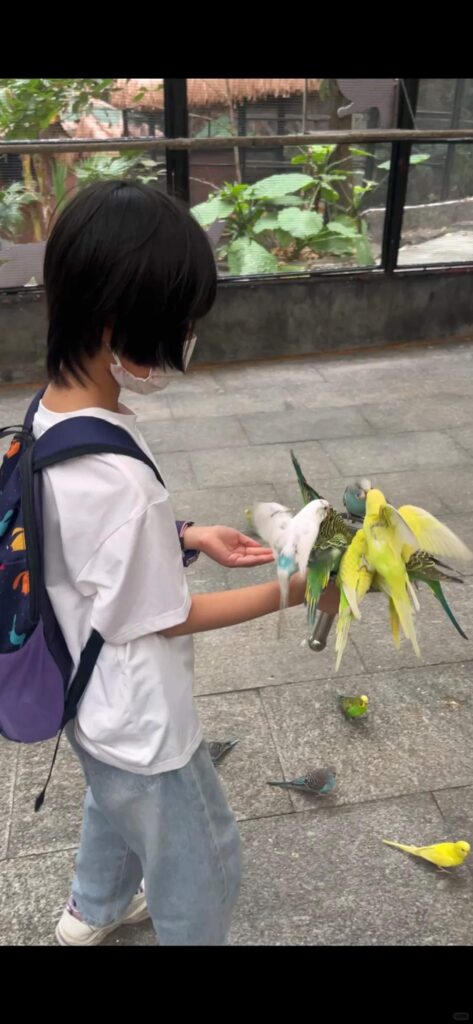
About 500 meters from Nengren Temple, you’ll come to another great place to stop, called Mingchun Valley. It’s often referred to as Baiyun Mountain’s “natural birdcage” and is home to thousands of birds, including red-crowned cranes, peacocks, and egrets. The birds roam freely through the valley, and there are also birdwatching paths and a small show area. If you enjoy birds, or if you’re visiting with children, this is a fun detour.
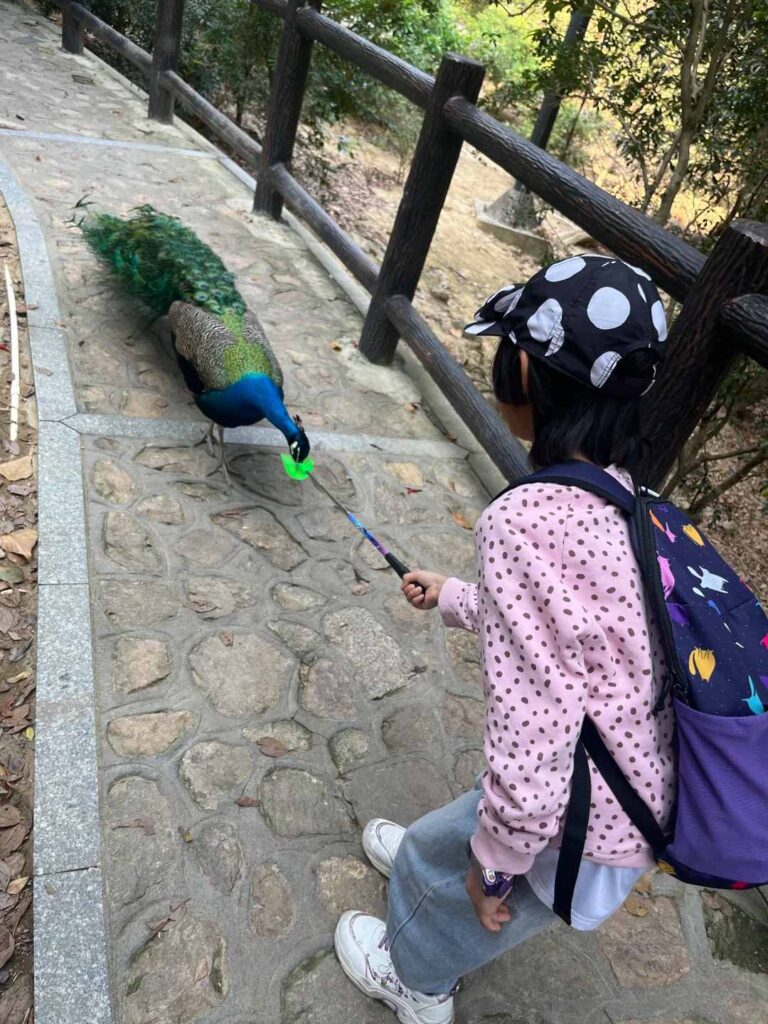
The Walk to Moxing Ridge
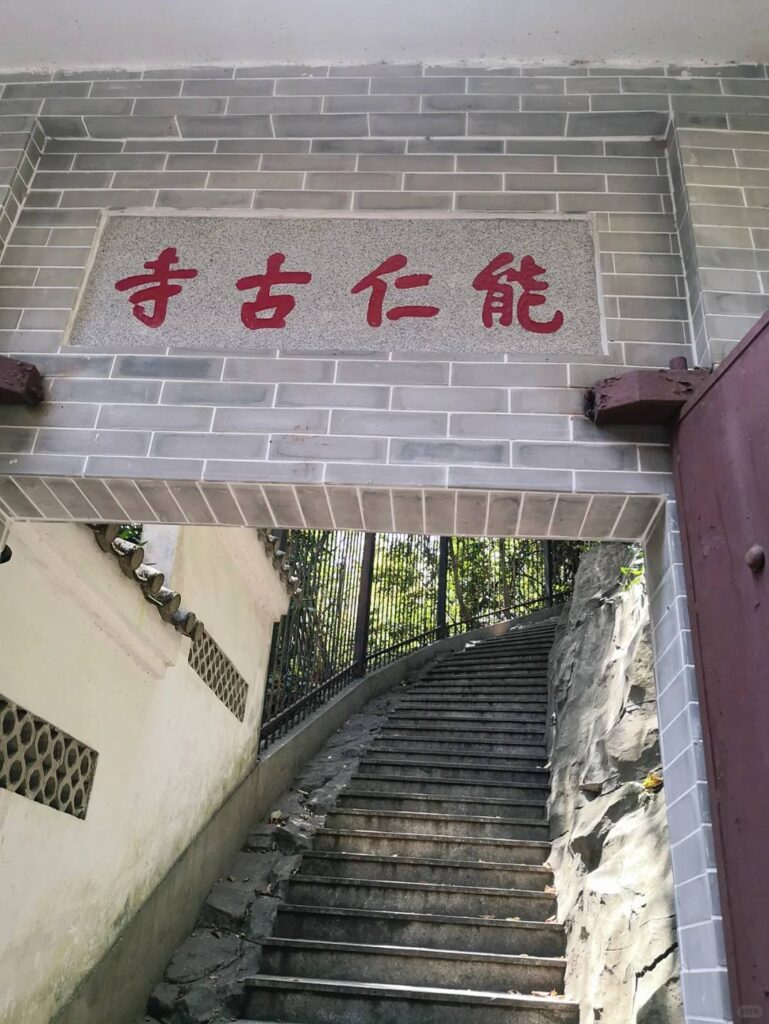
After a short break, continue toward Moxing Ridge. On the way, you’ll pass a few places I recommend stopping at, including the ruins of Baiyun Ancient Temple, Nine Dragon Spring, and the Stele Forest.
The Ruins of Baiyun Ancient Temple
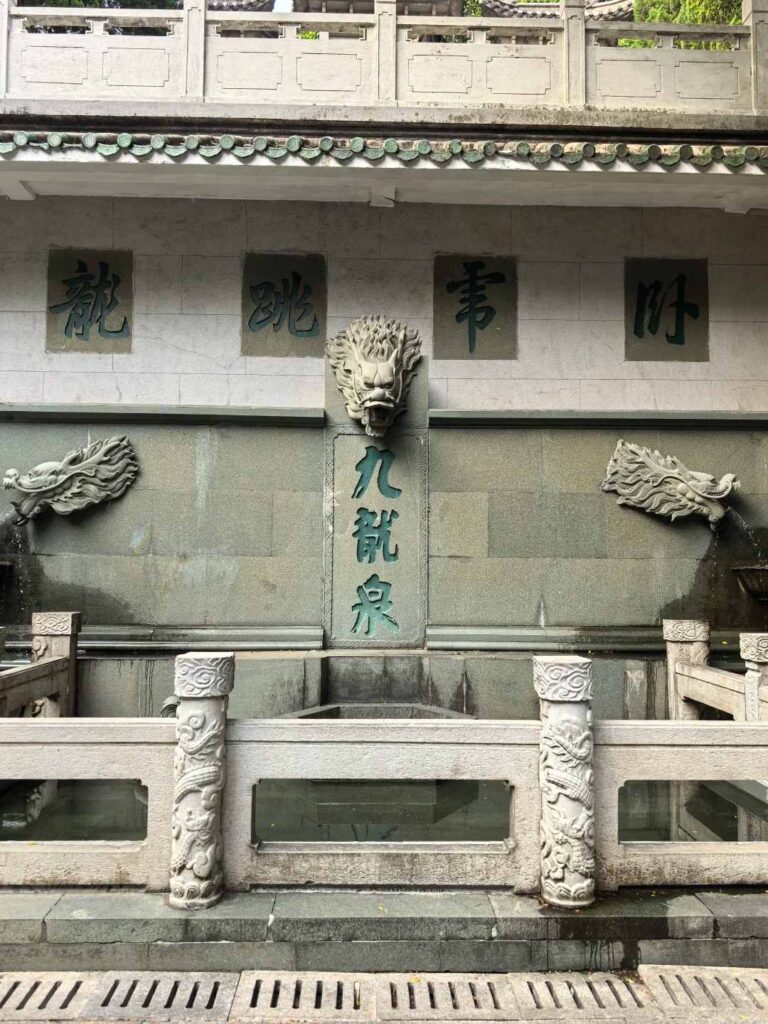
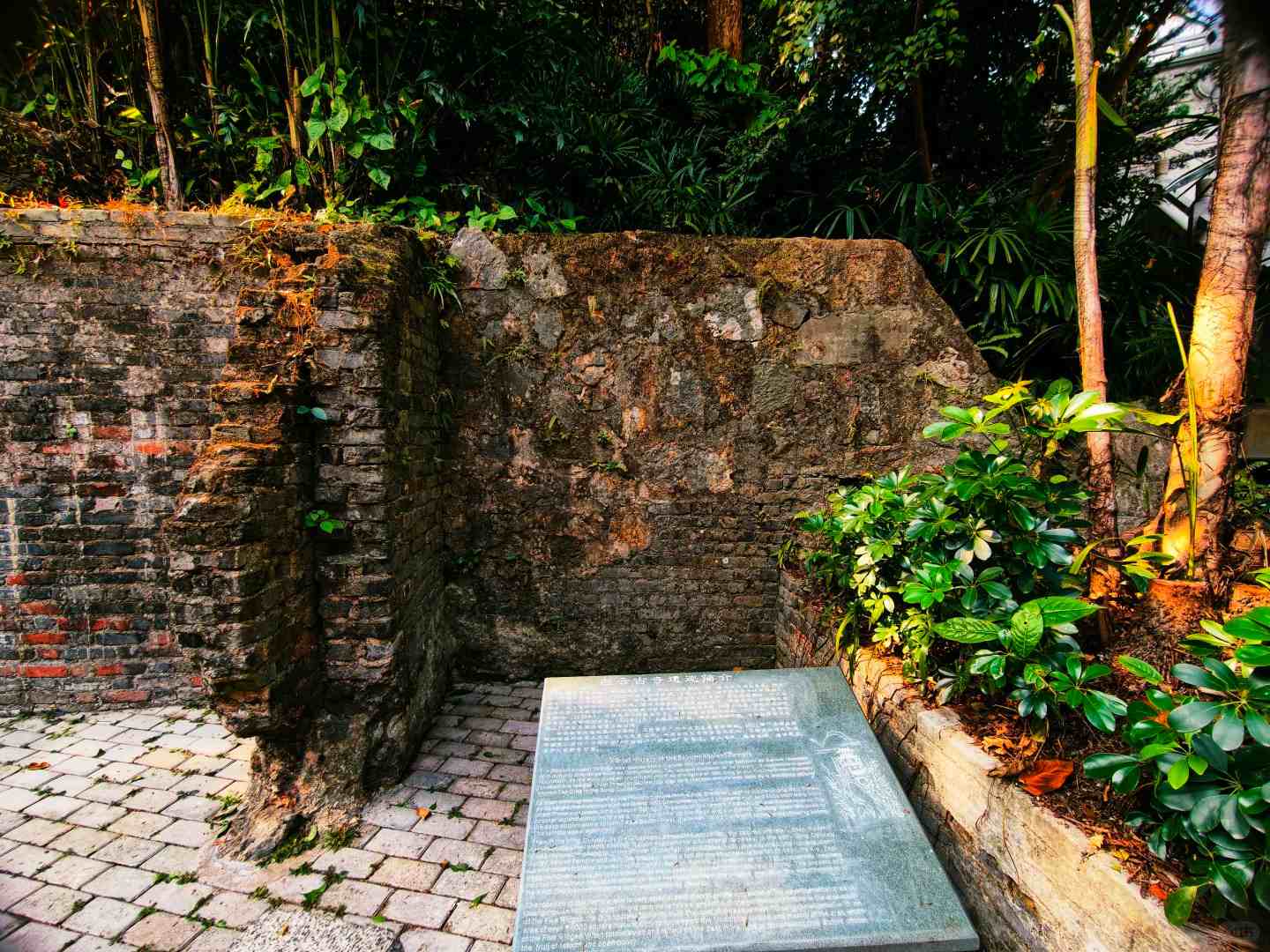
Baiyun Ancient Temple once stood higher than any other temple on Baiyun Mountain. It is said to date back over 1,000 years, to the Southern Han period, and to have been founded by the monk Shi Shixing on imperial orders. Nine Dragon Spring was just in front of the temple.
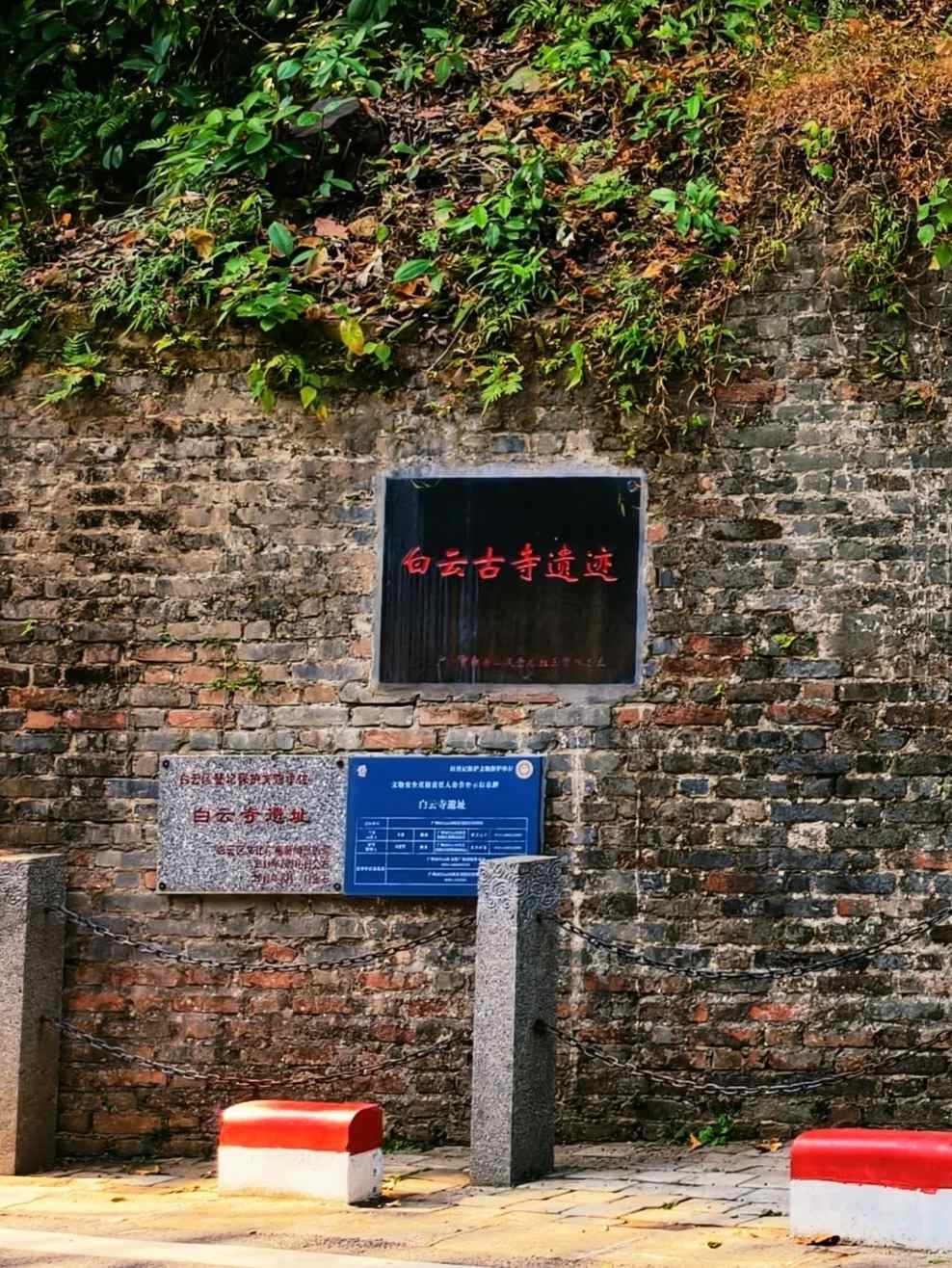
By the Ming and Qing dynasties, the temple had already fallen into ruin and had been rebuilt several times. Today, only part of the old gate and sections of wall remain, but the main temple buildings are gone.
Stele Forest
The Stele Forest is one of Baiyun Mountain’s main cultural sights. Despite the name, it is not a forest in the usual sense, but gardens, corridors, and pavilions filled with stone inscriptions. Built on the former site of Baiyun Temple, it contains nearly 300 stone monuments and rock carvings and showcases Lingnan garden design with poetry, calligraphy, and stone carvings. Because it occupies the old temple site, the area still retains its historic atmosphere.
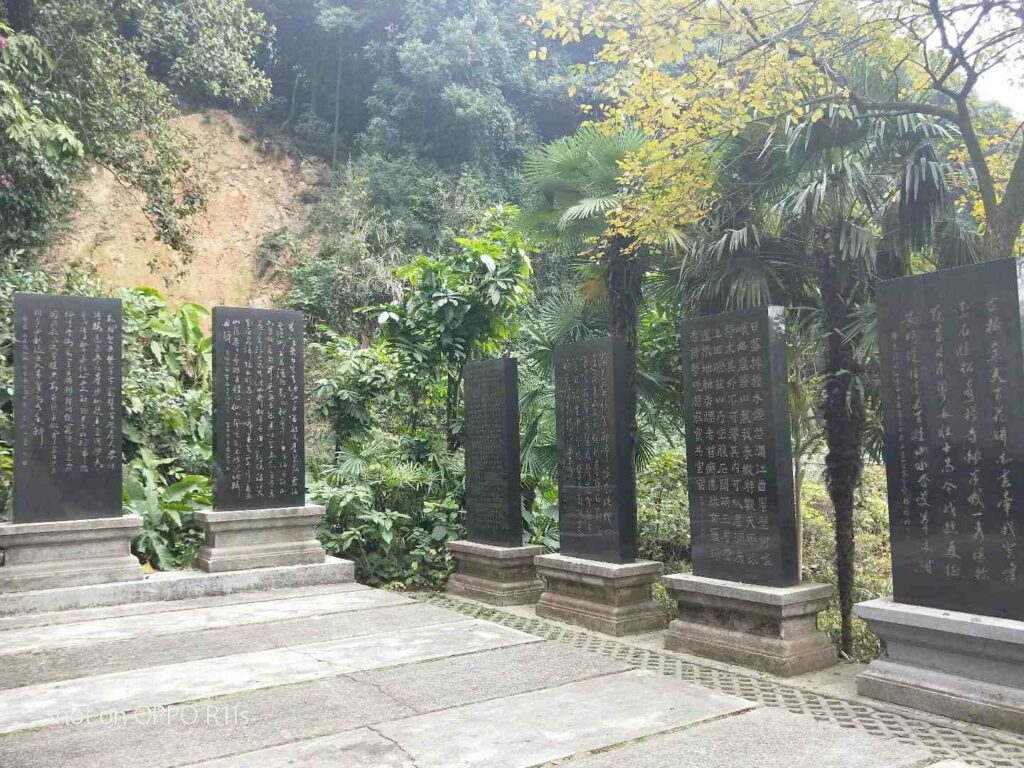
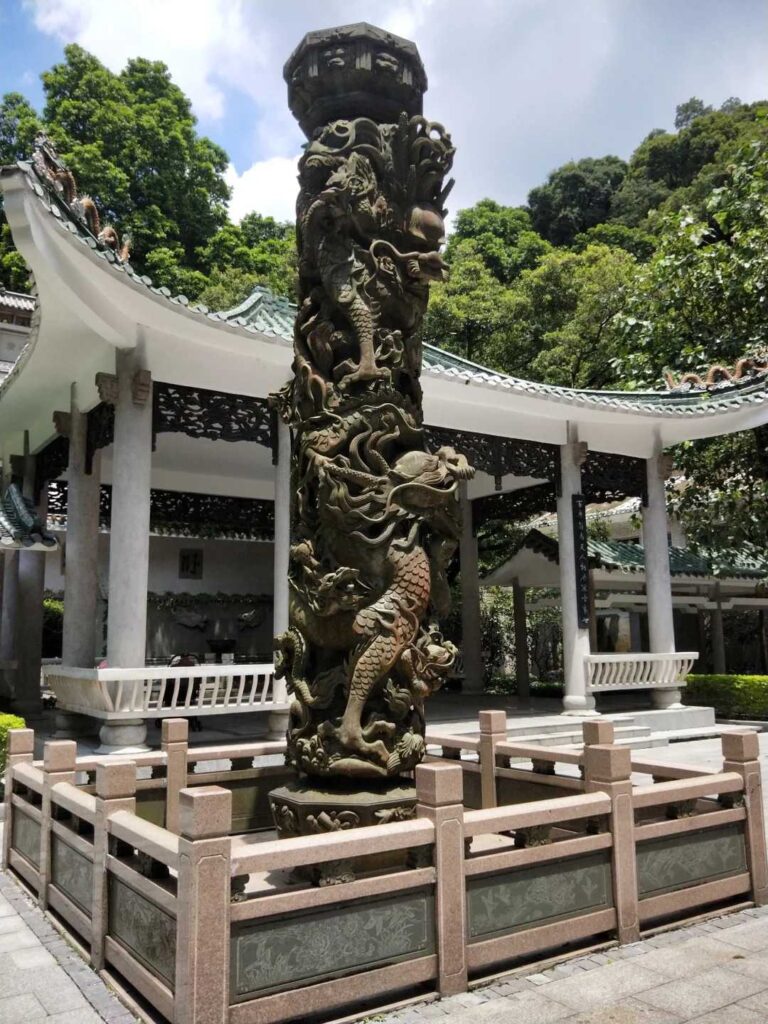

You’ll see inscriptions both indoors and outdoors, as well as poems and other texts carved directly into the rock, a traditional form of stone inscription in China. If you don’t read Chinese, you’ll miss the details in the poetry and calligraphy, but the history and beauty of the garden still make it an enjoyable experience nonetheless.
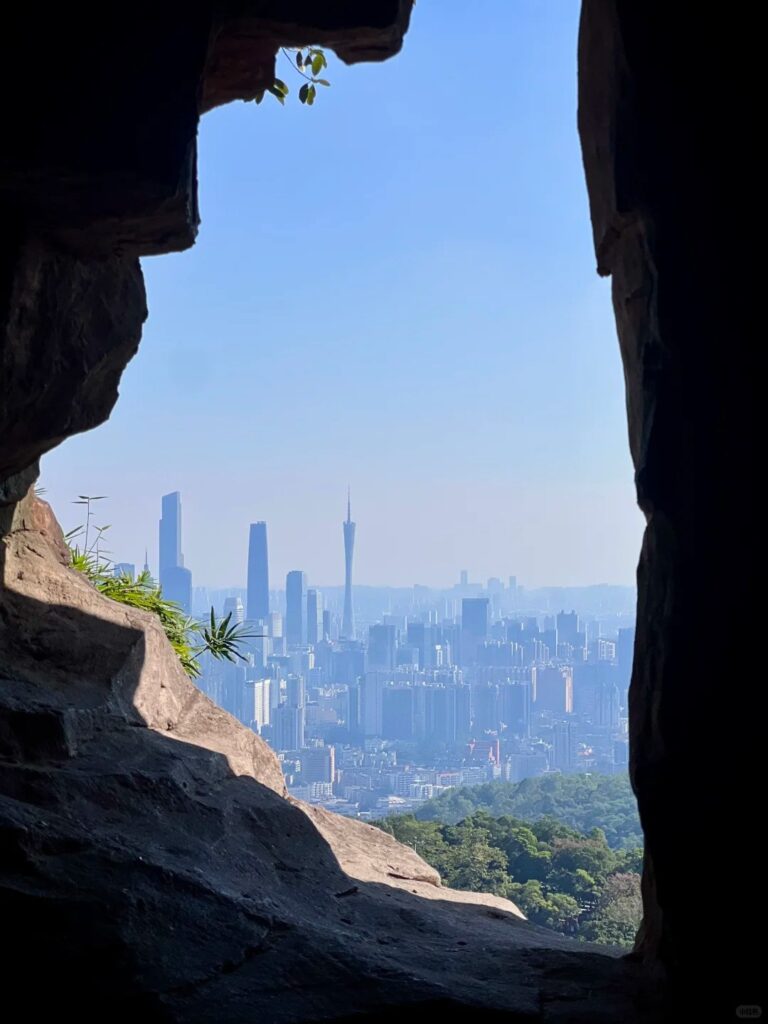
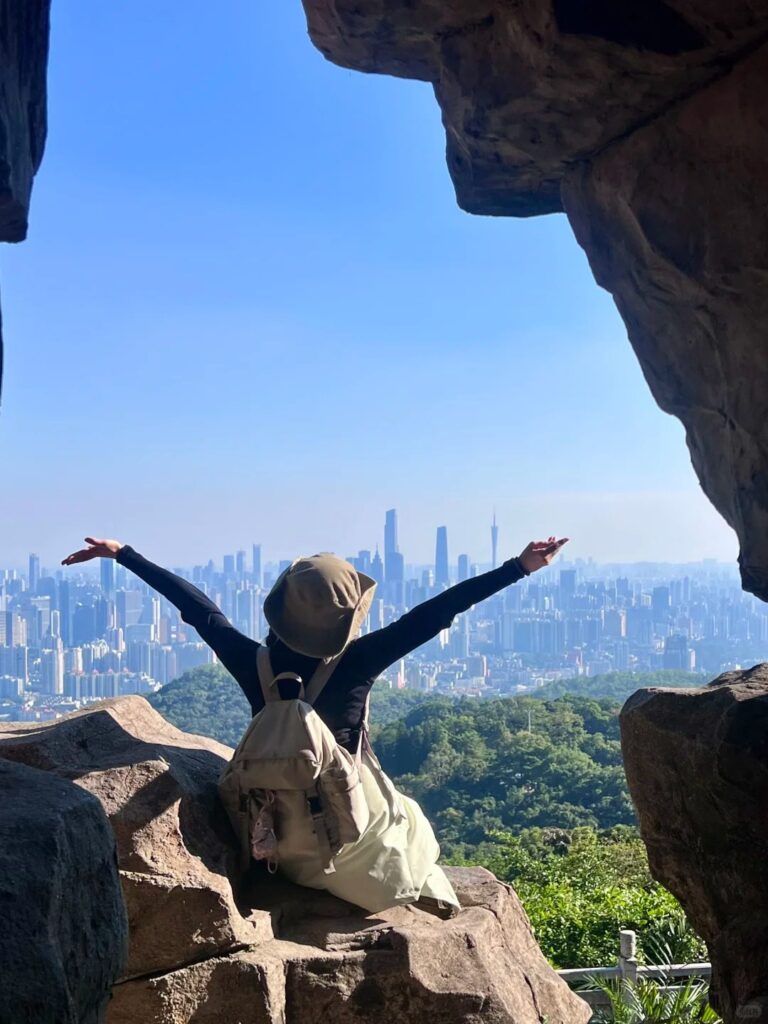
This is also one of the best places for photos on Baiyun Mountain. Part of the Stele Forest features a cave-like opening that many visitors use to frame the Guangzhou skyline in their photos. I particularly recommend visiting at sunset, and for the best photos, come on a clear day.
Moxing Ridge
From the Stele Forest, walk north for about ten minutes to reach the south entrance to Moxing Ridge. You’ll need a separate ticket to enter the Moxing Ridge area, but admission is just 5 RMB. I’d buy it in advance through the WeChat mini-program so you don’t have to wait in line at the entrance.
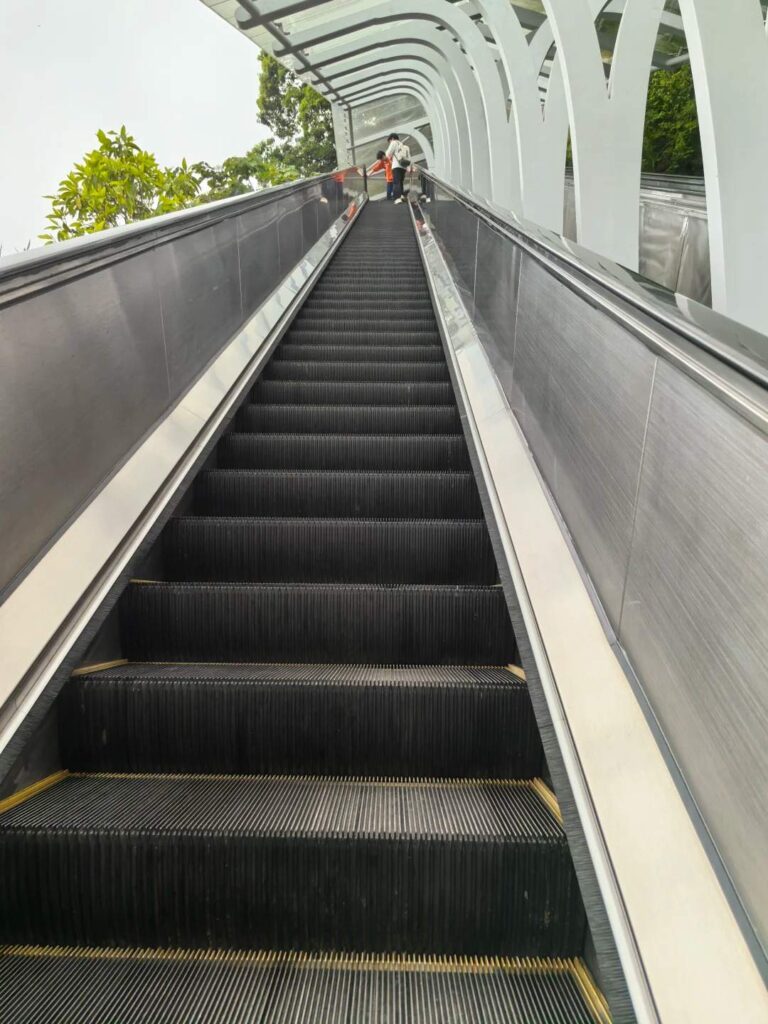
Once inside, you can take the escalator up to the summit area of Moxing Ridge, Baiyun Mountain’s highest point at 382 meters.
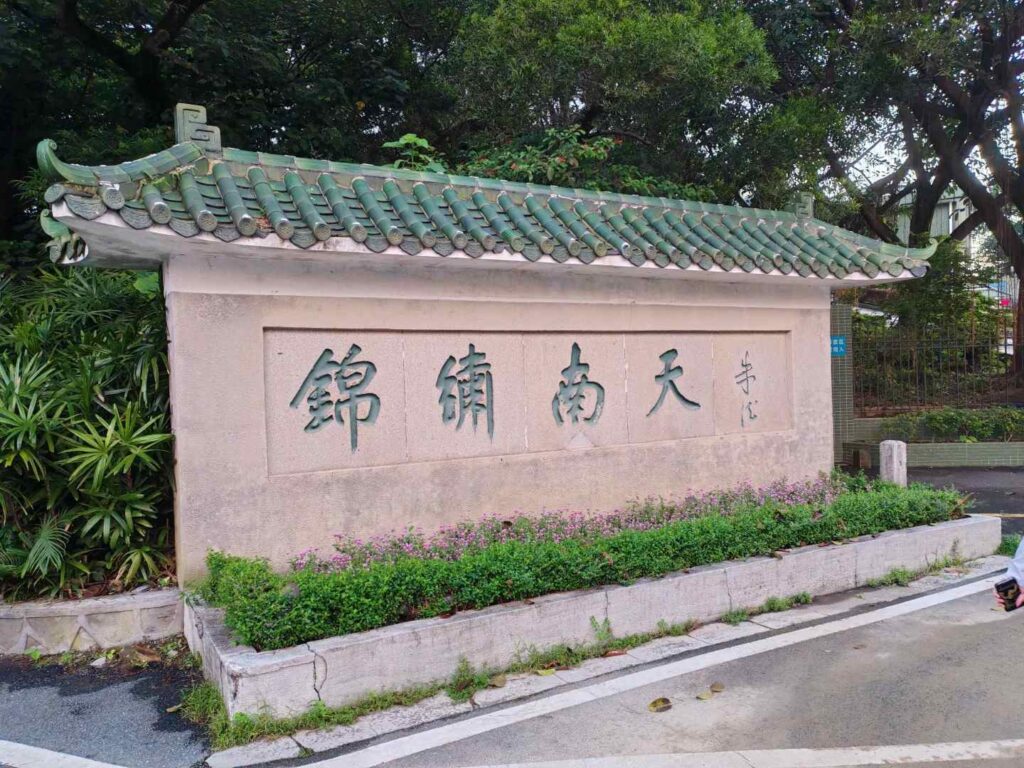
At the top, the first thing you’ll see is the Baiyun Mountain archway, with an inscription of four Chinese characters meaning “Splendid Southern Sky(锦绣南天).” The calligraphy was written by Zhu De, one of the founding marshals of the PRC, during his 1965 visit to Baiyun Mountain.
There’s also a lookout here called the Lock of Love Platform. At the top, there’s a spot where visitors hang locks or red wooden tags with messages to loved ones or wishes for the future.
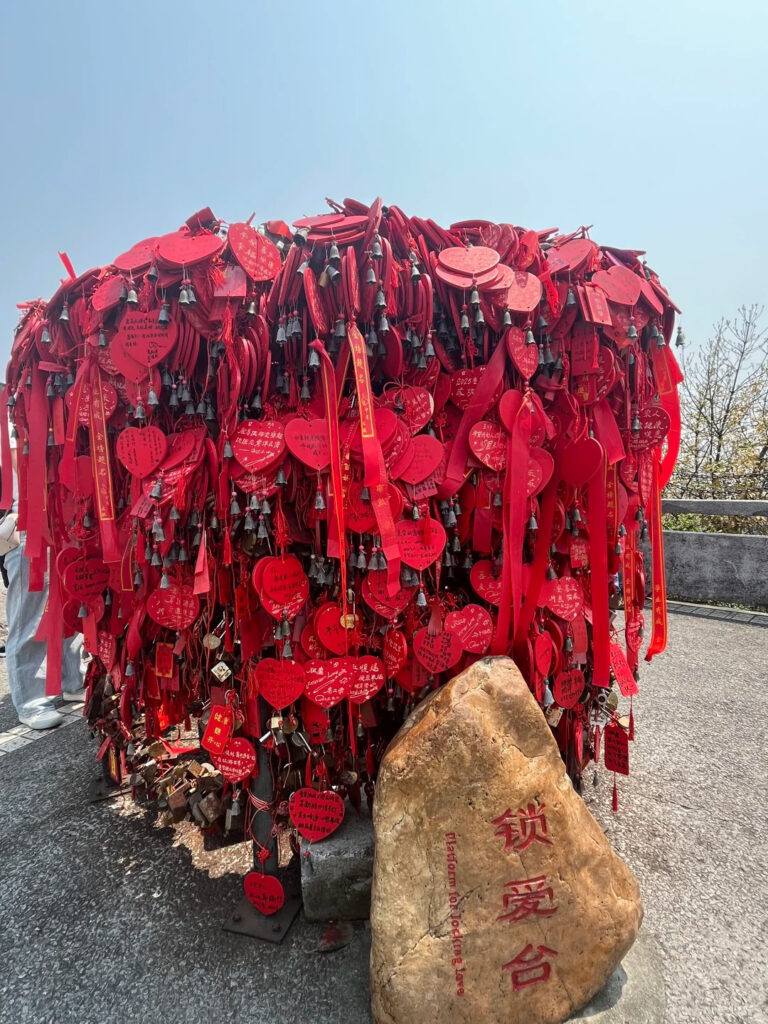
If you’d like to add one of your own, you can buy a lock from the small stalls nearby, and the vendors can engrave a message on it for you. I bought one a few years ago, and it was around 60 RMB. The wooden tags are cheaper.
Moxing Ridge also has an elevation marker sculpture. It reads “1900 KM Beijing,” meaning Moxing Ridge is about 1,900 kilometers from Beijing. The base also shows the elevation: 382 meters.
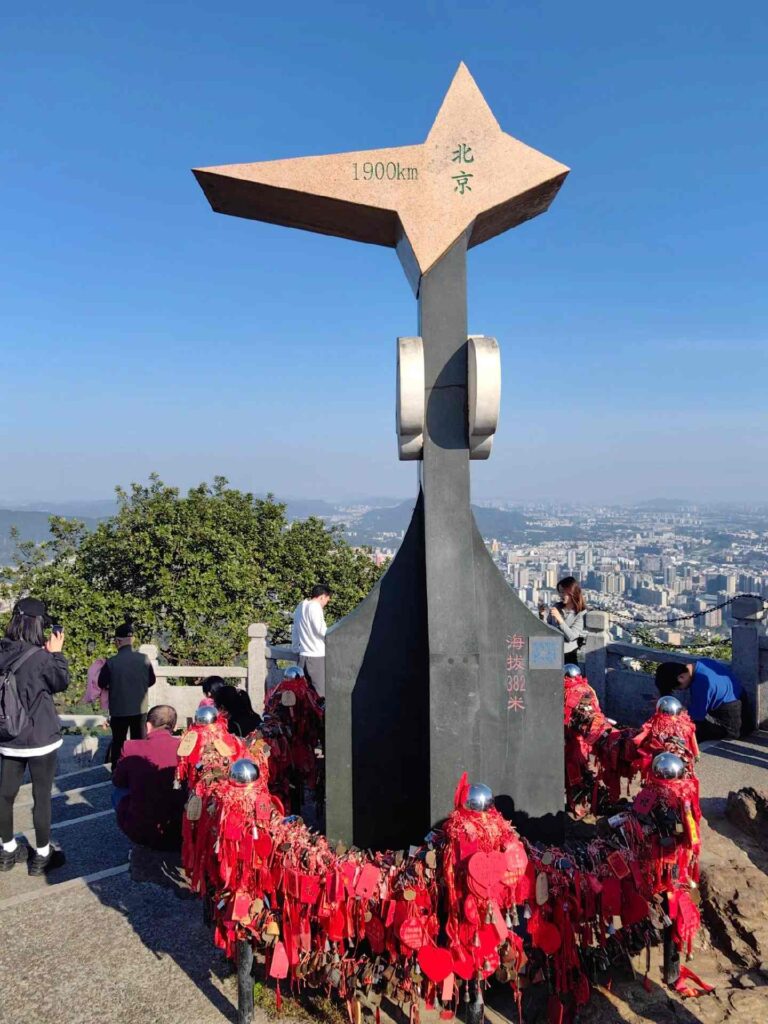
From here, you can enjoy sweeping views of Guangzhou and some of the best sunset views in the city.
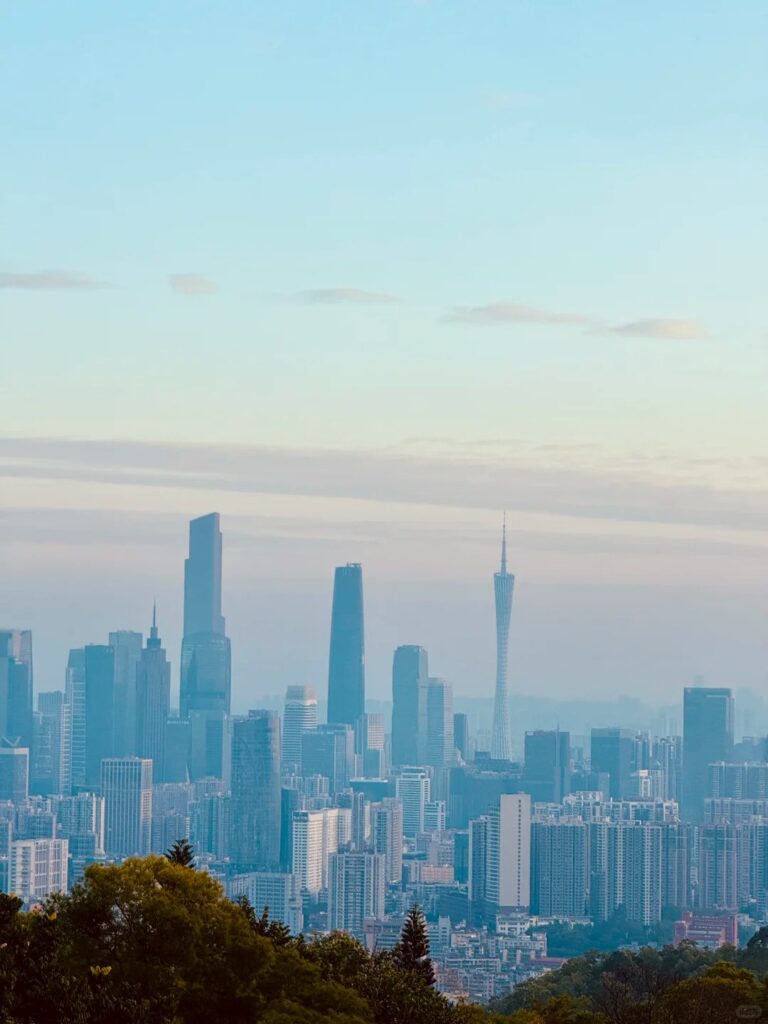
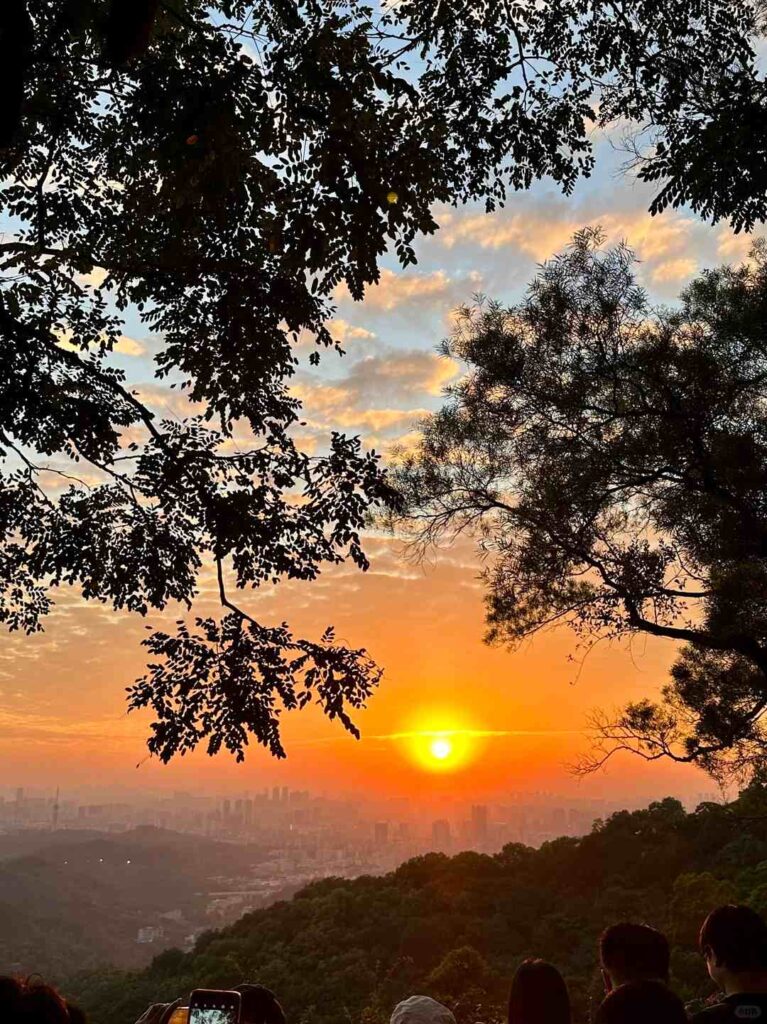
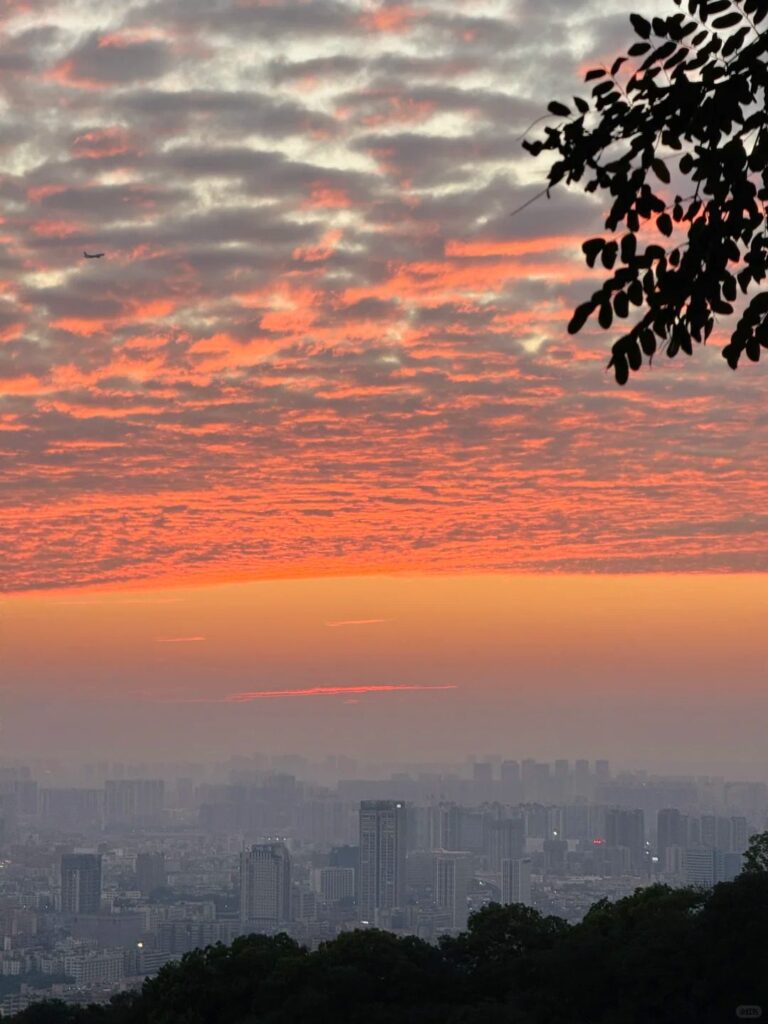
When you’re ready to head back down, I wouldn’t recommend going back the same way, otherwise you’ll miss one of the most scenic stretches of the descent.
Dangxiong Pavilion
Instead, continue forward and follow the stairs down and you’ll soon reach Dangxiong Pavilion. It’s a good place to stop for a rest, enjoy the views, and take a few photos.
There’s also a sightseeing shuttle stop here, so if you’re getting tired, you can take the shuttle down from this point.
Baiyun Zipline
Next to Dangxiong Pavilion, visitors looking for something a little more adventurous can try the Baiyun Zipline.
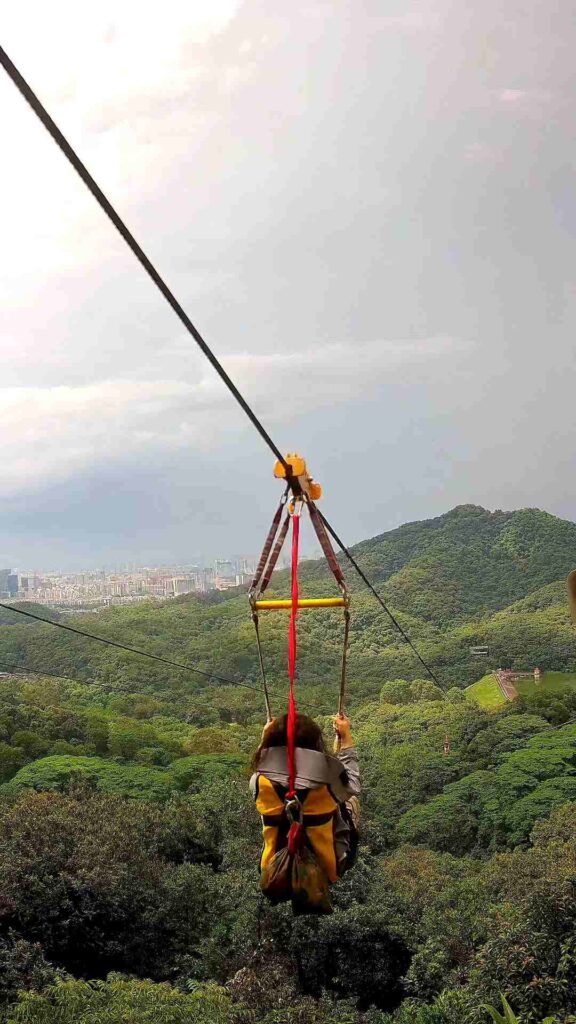
It’s a high zipline, about 1,500 meters long, that reaches speeds of up to 90 km/h. The ride lasts around three minutes and you get incredible views of the forest and valley below. I’m a little afraid of heights, so I haven’t (yet) worked up the courage to try it.
Tickets are 145 RMB for one person or 268 RMB for two.
The zipline ends near Mingzhu Tower, and this is a great part of the mountain if you’re visiting with kids who want to play in the water. From here, it’s easy to keep heading downhill toward the West Gate.
Peach Blossom Ravine and Huangpodong Reservoir
If you keep following the main path down from Dangxiong Pavilion, you’ll reach Peach Blossom Ravine in about half an hour. This small area is best known for its peach blossoms, and the landscaping was inspired by The Peach Blossom Spring, a famous piece of classical Chinese literature.
There’s a separate ticket (5 RMB per person) for this area from January to March, when the peach blossoms are in bloom. The rest of the year, entry is free.
Peach Blossom Ravine sits right beside Mingzhu Lake and Huangpodong Reservoir. For me, the best thing about this whole area, especially if you’re with kids, is that they can wade in the water and catch little fish and shrimp. If you come here with kids, they probably won’t want to leave.
Best Spots for Kids to Play in the Water
Yunshan Tea Garden
The stream here is very clear, and the water is shallow and calm, so it’s a great spot for younger kids to play. There’s also a covered walkway beside the stream, where adults can sit and relax while they keep an eye on the kids. Kids usually have a great time here with small nets, catching fish and shrimp, splashing around, and wading through the stream.
Mingzhu Lake
The water at Mingzhu Lake is lovely, and on a clear day it sparkles in the sunlight. You’ll often see large koi gathering near the shore looking for food, because there are always kids willing to drop them some of their snacks! Besides the koi, you may also spot small fish, shrimp, and sometimes even crabs, so it’s a fun place for kids to poke around and see what they can find.
Peach Blossom Ravine
There’s also a clear stream running through Peach Blossom Ravine. It’s a pretty area, with smooth pebbles on the bottom and many trees along the stream that provide lots of shade. The water is mostly calm, and in most places it only comes up to a child’s calves. This area is usually full of children on weekends, so if you’d rather avoid the crowds, I’d pick Yunshan Tea Garden or Mingzhu Lake.
If you’re planning to let your kids play in the water here, bring a small net, a change of clothes, and water shoes (there are quite a few loose stones on the stream bed). I also suggest buying a waterproof phone pouch, which makes taking photos of your kids playing easier. There are restrooms near Peach Blossom Ravine and wash basins at Yunshan Tea Garden, so they can rinse off afterward.
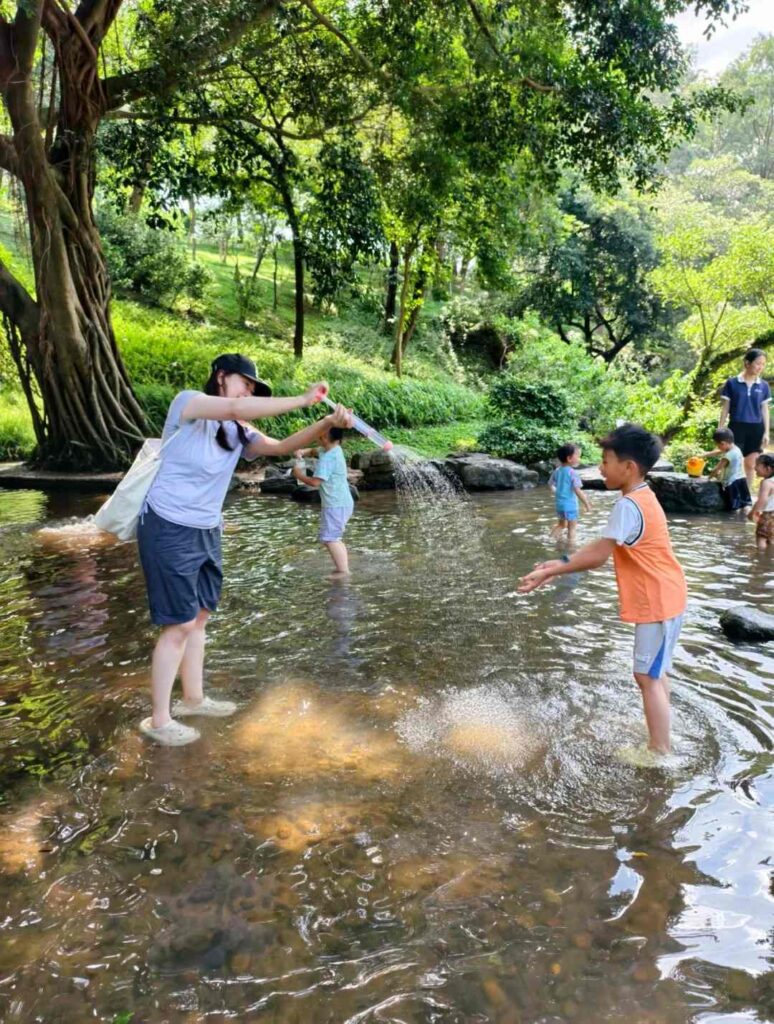
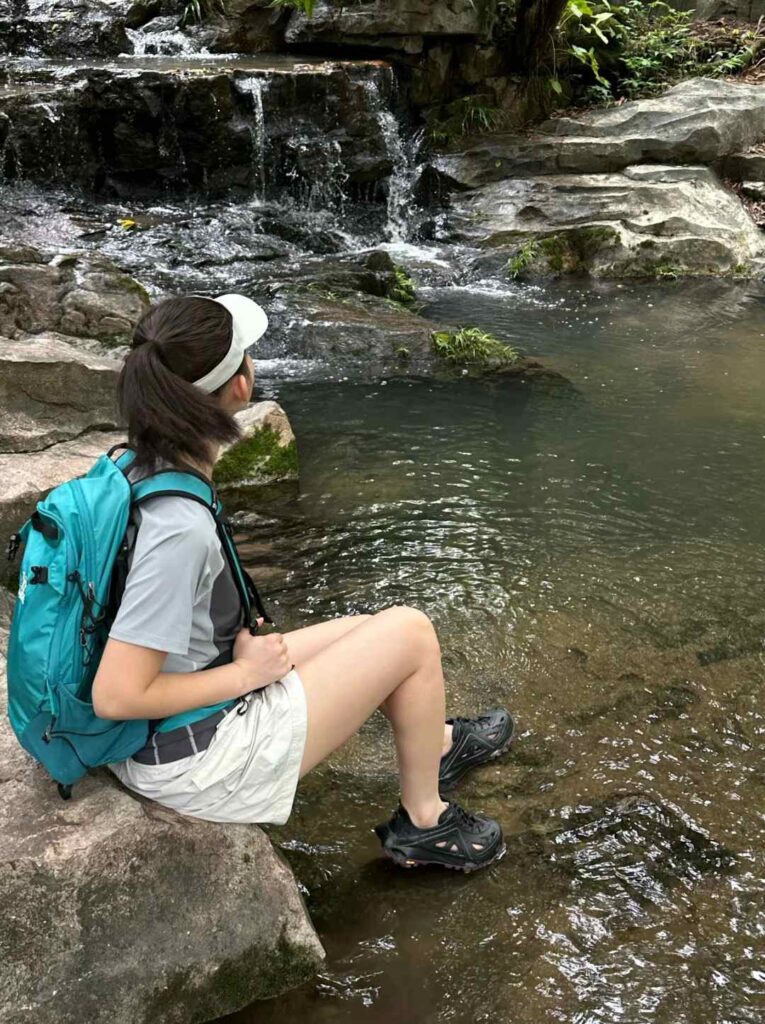
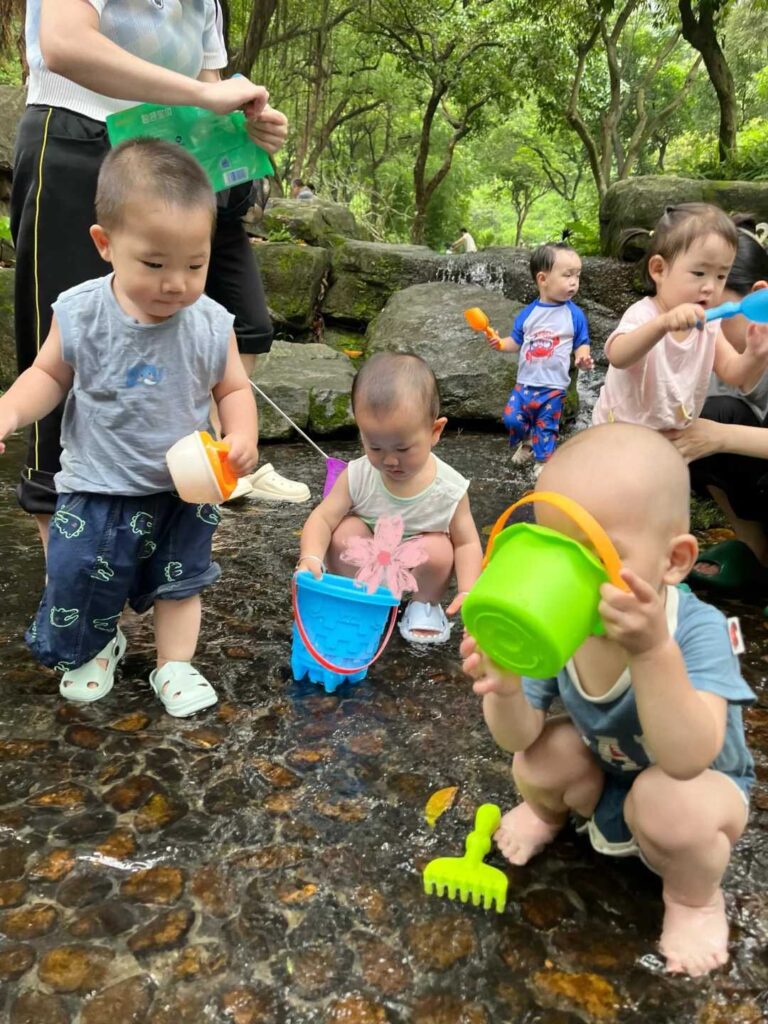
In addition to being a fun spot to play in the water, this is also one of the prettiest places for a walk, especially the area around Huangpodong Reservoir. There’s a 520-meter boardwalk that winds along the water, and on a clear day the lake sparkles with the reflection of the hills. There’s also a large lawn beside the reservoir, so if you’re not in a hurry, it’s a nice place to sit and relax.


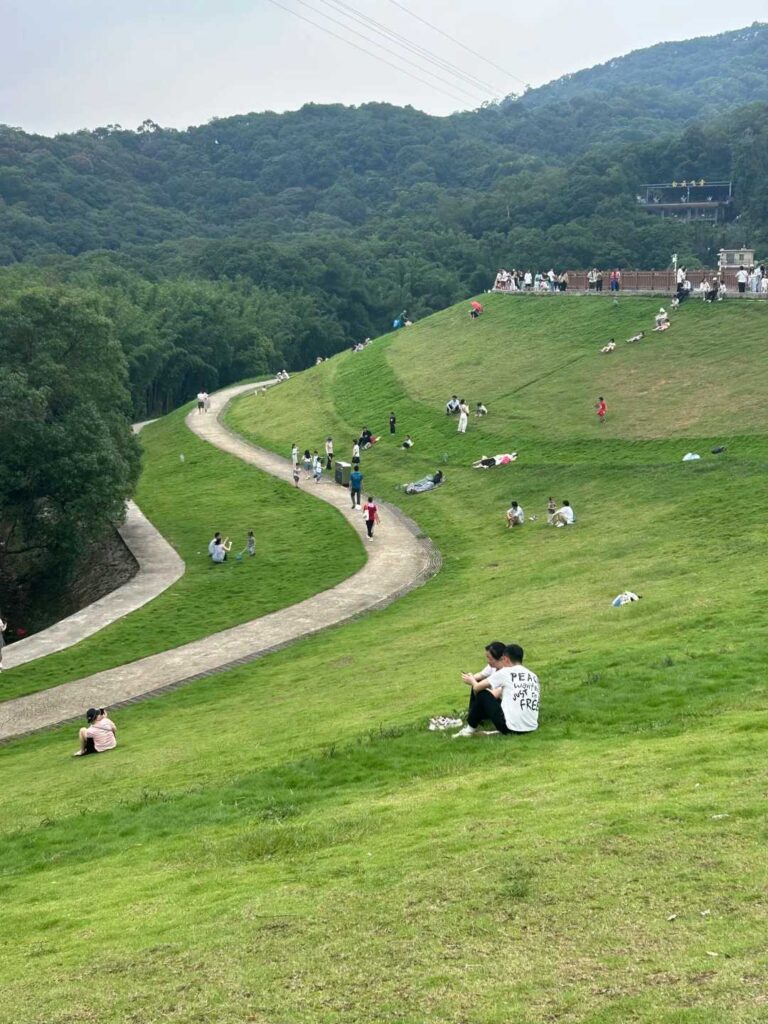
After you’ve finished exploring this area, continue toward the West Gate.
Cui Bamboo Garden
A few hundred meters farther along, you’ll pass Cui Bamboo Garden, not far from the reservoir. This area was laid out around the original bamboo groves and stream, and is a nice quiet place to stop. Inside, you’ll find Zhuyun Pavilion, stone carvings on the garden walls, ornamental rocks, and winding paths. The running water and bamboo make it a very peaceful area for a stroll.
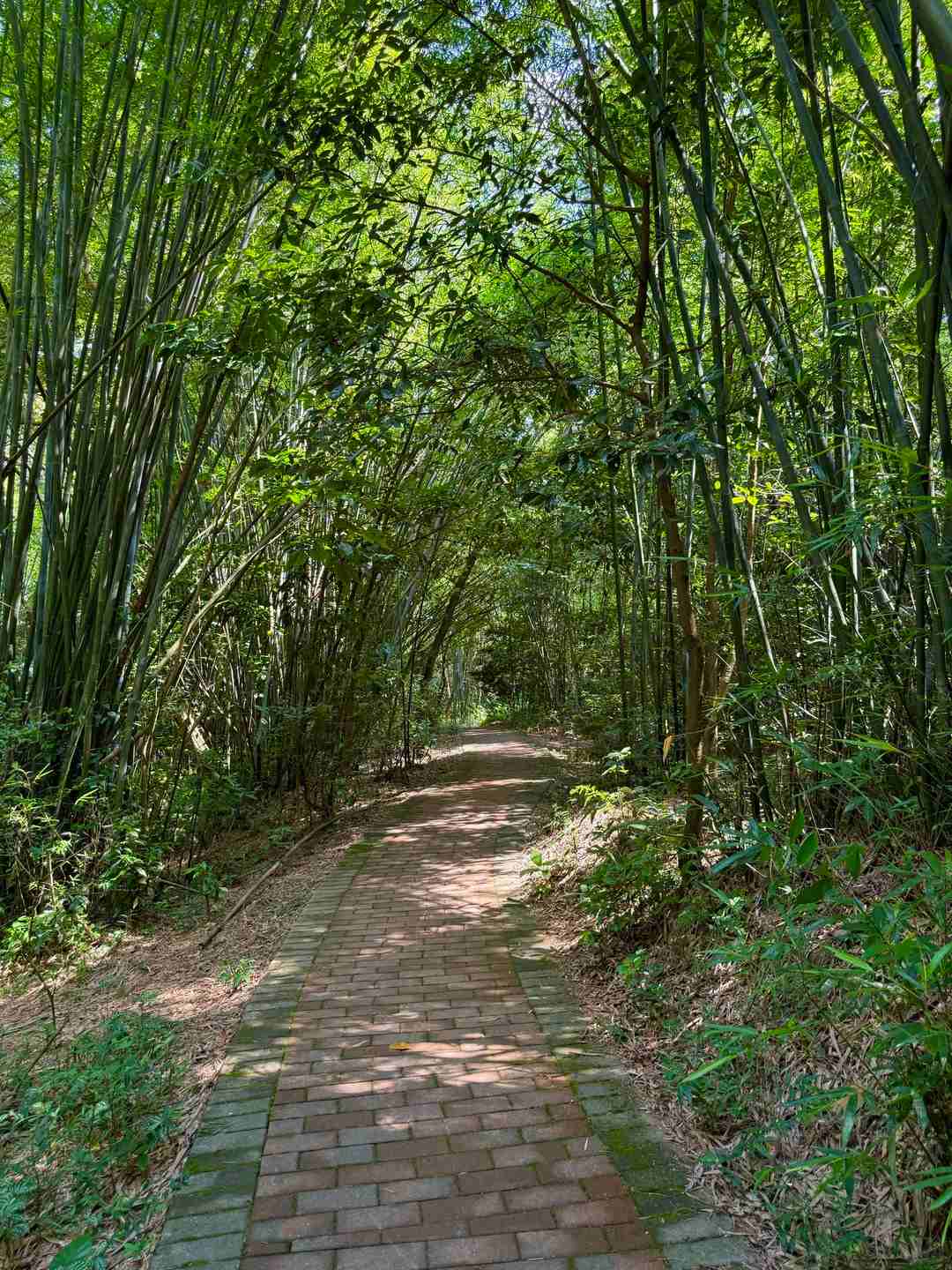
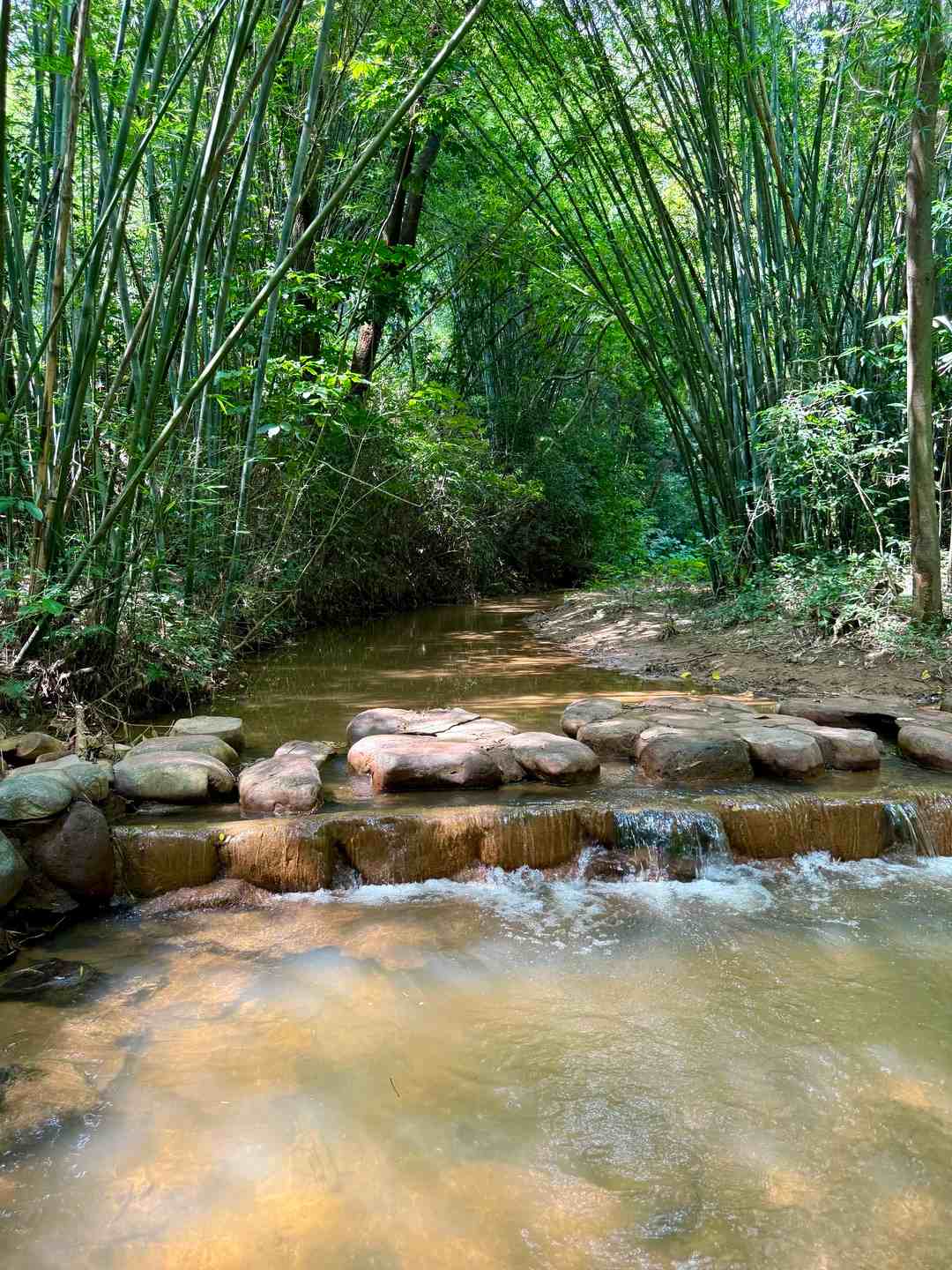
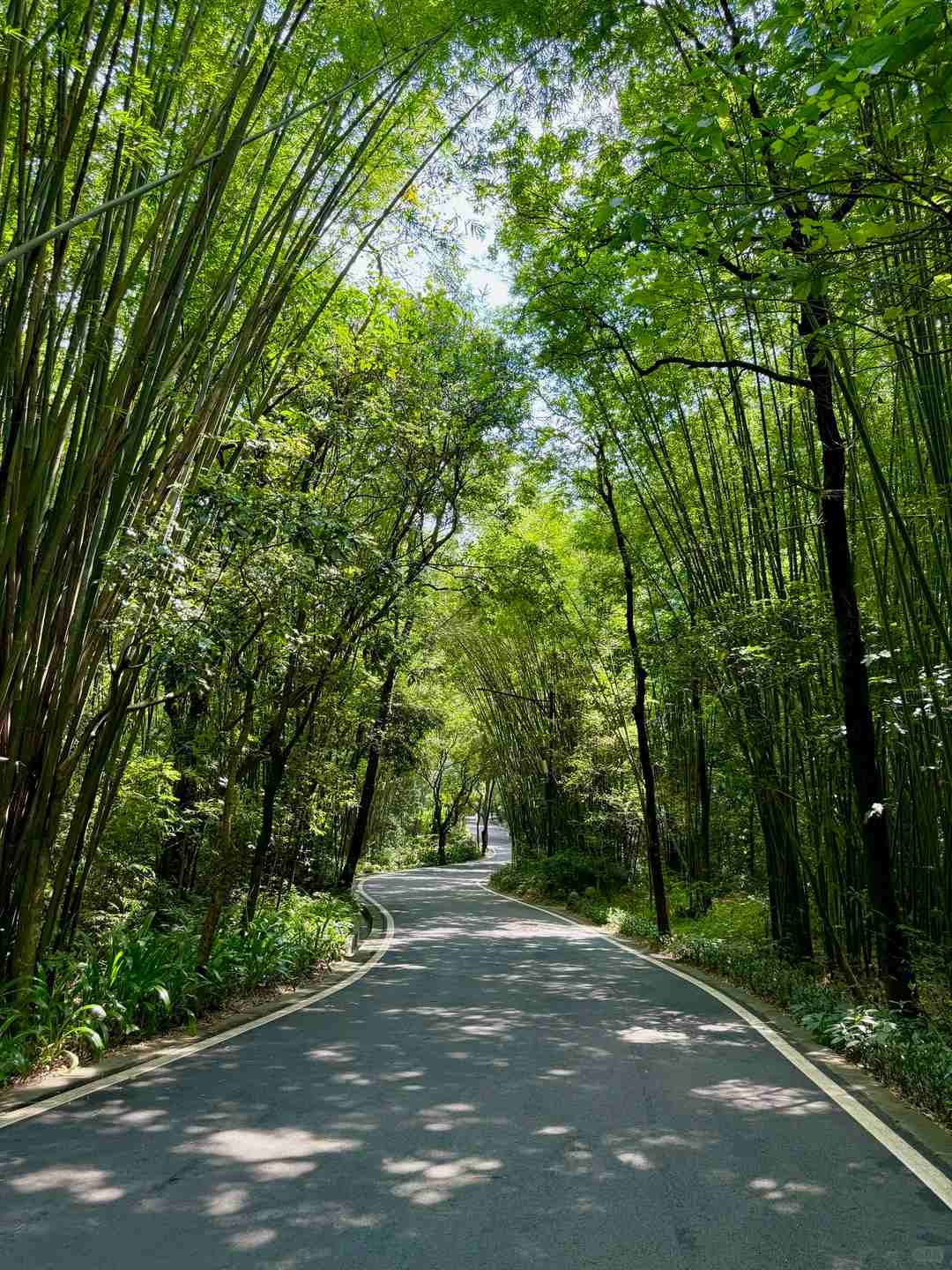
Once you’ve finished at Cui Bamboo Garden, keep heading toward the West Gate. It’s about a 20-minute walk from there, and at that point you’ll have finished the main hike.
Final Thoughts
If you have time in Guangzhou, Baiyun Mountain is definitely a recommended addition to your itinerary. It offers a completely different side of the city that’s quieter, greener, and more relaxed. After busy days exploring the city, it’s a nice place to slow down and enjoy the scenery.
This guide is based mainly on my own visits to Baiyun Mountain over the years, along with tips and experiences shared by other travelers on Chinese social media. I hope it helps you avoid unnecessary detours and makes your first visit a little easier.
If you still have questions while planning your route, just leave a comment and I’ll do my best to help!


