Essential Things to Do Before Traveling to China in 2026
Planning a trip to China in 2026? A little preparation before departure can make your trip smoother and more enjoyable. If your passport and visa, mobile data, payment apps, and transportation basics are all sorted out before you fly, traveling in China will be much easier, whether you’re going for a short city trip or a longer trip across the country.
It’s easy to plan your own trip to China, but it is different from Japan, South Korea, and much of Southeast Asia. Many of the services that you’re used to either work differently in mainland China or may not work at all. Google Maps, for example, is not reliable there, and WhatsApp may not work consistently. In many places, you also won’t be able to use your international credit card the way you’re used to.
That doesn’t mean traveling in China is difficult, just that you have to set some things up before arriving.
Once you’re set up, China can be surprisingly good value for travelers. Taxis are affordable, public transport is cheap and easy to use, and the food is often excellent for the price. On top of that, many cities have far more to see and do than first-time visitors expect.
Table of Contents
- China Travel Pre-Departure Checklist
- When Not to Visit China (If Possible)
- China Entry and Visa Basics
- Internet Access: Set Up Before You Go
- Do I Need a Local Chinese SIM Card?
- Payments: Link the Card to Alipay and WeChat Pay
- How Much Cash Should You Carry in China?
- Accommodations
- Language: Translation Apps and AI Tools
- Getting Around: Amap
- Buses, Subways, and Public Transit in China
- Ride-Hailing
- Food and Everyday Essentials: Meituan
- High-Speed Rail
- Power Banks, Plugs, and Voltage in China
- Frequently Asked Questions for China Travel in 2026
China Travel Pre-Departure Checklist
Here are the things that you will want to plan before your trip:
- Documents
Check which entry option applies to your passport: visa-free entry, the 240-hour transit visa exemption, or a standard L tourist visa. Have your passport and any required supporting documents ready before you leave. - Internet access
Set up an eSIM or VPN before you leave so you can access websites and apps that are blocked in China. - Payment
Download Alipay and WeChat, link your credit card, and verify your account before you go. - Accommodations
Book your hotel in advance on Trip.com or another major booking site. If you’re staying in an Airbnb or with a friend, remember that you’ll need to complete temporary accommodation registration at the local police station within 24 hours. - Maps
Download Amap and learn the basics before your trip. - Basic medications
Pack a small supply of basic over-the-counter medications, such as allergy pills and pain relievers, plus a few bandages, especially if you’ll be traveling to more remote areas. - Save key information in Chinese
Save screenshots or print copies of your hotel address in Chinese, the Chinese names of places you plan to visit, and your emergency contact details. - Save important phone numbers
110 for police, 119 for fire, 120 for ambulance, 122 for traffic police, plus the number for your country’s embassy or consulate. - Insurance (Optional, but recommended)
Buy travel insurance that covers medical expenses in China. - Transportation (Optional)
Create your account and add your passport details on Trip.com or the 12306 app before your trip, so booking high-speed rail tickets is easier later.
When Not to Visit China (If Possible)
1. July and August
Much of China is extremely hot in July and August. It’s also peak summer vacation season, so major attractions can be crowded and less enjoyable.
If you have to travel during these months, consider cooler, higher-altitude areas and grassland regions, such as parts of Yunnan, Guizhou, Sichuan, Qinghai, or Inner Mongolia.
2. Major Public Holidays
The big ones include Chinese New Year, Qingming Festival, Labor Day, and National Day. During these periods, popular sights, train stations, airports, and hotels can be much busier than usual.
Unless your dates are fixed, I wouldn’t travel during these holiday periods. You’re much more likely to experience bigger crowds, longer lines, and higher prices, which makes for a less relaxing vacation.
China Entry and Visa Basics
At present, China has two main visa-free options for travelers: 30-day visa-free entry and the 240-hour transit visa exemption. Before you book flights or hotels, check which rule applies to your passport.
Countries eligible for China’s 240-hour visa-free transit:
The transit visa exemption gives you 10 days, which is enough for many travelers. If that feels too short, one possible route is:
Your home country → mainland China → Hong Kong or Macau → mainland China → your country
Because Hong Kong and Macau have separate immigration systems, an itinerary like this lets you use the transit visa exemption twice and spend around 20 days in mainland China. Hong Kong and Macau are worth visiting anyway, so you don’t just have to use them as stopovers.
If you’re using the transit visa exemption, have proof of onward travel to a third country or region ready before you arrive. That can be a flight, train, or ferry ticket.
Read More: Complete Guide to China’s 240-Hour (10-Day) Visa-Free Transit Policy
If you want to stay longer in mainland China, or your route does not include Hong Kong or Macau, you’ll need to apply for a tourist visa before your trip.
How to Apply for a Chinese Tourist Visa
Step 1: Fill out the Chinese visa application form online, then print and sign it. Make sure you choose the Chinese embassy, consulate, or Chinese Visa Application Service Center (CVASC) that serves your specific place of residence.
Step 2: Prepare the rest of the required documents.
Step 3: Submit your application in person at the Chinese embassy, consulate-general, or CVASC, and pay the visa fee. After you submit your documents, you’ll receive a pickup slip. In some countries, you pay the fee when you collect the visa instead.
Step 4: Collect your passport and visa on the date shown on the pickup slip. If you selected mail delivery, just wait for your passport to arrive.
Also, make sure your passport is valid for at least six more months and has at least two blank visa pages.
Internet Access: Set Up Before You Go
Before you leave for China, make sure you know how you’ll get online.
Mainland China’s internet works differently from what many travelers are used to. If you use a local Chinese network, such as hotel Wi-Fi or a local SIM card, you won’t be able to open apps and websites like Whatsapp, Facebook, Instagram, Google, Google Maps, or Gmail directly.
If your regular phone plan includes reasonably priced international roaming and you don’t mind paying for it, that’s usually the simplest option. You can keep using your mobile data like normal and access the apps and websites you rely on at home. If not, set up one of these other internet options before your trip:
Option 1: Use a VPN
You can set up a VPN on your phone and/or laptop before you leave. This can help you access Google, Facebook, Instagram, and other sites that are blocked in mainland China.
Some commonly used options are Just My Socks, Astrill, and Let’sVPN.
My Perspective
I’m based in China and have used VPNs and proxy tools here for years, so here’s my take on the three VPN options above.
The one I’ve used for the longest time is Just My Socks. It’s a proxy service tied to BandwagonHost and is one of the most common choices for users in China. It’s also fairly affordable at around $6 a month, which is likely one of the reasons it’s so popular.
Astrill is more like a traditional VPN, as it encrypts your traffic, and is considered one of the more reliable options for China. It is expensive, at around $30 a month, so unless privacy and encryption matter a lot to you, I probably wouldn’t choose it for a short trip.
Let’sVPN used to work pretty well and was fairly affordable, with plans starting at about $6 a month. Despite the name, though, it isn’t really a traditional VPN, and it does not encrypt your internet traffic.
It used to have a good reputation and was often recommended on Reddit, but it may have drawn government attention, because it has been unusable for most of the past month.

The company also recently posted a notice saying it could no longer guarantee stable service in mainland China. For now, I wouldn’t recommend choosing this one.
Tips for Using a VPN in China
- VPNs can sometimes interfere with Chinese apps and websites. If a local app suddenly becomes slow or stops loading properly, check whether your VPN is still running. If it is, turn it off and try again.
- Be careful with VPN recommendation lists you find through Google. Many of them promote big-name services like ExpressVPN or NordVPN, but in reality, those services aren’t reliable in China. A lot of those articles are written for affiliate commissions, not because the services actually work well in China. If you check Reddit, you’ll find a lot of complaints from users who say those services didn’t work well there.
- If you plan to rely on a VPN throughout your trip, it usually makes sense to get a local Chinese SIM or ESIM card as well. Otherwise, once you’re away from Wi-Fi, you’ll be using your home carrier’s roaming data, which can get expensive quickly.
- Many of these services work across multiple devices. Depending on the plan you purchase, you can be able to use the same account on your phone, laptop, and tablet, or even split the cost with a travel companion.
- Set everything up before you leave. Once you’re in China, downloading the app, logging in, or fixing any issues that arise can be more difficult.
Option 2: Buy an eSIM from outside mainland China before you arrive
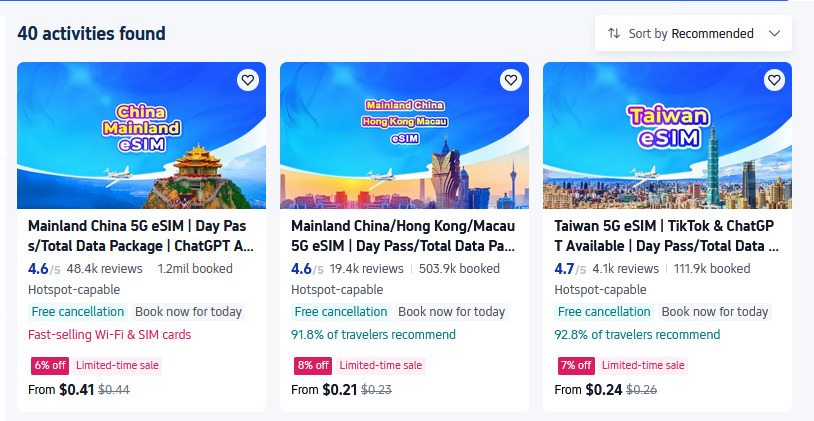
This is the option I recommend, especially if you do not want the hassle of buying a local Chinese SIM card. As long as you activate your eSIM before the trip, you can still access apps and websites that are blocked on local networks in mainland China. It is also the most reliable way to stay connected to the internet in general while you are in China.
To access blocked websites and apps through an eSIM, the eSIM needs to be issued outside mainland China. A Hong Kong eSIM from Trip.com is usually very inexpensive.
Tips:
- As soon as you connect to hotel Wi-Fi, you are back on China’s local network, which means apps and websites like TikTok, YouTube, and Google may stop working. If you need those apps again, turn off Wi-Fi and switch back to your eSIM data.
- If you want to open blocked sites or software on your laptop, your eSIM will only help if you connect the laptop through your phone. To do this, turn on your phone’s hotspot and connect your laptop to it.
- That said, I still recommend using a VPN while using hotel Wi-Fi. A VPN is usually much cheaper than extra eSIM data, often around $5 a month. Save your eSIM data for when you are out during the day.
Do I Need a Local Chinese SIM Card?
If you plan to use a VPN for blocked sites throughout your trip, getting a local Chinese SIM card still makes sense. You can use local mobile data for everyday browsing and turn on the VPN only when you need it, which is a faster and more stable setup.
If you are relying on an eSIM for internet access, you can still use the main apps most travelers need without having local Chinese phone number, including:
- Alipay
- WeChat Pay
- DiDi
- Amap
- Trip.com
- Dianping
Just keep in mind that some app features will be limited, including Meituan delivery, Amap’s ride-hailing feature, and some payment or discount features inside mini-programs. For most trips, though, it’s not a big issue.
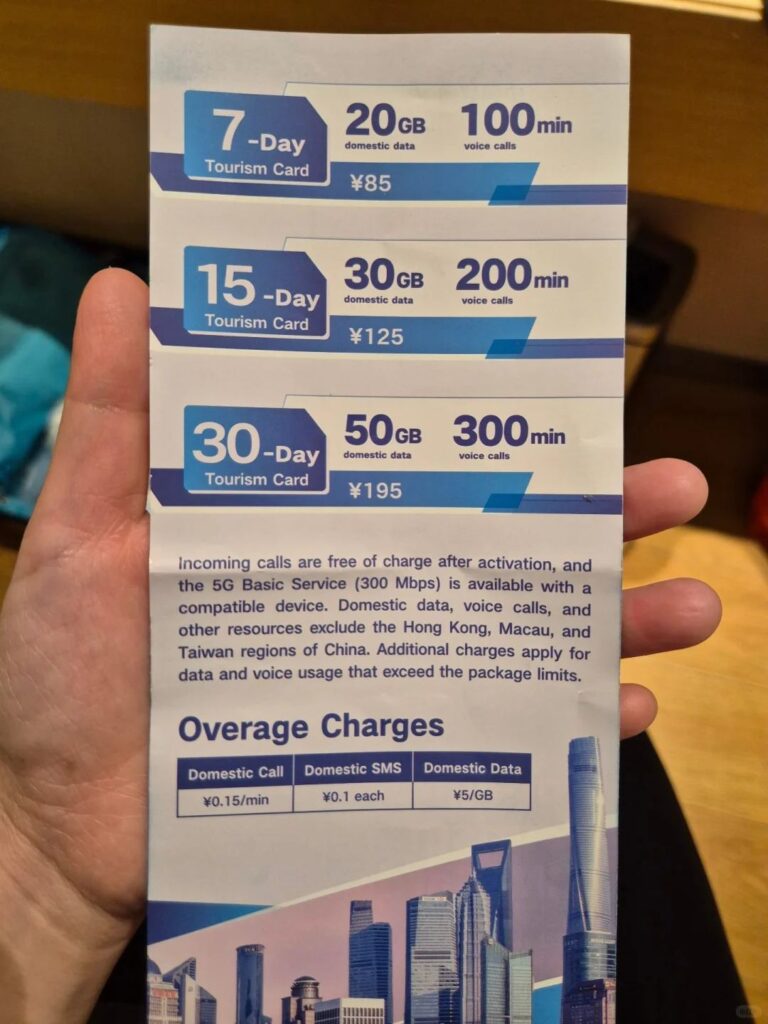
If you plan to stay in China for longer than two weeks, I recommend getting a local SIM card. You can buy one at the airport, often near baggage claim, or just ask airport staff where to get one. It usually costs around $18 for 15 days. If you are traveling with someone and will be together most of the time, one SIM card may be enough. You can just share a hotspot and split the cost.
Read More: Do I Need a Chinese SIM Card (Phone Number) When Traveling to China?
Payments: Link the Card to Alipay and WeChat Pay
China relies heavily on mobile payments, and in cities, cash is barely used. Even street vendors usually accept QR code payments. If you don’t set up mobile payments, paying for things during your trip will be more inconvenient.
The good news is that international travelers can now link overseas credit cards to Alipay and WeChat Pay. You do not need a Chinese bank account to pay in China.
Step 1: Open Alipay – Open the app and tap Me in the lower-right corner.
Step 2: Add your card – Tap Bank Cards or Add Bank Card.
Step 3: Enter your information – Enter your card details and personal information.
Step 4: Complete verification – Complete verification by SMS or through your bank’s app.
Once that’s done, your card should be linked.
Tap Me in the bottom-right corner, then go to Pay and Services → Wallet.
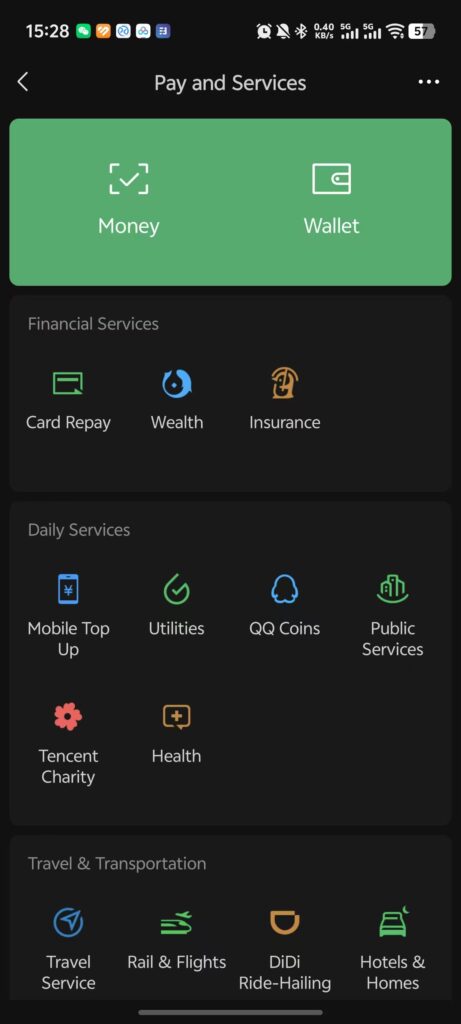
Tap Bank Cards → Add a Bank Card.

Enter your card details, then tap Done.
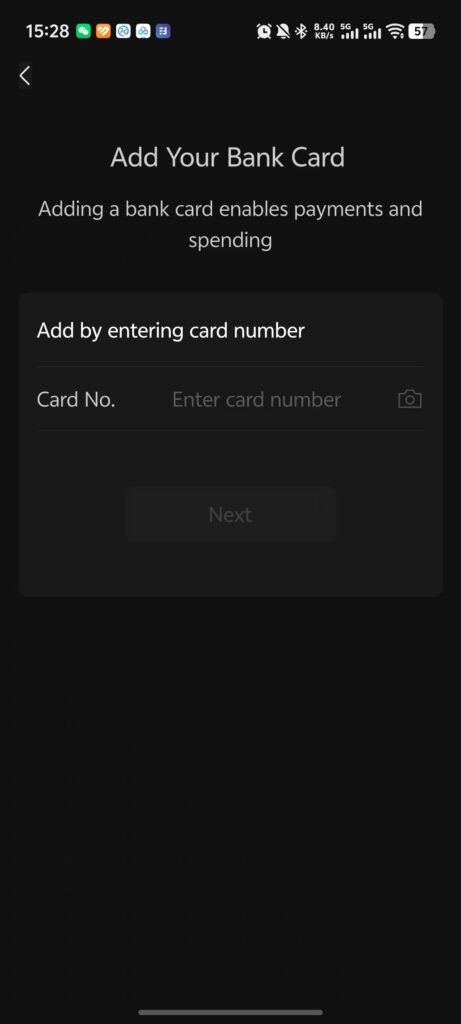
After that, you should be able to use WeChat Pay for QR-code payments.
Important Notes
- The name on your credit card must match the name on your Alipay or WeChat account.
- Alipay and WeChat Pay do not support the same overseas cards. WeChat Pay supports cards such as Visa, Mastercard, JCB, Diners Club, and Discover. Alipay supports Visa, Mastercard, Diners Club, and Discover.
- Before you leave, check your card’s overseas spending limit and have a backup card ready in case a payment is declined.
Fees for International Cards on Alipay and WeChat Pay
Here is how the fees work when you use an overseas card on Alipay or WeChat Pay:
- RMB 200 or less per transaction: no platform fee. You may still be charged a foreign transaction fee by your card issuer.
- More than RMB 200 per transaction: a 3% platform fee applies.
One simple way around this is to split the payment. For example, if your bill comes to RMB 500 at a restaurant or in a shop, you can ask staff to split it into smaller payments, such as 200 + 200 + 100, so you can avoid the fee.
Hotel bookings and some attraction tickets often cost more than RMB 200. For larger payments like this, I recommend booking through Trip.com and paying by credit card to avoid the extra platform fees.
When to Use Each Payment App
- Alipay is especially useful because it brings together a wide range of mini-programs. Through those mini-programs, you can book a ride with DiDi, buy attraction tickets, order food, get train tickets, and arrange car rentals. If you set it up before your trip, you can do a lot without leaving the app.
- WeChat Pay can do everything mentioned above for Alipay, and it’s accepted in more places. Many small vendors only take WeChat Pay.
My suggestion:
- Install and set up both apps and link your card in each one before your trip. If one stops working for some reason, you can use the other as a backup.
- I recommend using Alipay whenever possible because it’s more payment-focused and generally a bit smoother to use, especially if you want the tap-to-pay option. WeChat is mainly a messaging app, more like WhatsApp or Facebook Messenger, so getting to the payment code usually takes a couple more taps than it does in Alipay.
- If you only want to install one, I’d recommend WeChat, because it’s not just a payment app. It’s also the messaging app most people in China use, and it has a built-in chat translation feature. While traveling in China, it can be helpful to add your hotel front desk staff, your guide, or any local contacts you have on WeChat for any assistance you might need.
Read More: WeChat: A Complete Guide to Using WeChat & WeChat Pay in China
What If Alipay or WeChat Pay Flags Your Account and Asks for ID?
Sometimes, if you make several large payments in a row, Alipay or WeChat Pay may flag your account for security reasons. When that happens, your payment may fail, but don’t panic.
The app will show you a prompt telling you how to remove the restriction. Open it and upload your passport again, or a photo of the physical card, to show that it belongs to you. In most cases, the issue is cleared within 15 to 30 minutes after you submit the documents.
To play it safe, I recommend linking two or three different credit cards and rotating between them.
How Much Cash Should You Carry in China?
Even though China is now basically cashless, I still recommend carrying some RMB while traveling.
RMB 1,000-2,000 is a sensible amount to carry in cash. It can help in emergencies, such as when your phone dies, your signal is unstable, or you lose your phone.
How to get RMB in China
1. Self-service exchange machines (recommended)
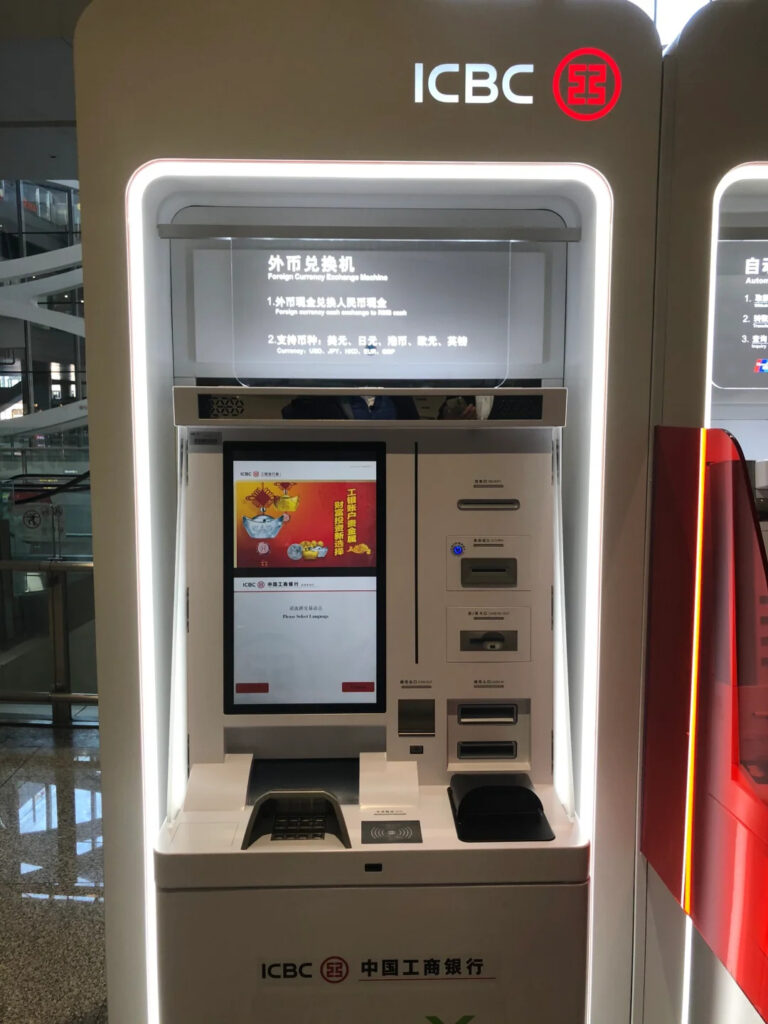
These machines are operated by banks, and you can often find them at airports and border crossings. They use the current exchange rate and do not charge a service fee. You’ll need cash to use them.
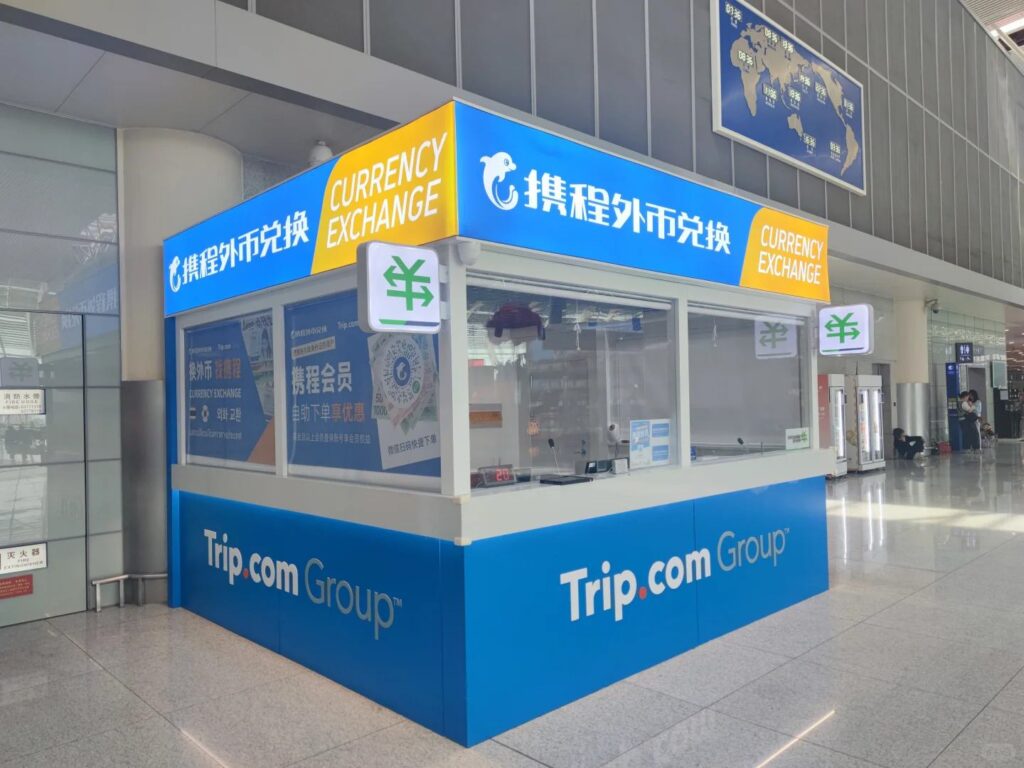
2. Currency exchange counters
These are also common at airports and border crossings, usually marked with signs like “Currency Exchange.” They’re staffed, so someone can help you through the process.
The counters let you pay by credit card, WeChat Pay, or Alipay instead of cash. They usually use the current exchange rate, but the service fee can be quite high, often around 10%.
3. ATM withdrawals
In all cities, certain ATMs let you withdraw cash with an international bank card, but not every ATM will work. Pick one that shows card logos like Visa, Mastercard, or JCB.
4. Exchanging money at a bank counter
You can also exchange money at a bank counter. Banks usually offer a current exchange rate, but the process can take a while.
Accommodations
Foreign visitors in China are required to complete accommodation registration within 24 hours of arrival. If you stay in a hotel, this is done automatically at check-in.
If you stay in an Airbnb or with a friend, you need to register on your own, which means going to the local police station. If you skip this, you may hear from the police later, which is a hassle you definitely want to avoid.
Some cheaper hotels, especially in smaller cities, can be reluctant to accept foreign guests. Usually, the issue is not that they are not allowed to take foreign guests, but that the staff are not used to handling passport registration and would rather avoid the extra work. Mid-range and higher-end hotels are much less likely to give you trouble.
If you normally book hotels through Booking.com or similar platforms, I would instead start by checking Trip.com for planning travel to China, which is the international version of Ctrip, one of China’s biggest hotel-booking platforms.
Because it’s so widely used in China, many hotels put their best rates and room options there. Prices are often lower than on some international booking sites, and some excellent hotels only show up on Trip.
You can still compare Trip.com with whatever booking site you normally use, including Booking.com, and book whichever rate is better. Trip often ends up being the better deal, especially if you are staying several nights.
If you are booking on Trip, a good place to start is with centrally located, Trip-rated four-star hotels, ideally near a subway station.
Language: Translation Apps and AI Tools
English is not widely spoken enough in China to rely on it everywhere, so a translation app is one of the most useful things you can have on your phone. It lets you type what you want to say in English and show the Chinese translation to the person you’re trying to communicate with.
Google Translate works well in general, but it’s not very useful in China unless you’ve already sorted out your internet access. I suggest Microsoft Translator instead, and I’d download the Chinese offline pack before your trip.
AI tools can also be very useful for translation. They often give clearer translations and can help you explain travel problems more easily. Some tools you’re used to using, such as ChatGPT or Gemini, are not available in China because of local restrictions. As an alternative, DeepSeek is free, easy to set up, and good enough for basic translation and figuring things out on the go.
In addition to a translation tool, learning a few simple Chinese words before you go will definitely make the trip easier.
Read More: How to Travel in China Without Speaking Any Chinese: Translation Apps + Simple Communication Tricks
Getting Around: Amap
Amap is basically China’s version of Google Maps, but more reliable and accurate. Google Maps doesn’t work properly in China, and even with a VPN, the map data is outdated because Google left the market years ago. It often places locations in the wrong spot, which makes it unhelpful for navigation in China.
Amap, on the other hand, updates traffic conditions quickly, and its bus and subway directions are clear and easy to follow. For international travelers, it is easier to use than you might expect.
You can use Amap without registering an account, but I still suggest signing up so you can use helpful features like ride-hailing and saved places.
You may also see Baidu Maps mentioned online, but I don’t really recommend it. Its English support is not as good as Amap’s, and its information is usually not updated as quickly.
Apple Maps is a decent backup option because its map data comes from Amap. It works fine for basic navigation, but doesn’t offer as many features.
Of course, getting around in China is not just about maps, so next I’ll cover subways, buses, and ride-hailing.
Download: iOS | Google Play
Read More: How to Use Amap (Gaode) in China
Buses, Subways, and Public Transit in China
Public transportation in China is excellent, especially in big cities. The subway will get you to most major sights, the fares are cheap, and you can just pay with your phone.
Paying with WeChat
Search for the Transit Code mini-program in WeChat, then follow the prompts to activate it and link your payment method. After that, you can just scan the code to ride the bus or subway.
Paying with Alipay
Tap Transport near the top of the home screen and follow the prompts to activate it. Once it’s set up, you can also scan to ride buses and subways.
A Few Helpful Tips
- Some cities sell subway day passes or transit passes. Guangzhou Metro, for example, offers one-day and three-day passes with unlimited rides during the valid period. If you expect to use the subway a lot, these can be good value. In most places, you need to buy them from staff at the station.
- Subways usually stop running sometime between 10:00 p.m. and 11:00 p.m, depending on the city.
- Bus fares are often around RMB 2, and in many places the price does not depend on how far you go.
- Subway fares do depend on distance. They usually start at around RMB 2 and go up from there. In some large cities, the starting fare is higher. On some lines in Shanghai, for example, the base fare is RMB 3.
Ride-Hailing
In China, most people don’t get a ride by waving down a taxi on the street anymore. Most people now use ride-hailing apps, since the pricing is clearer and the overall experience is more reliable.
Ride-hailing in China is fairly affordable. Public transit is excellent, but it can still take time, and rush hour can get crowded. On most trips, you’ll probably end up using ride-hailing quite a bit, so it helps to know how it works before you need it.
How to Book a Ride
You can use the built-in DiDi mini-program in Alipay or WeChat.
Open Alipay or WeChat, then type DiDi into the search bar at the top. Once you open the mini-program, it will usually detect your location. Enter your destination, and you can book a ride right away. You can also choose between different car types, depending on what you need.
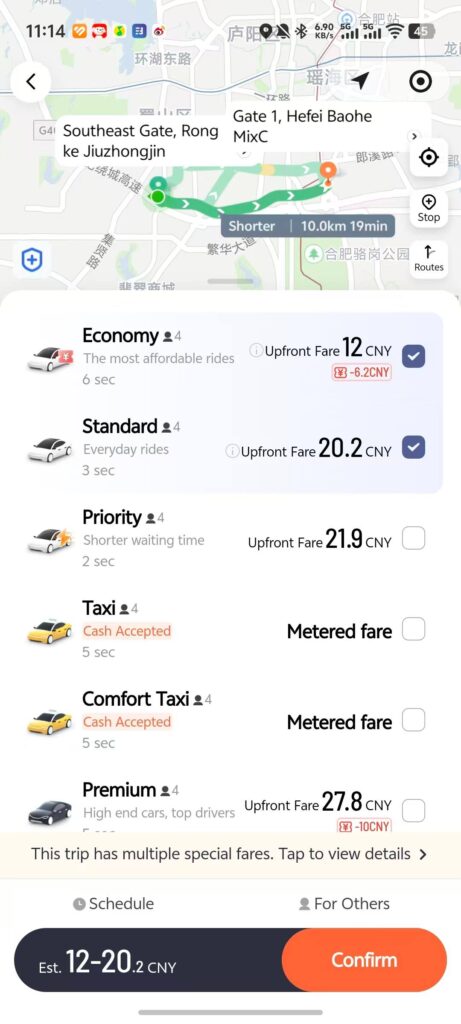
Once the ride ends, the fare is charged automatically through Alipay or WeChat. If you have linked an international credit card, that’s the card that will be charged. So you can book and pay for rides easily even without a mainland Chinese phone number or a separate app.
Ride-Hailing Experience
- Before you confirm the ride, the app will show the route and the estimated fare.
- You usually don’t need to say much to the driver. Before you get in, just confirm the last four digits of your phone number, or simply show the number on your phone screen.
- Once you arrive, you can just get out of the car. In most cases, you do not need to wait for the payment to finish because it goes through automatically.
Amap’s Ride-Hailing Feature
Amap also has a built-in ride-hailing feature. It pulls rides from multiple platforms, including DiDi. You can still pay automatically through Alipay or WeChat.
Personally, I use Amap to book rides because it works more smoothly with navigation. For example, once you look up a route in Amap, you can book a car right there, which makes the whole process quicker.
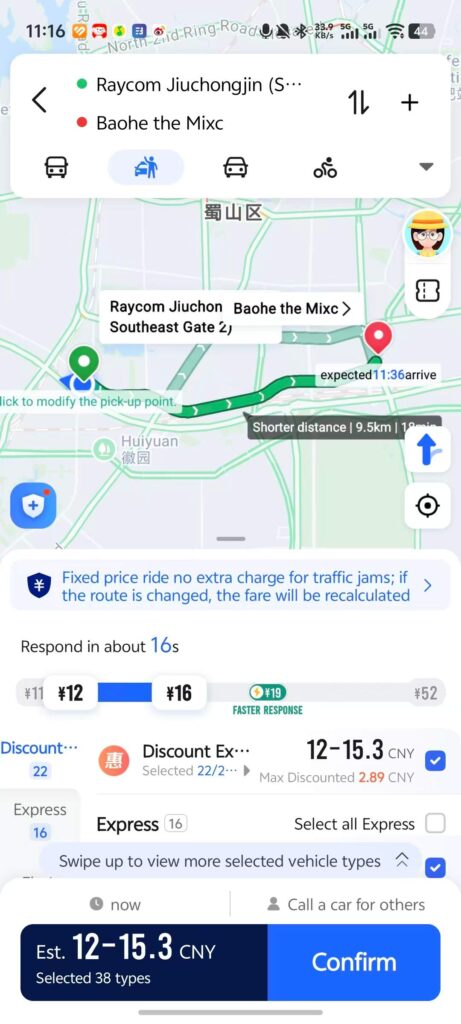
Amap’s ride-hailing feature requires an account, and it does not support phone numbers from every country or region, so it’s a good idea to test it out before using it.
If your number won’t work to create an Amap account, switch to the Didi mini-program in Alipay or WeChat instead.
Food and Everyday Essentials: Meituan
Meituan is one of the most useful apps to have in China. You can use it to order delivery, find restaurants, and look up nearby services and activities.
1. Order delivery
After a long day out, if you don’t feel like sitting down at a restaurant, stay in and order food through Meituan. It’s not just for meals, either. You can also get medicine, toiletries, and other basics delivered, which is really handy if you forget something on your trip.
2. Find nearby restaurants
You can use the Food section in Meituan to look for restaurants nearby. In general, the higher the rating and the more reviews a place has, the better it will be.
Meituan also has vouchers and often offers deals. In many cases, booking through the app is cheaper than just walking in and ordering.
3. Look up local services and activities
Meituan is not just for food or deliveries. You can also use it to find nearby playgrounds, activities for kids, spas, massages, and bathhouses. If you want some downtime or to include local experiences in your trip, Meituan is useful for that too.
Read More: How to Use Meituan
Another Option: Dianping
Dianping is another option for finding food, similar to the restaurant side of Google Maps. You can find almost every restaurant, tourist attraction, and local experience on it. It works well both for planning ahead and for checking options once you are already out and about.
It also lets you join the waitlist for some restaurants directly in the app, which can save you time standing in line.
My Perspective
In most cases, Meituan alone is enough, and it’s the app most locals use. Neither Meituan nor Dianping has an English version, but you can just open the Meituan mini-program in WeChat and use WeChat’s built-in translation feature.
High-Speed Rail
If you plan to visit more than one city in China, high-speed rail is one of the easiest ways to travel between them. It is fast, comfortable, and very efficient.
Booking High-Speed Rail Tickets: 12306 vs. Trip.com
If you want the lowest price, book through the official 12306 app. If you want a simpler booking process, Trip.com is easier, but it adds a service fee.
The official 12306 app
12306 is the official booking platform, but the interface is not especially intuitive, and identity verification can be a hassle for international travelers. The first time you use it, you may run into issues such as phone-number verification. But once you get it working, you can save on service fees, and changing tickets online is easier.
Booking high-speed rail tickets on Trip.com
If you want a less complicated system, Trip.com is the easier option. It supports multiple languages and works smoothly for booking trains in China.
When you book, you only need to enter your passport details and pay with an international credit card. Once the booking goes, there is no need to collect a paper ticket; you can go straight to the gate with your passport.
The only downside is there is an extra $2 service fee per ticket.
Which one should I use?
Trip.com also sometimes runs new-user promotions, and it can be a good way to save if you want to book trains, hotels, attraction tickets, and Chinese eSIMs in one place.
If you only visit China once in a while, just use Trip.com. It’s easier, and you can book everything in one place with an international credit card.
If you travel to China often, it’s worth taking the time to set up 12306, because the service-fees add up over time.
What to Know Before Taking High-Speed Rail in China
1. High-speed rail stations are often very large.
Many stations in China are huge. Shanghai Hongqiao, for example, has 30 boarding gates. Try to arrive at least 20 minutes early so you can find the right one.
2. Ticket check usually closes 5 minutes before departure.
If you miss the cutoff, you will not be allowed onto the platform. Even if you are already in the waiting hall, you still need to get through the ticket check before it closes.
3. At some stations, passports do not work at the automatic gates.
If the gate cannot read your passport, use the staffed lane instead. A staff member will check your documents manually and let you through.
4. Watch out for prohibited and restricted items.
Items like knives, gasoline, and alcohol will be banned or restricted. Liquor above 70% alcohol is not allowed on board.
5. During peak travel seasons and major holidays, book early.
Tickets on popular routes can be hard to book during holidays and other busy periods, so try to book as early as you can.
Power Banks, Plugs, and Voltage in China
Flying with a Power Bank in China
Airport security in China is fairly strict about power banks. If you are taking domestic flights within China, security staff may ask you to take your power bank out for separate inspection so they can check whether it has 3C certification (China Compulsory Certification).
This is not an immigration rule when you enter China. But if you will be flying again within China, check in advance that your power bank has a clear and readable 3C mark so airport security doesn’t stop you.
Also, power banks cannot go in checked luggage. They need to stay in your carry-on bag.
Plug adapters
China may use a different outlet from your home country, so check before your trip and bring a plug adapter if needed. Otherwise, you won’t be able to charge your phone, laptop, or other devices.
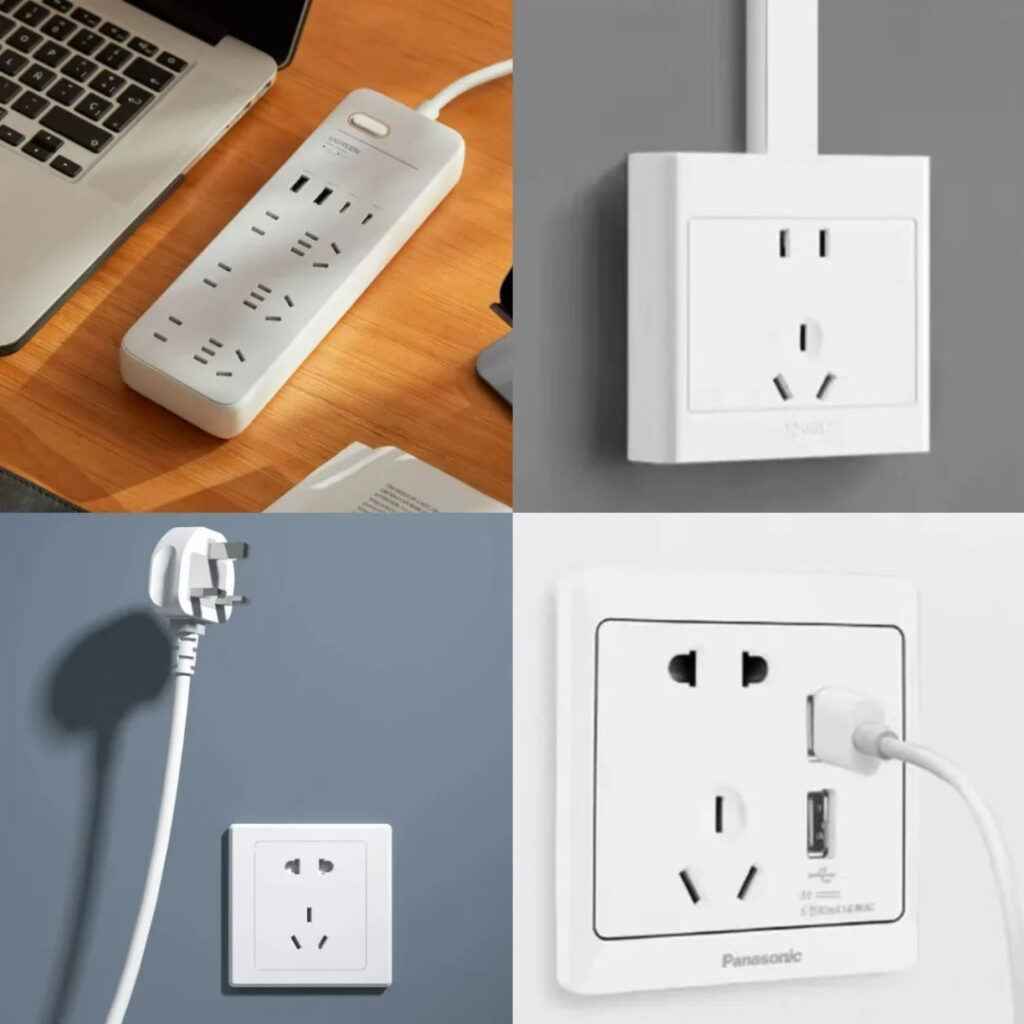
Before you leave, buy a universal plug adapter on Amazon or elsewhere online. If you forget, you can still buy one after you arrive in China at convenience stores, large supermarkets, or electronics shops. Prices are usually around RMB 15 to RMB 50.
But if you can use Meituan, I’d suggest ordering one there instead. Prices are usually clearer, and it can often be delivered to your hotel within an hour, so you don’t have to go out and buy one yourself.
Make sure your devices support 220V
Mainland China uses 220V/50Hz power. Before your trip, make sure the devices you bring can handle that voltage. Most phone chargers and laptop chargers support a wide voltage range such as 100V–240V, so they can usually be used directly.
But if you plan to bring a hair dryer, curling iron, or other small appliances, make sure to check whether they support 220V. If a device only supports lower voltage, you will need a transformer, otherwise you may damage it.
A few helpful tips
At some mid-range and higher-end hotels in big cities, the front desk may be able to lend you a plug adapter.
Many newer hotels in China have USB charging ports built into the outlets, but charging is usually slow, so they are best used only as a backup.
In places like coffee shops, malls, high-speed rail stations, and restaurants, shared power banks are very common. You can rent one by scanning a code in WeChat, which is useful if your phone runs low on battery.
Frequently Asked Questions for China Travel in 2026
Read More:
Is It Safe to Travel to China as a Tourist in 2026?
Essential Apps you need for Traveling in China
Is Using a VPN in China Illegal?