Shanghai Wild Animal Park Guide — Tips, Opening Hours, and Tickets
If you’re visiting Shanghai with kids, Shanghai Wild Animal Park makes a great day for the whole family. It’s huge (covering 153 hectares) and home to more than 200 animal species from around the world, including many rare and protected animals.
I’ve visited twice with my kids over the past three years, and both times I felt it was a really good place for families. However, I do think it’s most enjoyable if you plan your day ahead of time.
The park is quite a long way from downtown Shanghai, and there’s a lot of walking once you’re inside. I’ve created this guide to help you plan your timing and transportation, so that you can have the best day at Shanghai Wild Animal Park with your family.
Getting There — Easiest Options
Shanghai Wild Animal Park is in Pudong, around 35 kilometers from central Shanghai. It is pretty out of the way, so you’ll want to decide how you’ll get there before the day of your visit.
1. Metro + bus or shuttle
The public transit option is to take Metro Line 16 to Wild Animal Park Station. From Exit 2, you can transfer to Bus 1069 or Pudong Route 71, both of which go directly to the park’s south gate.
If you don’t want to wait for a bus, look for the park’s green shuttle buses. They are free, and the ride from the metro station to the park entrance only takes about five minutes. They run from 8:30 a.m. to 4:30 p.m., but I would still confirm the last return shuttle in the afternoon just to be safe.
2. Taxi or ride-hailing service
If you’re traveling with young kids or older family members, taking a taxi or using a ride-hailing service is an easier option. It’s less tiring and doesn’t require switching between the metro and a bus/shuttle.
If it’s your first time in the city, this can be a good option for the sake of less planning. And taxi fares in Shanghai are reasonable, especially outside of peak traffic hours.
Pro-tip: When you exit the metro station, you may see people selling bottled water. I’d avoid buying from unofficial vendors and just get drinks from a convenience store, supermarket, or inside the park.
Opening Hours
Shanghai Wild Animal Park changes its opening hours by season, so be sure to check the latest official information before your visit. As a general guide:
January – June, September weekdays, October 8th – October 31st (normal hours)
- Weekdays: 9:00 a.m.–5:00 p.m.
- Weekends and public holidays: 8:30 a.m.–6:00 p.m.
July – August, September weekends, October 1st – October 7th
- 9:00 a.m.–9:30 p.m.(weekdays)
- 8:30a.m.–9:30 p.m. (weekends and public holidays)
November
- 9:00 a.m.–5:00 p.m.(weekdays)
- 8:30 a.m.–5:00 p.m. (weekends and public holidays)
December
- 9:00 a.m.–4:30 p.m.
March – November
- 9:00 a.m. to 5:00 p.m.
If you’re visiting with kids, I’d strongly recommend arriving early. The weather is usually more comfortable in the morning and the animals tend to be more active (and kids too!). If you arrive later in the day, you’ll have more to squeeze in with less time to do it.
Tickets
As of March 2026, ticket prices for Shanghai Wild Animal Park are:
- Adults: 190 RMB
(Adult tickets increased from 130 RMB on March 1, 2026.) - Children ages 6 and under, or under 1.3 meters (4.3 feet) tall: free
- Minors (ages 6–18), and college students: 95 RMB
- Seniors (ages 60–64): 170 RMB
- Seniors (ages 65+): 95 RMB
If you’re visiting with kids or anyone who enjoys interacting with animals, the animal interaction package is worth it. It costs RMB 290 and includes zoo entry plus the animal-feeding experience, which isn’t sold separately. For families, it’s a fun extra and good value. (Learn More)
Pro-tip: Before you go, check the park’s official mini program, especially if it’s your first visit. You can find the park map, show times, attraction locations, and updates on what’s running that day.
Pro-tip: Before you go, check the park’s official mini program, especially if it’s your first visit. You can find the park map, show times, attraction locations, and updates on what’s running that day.
If you’re visiting with kids or anyone who enjoys interacting with animals, the animal interaction package is worth it. It costs RMB 290 and includes zoo entry plus the animal-feeding experience, which isn’t sold separately. For families, it’s a fun extra and good value. (Learn More)
Getting Around the Park
Many first-time visitors are surprised at the size of the park and how much walking the day entails. There’s no shortage of things to see, but the distance between different areas can be tiring.
If you’re visiting on your own, you might not mind the walking, but if you’re going with kids, especially younger ones, I would at least be aware of the other options for getting around.
These are the options inside the park:
1. Park shuttle bus
This costs 45 RMB per person and stops at fixed stations around the park.
If you’re visiting with young children, this is one of the easiest options. It’s not the most flexible, but it does save a lot of walking.
2. Electric cart rental (for up to four people)
This costs around 200 RMB per hour, or RMB 600 for the full day, plus a 1,000 RMB deposit. This is the most flexible option, as you can move at your own pace and adjust your route as you go. The obvious downside is the price, which can add up quickly if you stay for several hours.
3. Stroller rental
If your child is little, or doesn’t manage long walks very well, I would consider renting a stroller. It’s 60 RMB for the day. A lot of kids start the day full of energy, then crash later on, so a stroller makes the second half of the day much easier.
The park used to offer pedal bikes as well, but last time I visited I was disappointed to see this is no longer an option.
My suggestion
If your kids are older, you probably won’t need to rent anything. There is a lot of walking, but most kids can handle it just fine. My child was five at the time of our visit and managed the whole park on foot.
If you’re visiting with a younger child, especially under 3, I’d personally suggest the park shuttle bus or a stroller. It’s worth the extra cost for later in the day when your kids lose energy.
Shanghai Wild Animal Park Route
If it’s your first visit, planning your route ahead of time will save you energy and keep you from having to backtrack. I suggest starting with the best section first, and then adjusting your plan the rest of the day as needed. My recommended route starts with the safari zone, then moves on to the walk-through areas, and ends with shows and interactive activities.
If you’re entering through the south gate, as most visitors do, I suggest this route:
Safari zone → giraffe and giant panda area → shows → lunch break → sea lion hall and Beast Mountain → other animal areas and interactive zones
There’s no need to follow this exactly. You can be flexible for your family’s needs and plan around show times as well.
Stop 1: The Safari Zone (Drive-Through Area)
Once you enter the park, head left and follow the signs to the safari zone. It’s one of the best parts of Shanghai Wild Animal Park, and I suggest starting your day here.
Instead of looking at animals behind enclosures, you ride through the area in a safari truck, which is much more exciting than a typical zoo visit. Lions, tigers, wolves, and bears roam around in large open spaces, and if you’re lucky, one might even walk right up beside the bus.
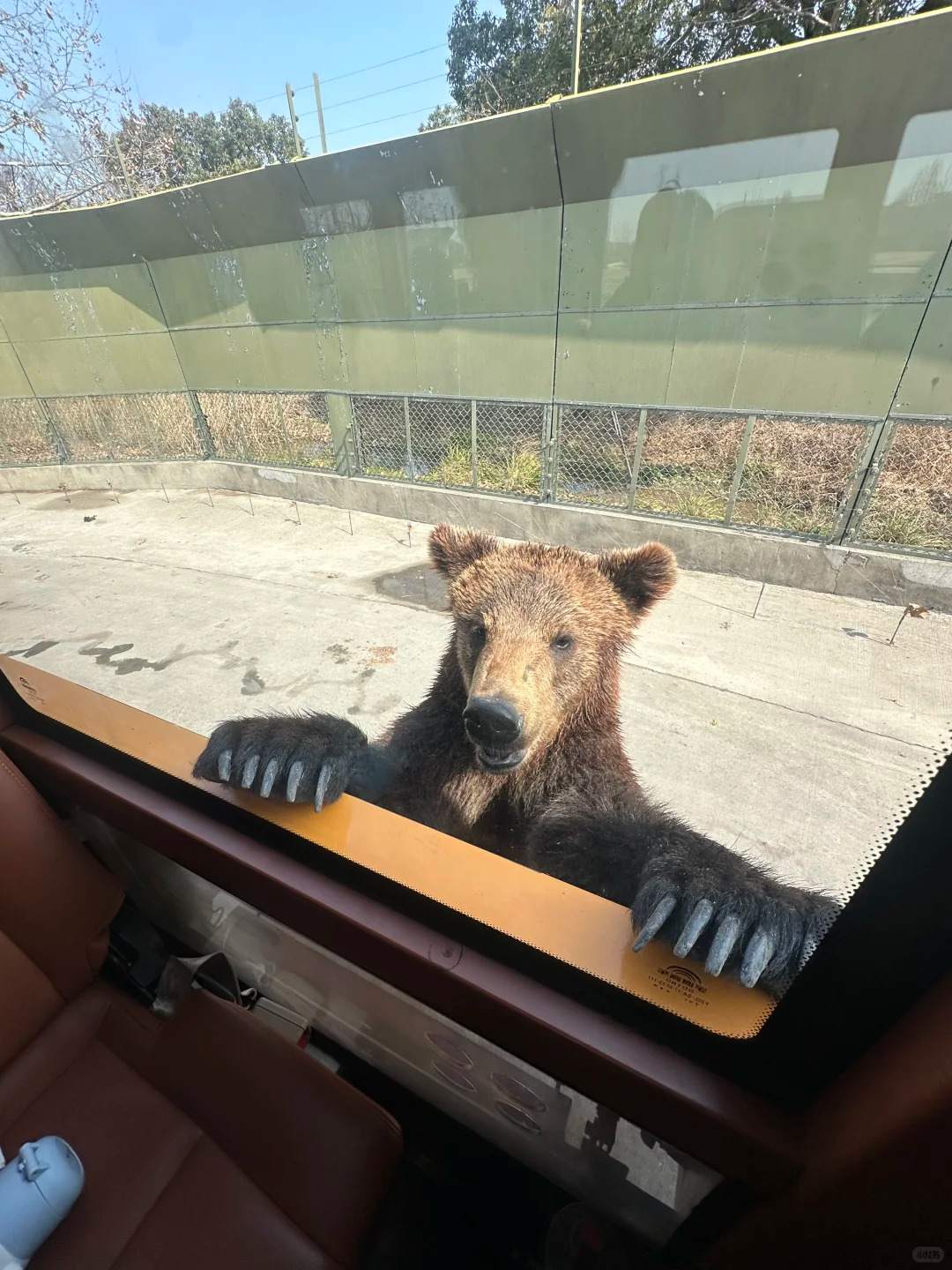
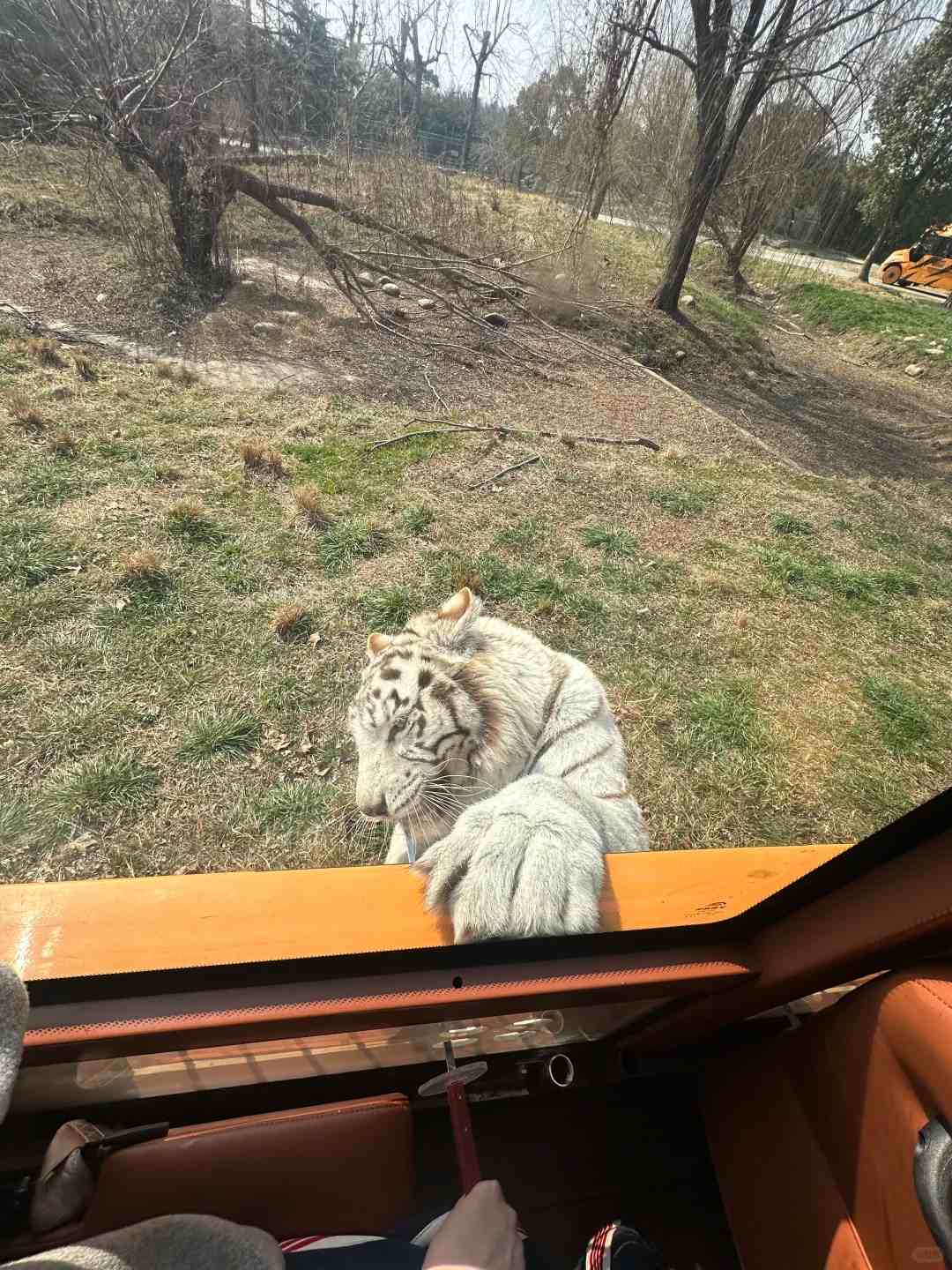
Like I said, I’d do this in the morning if you can. The animals are usually more active earlier in the day, while later on many of them are more likely to be stretched out and sleeping.
Safari Zone Options
There are three ride options in the safari zone:
1. Standard sightseeing bus (free)
This is the basic option, and it’s the one most visitors choose.
Buses run every 10 to 15 minutes, and the full ride takes about 40 minutes. There’s often a line, but the line moves at a decent pace and the buses don’t have to wait until every seat is full before leaving.
From my experience, the best seats are on the right-hand side, somewhere near the front or middle of the bus. The view is usually better there, so it’s easier to spot the animals. Some seats have windows that are slightly blocked, which can make it harder to get good photos.
2. Standard feeding bus (50 RMB per person)
With this option, you can watch staff feed wolves, bears, and tigers from fairly close range, but visitors don’t feed the animals themselves.
Personally, I don’t recommend this option. It costs more than the standard sightseeing bus, but I don’t think it adds enough to be worth it. The railings and the vehicle itself can also get in the way, which can affect your view and your photos.
3. VIP feeding bus (100 RMB per person)
This is the best choice if you want something more interactive.
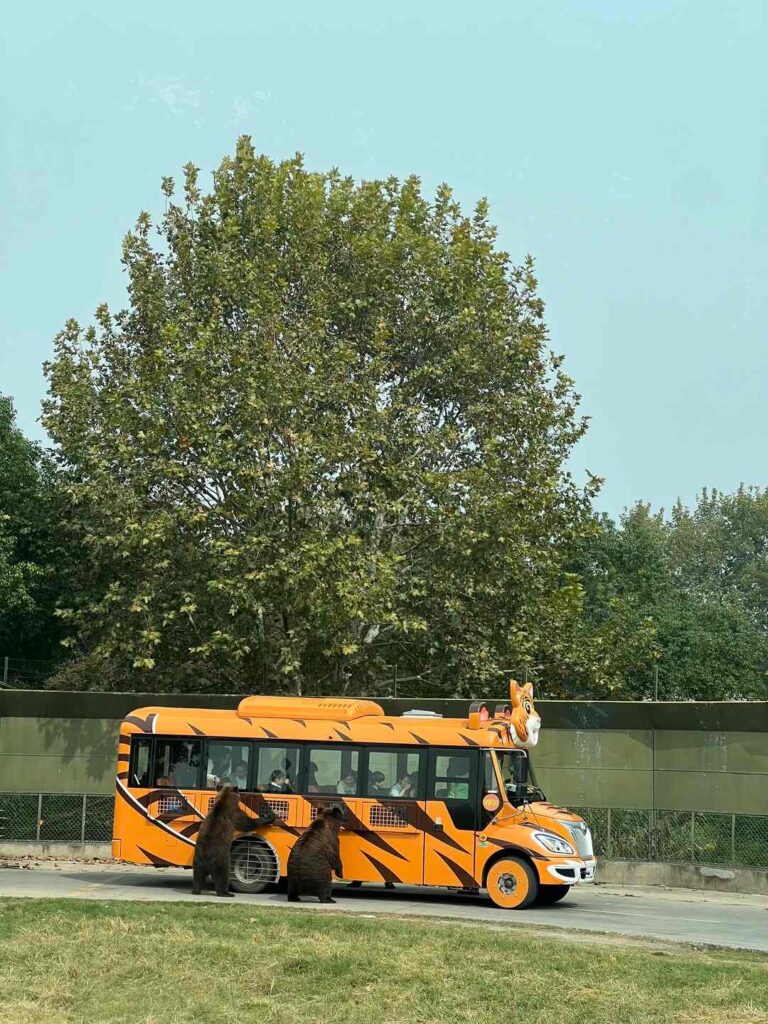
Before boarding, each visitor is given a small bucket of food prepared by the park, and you can take part in the feeding under staff supervision. For kids especially, this is a very memorable experience.
My recommendation
If you’re only choosing one, I’d go with either the standard sightseeing bus or the VIP feeding bus. If you just want the best overall view of the animals, the standard sightseeing bus is enough. If you want something more hands-on, the VIP feeding bus is the better choice.
Regardless of your choice, remember not to put your hands out the window, and don’t try to feed the animals with your own food. Any feeding should only be done per staff instructions and with food provided by the park.
Safari Zone Experience
There are different sections of the safari zone, and each part of the experience is unique.
In the herbivore area, you’ll see animals like antelope and zebras. I’ve noticed that the grass is often grazed short, so the area can look pretty bare.
The tigers, lions, and black bears in the carnivore sections are the most exciting, especially when you see the animals moving near the water. Photos really don’t do this part justice.
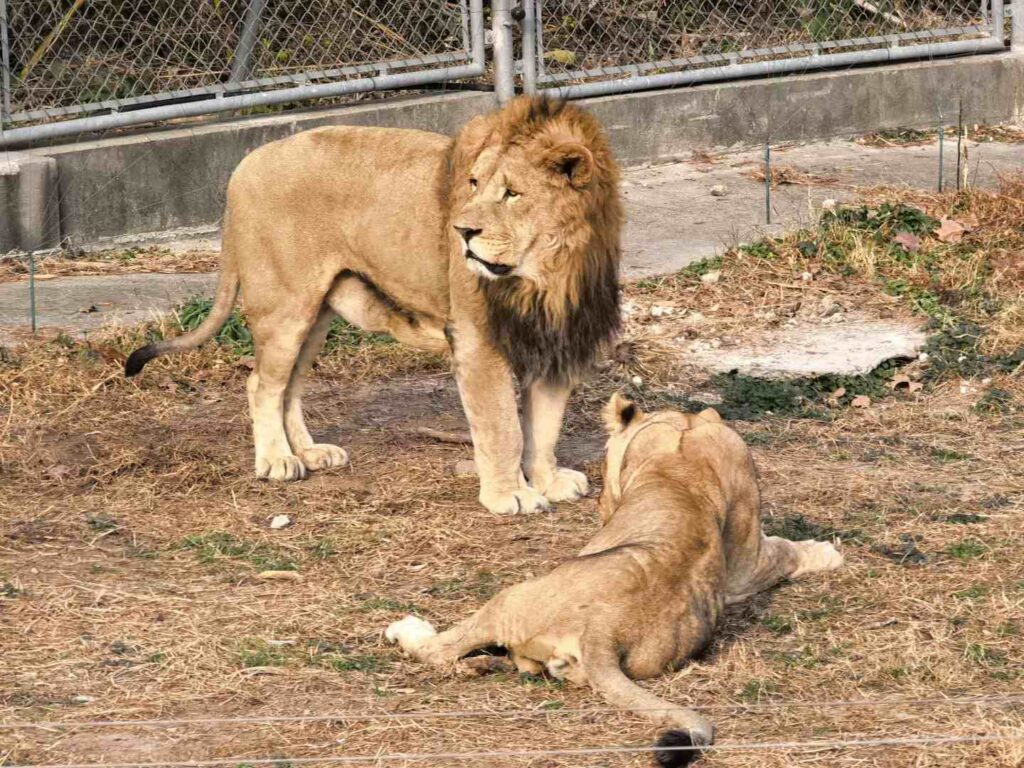
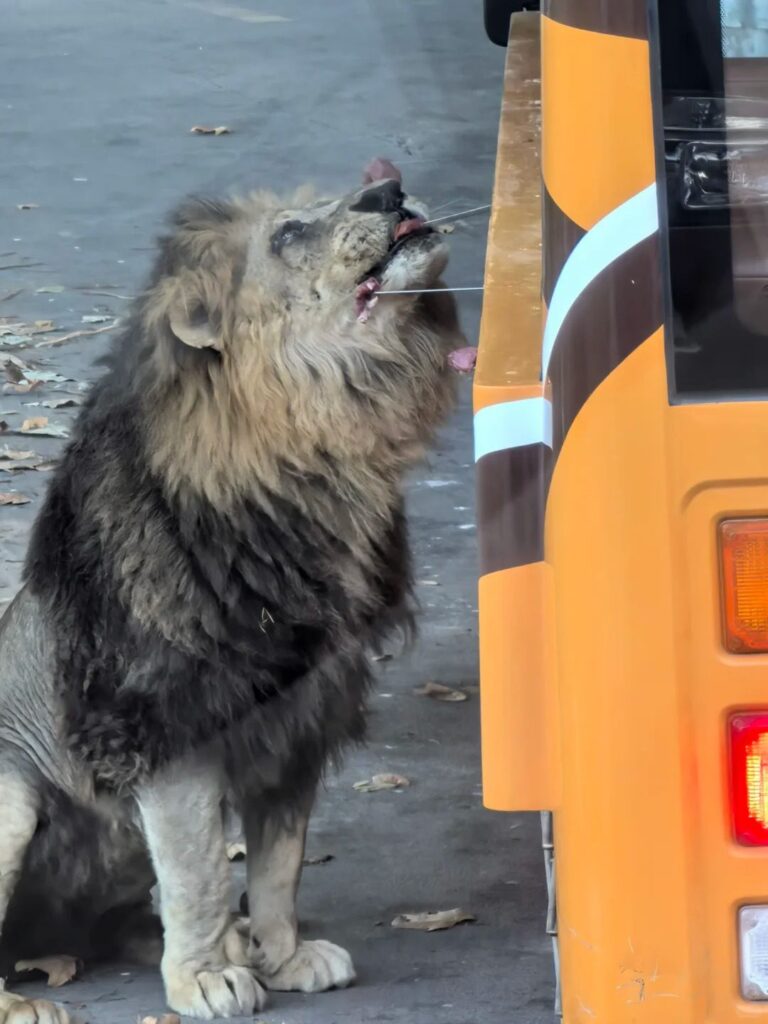
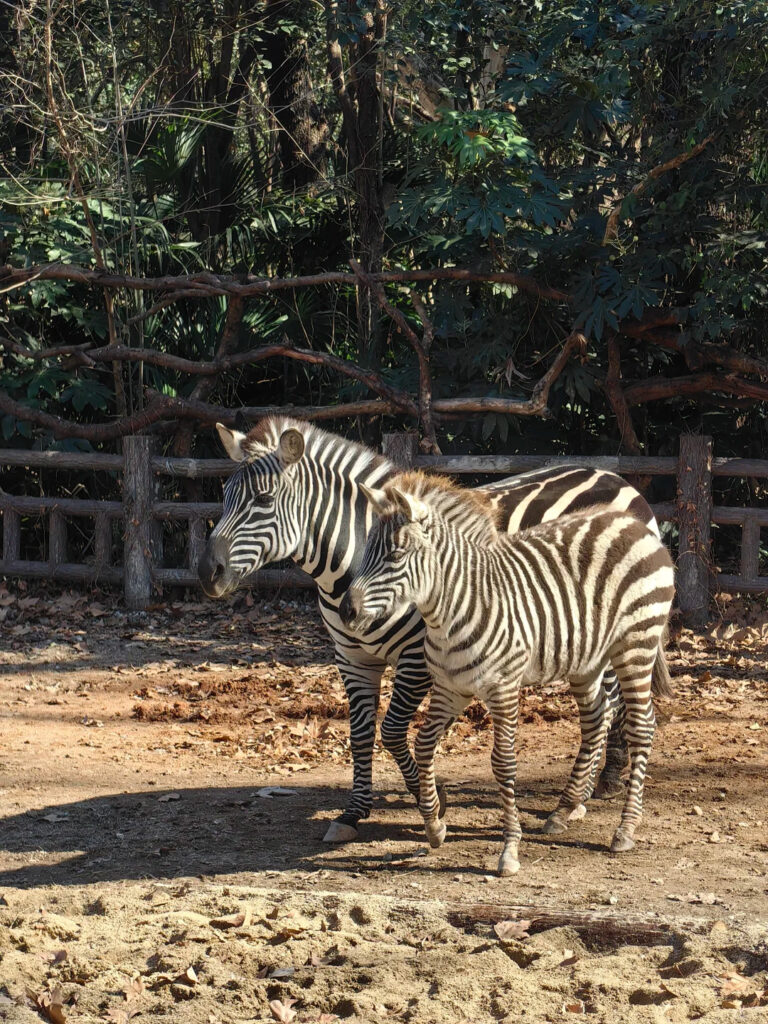
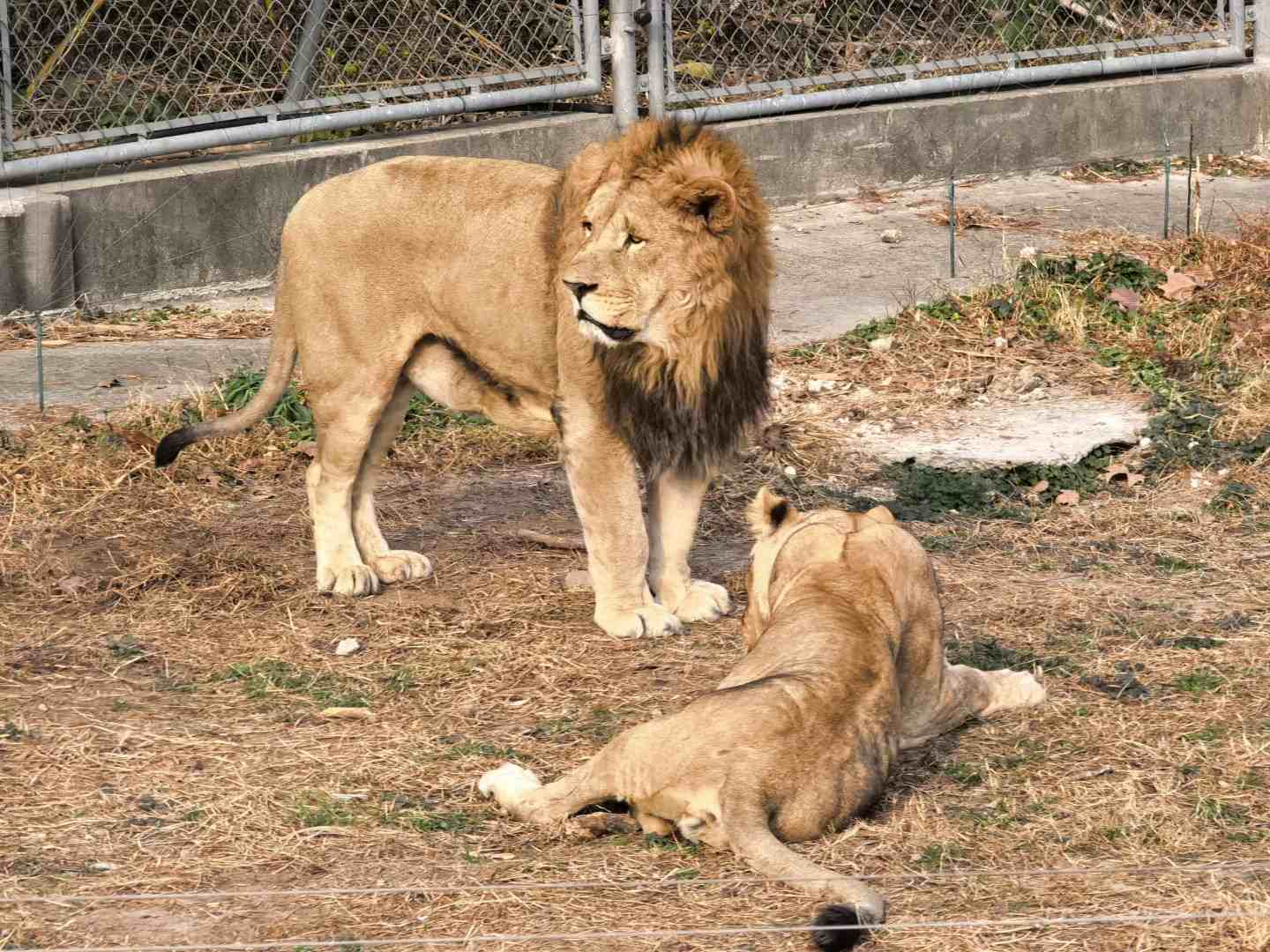
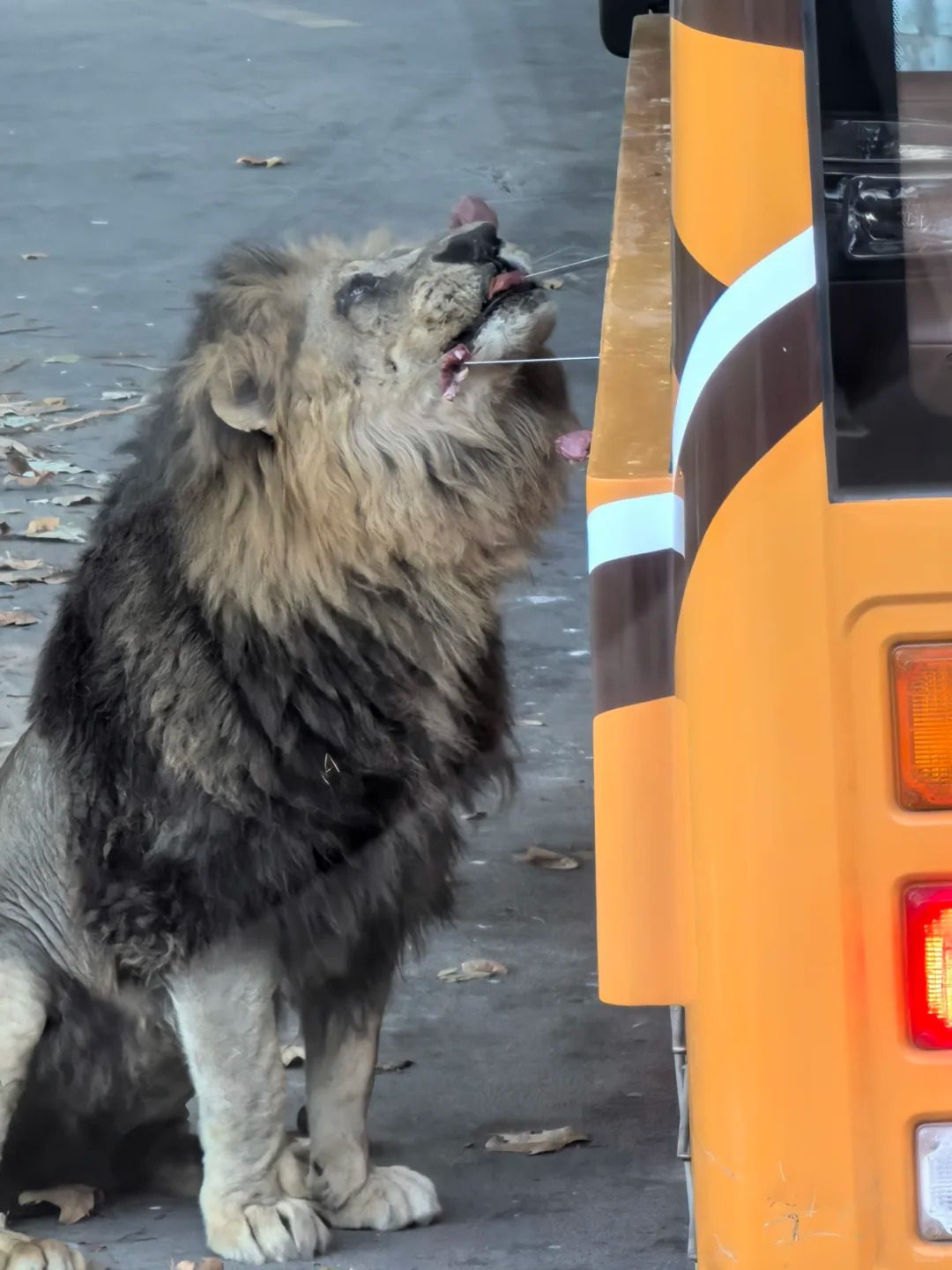
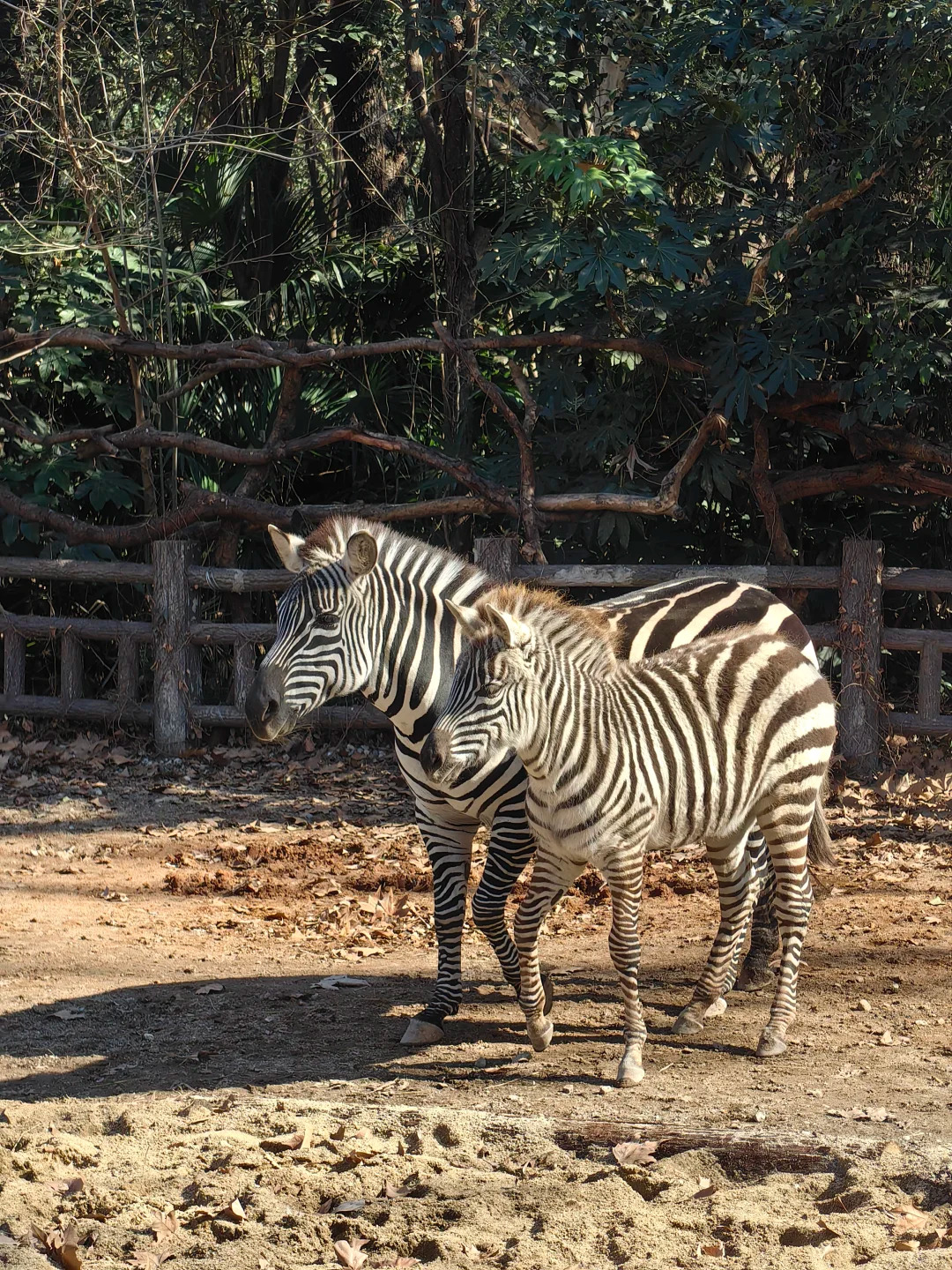
The leopards tend to be hard to spot at any time of day, so whether you see one really comes down to luck.
Stop 2: Individual Animal Sections (Pedestrian Area)
Once you come out of the safari zone, this part of the park is explored on foot, so it’s a good place to wander at your own speed, stop to interact with the animals, and take photos.
If you’re short on time or already starting to feel tired, don’t try to see every single section. I’d pick a few favorite areas and spend more time wherever the experience feels most interesting.
After visiting twice with my kids, these are the sections I’d prioritize:
1. Flamingo area
Soon after entering the walk-through section, you’ll see the flamingo lake. Large groups of flamingos gather by the water, and their bright color makes this area stand out even from a distance.
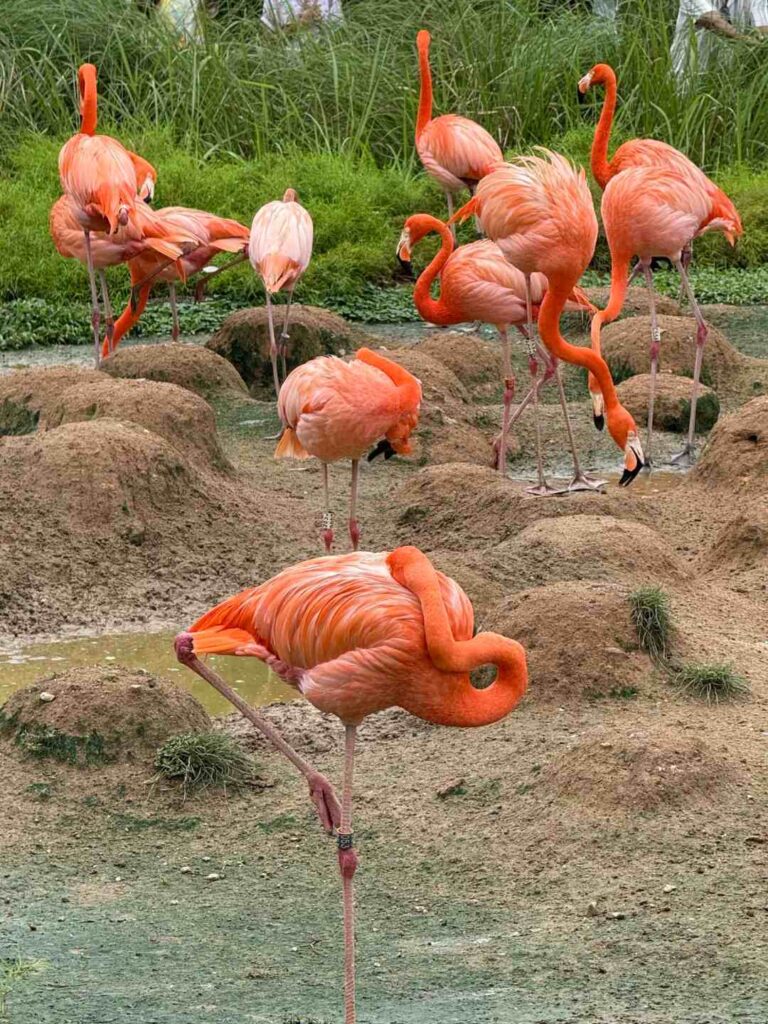
You can buy feed here for 20 RMB. Once you start feeding them, the flamingos tend to come much closer, which is so fun and also makes for great photos.
2. Giraffe house
The giraffe area is always a popular stop, especially if you’re visiting with kids and want to interact with the animals.
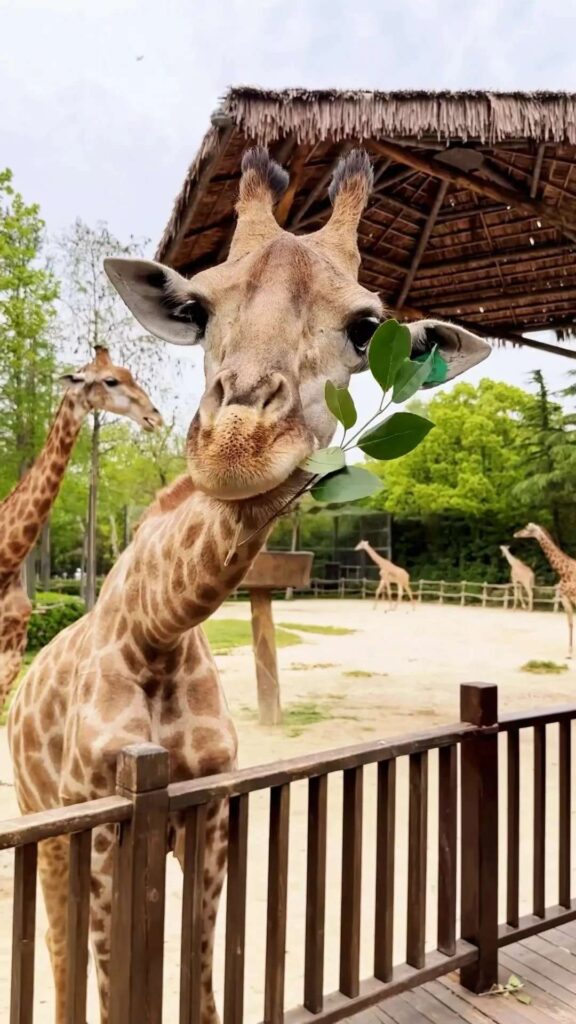
You can buy leaves to feed the giraffes for around 30 RMB per serving. When they come over and lower their heads to take the food, you get to see them up really close.
If you want the best feeding experience, I’d try to get here before 11:00 a.m. By the afternoon, they’ve often already eaten quite a bit, so they may be less interested.
3. Giant panda house
If it’s your first visit, the giant panda house is a must. It’s one of the park’s most popular areas.
It’s a large indoor space where you can get a close look at the pandas as they move around, eat, and rest. The park has four giant pandas.
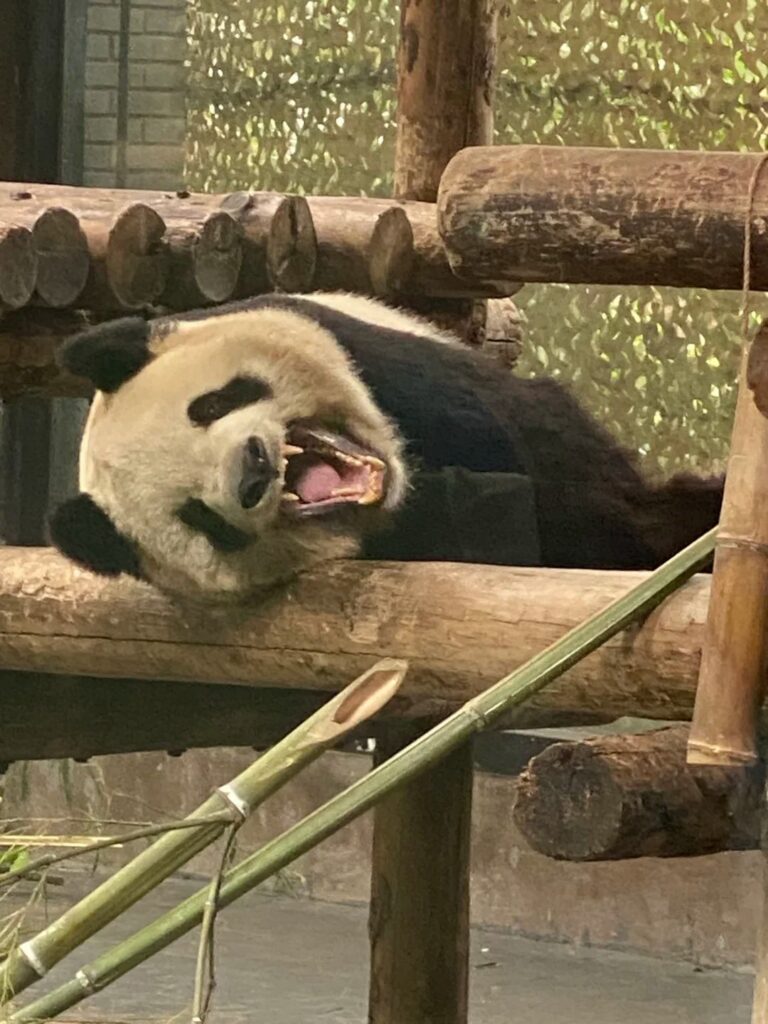
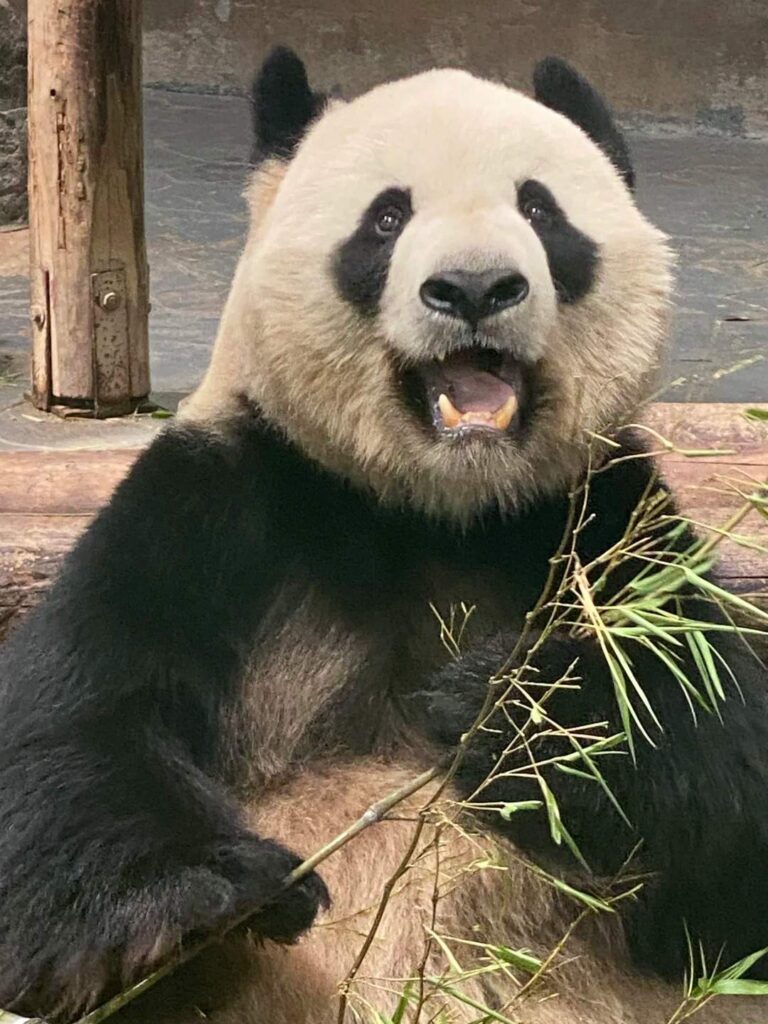
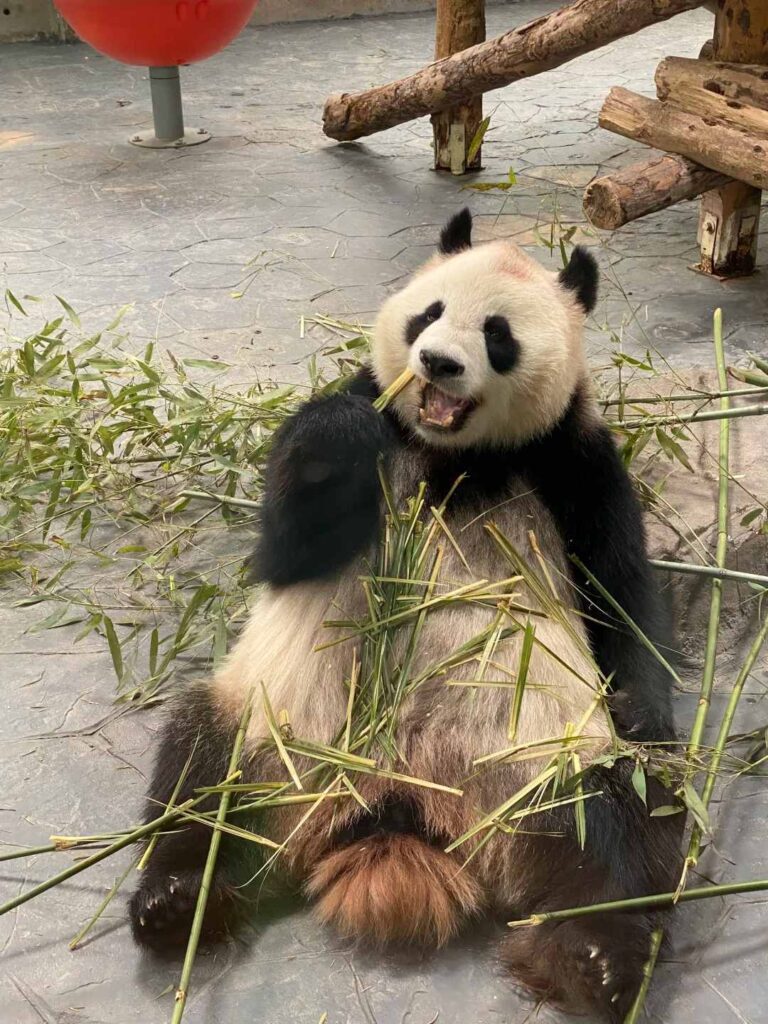
Popular feeding times are around 11:00 a.m. and 2:00 p.m., so if you want a better view, try arriving about 10 minutes early to grab a good spot.
Visitors are not allowed to feed the giant pandas.
4. Red Panda Area
This area has become one of the park’s most popular photo spots. The red pandas are incredibly cute, and if you’ve never seen them before, you’ll love their little faces.
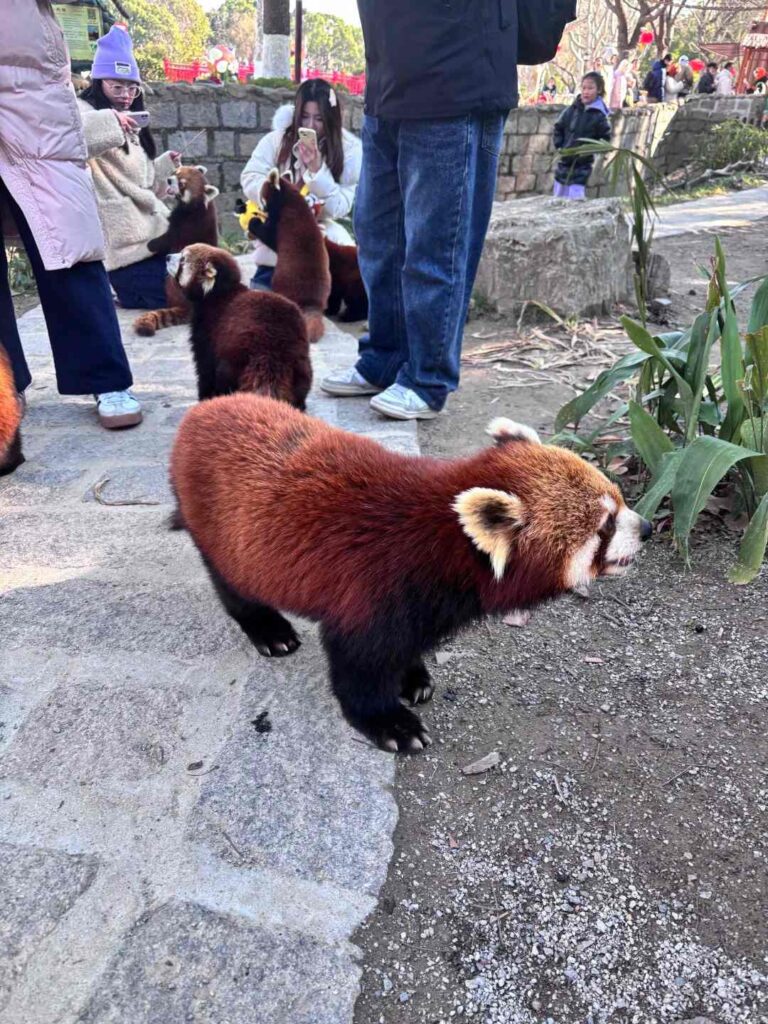
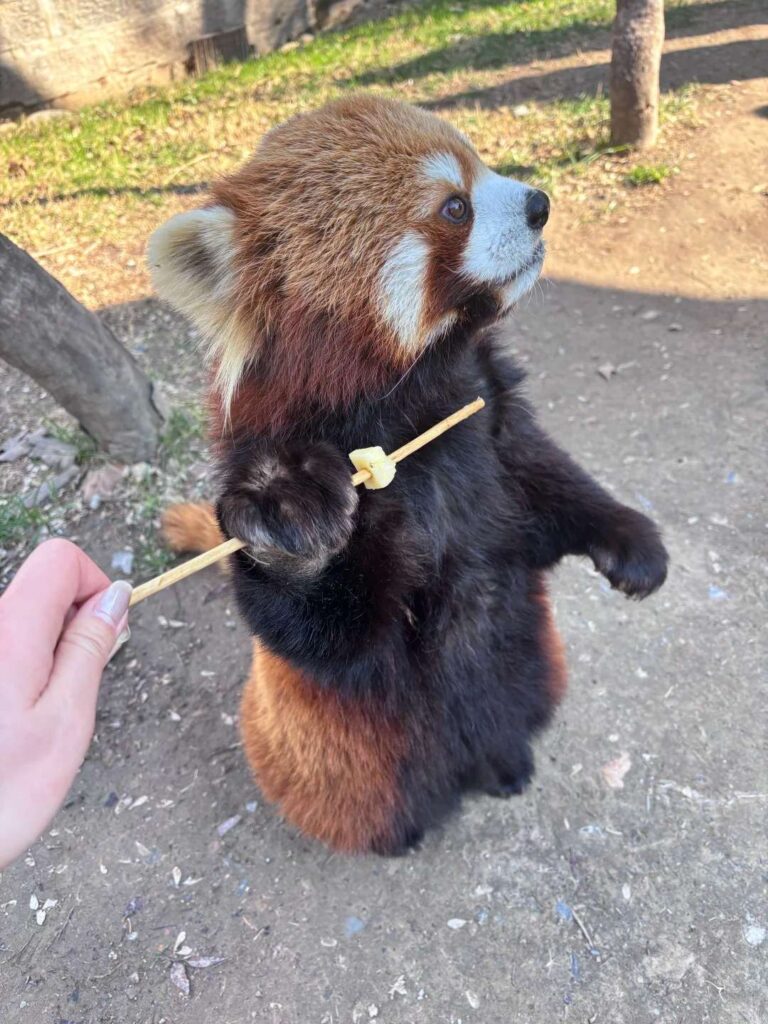
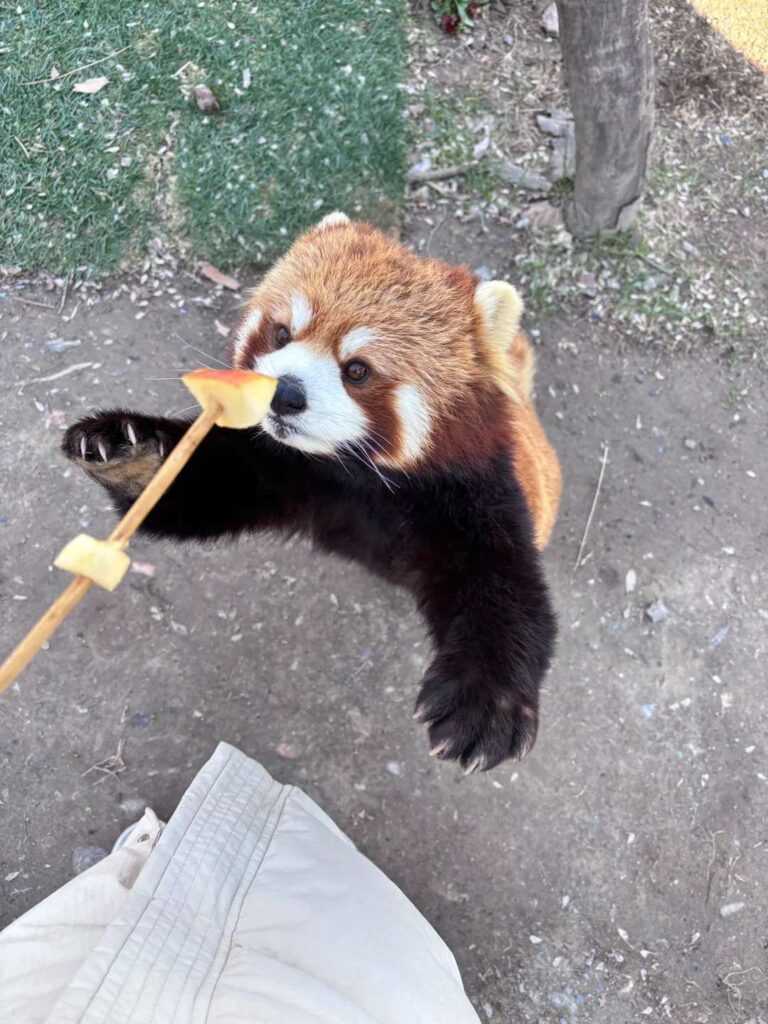
During the interactive sessions, you can get pretty close to them, and if you’re holding a skewer of apple slices, they’ll often follow you around.
This area closes at 3:00 p.m., so try to go earlier in the day. After they’ve already been fed by lots of visitors, they tend to be less energetic.
5. Golden Snub-Nosed Monkey Area
This is another area that I definitely suggest stopping at.
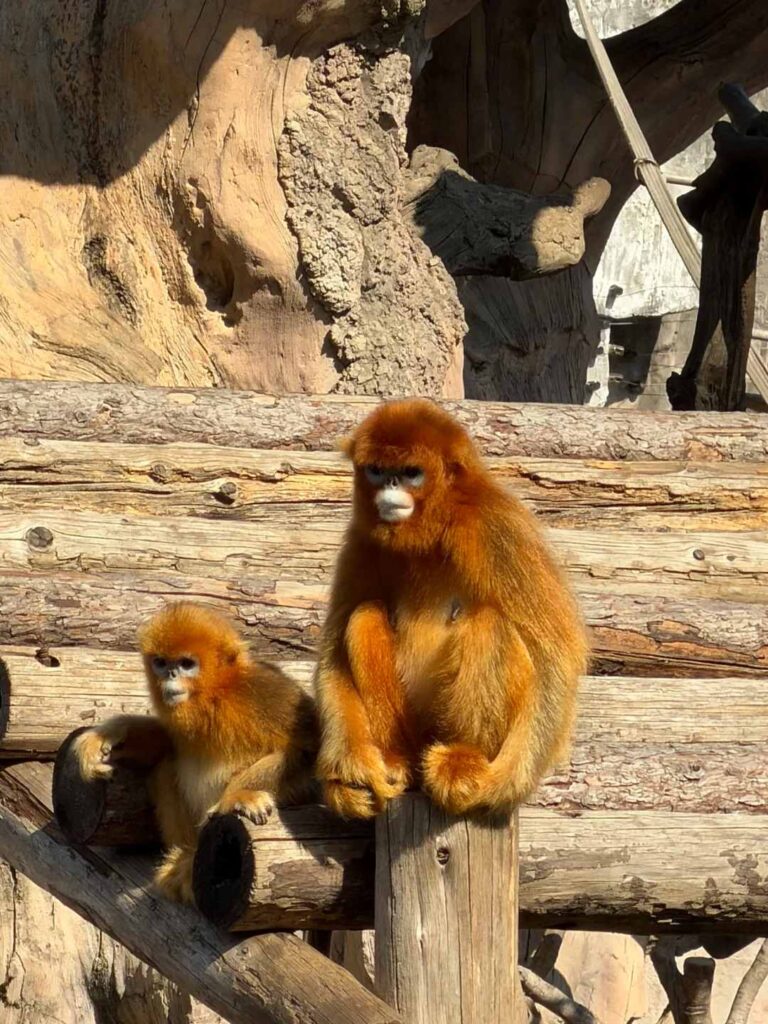
Most visitors already know pandas, but golden snub-nosed monkeys are usually less familiar. They’re one of China’s most distinctive and unique rare animals, with a look that’s hard to mistake once you’ve seen them.
6. Lemur Island
Lemur Island is one of the most interactive parts of the park, and it’s often a favorite for kids.
There are set times for free feeding sessions. After an educational talk, the keepers hand out 10 portions of red dates (jujubes) to whoever is there first. If you manage to get some, the lemurs will come right up to you, and sometimes they’ll even jump onto your hand, which kids love.
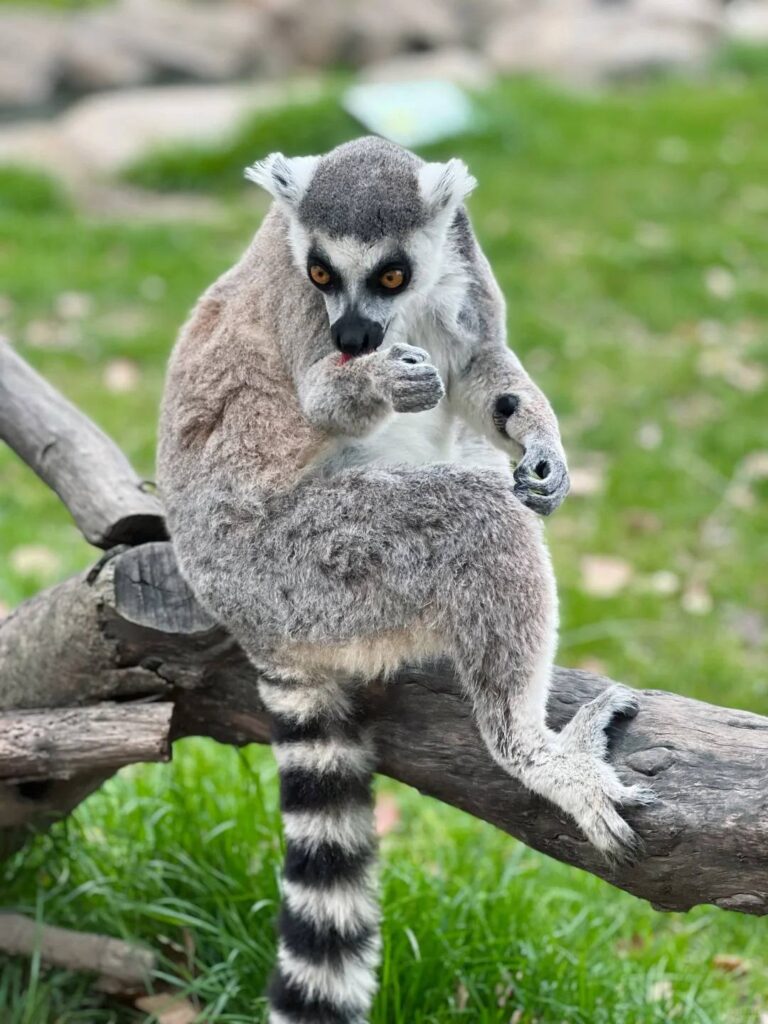
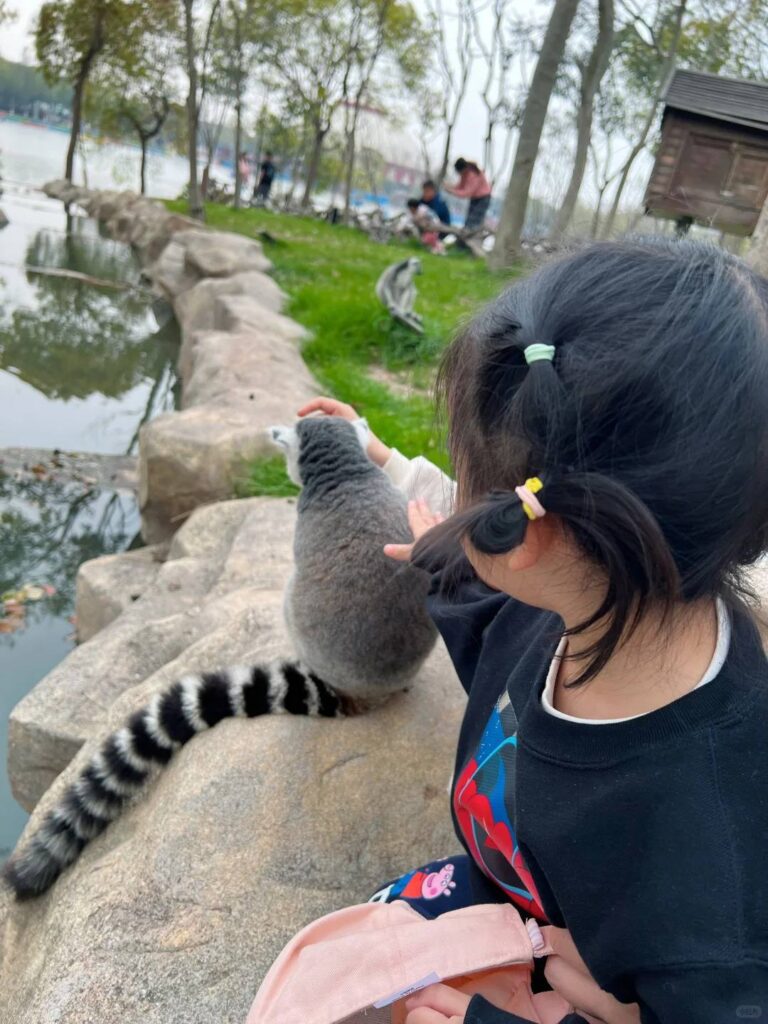
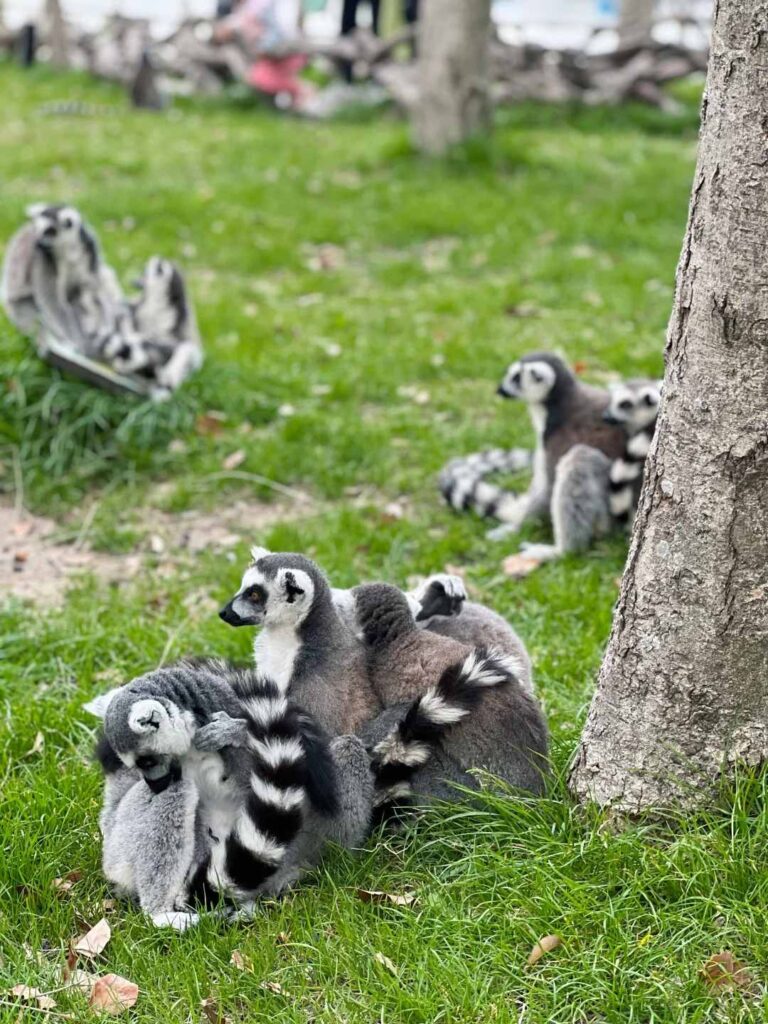
That said, don’t make any sudden movements or tease them. If you’re with kids, remind them to stay quiet and be careful.
7. Kangaroo Hill
Kangaroo Hill is another fun stop for families. It’s a free-range area that you can walk into and see the kangaroos up close.
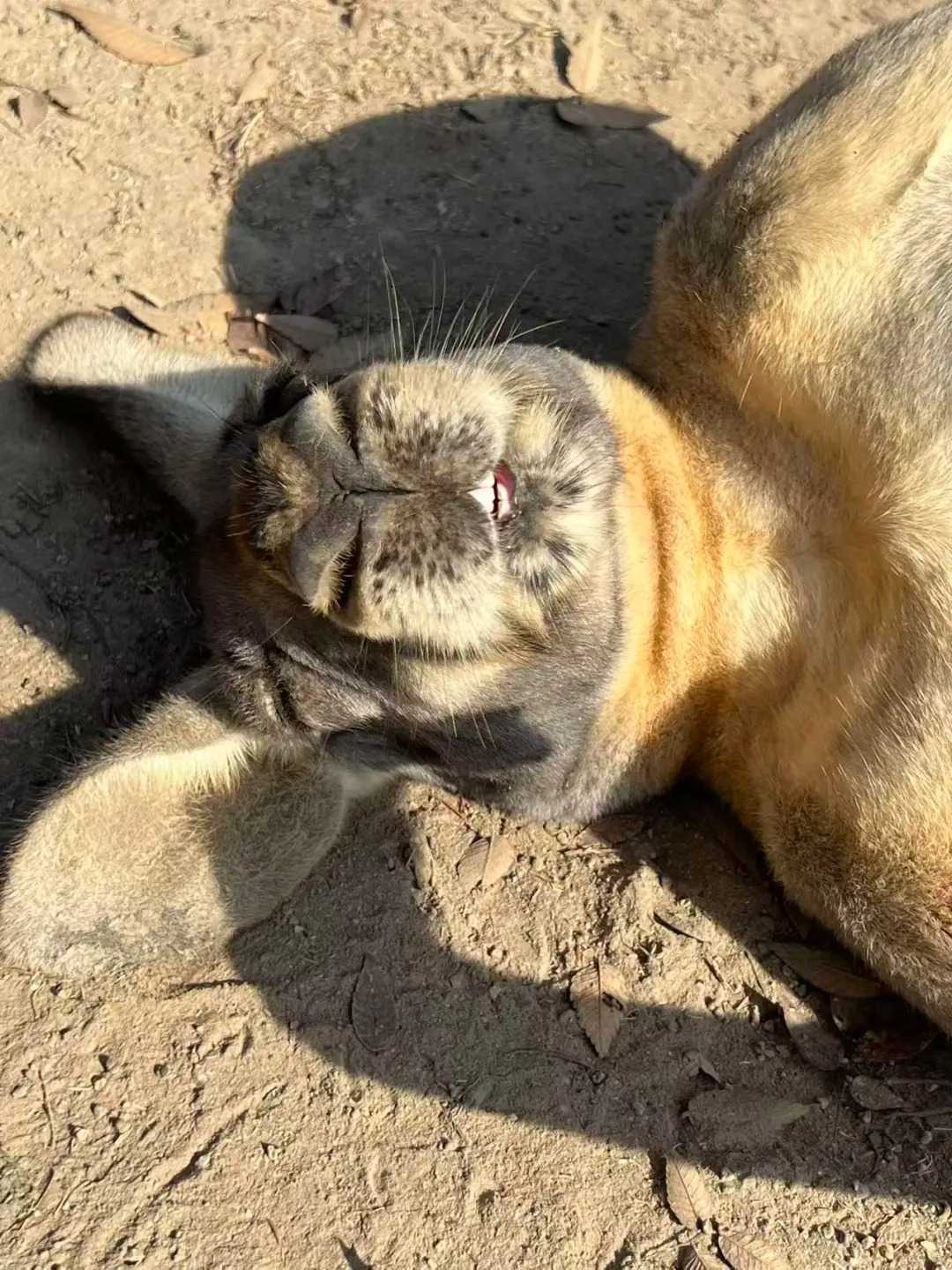
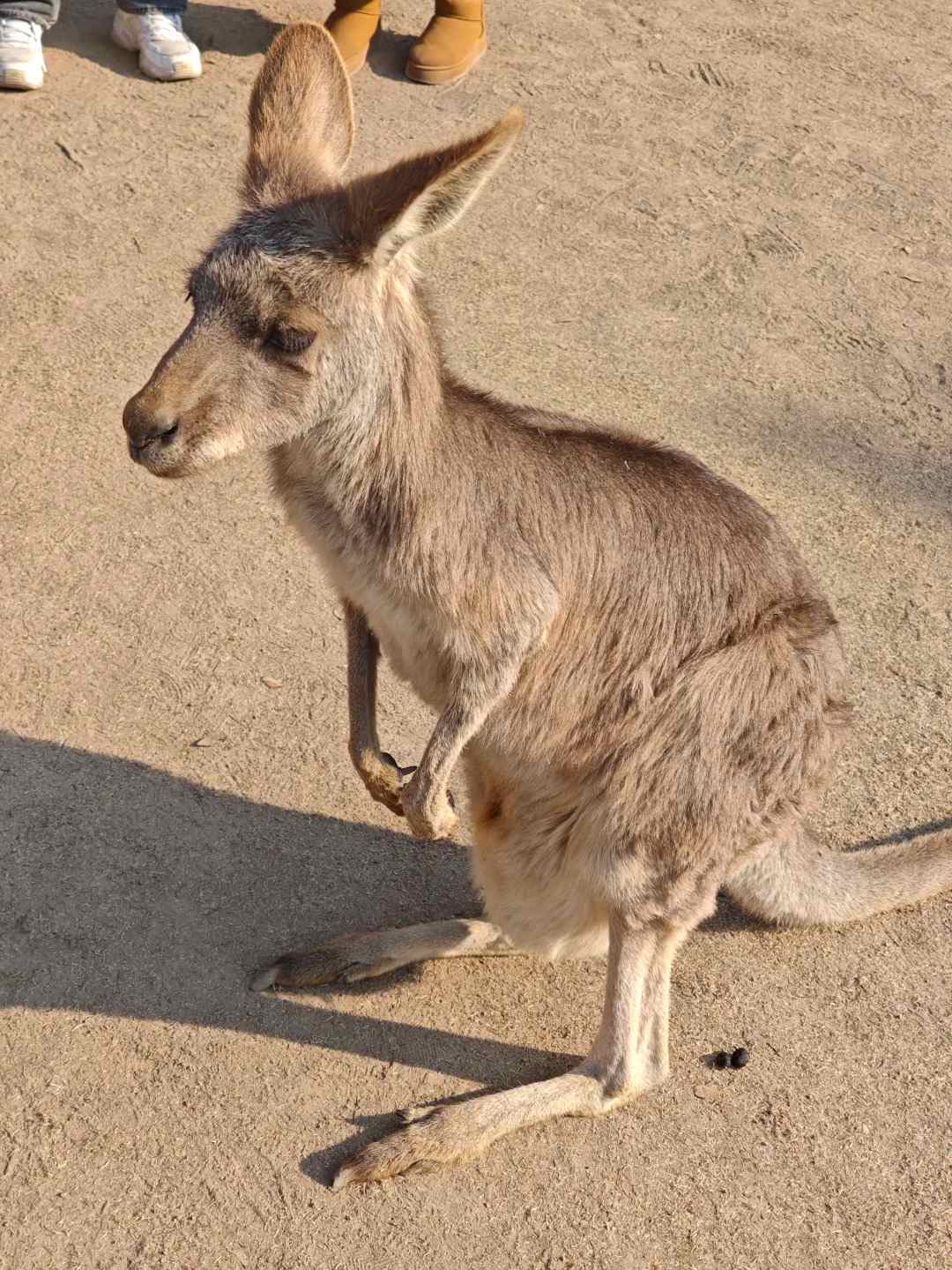
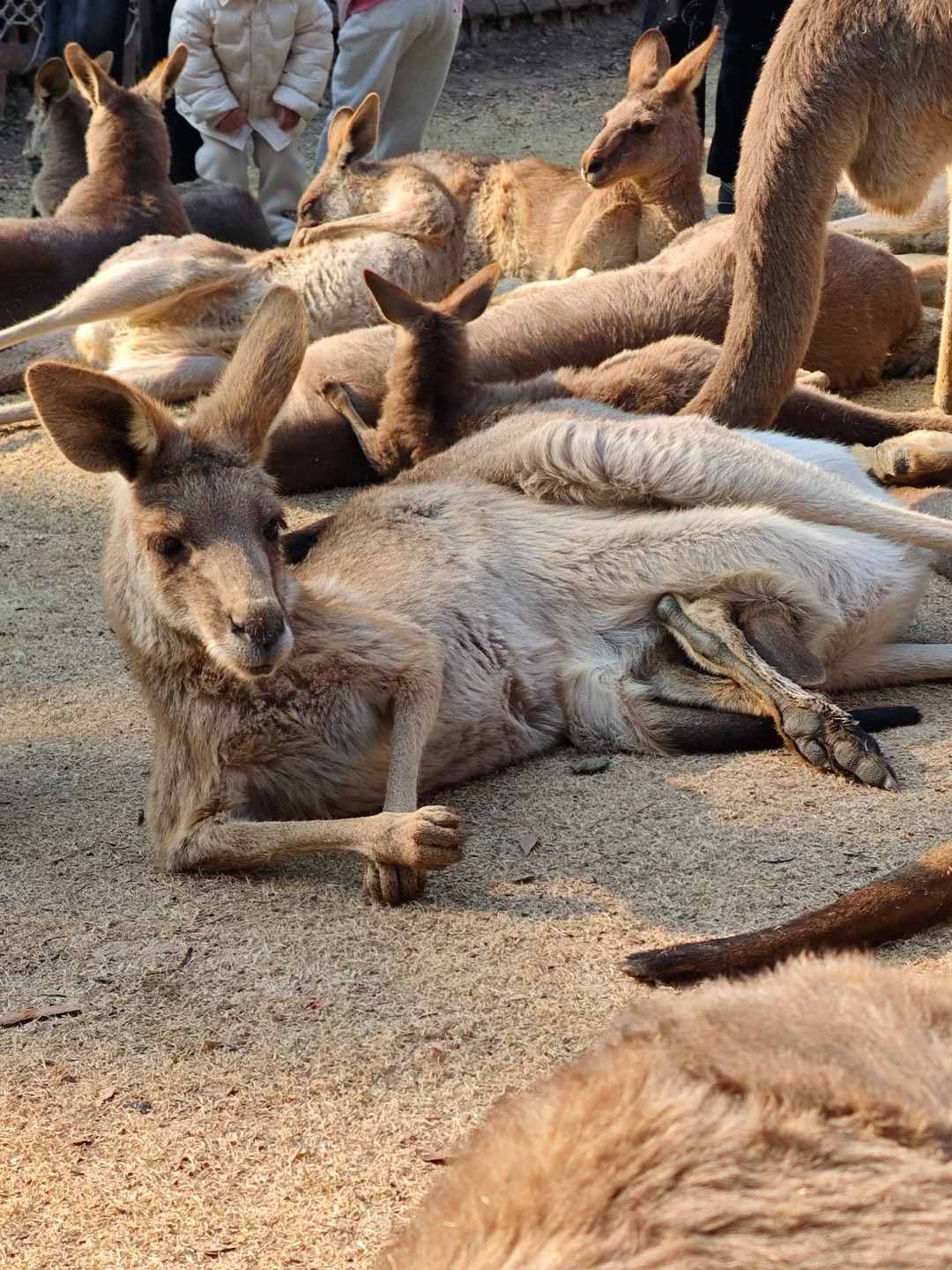
They’re generally quite gentle, and it’s also a good place for photos, so a lot of visitors stop here for a while. They are large, though, and some kids may feel a little nervous around them. One of my kids, for example, was too scared to go in.
8. Tiger Feeding Show Area
The tiger feeding show is one of the performances visitors enjoy most. You get to watch the tigers climb up poles to grab meat, then drop into the pool, which is exciting to watch. (It isn’t graphic, so it’s fine for kids.)
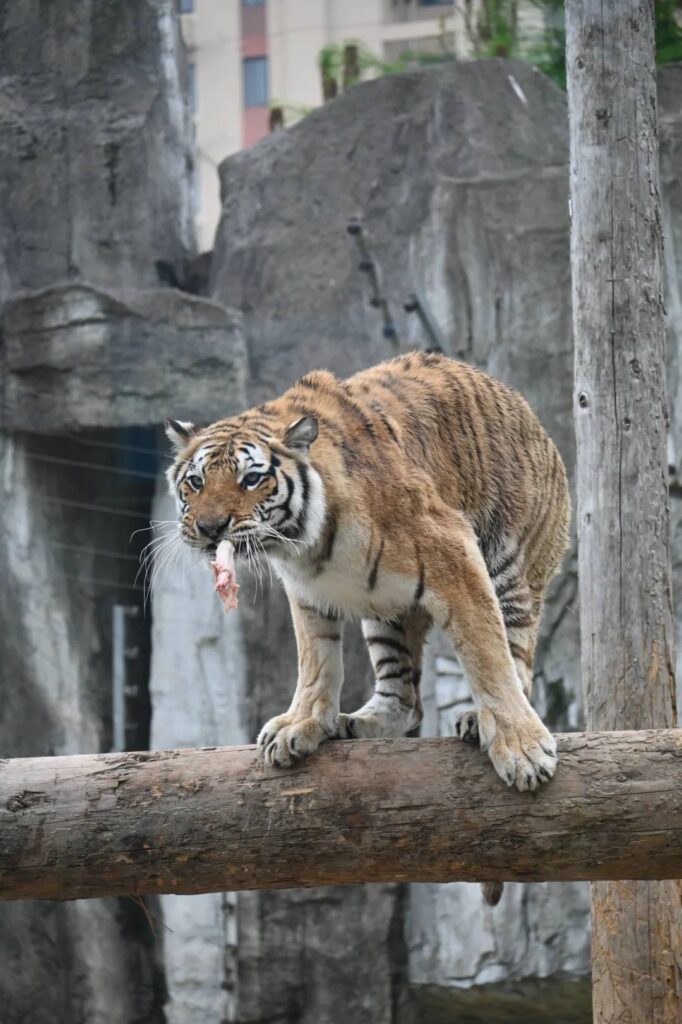
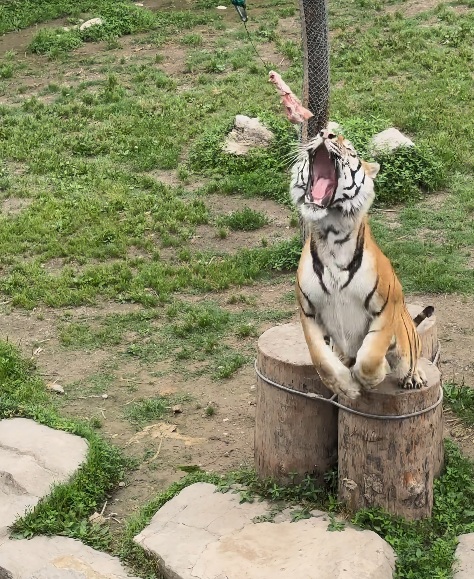
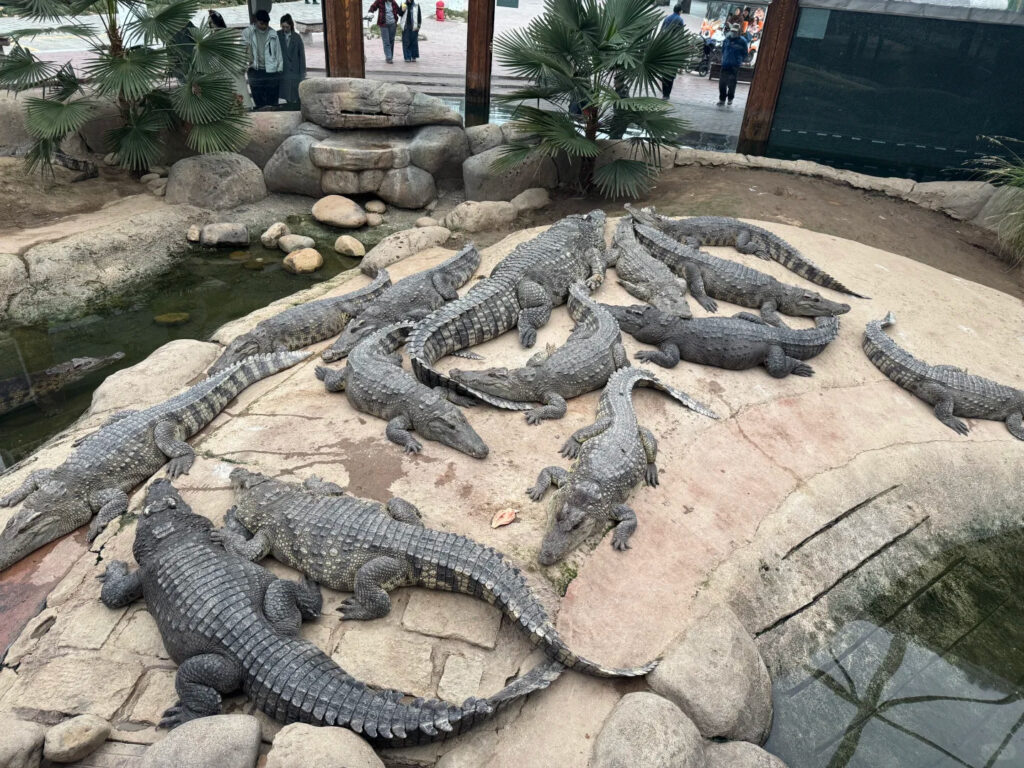
Right next to this area, there’s also a crocodile section with a huge number of crocodiles. There were so many that I honestly didn’t want to look for too long, but my kids loved it.
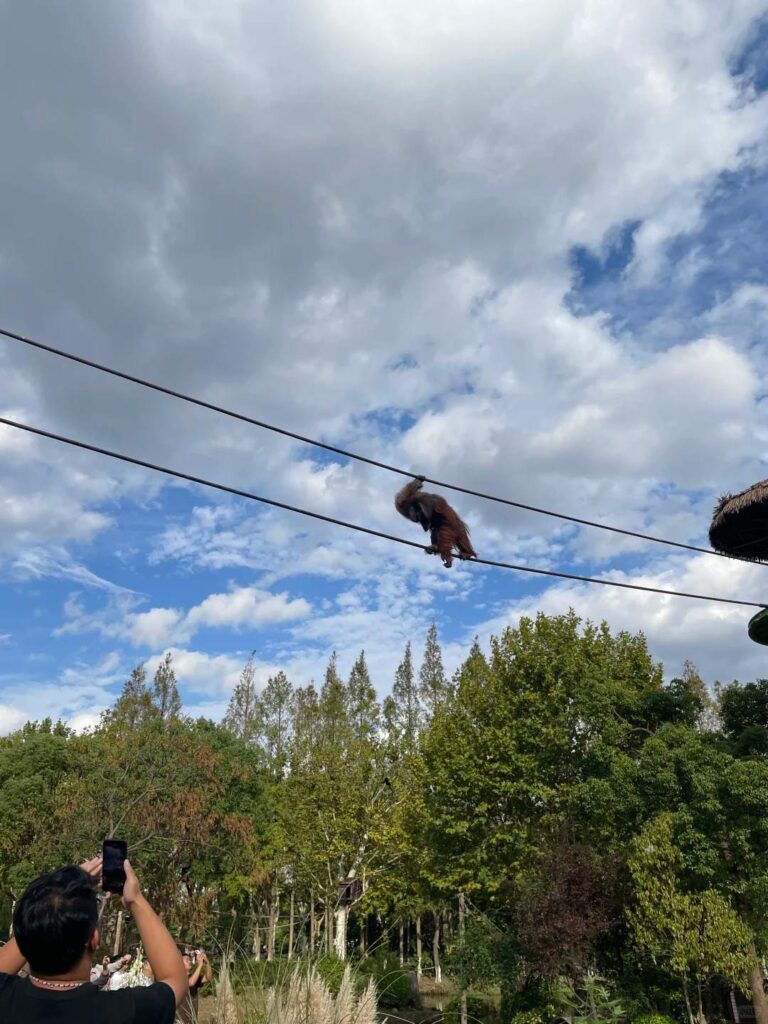
In that area, besides the tiger diving show, the other highlights for me were the orangutans walking on ropes overhead and the two young ones wandering around nearby. They were absolutely hilarious.
Little Animal Area: Great for Younger Kids
Beyond the main exhibits, the little animal area is one of the best parts of the park for younger kids, because some animals can be approached at close range and some can be fed. Every time we visit, my kids end up spending a long time here.
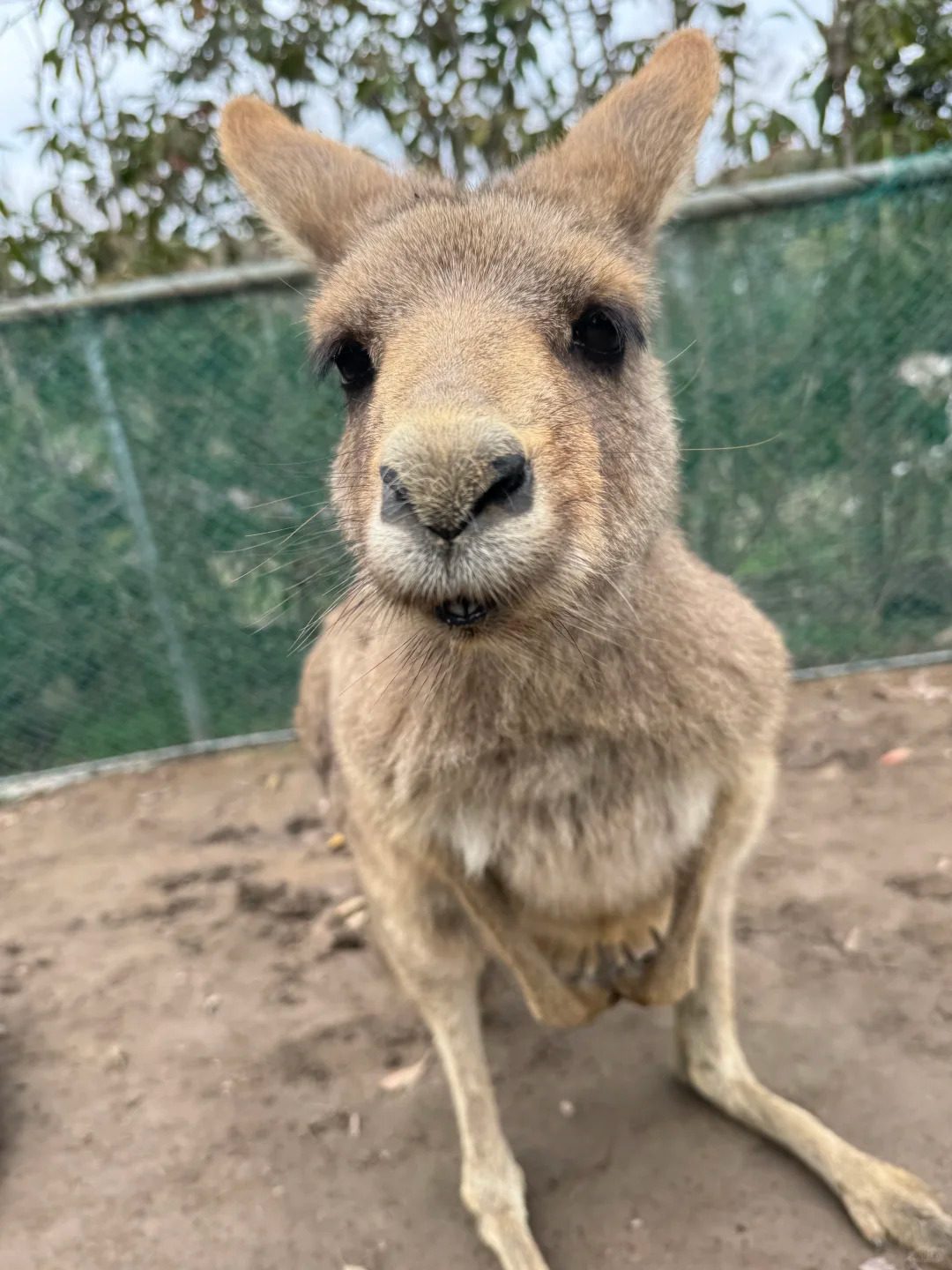
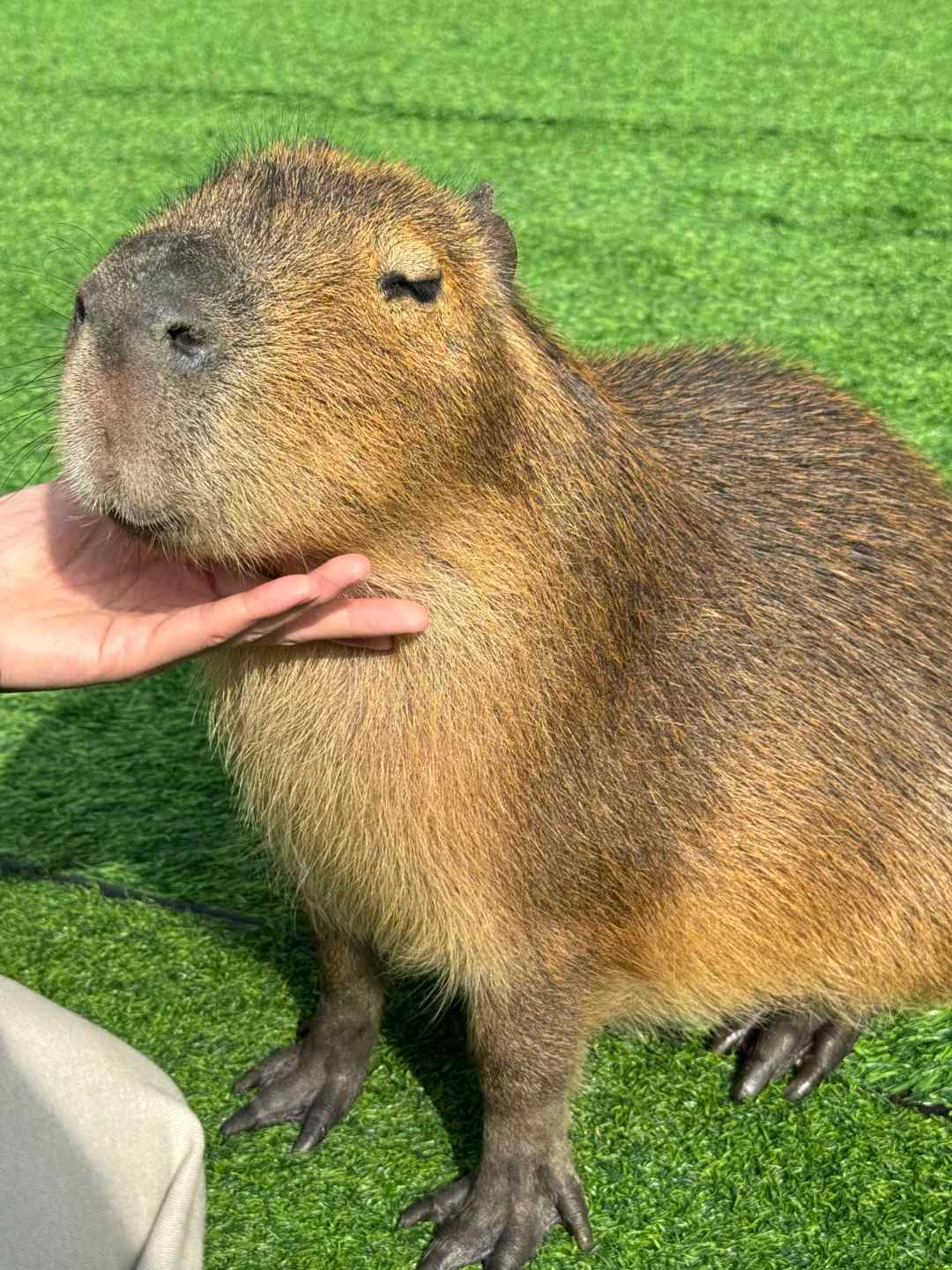
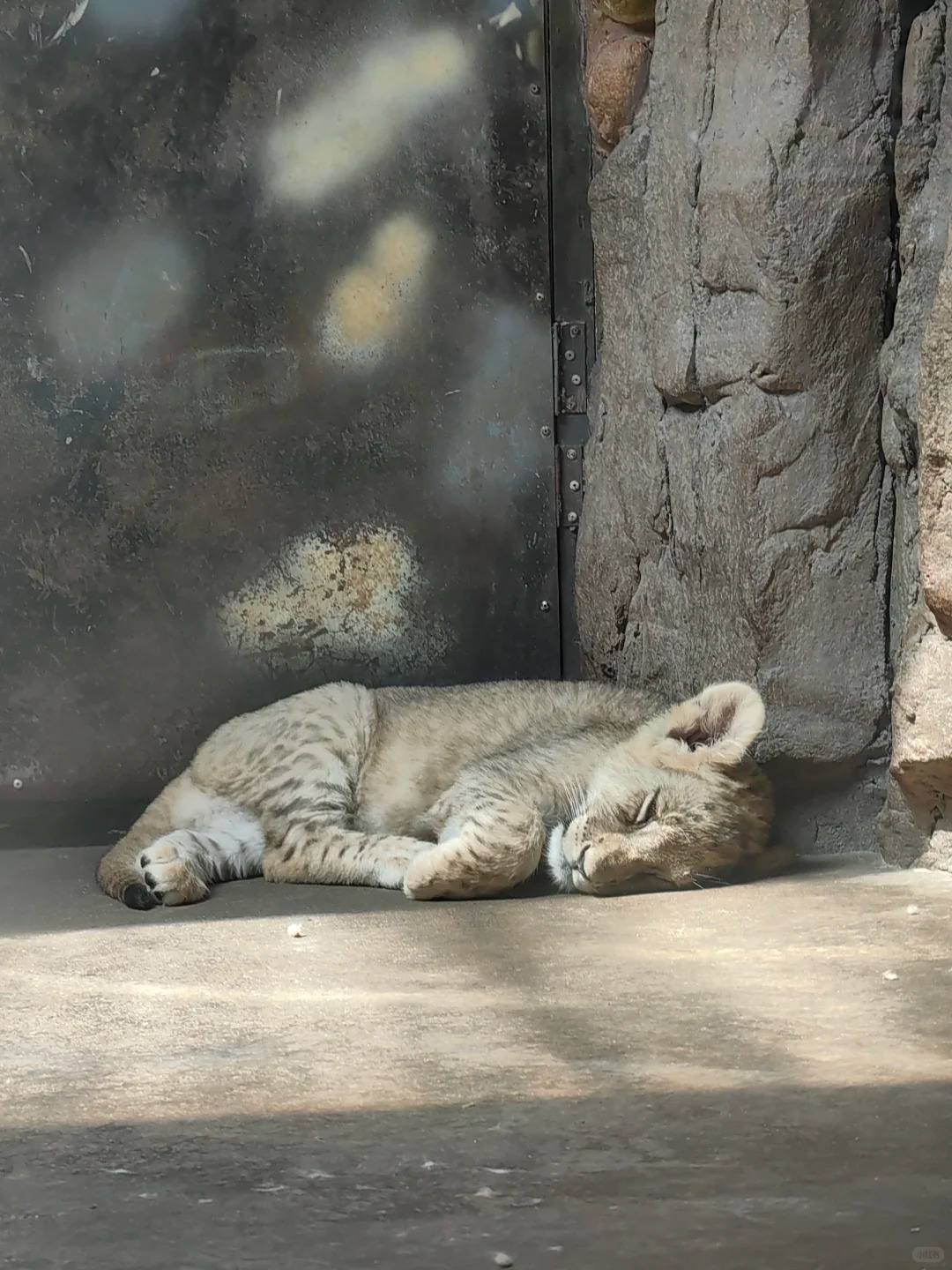
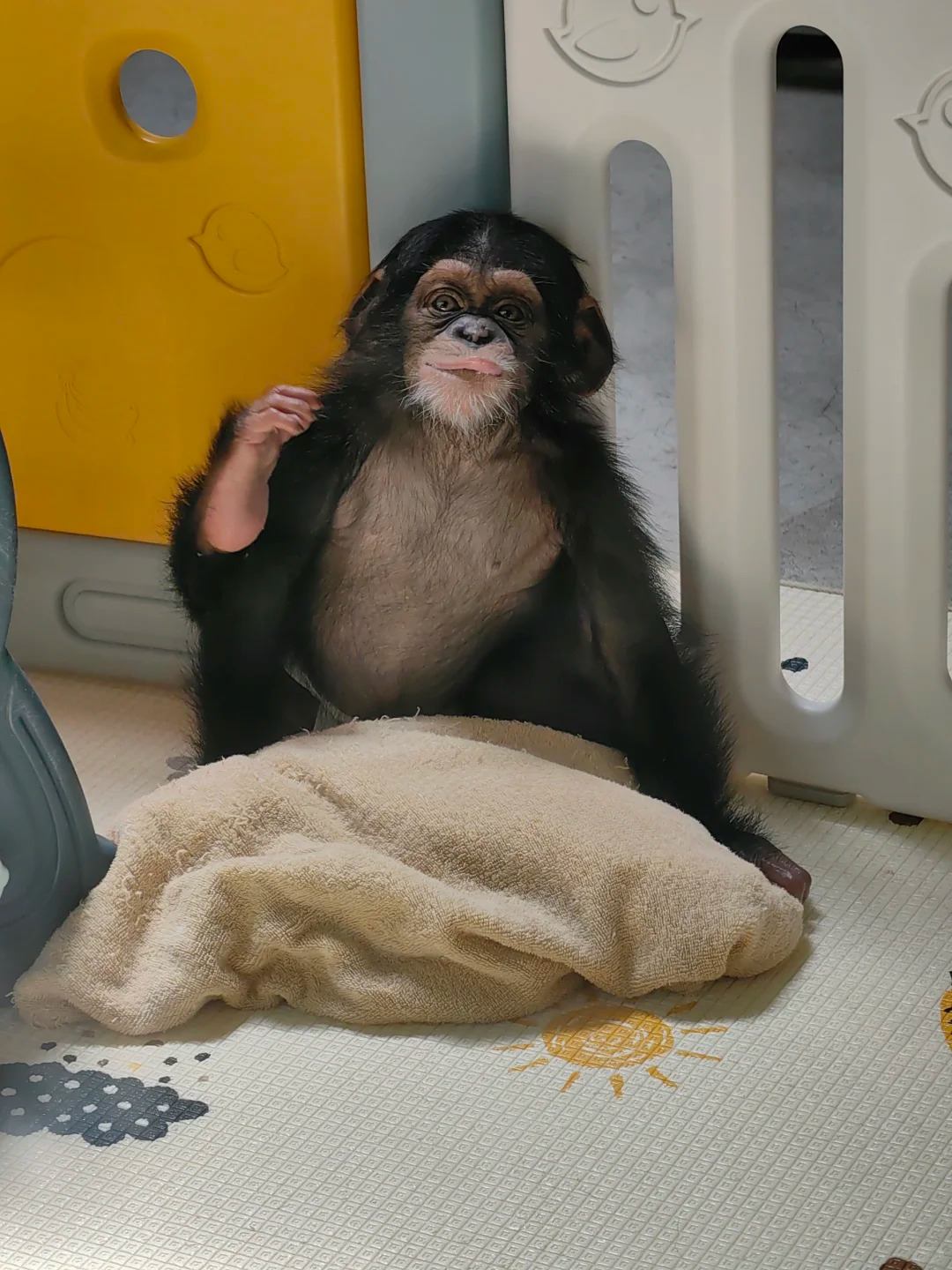
You’ll see animals like capybaras, wallabies, miniature horses, guinea pigs, sika deer, tiger cubs, lion cubs, and other small animals and young animals. They’re all incredibly cute.
There’s a grassy area nearby, along with a few simple play structures for kids. Many kids end up wanting to stay here longer than they do in some of the other parts of the park. If you’ve already done a lot of walking by this point, it’s also a nice place to slow down for a while.
Interactive Feeding: Worth the Price for the Experience
If your child is excited about feeding animals, the park’s interactive feeding package is worth it. One ticket gives you access to feeding at more than ten different spots, so you don’t have to stop and buy feed in each section. It’s also cheaper than paying separately.
This package is only available bundled with admission. It costs 290 RMB per person, which includes the 190 RMB entry ticket plus a 100 RMB interactive ticket. Only 300 are sold each day, and you need to buy them through the Shanghai Wild Animal Park WeChat mini program or the official app.
Personally I do think it’s worth the extra 100 RMB. Your child gets to feed a wide range of animals, and most kids enjoy it all day. When we visited, my kids were excited the whole time and wanted to stop at almost every feeding point.
The only downside is how much of the day it takes up. With so many feeding stops, time goes by fast. If you do purchase it and also want to see some of the shows, just plan ahead a bit for how you’ll divide your time.
Animals You Can Feed and Feeding Hours
Feeding times vary depending on the animal, so reference this list as you plan your route:
- Giraffes: 11:00 a.m.–3:00 p.m.
- Alpacas: 11:30 a.m.–3:30 p.m.
- Kangaroos: 11:00 a.m.–3:00 p.m.
- Asian elephants: 10:00 a.m.–4:00 p.m.
- Brown bears: 10:00 a.m.–4:00 p.m.
- Red pandas: 12:00 p.m.–3:00 p.m.
- Capybaras: 10:00 a.m.–4:00 p.m.
- Ligers and lions/tigers: 11:30 a.m.–3:30 p.m.
- African elephants: 11:30 a.m.–2:30 p.m.
- Hippos: 11:30 a.m.–3:30 p.m.
- Zebras: 10:00 a.m.–4:00 p.m.
- Flamingos: 9:30–11:00 a.m. and 1:30–4:00 p.m.
- Little animal interaction area: 12:30–3:30 p.m.
Stop 3: Live Shows
The live shows are a big part of the experience here too. The three main ones are Nature Unlocked, the Sea Lion Theater, and Beast Mountain Theater, and I recommend all three. However, pay attention to your timing so you’re not rushing to shows in the later part of the day.
1. Nature Unlocked (解密大自然)
This is a large live variety show that includes horseback riders and animal demonstrations, such as eagles grabbing balloons and ostrich races. It’s lively and a lot of fun to watch.
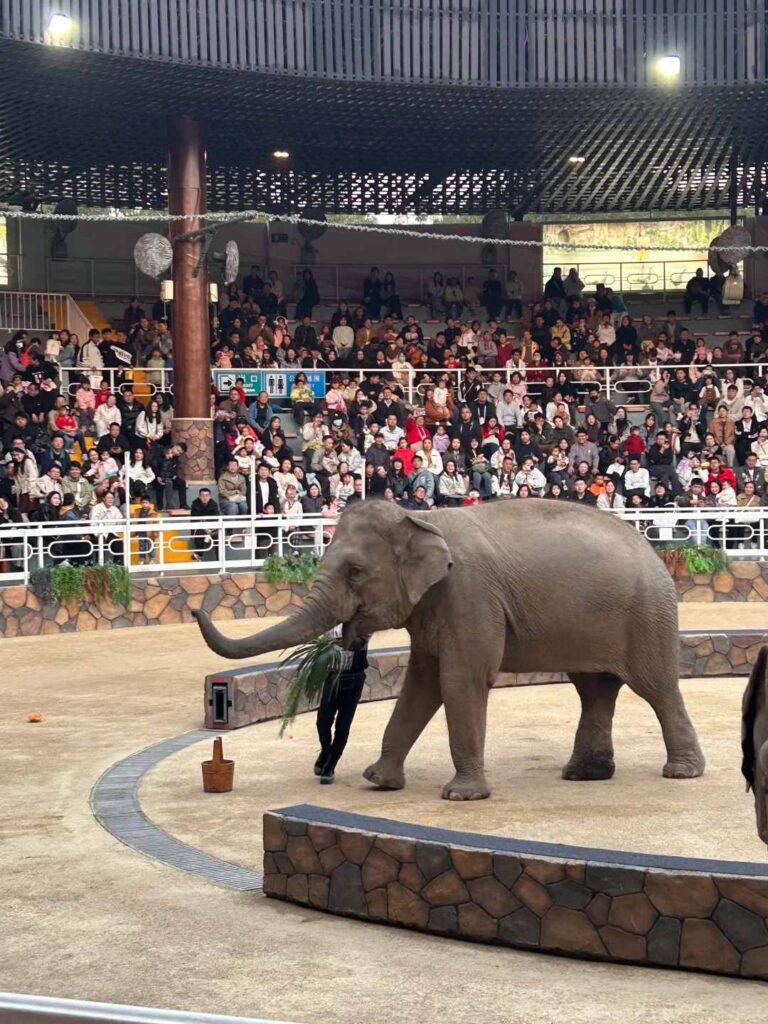
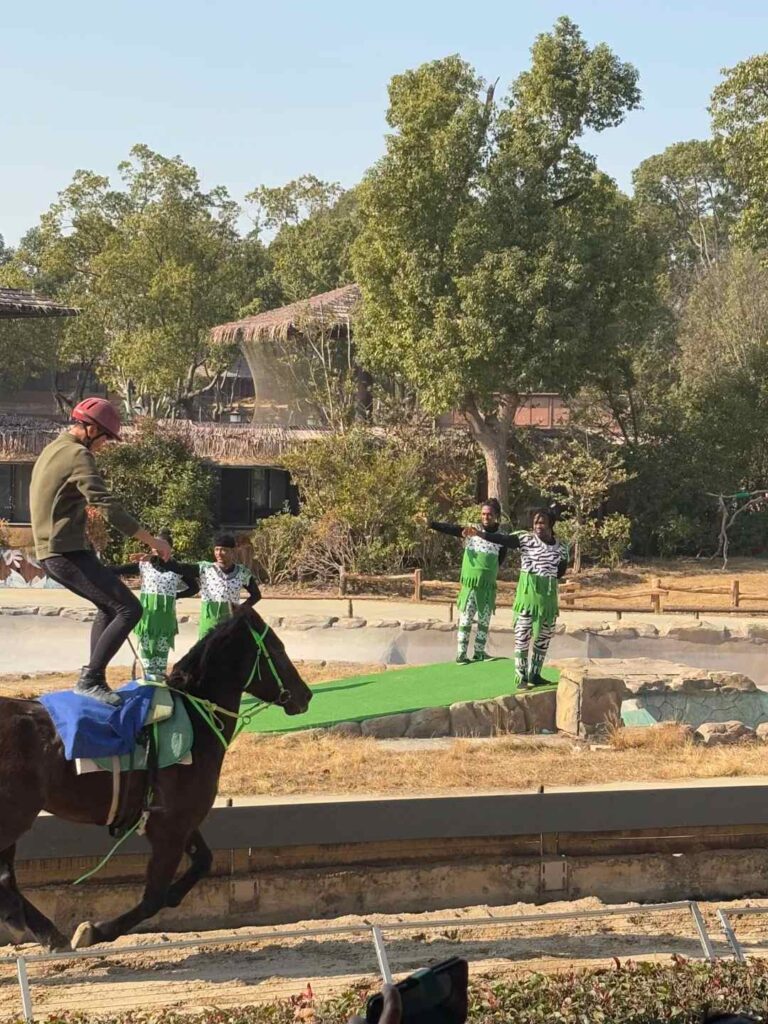
The part that stood out most to me was the cheetah sprint. It’s over in seconds, so pay attention or you’ll miss the whole thing!
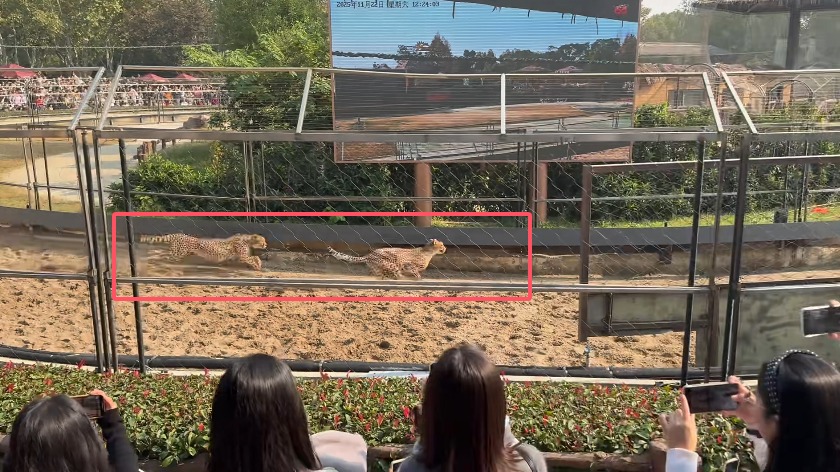
I’ve seen visitors mention on social media that the cheetah run may only appear in the 12:00 p.m. show, rather than in every time slot. If that matters to you, aim for the noon show or check with staff the day of your visit.
Nature Unlocked showtimes are:
- 10:30–10:45 a.m.
- 12:00–12:20 p.m.
- 1:15–1:30 p.m.
On holidays, this show can get busy, so it’s a good idea to line up early. The venue is fairly large, but if you sit too far back, it can be harder to see everything.
2. Sea Lion Theater (海狮剧院)
At the Sea Lion Theater, sea lions balance balls, spin around, and perform with their trainers, so this is another favorite for families.
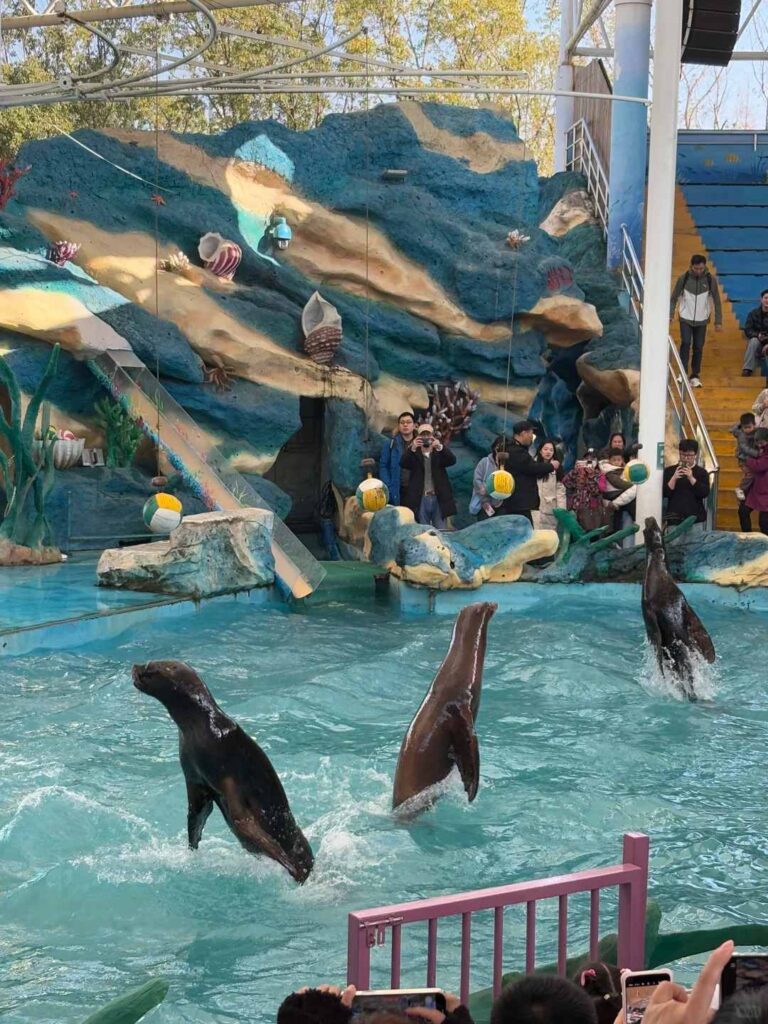
The theater’s showtimes are:
- 10:00 a.m.
- 12:30 p.m.
- 3:15 p.m.
- 4:00 p.m.
The show lasts about 20 minutes. If you can, get there a little early and try to sit in the middle section or somewhere near the front, where the view is much better.
If you sit near the middle of the pool, you might even get picked for a sea lion interaction. There’s a platform in that area where the trainers sometimes invite someone from the audience to join in!
3. Beast Mountain Theater (百兽山剧场)
The showtimes for Beast Mountain Theater are:
- 2:15 p.m.
- 3:15 p.m.
- 4:15 p.m.
This is the show with the biggest mix of animals, including elephants, hippos, porcupines, ostriches, peacocks, and more. It’s a big venue, and there’s a lot going on throughout the performance. Some parts are animal acts, while others are trainer-led presentations, with one animal after another coming out the stage.
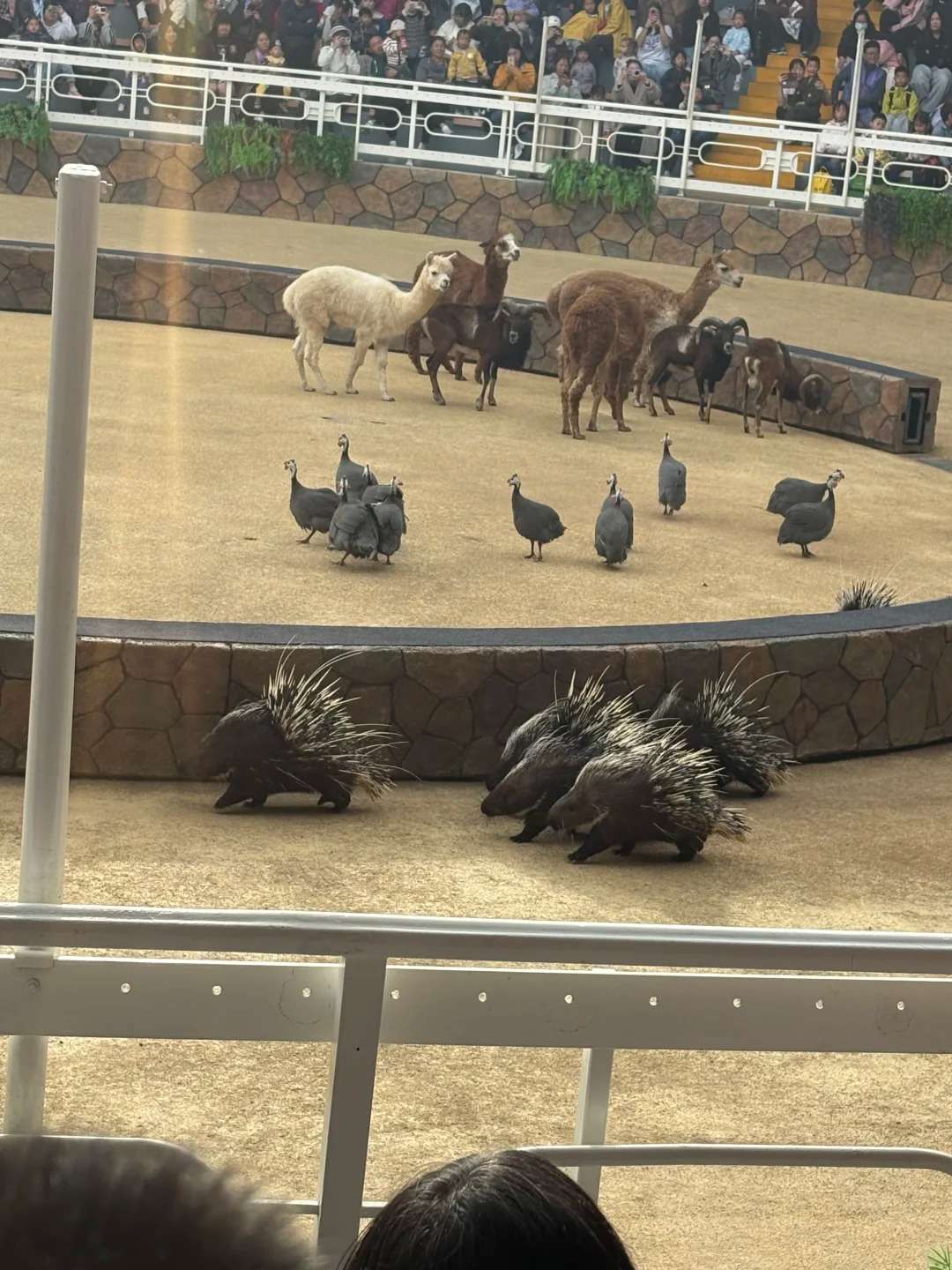
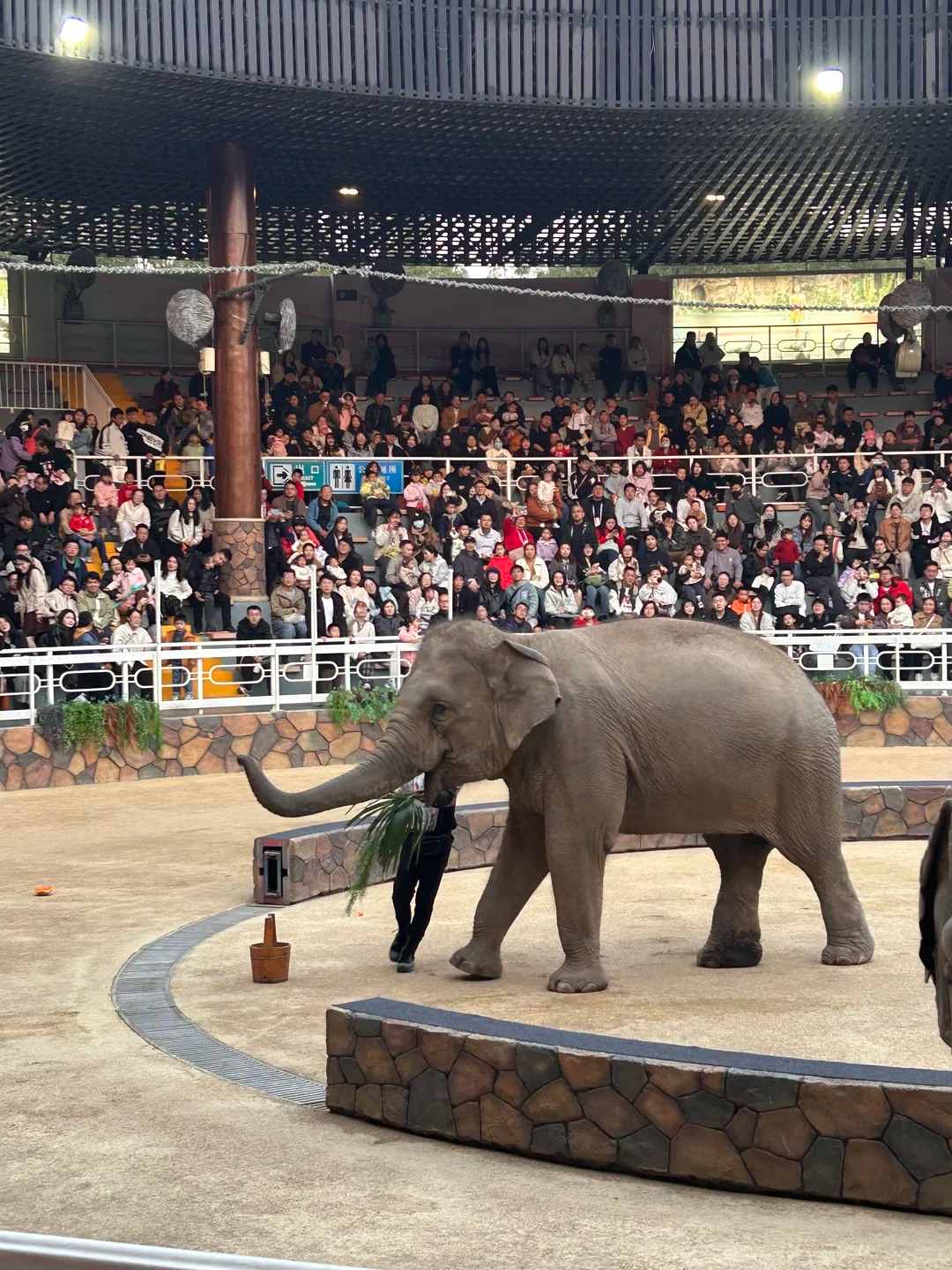

I’d try to get there a little early and aim for a seat in the front-middle section if you can. The show lasts about 40 minutes.
Pro-tip: Showtimes can potentially change, so once you’re inside the park, I suggest taking a photo of the day’s schedule or checking in the official WeChat mini program so you can accurately plan your day.
There’s also a paid horseback ride nearby. It costs around 60 RMB for about 3 minutes. If your child is old enough and comfortable around horses, it can be a nice addition if you have time.
Paid Show: Magic City Code
This is a circus-style acrobatics show that my family really enjoyed. It runs for about an hour and is built around fantasy characters like wizards and princesses. It’s big, flashy, and very theatrical, with lights and stage effects.
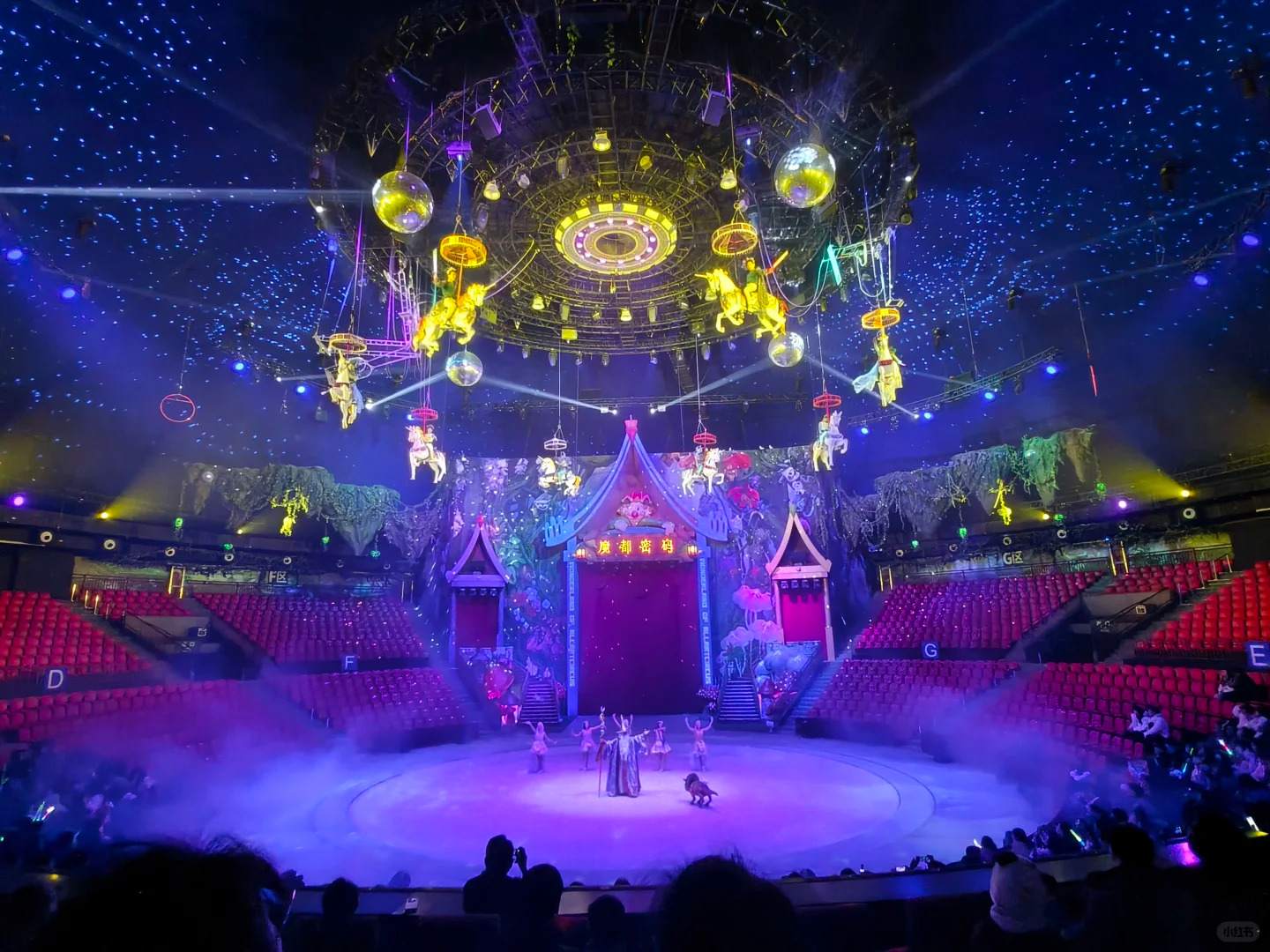
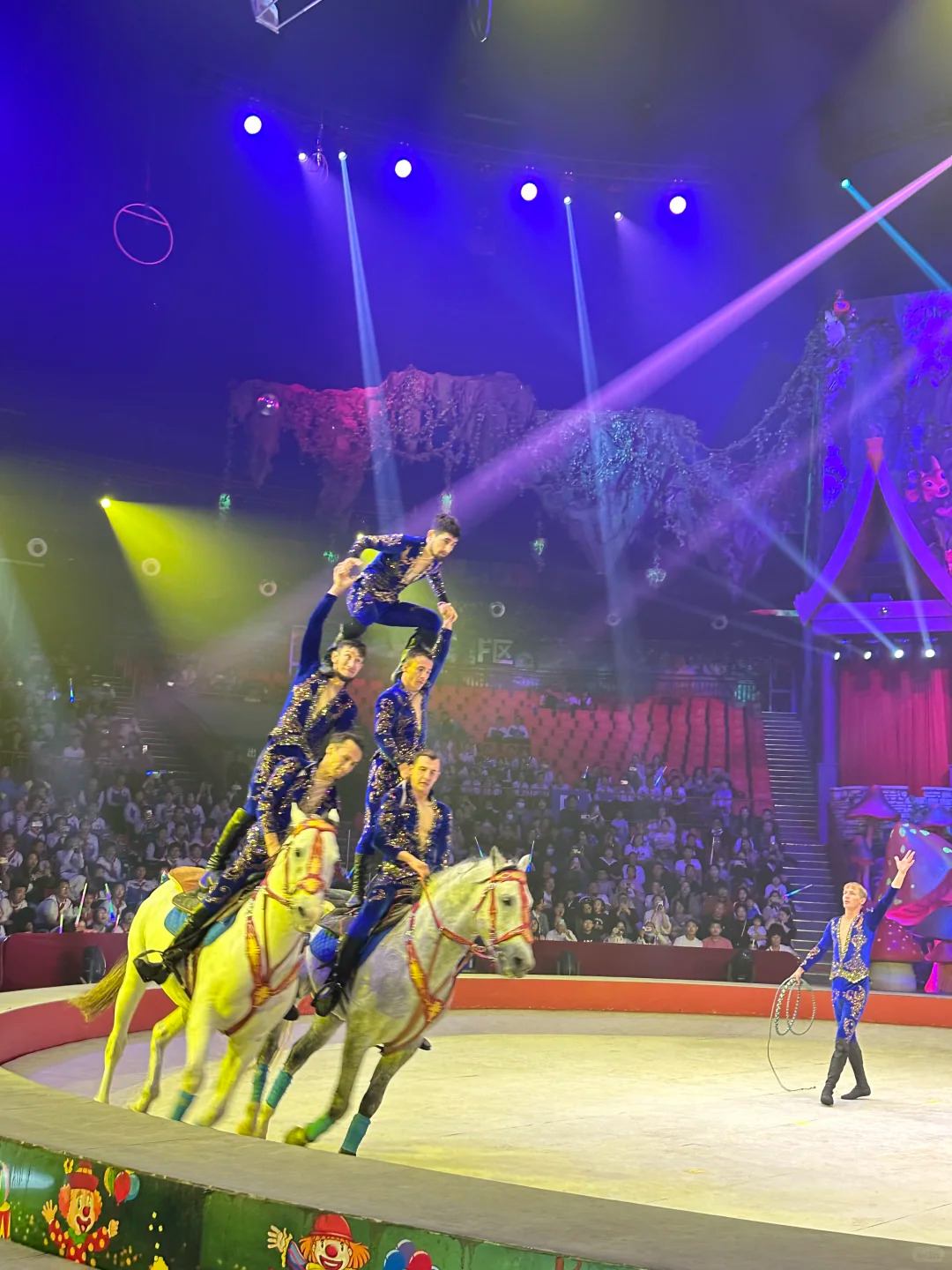
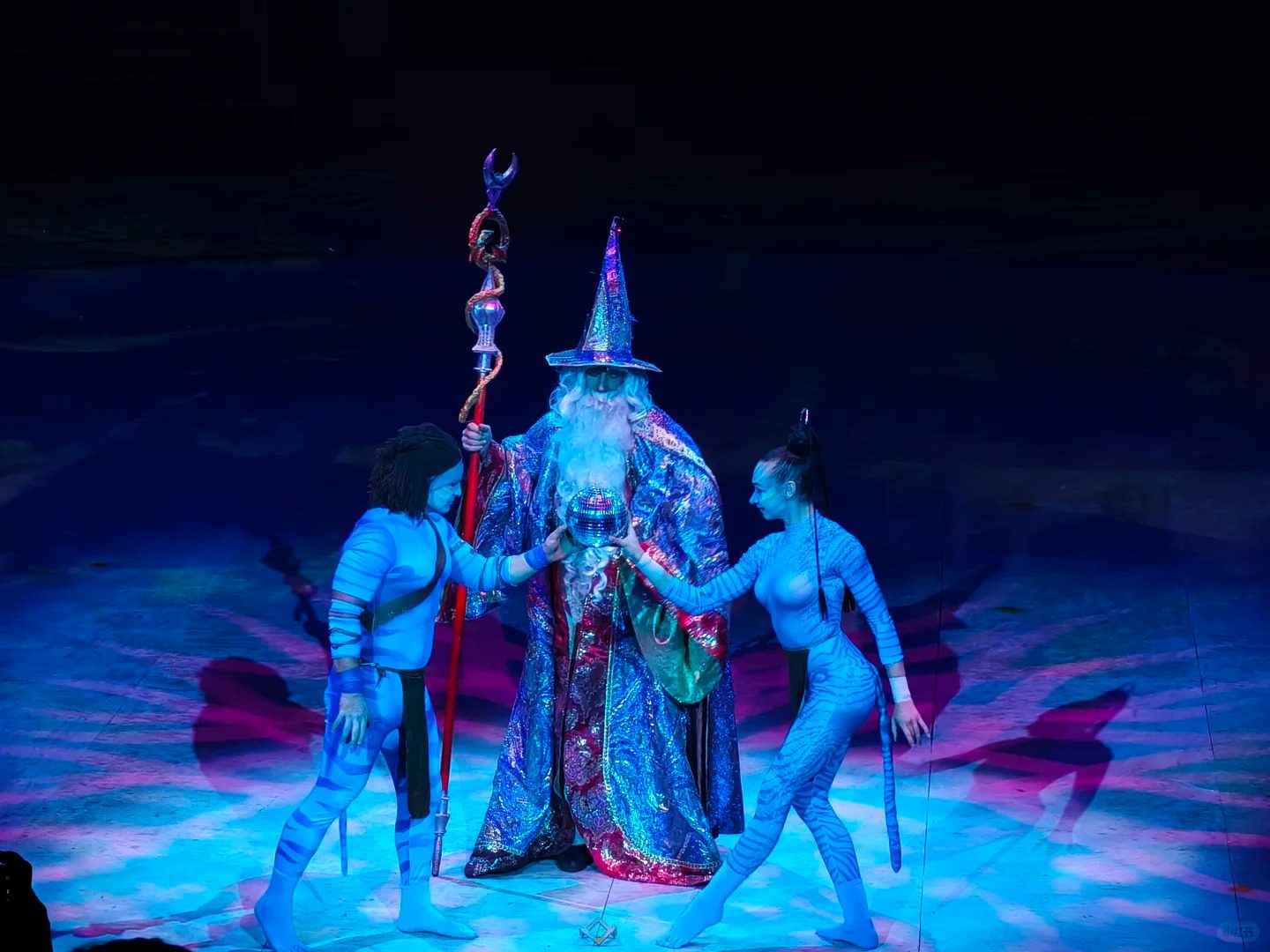
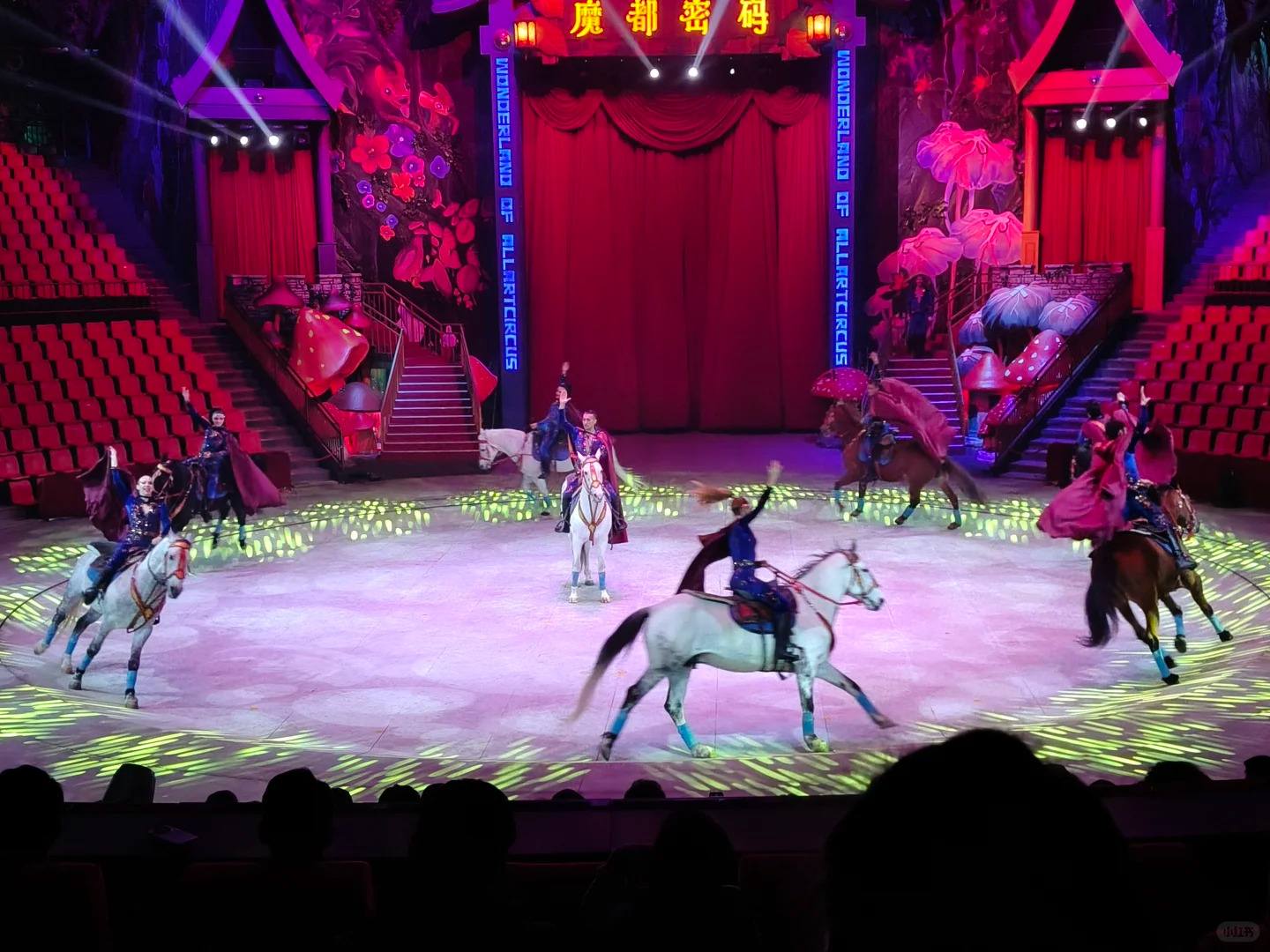
There are three tiers of ticket prices, based on seat location:
- 70 RMB
- 80 RMB
- 110 RMB
I’d go with the 80 RMB seats; I don’t think it’s worth paying extra for the 110 RMB VIP seats closer to the front. Same-day booking is available before 10:00 a.m.
A Few Tips Before You Go
1. Wear comfortable shoes
As I’ve described, the park is big, and you’ll do a lot of walking over the course of the day. If your shoes aren’t comfortable, you’ll definitely feel it by the afternoon.
2. Get there early
Earlier in the day, there are usually fewer visitors, and the animals are often more active. This is the most evident in the safari zone, as by midday, many animals have already settled down to rest, so the experience isn’t as good.
3. If you want to feed several kinds of animals, plan your route in advance
The park has both free and paid feeding experiences. If your kids are excited about feeding animals, the interactive feeding package is worth buying.
I’d use the park map (available in both the WeChat mini program and on the official website) to pick out the feeding spots you care about most, then work out the most practical walking route from there to avoid backtracking.
4. Avoid holidays if you can
If possible, I’d avoid major Chinese holiday periods like the May Day holiday, National Day, and Chinese New Year. On busy days, you can spend more time in lines than actually seeing the animals. The best time to visit is a weekday.
5. Get to the shows early
If you arrive late for a popular show, it’s not just that the seats won’t be as good, but sometimes you may not get in at all (especially on holidays). To be safe, I’d try to get there about 30 minutes early.
6. Bring your own food and water
The park does allow visitors to bring food and drinks inside. I suggest packing water and a few snacks, especially if you’re with kids.
7. Food delivery is permitted, but don’t leave the park
I’ve ordered food delivery to the zoo entrance before, which is most practical if you plan to already be near the gates at that time. The important thing is not to leave the park to pick it up yourself. Once you exit, your ticket is not valid for re-entry.
8. McDonald’s is an option inside the park
If you want something simple and reasonably priced, McDonald’s is the easiest choice. The downside is that it often has the longest line.
If you don’t want to wait that long, there are other restaurants with seats overlooking the animal enclosures, which are very enjoyable.
9. For younger kids, a stroller is a good idea
If you already have a stroller, you can bring it into the park. There’s a lot of walking, so it’s very helpful with younger kids.
You can also rent one at the entrance for around 60 RMB for the day. The strollers are decently sized, and I’ve seen two small children sharing one.
Final Thoughts
I recommend including Shanghai Wild Animal Park in your trip to China, especially if you’re traveling with kids. If you’re visiting for the first time, I would suggest doing some planning before, but no matter what, it’s a really fun family day. We found it to be even more enjoyable with our kids, and that’s why we’ve continued to come back.
Read More:
Things to Do in Shanghai
Where to Stay in Shanghai
Shanghai Astronomy Museum – A Visitor’s Guide (hours, Tickes)