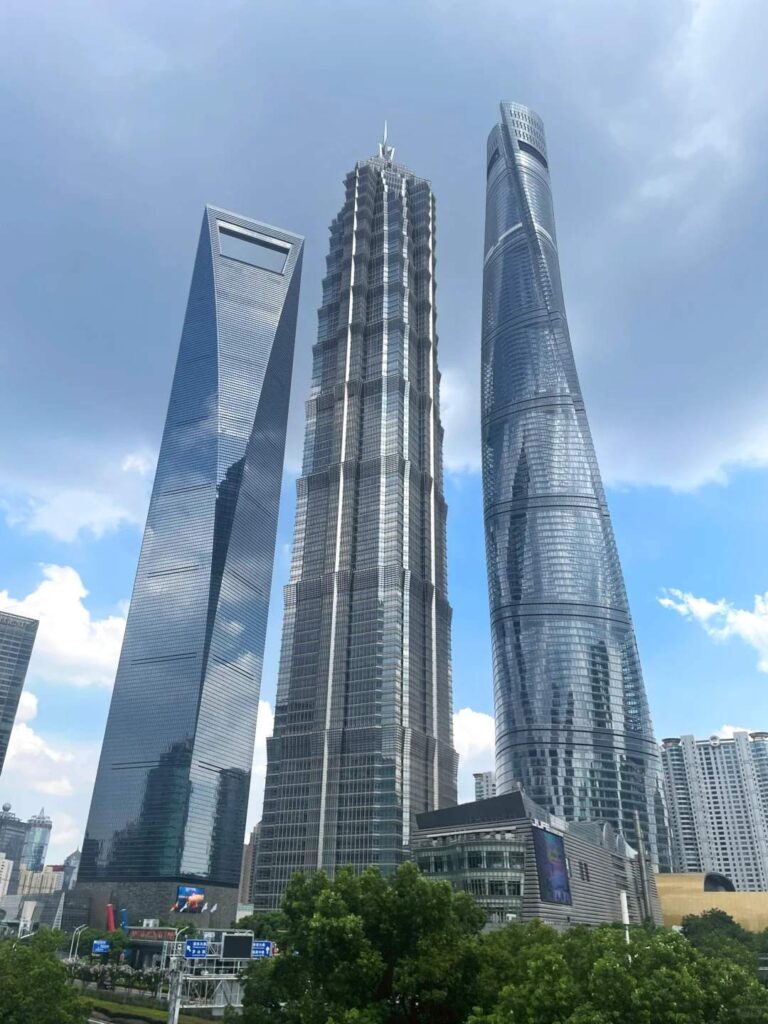
Shanghai Science and Technology Museum Reopens: A Family Visitor’s Guide (hours, Tickes)
If you’re visiting Shanghai with kids, the Shanghai Science and Technology Museum is a must-see. It closed for major renovations in March of 2023, and after three years of upgrades, it reopened in February 2026.
According to the museum, the renovation added and updated 10 permanent exhibition areas covering topics such as aviation, energy, materials science, and life science. There are now over 400 exhibits, and about 80% of them are hands-on. Kids can press buttons, climb into installations, touch things, and even run small experiments. It’s a great way for kids to learn while they play, and there are options for kids of all ages.
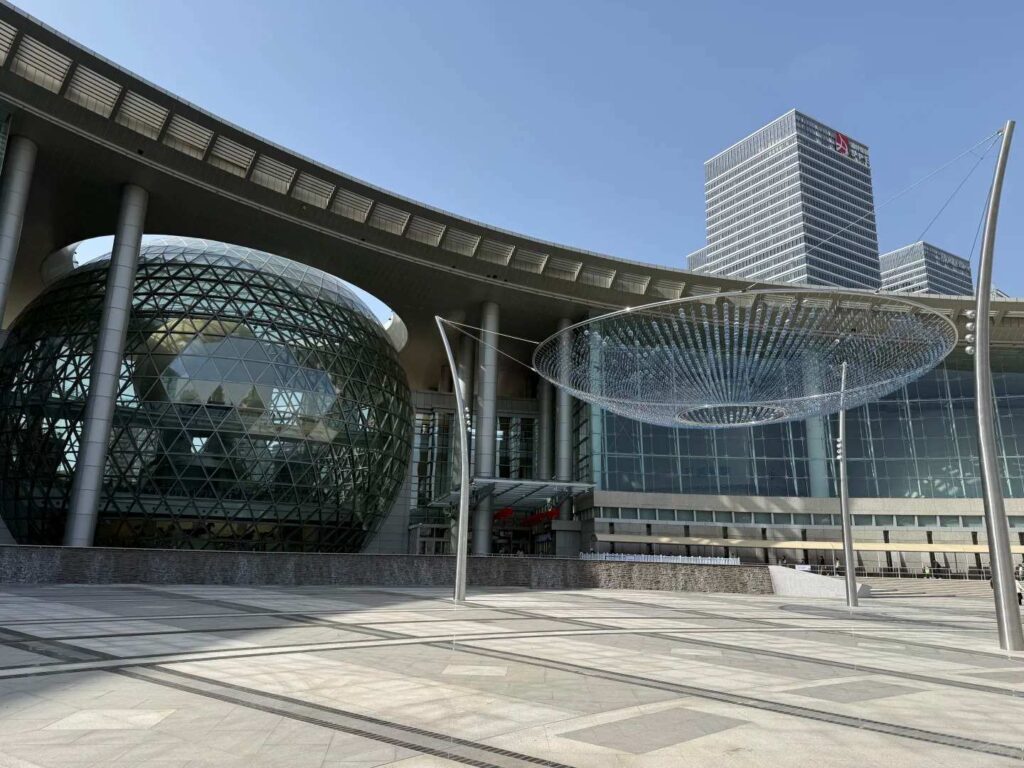
I visited with my child right after it reopened, so I’ve created this guide based on our own experience at the museum.
My Overall Impression
I absolutely recommend bringing your kids here!
The renovated museum has more equipment and better content, but the biggest change is the number of interactive exhibits. Instead of just looking at displays, kids get to move, touch, and test things with their hands. I think that when they are able to experience science in this way, it’s easier for them to understand and remember.
Planning Your Visit
The biggest thing that can affect your visit is timing. If possible, try to avoid peak travel seasons. The museum had been closed for three years, and it reopened right around the Chinese New Year holiday, so the crowds have been large since then.
The museum has seven popular interactive experiences that require on-site reservations (only available after you’ve entered). Spots can fill within a few minutes, so on busy days, you may miss out on certain experiences entirely.
The exhibition halls can get very crowded on popular days, which can leave you with less time to enjoy the museum. If you can, try to visit on a weekday (Tuesday to Friday). The experience will be much smoother and more enjoyable.
At the end of this guide, I’ve put together suggested routes by age group, so you can follow the one that fits your family.
Location
The Shanghai Science and Technology Museum is located at 2000 Century Avenue, Pudong.
The easiest way to get there is by metro: take Line 2 and get off at Shanghai Science and Technology Museum Station. Once you exit the station, follow the signs and you’ll reach the entrance in a few minutes.
Tickets
The museum uses a reservation system with ID verification and limited daily capacity, so tickets need to be booked in advance through the museum’s official WeChat mini program or WeChat official account.
Ticket prices
- Adults: 45 RMB (¥45)
- Children (ages 6–18): 22 RMB (¥22)
- Children under 1.3 m (about 4 ft 3 in): free with an adult
- Seniors 70+ with valid ID: free admission
Tickets are released 7 days in advance at 10:00 a.m..
If you’re an international visitor, you can collect your ticket at the museum with your passport on the day of your visit, then present it at the entrance.
It’s a good idea to book at least a week ahead, especially for weekends and holidays. During busy periods, tickets sell out quickly.
Opening Hours
- Tuesday–Sunday: 9:00 a.m.–5:00 p.m.
- Last entry: 4:00 p.m.
- Closed: Mondays
Is It Easy for Non-Chinese Speakers?
Yes, for the most part!
Many major exhibits have bilingual Chinese–English labels, so you can still follow what you’re seeing and enjoy the activities. This is especially true for families: you can try the hands-on elements first, then skim the text for context. That said, English support isn’t necessarily consistent throughout the museum. Some activity instructions, reservation rules for certain exhibits, and announcements are still in Chinese.
Why you’ll still enjoy it even if you don’t speak Chinese:
Lots of hands-on exhibits: Much of the learning happens through experimentation, where kids try something, watch what happens, and then try again. Even if you can’t understand all of the text, you can still enjoy plenty of the exhibits this way.
Universal themes: Aviation, robotics, the human body, and energy are generally recognizable anywhere. And since the museum explains them through models, diagrams, and interactive displays, they’re still easy to follow with limited language support.
Pro-tip: Some of the most popular exhibits require an additional reservation. The official mini program is mainly in Chinese, but WeChat’s built-in translation can help you navigate it. If you get stuck on site, staff can usually help you figure it out.
Read More: How to Travel in China Without Speaking Any Chinese
First thing to do after you enter
(Reserve the most popular activities.)
There’s so much to do at the museum that if you don’t plan ahead, it’s easy to run out of time for some of the highlights.
My suggestion: once your ticket is scanned and you’re inside, start by reserving the most popular interactive activities.
Where to reserve (WeChat)
Search “上海科技馆” → go to “展项预约” (Exhibit Reservations).
Inside, you’ll see 7 activities, each with clear instructions on how the reservation works.
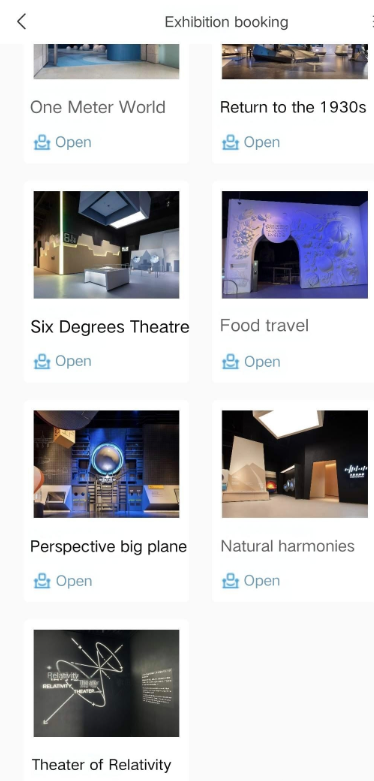
Reservation release times:
- 9:15am — sessions before 1:00pm
- 12:30pm — sessions 1:00–3:00pm
- 2:30pm — sessions after 3:00pm
A few things to keep in mind
- You’ll need to be on the page right at release time.
- You can reserve up to 2 activities per day.
Reservations can only be made after you’ve entered the museum (not from outside).
Museum Floor Guide
Rather than being divided strictly by topics, the floors are mostly grouped by the types of experiences offered.
1F: Mechanics / Sound / Light / Energy
This floor is very hands-on and easy to follow. Kids can explore force, sound, and light through interactive exhibits. There are also a few sections on clean/renewable energy. It’s especially good for younger children, as the exhibits are simple, engaging, and very interactive.
2F: Earth / Ecology / AI / Future Cities
A more future-facing, tech-forward floor, including a lot of information about AI. Since AI is already part of everyday life, these exhibits can help kids move beyond just knowing AI exists and start forming a basic sense of how it works.
3F: Human Body / Aviation / Scientific Discoveries
This level is more advanced and information-dense. It suits older kids, or families who like to slow down, read more, and take time to understand the content.
B1: Movies / Temporary Exhibits / Rest Area / Extra Experiences
This floor doesn’t have as many permanent exhibits, but I still think it’s worth saving time for. The museum’s most popular feature, the dome theater, is down here, and it’s also a good area to rest if you get tired.
Giant Screen + Dome Theater
I think it’s worth adding both to your day.
If you’re visiting the Shanghai Science & Technology Museum, I recommend trying both the giant screen theater and the dome theater. They are highly immersive and visually impressive.
Ticket prices (comparable to a regular movie ticket)
- IMAX Giant Screen Theater: 40 RMB per person
- IMAX Dome Theater: 30 RMB per person
Ticket Tips (Important for Weekends)
If you’re visiting on a weekend, buy tickets as early as possible through the museum’s WeChat mini program, as same-day tickets often sell out. Tickets are released 7 days in advance at 10:30 a.m.
Tickets for the IMAX giant screen and dome theater are sold separately from museum admission. If you only want to see a film, you can purchase a theater ticket on its own, which doesn’t include access to the rest of the museum.
IMAX Giant Screen Theater
(High-quality, lifelike visuals.)
The giant screen is most impressive for its sharp, bright, and lifelike image quality. As the name suggests, the screen is enormous—about 23.68m wide and 18m tall. Once you sit down, it’s evident how much it differs from a regular movie screen.
On my visit, I watched a a museum-made film, 《马到成功》 (Ma Dao Cheng Gong), which felt especially fitting for the Lunar New Year season, as this is a phrase commonly used to wish success during the Year of the Horse. The film brings to life the relationship between horses and human civilization, moving from Inner Mongolia to Doha, Amsterdam, and the American West.
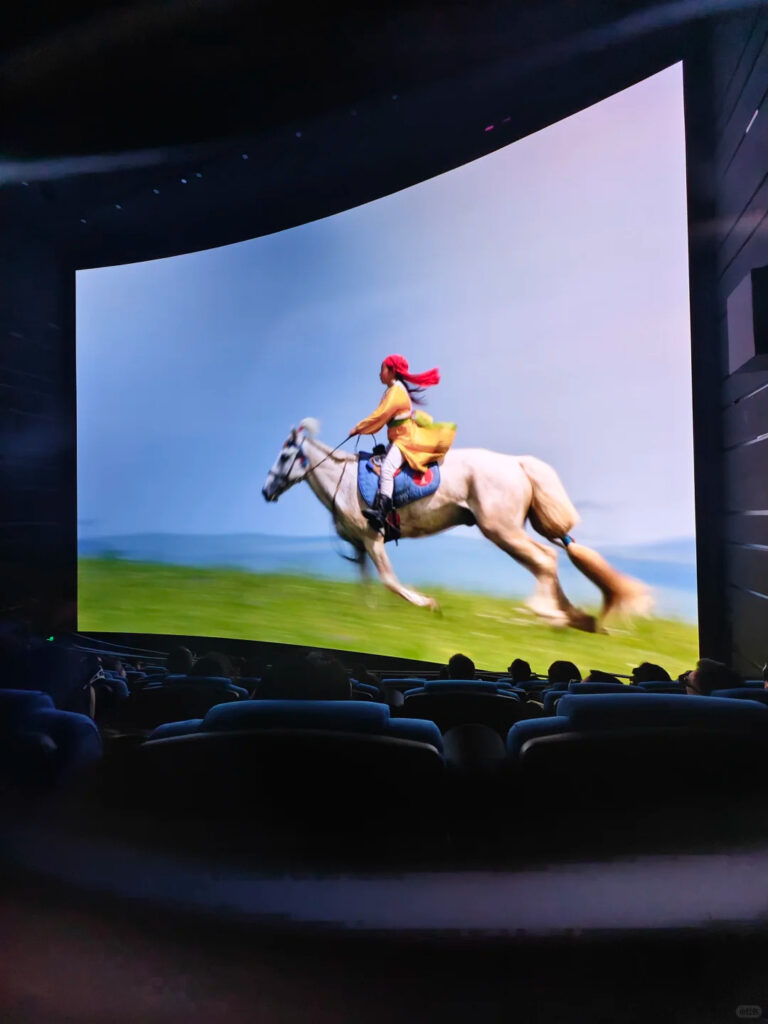
Because it’s an LED giant screen, the fine details are beautiful. The film requires 3D glasses, which makes you feel like you’re inside the story—riding across the grasslands of Inner Mongolia, then sweeping over red-rock valleys in the American West. It was a blast.
IMAX Dome Theater
(If you can only do one, I’d pick this one.)
If you have time for only one of the two theaters, I’d recommend prioritizing the dome theater.
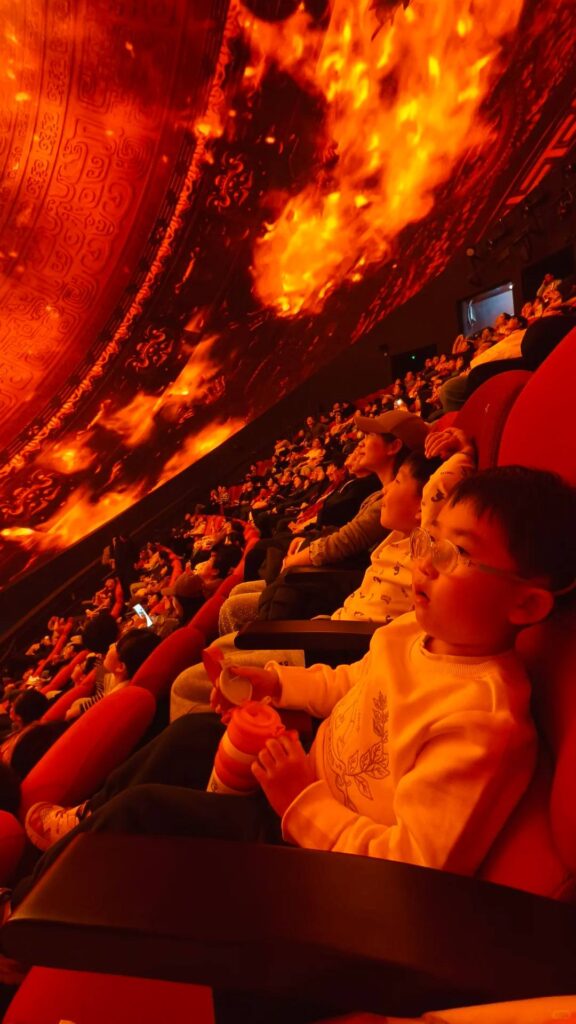
With the wraparound screen, it’s a very different experience from the giant screen. You don’t need 3D glasses, and your view is surrounded by a dome-shaped screen about 23m across, which actually makes it feel more immersive.
I watched 《月球基地:下一步》 (loosely, “Moon Base: Next Step”). Lying back and looking up, it was like into the night sky, and when meteors appeared, it felt like they were flying right over our heads. It’s especially great with kids, because it helps them feel how vast and awe-inspiring space is.
Two other films to see
If you’re looking for other options, these are also worth noting:
- Giant screen documentary 《北极:冰冻星球》: a documentary focused on polar ecology and natural spectacles.
- Wraparound (surround-style) screen film 《苍穹》: especially interesting if you enjoy nature and the draw of outer space.
Pro-tip: Missed daytime tickets? See an evening show.
You can explore the permanent exhibits before 6:00pm, then watch two screenings. It’s a great way to end your day at the museum.
Ten Permanent Exhibit Zones
(Review your options first, then decide how to spend your time.)
Next, here’s a quick overview of the museum’s 10 permanent exhibit zones, so you can see what’s on offer before planning your route.
Current permanent zones
- 雨林秘境 (Rainforest Secret Realm) — currently closed
- 源动未来 (Future of Energy / Power)
- 材料魔方 (Materials “Magic Cube”)
- 智慧之光 (Light of Wisdom)
- 一米世界 (One-Meter World)
- 共生星球 (Symbiosis Planet)
- 明日行者 (Tomorrow’s Travelers)
- 探索之光 (Light of Exploration)
- 神奇的我 (Amazing Me)
- 飞行探秘 (Flight Exploration)
Across the museum, there are 405 science exhibit units and 926 individual exhibit items, and around 80% are interactive. Almost everything is designed for learning through play, so we thought the experience was very engaging.
If you’ve been to the Hong Kong Science Museum, you probably found that to be very impressive. But from a family perspective, the Shanghai Science & Technology Museum alsohasa lot to offer, and in many ways, I think it’s even better.
Two of my Favorite Activities
1) Flight Exploration: “Back to the 1930s”
In the 飞行探秘 (Flight Exploration) zone, there’s an experience called “Back to the 1930s,” which I found to be very exciting. You’re inside a realistic reconstructed aircraft: a Ford 5-AT tri-motor (about 15.32m long and 3.86m tall).
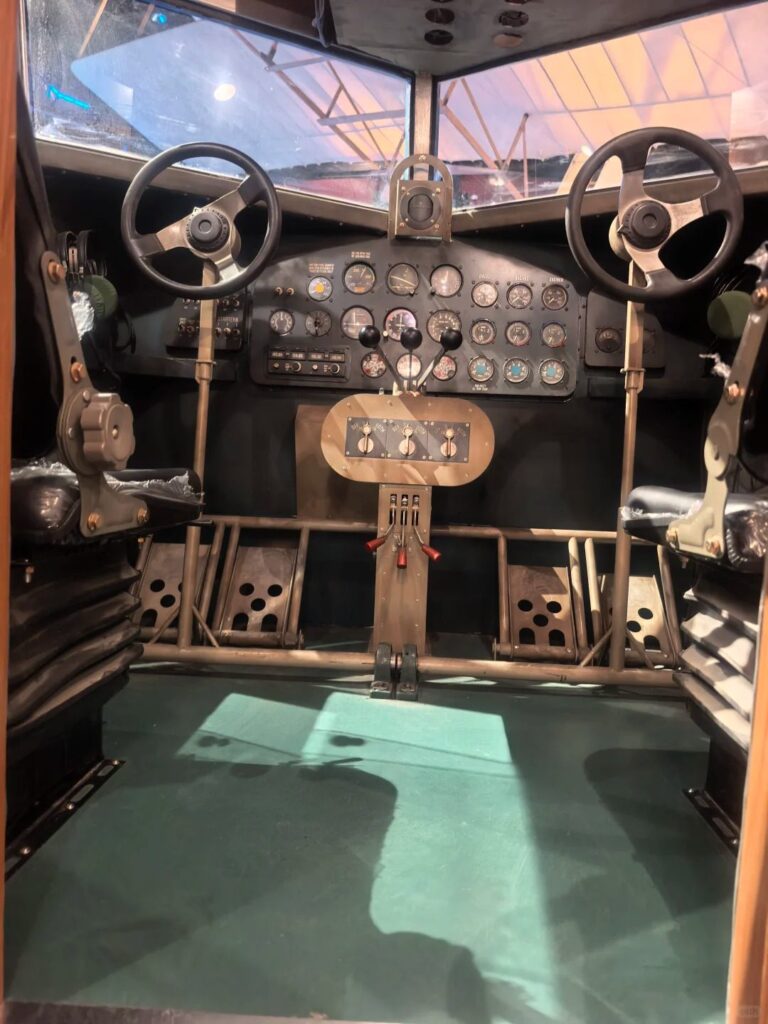
You put on a VR headset and sit inside the cabin, and the experience drops you straight into 1930s Shanghai, simulating a flight from Shanghai to Hankou. It’s not just something you look at, it’s designed to give you the experience of what flying back then might have felt like.
2) Amazing Me (神奇的我): “Food’s Journey” (食物的旅行)
In Amazing Me (神奇的我), there’s an experience called “Food’s Journey” (食物的旅行) that I recommend for visitors who have kids with them.
Kids play the role of a piece of food: they sit in a small cart, put on 3D glasses, and “travel” through the digestive system. You enter through the mouth, then move through the stomach and intestines, with 3D animation explaining what’s happening along the way.
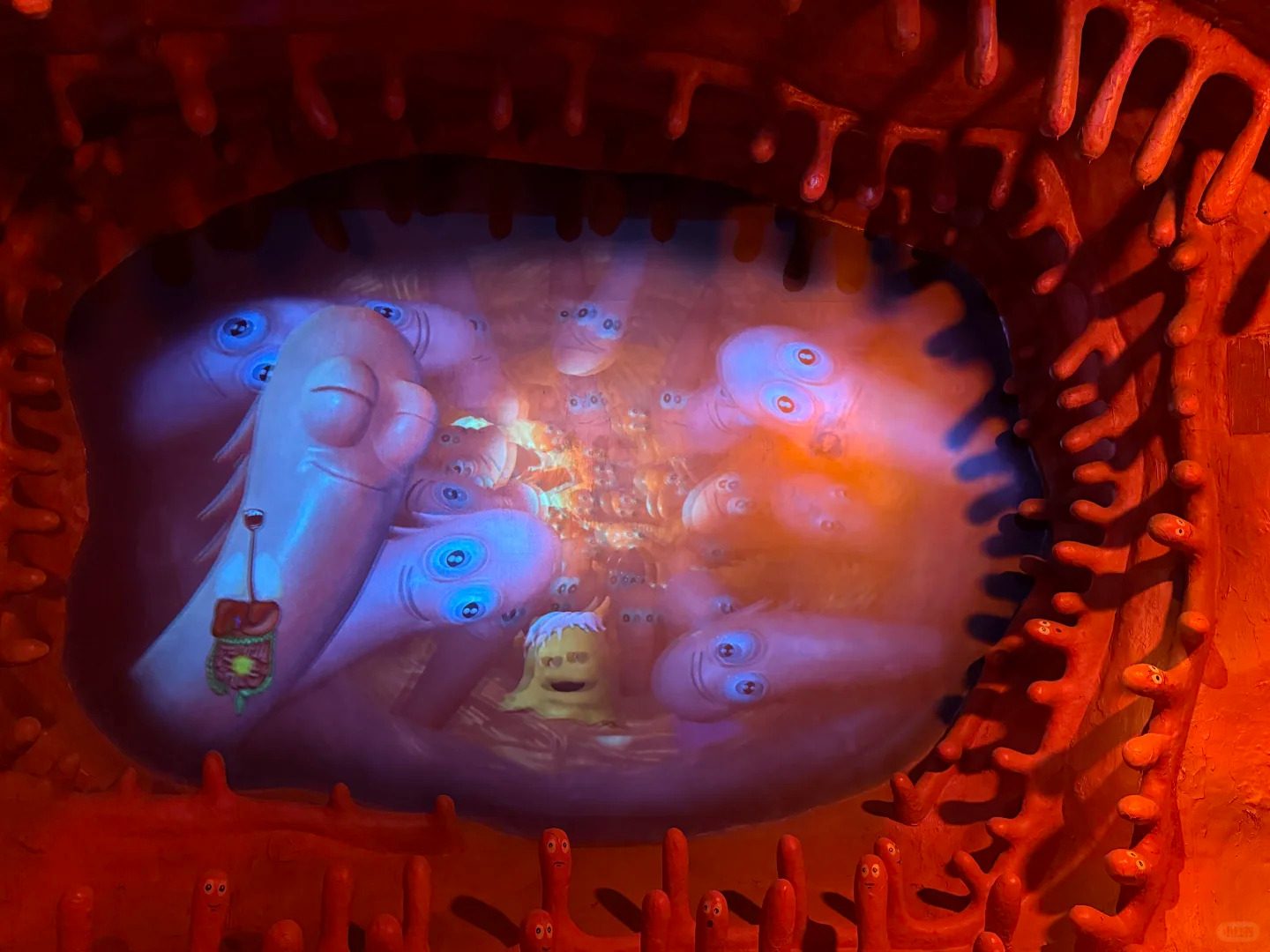
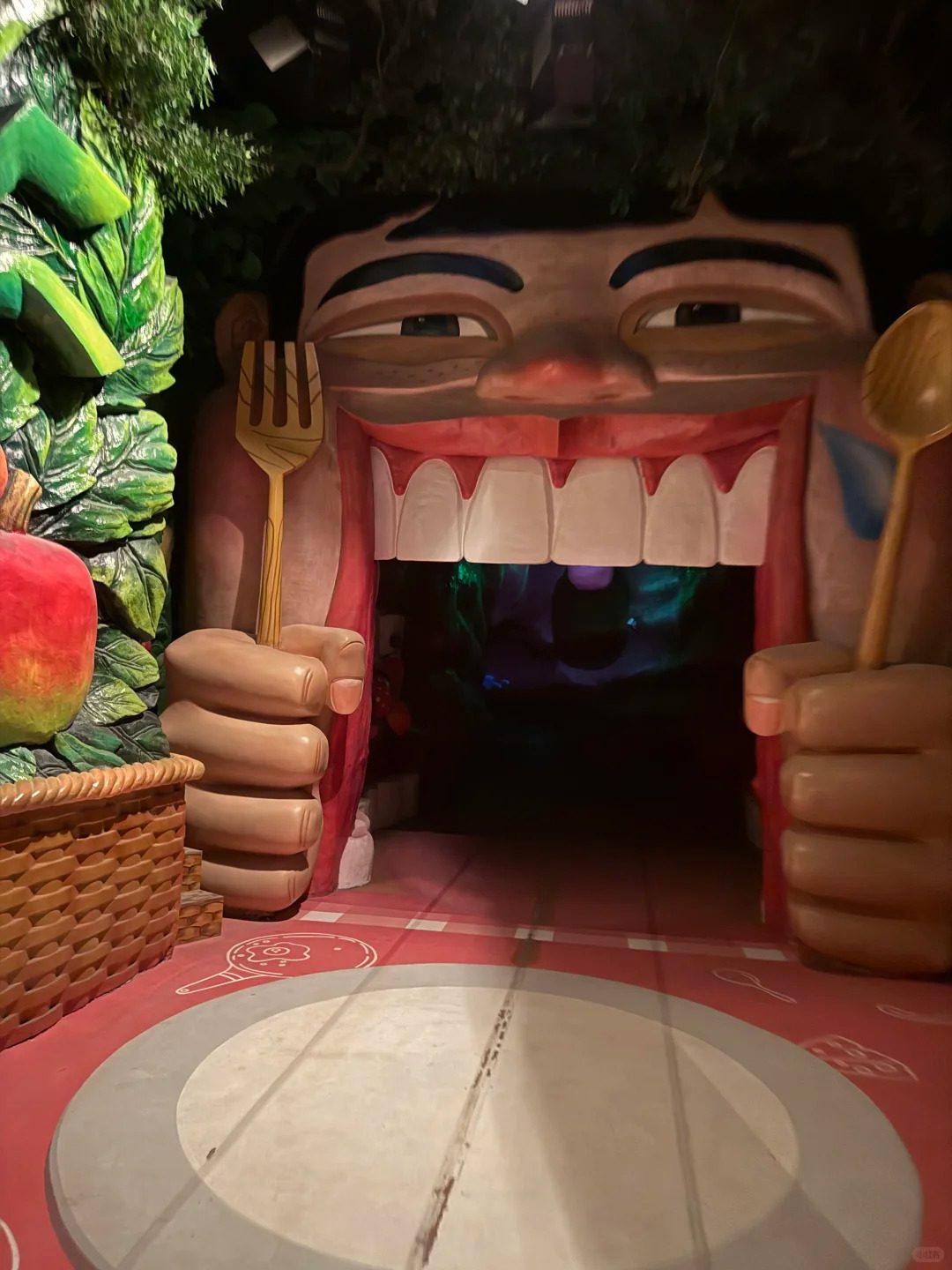
Yes… it ends in a very kid-friendly but very clear way—pretty much exactly where you think this journey is going.
Pro-tip: It’s quite dark inside. If your child is afraid of the dark, they may feel nervous, so I’d save this one for when they’re a bit older.
Experiences like this are certainly more vivid than any biology book, and much easier for kids to remember.
One-Meter World (一米世界): Highly recommended for Kids Under 8
If your child is under 8, One-Meter World (一米世界) is definitely a must-do.
It’s a giant science playground packed full of activities. Once you’re inside, you can play for 70 minutes, at which point most kids don’t want to leave!
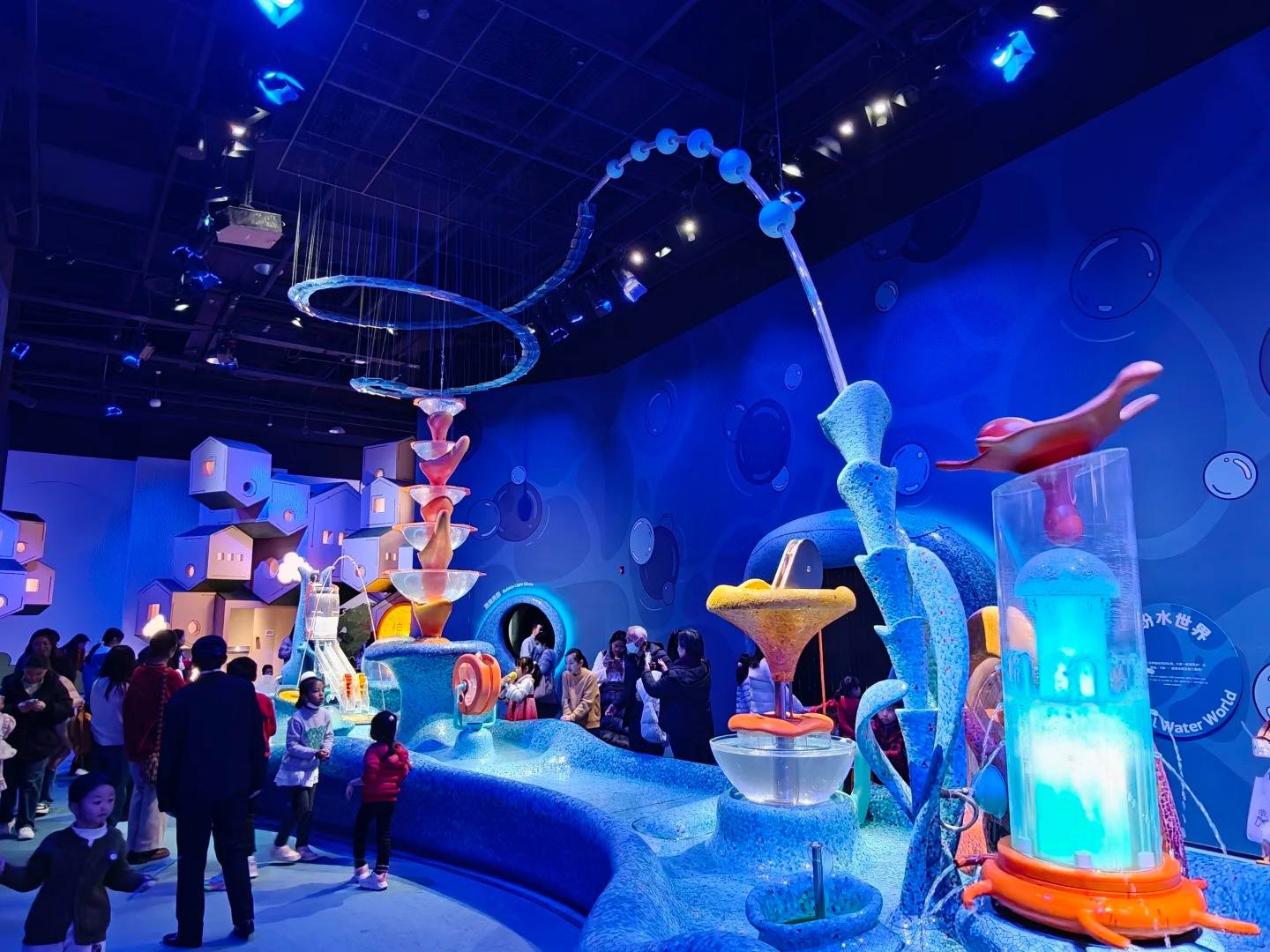
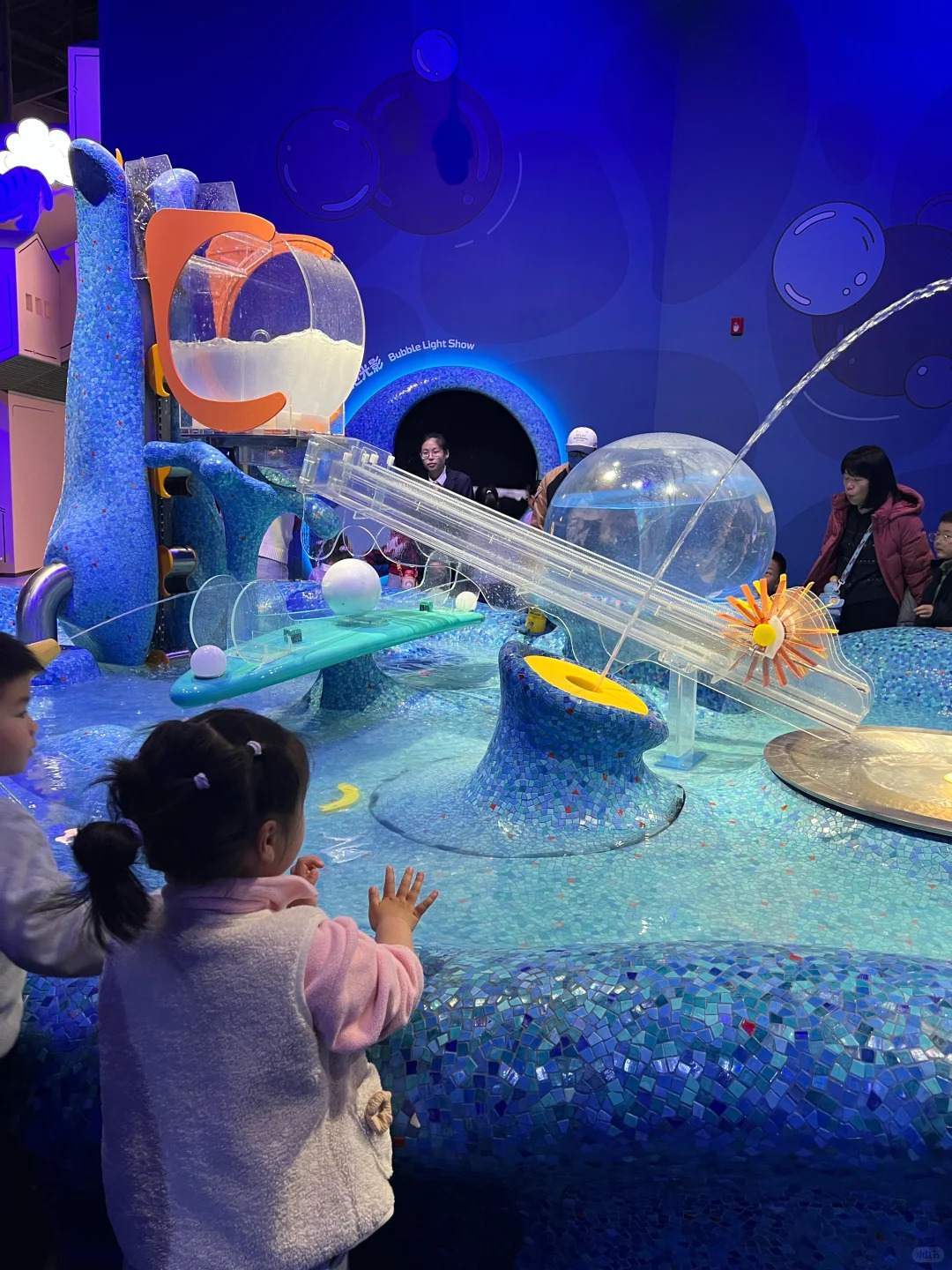


Since it’s so popular, it can be hard to book during holidays. If you can, try to go on a weekday, when it’s easier to reserve and more enjoyable.
Missed reservations? You’ll still have a great time
Even if you don’t book the most in-demand activities, you’ll still enjoy plenty of other exhibits. The museum is interactive from start to finish, so it’s easy to stay engaged all day.
Here are a few areas and experiences that I recommend which do not require an additional reservation.
Light of Wisdom (智慧之光): Always Busy, but a Classic
Light of Wisdom (智慧之光) is almost always one of the busiest areas in the museum. It’s one of the museum’s classic zones that was largely kept as-is during the renovations. There are 60+ exhibits here, and most are interactive, so it stays popular for a reason.
Top pick: The High Bike
Ever wondered what it feels like to ride a bike up in the air?
It looks intense, almost scary, but it’s actually very safe. And it effectively demonstrates an important physics concept: the lower the center of gravity, the more stable something is.
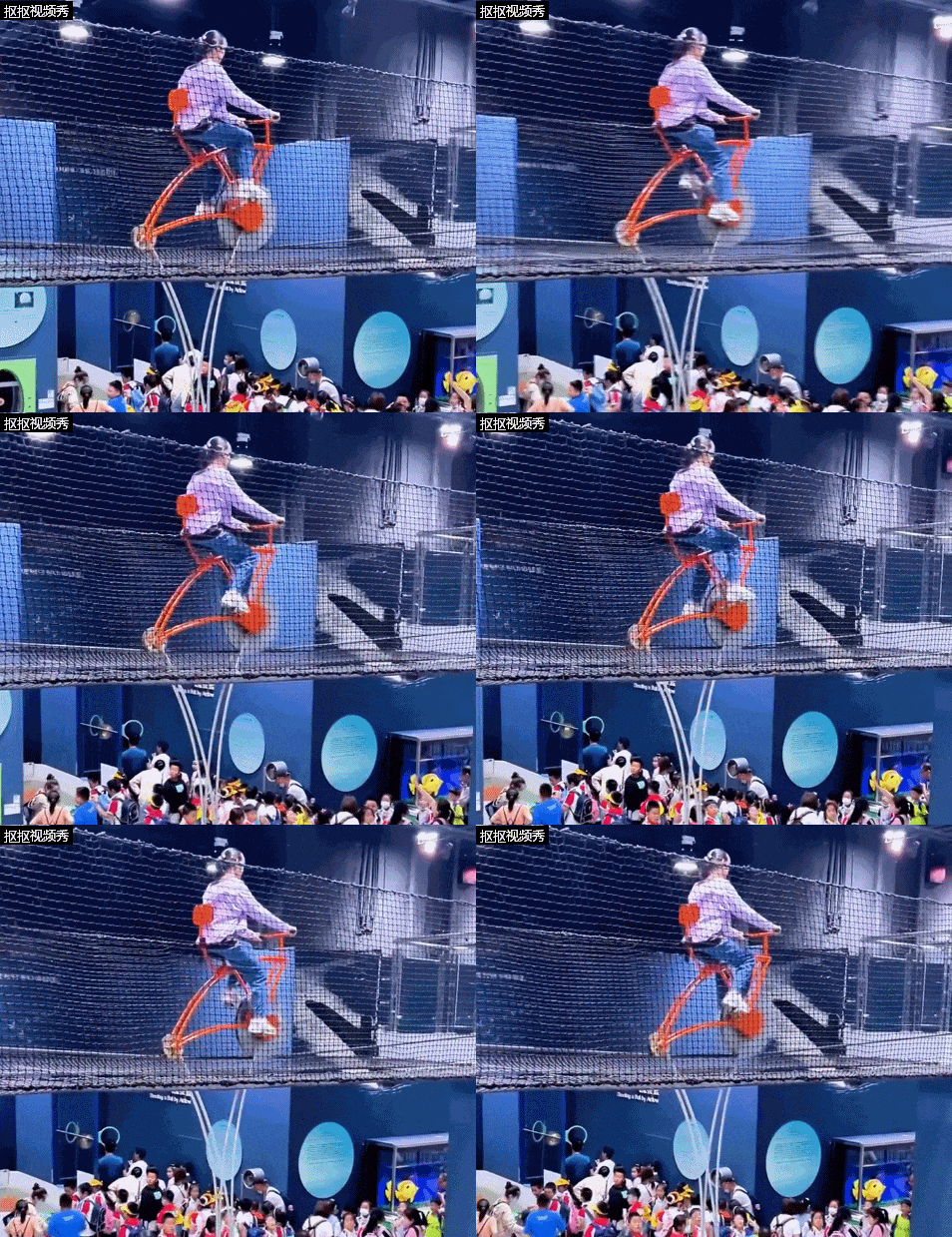
Kids are often nervous at first because it looks high, but they are usually more comfortable and excited once they realize they won’t tip over even if they wobble. A lot of kids come down ready to do it again!
Height requirement: 140cm (about 4’7″) or taller.
源动未来: Making Energy Topics More Understandable
Energy is a complex topic to understand, but 源动未来 makes it more family-friendly. It uses game-like, hands-on interactives to make complex topics, such as Faraday-style experiments, energy distribution, and carbon capture and storage, feel much easier to grasp.
Don’t miss: 能源挑战之旅 (Energy Challenge Journey)
This is a large, full-body interactive activity where kids learn about conservation of energy by movement and play.
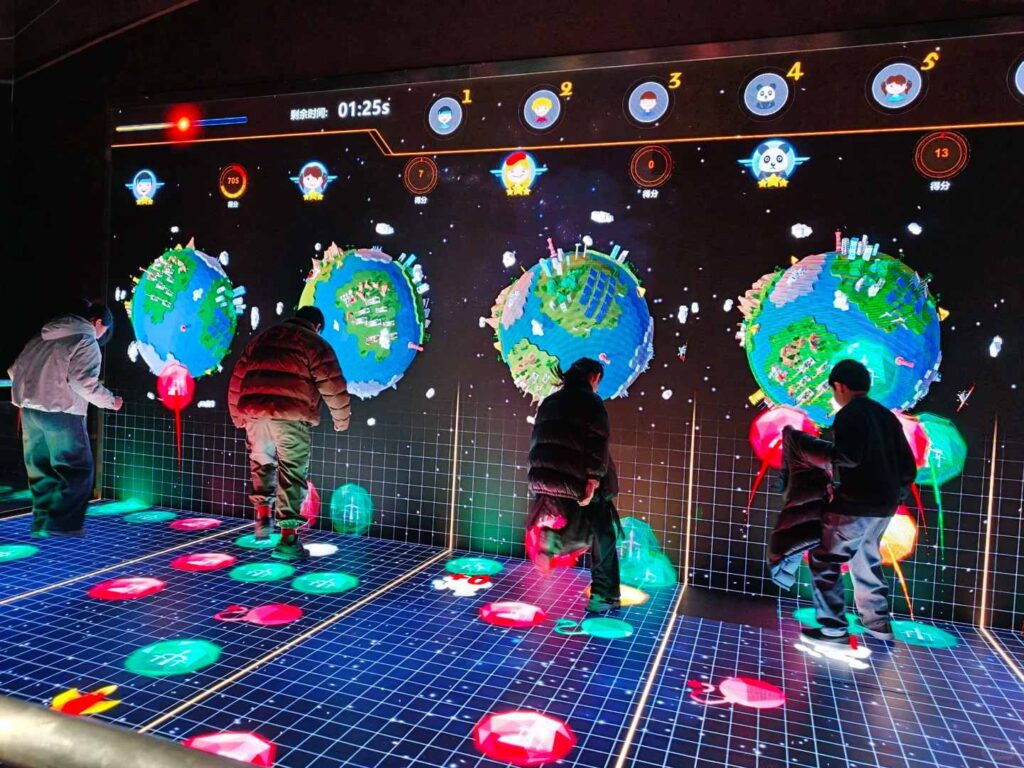
The space can accommodate a lot of participants at once, so the line moves fairly quickly. It’s very fun when a lot of kids are jumping on it together, and one of the most upbeat experiences in the museum.
飞行探秘: Flight Experiences
飞行探秘 helps kids understand aviation concepts in a hands-on way. With a flight simulation and a skydiving-themed experience, this zone is very popular.
Recommended: 四轴平衡器 (Pilot Training Device)
In this activity, kids try equipment similar to that which pilots use for training. They get on and experience different flight states, like pitching, rolling, and the extra-weight sensation.
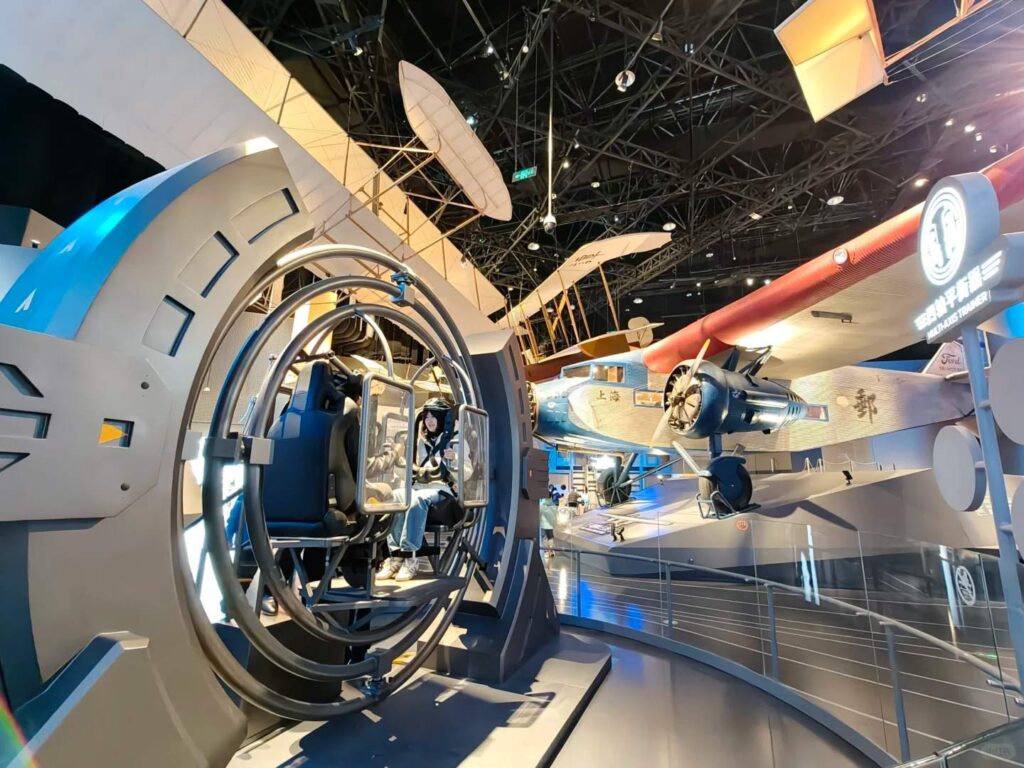
The science concept behind it is conservation of angular momentum, but even without an explanation in technical terms, kids learn by getting to try it and feel it.
Details
- Capacity: 2 people per turn
- Time: about 1 minute per turn
- Height requirement: 140cm (about 4’7″) or taller
Each round is short, so a lot of kids get off and immediately want to go again.
Simulated Skydiving: Exciting and Educational
The simulated skydiving experience is also highly recommended. Kids put on skydiving gear, wear a VR headset, and get the sensation of a high-altitude skydive.
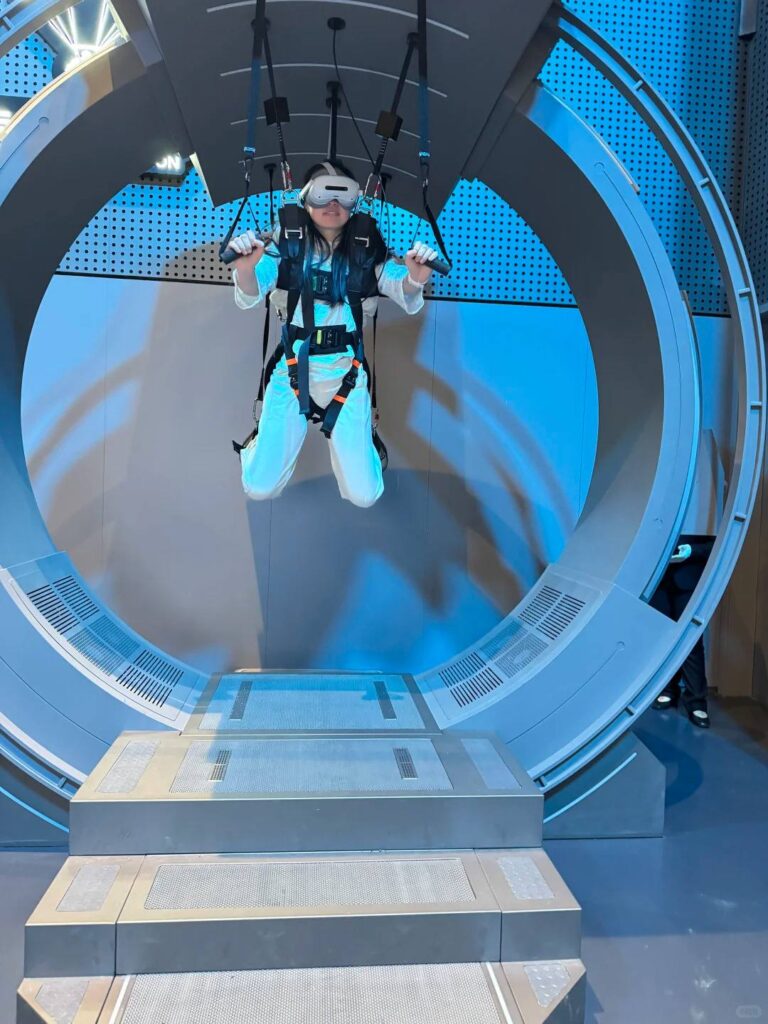
What makes it more than a scenery experience is that kids also have to make control inputs like a pilot would: keeping the parachute stable, adjusting their glide direction, and landing safely in a designated area. Going through that process helps them feel the basics of aerodynamics in a direct way.
Details
- Height requirement: 140cm (about 4’7″) or taller
- Time: about 5 minutes per person
探索之光: Experiments and Modern Ideas
探索之光 focuses on scientific discovery and thinking. Through observing, comparing, and using interactive screens, you can explore classic science experiments yourself, such as Mendel’s pea experiments and Griffith’s transformation experiment (a classic genetics/microbiology experiment, often described using pneumococcus).

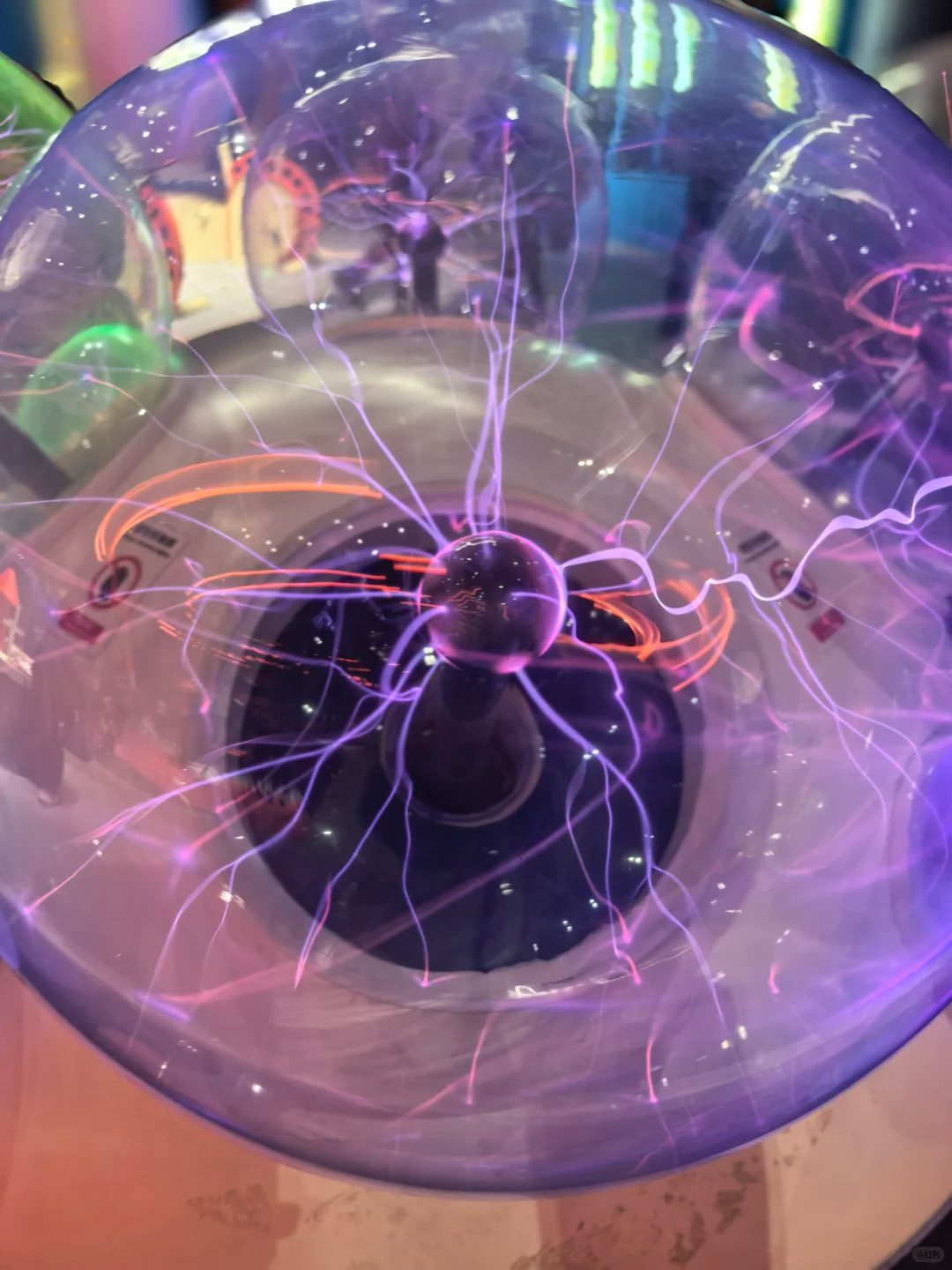
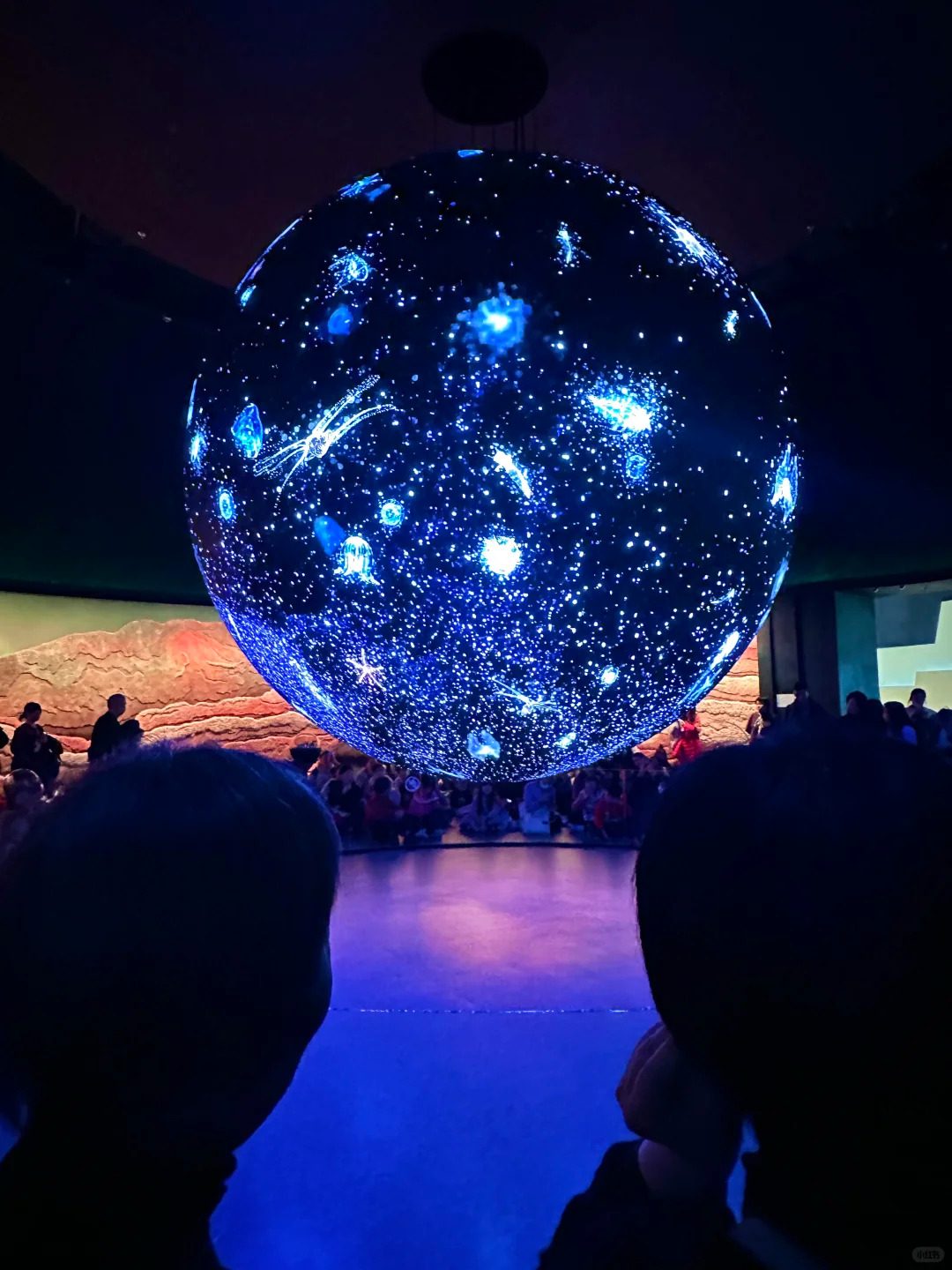
Alongside the classics, this zone also introduces more modern topics such as quantum concepts, cloning technology, and hybrid rice technology. It’s not the most energetic area, but it offers more information and depth. It’s best for kids who are happy to slow down, look closely, and really try to understand what they’re seeing.
明日行者: Robots and a Live Show
If your child is in a robot phase, they will love 明日行者, which has robots throughout the zone and a live performance featuring a robot called “玄俑.”
The highlight is the way the show stages the robot’s build-and-activation sequence as part of the performance: 玄俑 begins as a main chip, then, working with three robotic arms, it’s gradually assembled, powered up, and slowly “comes alive.”
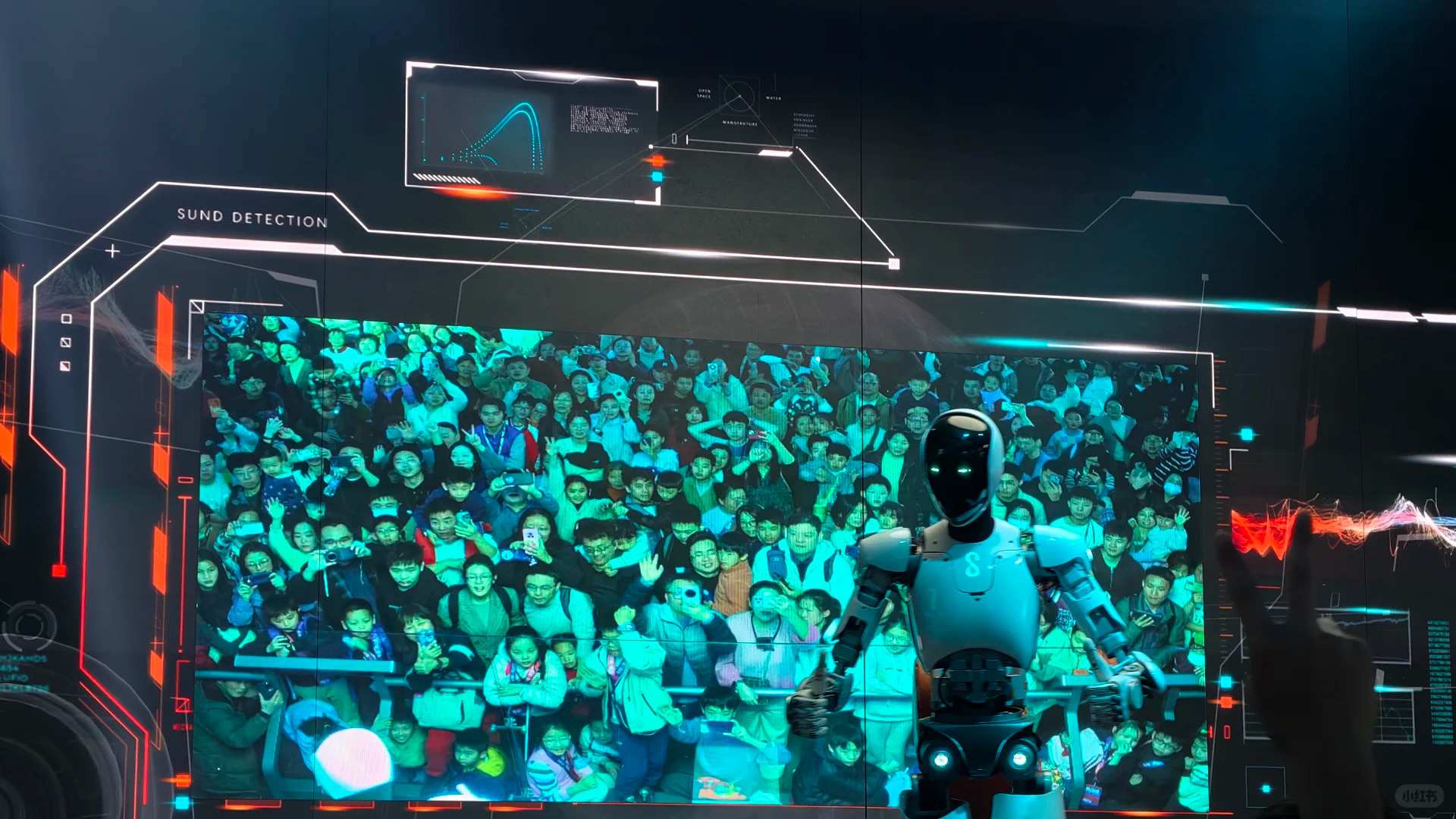
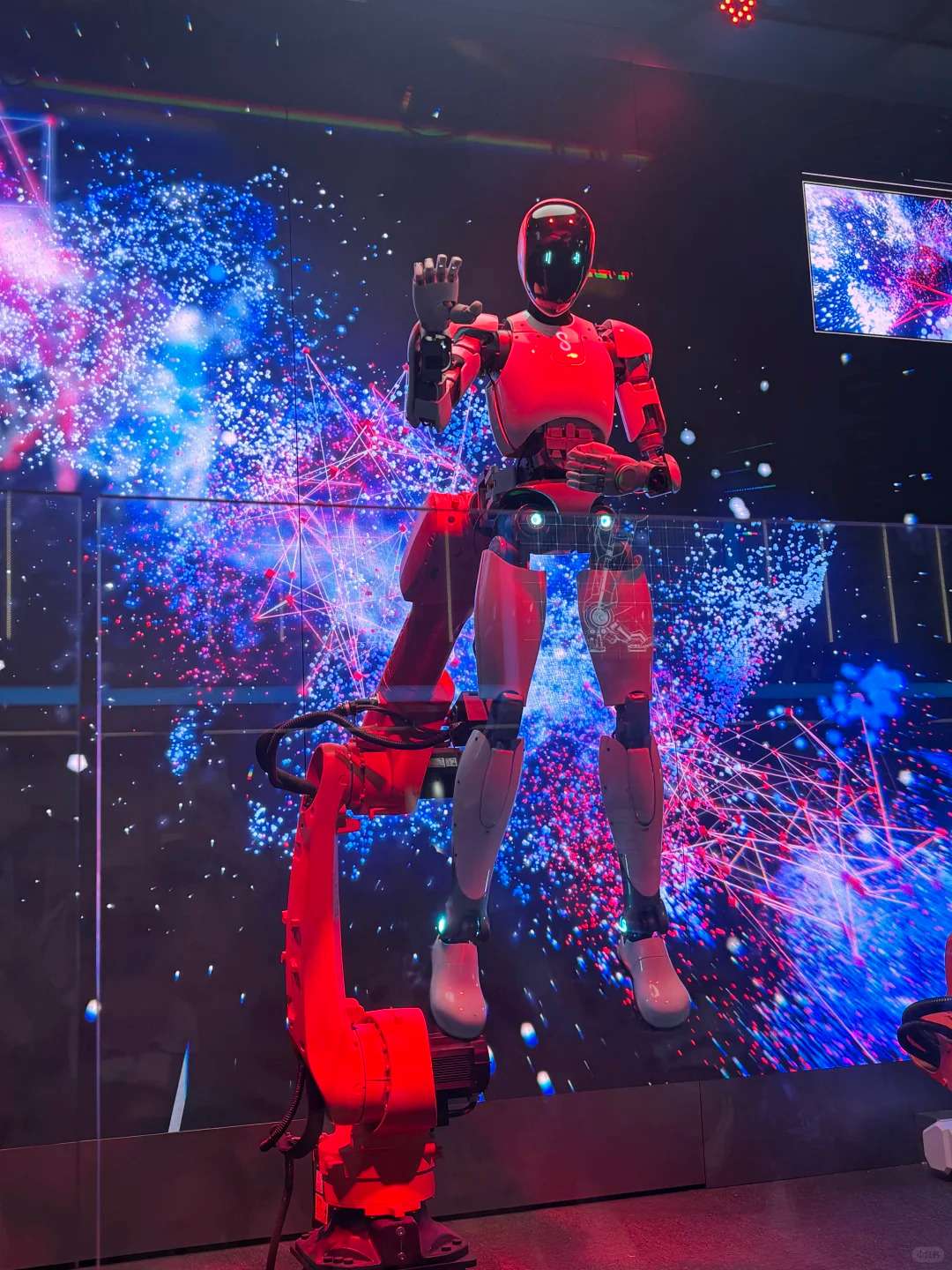
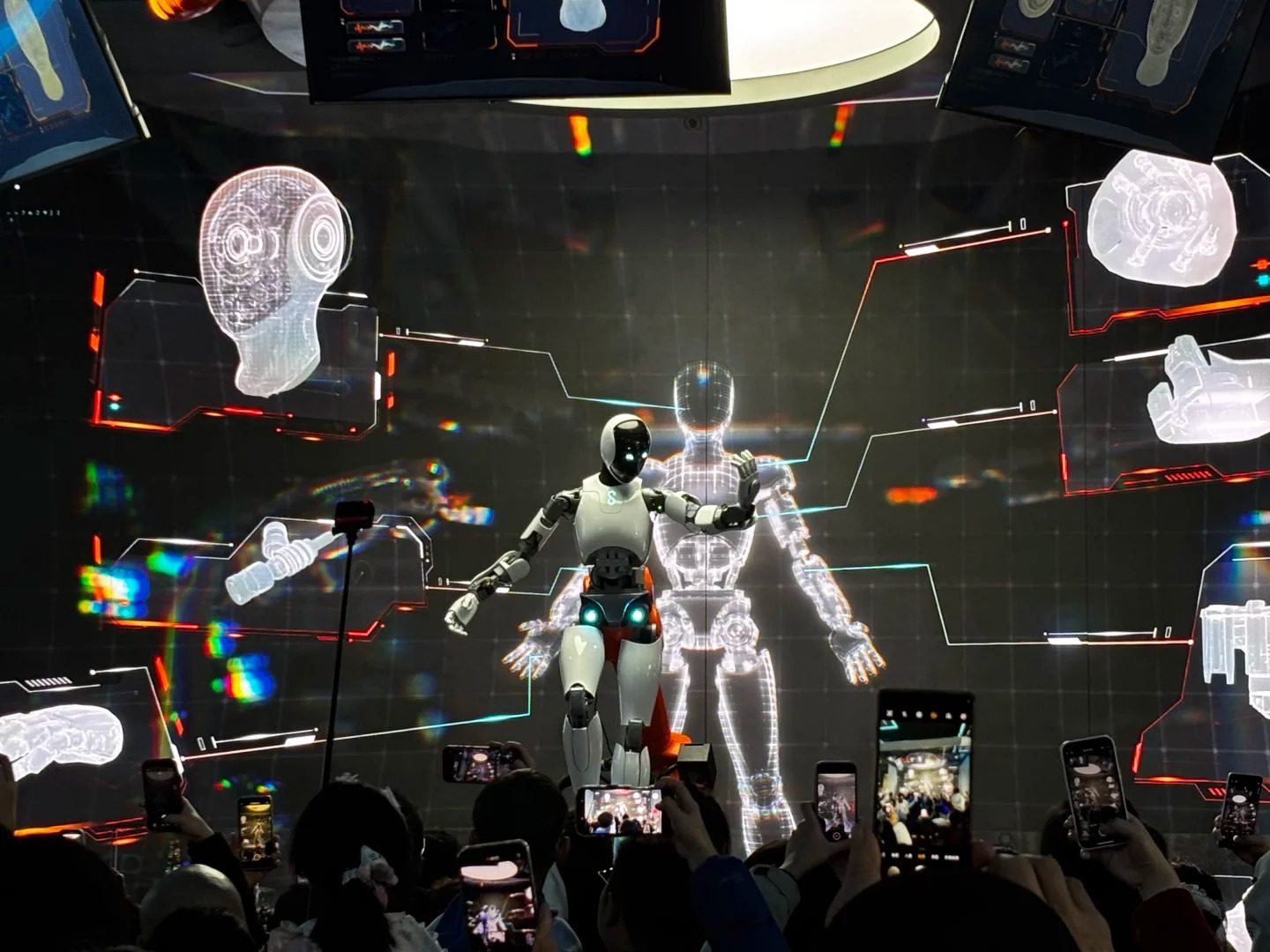
The show has lights and music, which makes it exciting and energetic. And after the robot “wakes up,” it incorporates the audience into the visuals, using real-time images from the crowd. These close-up interactions are hard to replace with a video, and I heard many kids say the same thing during the show: “Whoa.”
Advanced, Cutting-Edge Exhibits
The upgraded Shanghai Science & Technology Museum also has a number of more advanced displays, such as high-end AI robots and other cutting-edge technology. They’re less interactive, but help visitors to see where future technology is headed.
Look out for:
- A timeline of AI-robot development: helps kids see how robots evolved into what we recognize today.
- “Artificial sun” exhibits (nuclear fusion): the content goes fairly deep, so it helps if parents give a little context ahead of time, then kids tend to follow it more easily.
- A “Schrödinger’s cat” setup: a key quantum-mechanics concept shown in a visual and intuitive way.
Most of these don’t require reservations, so you can walk up and explore in your own time.
Don’t Skip the Small Activities
(Some of the less popular exhibits ended up being our favorites.)
Beyond the high-demand experiences, the museum is full of smaller interactive stations with shorter lines. They’re still really fun, and since they’re less crowded, often better for slowing down and exploring at your own pace.
A few examples:
- Tap-and-compare materials: test the same actions on wood, metal, and plastic so kids can see how different materials sound.
- A “brain fill-in” experiment: put on headphones, listen to a sentence with missing words, and realize your brain can still piece together meaning even when information is incomplete.
- A hearing-loss simulation: wear headphones to experience how the world might sound for someone with hearing loss. It’s educational, and it also helps kids understand what others may be experiencing, which is great for building empathy.
Food
You’ll likely spend most of the day here, so I would plan on eating at least one meal inside the museum. Every floor has either a restaurant or a drinks/snack area, so there are a variety of options.
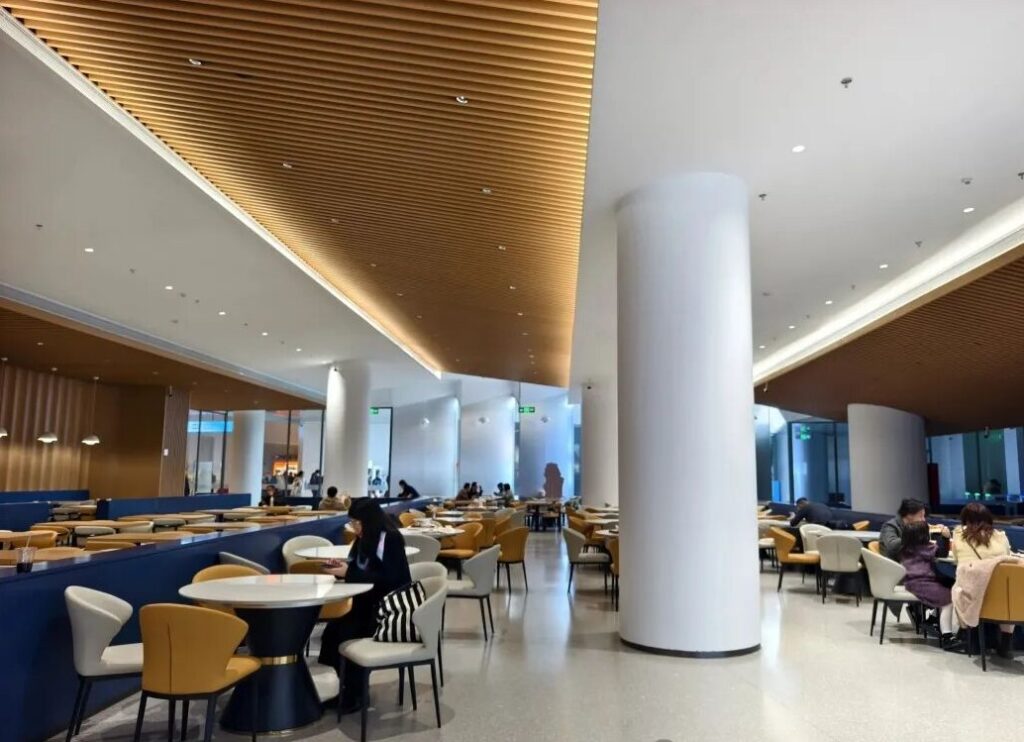
My pick: the Thermodynamics Restaurant on B1. It’s spacious, the seating is comfortable, there are more choices, and prices are still reasonable. For me and my child, our meal came to 112 RMB total, and we also bought a 20 RMB ice cream.
Pro-tip: many restrooms have free water dispensers nearby. Bring a reusable bottle that you can refill throughout the day.
Age-Based Routes You Can Follow
These three routes are arranged by age. Your family likely won’t be interested in everything, so following one route can save time and allow you to get to as many experiences as possible.
Under 8
Start: 1F 一米世界 (One-Meter World) — a science playground (about 1.5 hours) → 1F 智慧之光 (Light of Wisdom) — light-themed games + simple interactives → 2F 共生星球 (Symbiosis Planet) — the 6D theater is highly recommended → 3F 神奇的我 (Amazing Me) — kid-friendly learning through play → B1 Theaters — watch a short film and take a break
Ages 8–12
Start: 3F 飞行探秘 (Flight Exploration) — a great intro to aviation/aerospace → 1F 材料魔方 (Materials “Magic Cube”) — hands-on activities (including a superconducting race-car-style one) → 2F 明日行者 (Tomorrow’s Travelers) — robots and tech experiences → 1F 智慧之光 (Light of Wisdom) — age-appropriate physics experiments → B1 Giant Screen Theater — immersive science film
Ages 12+
Start: 3F 探索之光 (Light of Exploration) — more technical, including quantum-related content → 3F 飞行探秘 (Flight Exploration) — go deeper with the experiences here → 2F 明日行者 (Tomorrow’s Travelers) — AI interactives + more advanced displays → 1F 材料魔方 (Materials “Magic Cube”) — unique hands-on exhibits → 2F 共生星球 (Symbiosis Planet) — Earth/ecology learning
Final thoughts
This museum isn’t the kind of place where you tick off a few popular exhibits and call it done. However you explore it, it’s easy to have a day that feels full and meaningful.
Pro-tip: The museum is huge. Get a good night’s sleep beforehand…otherwise you’ll almost certainly feel it by the end of the day.
FAQ
Read More:
Shanghai Museum East Branch Guide
Things to Do in Shanghai