
Best Things to Do in Guangzhou in 2026 – A Complete Travel Guide
I highly recommend Guangzhou for first-time visitors to China. With more than 2,200 years of history, the city is deeply rooted in the past, but also has the buzz of a modern city. As one of China’s most international cities, Guangzhou is lively, welcoming, and easy to explore at your own pace.
It’s also one of the country’s best cities for food. While the Cantonese food here is excellent, you’ll also find great food from all over China, along with a variety of international options.
In this article, I’ll show you the best places to visit in Guangzhou and share which ones I recommend the most. I’ll also suggest a few routes that group nearby sights together to make planning your trip easier.
Why trust my recommendations?
Guangzhou has long been one of my favorite cities in China. Compared with other big cities like Shanghai and Shenzhen, I find it to be a bit more welcoming and affordable for travelers. I lived and worked here for over ten years, so I know the city well. And even after moving away, I still come back with my kids from time to time.
In addition to my personal experience from the years I spent living in and traveling around Guangzhou, I’ve also read a lot of reviews and discussions about places in the city on Chinese social media pages. As such, I’m able to share places that have become more enjoyable in recent years, and avoid recommending places that visitors often find less interesting.
Table of Contents
- Best Things to Do in Guangzhou
- 1. Zhujiang New Town & Canton Tower (Must-Visit)
- Huangpu Ancient Port
- Tianhe: Shopping and Food (Must-Visit)
- Beijing Road Pedestrian Street (Must-Visit)
- Dafo Temple (Recommended)
- Yuexiu Park (Must-Visit)
- Sun Yat-sen Memorial Hall (Recommended)
- Sacred Heart Cathedral (Recommended)
- Chen Clan Ancestral Hall (Must-Visit)
- Shangxiajiu Pedestrian Street (Recommended)
- Shamian Island (Must-Visit)
- Baiyun Mountain (Recommended)
- Yongqing Fang (Must-Visit)
- Sun Yat-sen University South Campus (Recommended)
- Chimelong Safari Park (Recommended)
- What to Do in Guangzhou Beyond Sightseeing
- Where to Stay in Guangzhou
- How to pick the right area
- A few final thoughts
Best Things to Do in Guangzhou
1. Zhujiang New Town & Canton Tower (Must-Visit)
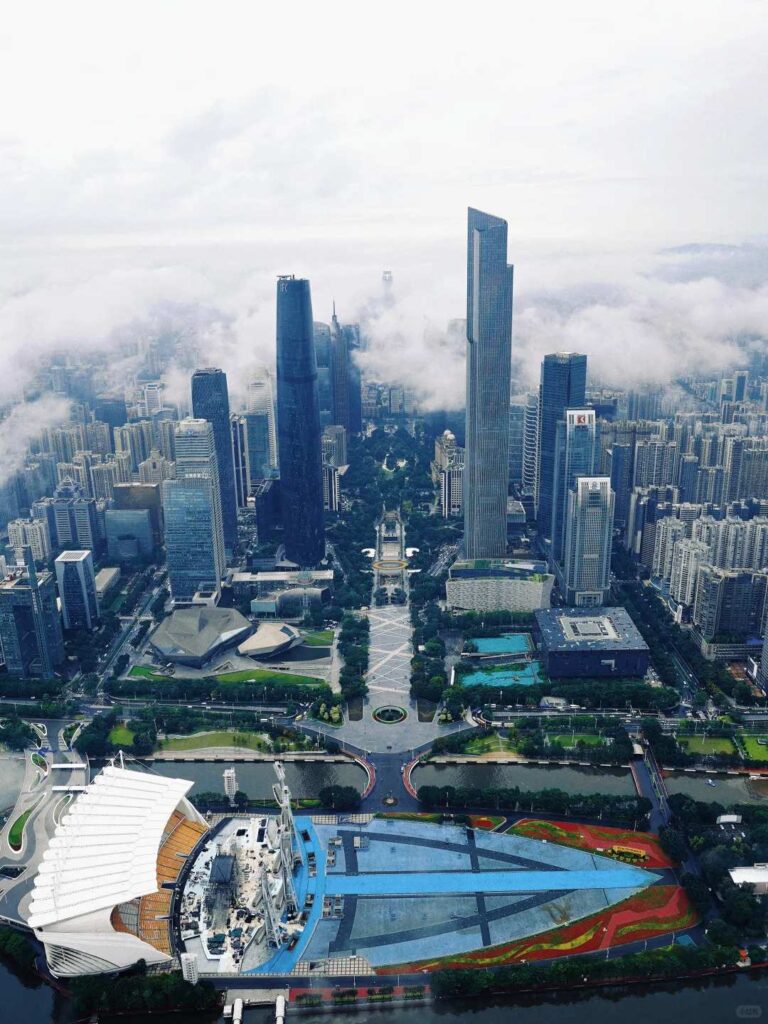
If you’re visiting Guangzhou, this is one area I definitely recommend prioritizing on your itinerary. It’s one of the best places to see the most modern parts of Guangzhou, with the city’s best views of the skyline and the Canton Tower above the river. And the views are even better at night when all of the buildings light up.
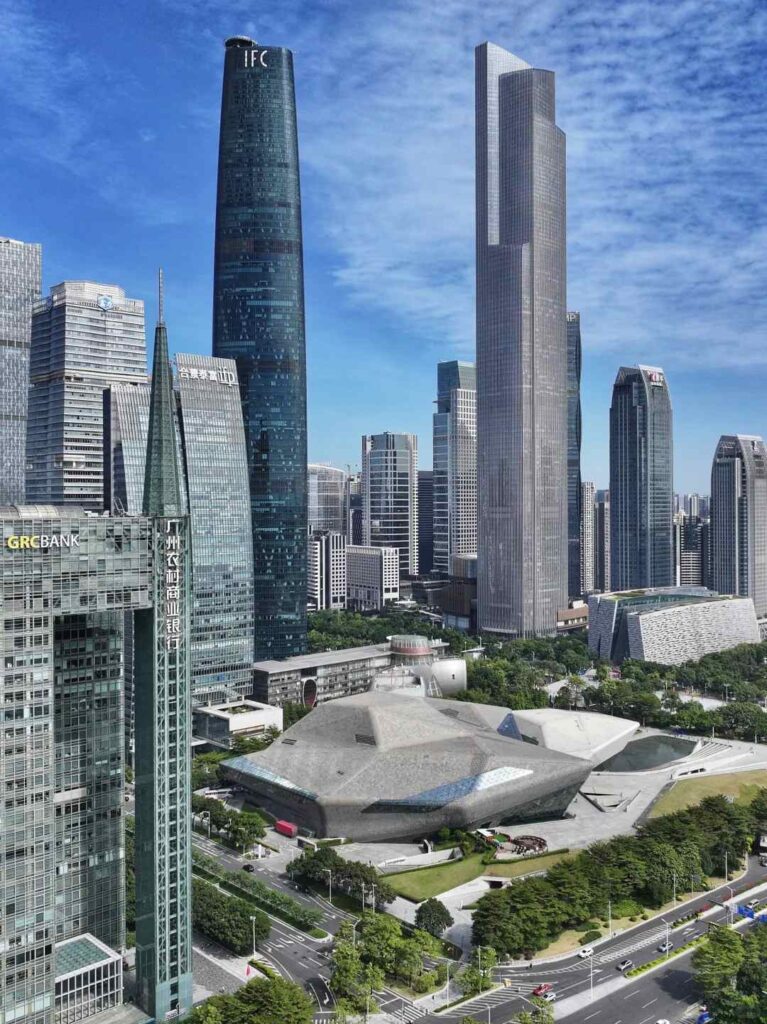
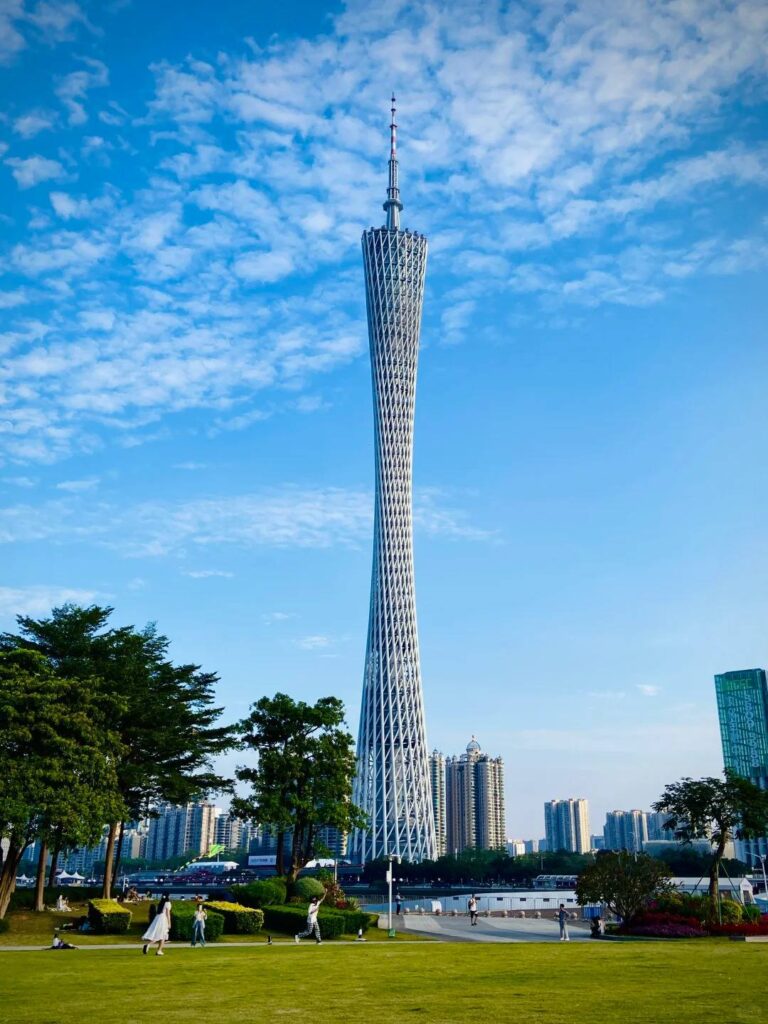
At 600 meters tall, Canton Tower stands out in the skyline. The tower is known locally as the “Slim Waist” (Xiaoman Yao), a nickname inspired by its narrow, twisting middle that gives it its distinctive shape. Across the Pearl River are Haixinsha Island and the center of Zhujiang New Town, and together they create one of the city’s most striking views.
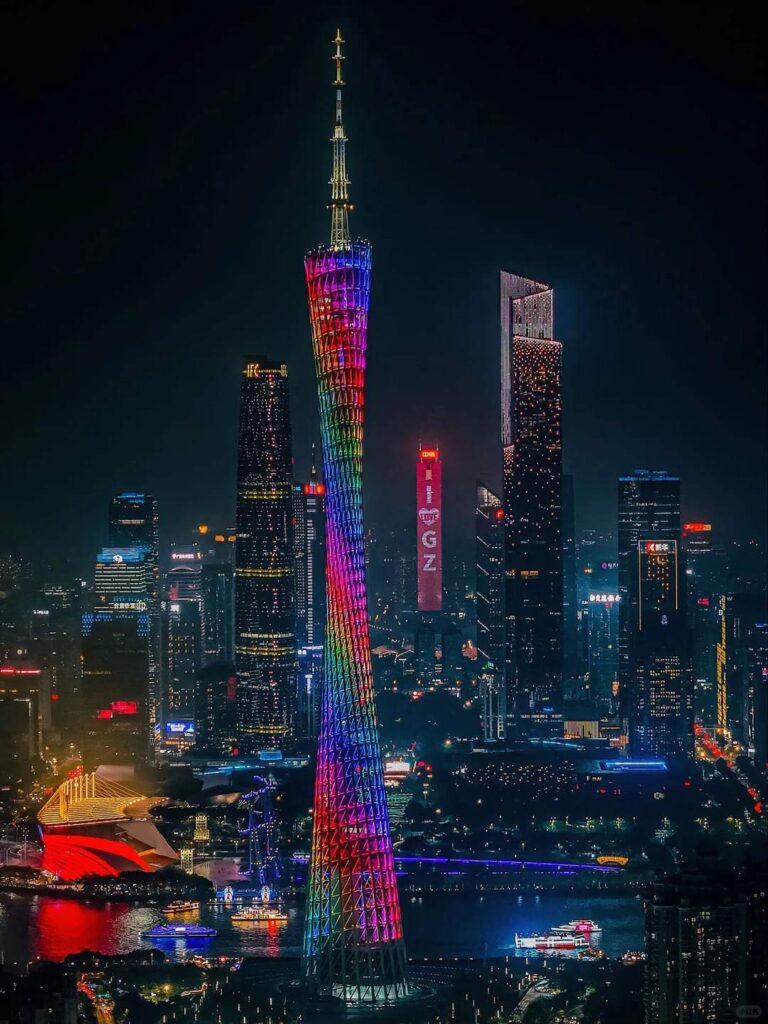
If you have time, I highly recommend exploring this part of the city on foot instead of just stopping for photos of Canton Tower. Zhujiang New Town is one of the few parts of Guangzhou where modern architecture, open public spaces, and the riverfront come together so well. You’ll get much more out of it by taking the time to walk through the area.
Read More: Guide to Visiting Canton Tower
Suggested walking route
You can take the APM line or grab a taxi to Huangpu Dadao Station, and start walking toward Haixinsha from here. My suggested route is:
Huacheng Square/Mall of the World → GDH Plaza → Coffee Around → Guangdong Museum → Haixinsha
The walk is about 1.5 kilometers, depending on where you start and finish. On a day with good weather, it’s one of the nicest walks in central Guangzhou. There are many green spaces and pedestrian paths between the towers, which makes the area feel open, even in the dense downtown district. It’s also one of the best parts of the city for taking photos.
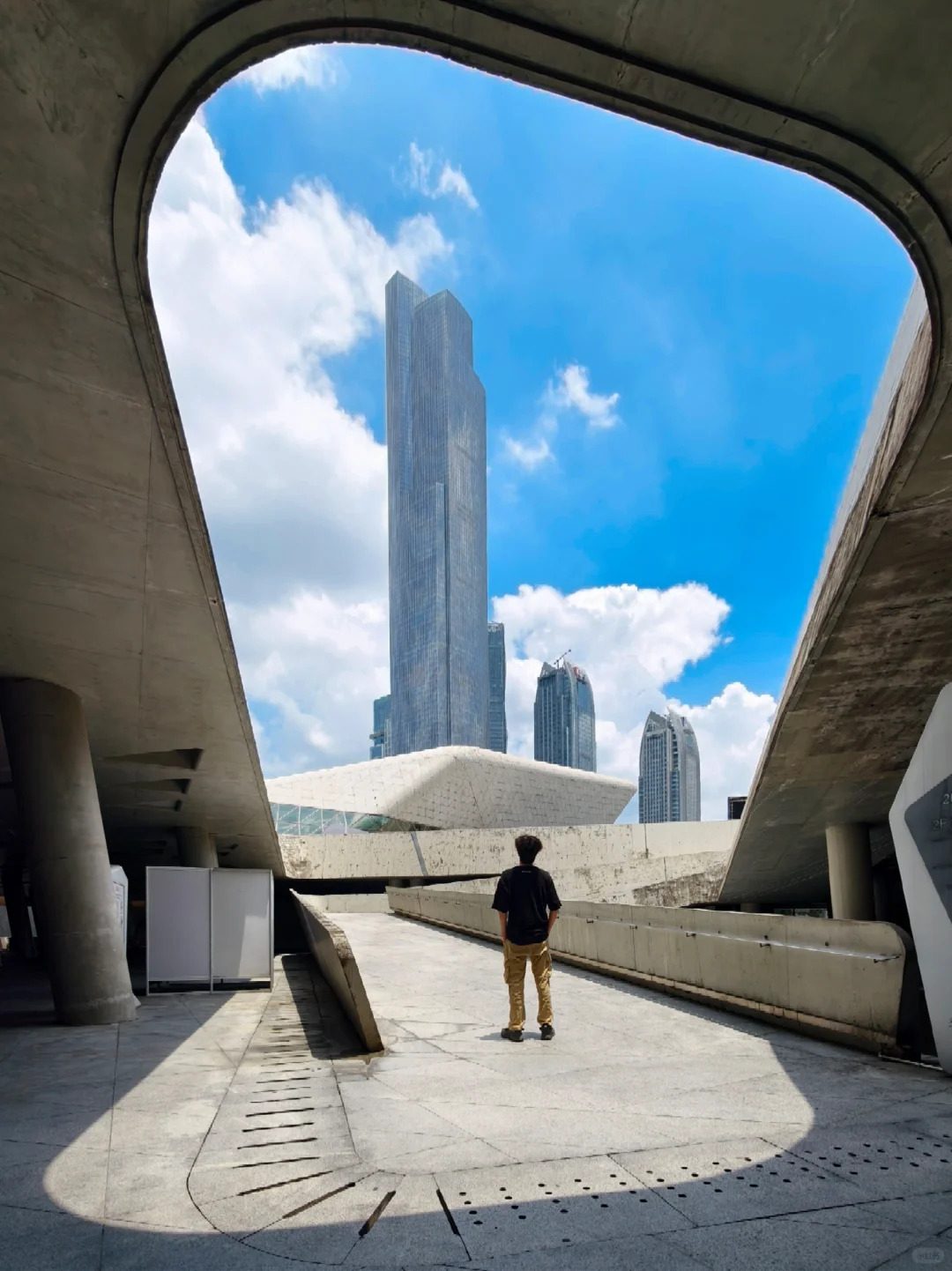
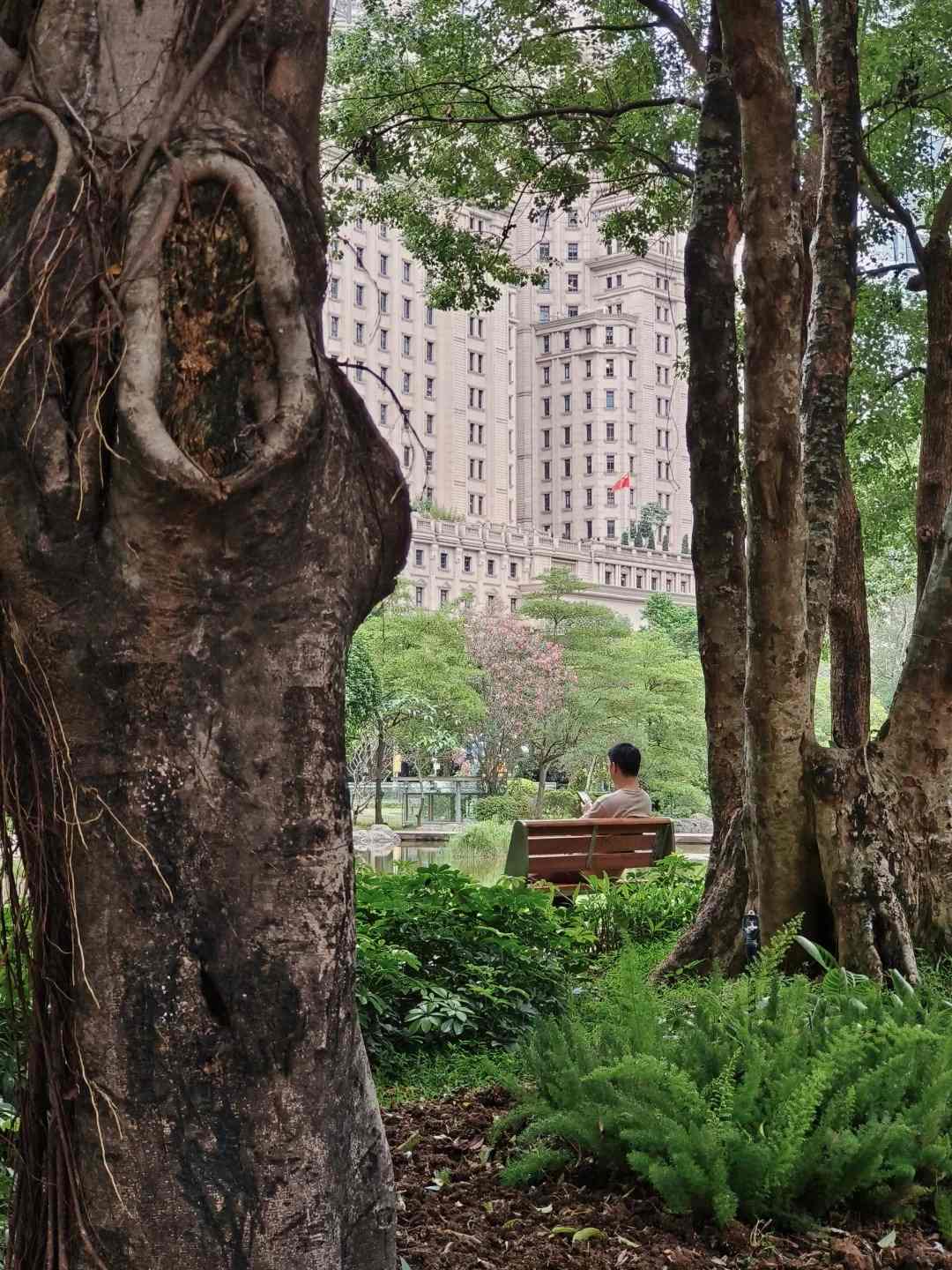
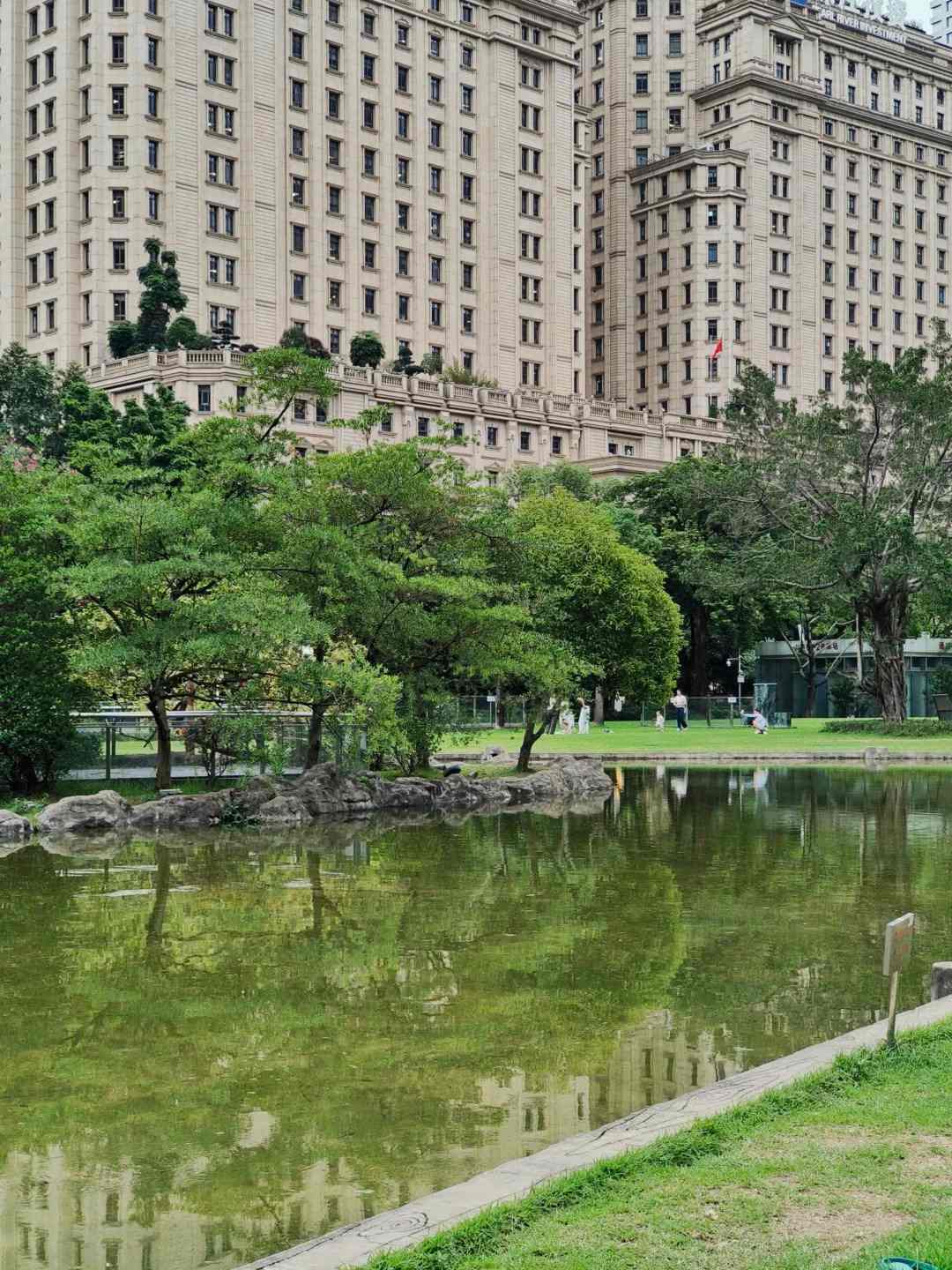
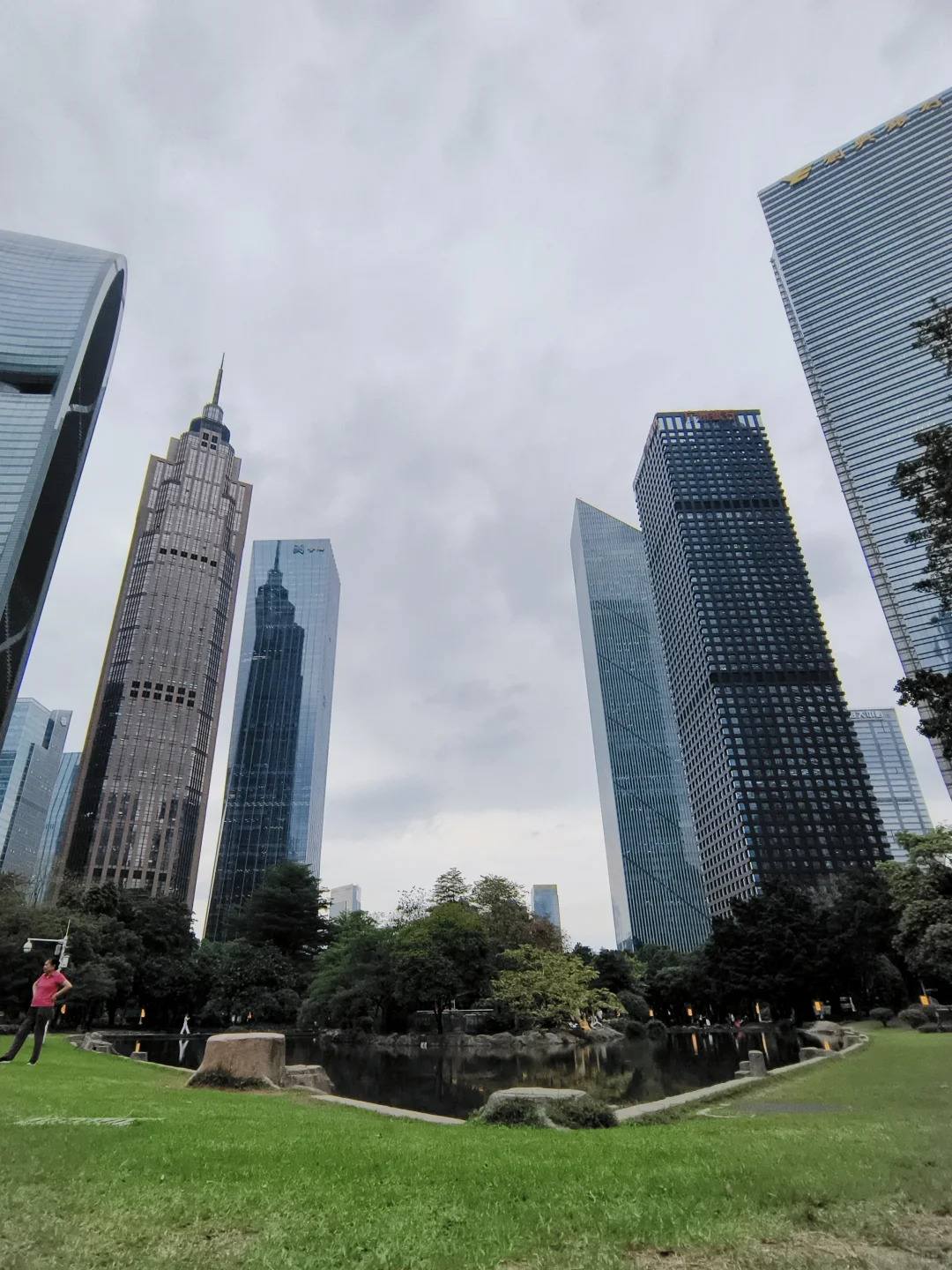
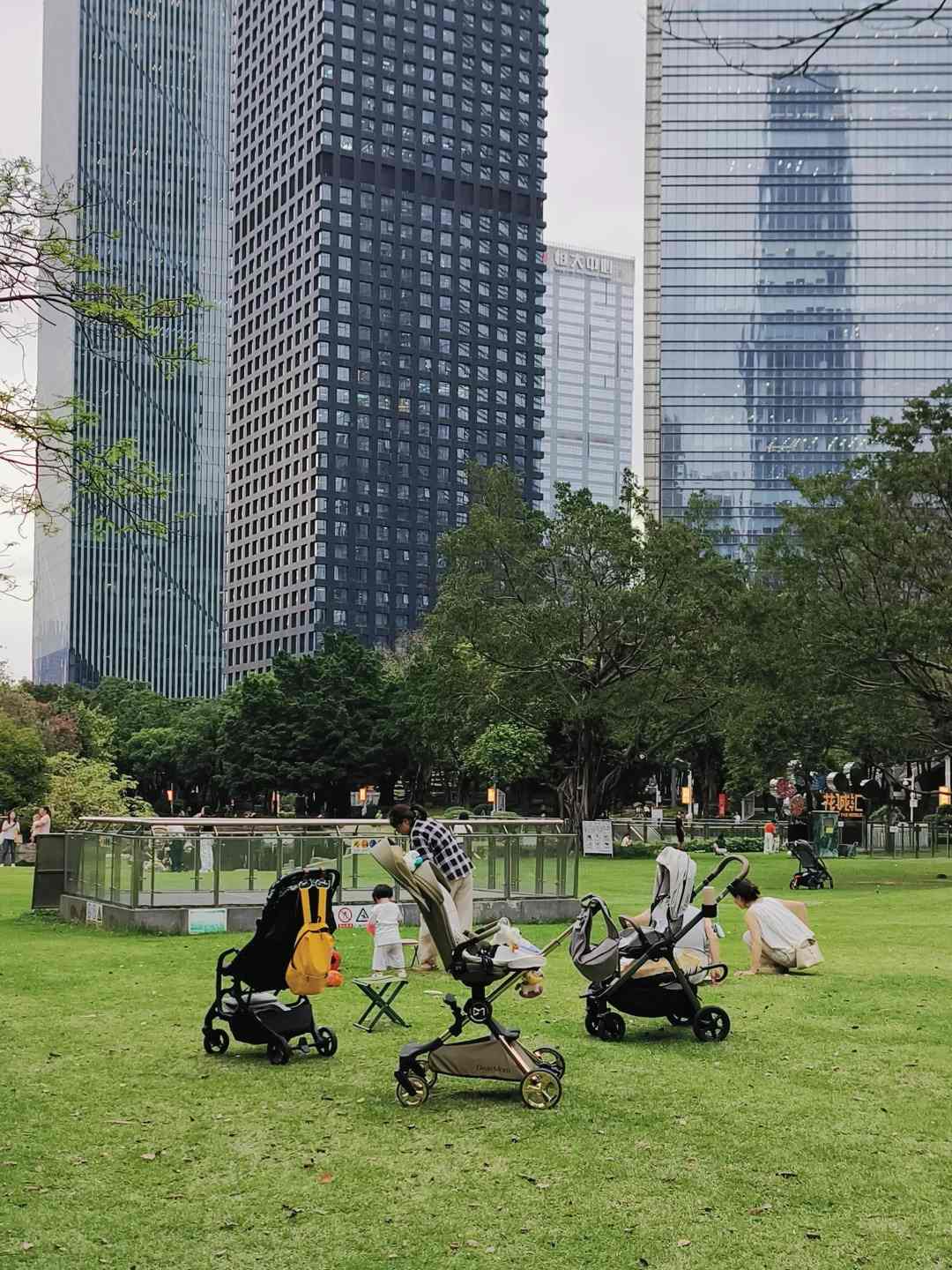
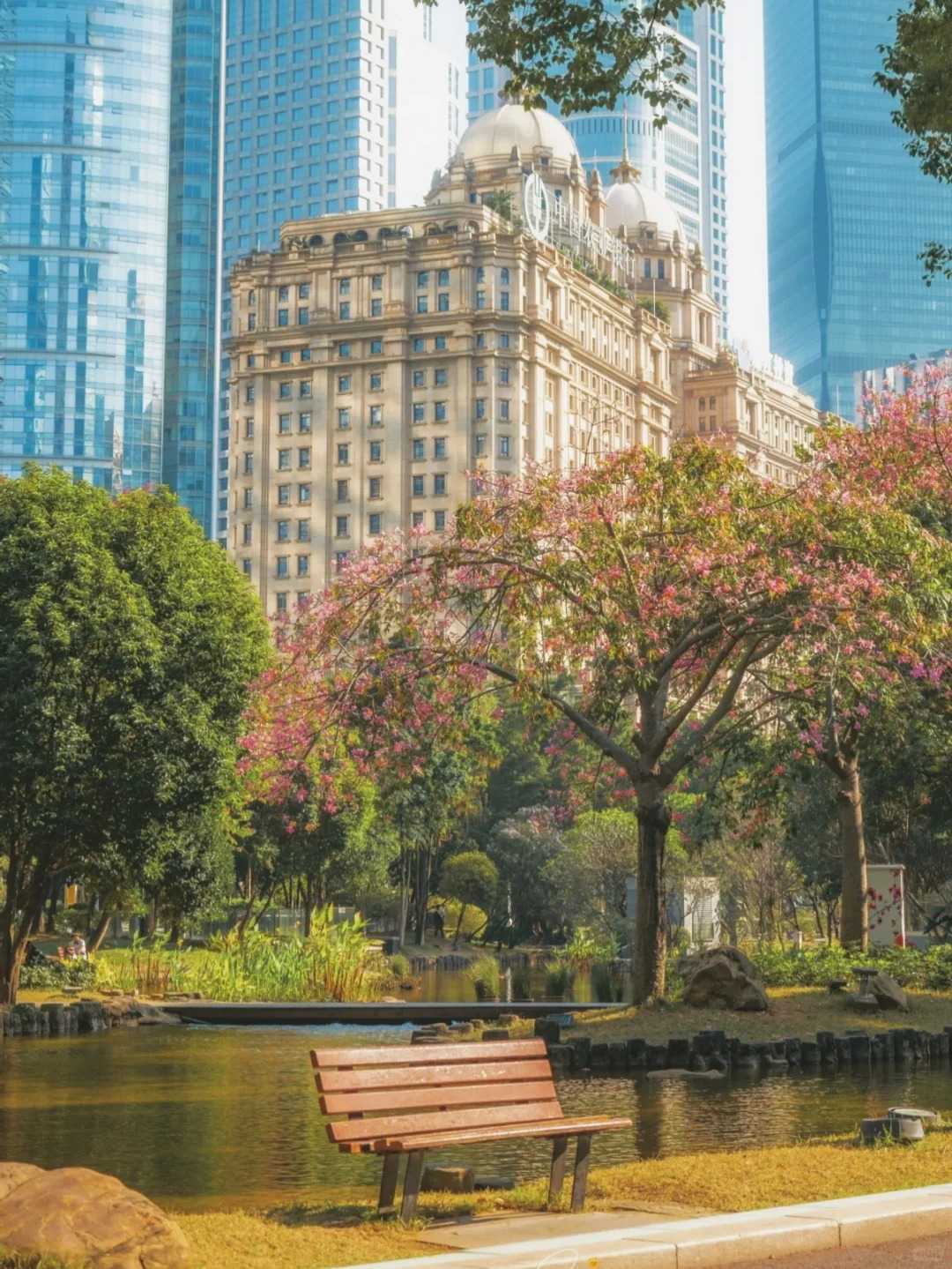
Because Huangpu Dadao Station is on the APM line and sits right in Zhujiang New Town, it’s a good starting point for this walk. In addition to admiring the skyline, here are some things that I recommend doing in this area:
Guangdong Museum (Recommended)
If you’re interested in Guangdong’s history and culture, I suggest taking the time to visit this museum. Guangdong has a distinct identity within China, and this is one of the best places to understand what makes it unique.
The collection includes everything from Lingnan artifacts to paintings, calligraphy, decorative arts, and fossils. The building itself is one of the most well-known cultural landmarks in this part of Guangzhou, recognizable by its dark and angular shape. It’s also interesting to see at night, when it’s lit up in red.
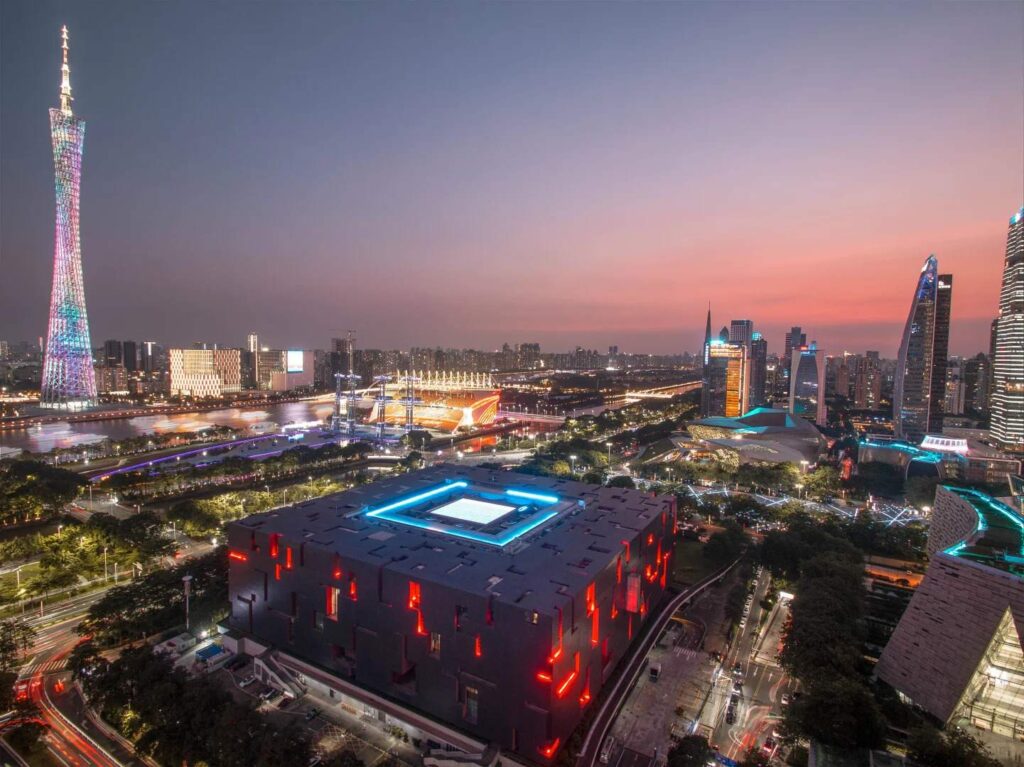
It’s accessible for international visitors, as the exhibits include both Chinese and English labels, and audio guides are available to rent. If you want additional information during your visit, you can also book a guided tour in English in advance.
Hours: Tuesday to Sunday, 9:00 a.m.–5:00 p.m.
Last entry: 4:00 p.m.
Closed: Monday
Admission: Free
Advance reservations are not required. International visitors enter using their passport.
Going Up Canton Tower (Recommended)
Going up Canton Tower is one of the most memorable things to do in Guangzhou, and is a favorite for many tourists. From the 488-meter observation deck, you get panoramic views of the city, including the Pearl River and the surrounding high-rises.
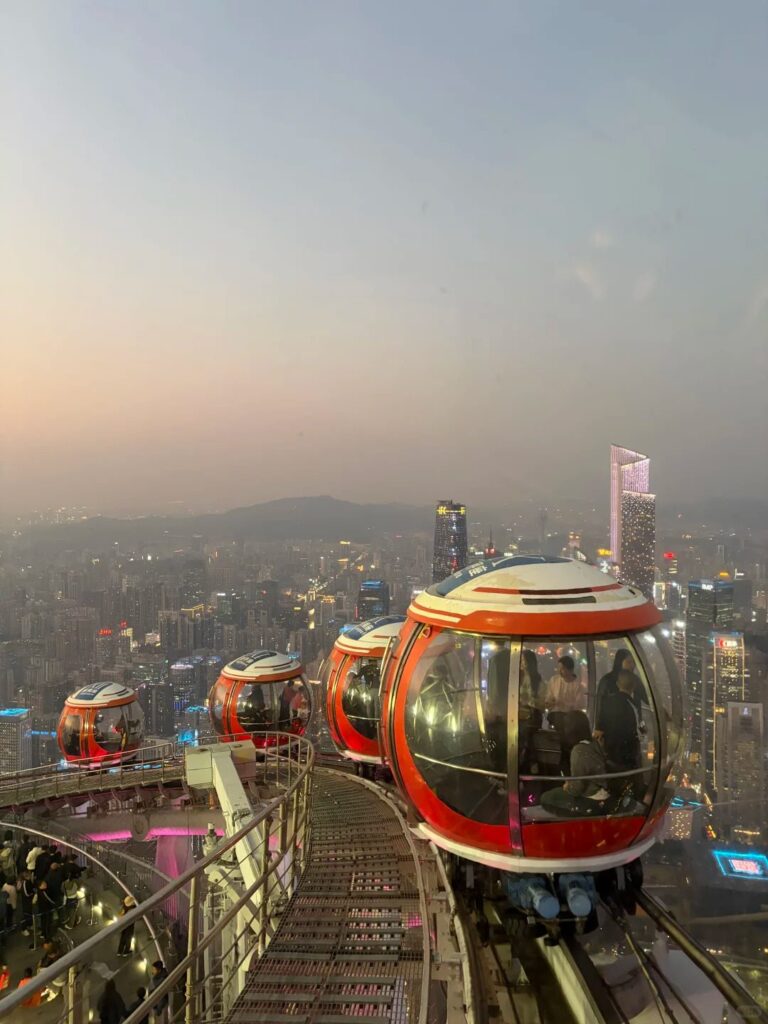
There are other things to do here too, including one of the highest Ferris wheels in the world. And if you’re looking for something even more thrilling, try the outdoor Sky Drop. Set on the 485-meter-high observation deck, it drops 31 meters at high speed, so it’s definitely not for the faint of heart.
Tickets:
- Observation deck: ¥150
- Children under 1.2 meters are free
- Other attractions inside the tower cost extra, and combo tickets are also available
Ride the APM Line (Must-Do)
If you’re visiting Guangzhou with kids, I’d highly recommend riding the APM (Automated People Mover) line at least once. Beyond being a convenient way to explore the city, the ride itself is exciting, even for adults. The APM line is fully automated, and there are large glass windows at both ends of the train. If you sit in the first or last row, you get a clear view all the way ahead. The first time my kids rode it, they had so much fun that they didn’t want to get off, and we ended up riding it back and forth several times!
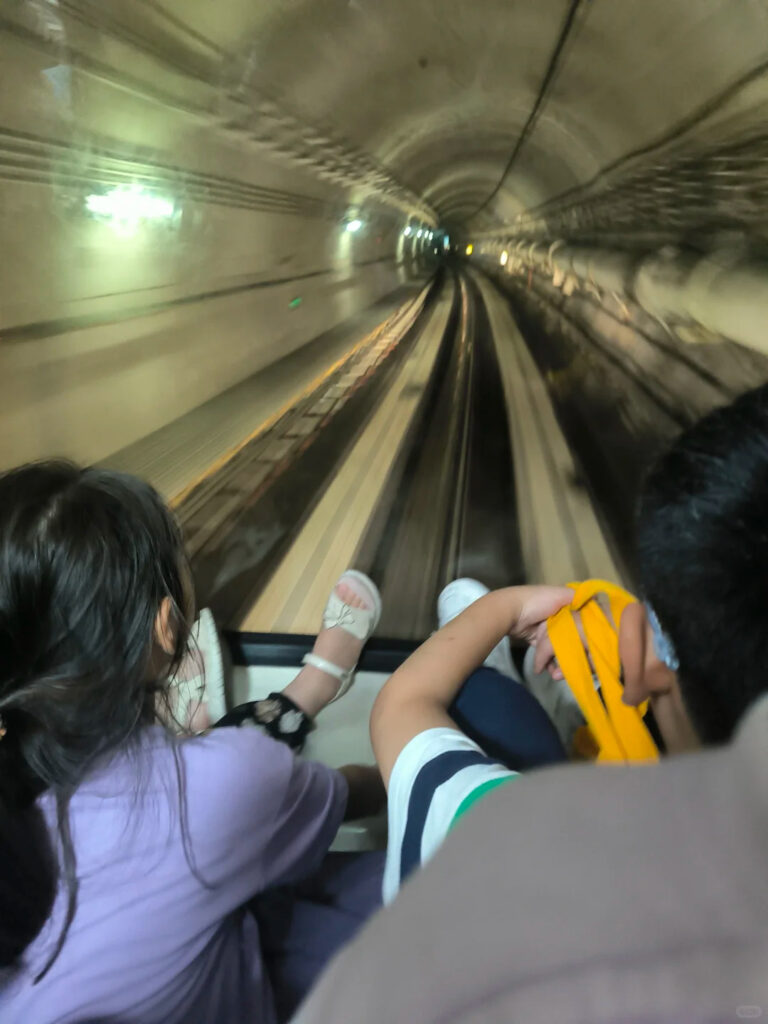
You can board at Haixinsha Station in Zhujiang New Town.
Fare: ¥2
Take a Pearl River Night Cruise (Must-Do)
A Pearl River night cruise is a great way to see Guangzhou after dark and enjoy a relaxing evening. From the river, you can admire Guangzhou’s skyline and see landmarks such as Canton Tower, Haixinsha, Liede Bridge, and Haiyin Bridge all lit up. It’s also one of the best ways to see how old and new Guangzhou exist together.
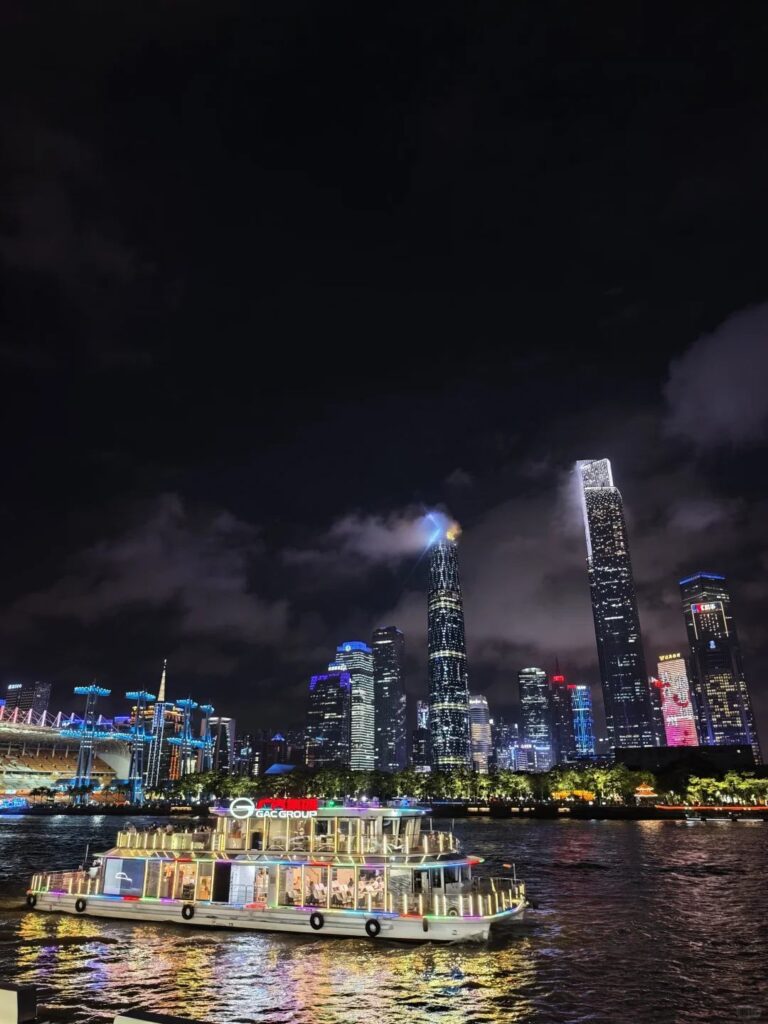
You can also book a buffet cruise and eat while you take in the views.
Duration: About 60–70 minutes
Prices:
- Basic route: from ¥68
- Buffet cruise: from ¥138
- VIP seating: from ¥198
Take the Tram (Must-Do)
Guangzhou’s tram line, which is more like a streetcar than a train, is part of the city’s regular public transit system, but it’s worth riding just for the views. The full line is about 7 kilometers long, and even if you don’t need to get around, it’s still a scenic ride. If you go when the flowers are blooming near the stops, some stretches are especially pretty and remind me of a scene from an anime.
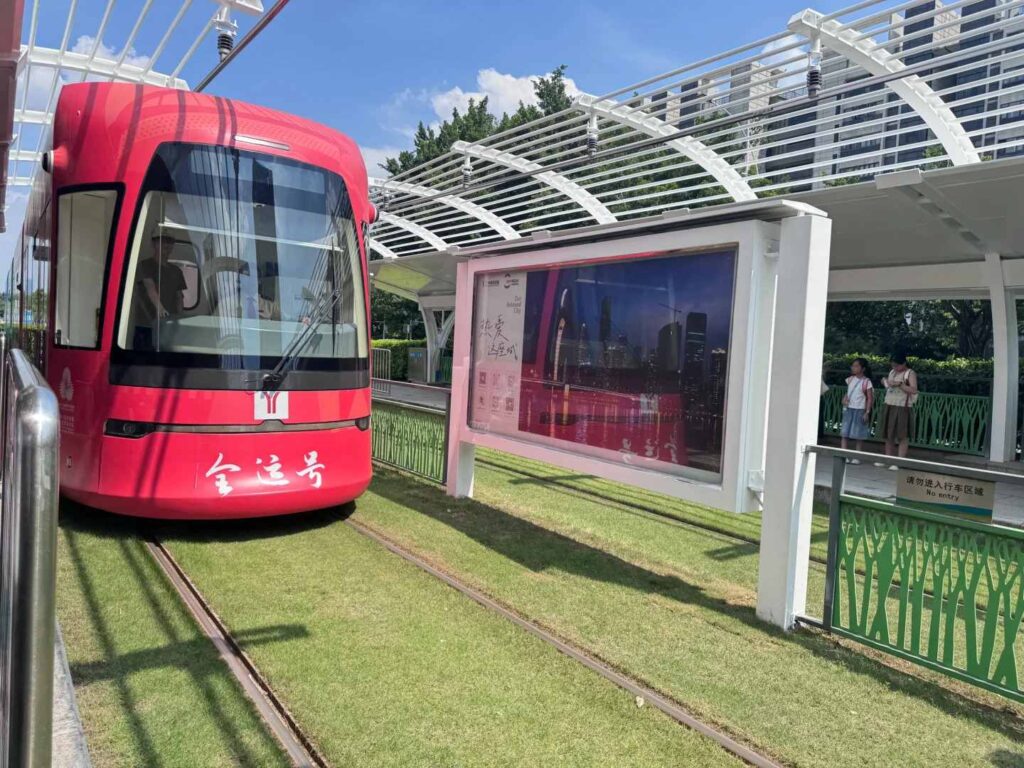
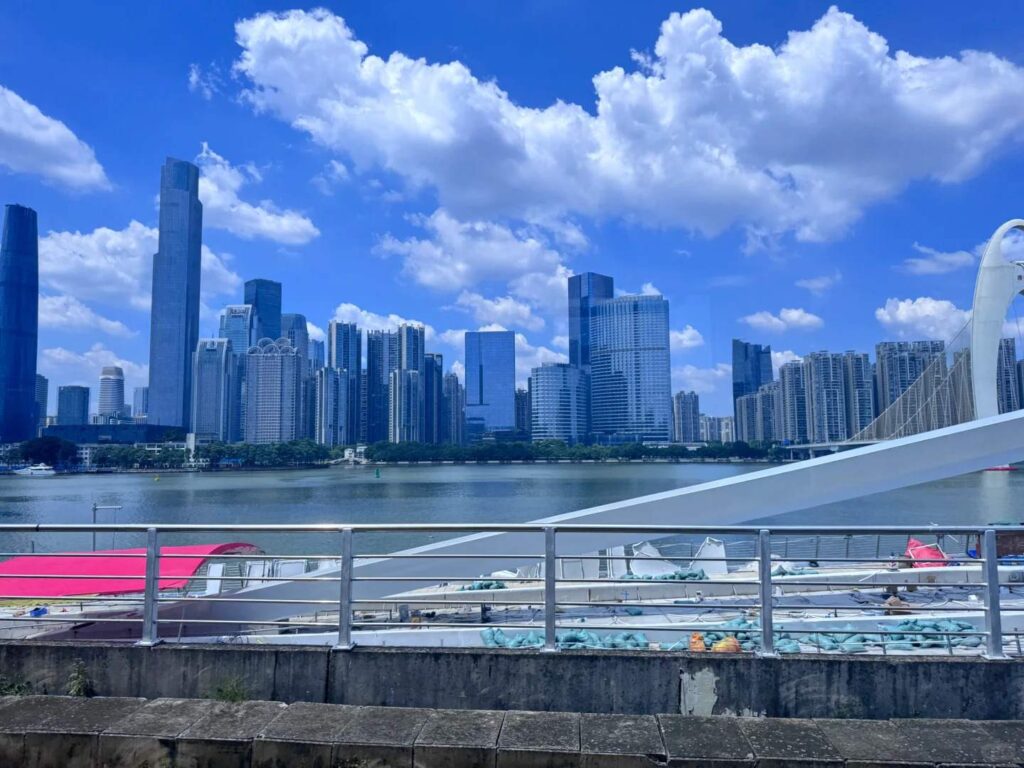
I recommend getting on at Canton Tower Station, where the line starts, and riding all the way to Wanshengwei. If you enjoy the ride, you can just take it back the same way.
Fare:
- One-way: ¥2
- Day pass: ¥6
The day pass includes unlimited rides for the day, plus a souvenir postcard
Operating hours: 7:30 a.m.–10:00 p.m.
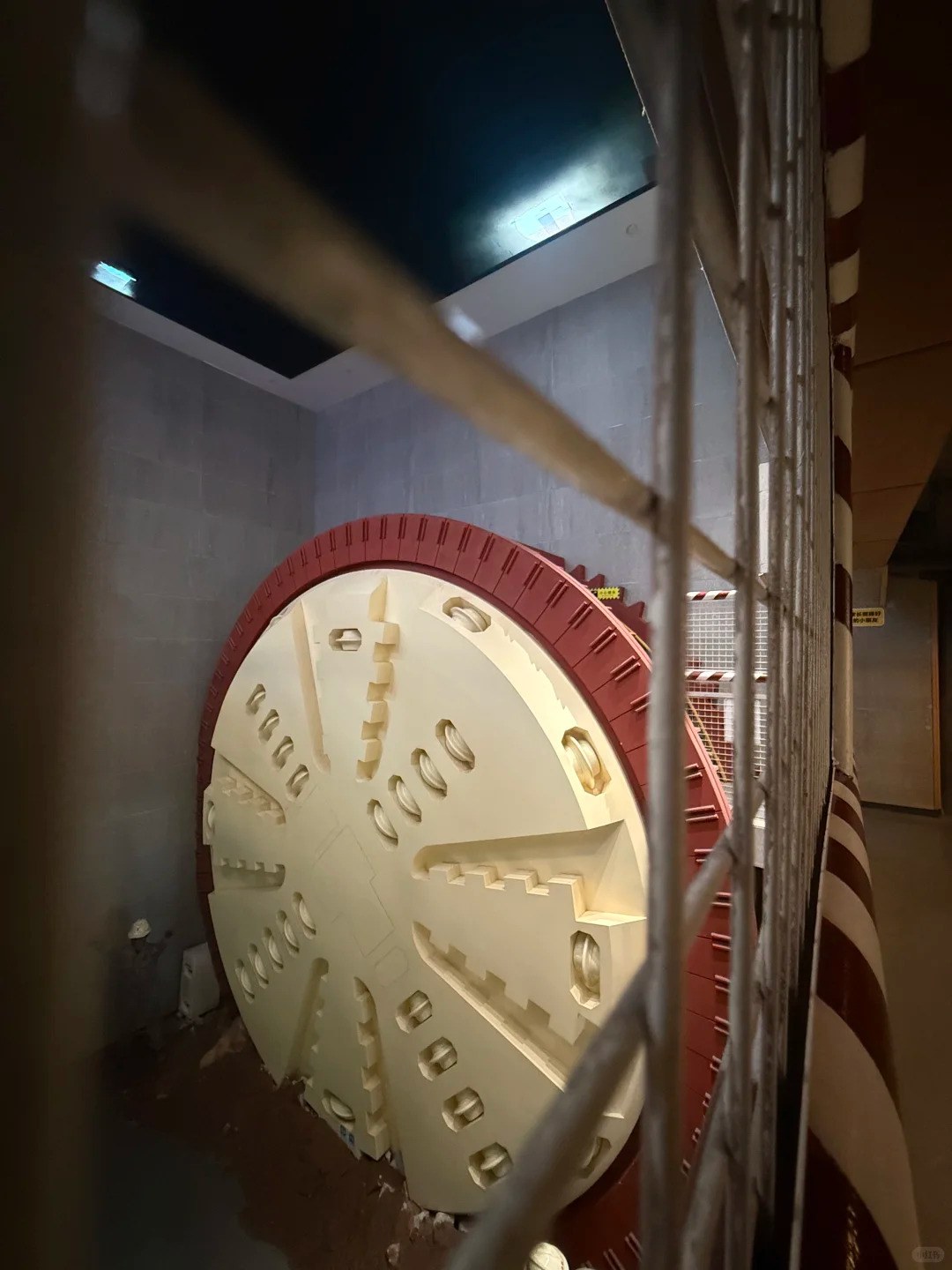
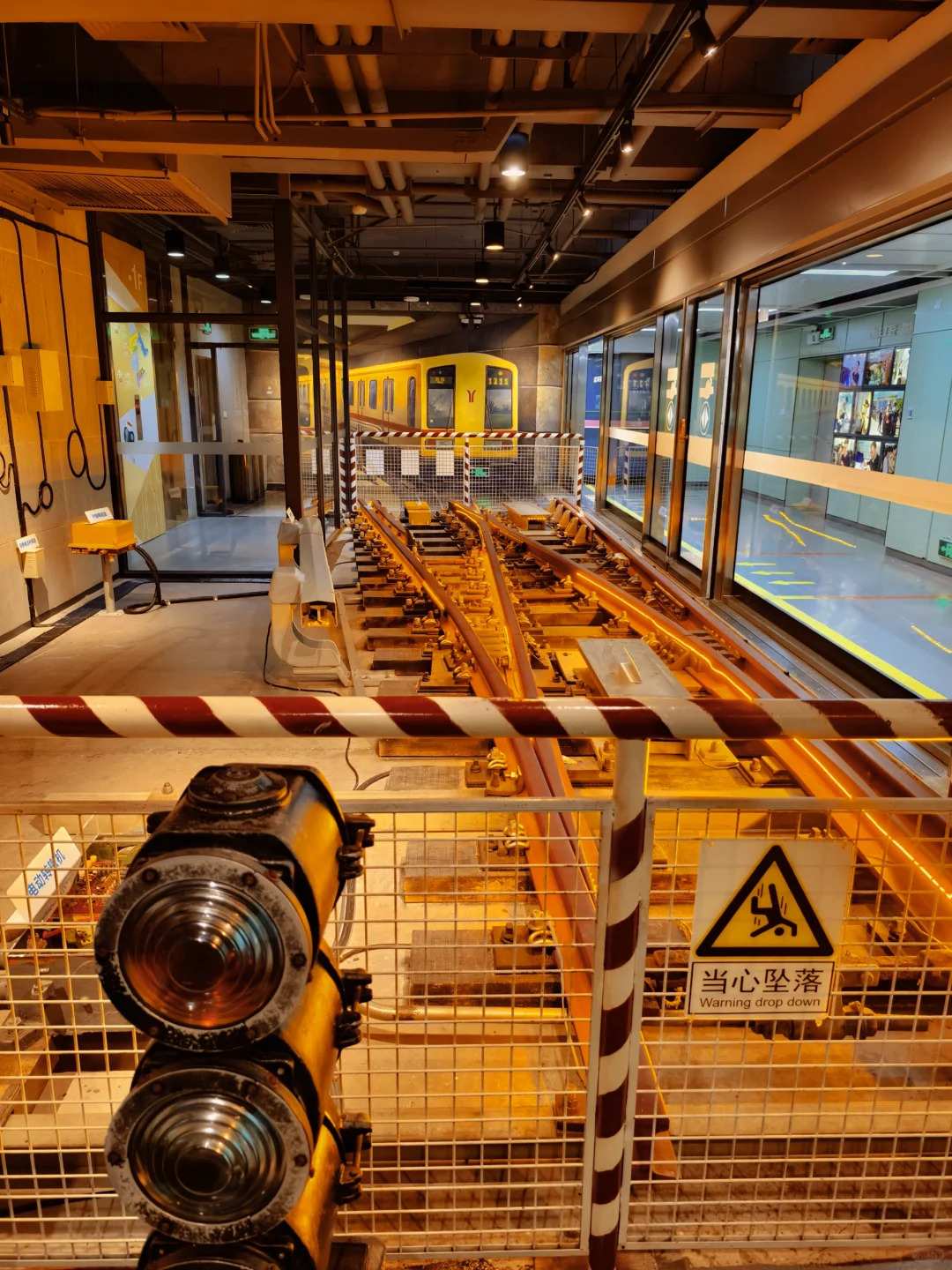
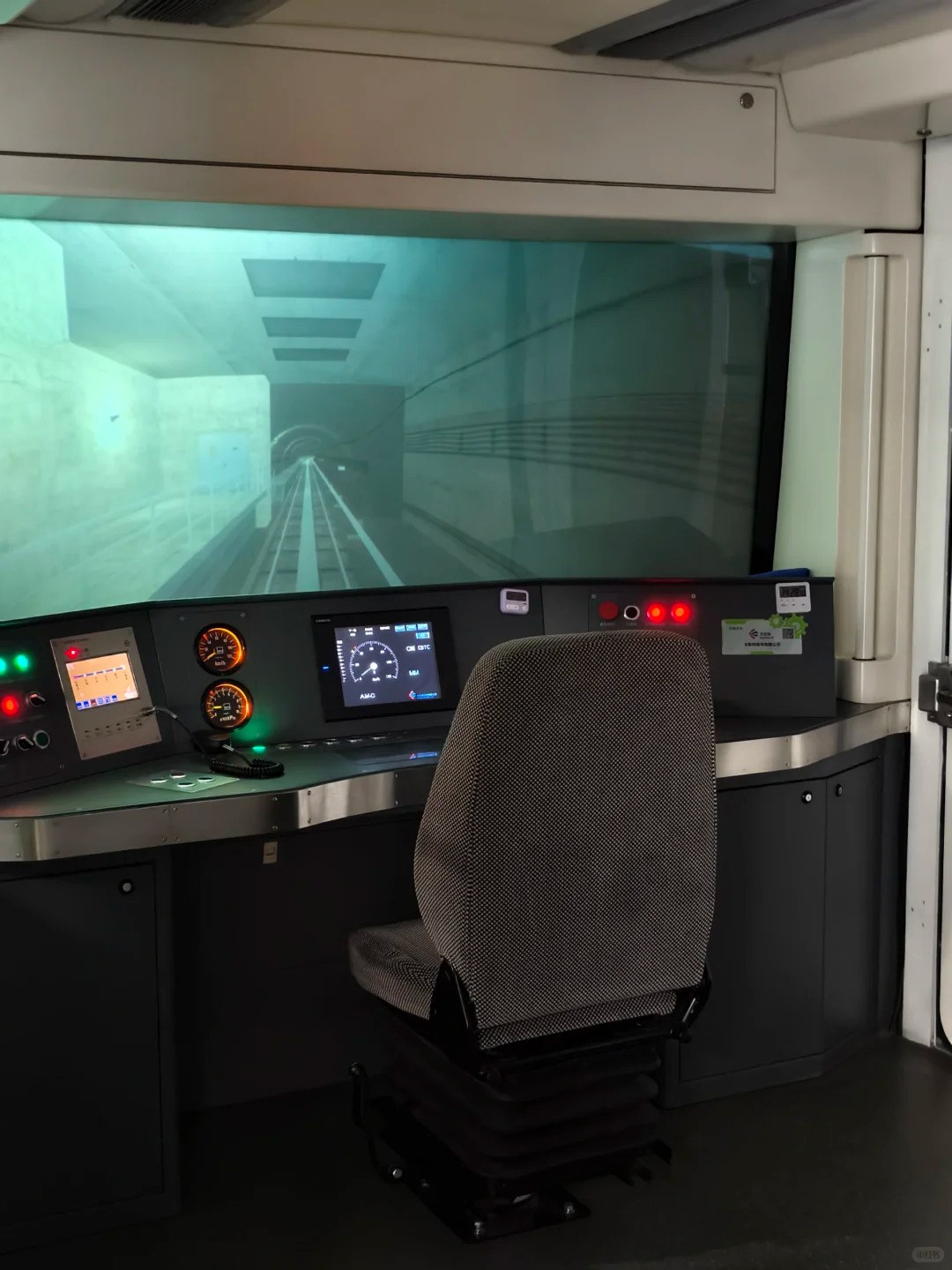
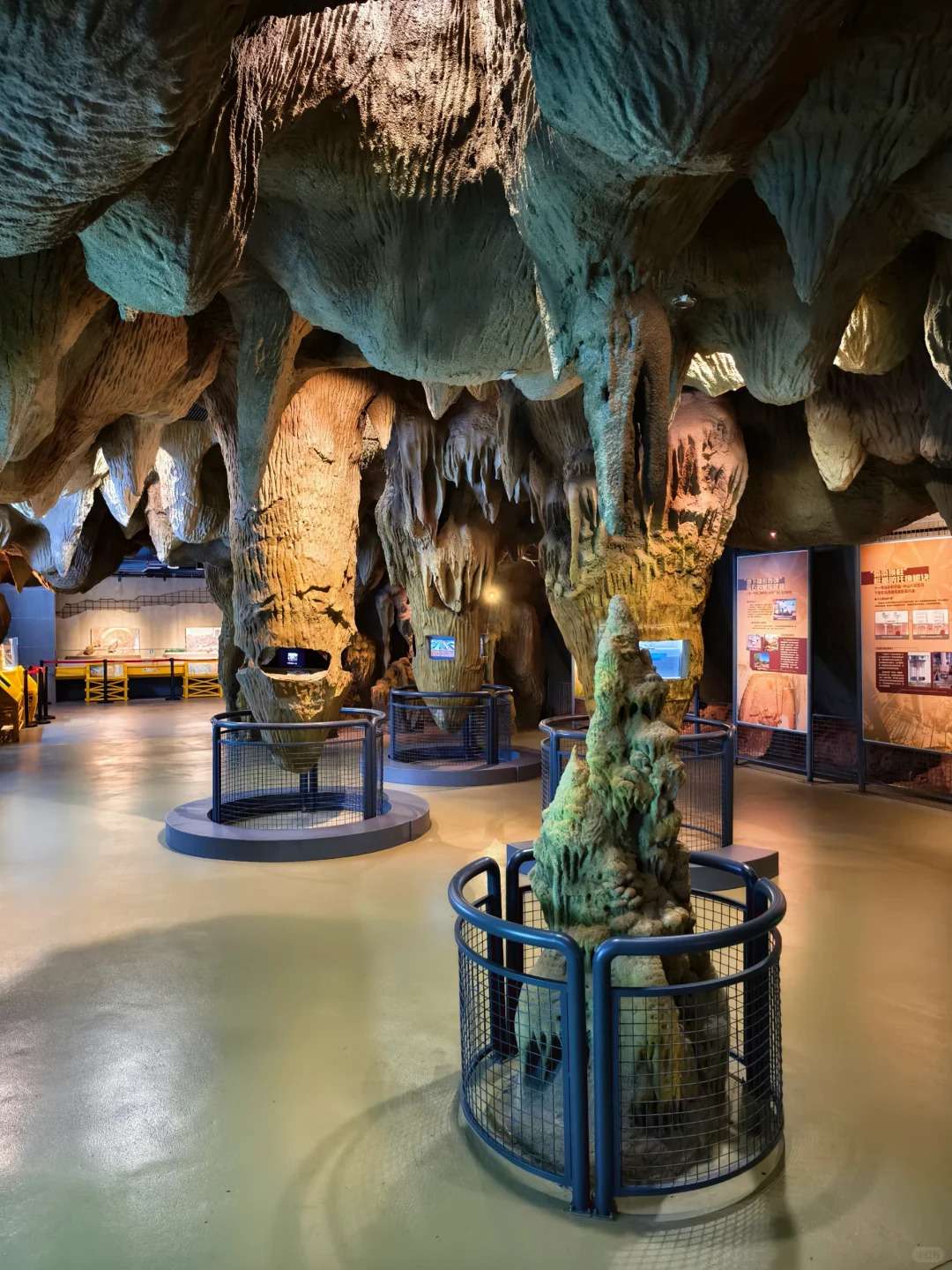
If you get off at Wanshengwei, consider visiting the nearby Guangzhou Metro Museum and Huangpu Ancient Port.
The Metro Museum is especially fun if you’re traveling with kids, and it’s only a 200 to 300 meter walk from Wanshengwei Station. Huangpu Ancient Port is also nearby and easy to add to the same outing.
Huangpu Ancient Port
Huangpu Ancient Port is an important historic site in Guangzhou, as it played a key role in the Maritime Silk Road and later in the city’s foreign trade. In 1757, the Qing government made Guangzhou China’s only legal port for international trade, so all foreign merchant ships had to pass through this area.
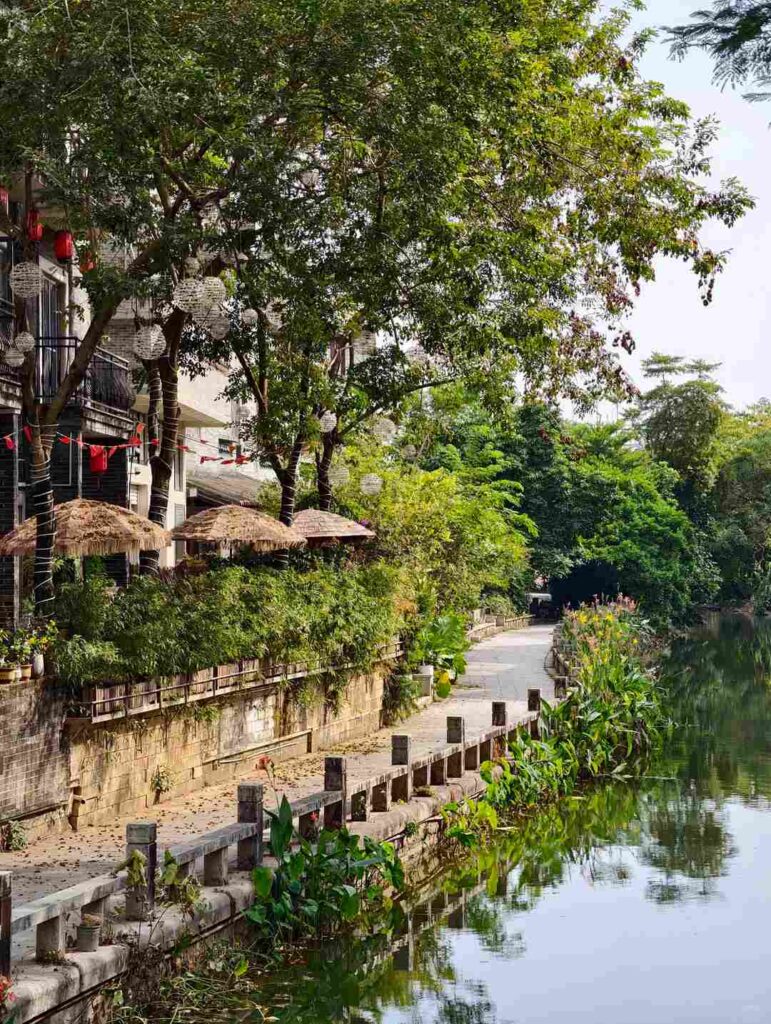
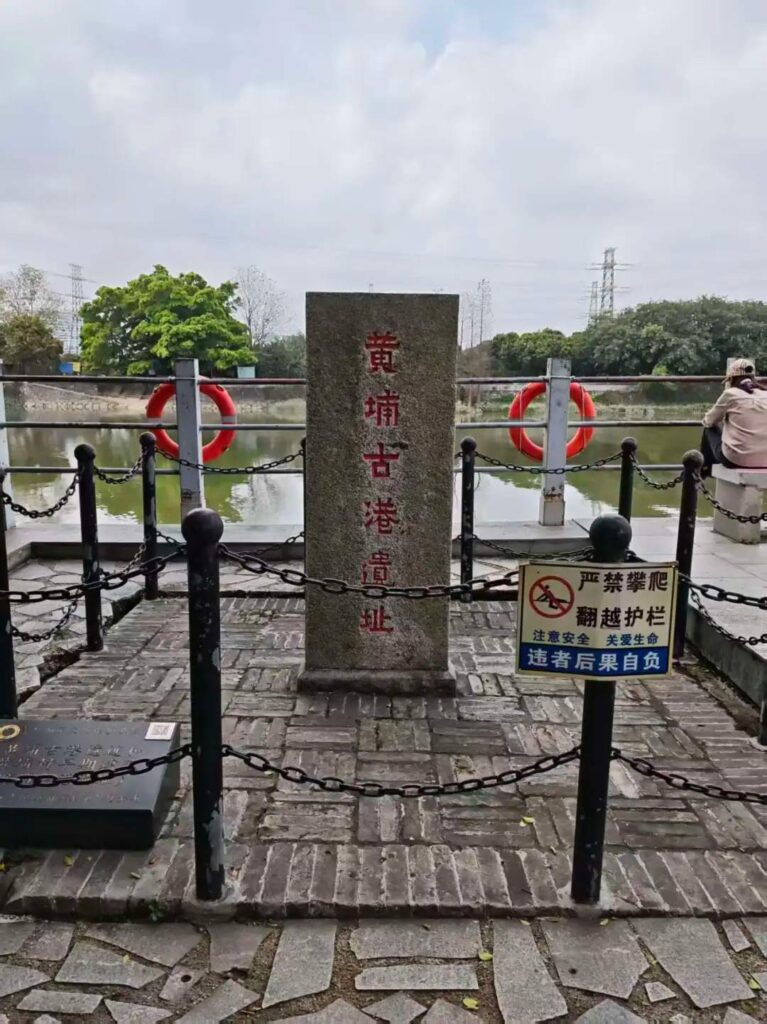
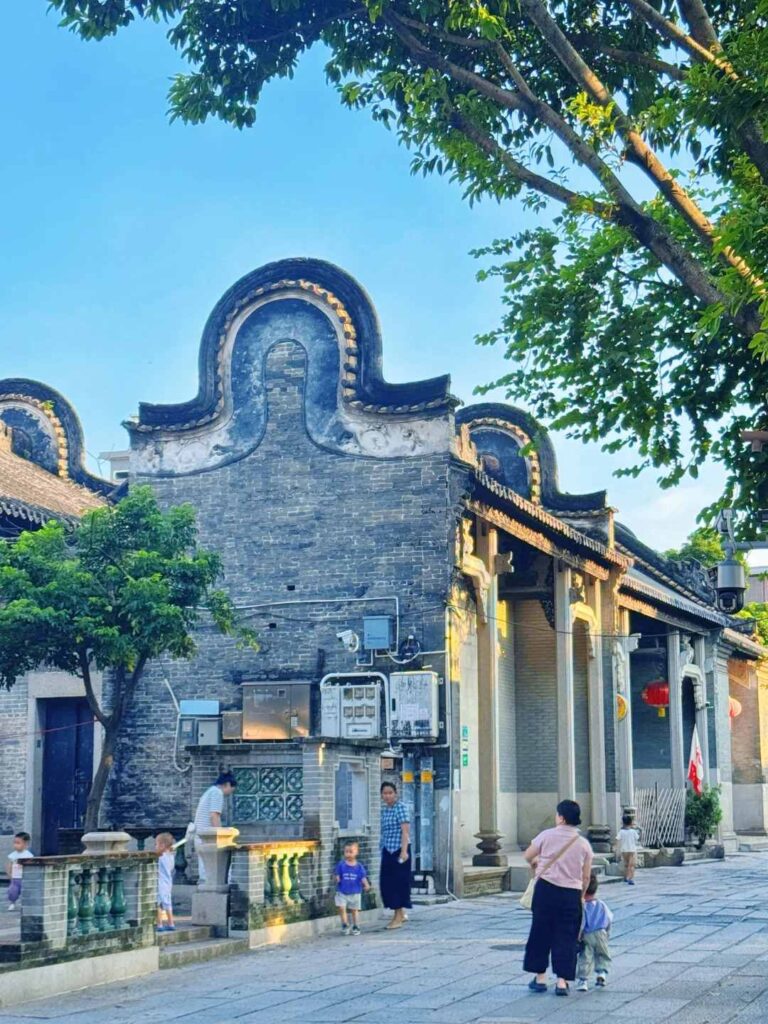
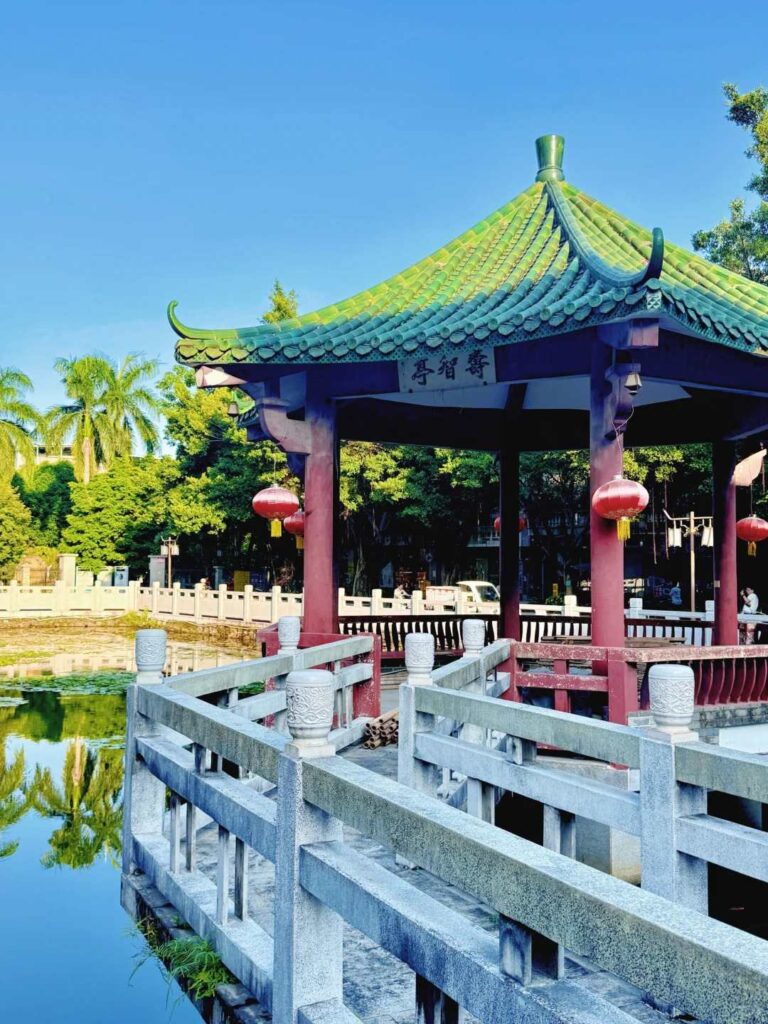
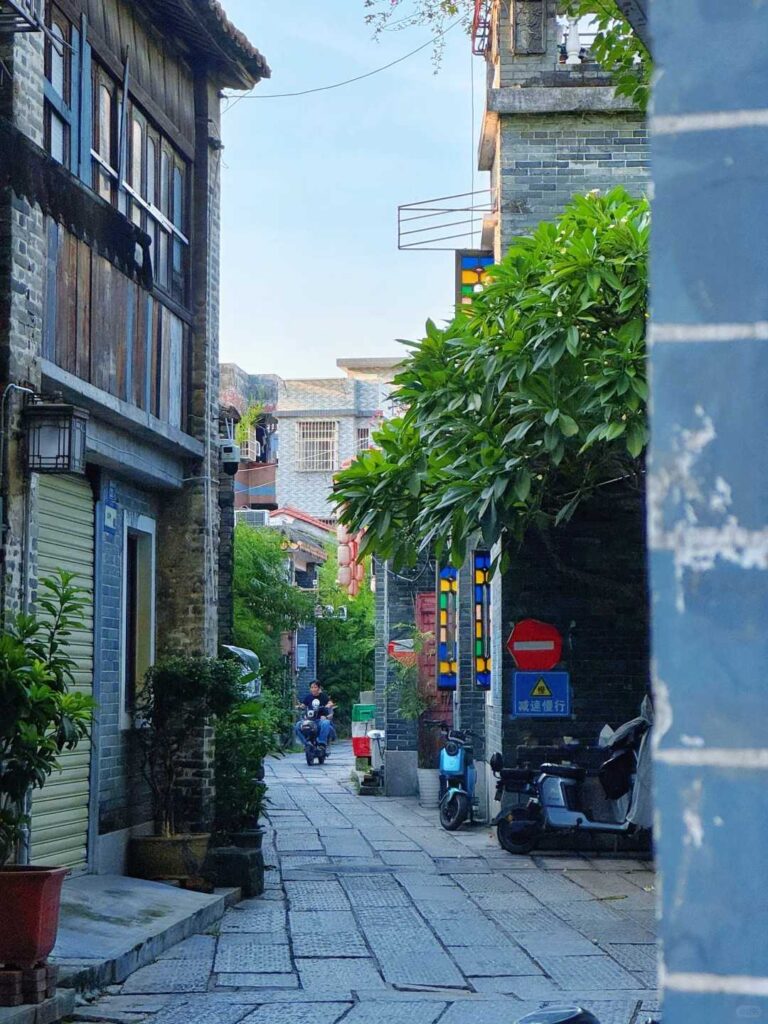
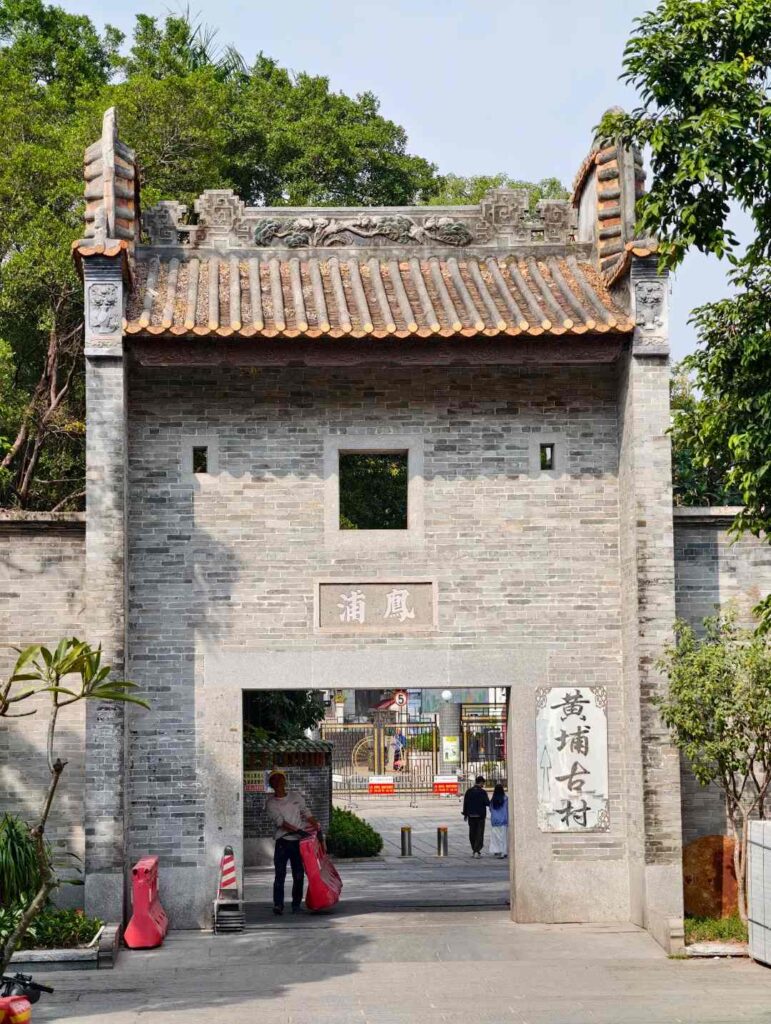
Today, the old port area has several historic sights, including the Yue Customs Museum, the Ancient Village History Museum, the old dock, the Huangpu Zhijie archway, and a number of Lingnan ancestral halls. If you’re interested in old architecture or Guangzhou’s trading past, I recommend making time to add this to your route.
After getting off the tram, you can take Bus 229 or a sightseeing bus. If it isn’t too hot, you can also walk. It’s about 1.6 kilometers away.
Tianhe: Shopping and Food (Must-Visit)
Tianhe is Guangzhou’s busiest and most modern shopping district. Many visitors enjoy spending an evening, or even a half-day, shopping and eating here. It’s not far from Zhujiang New Town, so you can get there easily by metro or taxi. Tiyu Xi Station is a convenient place to start.
This shopping district isn’t just one street, and you can’t cover it all in a short time frame. It’s made up of several big malls, and although many of them are connected, each one offers something different. I recommend going in this order:
Teemall → Parc Central → Grandview Mall → Fashion Tianhe
Pro-tip: If you want to do this route at a relaxed pace, you’ll need at least half a day. If you’re short on time, it makes more sense to pick one or two places that interest you most.
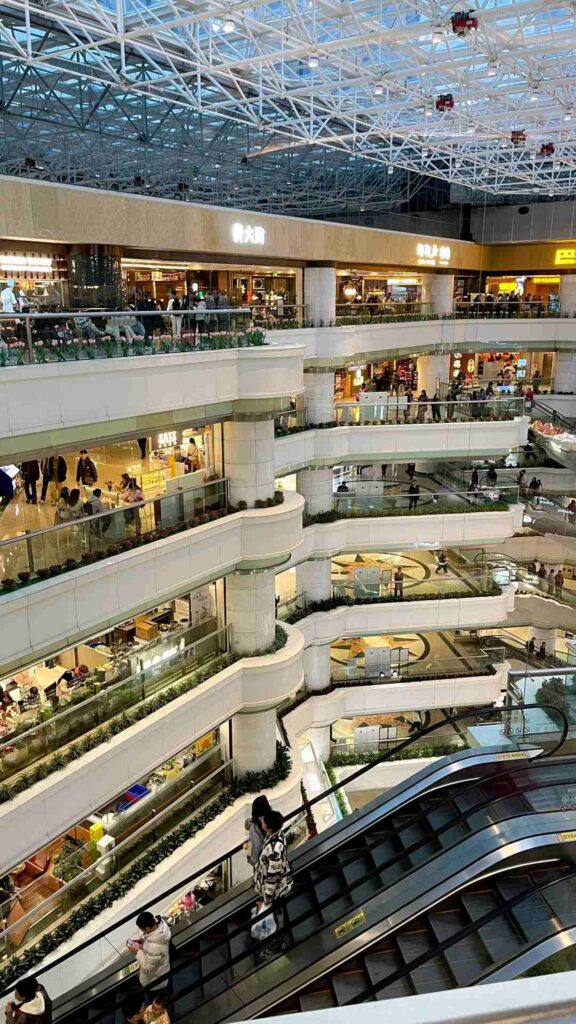
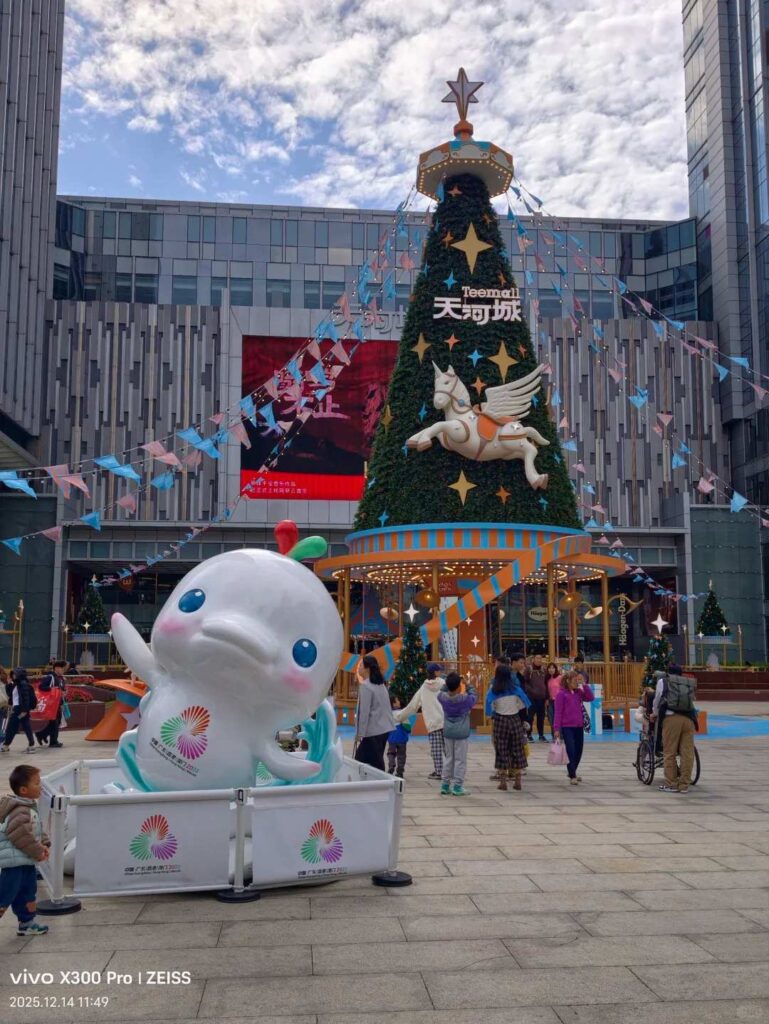
1. Teemall: Classic and easy to navigate
If you want a mall that’s easy to navigate and has a good mix of brands, Teemall is a good choice. The AEON supermarket in the basement is a good place to buy souvenirs because it has a wide selection. Their flower-shaped egg tarts are also very good.
2. Parc Central: Great for photos and shopping
Parc Central is recognizable by its large plaza with fountains and greenery. Like many other places in the city, it looks particularly pretty at night when the lights come on. The shops here are primarily international luxury brands.
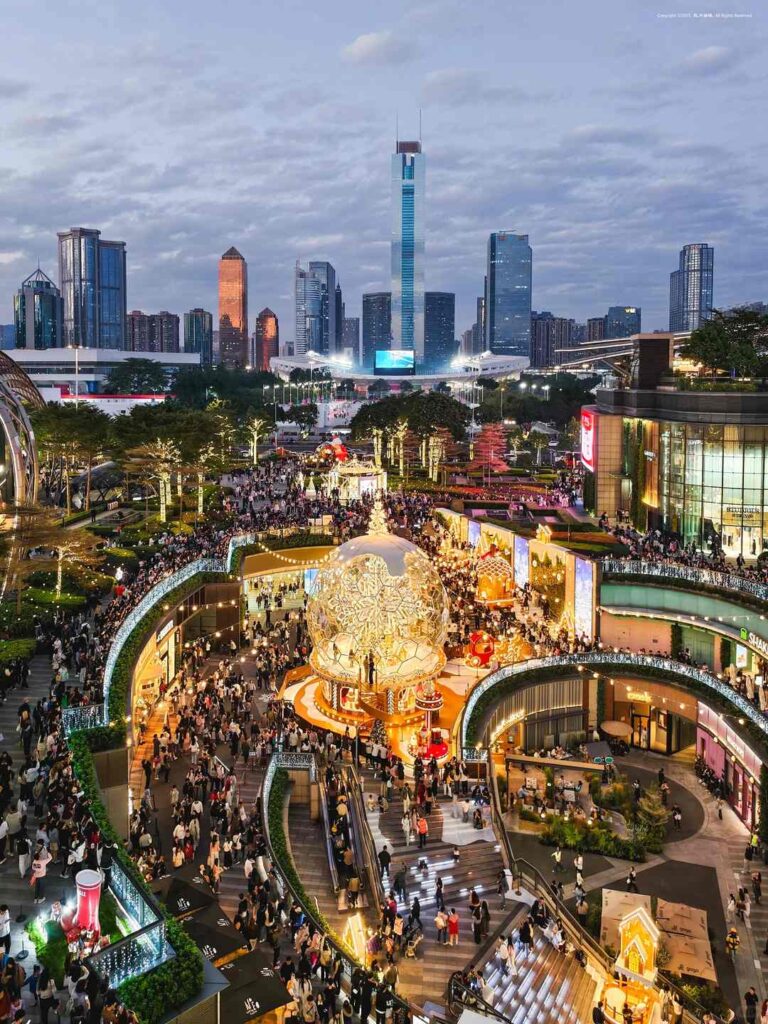
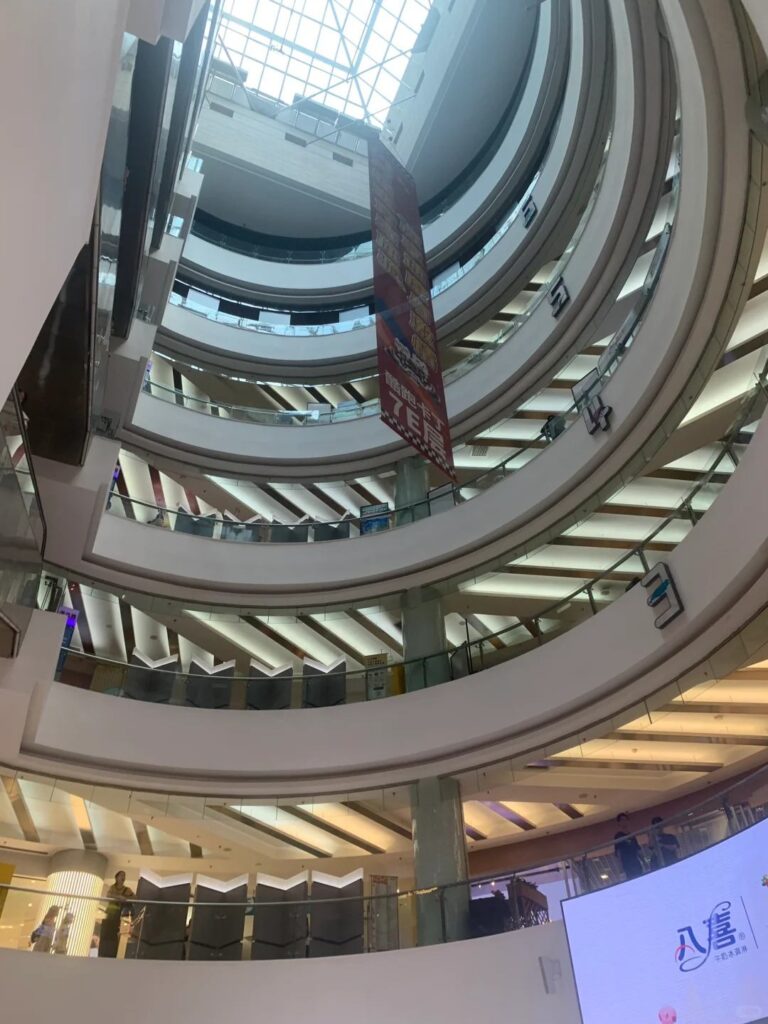
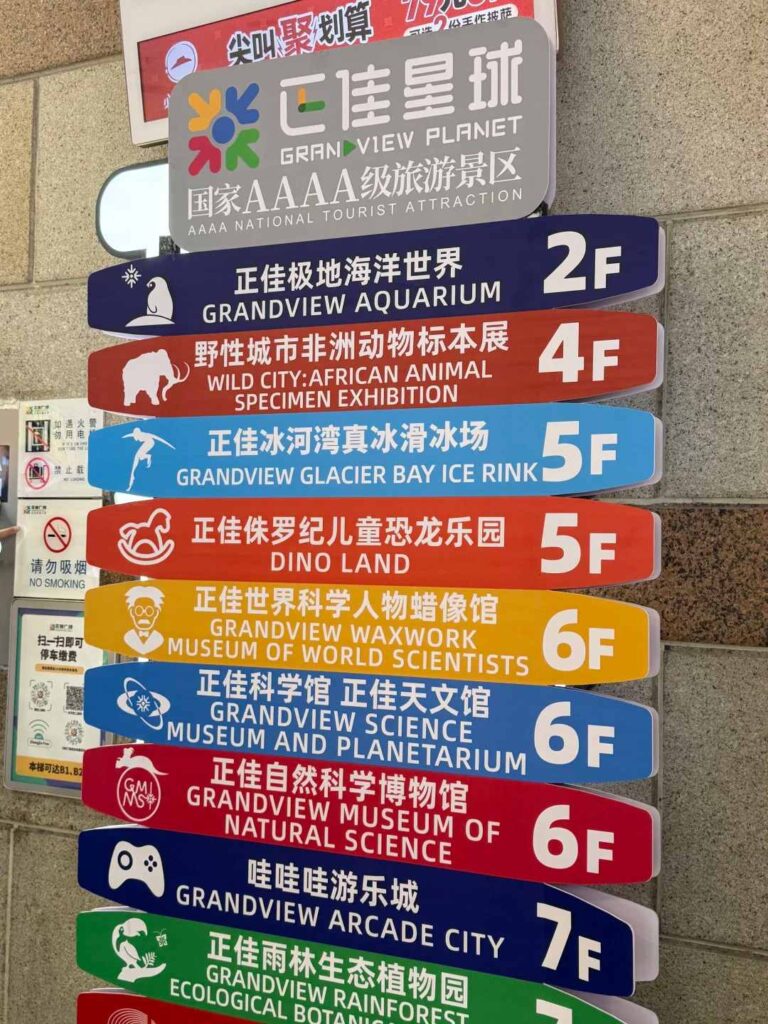
3. Grandview Mall: Especially good for families
Grandview Mall is much more than a regular mall, with indoor attractions like the polar ocean world and the rainforest. It’s especially enjoyable if you’re visiting with kids, because there’s a lot to keep them entertained.
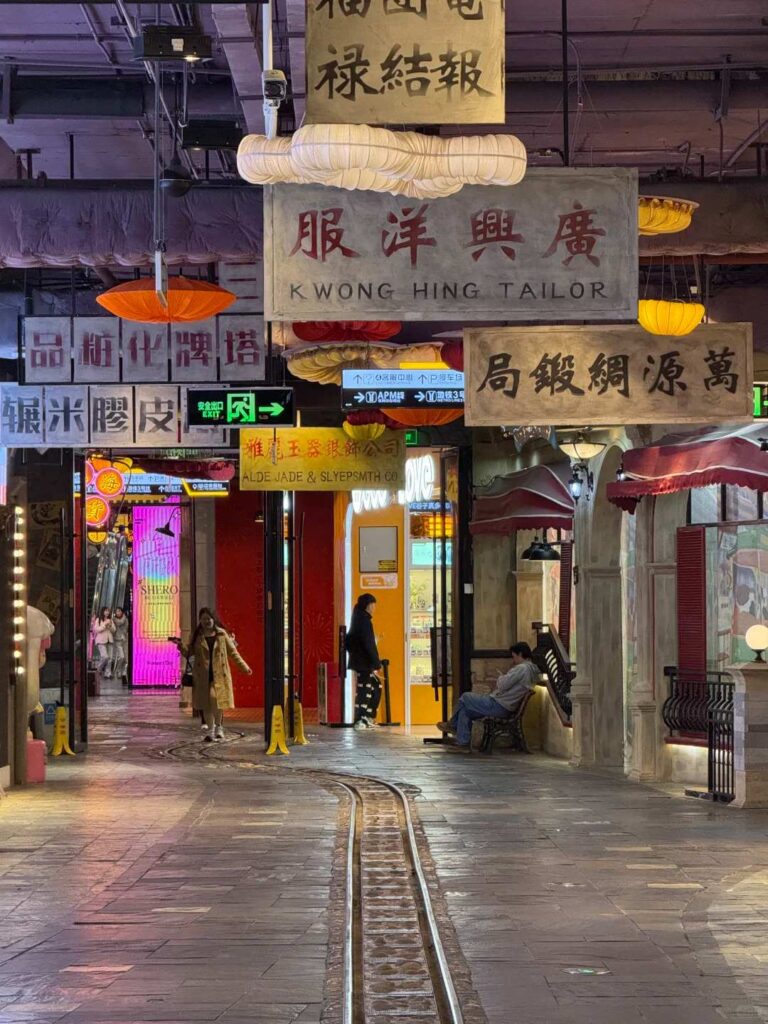
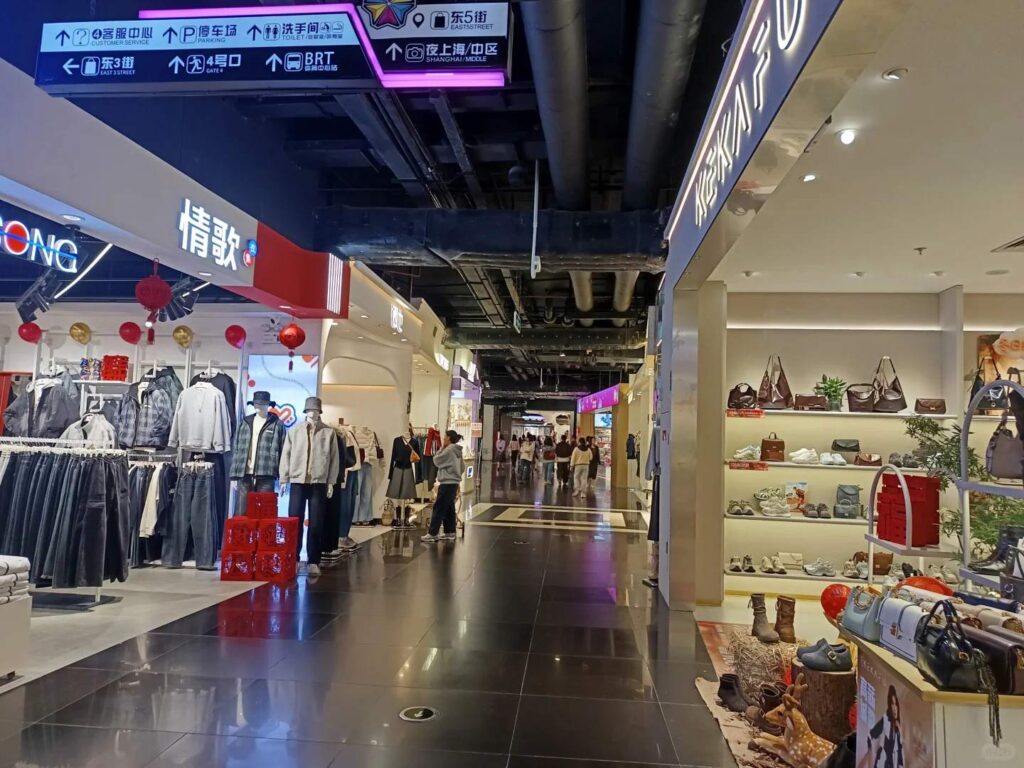
4. Fashion Tianhe: A trendy underground space
Fashion Tianhe is a huge underground space for shopping and hanging out, with a layout that kind of resembles a maze. Its retro style and neon lights give it a unique atmosphere that’s different from a traditional mall. Most of the shops here sell clothes, accessories, quirky gifts, and snack foods.
Beijing Road Pedestrian Street (Must-Visit)
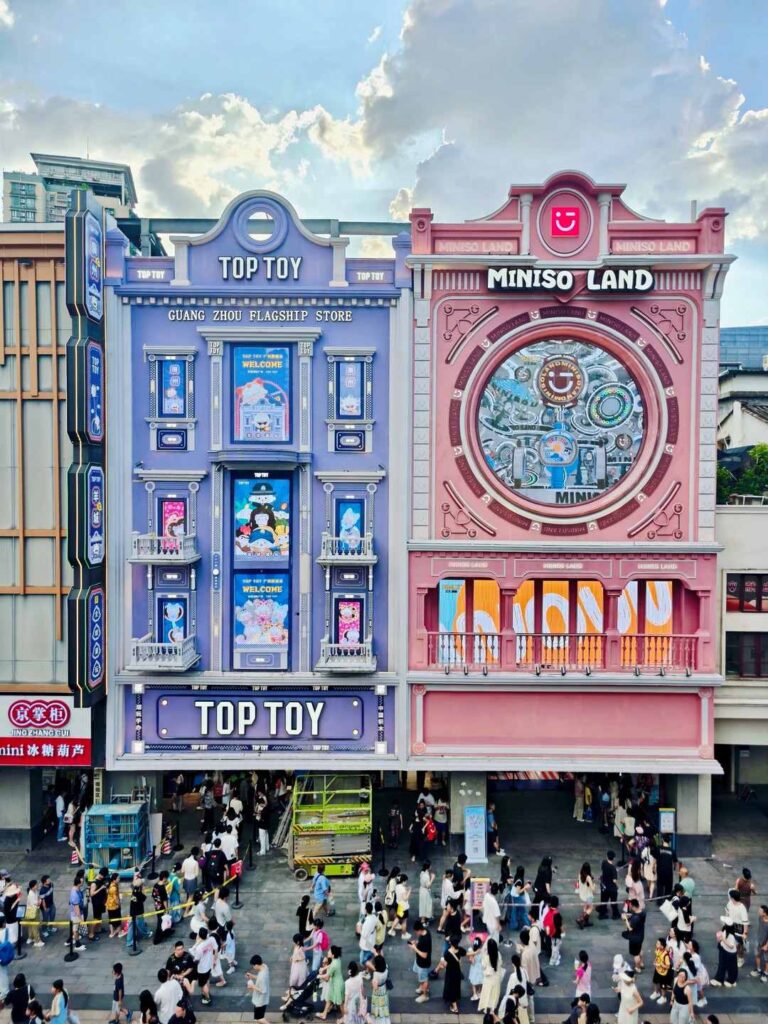
Beijing Road, in the heart of Yuexiu District, is one of Guangzhou’s main shopping and commercial areas. On both sides of the street, you’ll find all kinds of shops, teahouses, and restaurants. It stays busy all day, so even if you aren’t there to shop it’s still an enjoyable area.
Beijing Road Pedestrian Street itself is not very long, but it’s only one part of the wider Beijing Road area. I highly recommend exploring the wider area instead of just walking down the pedestrian street and leaving.
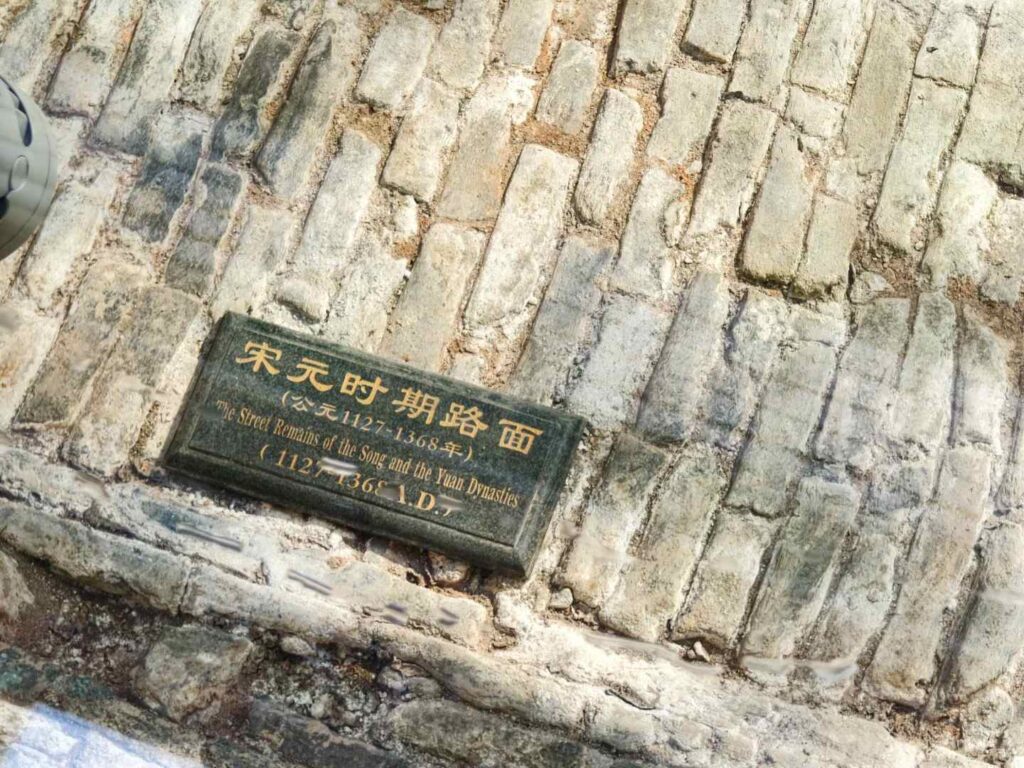
Despite being a busy shopping area, this part of the city still reflects the character of old Guangzhou. The streets are lined with lush trees, which makes the area feel like an urban park rather than the center of a major city. It’s also very interesting because when you walk along Beijing Road, you’re literally walking above history. Beneath the street are preserved sections of ancient roads from the Tang and Song periods, displayed under glass.
There are also several important historic sites nearby, including Dafo Temple, the Nanyue Kingdom Palace Site, the Nanyue Wooden Watergate Site, and the Yaozhou Site. Beyond the historic sites, the area also has lots of interesting little shops and a lot of options for traditional Guangzhou food. It’s a great place to wander around, browse shops, and snack as you go.
Dafo Temple (Recommended)
Dafo Temple is right next to Beijing Road Pedestrian Street, but the noise of the shopping doesn’t disrupt the peace beyond the temple’s gate. Inside, you’re surrounded by incense and towering trees, which makes for a noticeable contrast to the crowds outside.
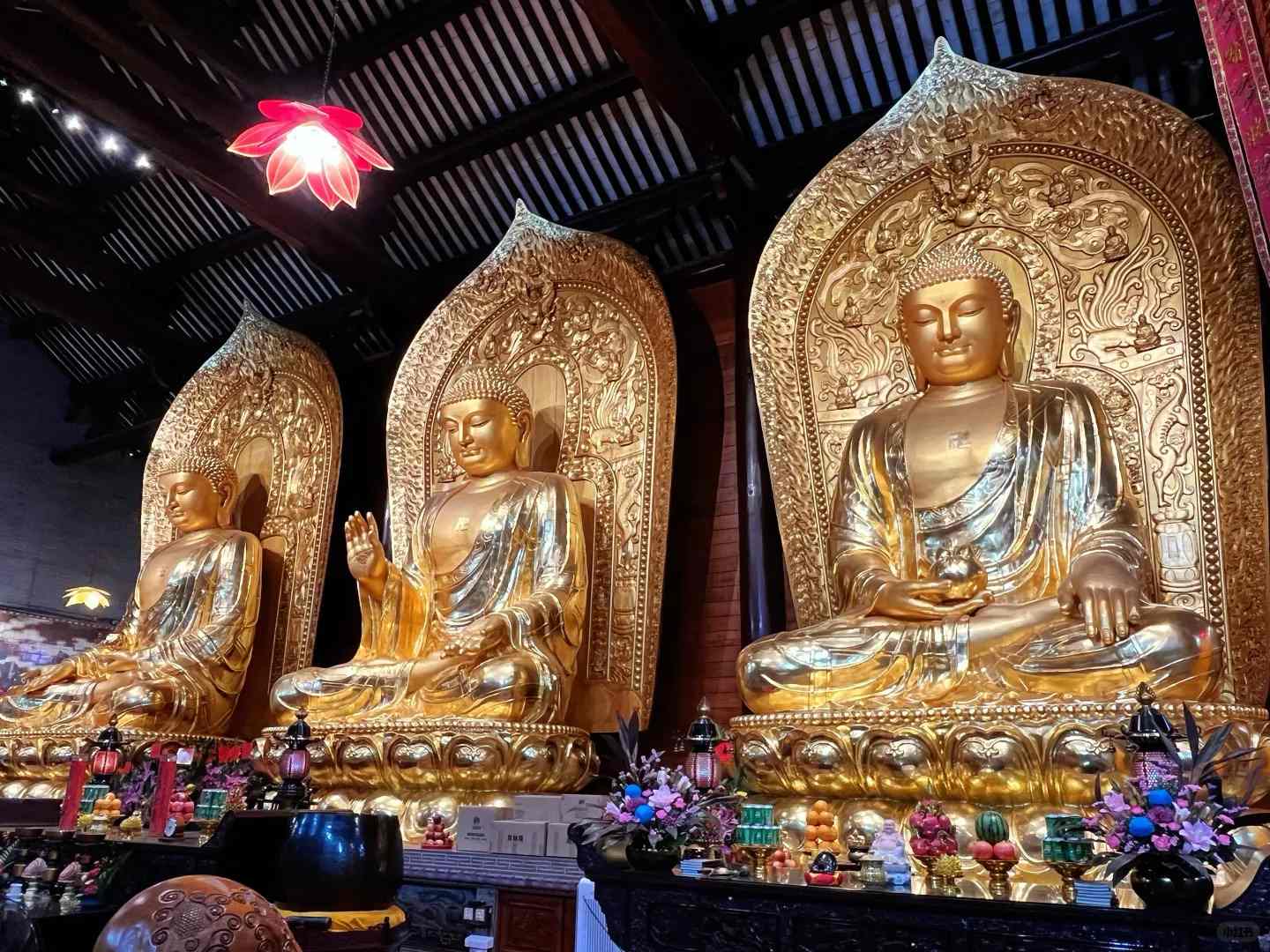
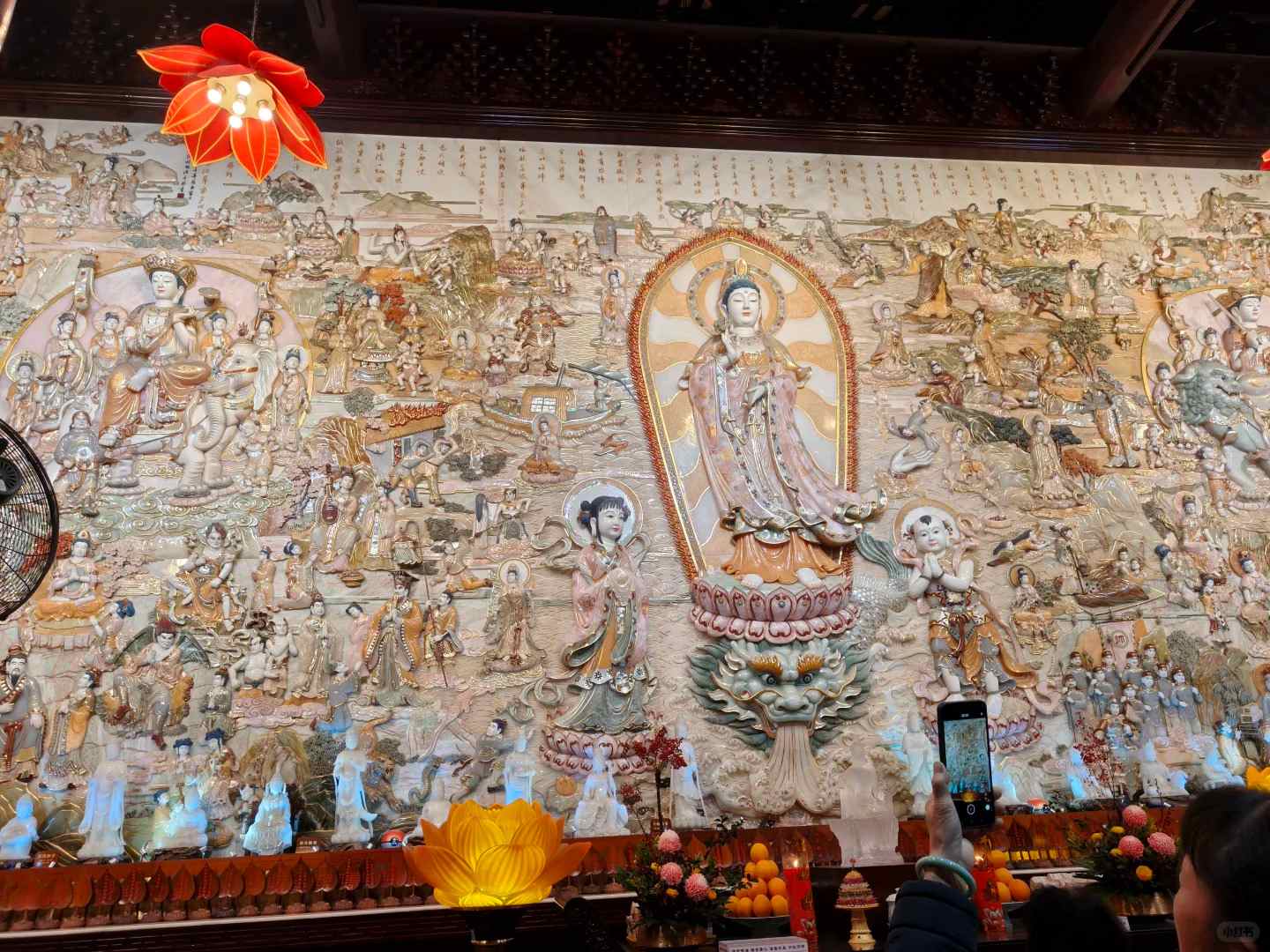
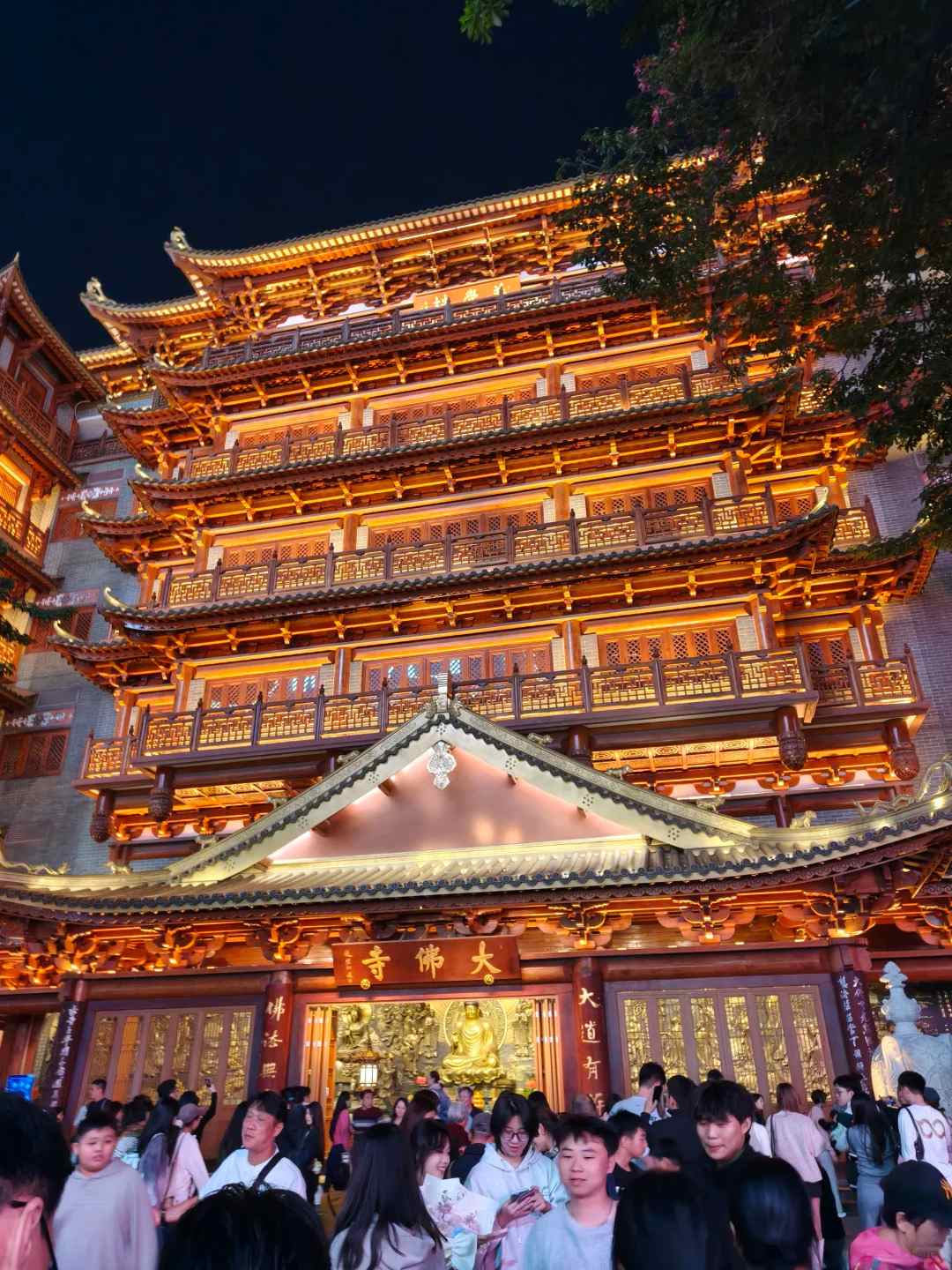
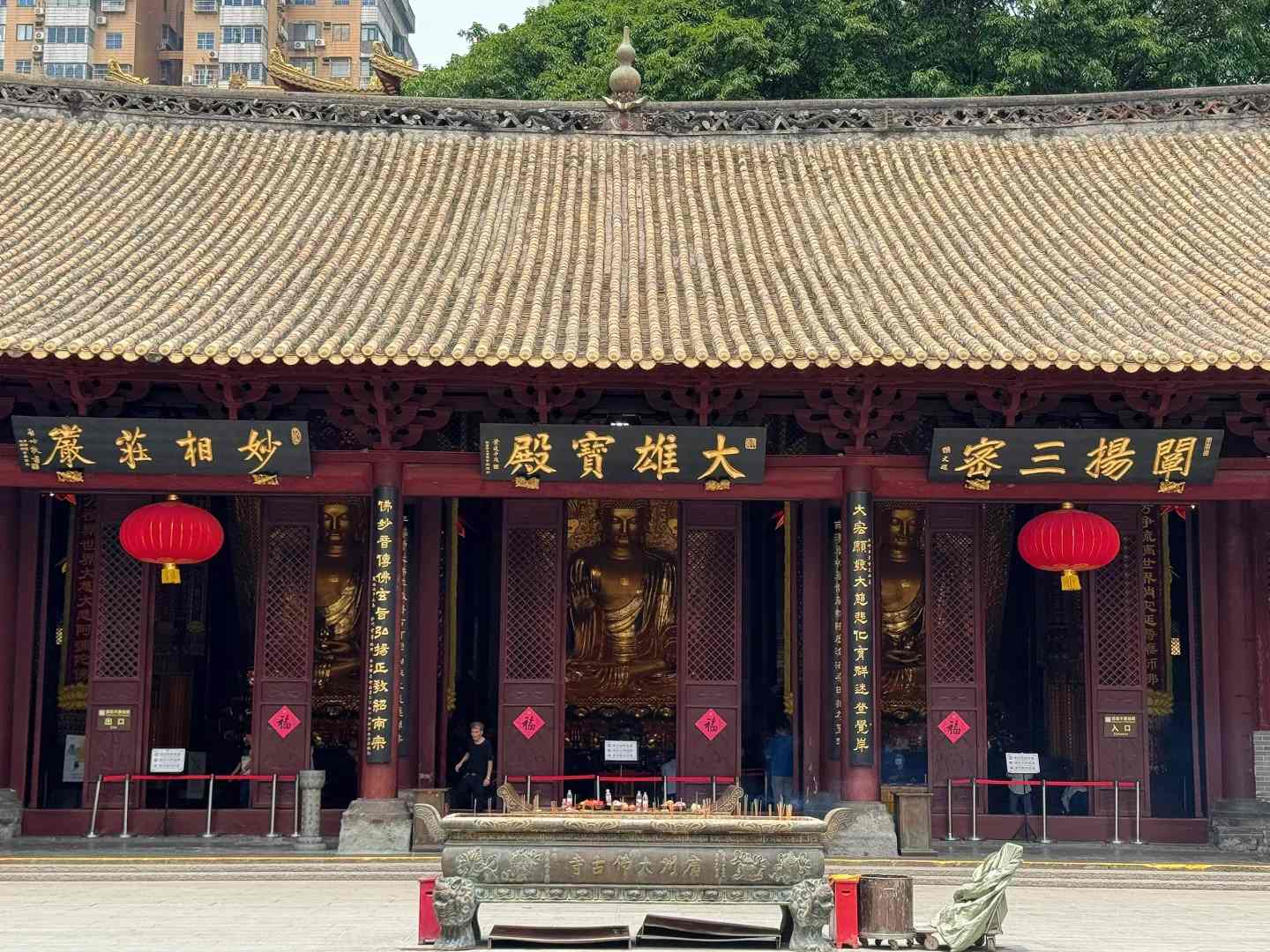
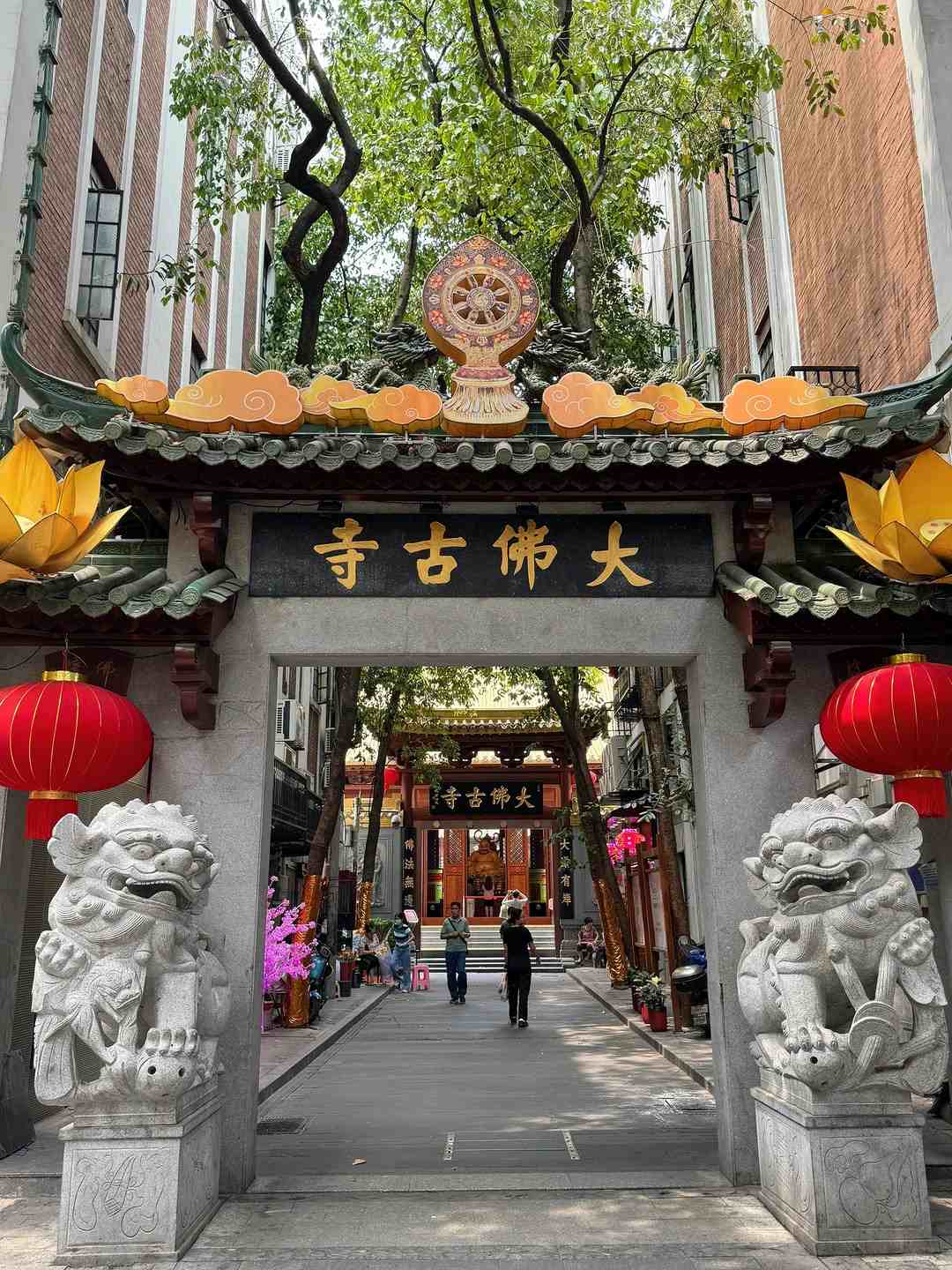
The temple’s history goes back more than a thousand years, to the Southern Han period. It was originally known as Xinzang Temple. Although it was destroyed at one point, much of the classic Lingnan layout you see today dates back to the Kangxi era of the Qing dynasty. It later came to be known as Dafo Temple, a name inspired by the three massive bronze Buddha statues housed in the quiet Mahavira Hall, each standing around six meters tall.
The buffet restaurant inside the temple has a wide range of food, spread across several sections. And if you’re a vegetarian, it’s had one of the best reputations in Guangzhou for years. You’ll find appetizers, Chinese and Western-style vegetarian dishes, Japanese-style dishes, soups, desserts, and fruit. There are even vegetarian versions of some classic Cantonese dim sum dishes. In addition to the array of food, the restaurant is also enjoyable for its spacious dining area and calm atmosphere. Sometimes they hand out oranges on the way out, which is a small but thoughtful gesture.
Yuexiu Park (Must-Visit)
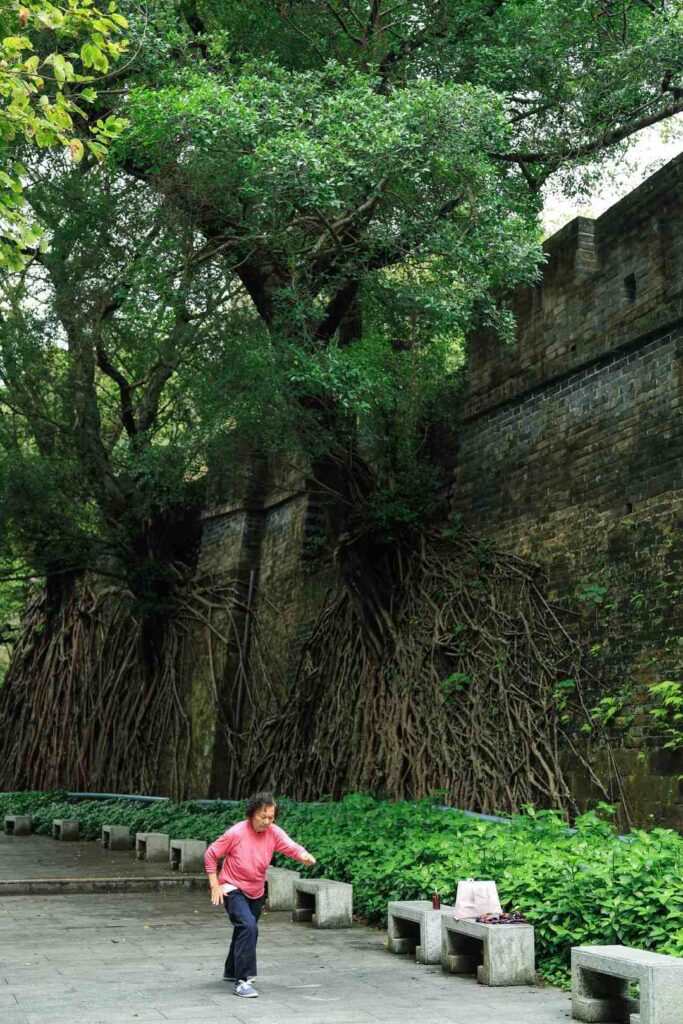
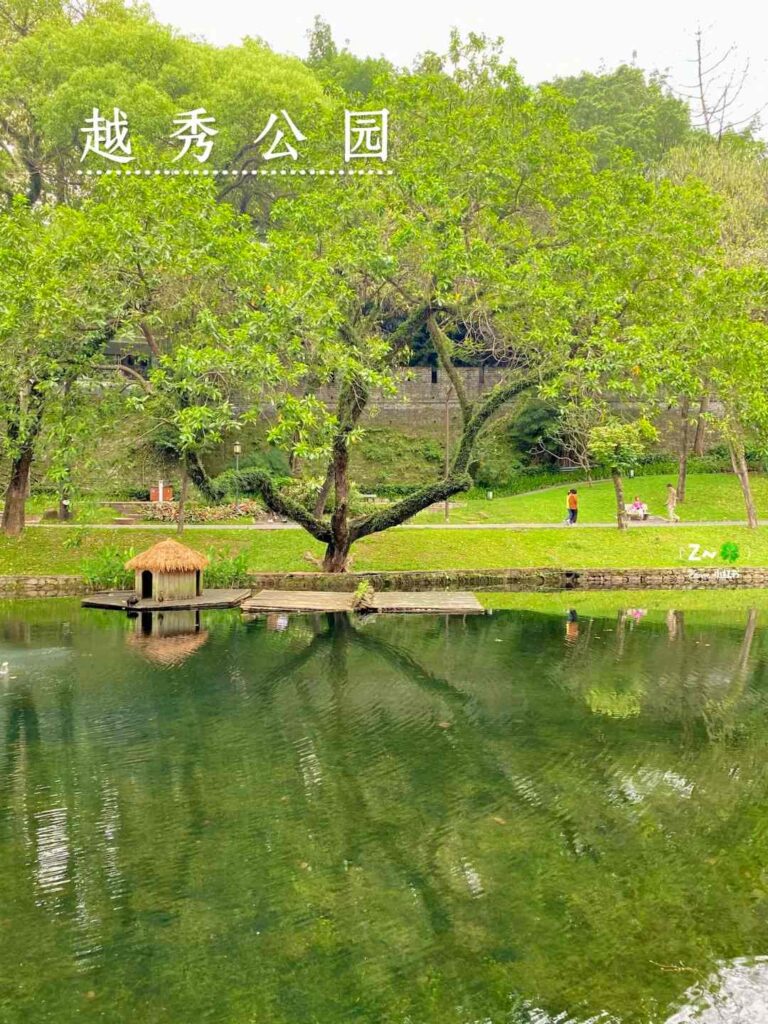
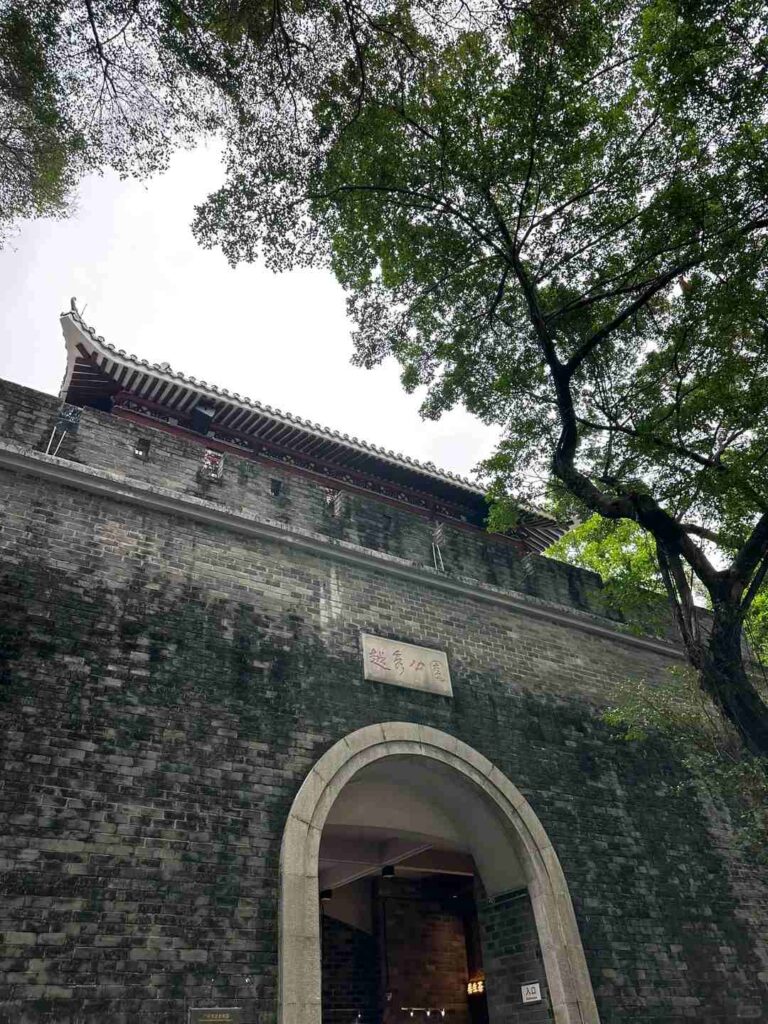
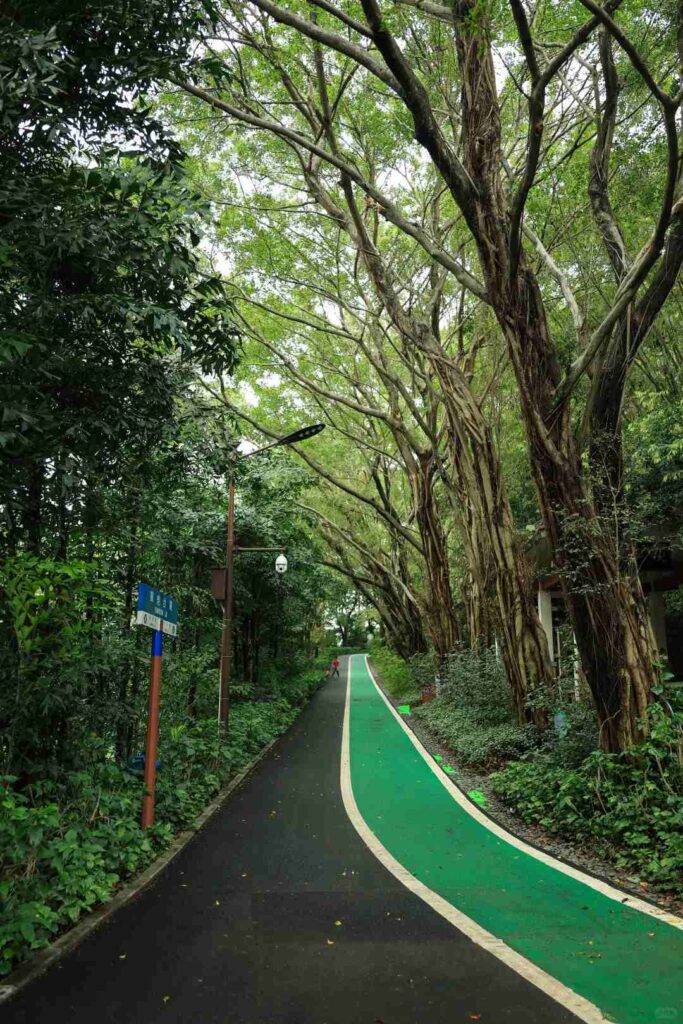
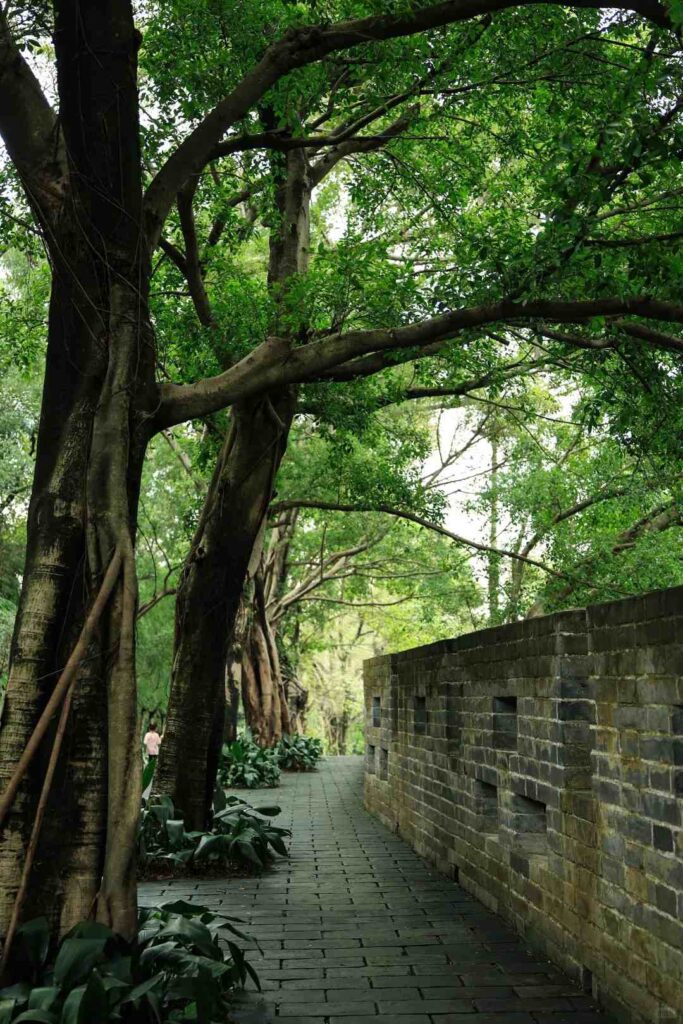
This is my favorite park in Guangzhou. It’s one of the largest parks in the city center and also has several important historic sites, including the old city wall, Zhenhai Tower (once home to the Guangzhou Museum), and the Sun Yat-sen Monument.
Guangzhou is known as the “City of Rams” because of the legend of the Five Rams, and the Five Rams Statue here is one of the city’s most recognizable landmarks.
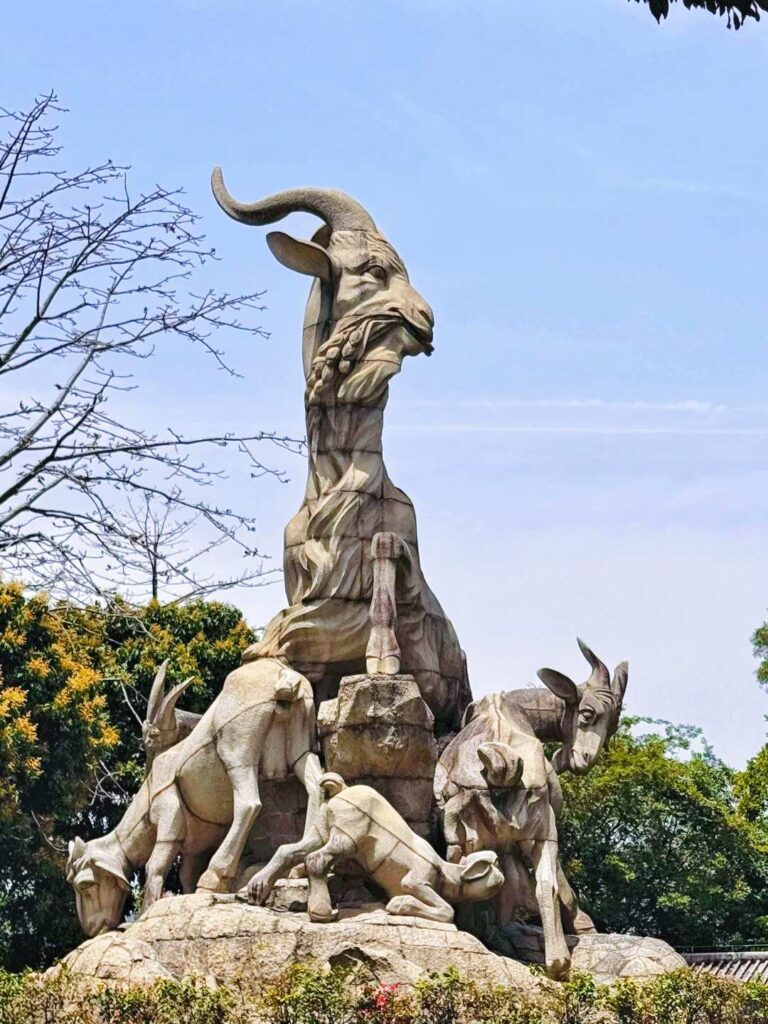
In addition to the historical spots, the garden is filled with greenery like banyan trees, palms, and other centuries-old trees. The lush environment created by the slopes, trees, open spaces, and monuments is typical of Lingnan style.
Read More: Guide to Visiting Yuexiu Park in Guangzhou
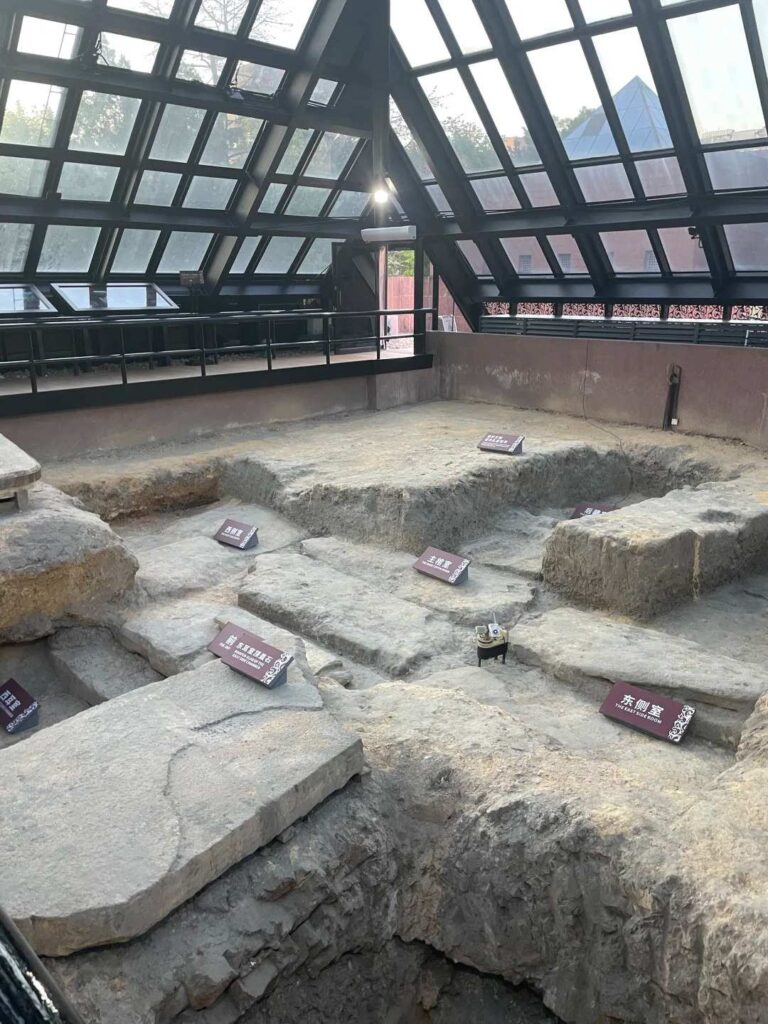
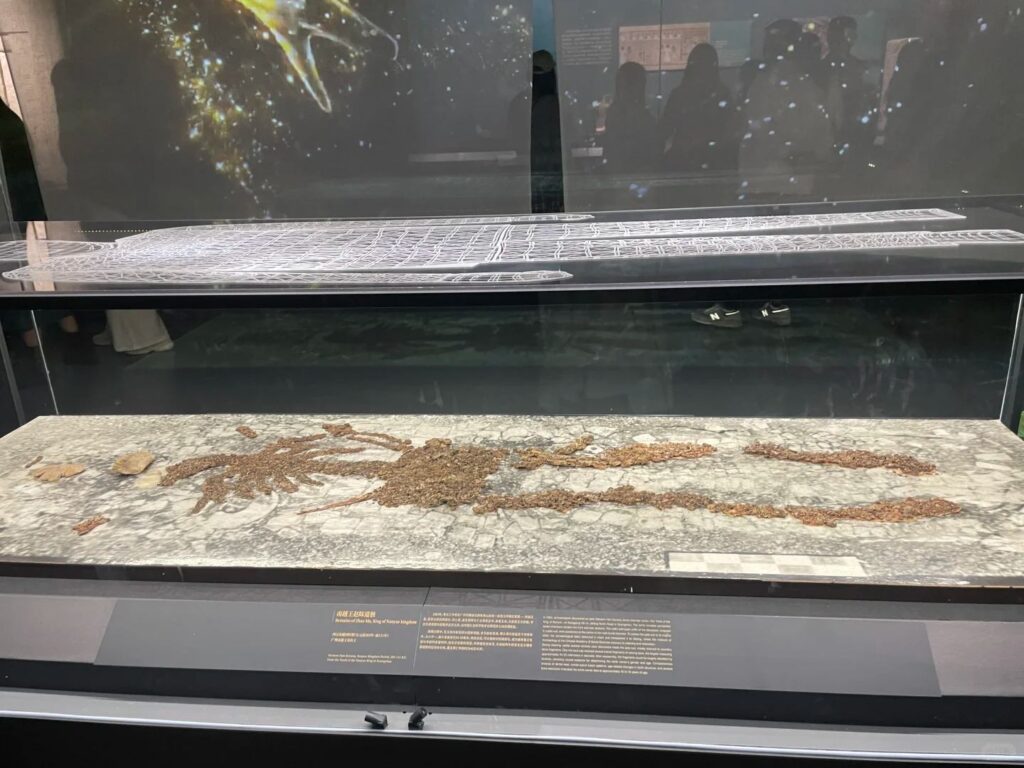
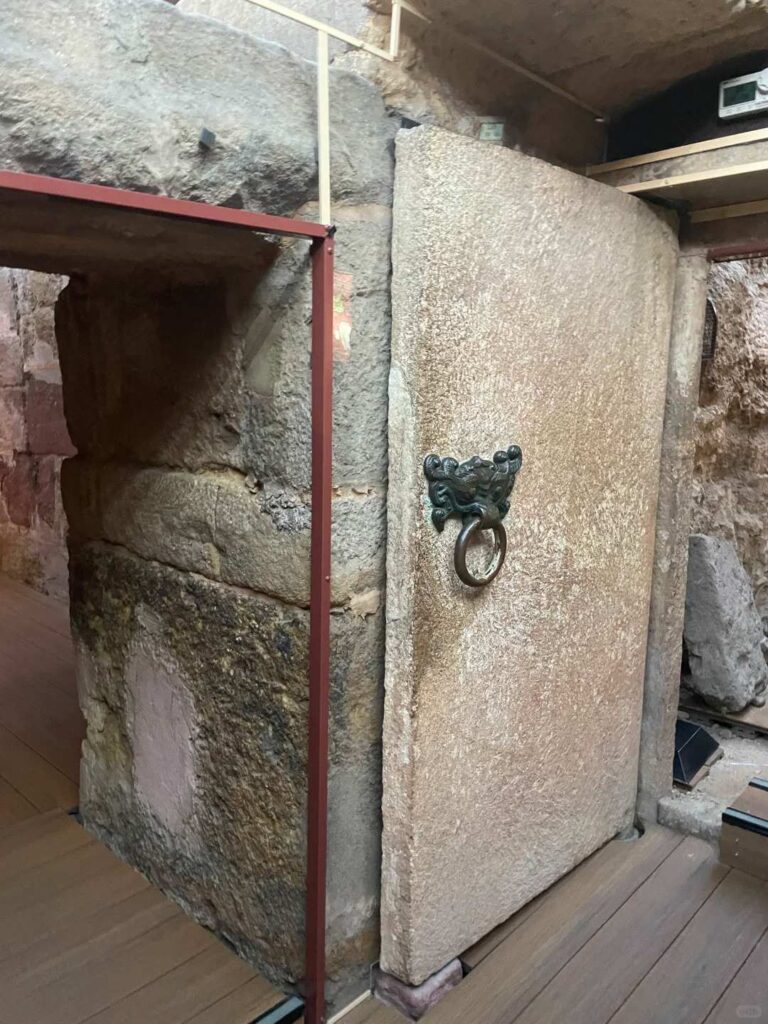
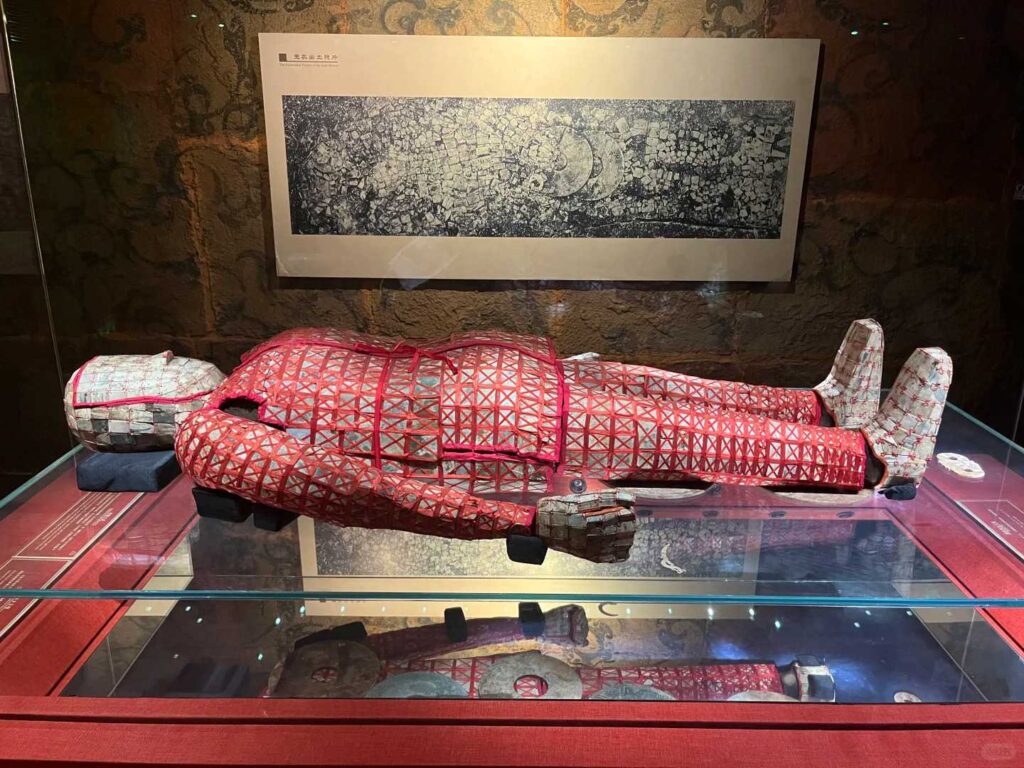
Mausoleum of the Nanyue King Museum (Must-Visit)
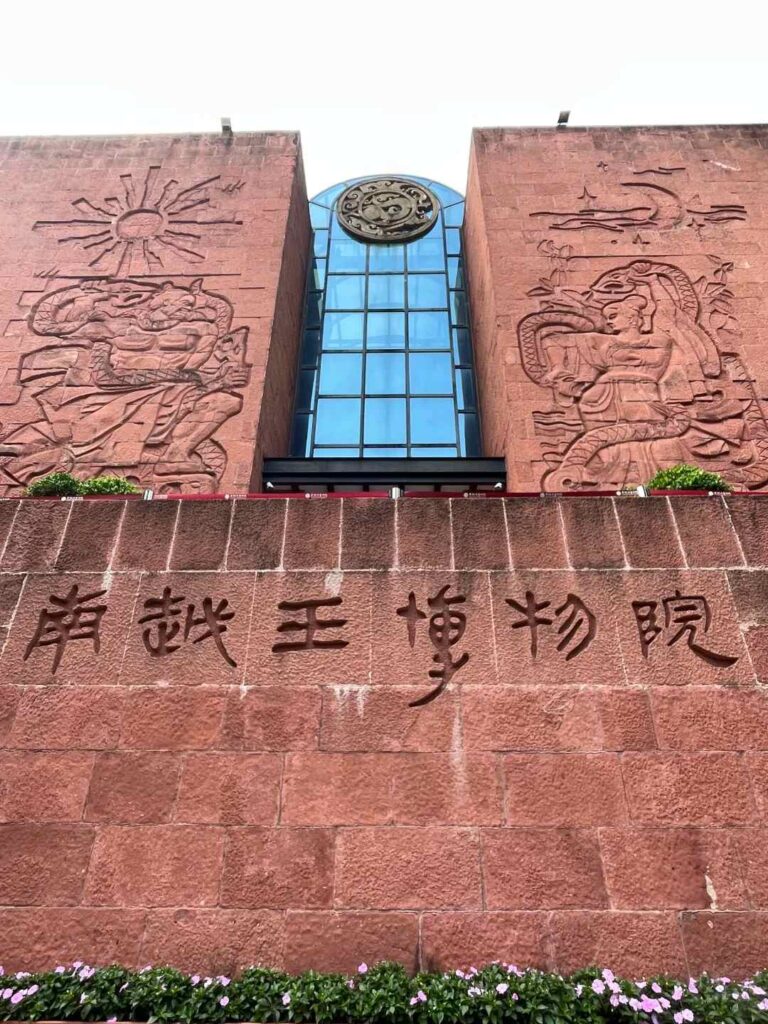
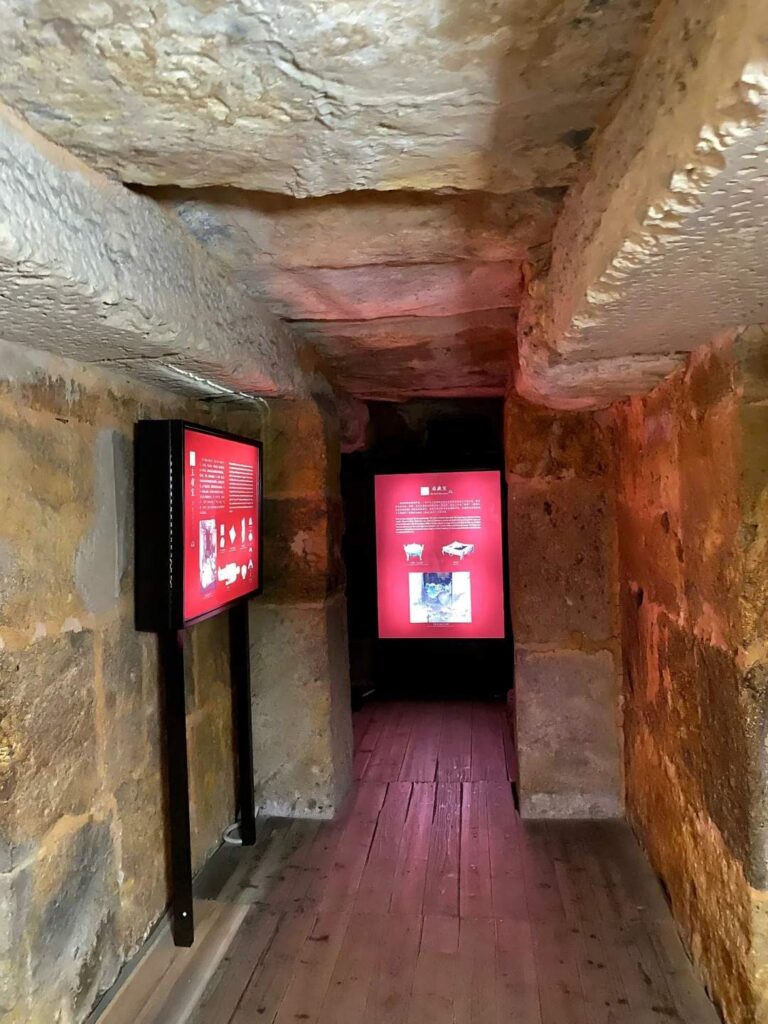
If you visit Yuexiu Park, I’d also recommend stopping by the Mausoleum of the Nanyue King Museum, near Exit E of Yuexiu Park Station. The museum stands on the actual tomb site of Zhao Mo, the second king of Nanyue, and displays many of the artifacts excavated from it. One of the most memorable parts of the museum is that you can actually walk into the tomb passage.
Getting there: Take Metro Line 2 to Yuexiu Park Station; the park is right outside Exit B1.
Admission: Free
Sun Yat-sen Memorial Hall (Recommended)
Sun Yat-sen Memorial Hall is just a short walk from the south side of Yuexiu Park, so it’s easy to visit the two together.
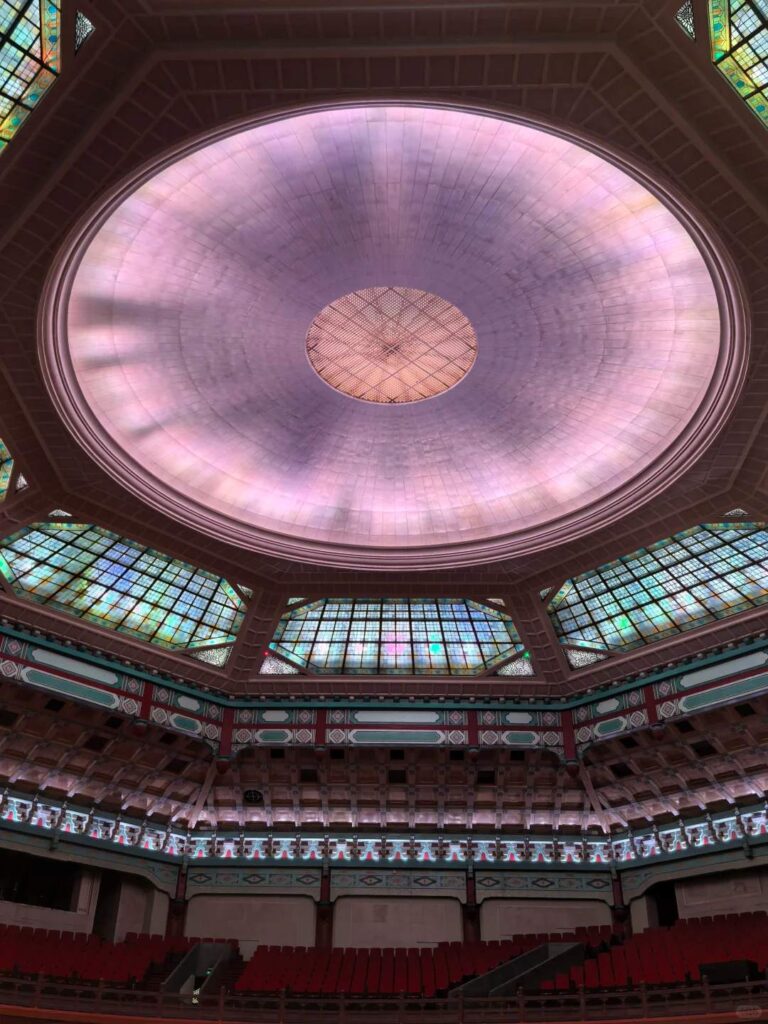
This is one of Guangzhou’s most recognizable historic buildings. It was built in 1931 on the former site of the presidential office used by Sun Yat-sen. Beyond its notable history, the architecture is distinctively Chinese, including the blue-tiled roof. The main hall inside is a vast space that can seat nearly 5,000 people, but isn’t held up by any pillars, which was an impressive feat for its time. The hall was designed so audiences can see and hear clearly from nearly any seat.
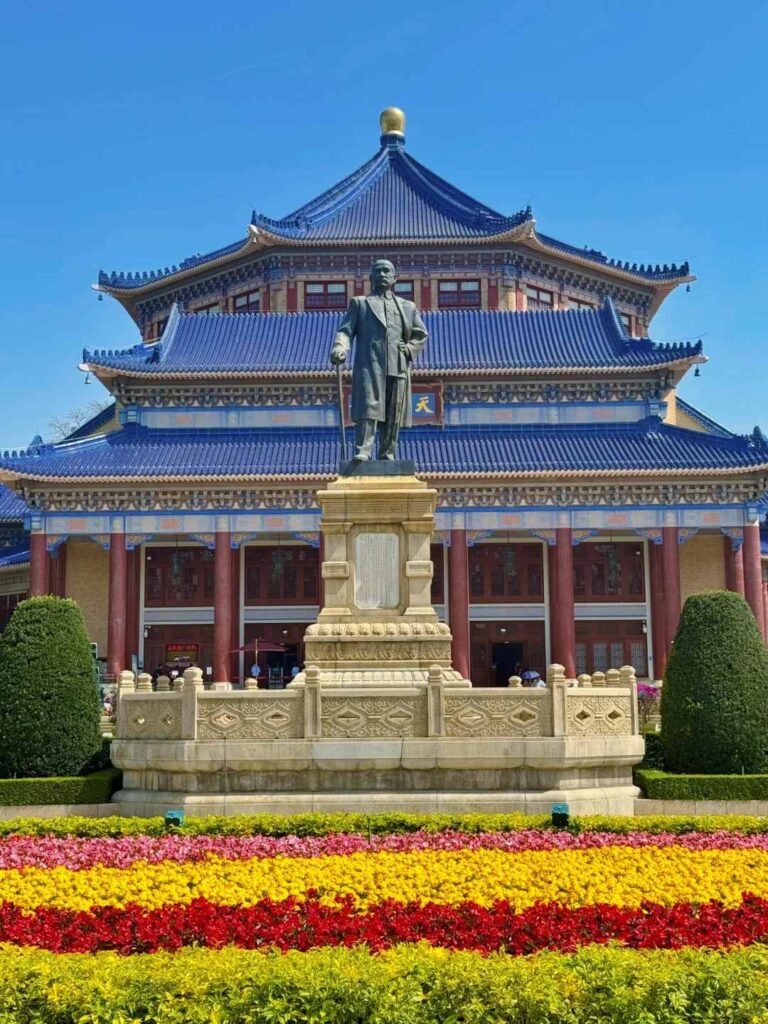
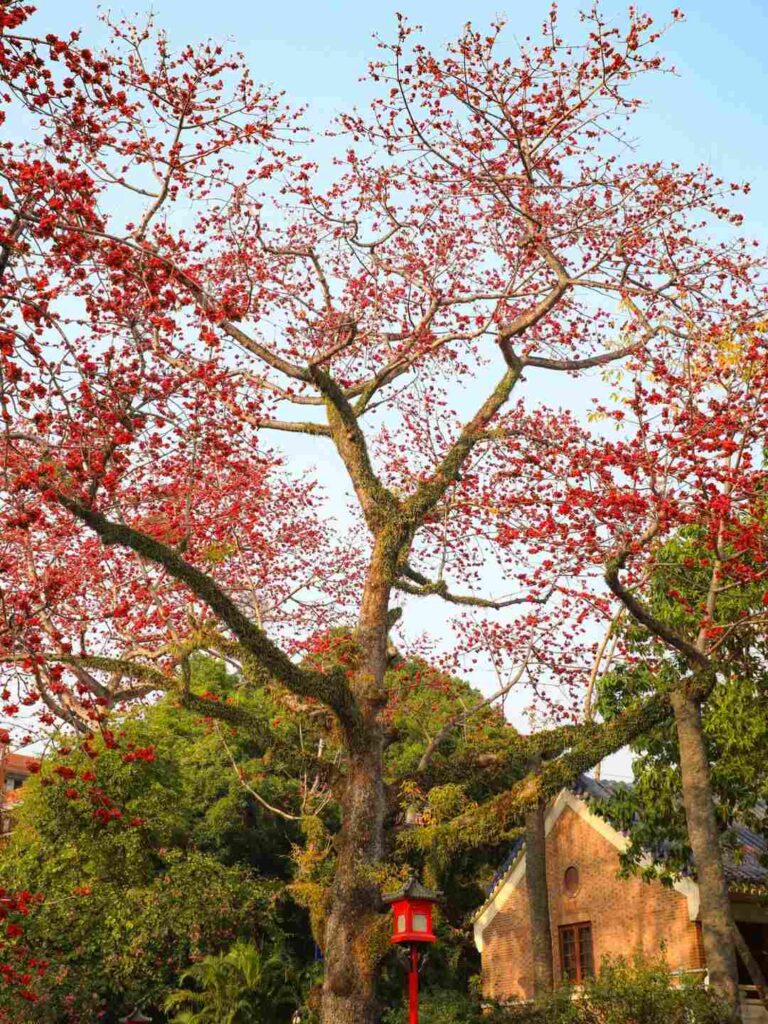
If you pass by the north gate, stop to see the kapok tree, which is more than 300 years old. The kapok is Guangzhou’s city flower, and because of its vivid red and bold appearance, it is often called the “hero flower.”
Tickets:
- The outer grounds are free to enter
- Entry to the main hall costs ¥10
Sacred Heart Cathedral (Recommended)
Sacred Heart Cathedral is one of the most beautiful churches in Guangzhou. It has stood for well over a century and remains an active Catholic church.
Construction began in 1863 and was completed in 1888, taking 25 years in total. Built largely from granite, it is known locally as the “Stone House.” It’s best known for its two twin towers and Gothic exterior.


The inside is solemn and larger than many visitors expect. It’s famous for its stained glass windows, which are beautiful in photos, especially if you’re there when the sun is shining through them.
This is still a place of worship today, so be sure to dress respectfully and speak quietly when visiting. Visiting hours can vary depending on the day and church services, so it’s best to check the current schedule before you go. It is usually closed on Mondays, and weekend visiting hours are different from weekdays.
Chen Clan Ancestral Hall (Must-Visit)
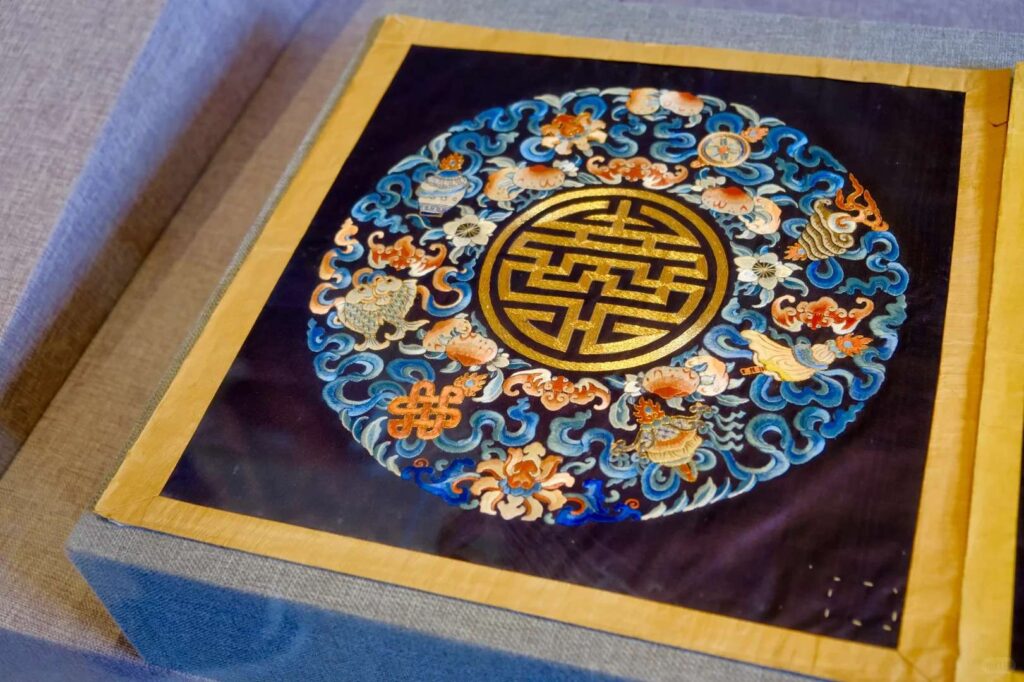
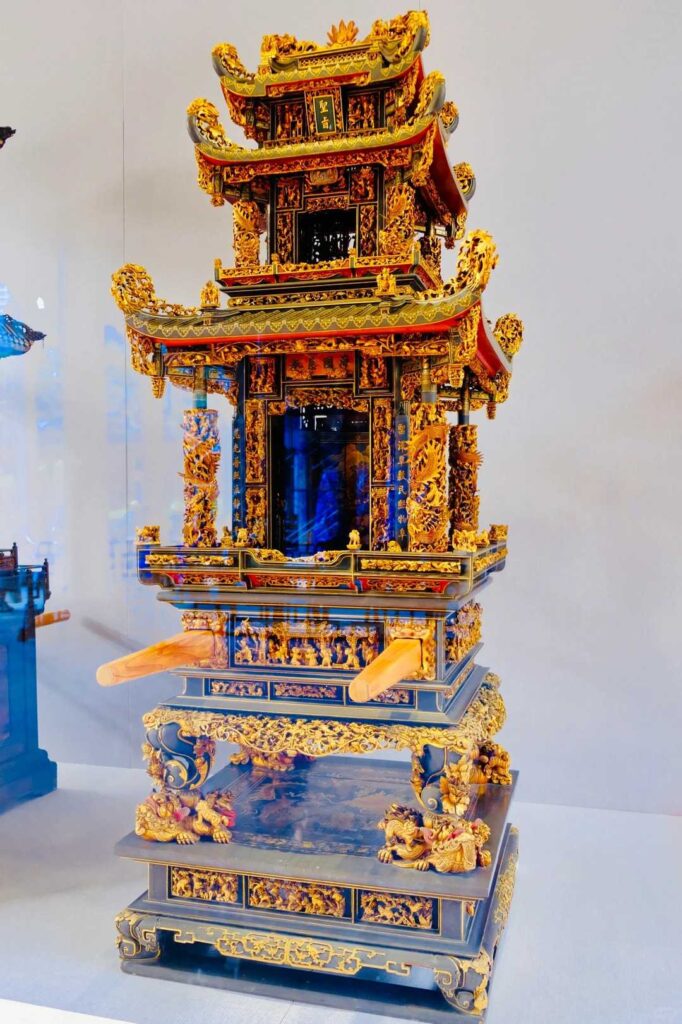
Chen Clan Ancestral Hall is one of the traditional landmarks in Guangzhou that I recommend most. It is widely regarded as one of the finest examples of Lingnan architecture.
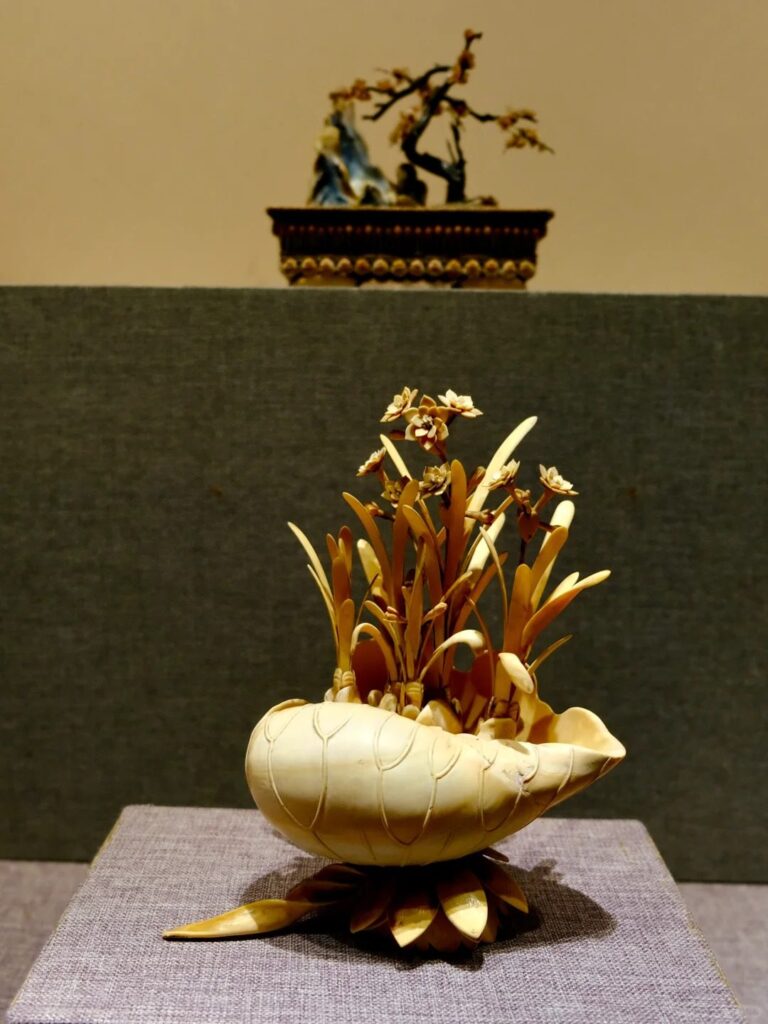
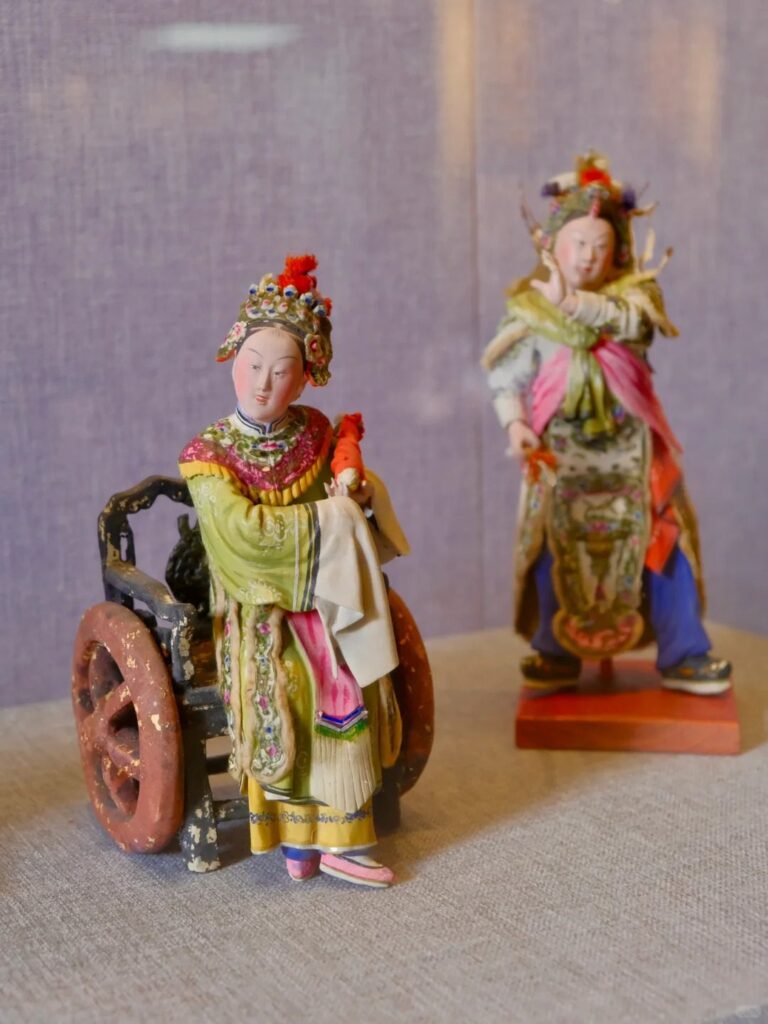
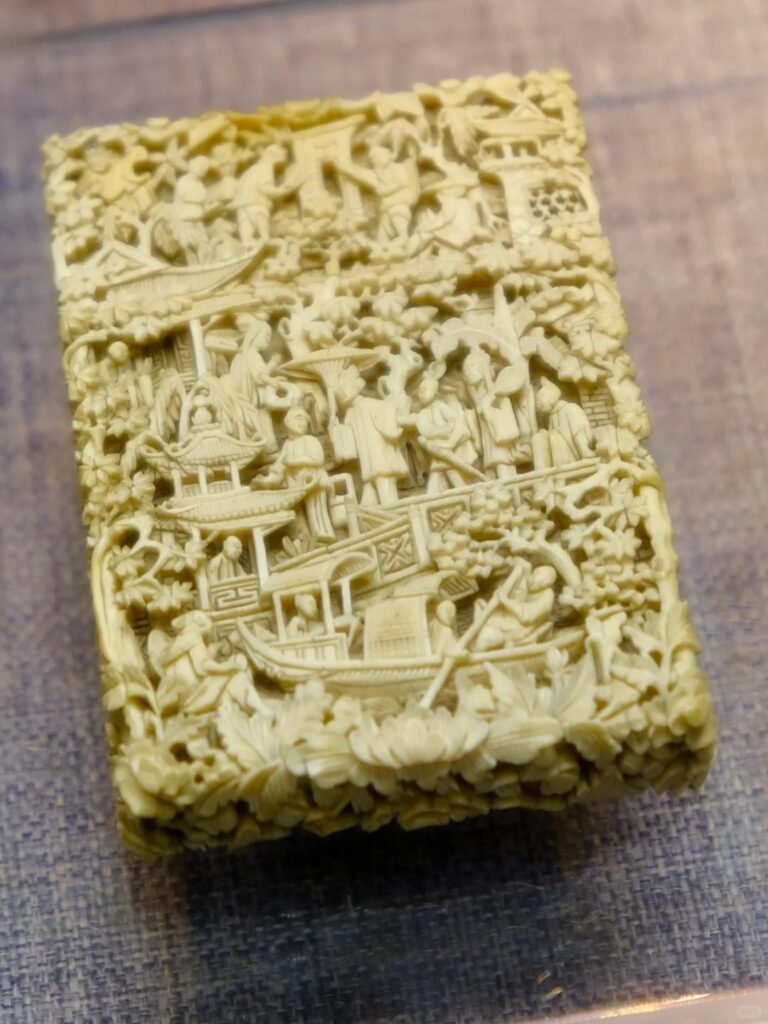
It was built during the Guangxu period of the Qing dynasty by members of the Chen clan from across Guangdong, and it originally served as both an ancestral hall and an academy. The architecture of the building is extraordinary, and its lavish decorations are what makes the site so famous. Inside, you can see a range of decorative details, including wood, brick, and stone carvings, ceramic work, and ornate roof decorations.
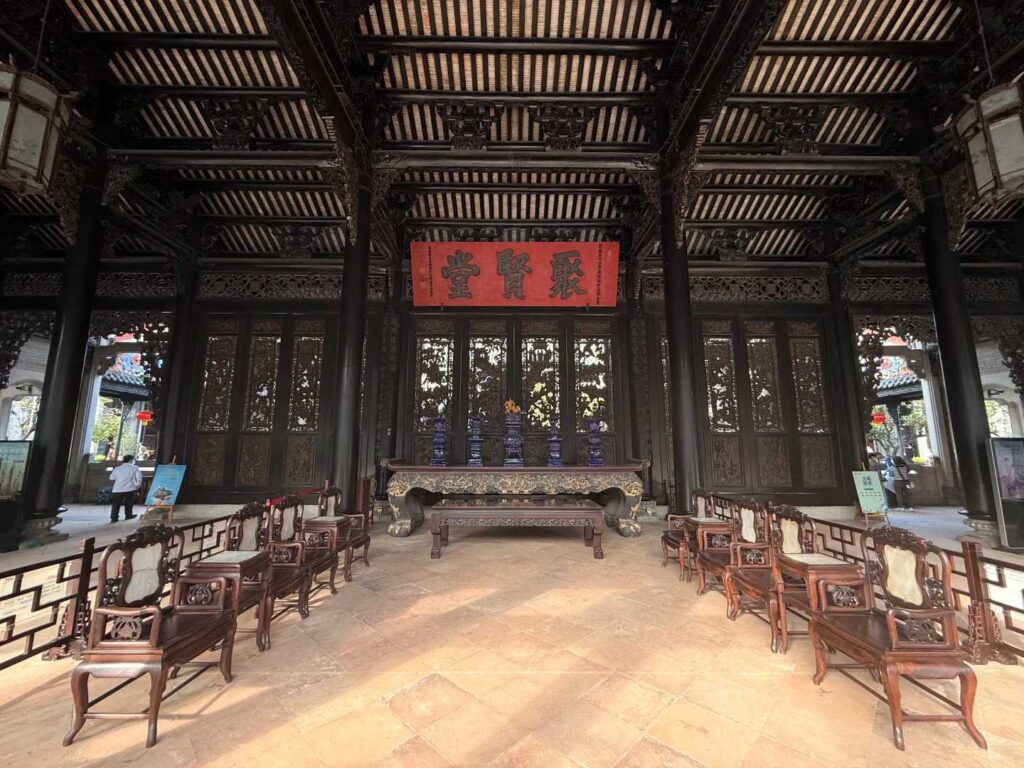
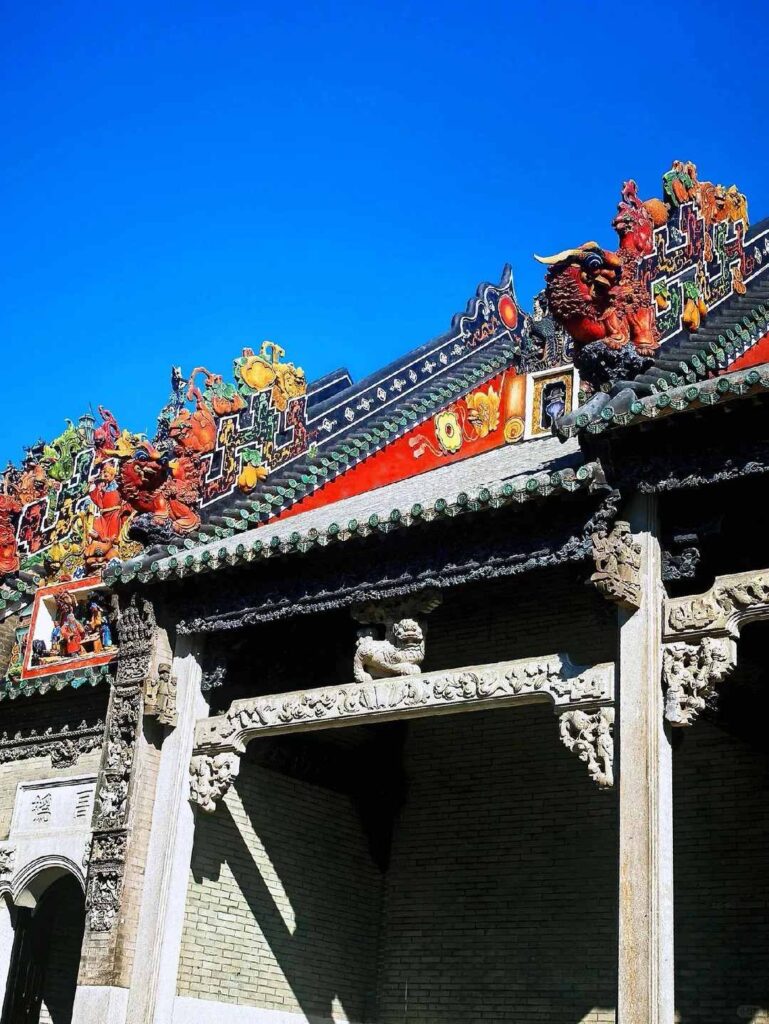
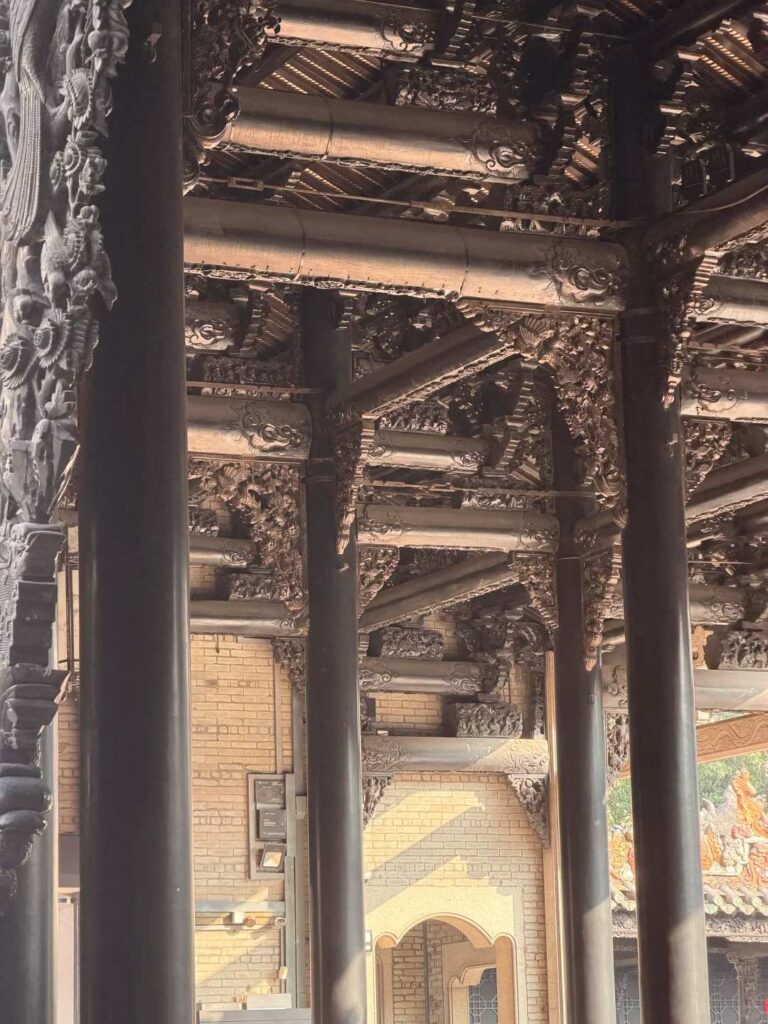
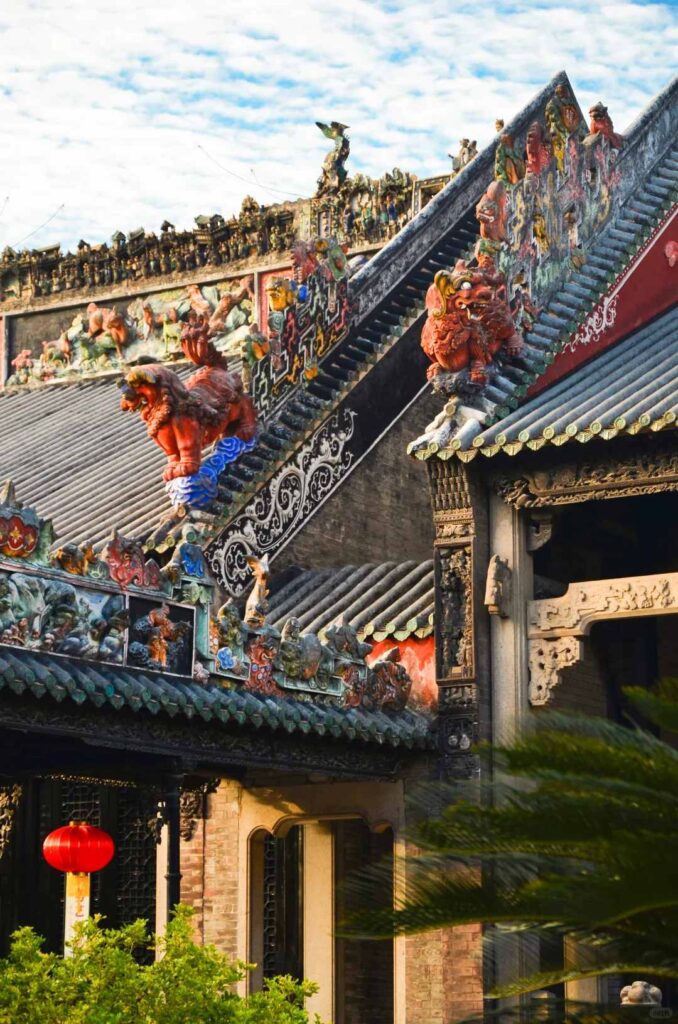
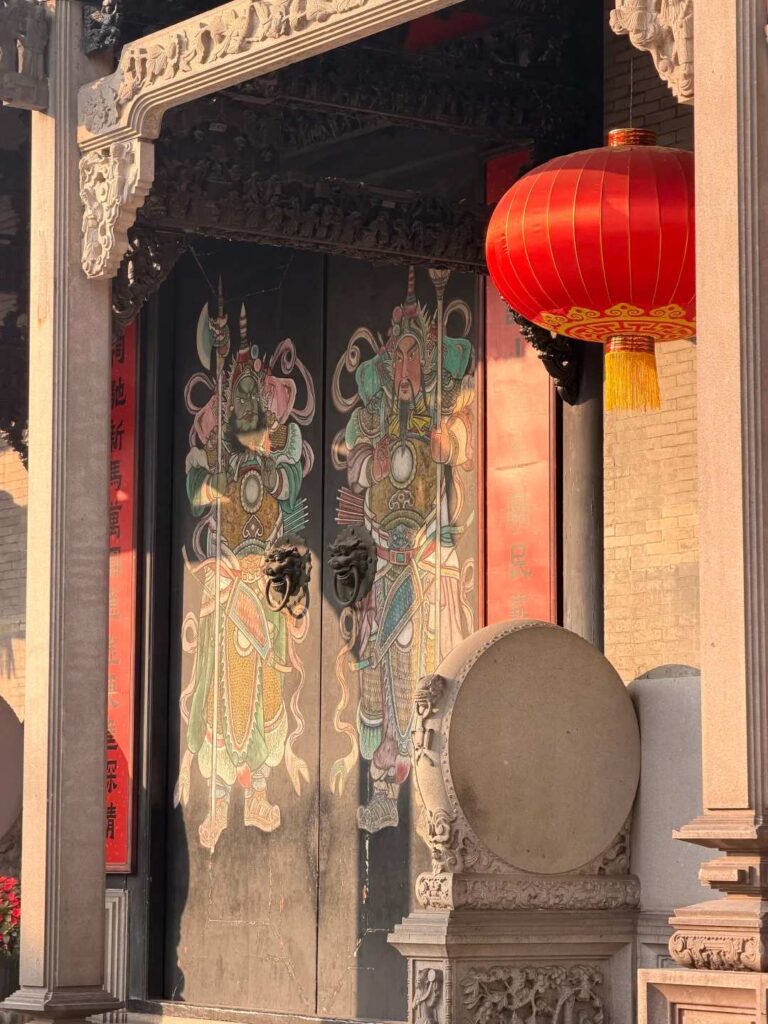
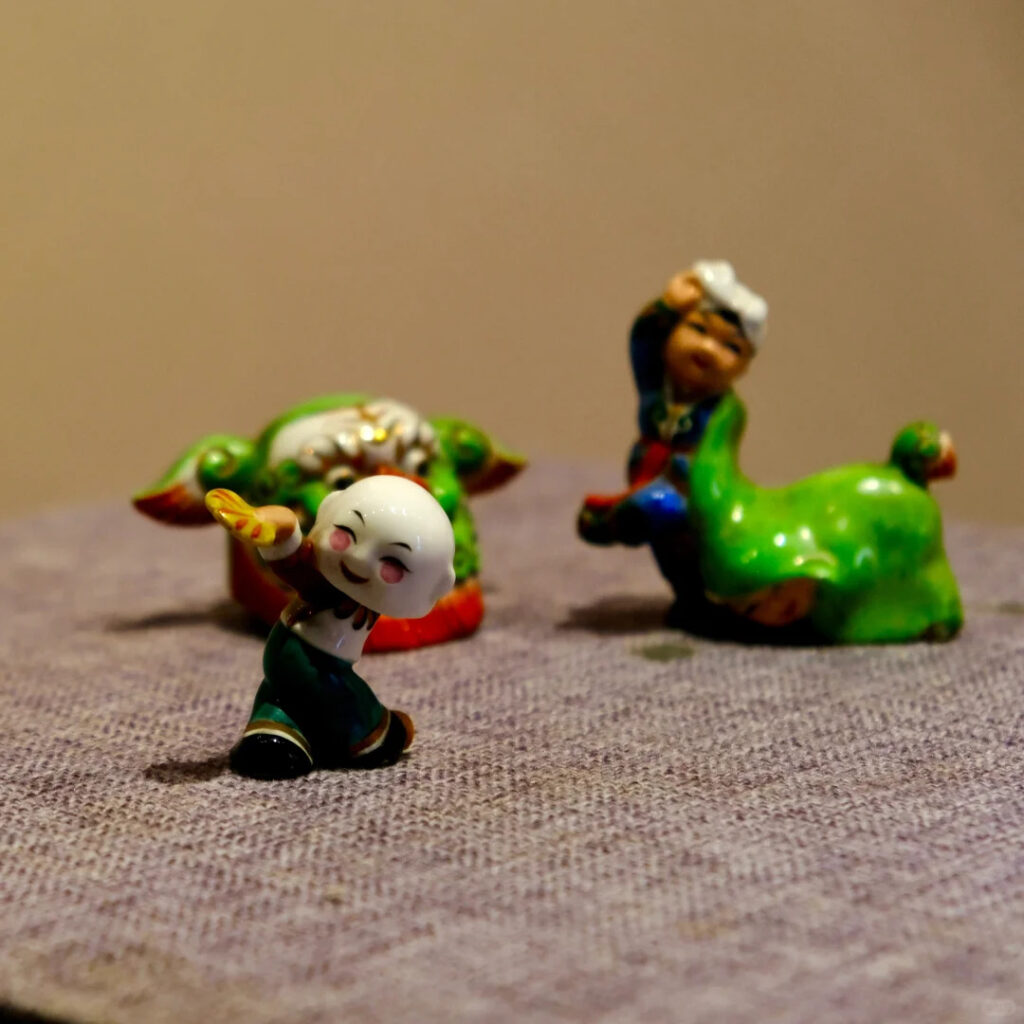
Today, it houses the Guangdong Folk Art Museum, where you can see exhibitions on traditional Lingnan art and craftsmanship. There are displays of traditional handicrafts, and sometimes live craft demonstrations. You can also get souvenirs, and compared to typical souvenirs, the items sold here are much more authentic and better keepsakes.
Getting there: Take Metro Line 1 or Line 8 to Chen Clan Academy Station, then use Exit D or E.
Hours: 9:00 a.m.–5:30 p.m.
Last entry: 5:00 p.m.
Closed: Tuesday
Tickets: ¥10 for adults; kids are free
Shangxiajiu Pedestrian Street (Recommended)
Shangxiajiu Pedestrian Street is a great place to visit if you want to experience old Guangzhou. It’s one of the city’s best-known shopping streets and is often described as China’s first pedestrian shopping street. It stretches over about 1.2 kilometers and is packed with shops, restaurants, and old local businesses.

The area has a long trading history and was once one of the main commercial hubs of old west Guangzhou. What stands out most today is the long row of qilou buildings lining both sides of the street. Qilou are one of the most recognizable building styles in old Xiguan, Guangzhou’s traditional western quarter. Their upper floors extend over the sidewalk, creating covered walkways that protect people from sun or rain, which makes a lot of sense in Guangzhou’s hot, wet climate. The architecture reflects a clear mix of Chinese and Western influences, and walking here gives you a sense of what the streets of old Guangzhou once looked like.
Beyond the architecture, this is also a great place to take in Guangzhou’s street life and try local snacks. You can look for local classics such as double-skin milk, sampan congee, ginger milk curd, and roast goose. You can also browse the shops and pick up small, inexpensive items. At night, the lights come on and the street stays busy and lively.
Shamian Island (Must-Visit)
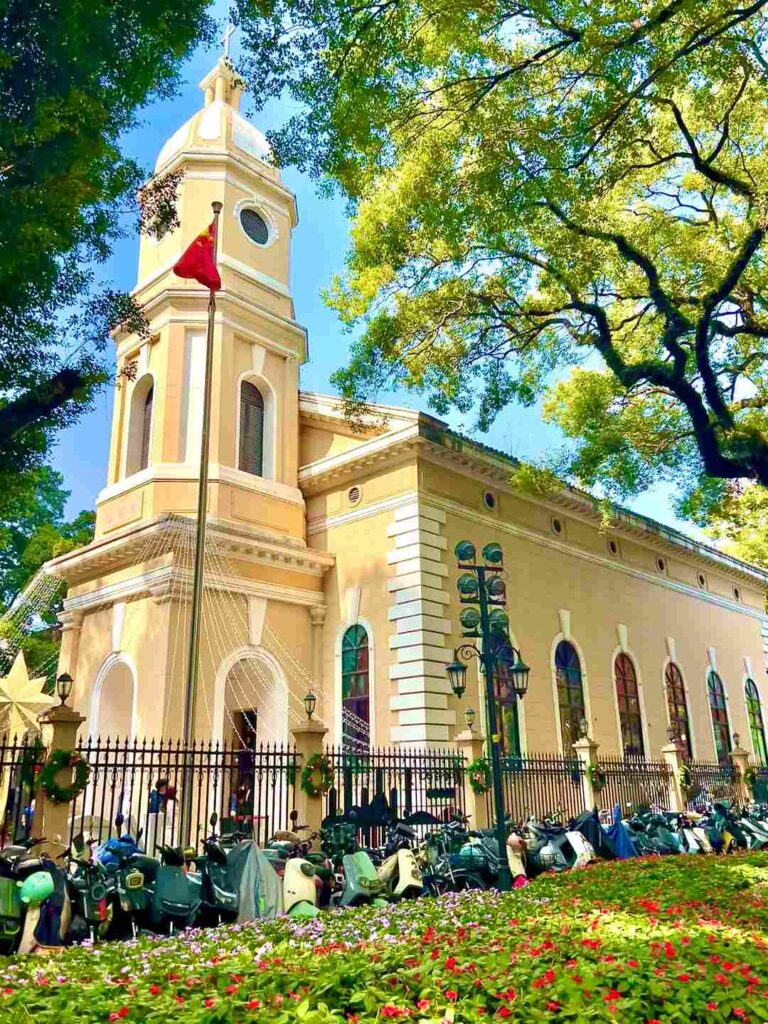
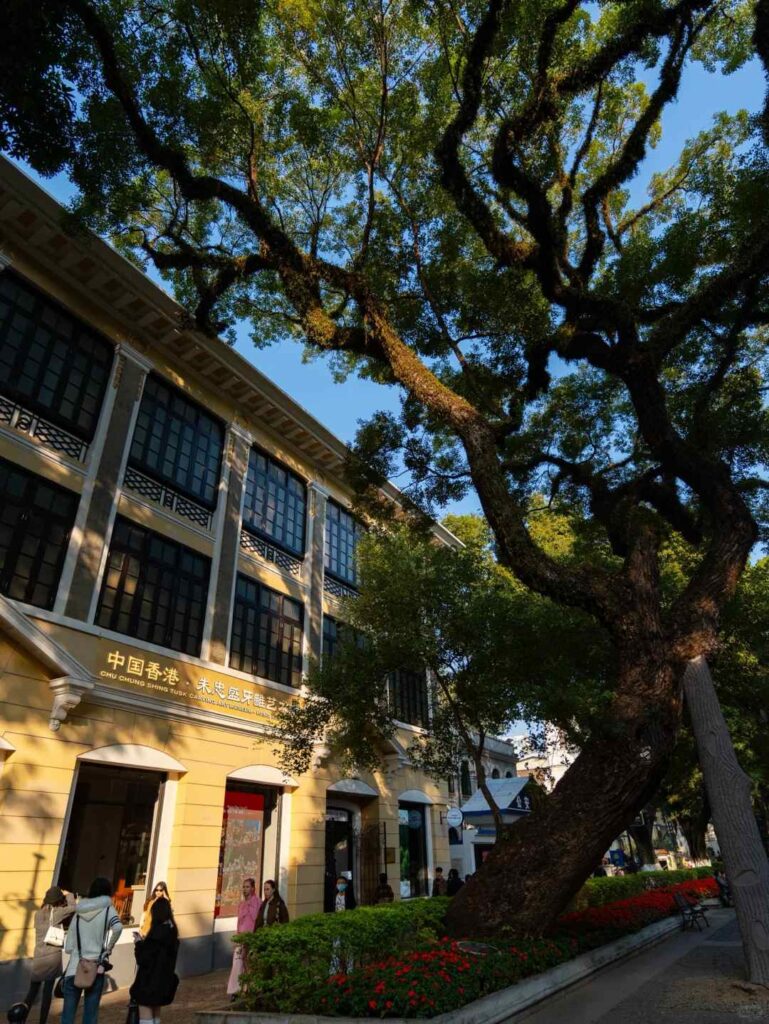
Shamian Island is often called “Guangzhou’s little Europe.” It’s known for its tree-lined streets, European-style buildings, and relaxed riverside. Because it’s free to enter, it’s a good place to slow down and take photos.
One of the best things about Shamian is how well its historic buildings have been preserved. In the late nineteenth and early twentieth centuries, this area was part of the British and French concession, which is why the island still has so many Western-style buildings today. Walking here is like stepping into an old European neighborhood, and there are 56 nationally protected historic buildings and sites to explore.
 Shamian Island
 Shamian Island
Shamian has wide streets and lots of shade from old trees, which makes the area calm and very green. The island is home to 137 old trees, and the oldest is more than 300 years old! With historic facades, churches, vines, and old trees, the area photographs beautifully.
Some of the old buildings now house cafés, restaurants, shops, and cultural spaces, so there are lots of places to stop in to take a break. I’d recommend going in the afternoon or around sunset, when the light is softer and it’s more pleasant to walk by the river. Early morning is also nice if you want fewer people and less noise. During holidays, it gets much busier during the day.
Many local residents still live on Shamian, so when you visit, be mindful of your noise level and avoid wandering into residential buildings or courtyards.
Read More: Shamian Island Guide
Baiyun Mountain (Recommended)
If you want a break from the city, along with fresher air and better views over Guangzhou, consider visiting Baiyun Mountain. It is one of the city’s best-known natural landmarks, with more than 30 peaks. The highest is Moxing Ridge, at 382 meters. From higher up, you get great views over the city and the Pearl River.
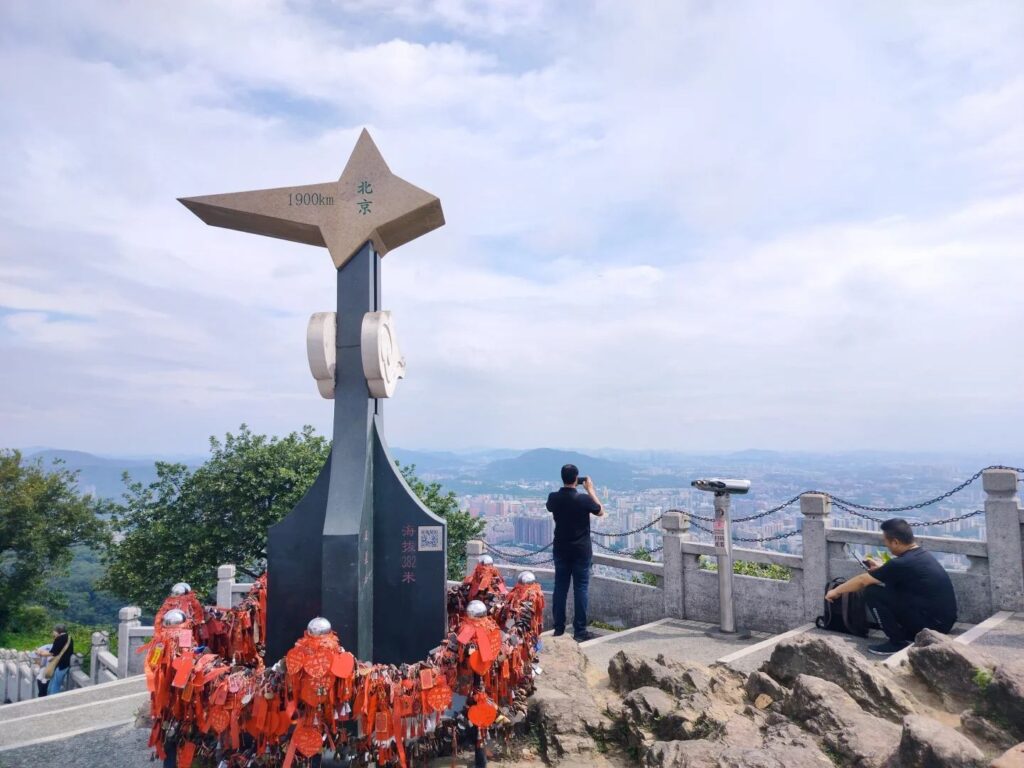
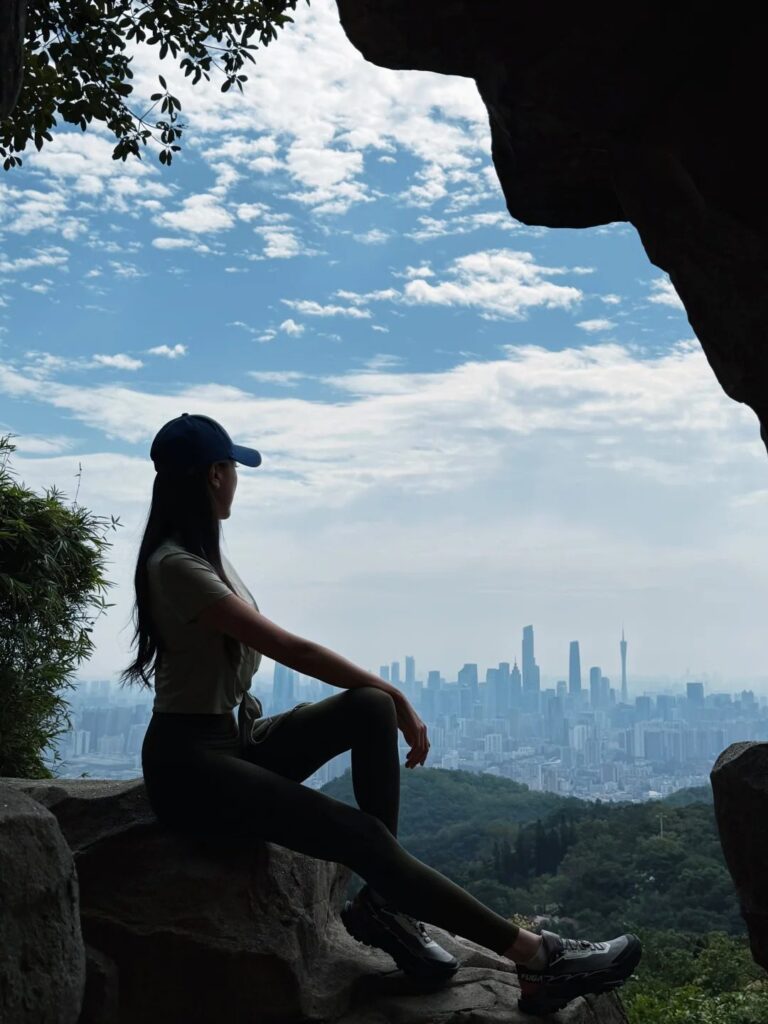
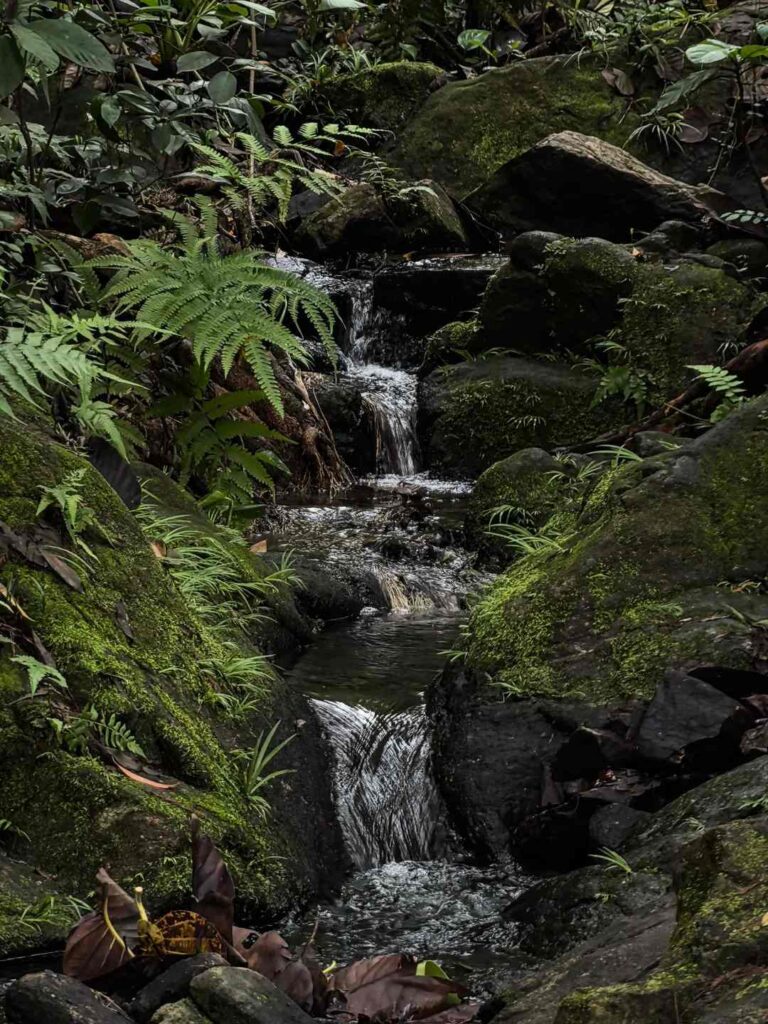
The hikes here aren’t super challenging, as the area is more like a park on the edge of the city. There are walking routes of different lengths and difficulty levels, so you can take your time and enjoy one that works best for you. If you’re traveling with kids or don’t want to walk the whole way, you can take the cable car or use the sightseeing buses in the park. If you do the whole thing on foot, it usually takes about five to six hours. Taking the sightseeing bus for part of the route will save you about an hour.
Pro-tip: There can be a lot of mosquitoes on the mountain, so bringing bug spray is a good idea.
Cable car: ¥25 uphill, ¥20 downhill
Sightseeing buses: ¥10–20 one way, depending on the route
Admission: ¥5
Read More: Guide to Visiting Baiyun Mountain
Yongqing Fang (Must-Visit)
One of my favorite things to do in Guangzhou is to explore Yongqing Fang, a historic neighborhood in Liwan District that showcases both old and new Guangzhou. There are streets that date back hundreds of years and many Cantonese historical and cultural sites.
The area also has many charming old stores, with local crafts and small cultural exhibits. Depending on the day, you may also come across Cantonese opera performances or other events linked to local traditions.


Yongqing Fang is best enjoyed slowly, so it’s worth setting aside about half a day for it. I personally recommend arriving around 4:00 p.m. and staying into the evening.
In the daytime, I suggest wandering the lanes and looking at the qilou, the arched buildings typical of old Guangzhou, and browsing the specialty shops. I personally think that at night, when the lights come on, the area feels more charming and full of character.
Moon Bridge is one of the best photo spots in Yongqing Fang, especially in the evening when the bridge and its reflection resemble a moon shape on the water. During peak season, this area can get crowded, so if you want photos, it’s best to get there early.
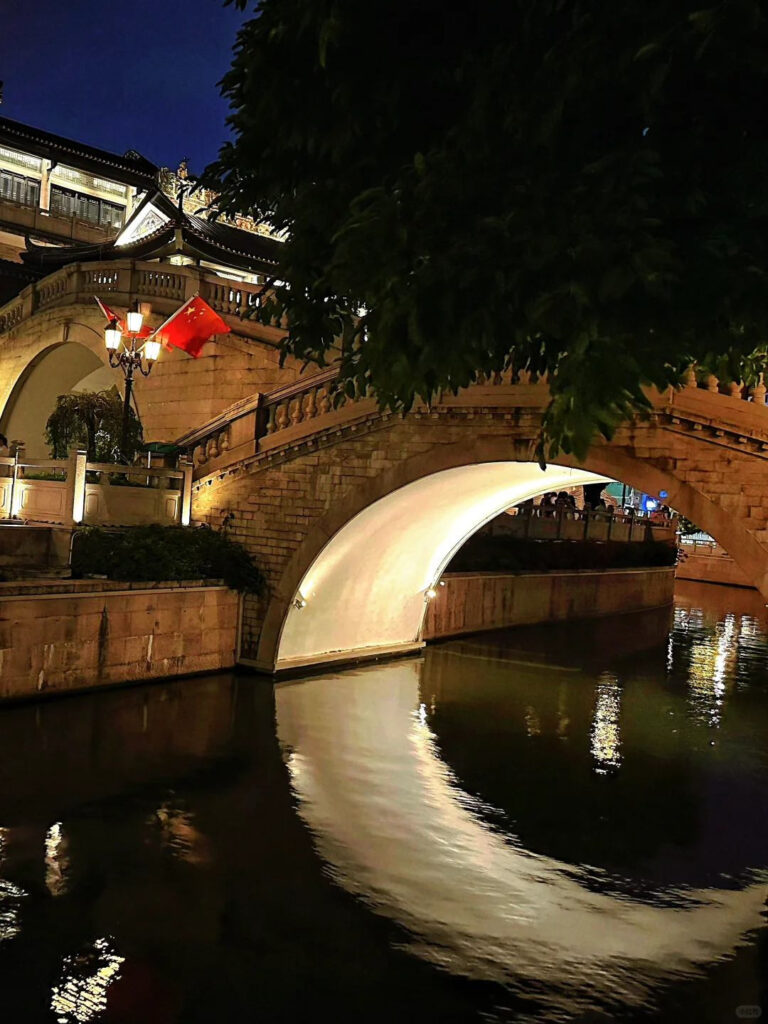
Another spot to check out is Bruce Lee’s Ancestral Home. Besides learning more about his family background, you also get a closer look at what a traditional Xiguan-style mansion in old Guangzhou was like. It’s also free to enter.
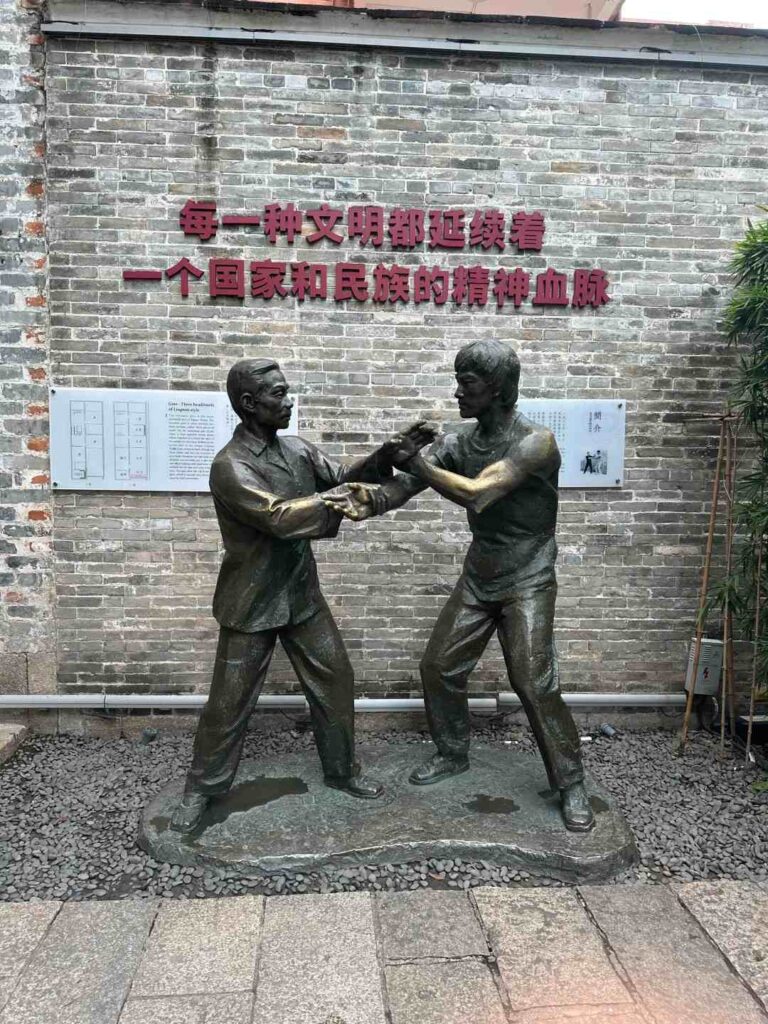
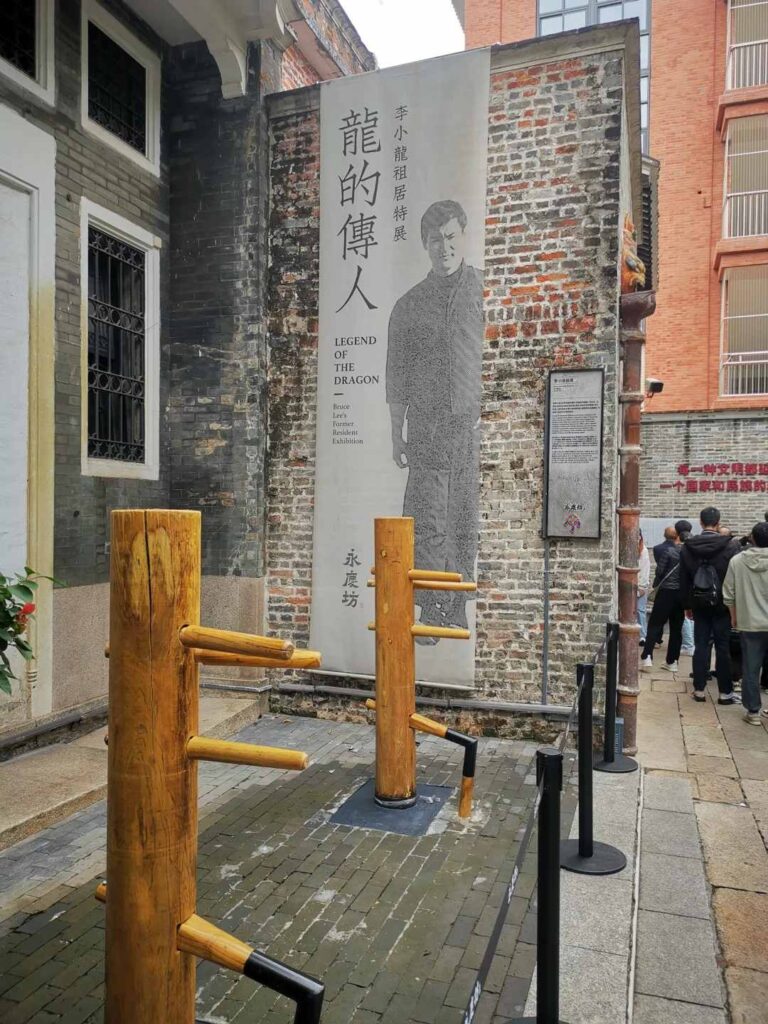
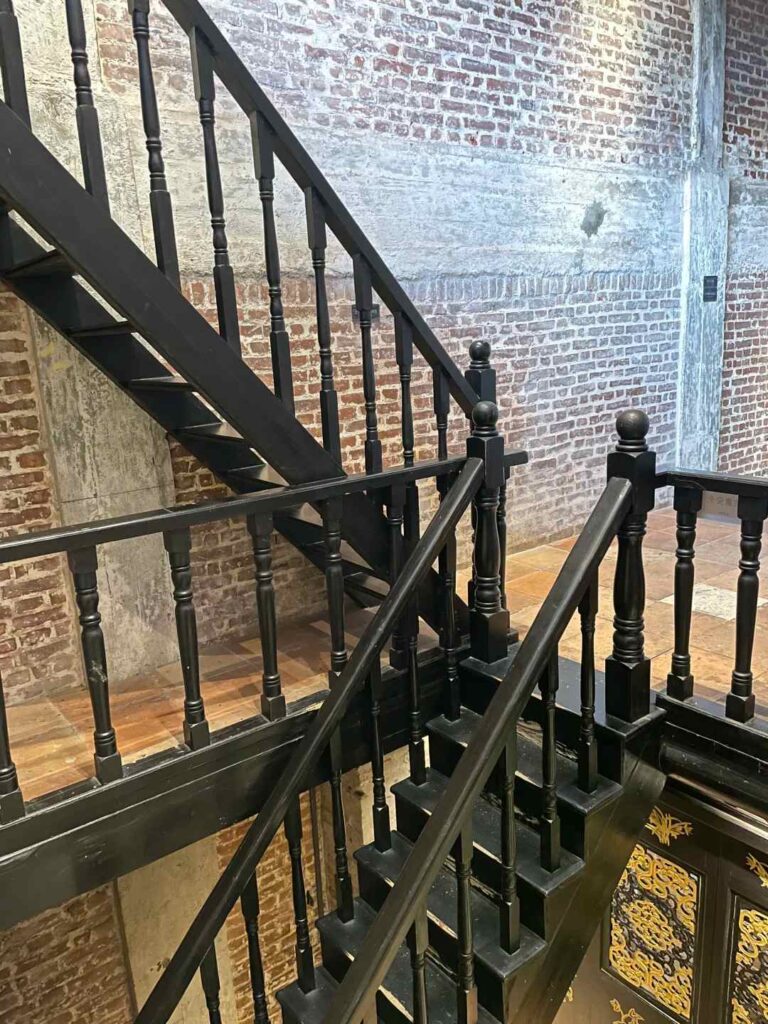
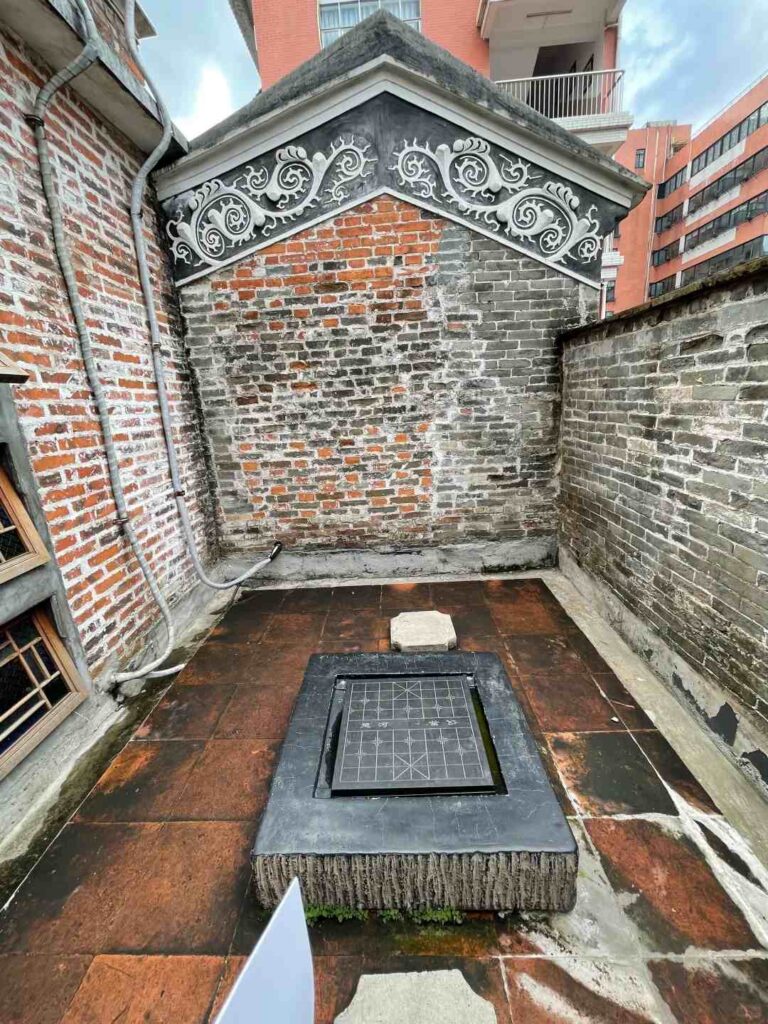
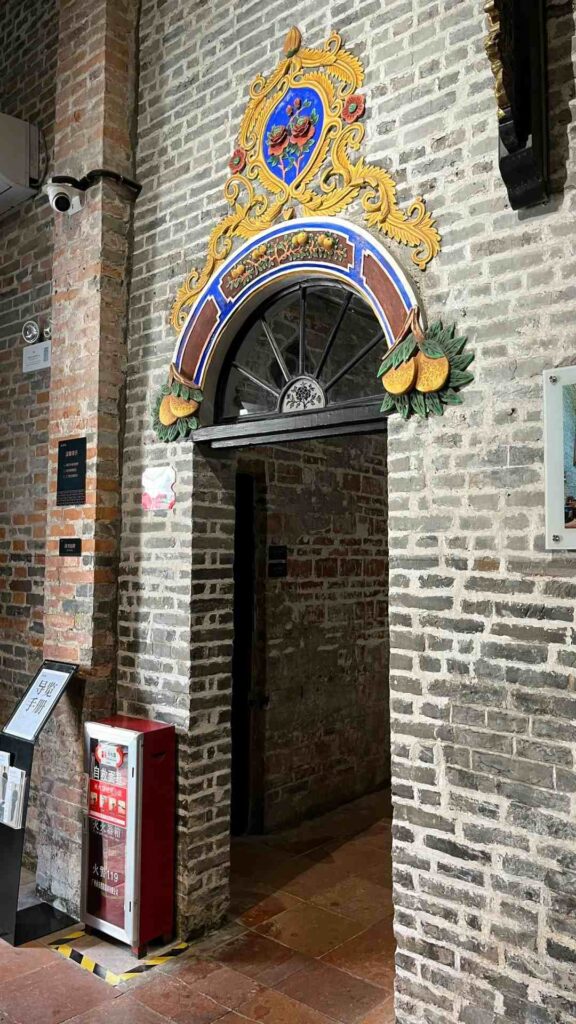
If you have more time, you can also walk over to the nearby Enning Road Historic District and explore that area.
Read More: Yongqing Fang – A Complete Travel Guide for First-Time Visitors
Sun Yat-sen University South Campus (Recommended)
Sun Yat-sen University is one of China’s top universities, and the South Campus is like a historic garden. When you arrive at the south gate, you’ll see the university’s name in Sun Yat-sen’s own calligraphy. The inscription is now more than a hundred years old!
If you walk from the south gate toward the north end of campus, you’ll pass huge trees, wide lawns, and many century-old buildings. The campus is very peaceful and very green.
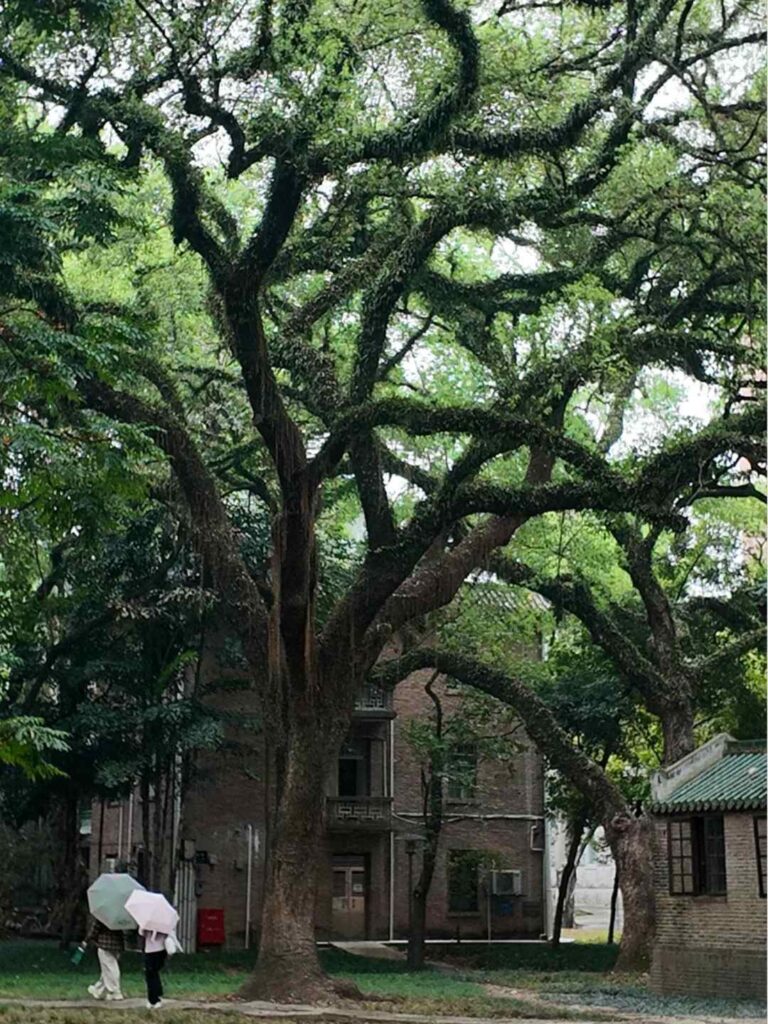
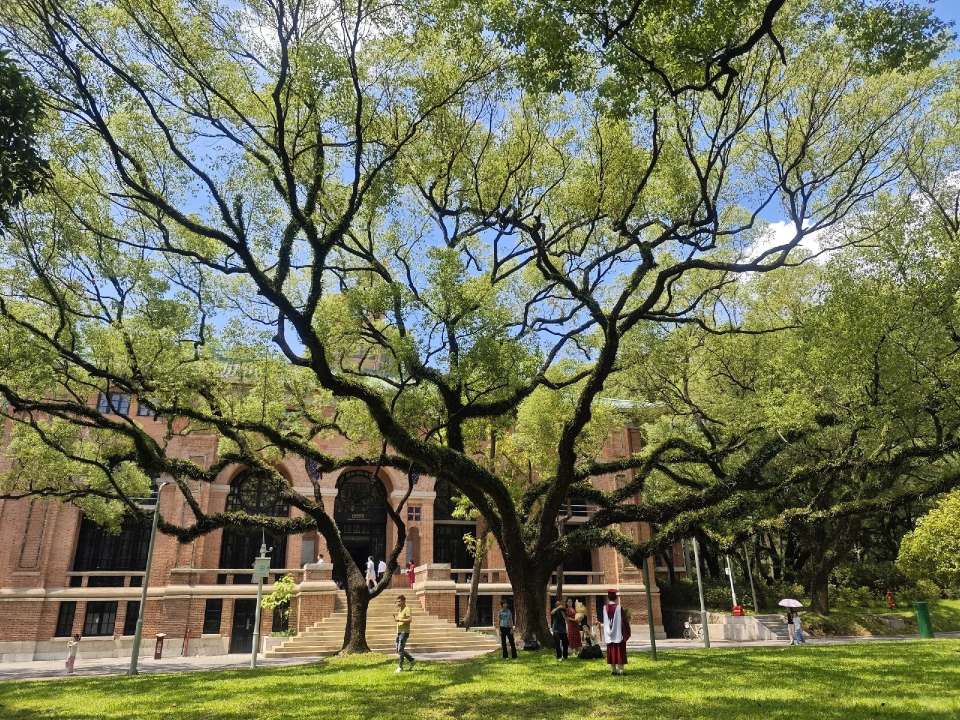
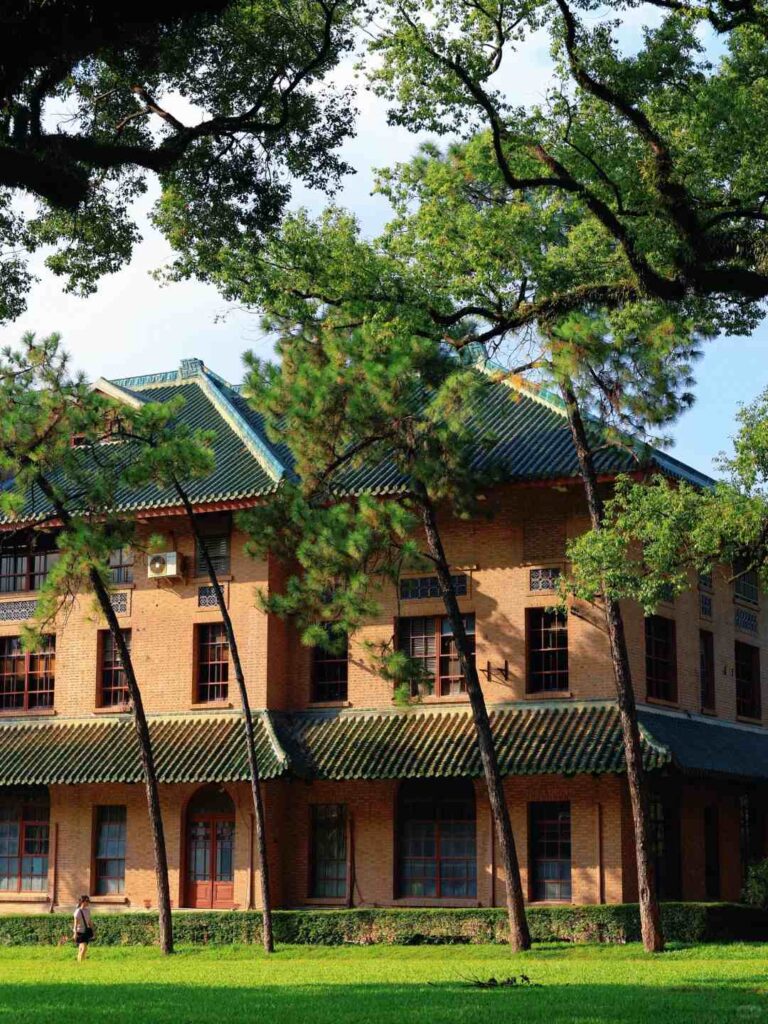
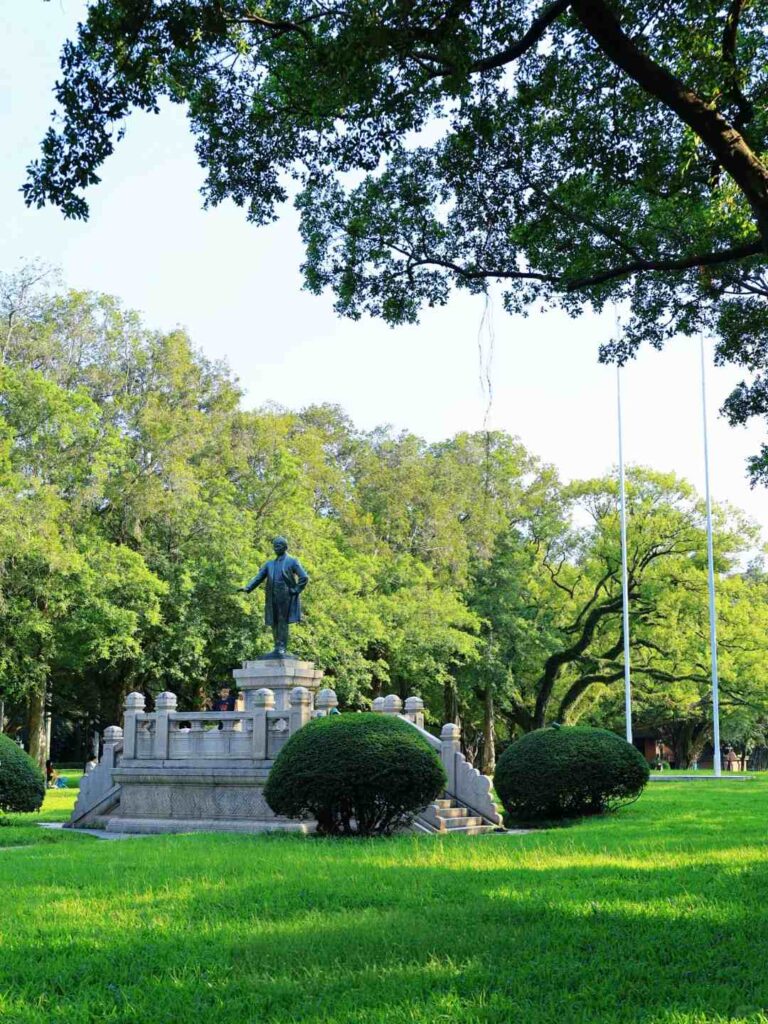
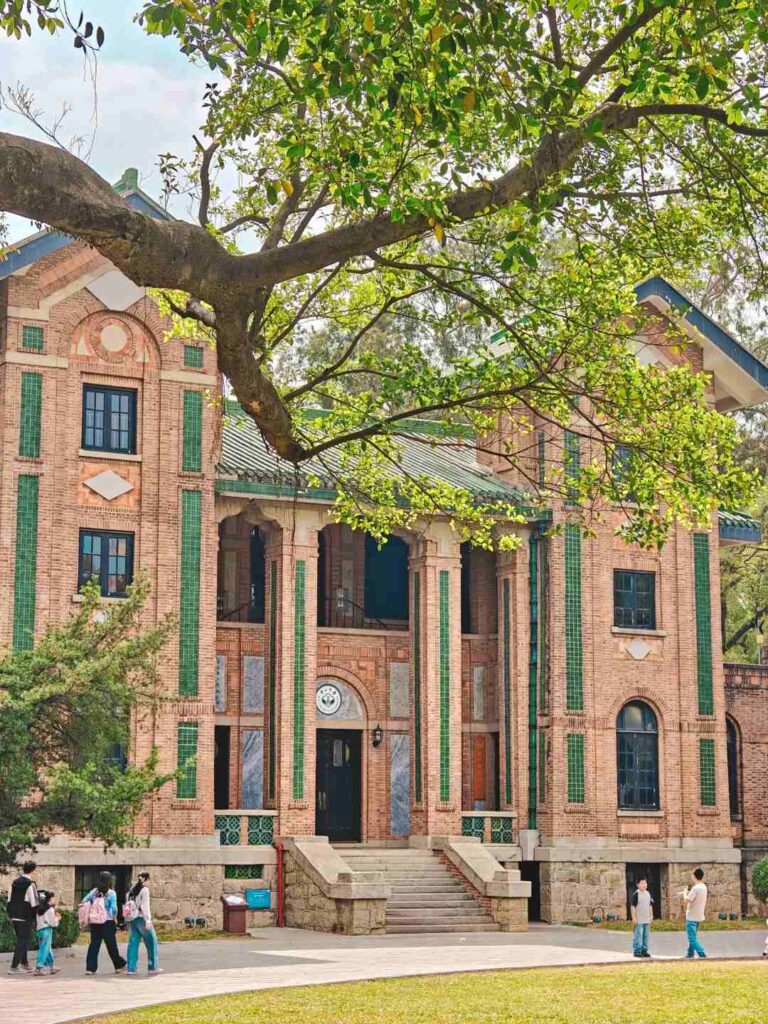
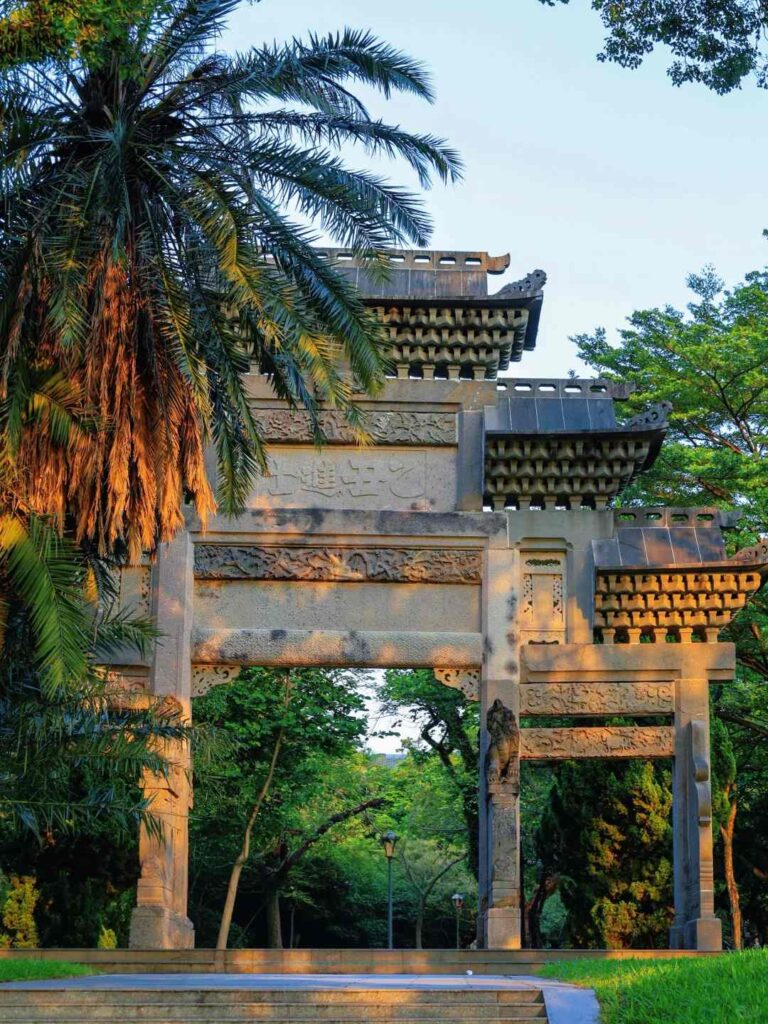
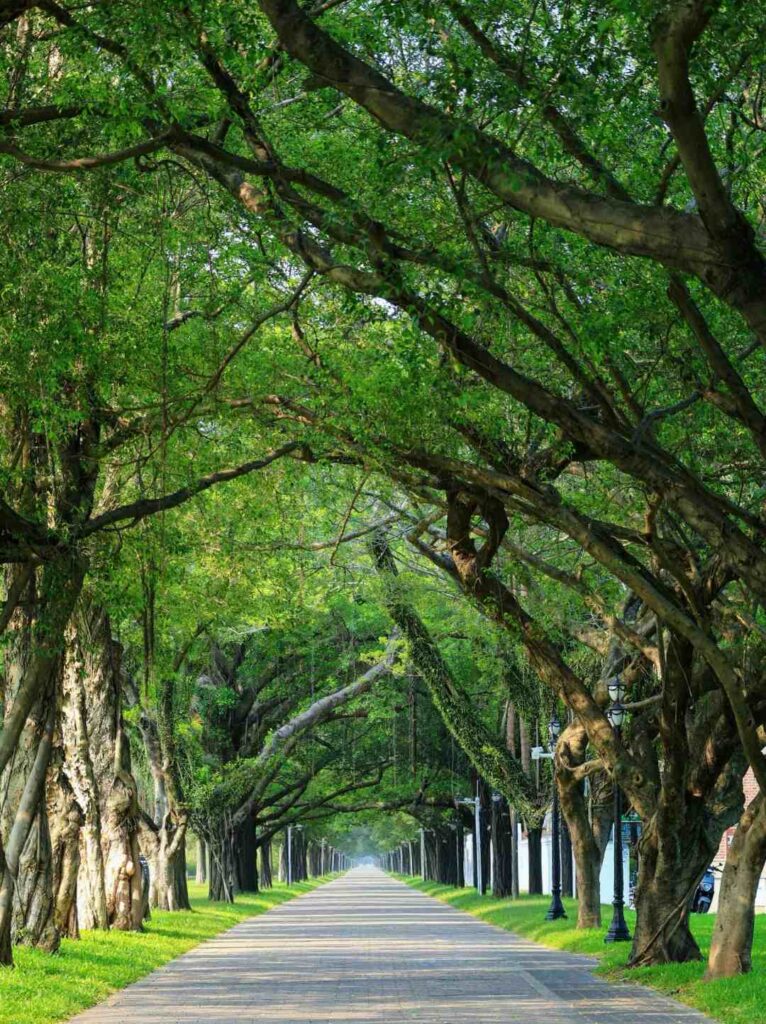
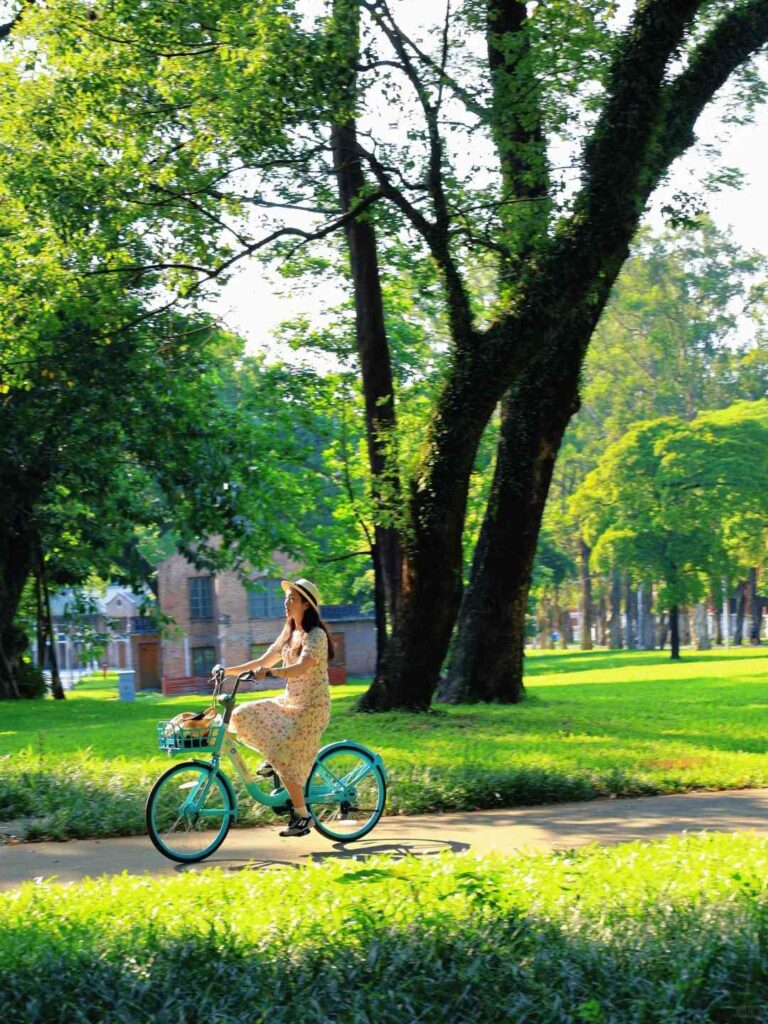
The South Campus is fairly large, and if you want to explore it at a relaxed pace, it usually takes about 90 minutes. I’d suggest combining walking with a shared bike, since that makes it easier to get around.
That said, shared bikes can be harder to find during holidays, when there are more visitors around. Based on my own experience, after entering through the south gate, your best bet is the 7-Eleven by the first intersection on the right. If you can’t find a bike, though, it’s still easy to explore the campus on foot.
When you’re done, head toward the north end of campus. Right outside is the Pearl River, and across it you’ll see one of Guangzhou’s best skyline views. Canton Tower is also not far away. You can either keep walking along the river toward Canton Tower, or take a Pearl River water bus from Sun Yat-sen University Pier to see the area from the water.
Admission: Free
Reservation required: Yes. You can book up to 7 days in advance through the university’s WeChat visitor reservation mini program, “中大逸码通行.” Be sure to choose South Campus.
Opening hours: Weekends and public holidays, 9:00–11:30 a.m. and 2:30–5:00 p.m.
Chimelong Safari Park (Recommended)
Chimelong Safari Park is one of the most popular wildlife parks in China and is home to a huge range of animals, including the famous giant panda triplets and many other rare animals. For families visiting Guangzhou with kids, it’s often one of the most fun experiences.
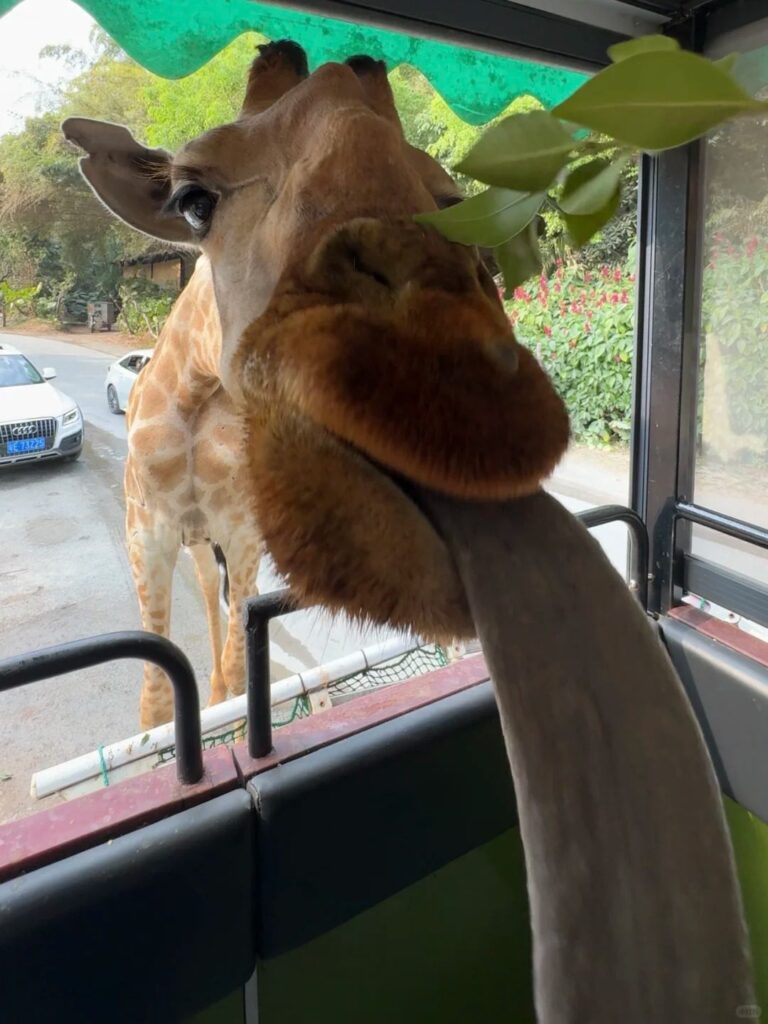
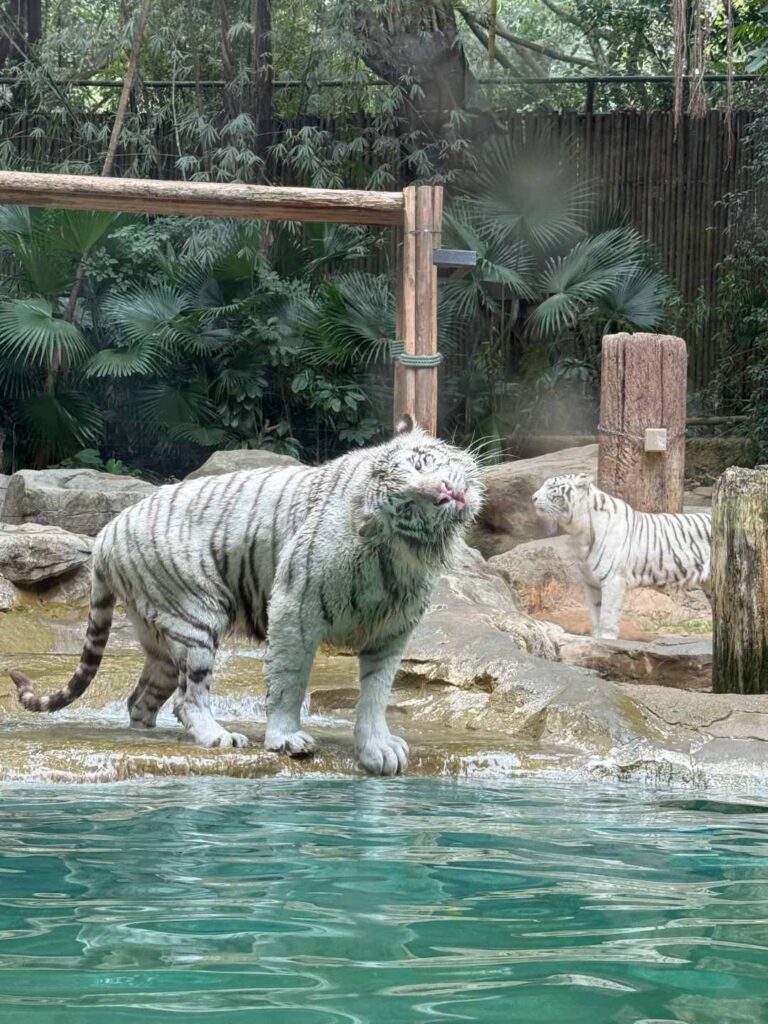
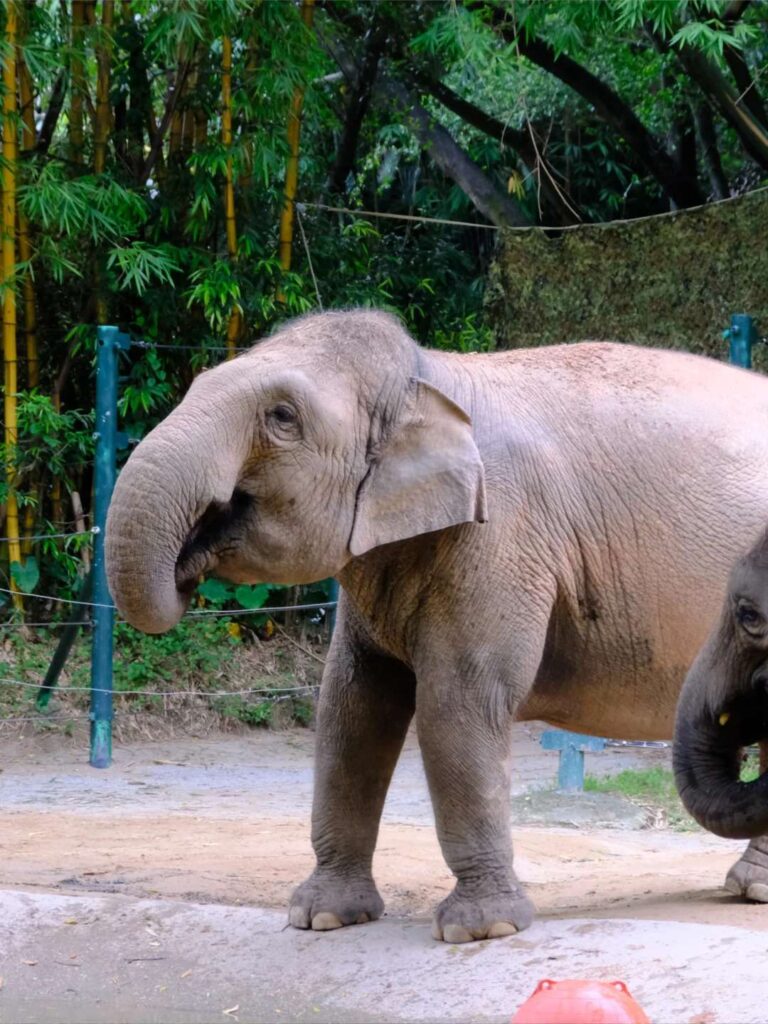
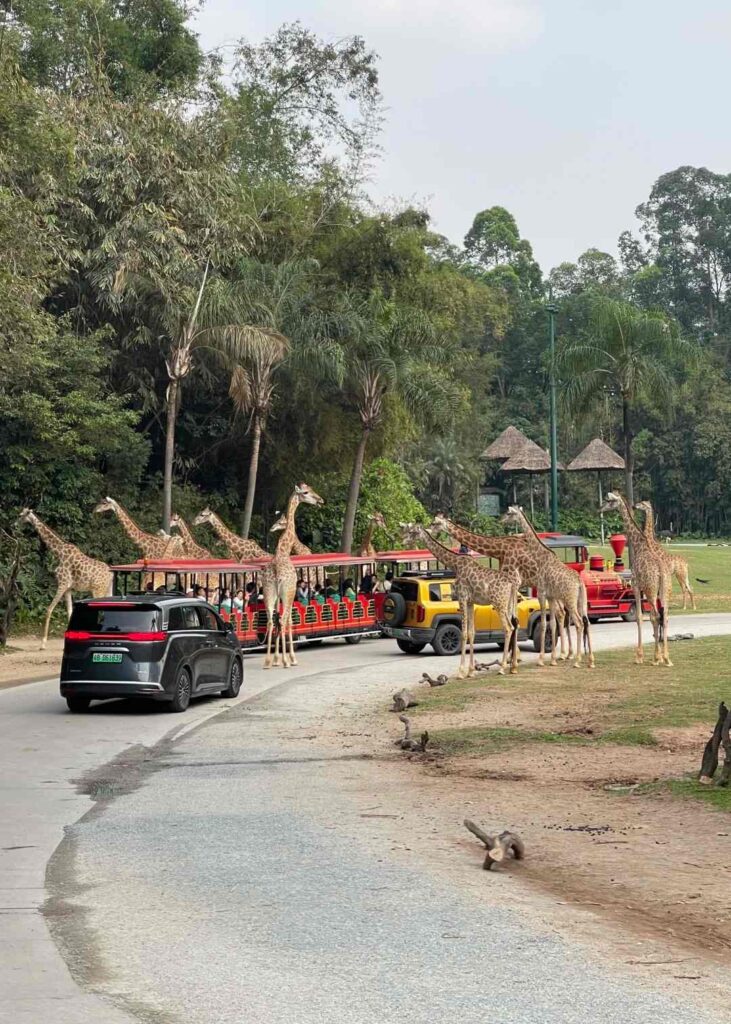
Inside the park, you can take a sightseeing train or safari vehicle to see animals up close, such as tigers, lions, and bears. There are also animal shows, feeding sessions, and spots for kids to interact with some of the smaller animals. Families can easily spend a full day here without getting bored.
Because the park is so large, I recommend setting aside a full day for it. If you still have the time and energy in the evening, you can also go to the nearby Chimelong International Circus, which is fun.
Safari park tickets:
| Tickets | Regular days | Designated days |
| Adult | ¥300 | ¥350 |
| Child | ¥210 | ¥245 |
- Free admission for children under 3 years old or under 1 meter tall.
- Chimelong Safari Park also offers family packages and combo tickets that include other Chimelong attractions. For the latest prices, check Trip.com.
What to Do in Guangzhou Beyond Sightseeing
1. Try a spa or bathhouse
Guangzhou has a number of 24-hour spa and bathhouse centers, which are very nice after a full day walking around the city.
In addition to massages, many of them are complete wellness complexes offering a variety of amenities like bathing areas, saunas, rest lounges, and buffet meals. Some also have movie rooms or game rooms, so you could easily spend an entire day there. At most places, once you pay the entrance fee you can use all of the services.
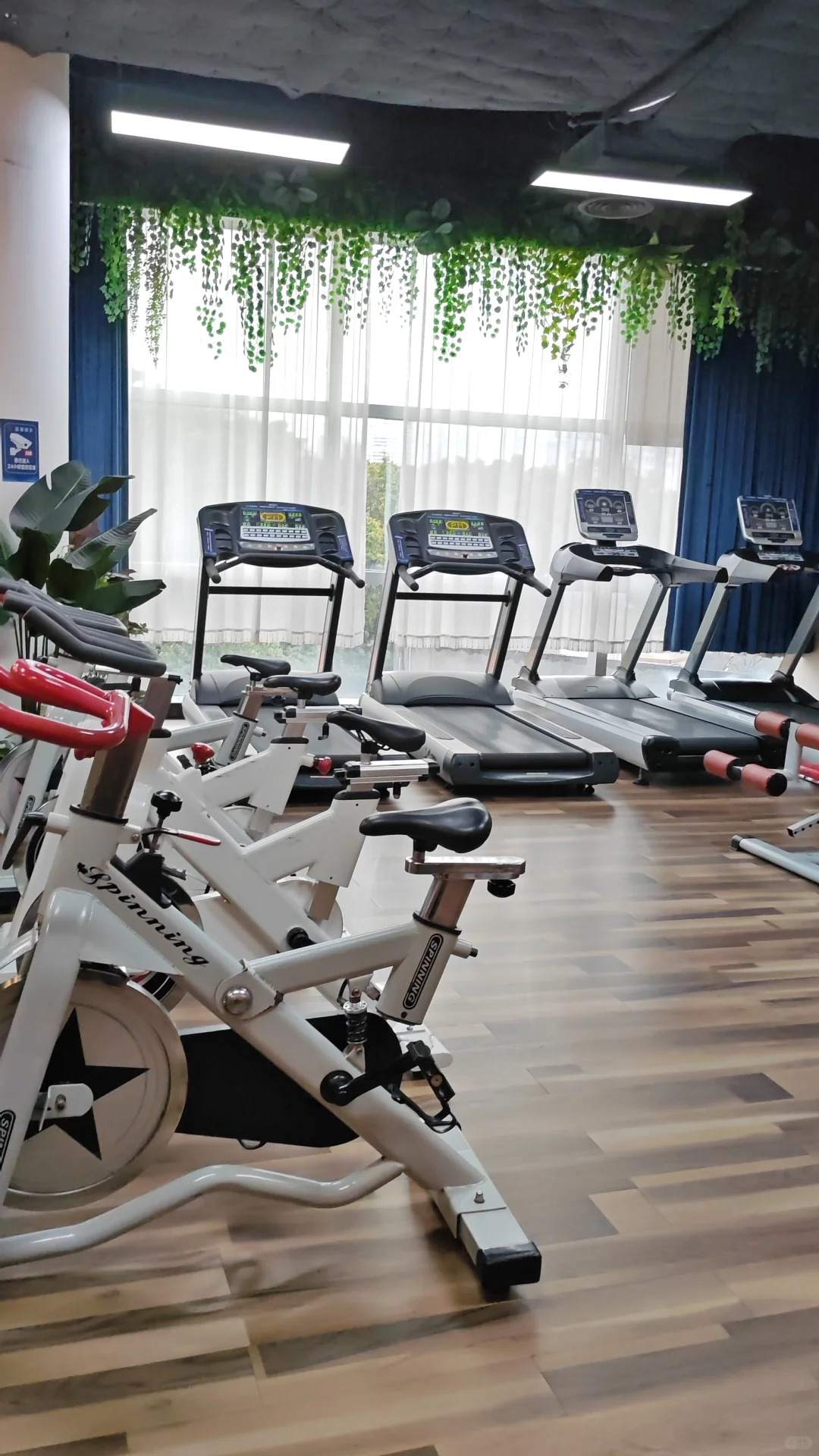
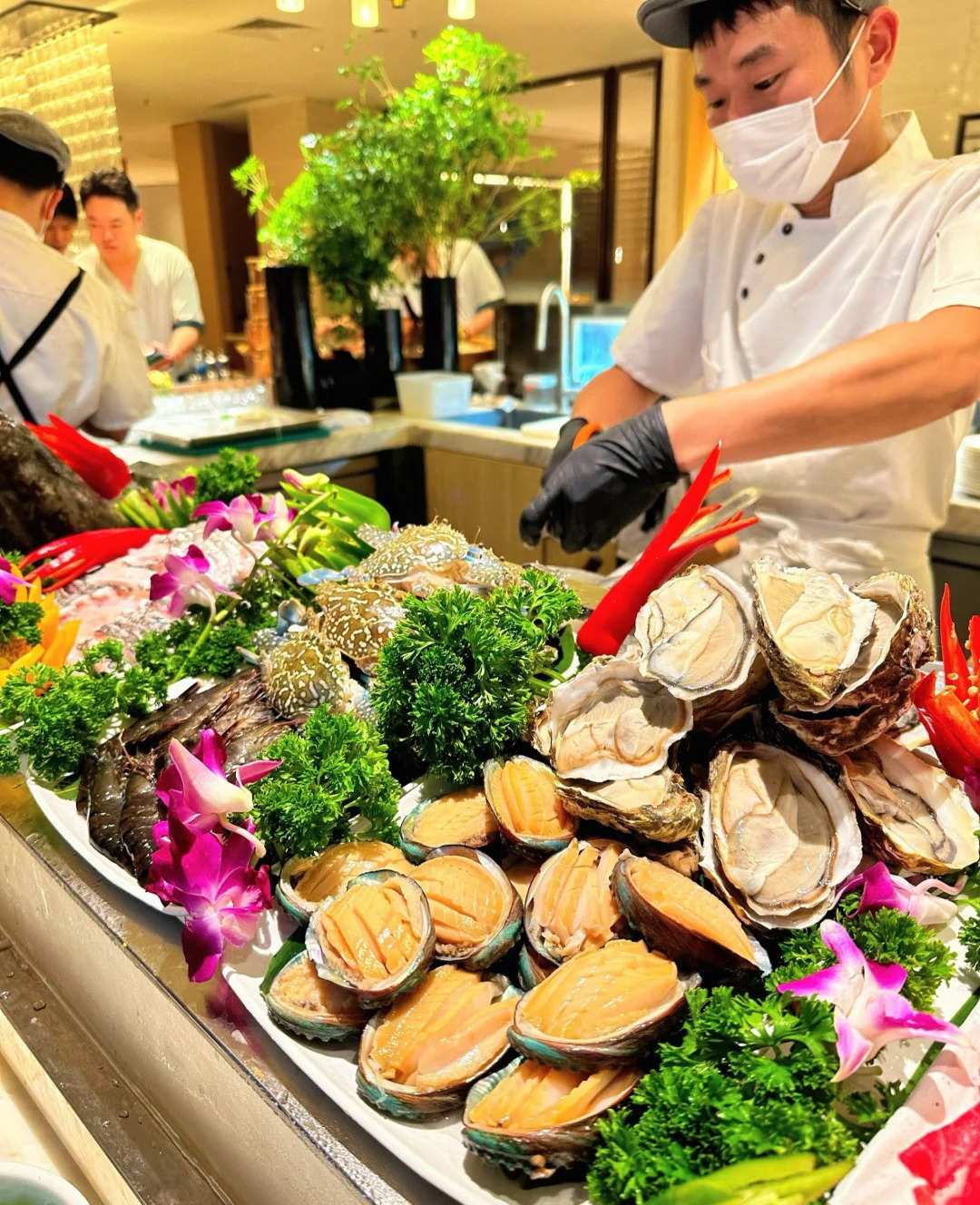
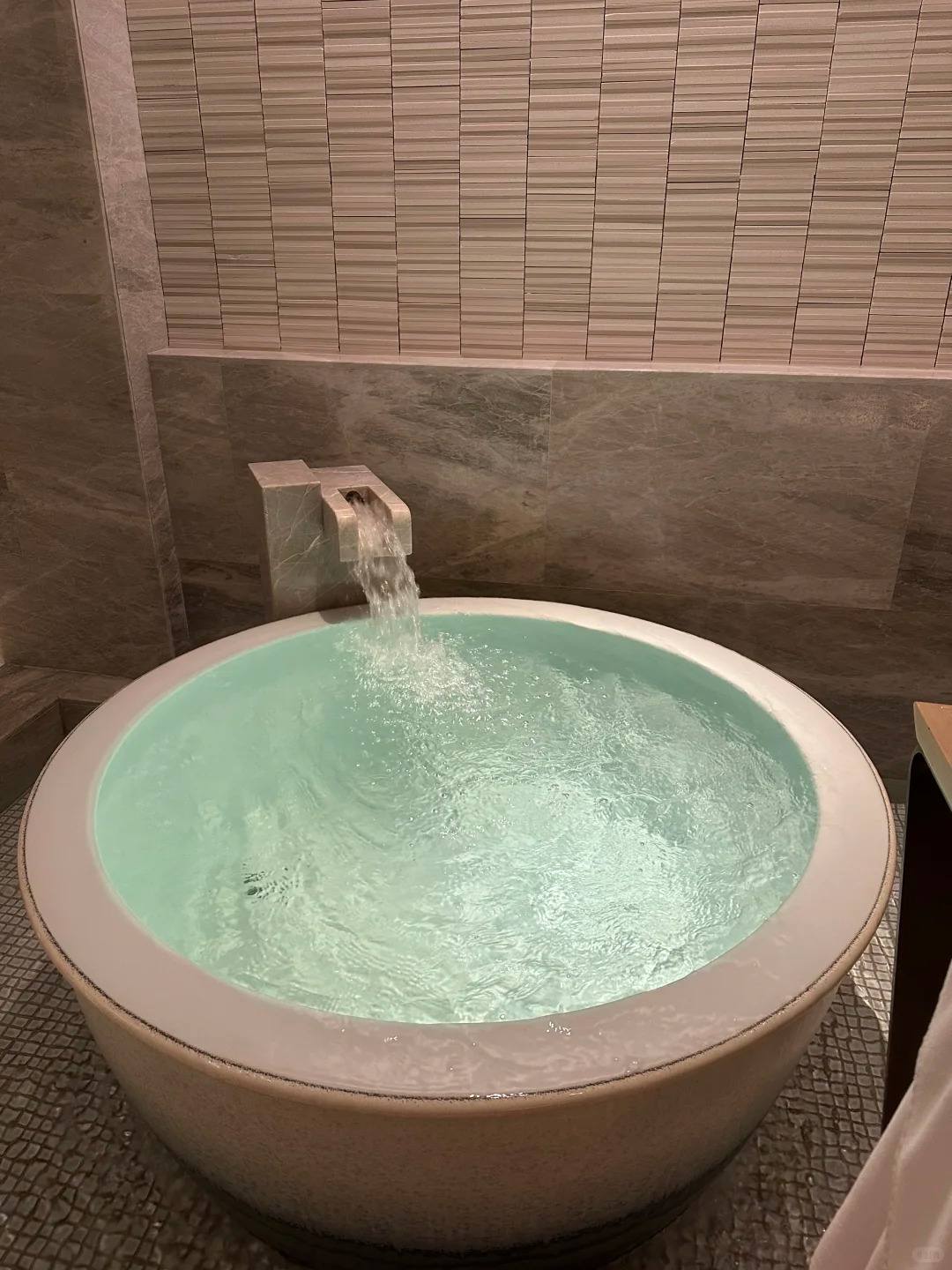
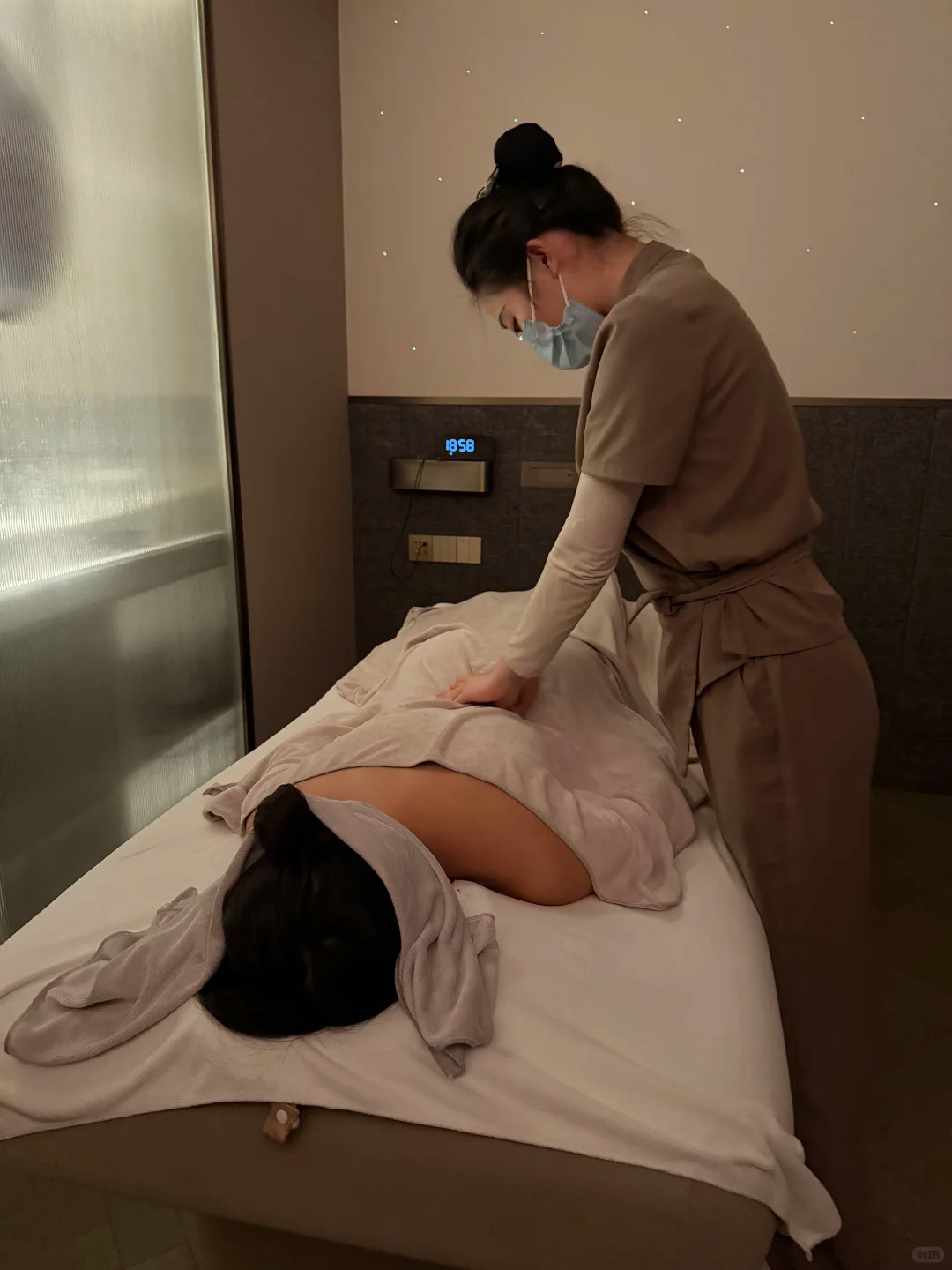
You can search on Meituan, one of China’s main local services apps, for bathhouses or spa centers near your hotel, then pick one with good reviews and a reasonable price.
If you don’t need something full-service, Guangzhou also has plenty of traditional massage and spa spots. They are usually cheaper and better if you just want a massage and some rest.
2. Get a haircut in Guangzhou
Haircuts in Guangzhou are usually pretty affordable, so if you were already thinking about getting a haircut during your trip, this is a good place to do it.
There are salons all over the city, but I recommend looking for a mid-range or higher-end one. At many salons, the basic service includes a wash, a head massage, and then the haircut. It’s a good way to relax and refresh during your trip.
3. Get a full medical checkup
If you come from a country or region where medical checkups are expensive, getting one in Guangzhou can be much more affordable. For a little over ¥1,000, you can get a thorough checkup, sometimes including a CT scan. A few days later, you can view your report on your phone, so you don’t have to go back to the clinic. The report will usually be in Chinese, but that’s less of a problem now thanks to AI translation tools.
You can search for nearby health screening centers on Meituan. Based on my own experience, I would choose a top public hospital, which are usually more reliable.
You can also go with chain providers such as Meinian Health (美年大健康) or Rich Healthcare (瑞慈体检), both of which are popular in China.
4. Use a shared bike
You will see shared bikes all over Guangzhou, which is a convenient way for tourists to get around, especially if the places you want to visit are close together. It’s often easier and more fun than getting a taxi or walking. To use a shared bike, you just scan the QR code on WeChat or Alipay and it will unlock.
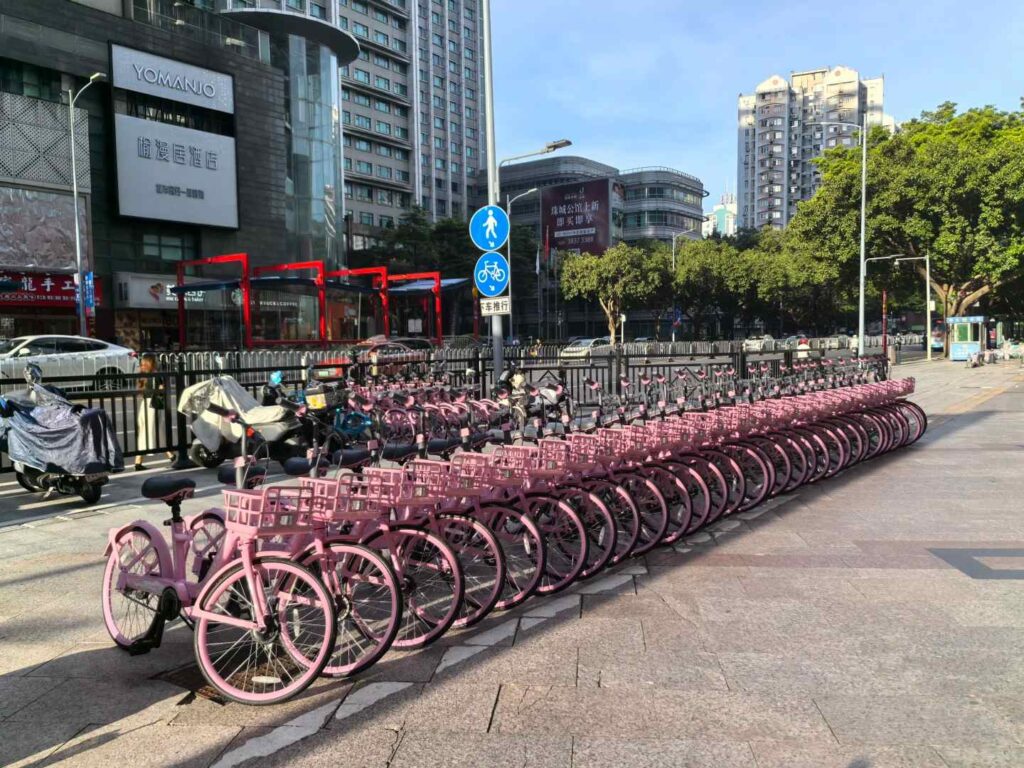
They aren’t very expensive, generally around ¥6 per hour. You do have to leave it in a designated parking area, otherwise you’ll be charged an extra parking or relocation fee (usually around ¥5).
5. Check out a supermarket
You might also be interested in visiting a big supermarket in Guangzhou, where you’ll find a variety of ready-to-eat food, drinks, snacks, and daily essentials. If you browse for a while, you’ll probably come across things you’ve never seen before, which can be a lot of fun for first-time visitors to China. Prices are also pretty reasonable at the larger supermarkets.
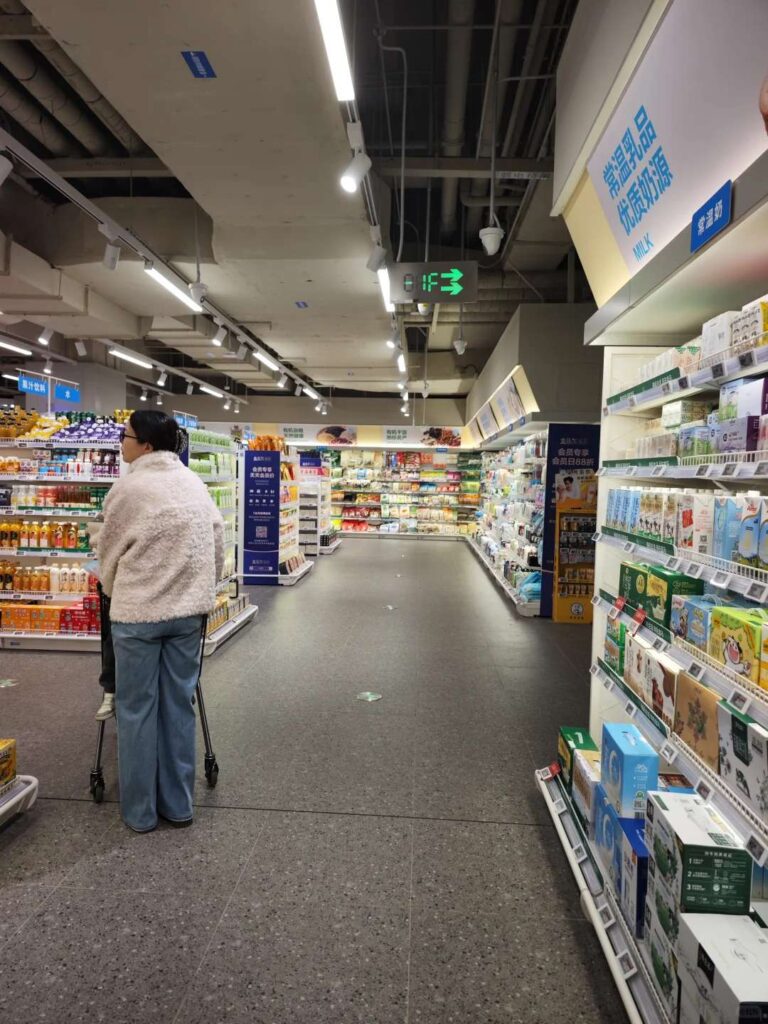
Most product packaging will be in Chinese, but again, AI tools make that much easier.
Read More: How to Travel in China Without Speaking Any Chinese
Where to Stay in Guangzhou
Where you stay in Guangzhou can make a big difference on your trip. Each part of the city has its own vibe and advantages, so it helps to think about what kind of trip you want before you book your hotel. And picking a good location can save you a lot of time and from having to cross the city a lot.
How to pick the right area
Area | What it’s like | Best for | Why stay here |
|---|---|---|---|
| Yuexiu / Liwan | Older, more historic parts of the city with some of Guangzhou’s best food. | Best for travelers who want food, history, and a more local feel. | Close to places like Yongqing Fang, Shangxiajiu, and Beijing Road, with lots of dim sum spots and old-school local restaurants nearby. |
| Tianhe (especially around Zhujiang New Town) | Guangzhou’s modern business and shopping district. | Best for visitors who want shopping, a modern city, or a convenient business area. | Well-connected by metro, close to Canton Tower, and packed with large malls. |
| Haizhu (especially around Pazhou) | A major exhibition and business area not far from Canton Tower. | Best for business travelers and trade show visitors. | Good transport links, a newer city environment, and newer hotels. |
| Panyu (especially around Chimelong) | The area around Guangzhou’s main theme parks. | Best for families traveling with kids. | A good choice if you plan to spend more than one day at places like Chimelong Safari Park. |
If food is one of your main reasons for visiting Guangzhou, Yuexiu or Liwan are the areas that I recommend to best enjoy the city’s famous food culture. I’d look for a hotel around Xihua Road, Chen Clan Ancestral Hall, or Shangxiajiu Pedestrian Street. From dim sum and sweet soups to roast meats, street snacks, and late-night eats, you’ll eat well all day.
If you prefer a more modern side of the city, or if you plan to do a lot of shopping, I recommend Tianhe, particularly Zhujiang New Town, Tiyu Xi, Shipaiqiao, and Linhexi. This part of the city is easy to get around, well-connected by metro, and full of large malls, so it’s a very convenient place to stay.
A few final thoughts
I hope this guide has given you a clearer sense of what Guangzhou is like and how to best enjoy it.
If you have any questions or want to share your own tips, feel free to leave a comment!
Read More:
Best Things to Do in Shanghai
How to Use Amap (Gaode) in China


