Shanghai Museum East Branch Guide (hours, Tickes)
For visitors interested in Chinese culture and history, the Shanghai Museum is an excellent addition to your itinerary. Regarded as one of China’s best museums, it is known for both the size of its collections and the quality of its items. The galleries offer a complete view of China’s past, from early archaeological finds to artifacts from later dynastic periods, presented through authentic objects rather than text or images alone.
While particularly exciting for fans of history, the museum is also enjoyable for visitors who don’t have a background in Chinese history, as many of the pieces are captivating even without detailed context. The craftsmanship, forms, and decorative details of the collections communicate a great deal on their own, making the museum a great introduction to Chinese artistic and material culture.
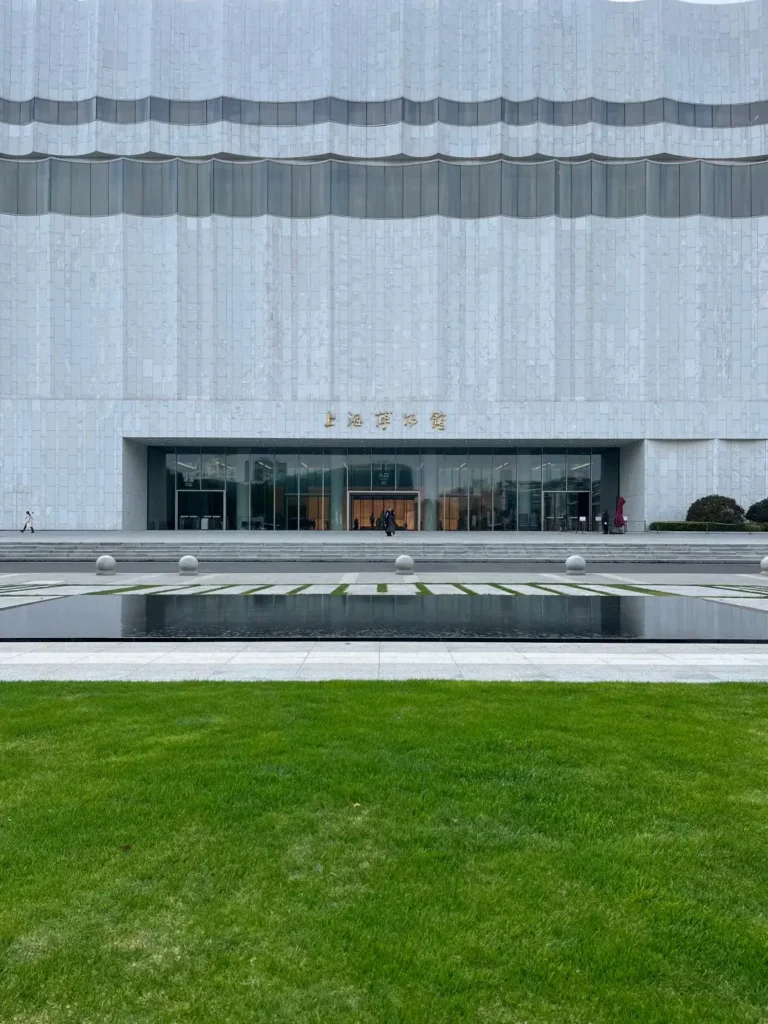
With a collection of more than one million objects, the Shanghai Museum is particularly strong in bronzes, ceramics, calligraphy, and painting, including important works from the Song, Yuan, Ming, and Qing dynasties. The sections below explain the museum’s two main locations and what sections to prioritize during your visit.
Locations
The Shanghai Museum is spread across two sites: the People’s Square Branch (the older building) and the East Branch in Pudong (the newer building). To see the museum’s most renowned collections of ancient Chinese artifacts, the East Branch is the recommended choice.
1) People’s Square Branch (Older Building)
Located in central Shanghai near People’s Square, this location is convenient for visitors staying downtown and is within easy reach of major attractions such as the Bund.
Since the opening of the East Branch, many of the museum’s major highlights have been relocated there. The People’s Square Branch now places greater emphasis on themed and special exhibitions, often centered around artistic and cultural topics (for example, qipao, fan painting, enamelware, and rotating curated shows), so it is best for visitors with specific interest in these subjects.
The branch also occasionally hosts major international exhibitions. A long-running exhibition of Egyptian artifacts, for instance, drew significant attention during its time at the People’s Square Branch. The featured exhibits change periodically, so check current listings when planning your visit.
2) East Branch (Newer Building)
The Shanghai Museum East Branch is located at 1952 Century Avenue, Pudong New Area.
This is the larger of the two sites and offers more extensive permanent galleries with more of the signature works. If your time is limited and you plan to visit only one location of the Shanghai Museum, I suggest visiting the East Branch.
Getting There (East Branch)
Recommended: Metro
Shanghai’s metro is generally the most convenient way to reach the Shanghai Museum East Branch, especially during peak traffic hours.
- Metro Line 2: Get off at Shanghai Science & Technology Museum Station and follow signs toward the museum. From the station, it’s a 10–15 minute walk.
- Metro Line 4 / Line 6: Get off at Pudian Road Station (Line 4: Exit 2; Line 6: Exit 1). From there, the walk is approximately 15 minutes.
Once you are in the area, following the signs to the museum entrance is easy.
Taxi / Ride-Hailing
Taxis and ride-hailing services are an alternative outside of rush hours, particularly if you are traveling with children, older family members, or on a tighter schedule.
Tickets and Reservations
Admission is free at both the People’s Square Branch and the East Branch. In general, visitors do not need a reservation and may enter by presenting a valid ID (international visitors typically use a passport).
Note: At the People’s Square Branch, reservations may be required during peak periods, such as national holidays, school vacations, or popular special exhibitions.
East Branch entry point: Individual visitors enter via the B1 East Gate (near Dingxiang Road) after the security check.
Hours and Weekly Closing Days
People’s Square Branch (Older Building)
- Hours: 9:00 a.m.–5:00 p.m.
- Last entry: 4:00 p.m.
- Closed: Mondays (except national holidays)
East Branch (Newer Building)
- Hours: 10:00 a.m.–6:00 p.m.
- Last entry: 5:00 p.m.
- Closed: Tuesdays (except national holidays)
Is the museum foreigner-friendly?
Yes, very!
Even if you don’t spend much time reading the text panels, many of the artifacts are compelling on their own. For international visitors who are new to Chinese history and culture, the Shanghai Museum is a perfect place to start.
Most exhibits include English labels, making it easy to get the key information, such as the period, function, and basic historical context, so even without Chinese, you can still expect an enjoyable visit.
For more in-depth information about the works, consider renting the multimedia audio guide, which automatically plays the relevant commentary as you approach an artifact. It is available at the service counter in the main entrance hall and costs about RMB 40. The guide covers most key pieces in the permanent galleries and is especially useful if you do not read Chinese.
The museum also offers English-speaking guided tours (advance booking required). Tours start at around RMB 300 and are designed for small groups. This is a good option if you want a more structured, narrative-led visit, particularly when visiting with others.
Read More: How to Travel in China Without Speaking Any Chinese?
Floor-by-Floor Overview
The Shanghai Museum East Branch has five gallery levels above ground, featuring 13 permanent exhibition halls along with several spaces for special exhibits. To make the most of your visit, choose the floors and galleries that match your interests.
Level 1: Bronzes Gallery and Sculpture Gallery
If you’re visiting for the first time, I suggest beginning on Level 1, starting with the Bronzes Gallery, one of the museum’s signature collections. Then head to the Sculpture Gallery for an introduction to early Chinese art.
Bronzes Gallery (Ancient Chinese Bronzes)
This gallery is a highly visual introduction to Chinese bronzes. It presents roughly 3,600 years of bronze traditions, from the Xia, Shang, and Zhou dynasties—early eras when bronze ritual vessels became representative of elite culture—through the Qing dynasty, China’s last imperial dynasty. More than 500 bronzes are grouped into eight sections, tracing how bronze vessels emerged and how their forms and functions evolved over time.
Among the major highlights is the Da Ke Ding (大克鼎), a large tripod ritual vessel from the late Western Zhou (around the 10th century BCE). Nearly one meter tall, it contains an inscription of about 290characters, recording events such as the noble Da Ke receiving a grant of land, an example of historical information preserved directly on the object.
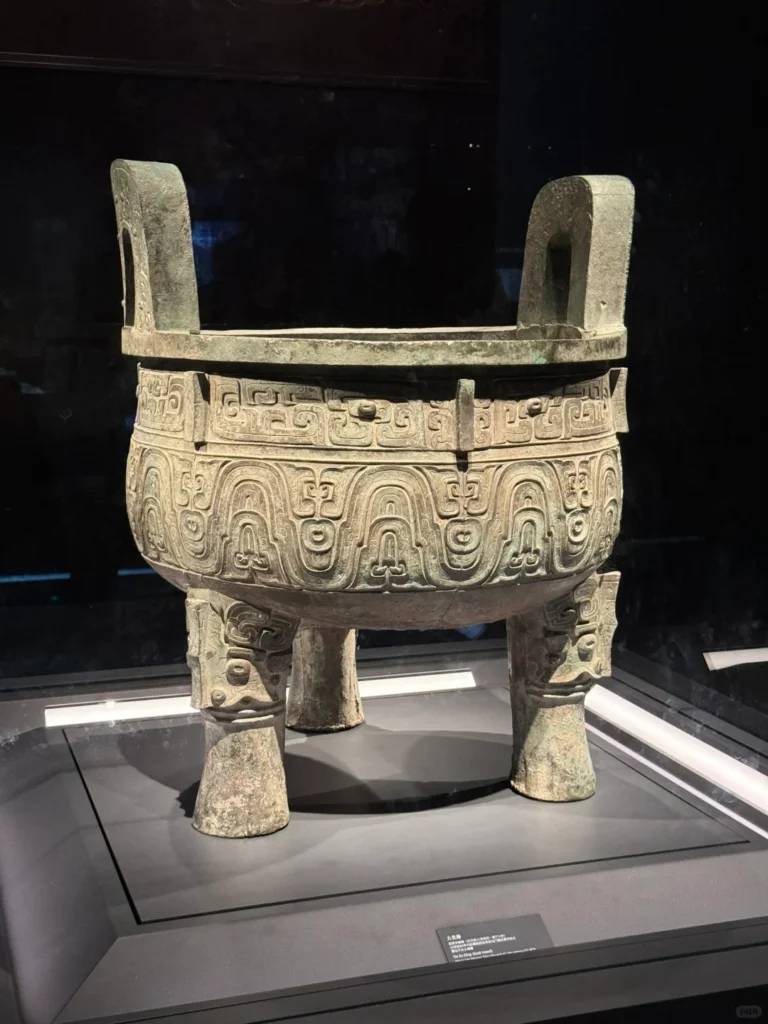
In ancient China, the ding (鼎), a three-legged bronze vessel used in state and ancestral rites, was more than a ceremonial object; it was also associated with political authority and ritual order. For that reason, the Da Ke Ding is significant both artistically and historically, and it is a key object for understanding Zhou ritual culture.
Another interesting piece is the Square Yue Axe with Inlaid Cross Patterns (dated to the late Xia dynasty, around the 17th century BCE). A yue is an axe-shaped weapon associated with ceremony and authority, and the age of this one makes it a noteworthy piece in the collection.
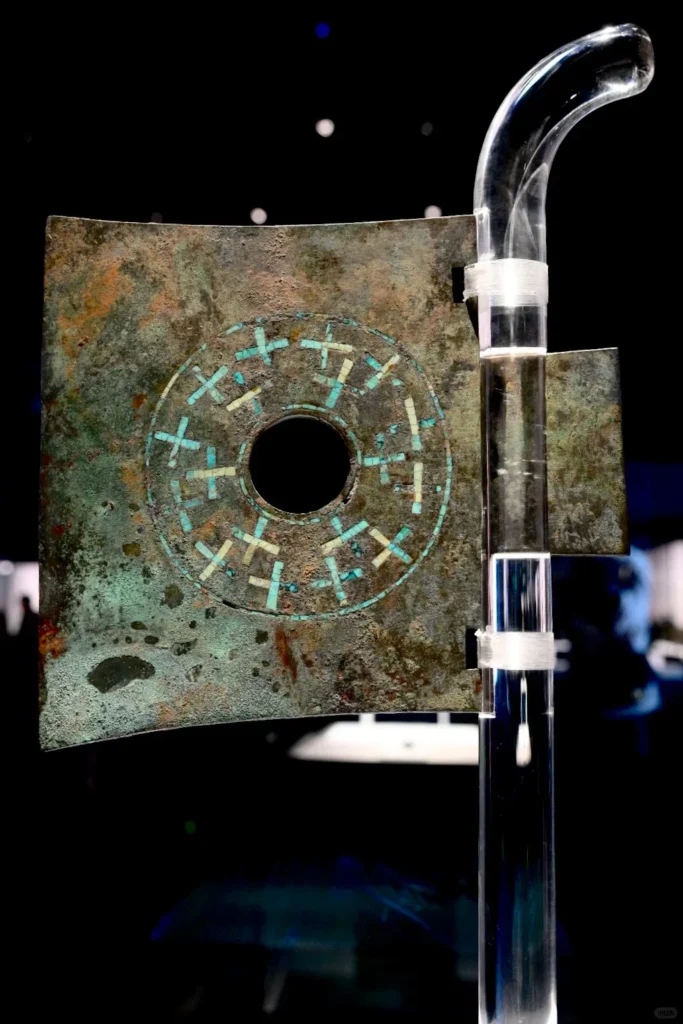
Other notable objects to look for include:
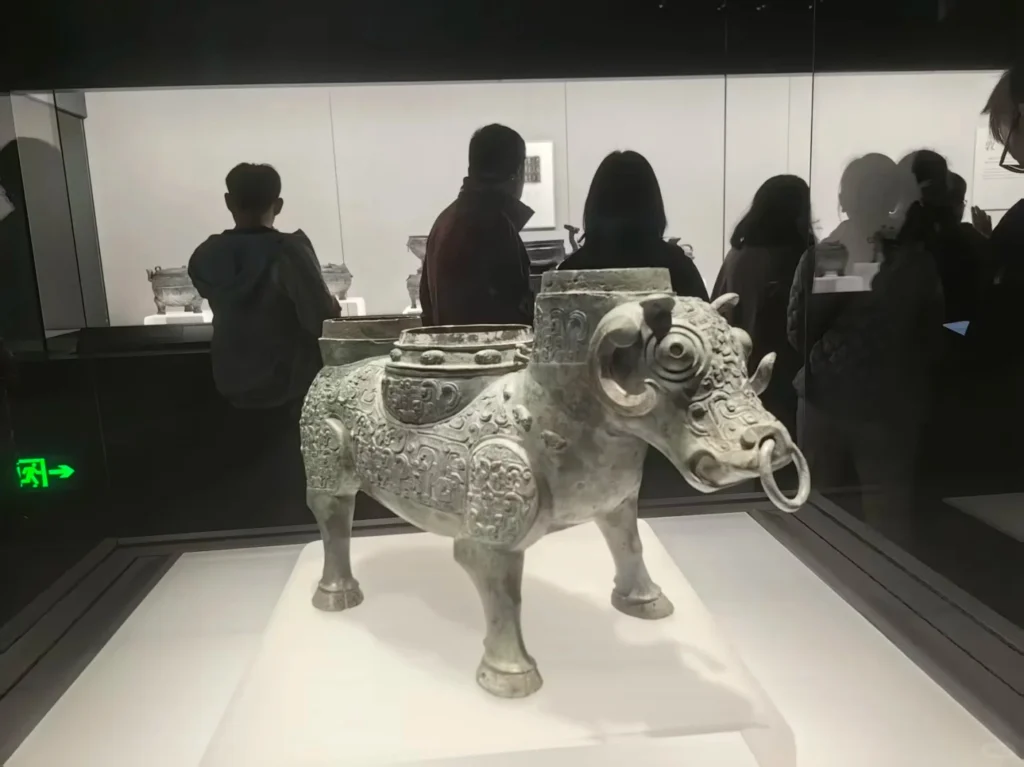
The Xizun, an animal-shaped wine vessel from the late Spring and Autumn period, helpful for understanding ritual offerings and wine-vessel culture.
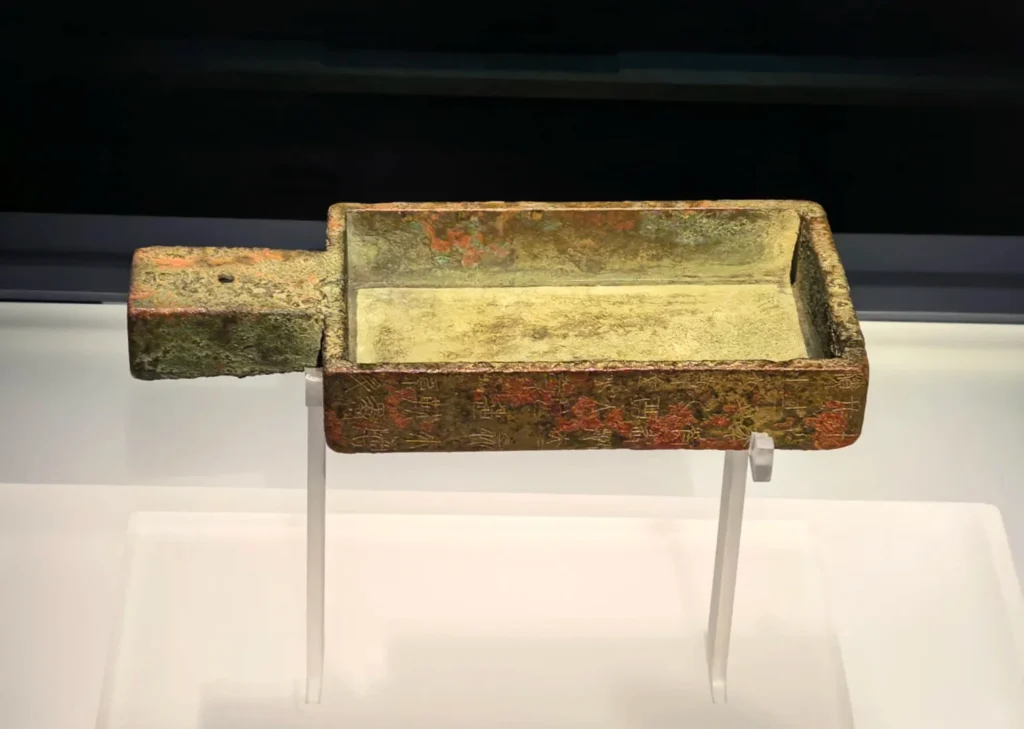
The Shang Yang Fang Sheng, a measuring vessel from the Warring States period (State of Qin), linked to the Qin-era standardization of weights and measures.
What makes the Bronzes Gallery stand out is not only the craftsmanship of the objects, but also how clearly they connect to the systems of their time, such as ritual practice, social order, and everyday life. If possible, allow extra time here to appreciate the details in the different pieces.
Sculpture Gallery (Ancient Chinese Sculpture)
Visitors familiar with Western art may notice that ancient Chinese sculpture seems different in its purpose, theme, and manner of presentation. This gallery demonstrates the aesthetic conventions and cultural backgrounds that make Chinese sculpture unique.
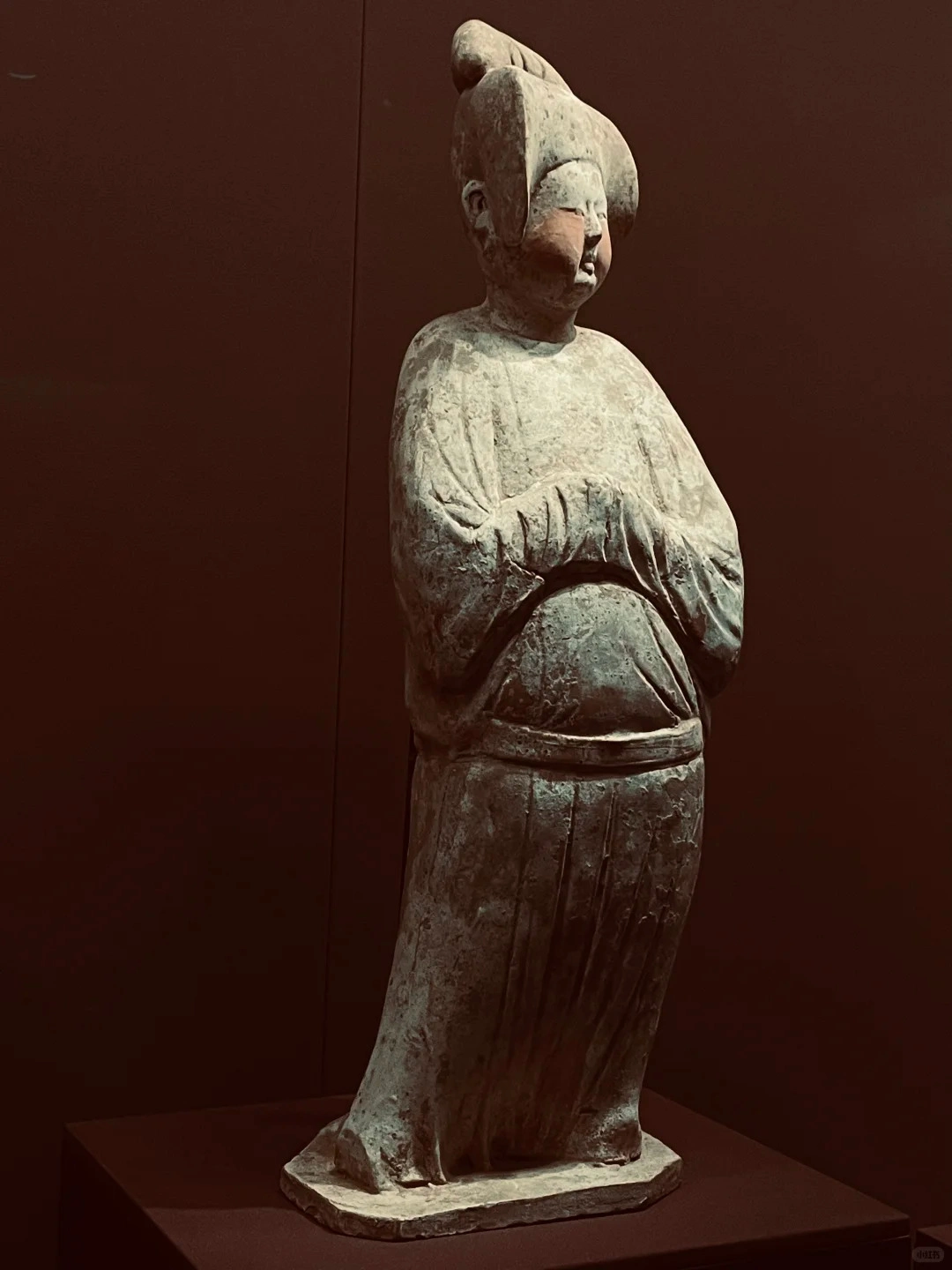
The displays bring together works from multiple dynasties and a wide range of mediums, including Buddhist stone carvings, ceramic figures (such as tomb figurines—objects placed in burials to accompany the deceased), wood carvings, and sculptures shaped by different regions and ethnic traditions within China. The collection includes nearly 300 works, and around a third of them are being displayed to the public for the first time.
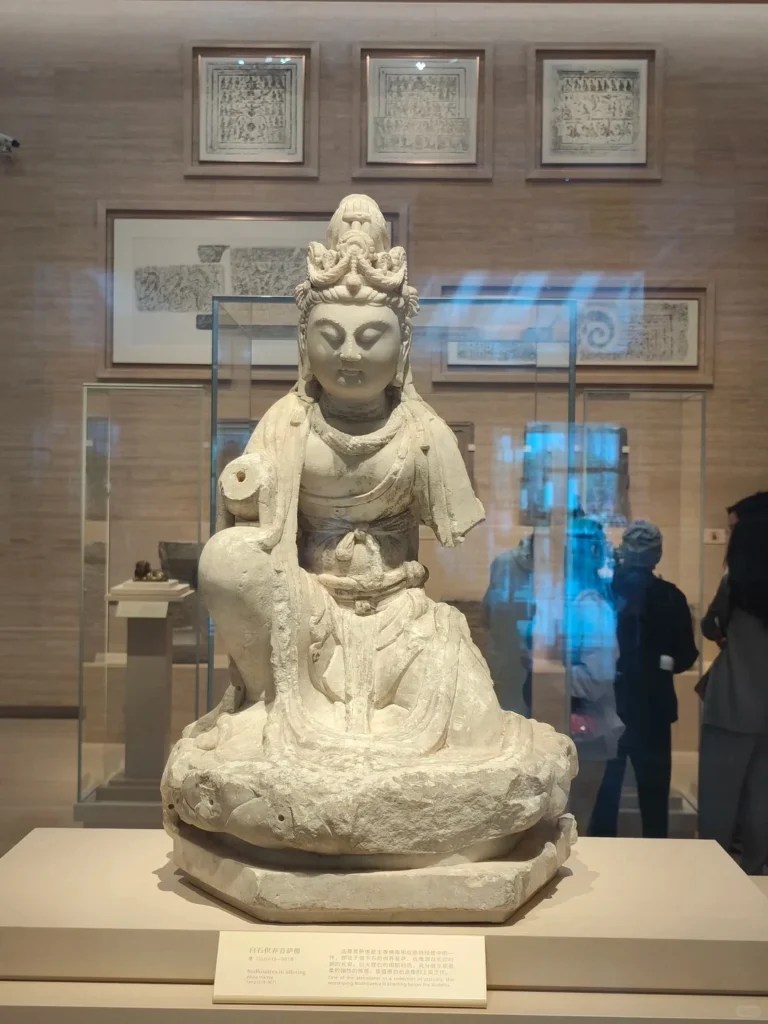
One standout piece is a Tang-dynasty white-marble statue of an offering Bodhisattva, a compassionate enlightened figure in Buddhism often depicted as a savior. Its calm pose and composed expression convey a sense of dignity and gentleness that aligns closely with classic Tang Buddhist sculpture.
Other distinctive works to look for include:
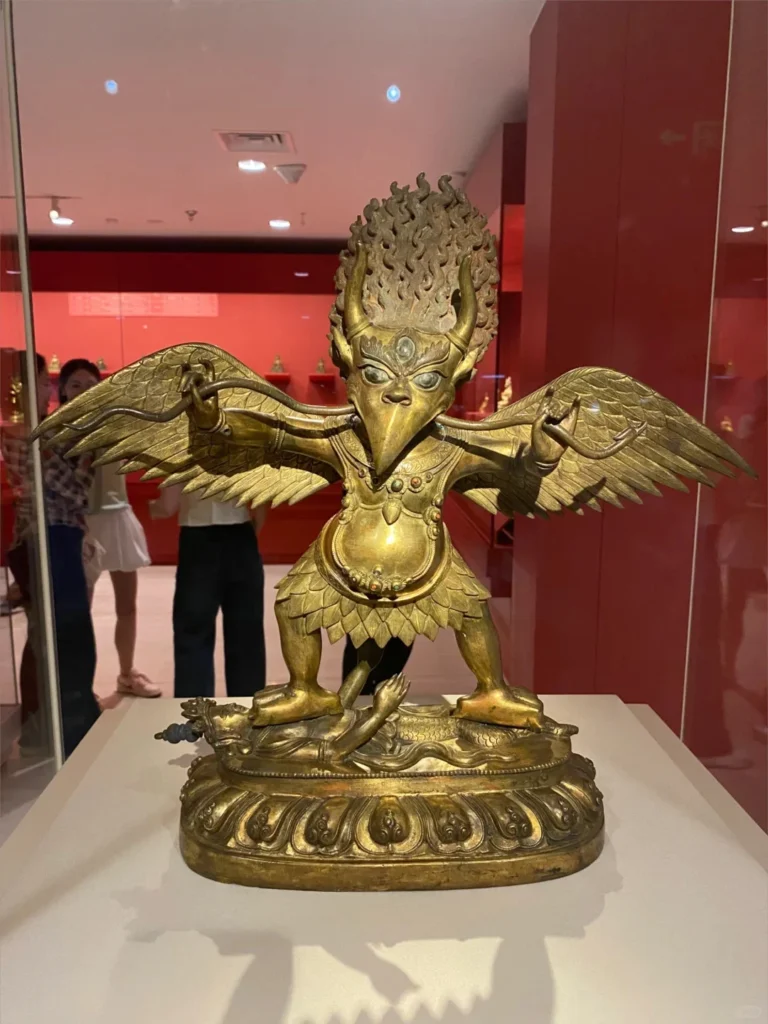
Tibetan Buddhist figures, including an 18th-century bronze statue of Garuda, a mythical bird figure in Buddhist tradition, typically depicted in an eagle-like form.
Polychrome-painted pottery figures and carved wooden Buddhist statues from different dynasties.
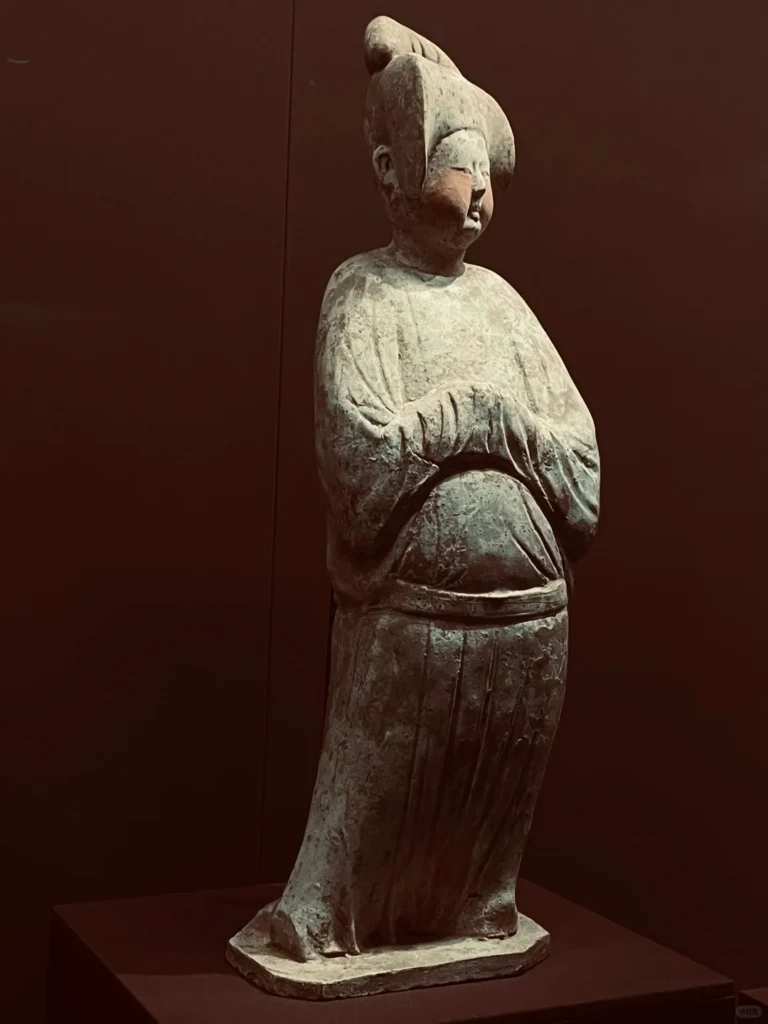
Seen together, these works highlight the range and diversity of Chinese religious and folk art. If you take time to study facial expressions, the folds of robes, and carving techniques, the sculptures become more expressive. The gallery itself is spacious and quiet, with soft lighting, making it a good place to slow down.
Level 2: Calligraphy, Painting, Jade, Seals, and More
Level 2 focuses on scholar-centered works and refined artistry. If you are interested in the Chinese writing system, painting traditions, or East Asian aesthetics more broadly, this is a good floor to spend more time on.
Calligraphy Gallery (Chinese Calligraphy Through the Dynasties)
This gallery is unusual in its scope, as permanent displays that trace the historical development of traditional Chinese calligraphy are rare.
In China, calligraphy is created with a brush and Chinese characters. It is not simply beautiful handwriting, but an art form in itself. The meaning of the text matters, but so does the quality of the brushwork, including rhythm, structure, spacing, and the force behind each stroke.
Using original works from different periods, the gallery introduces the evolution and stylistic features of the major script types: seal script, clerical script, regular script, running script, and cursive script. For international visitors hoping to understand Chinese culture more deeply, it offers one of the clearest ways to appreciate the beauty of Chinese characters.
A major highlight is Huaisu’s Kusun Tie (Bitter Bamboo Shoots Letter) (around 750 CE), a Tang-dynasty monk calligrapher known for dynamic cursive writing. This cursive note is only 14 characters long, yet it is highly significant. It is the only work universally accepted as Huaisu’s authentic handwriting, and it is classified as a top-tier national cultural treasure, meaning it is not permitted to leave China for overseas exhibitions.
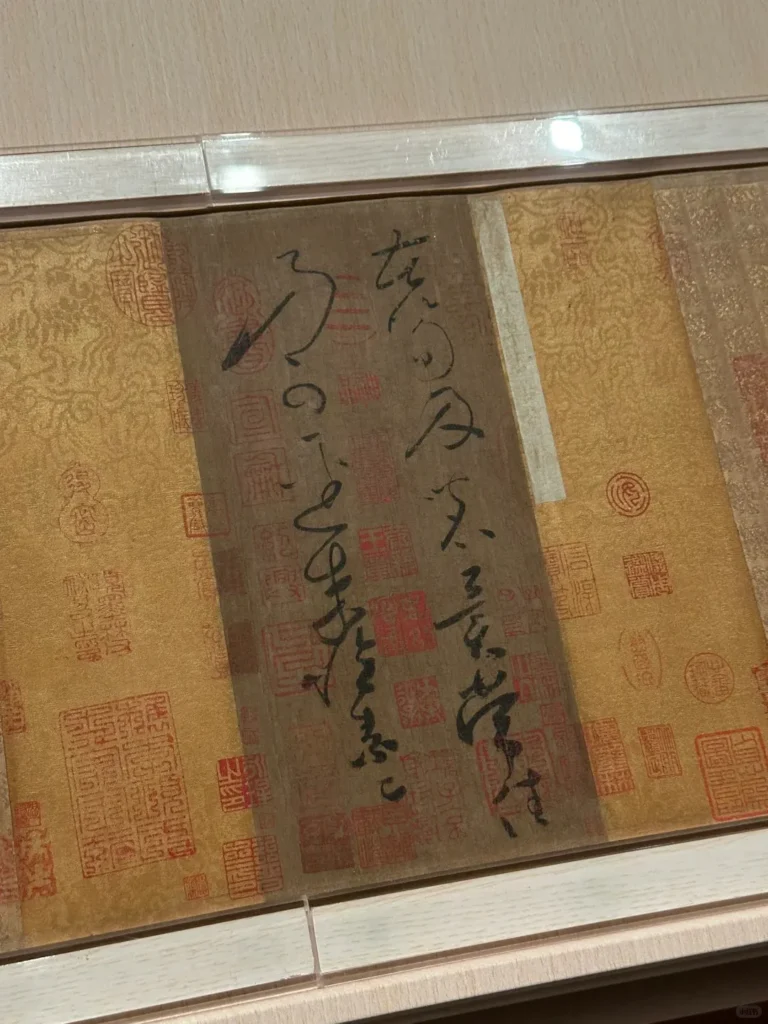
Despite its brevity, the brushwork is bold and has a strong sense of motion, so you don’t need to be able to read Chinese to appreciate the piece. It exemplifies the appeal of “wild cursive,” in which the writing does more than just record information. It conveys an impression of the writer’s personality and state of mind, which reflects a core idea in traditional Chinese aesthetics: the writing reveals the person.
When viewing it, it’s worth reading the English explanation beside the display, then focusing on the brushwork, including where lines thicken or narrow, where the pace accelerates or slows, and how strokes turn and shift.
Painting Gallery (Ancient Chinese Painting)
Located next to the Calligraphy Gallery, the Painting Gallery features paintings preserved and copied through the centuries, from the Tang, Song, Yuan, Ming, and Qing periods. Together, they reflect how Chinese painting developed over time, from figure painting to landscapes and “bird-and-flower painting,” an established genre centered on flora, birds, and symbolic natural motifs.
A major highlight is Sun Wei’s Gao Yi Tu Juan (Scroll of Lofty Recluses) from the late Tang dynasty (9th century). It is widely regarded as the only surviving work attributed to Sun Wei, and it holds an important place in the history of Chinese figure painting, considered a representative masterpiece.
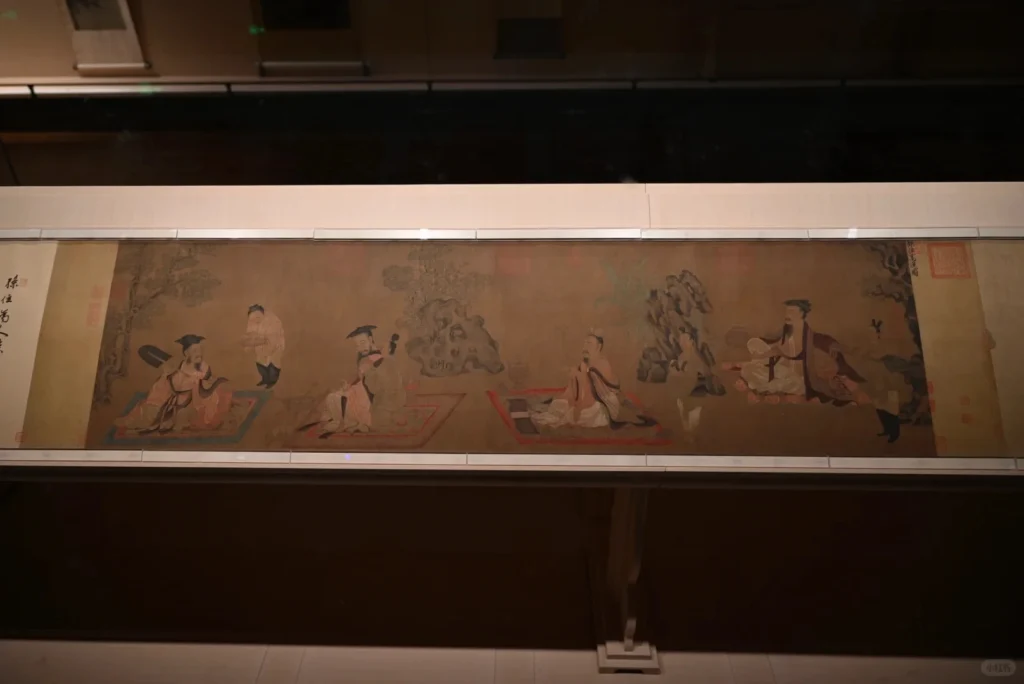
You will also see Ming- and Qing-dynasty landscape handscrolls, a horizontal format designed to be viewed gradually, section by section. The pieces are done in the Jiangnan literati tradition, by scholar-artists who valued personal expression and taste over strict realism. Rather than aiming for photographic accuracy, these works emphasize layered ink, compositional rhythm, and the overall spirit of a scene. The effect is quiet and understated, often more suggestive than descriptive.
For visitors more familiar with Western painting, this is also an opportunity to compare artistic approaches. Western oil painting often emphasizes perspective, light and shadow, and three-dimensional volume. Traditional Chinese ink painting, by contrast, focuses on capturing essence and mood through the use of intentional blank space, the expressive rhythm of the brush and ink, and the overall atmosphere.
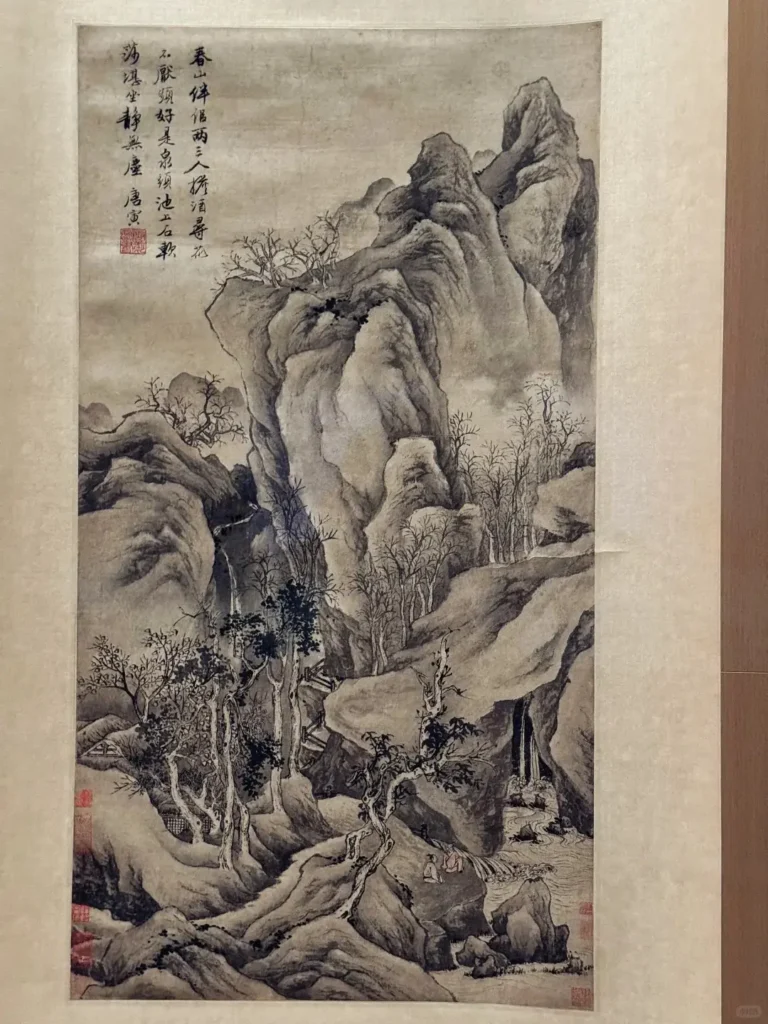
The bilingual Chinese–English labels help clarify the stories behind the works, their historical context, and what to notice aesthetically.
Jade Gallery
China is often described as a “kingdom of jade,” and jade culture can be traced back thousands of years. The Jade Gallery displays objects ranging from the Neolithic period to the Qing dynasty, making it an effective way to follow how jade forms and meanings evolved over time.
One interesting object is a “divine human” jade figure from roughly 4,000 years ago, unearthed from the Shijiahe culture, a prehistoric culture in China dating to around 2000 BCE. The figure likely reflects how people of the time imagined a sacred or god-like human presence, offering a rare glimpse into what they may have revered.
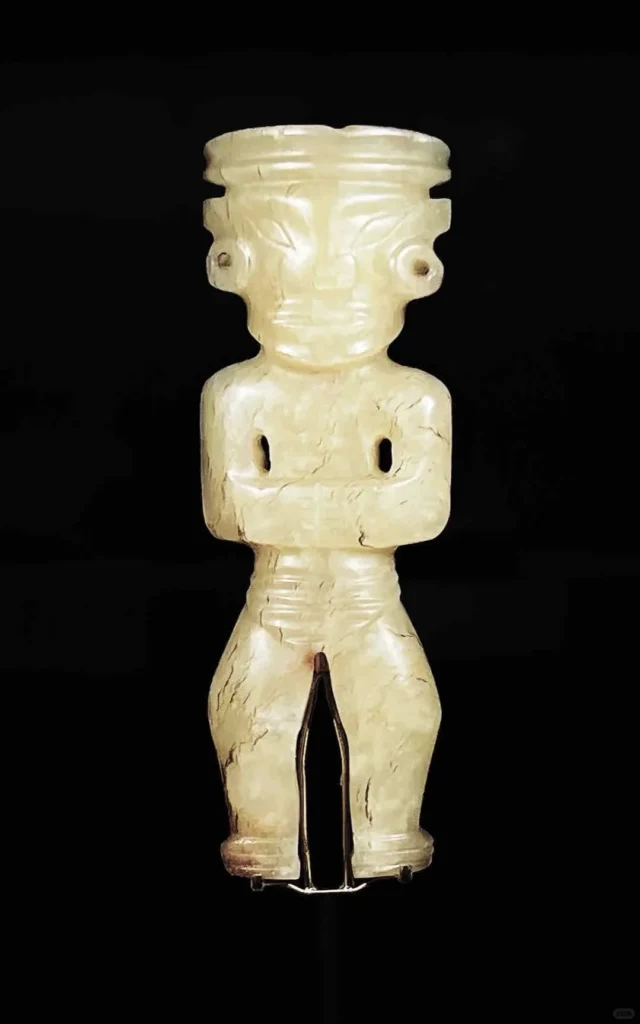
In Chinese tradition, jade was more than a precious material. It was associated with character and symbolic meanings tied to ritual practice. This figure is abstract and simple, yet it encourages reflection. Its exact function and the full meaning of its details remain uncertain, and this sense of mystery is part of its appeal.
You will also see several classic types of jade objects that illustrate how jade functioned in different social contexts, including:
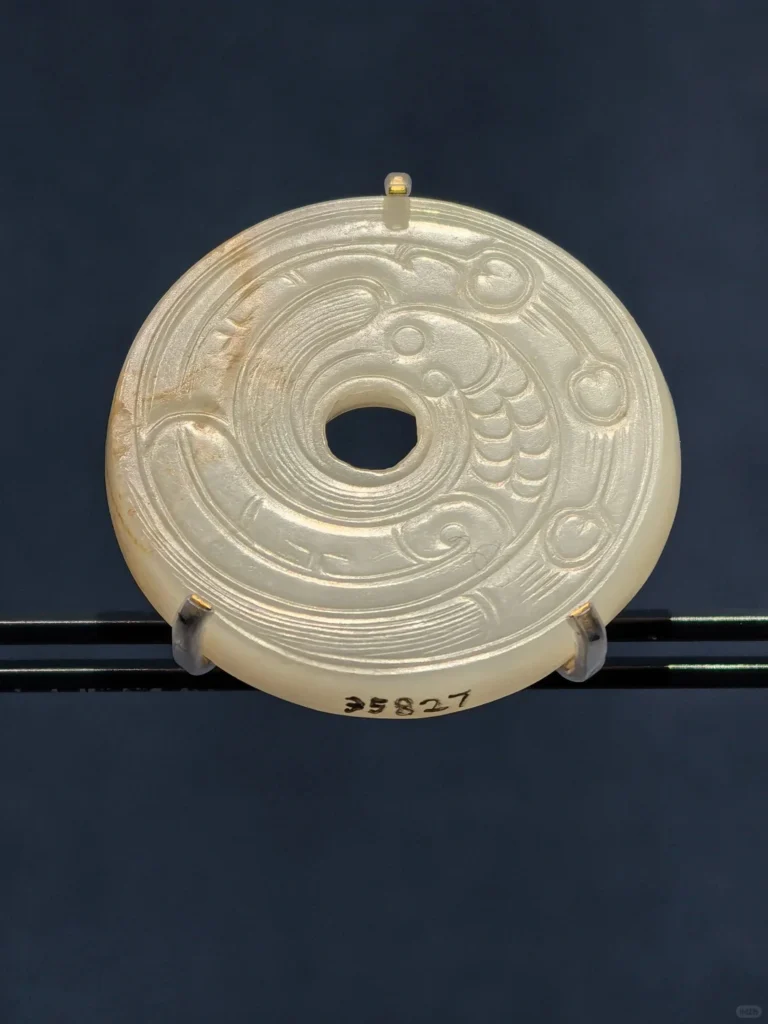
Jade bi discs, round discs with a central hole, associated with ritual use and social status, from the Spring and Autumn/Warring States period.
Han-dynasty jade cicadas, small cicada-shaped ornaments frequently found in tombs, commonly linked to ideas of renewal or continued life.
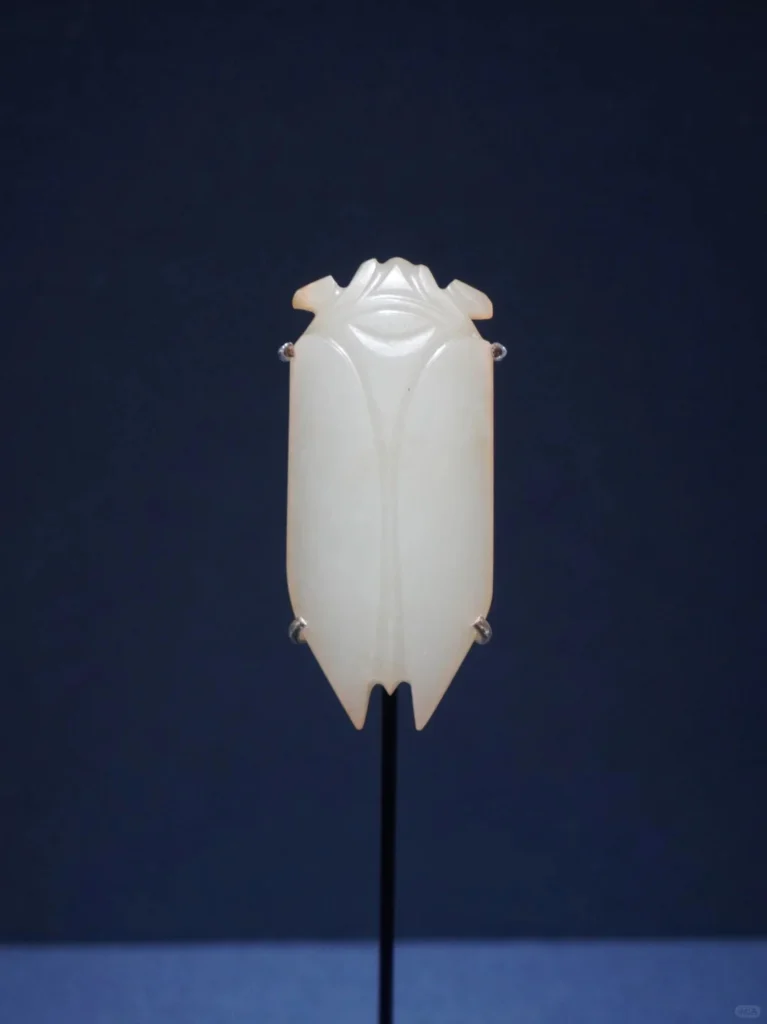
Qing-dynasty jade mountain carvings, landscape display pieces carved from a single block of jade, emphasizing decoration and aesthetic appreciation.
In the soft lighting of this gallery, you can study the stone itself and its surface patterns. When you observe the smooth, subtle luster of jade, it becomes clear why the material has been treasured in China for so long.
Seal Gallery
The Seal Gallery focuses on official seals, private seals, and the art of seal carving, or engraving Chinese characters into a seal to produce a stamped impression. More than 500 objects are on display in this collection and around 35% of them are being shown to the public for the first time.
In ancient China, a seal functioned as a form of verification, used to confirm identity, rank, and authority, and it could also signal trust and responsibility. The gallery traces imperial seals, the official seal system, and how literati seal carving, an artistic tradition developed by scholar-officials and educated elites, gradually became an art form with its own aesthetic standards.
A standout object is the “Jin Guiyi Di King” gold seal from the Western Jin dynasty (roughly 265–316 CE). Cast in solid gold, it was an official seal granted by the Western Jin court to a minority leader. The Di, one of the ethnic groups living in what was then northwest China, were among the communities recognized in this way.
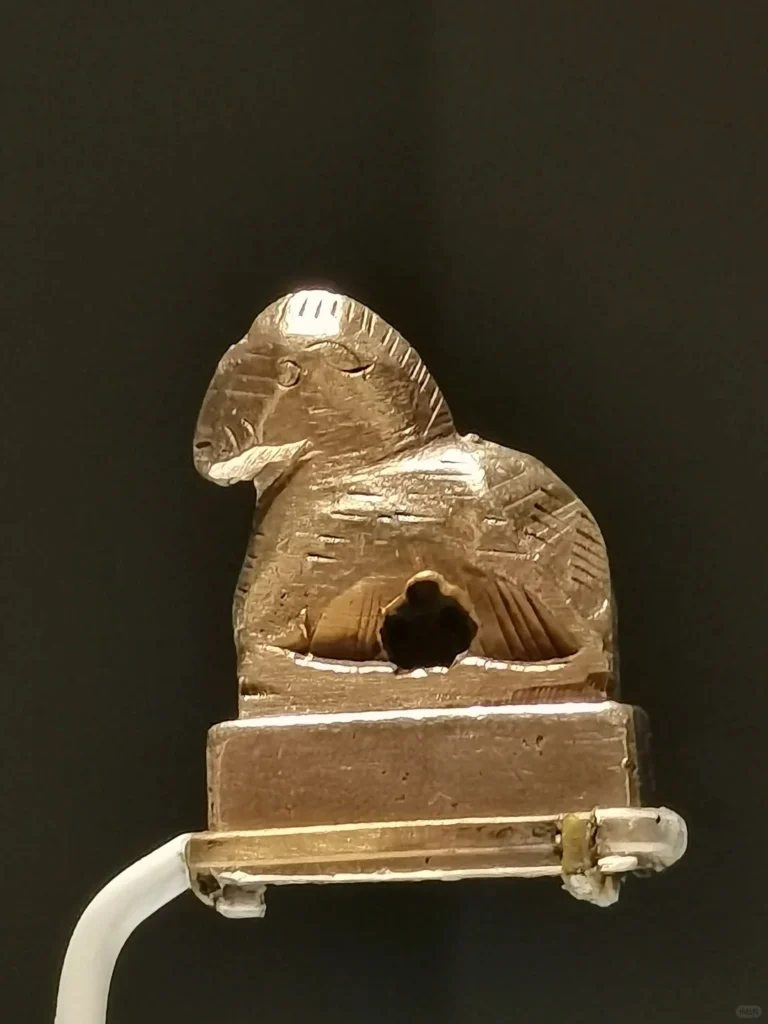
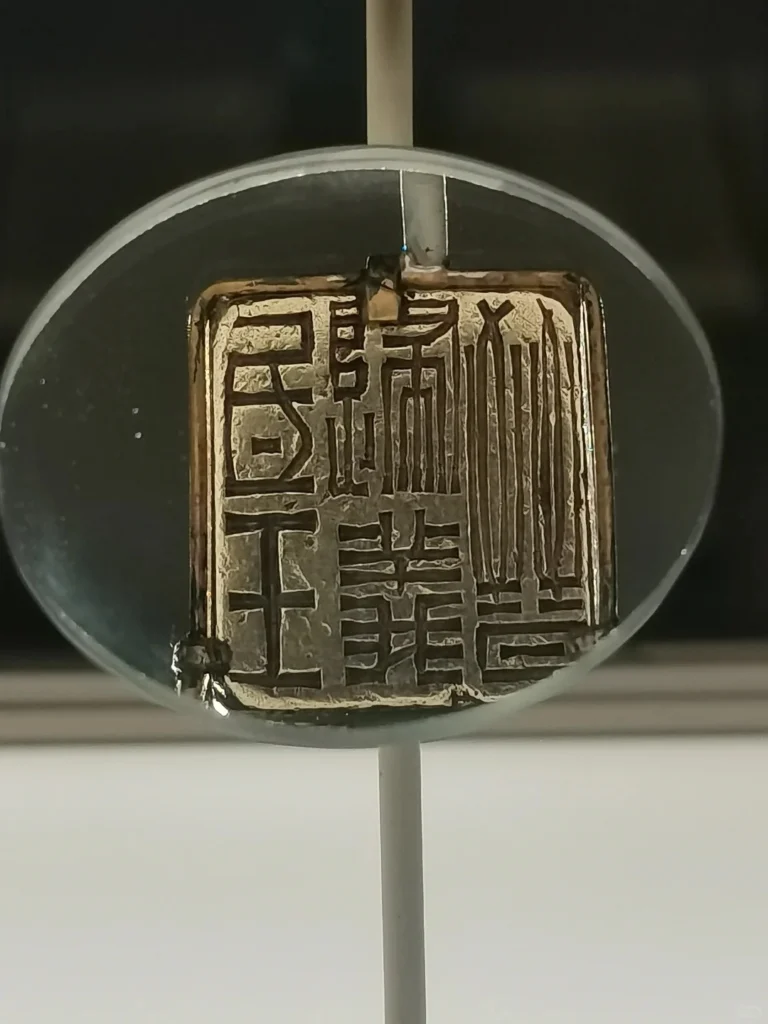
The Seal Gallery displays highlight how carving styles shifted from dynasty to dynasty, from restrained and formal to more lively and playful. The characters on the seals have remained sharp, so the craftsmanship of the seals is evident, even centuries after they were designed.
Level 3: Ceramics, Currency, and Everyday Civilization
Level 3 turns to material culture and daily life. One side focuses on ceramics, among China’s most recognizable cultural exports in the premodern world, while the other examines currency, a concrete way to see how societies change over time.
Ceramics Gallery (Ancient Chinese Ceramics)
China is thought to be the birthplace of porcelain, and Chinese porcelain became famous far beyond China in the ancient world. In English, the word “china” is also used to mean fine porcelain, which is one reason many international visitors are especially curious about this gallery.
The Ceramics Gallery presents a timeline, from prehistoric painted pottery to the porcelains of the Song, Yuan, Ming, and Qing dynasties. The displays are arranged by dynasty, making it easy to follow how firing techniques advanced, how tastes shifted, and how ceramics supported both domestic culture and overseas exchange.
Highlights include celebrated wares from Song-dynasty kilns, leading production centers known for distinct styles and technical innovation, such as Ru ware and Guan ware. The gallery also features representative masterpieces from Jingdezhen, China’s best-known historic porcelain center, across the Yuan, Ming, and Qing periods. One of the East Branch’s signature pieces, a Ru-ware celadon dish, is displayed here.
Ru ware is one of the most revered Song-dynasty traditions, prized for a glaze often described as soft and jade-like. Very few Ru pieces survive today, which contributes to its status in Chinese ceramic history. This celadon dish has a refined surface, and faint crackle (fine, naturally formed lines in the glaze) is visible up close. It exemplifies the characteristic subtle and elegant Song aesthetic and demonstrates the distinctive appeal of Chinese porcelain.
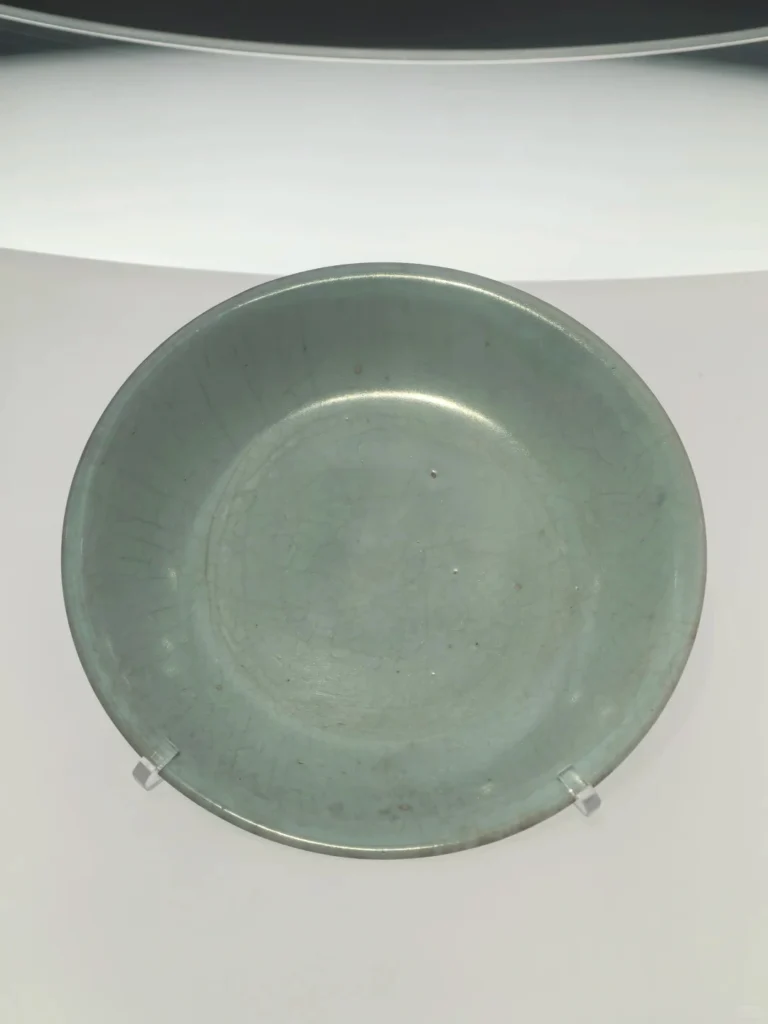
Another work to look for is a Jingdezhen famille-rose vase, a style of soft pink enamel decoration developed in the Qing dynasty, painted with a traditional motif of peaches and bats.
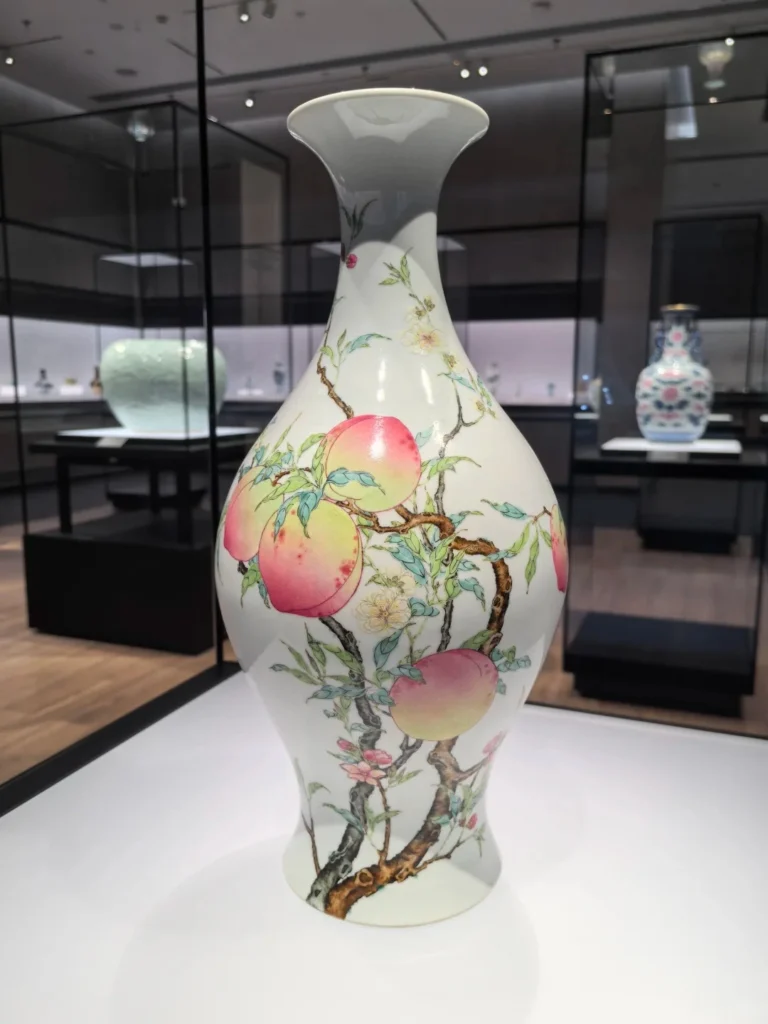
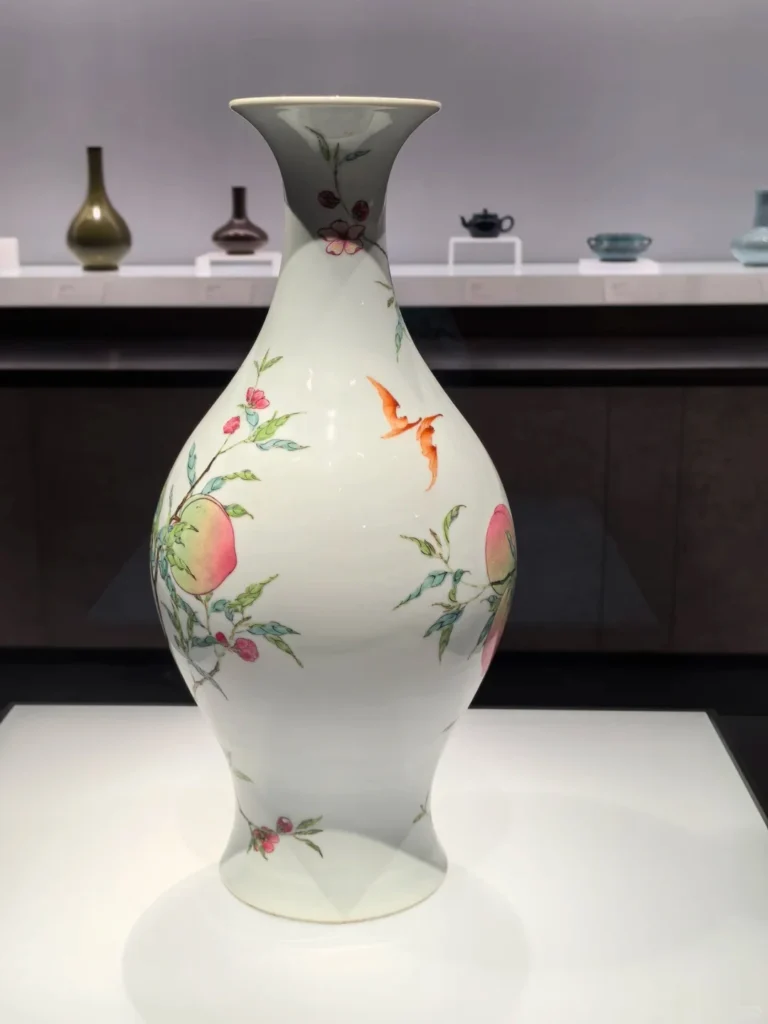
It was produced during the Yongzheng reign at an imperial kiln, a workshop that made wares specifically for the court, meaning it was created for royal use. In Chinese symbolism, peaches and bats commonly signify long life and good fortune. The craftsmanship is exceptional, and the museum notes that comparable pieces are rare today, making it worth looking for while you’re in the Ceramics Gallery.
Currency Gallery (Ancient Chinese Currency)
The Currency Gallery traces China’s monetary history from the pre-Qin era, before China’s first imperial unification (221 BCE), through the Qing dynasty, spanning a remarkably long timeline. The East Branch displays more than 6,000 coins and other forms of currency, on a larger scale than the related exhibits at the People’s Square Branch. Moving through the displays in sequence, you will see how money took very different forms over time, including:
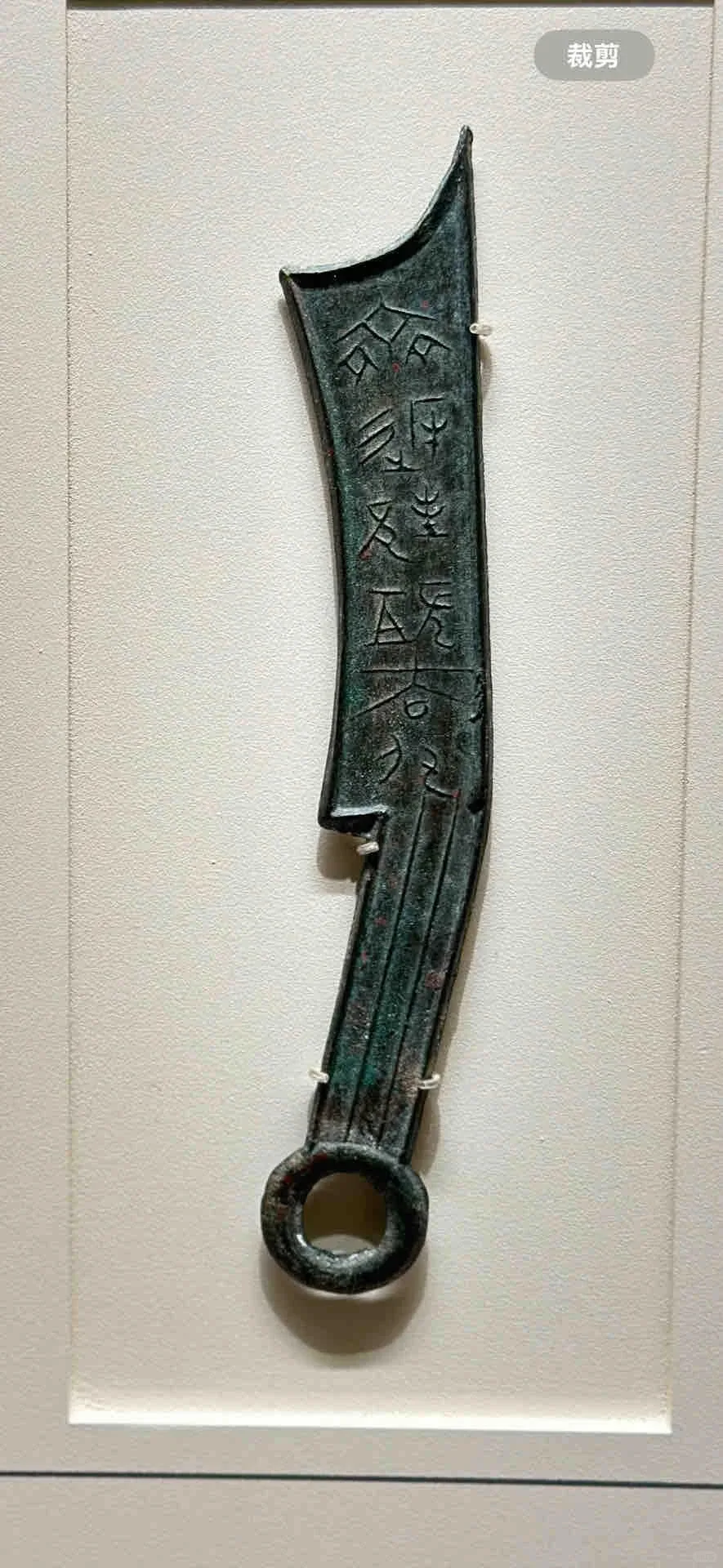
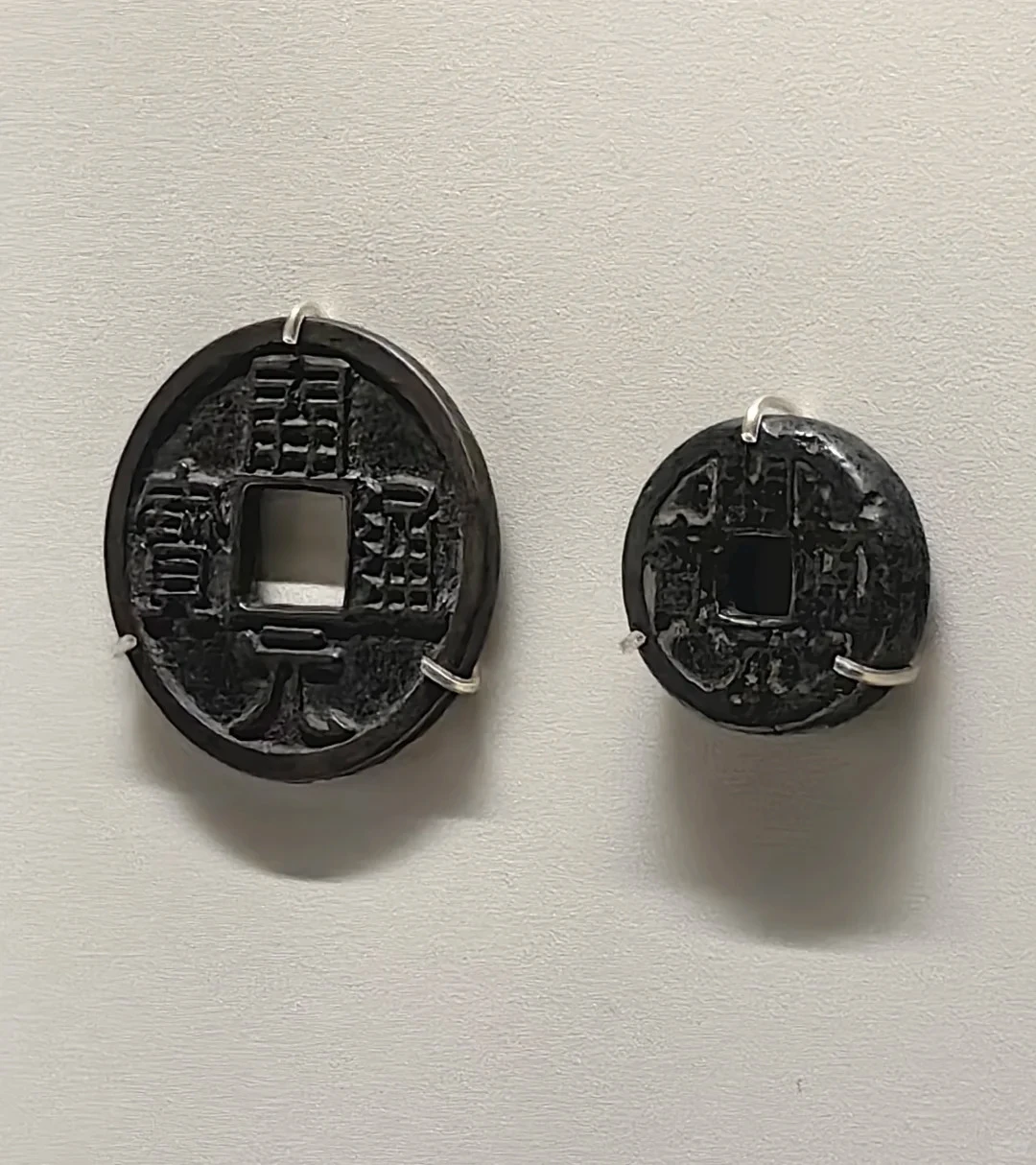
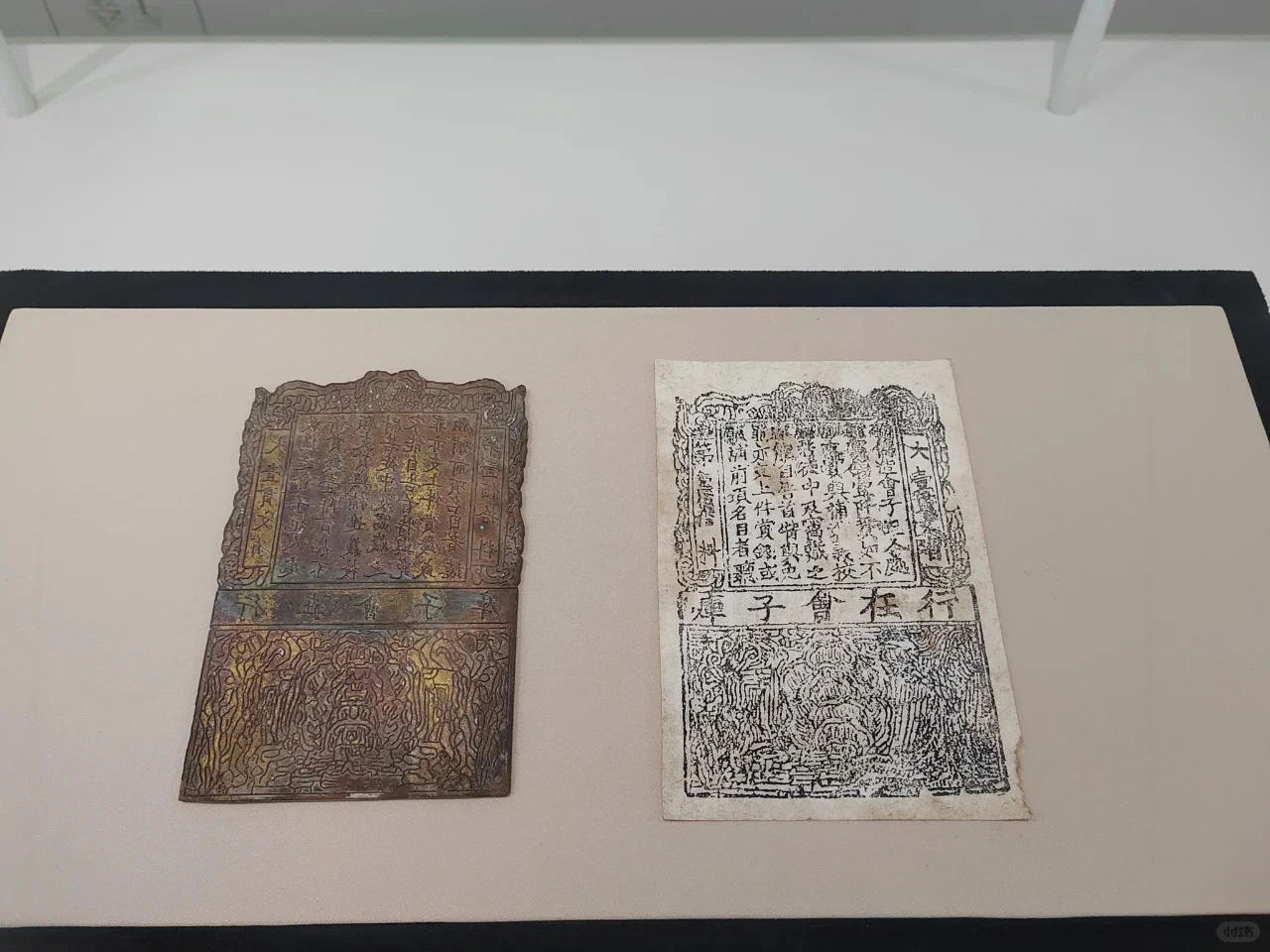
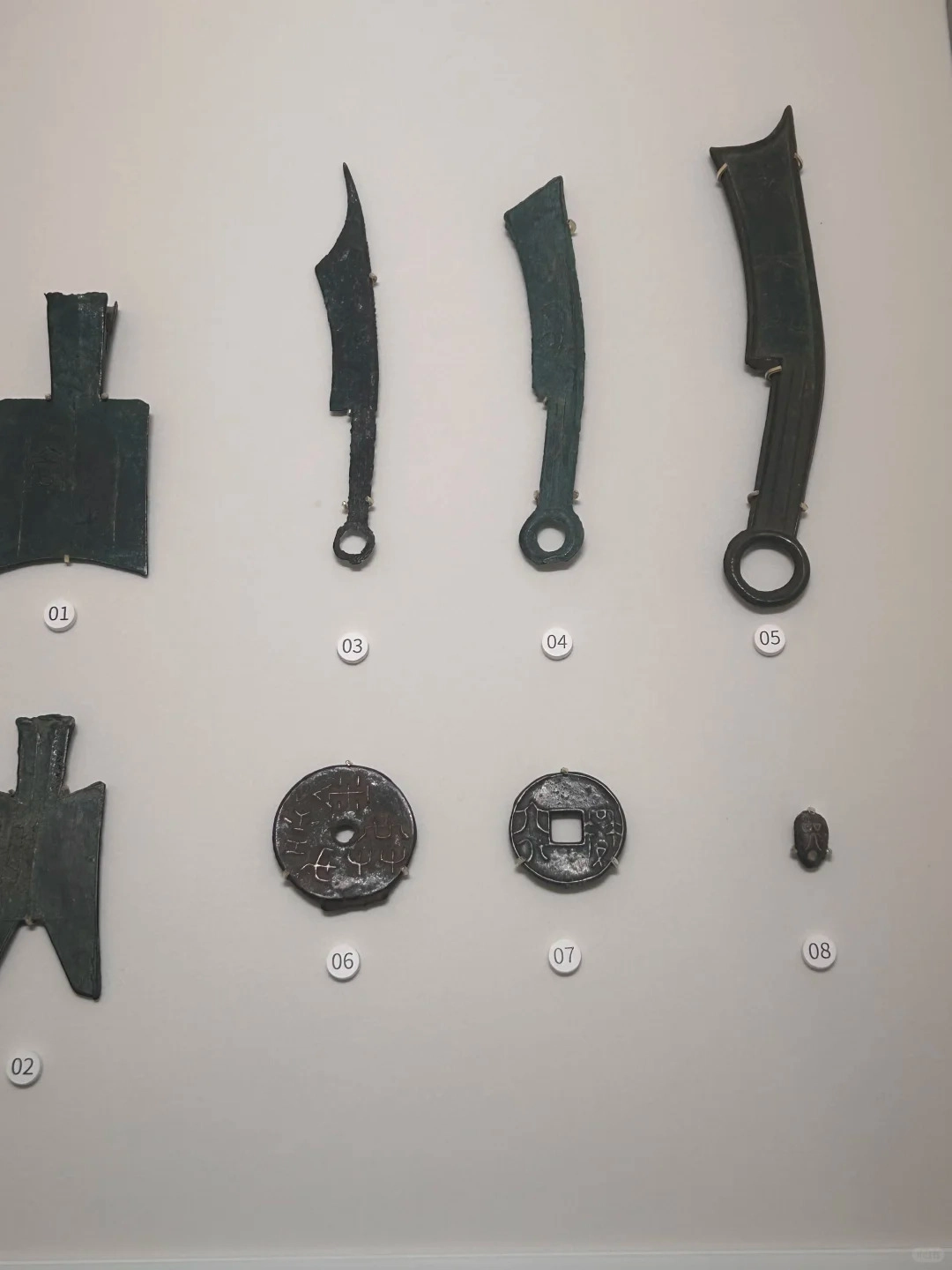
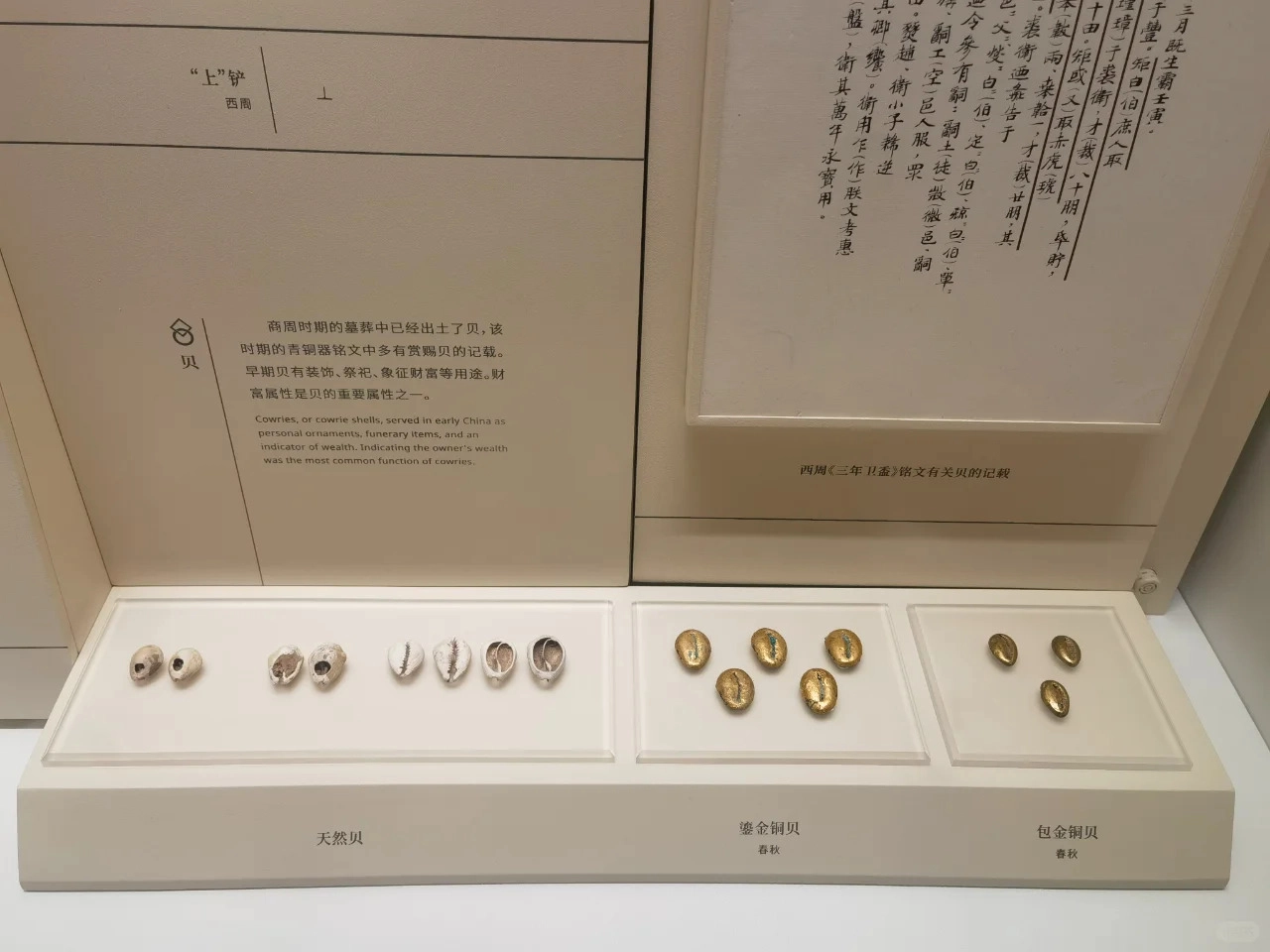
- Early shell money: shells used as a medium of exchange.
- Spade money and knife money: bronze currencies shaped like tools, from the Spring and Autumn/Warring States period.
- Round coins with square holes: a standardized form that spread after Qin unification.
- The Tang-dynasty Kaiyuan Tongbao: a widely used coin that became a model for later issues.
- The Song-dynasty paper money Jiaozi: among the earliest government-issued paper currencies.
- Late Qing machine-struck silver coins: early modern coinage, including the common “dragon dollar” type (silver dollars featuring a dragon design).
Using original objects along with images and concise explanations, the exhibit shows how currency design changed, and how trade, finance, and the wider economy developed alongside it.
There are several special pieces worth looking for, such as the three-hole spade coin, from the Warring States period and a Guangxu Yuanbao silver coin minted by the Guangdong Mint during the Qing dynasty.
If you have time, I suggest choosing a few coins to examine closely. Each item carries historical information, and seeing them up close shows how economic systems shifted, how minting technology advanced, and how the appearance of Chinese characters on money evolved over time.
Level 4: Archaeological Shanghai, Jiangnan Craft & Design, and More
Save time in your visit for Level 4. The first gallery depicts an archaeological timeline of Shanghai, while the other shares the aesthetics of the culturally-rich Jiangnan region.
Archaeological Shanghai (Kao Gu Shanghai)
Many people associate Shanghai primarily with modern urban life, but the history of Shanghai and its surrounding area goes back to the Neolithic period 6,000-7,000 years ago. This gallery displays more than 2,000 excavated artifacts tracing the region’s transformation from prehistory to the modern era, including early settlements and daily life, the gradual rise of towns, and the major changes that followed when Shanghai opened as a treaty port in the modern period.
For international visitors, the gallery shows how Shanghai evolved from small communities into a major metropolis. It also challenges the impression that Shanghai is a “city without history,” showing instead how the region fits into the broader story of Chinese civilization.
Representative finds from different stages include:
- Pottery from the Majiabang culture: an early Neolithic civilization in the Shanghai region.
- Jade from the Liangzhu culture: a major Yangtze River Delta civilization (roughly 3300–2300 BCE).
- Archaeological remains from towns during the Tang and Song periods.
- Excavated objects related to Shanghai County in the Ming and Qing periods.
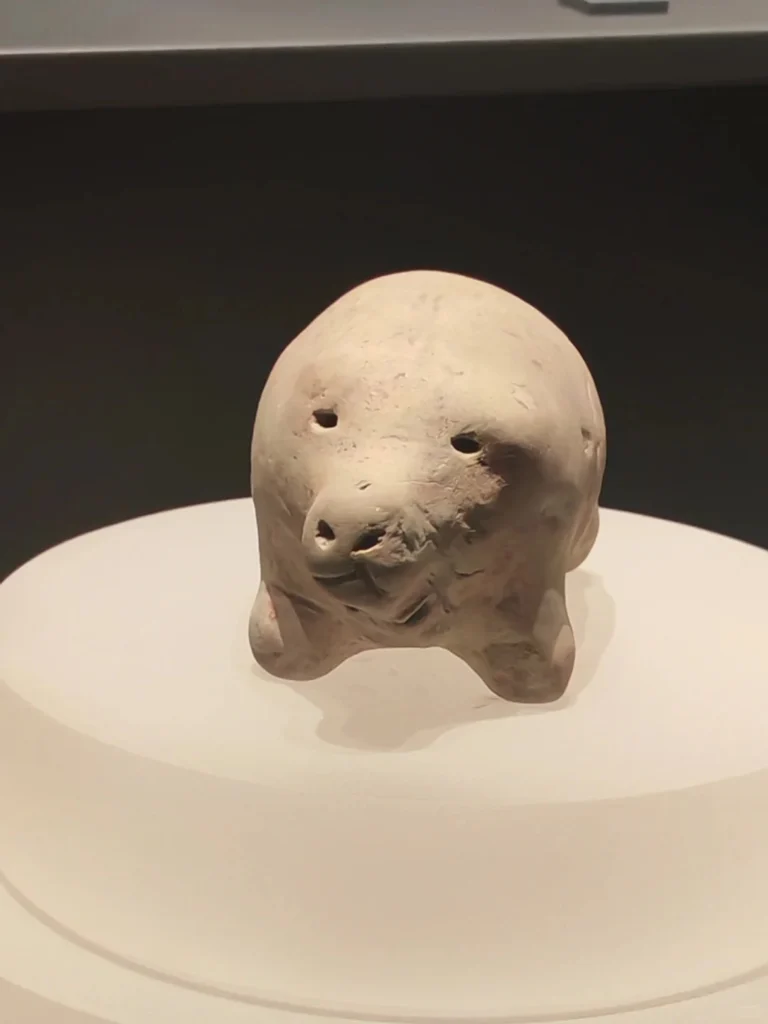
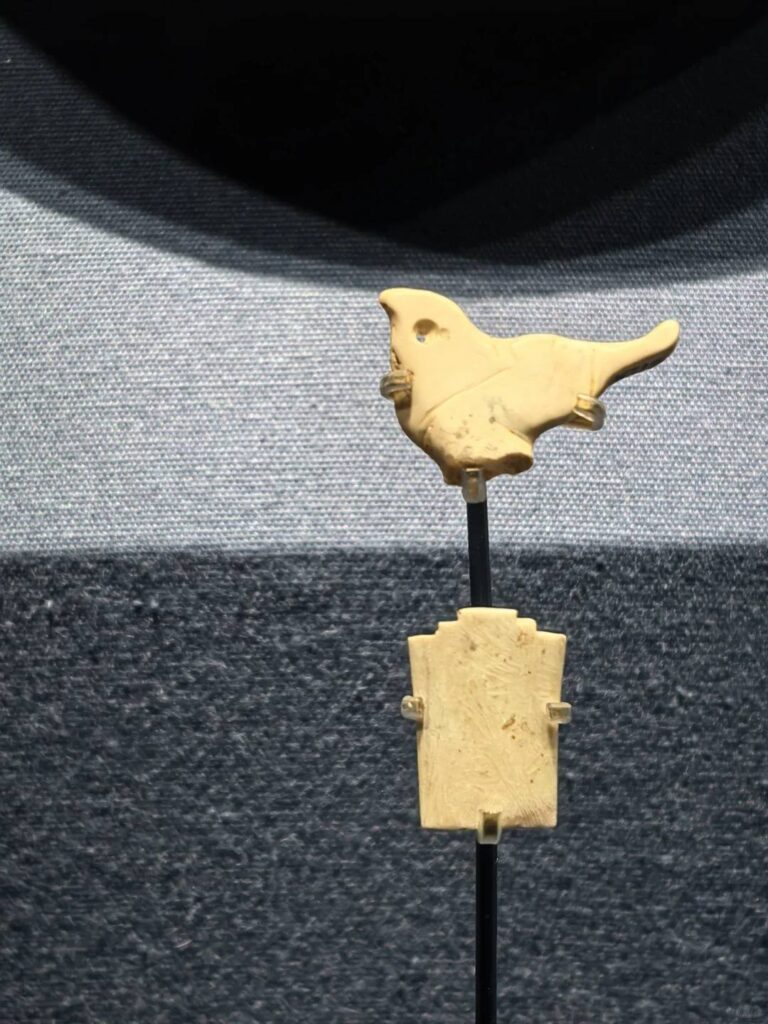
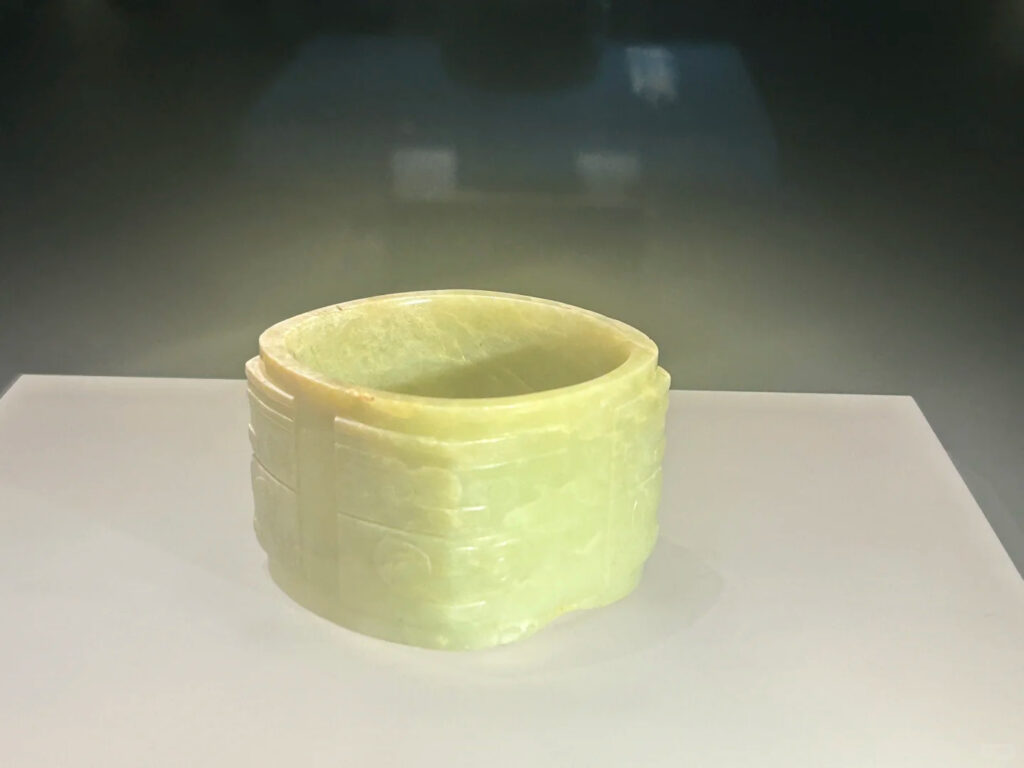
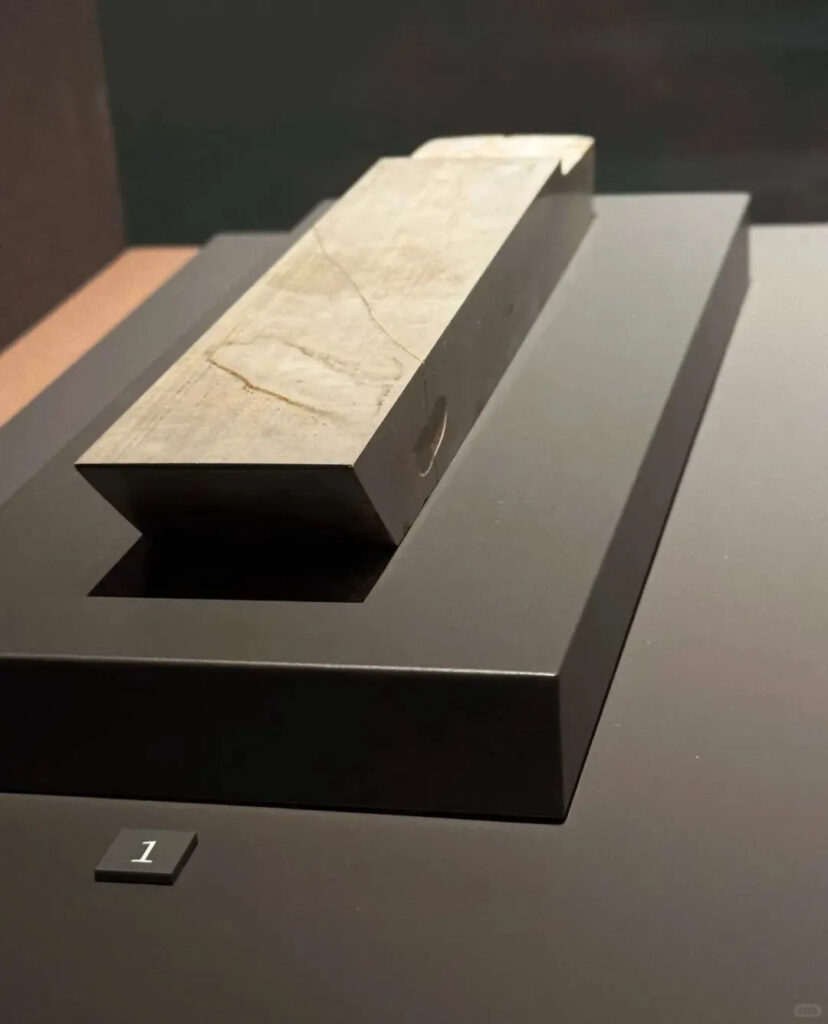
One interesting object is a Liangzhu-culture ivory scepter, a ritual object associated with authority, excavated from the Fuquanshan site in Qingpu, Shanghai, one of the region’s important prehistoric sites. It is among the earliest and most finely made ivory scepters found in Chinese archaeology, and it may have been connected to ritual practice or symbolic power. This object underscores how skilled and complex prehistoric societies could be.
Jiangnan Craft & Design Gallery
The Jiangnan Craft & Design section focuses on craftsmanship and everyday objects from Jiangnan, the region south of the lower Yangtze River, including Shanghai and nearby provinces, and offers an introduction to its traditional aesthetics.
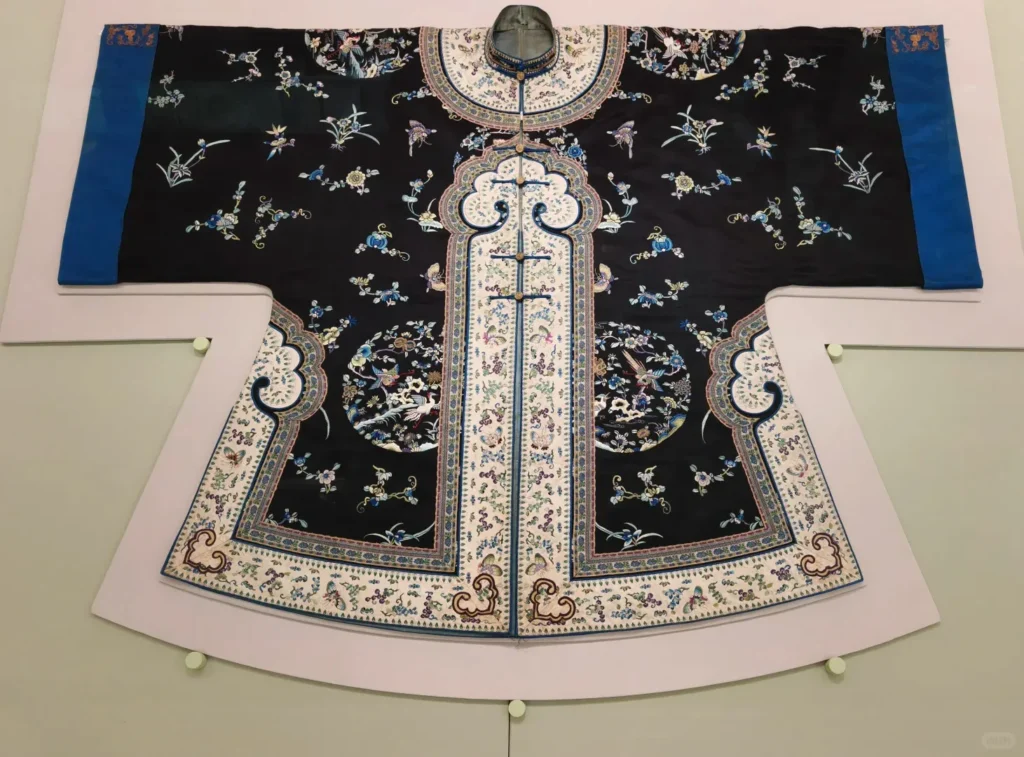
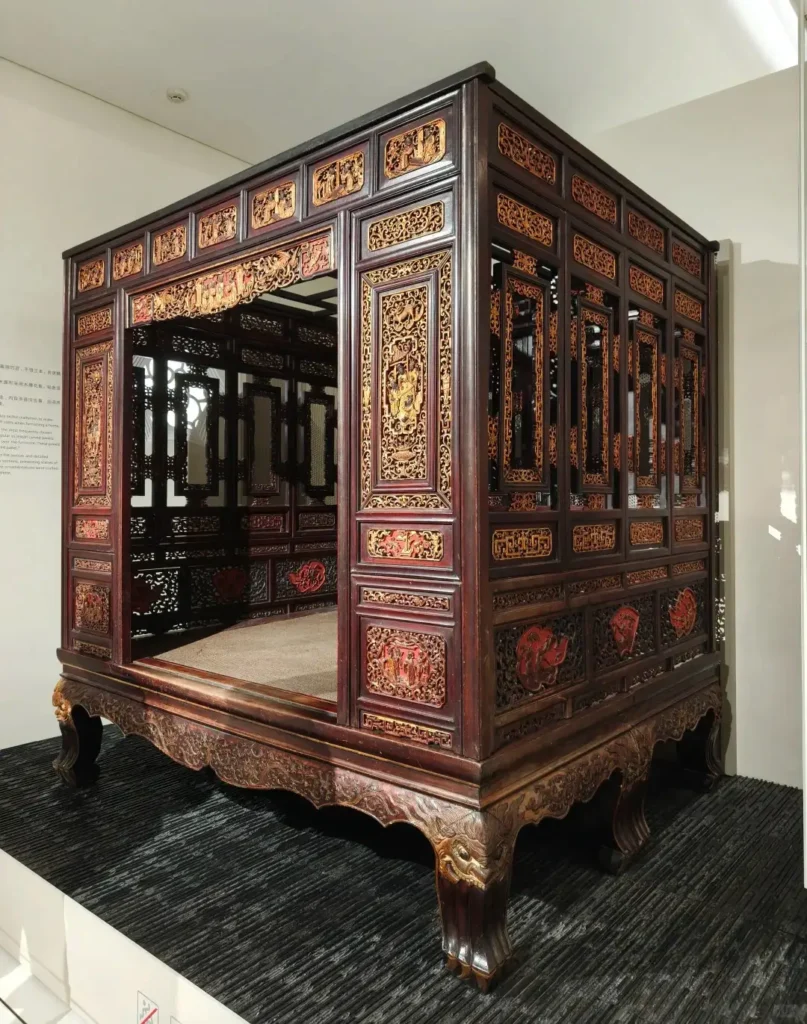
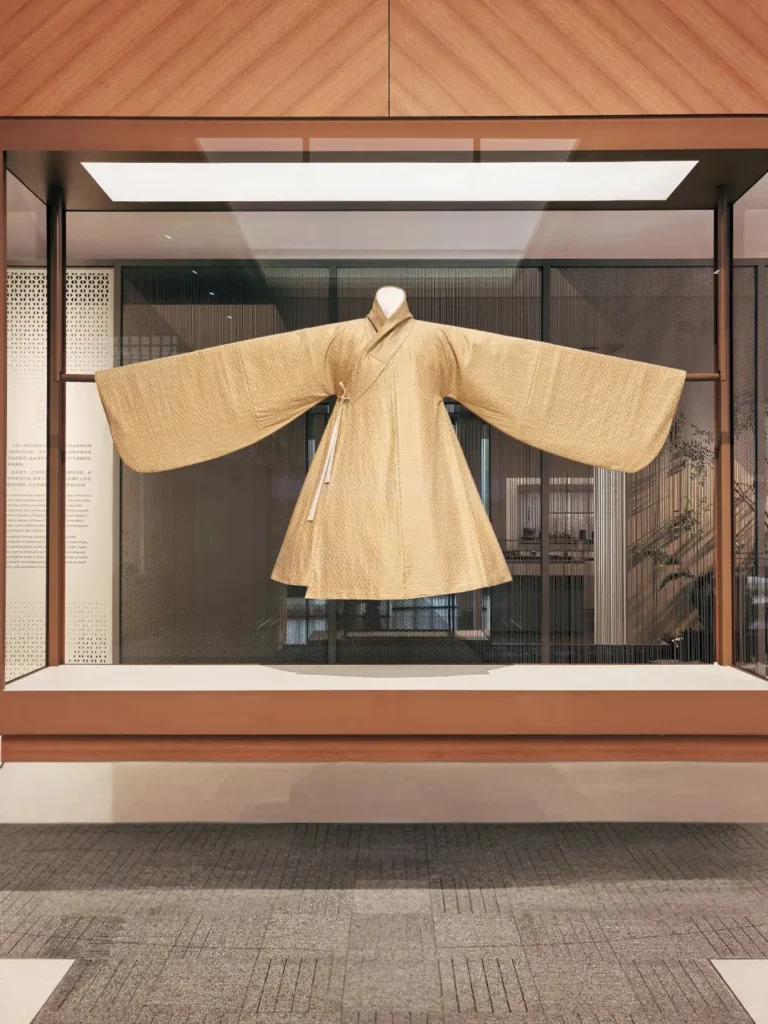
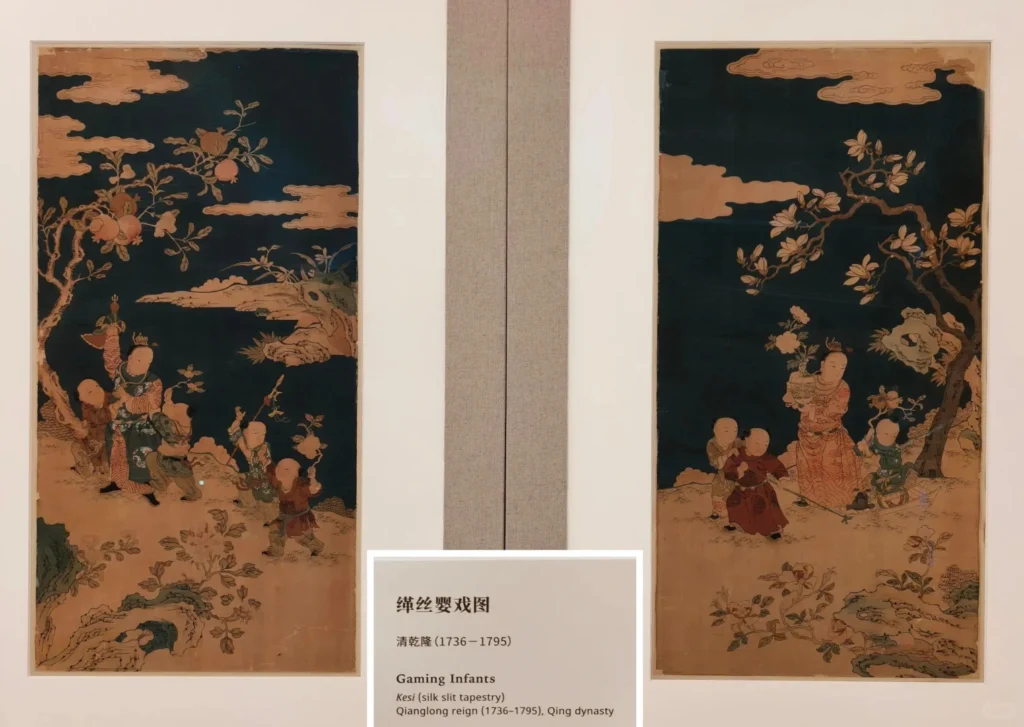
The gallery design blends modern minimalism with elements inspired by classical Jiangnan gardens. Large windows bring in natural light, and the atmosphere is calm. Inside, you will see a range of craft traditions and desk objects, small items for the scholar’s studio, valued for both function and taste, such as:
- Garden-style carved window lattice patterns.
- Traditional writing tools, including Huzhou brushes, which are fine calligraphy brushes long associated with the Jiangnan region.
- Folk woodblock prints, including Taohuawu New Year prints, or colorful seasonal prints traditionally displayed for good fortune.
- Delicate embroidery works, such as Gu embroidery, a renowned Suzhou-area embroidery tradition known for fine detail
- Craft items associated with Shanghai’s Haipai (“Shanghai style”) culture, a modern aesthetic shaped by both Chinese and international influences
Together, these works reflect a Jiangnan sensibility that emphasizes restraint, refinement, and subtlety. Walking through the gallery can feel like stepping into a quiet study and courtyard in a Jiangnan water-town, where craft and daily life are closely connected.
Pro-tip: along one side of the Jiangnan Craft & Design Gallery, an escalator leads directly to the Level 5 roof garden. If the weather is nice, consider taking a short walk for fresh air and an outdoor view.
Breaks and Food
The Shanghai Museum East Branch is large, and a thorough visit can easily take several hours. The building offers multiple rest areas and convenient food options:
Level 1 lobby (near the exit): a museum café and gift shop with coffee, tea, and light snacks.
Between Levels 2 and 3 (near the stairs): an open café-style rest area where you can sit with a drink and look out over the atrium.
Level 4: a restaurant and tea room serving simple Chinese meals and tea snacks, which is convenient if your visit overlaps with lunchtime.
There are additional dining choices in the surrounding area, including Shanghai Science & Technology Museum and nearby commercial spaces. If you leave for a meal, same-day re-entry is permitted with a valid ID (passport).
Bag Storage
The museum provides free lockers so you don’t have to carry large backpacks or luggage through the galleries. Storage areas are available on the basement level and in the Level 1 lobby, and you can store coats, larger bags, and luggage with a valid ID.
As a general precaution, avoid storing valuables (such as passports, wallets, and electronics). Keep them with you during your visit.
Things to Keep in Mind
Security Check and Prohibited Items
Before entering, bags and personal items pass through a security screening. The museum restricts certain items, such as lighters and open beverages. If you are carrying anything not permitted inside, the bag-storage area can help you handle it.
Photo Rules
Unless signage indicates otherwise, photography is permitted in the East Branch’s permanent galleries, provided you do not use flash. For courtesy and safety, avoid tripods, do not block display cases, and be mindful of other visitors while taking photos.
Crowd Tips
Weekdays are usually the best option for lighter crowds, though weekends are still enjoyable. If possible, I suggest avoiding major Chinese holidays, especially May Day, National Day, and Chinese New Year, when the museum is often more crowded.
Closing Thoughts
This guide is intended to help you make the most of a visit to the Shanghai Museum East Branch. Whether you are drawn to the large bronze collections or to the softer calligraphy and paintings, the museum offers a rewarding and memorable introduction to Chinese art and history.
Read More:
Things to Do in Shanghai
Yu Garden Travel Guide
Where to stay in Shanghai