Shanghai Astronomy Museum (Planetarium) – A Visitor’s Guide (Hours, Tickes)
If you’re planning a trip to Shanghai, I really recommend making time for the Shanghai Astronomy Museum (Planetarium). It’s one of the largest astronomy museums in the world, and it’s impressive in just about every way: the campus is huge, the exhibits are excellent, and the building itself is fascinating. Even if you’re only somewhat interested in space, the architecture alone makes it worth the trip.
That said, there are two important things to know before you go. First, the museum is a long way from central Shanghai. Second, tickets can be hard to get, especially on weekends and during holidays. If you plan in advance with these things in mind, your visit will be much smoother.
Location and timing
The Shanghai Astronomy Museum is in Lingang, near Dishui Lake, in the far southeastern part of Pudong, which is nowhere near Shanghai’s main tourist areas like the Bund, Nanjing Road, or Yu Garden.
Many visitors don’t take this into consideration and try to combine the museum with downtown sightseeing on the same day. Usually that doesn’t leave enough travel time and results in a rushed schedule.
If you’re only planning a quick walk-through of the main permanent exhibitions, a little over two hours can be enough. If you enjoy museums, or if you’re visiting with kids, four hours or more will feel much more comfortable.
Personally, I suggest planning for at least half a day. That gives you enough time to go through the main exhibition areas at a comfortable pace, take a short break, and possibly add one or two of the reservation-only experiences.
And if you also want to include the dome theater, other theater programs, and some time outdoors, then spending a full day here is ideal. You’ll have a much better experience if you give it the time it deserves. If you do have a full day, it also pairs well with other attractions around the Dishui Lake area.
Pro-tip: try to book an early entry slot. Starting early gives you a better chance of enjoying everything without feeling rushed through the exhibits.
How to get there
By metro
The easiest public transport option is Metro Line 16. Get off at Dishui Lake Station and then the museum is about a 10 to 15 minute walk.
If you’re staying in central Shanghai (around the Bund, for example) the journey by metro can take close to two hours, so leave yourself plenty of time, especially if you’re visiting in the morning.
By taxi or ride-hailing app
If you want to save time, taking a taxi or using a ride-hailing app (Amap, Didi) is the more convenient option. From the Bund area, the drive usually takes around 1 hour and 15 minutes.
However, traffic in Shanghai can be heavy during rush hour, so depending on the time of day, a car isn’t always faster than the metro.
Opening hours
| Opening Hours | 09:00 – 16:00 (Ticketing stops at 15:00); Closed on Mondays, except during National Day holiday |
|---|
Starting in February 2026, the museum has extended hours until 8:00 p.m. on Saturdays and official public holidays. On these days, the exhibition halls remain open later, and visitors can also attend special evening programs.
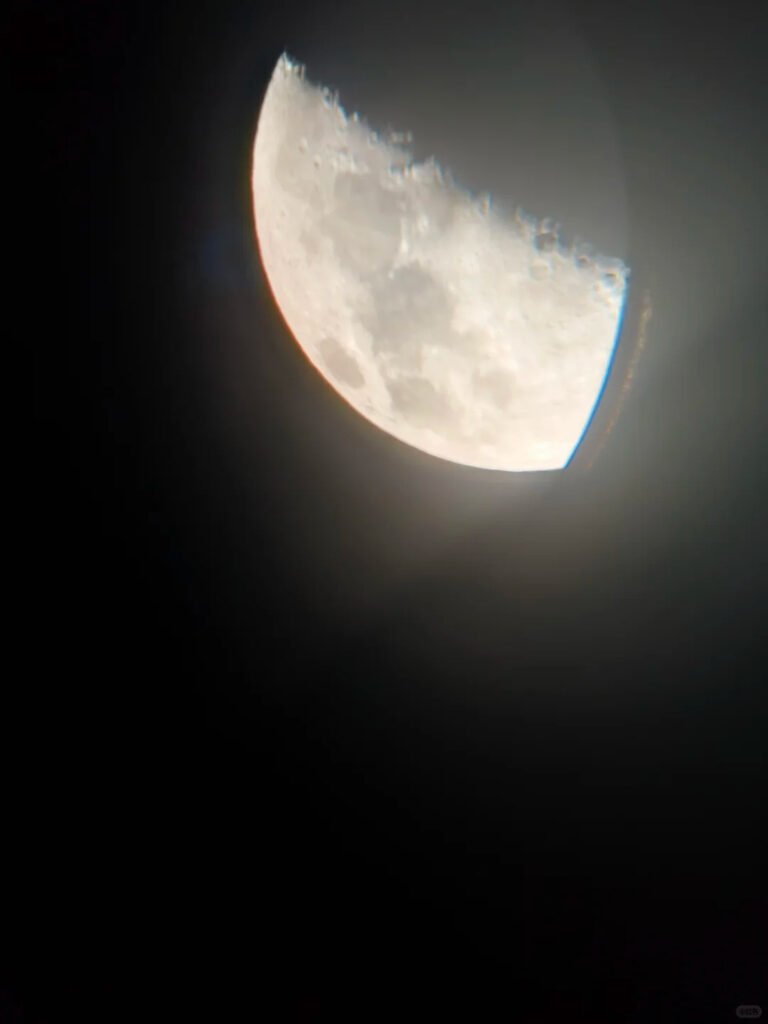
One such evening program that I particularly recommend is called “Encounter with the Stars.” The sessions run from 5:30 PM to 10:00 PM and include the chance to observe the moon and the night sky through large telescopes, which is a pretty special experience. Keep in mind that these events require advance reservation, and telescope viewing is weather-dependent.
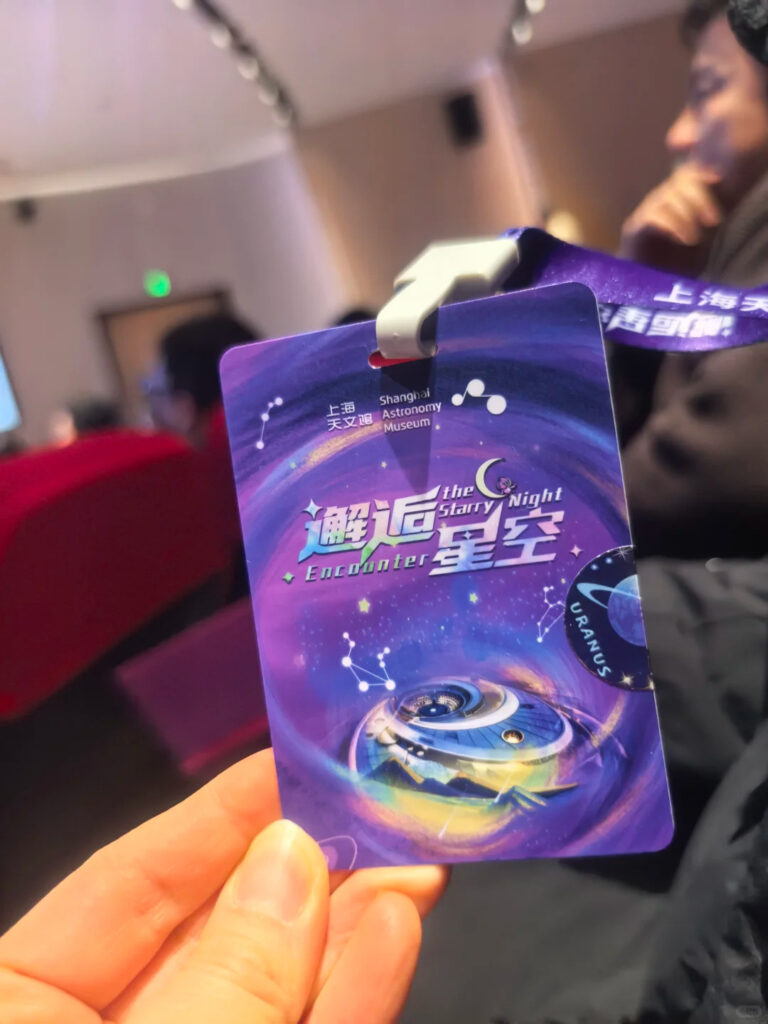
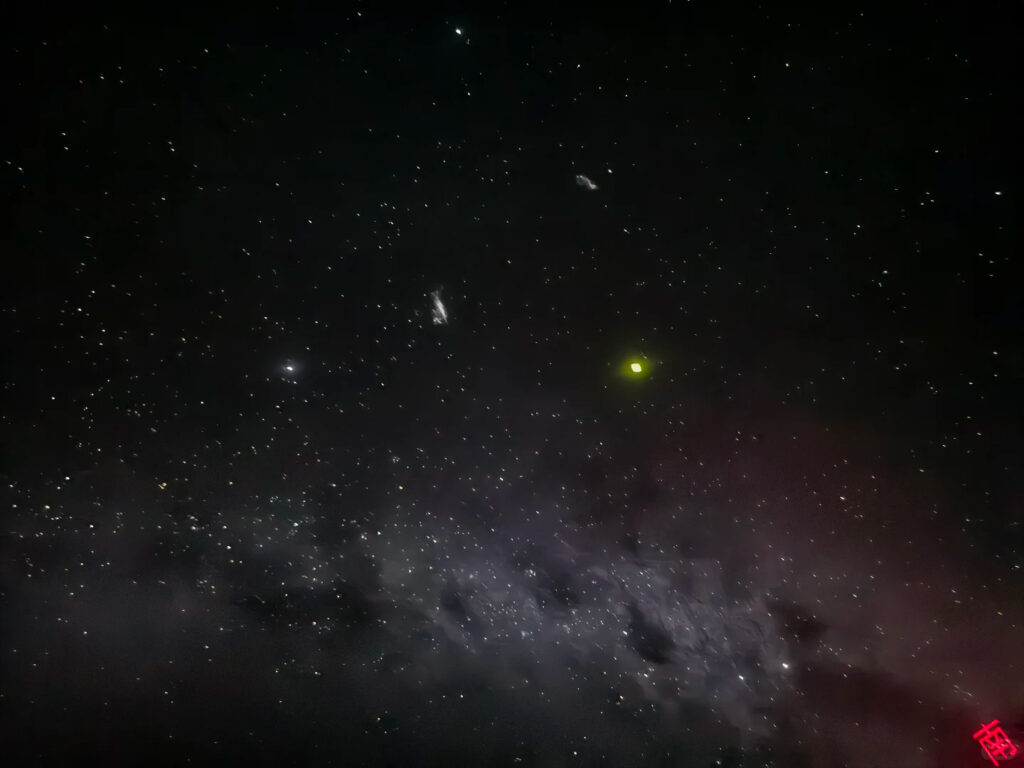
Because schedules, temporary closures, and visitor limits can change, it’s always a good idea to check the museum’s official website or WeChat account before your visit.
Ticket information
Regular admission prices for the Shanghai Astronomy Museum are:
- Adults: 30 RMB
- Students: 15 RMB
- Seniors aged 60–69: 25 RMB
Free admission is available for:
- Children under 6 years old, or under 1.3 meters tall
- Seniors aged 70 and above
- Visitors with disabilities
If you want to see a film in the dome theater, you’ll need to buy a separate ticket. These usually cost 40 RMB per person.
Tickets need to be reserved through the museum’s official booking channels, including Trip and WeChat mini program.
They are released three days in advance, and it’s a good idea to book as early as possible.
Reservation tips
Booking ahead of time is important for the Shanghai Astronomy Museum. Tickets are always popular, but they are in especially high demand on weekends, public holidays, and during school breaks. If you already know the date you want to visit, book as soon as tickets are released.
If you weren’t able to reserve ahead of time, you can try buying a ticket on site with your passport. Keep in mind that it depends on whether there are tickets left that day, so I wouldn’t rely on that as my main plan.
Is the Shanghai Astronomy Museum worth visiting?
Yes, absolutely. And if you’re traveling with kids, I’d say it’s one of the best museum choices in Shanghai.
For families with elementary-school-age children, this is an especially good pick. There are lots of large-scale models, interactive exhibits, and immersive displays, so it doesn’t feel dry or too academic. The museum was designed with families in mind, with a layout that keeps things engaging and also a dedicated area for younger children. Nonetheless, many adults enjoy the Shanghai Astronomy Museum just as much. Personally, if I had to sum up the museum in one word, it would be impressive.
Beyond the size, architecture, and its beauty in photographs, the museum stands out for its ability to make complex concepts, such as the universe, gravity, time, and the night sky, accessible through a hands-on, immersive experience. You don’t need to know much about astronomy to enjoy your visit; if you follow the flow of the galleries, it’s easy to build an understanding as you go.
Most of the exhibit descriptions are bilingual, so language usually isn’t a barrier for visitors who don’t speak Chinese. And because so much of the museum is visual and interactive, it’s still enjoyable even if you don’t catch every detail.
Pro-tip: If there’s something you don’t fully understand, take a photo of the exhibit label and ask an AI tool to explain it in simpler, more everyday language.
Read More: How to Travel in China Without Speaking Any Chinese: Translation Apps + Simple Communication Tricks
Reserve the Popular Experiences as Soon as You Get Inside
Several of the Shanghai Astronomy Museum’s most popular experiences require a separate reservation after you enter, which many first-time visitors don’t realize before they visit.
When you arrive, it’s easy to get distracted by the large main hall and the architecture, take photos, wander around for a while, and only then remember to reserve the most popular exhibits. By that point, they’re often already fully booked for the day.
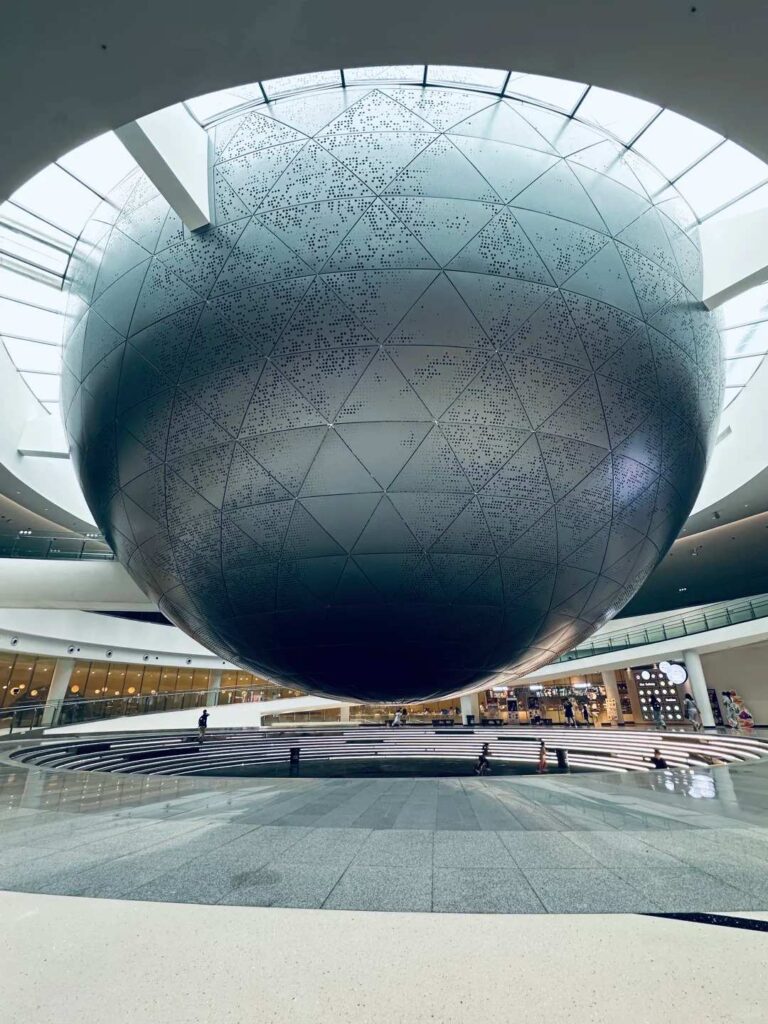
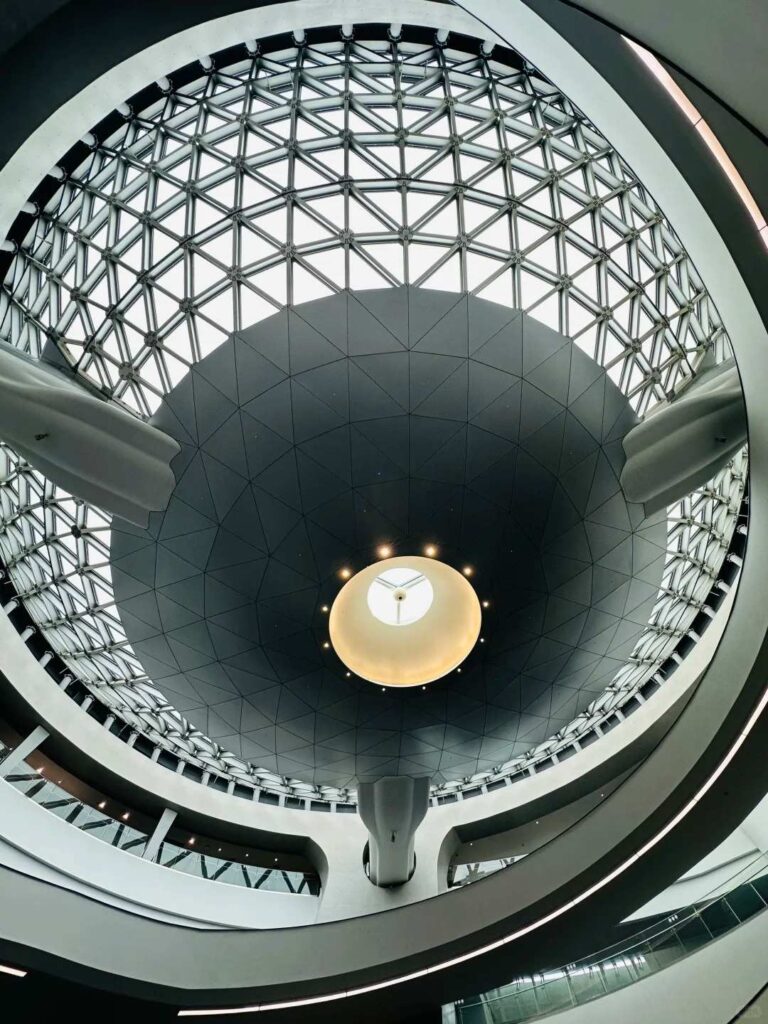
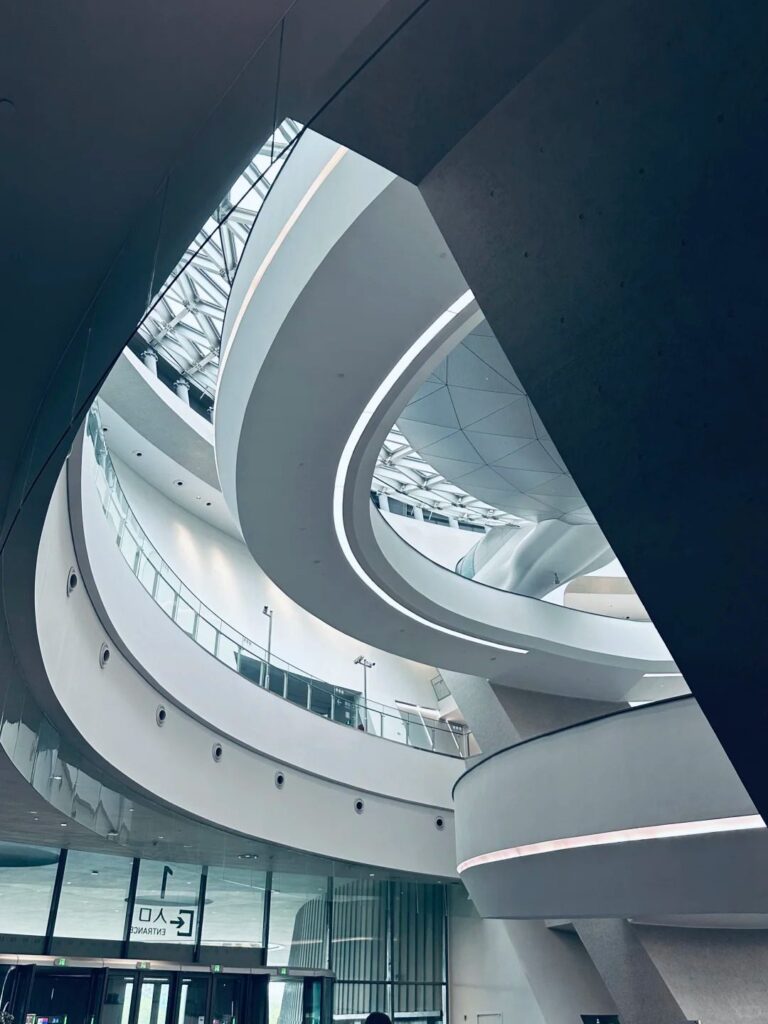
Also, these reservations can only be made after you’re inside the museum, you can’t book them in advance from outside. So as soon as you get in, it’s a good idea to reserve the experiences you want first, and then start exploring the exhibits.
Here’s a quick guide to some of the reservation-only experiences.
Curious Planet
Best for younger children
Curious Planet is an interactive area designed especially for younger kids between 90 cm and 120 cm tall.
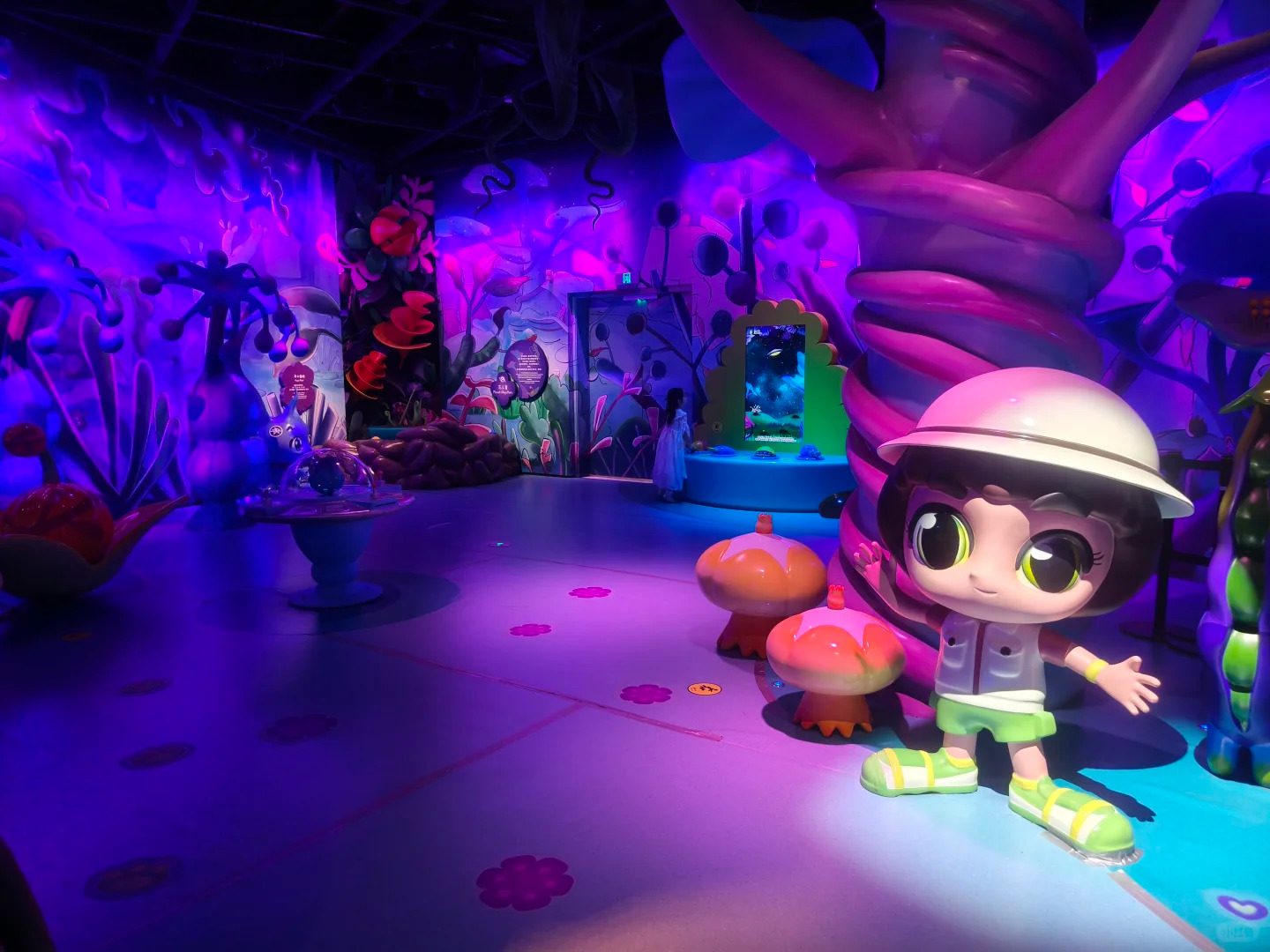
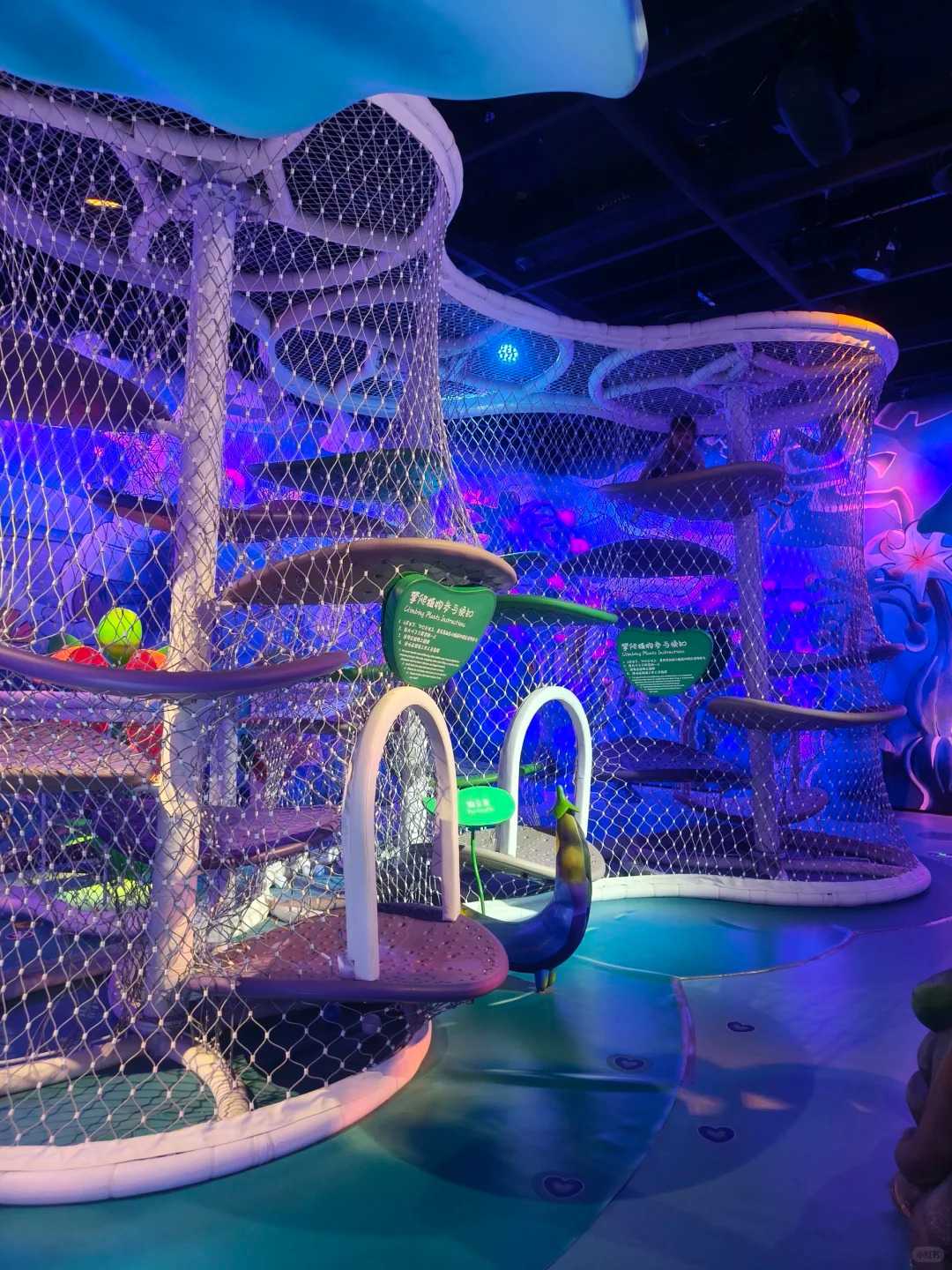
It’s a small, space-themed playground where kids can climb, explore, use their hands, and play games as an introduction to basic astronomy concepts. This is often a highlight of the museum for many kids, especially younger ones, so it’s worth reserving early.
- There are three sessions each day, and each session lasts 45 minutes.
- Available time slots: 10:30 a.m., 1:30 p.m., and 2:30 p.m.
- Non-slip socks are required to enter, and they can be purchased at the museum.
“What If” Theater
Entirely in Chinese; not a top pick for most international visitors
The “What If” Theater is a lighter, more imaginative science experience. The program asks an interesting question: what would the world look like if some of the universe’s fundamental conditions were different?
Through animation and creative displays, the program makes the answer to this question more accessible. Each session lasts around 30 minutes, and compared with some of the other programs, it’s often a little easier to book.
However, this was not one of the most memorable experiences for me personally. It wasn’t bad, but it wasn’t something I’d go out of my way for on future visits. Older kids may enjoy it, especially those in middle school or above. For younger children, it’s something colorful to watch but definitely harder for them to understand.
Unfortunately for foreign visitors, it’s entirely in Chinese, with no English subtitles. Unless you understand Chinese well enough to follow along, I wouldn’t recommend this particular experience.
Optical Planetarium
Highly recommended
The Optical Planetarium is absolutely worth doing. It’s a dome-like space where visitors lie back on beanbag-style seats and look up at a projected night sky overhead. I found the experience to be calm, unique, and memorable.
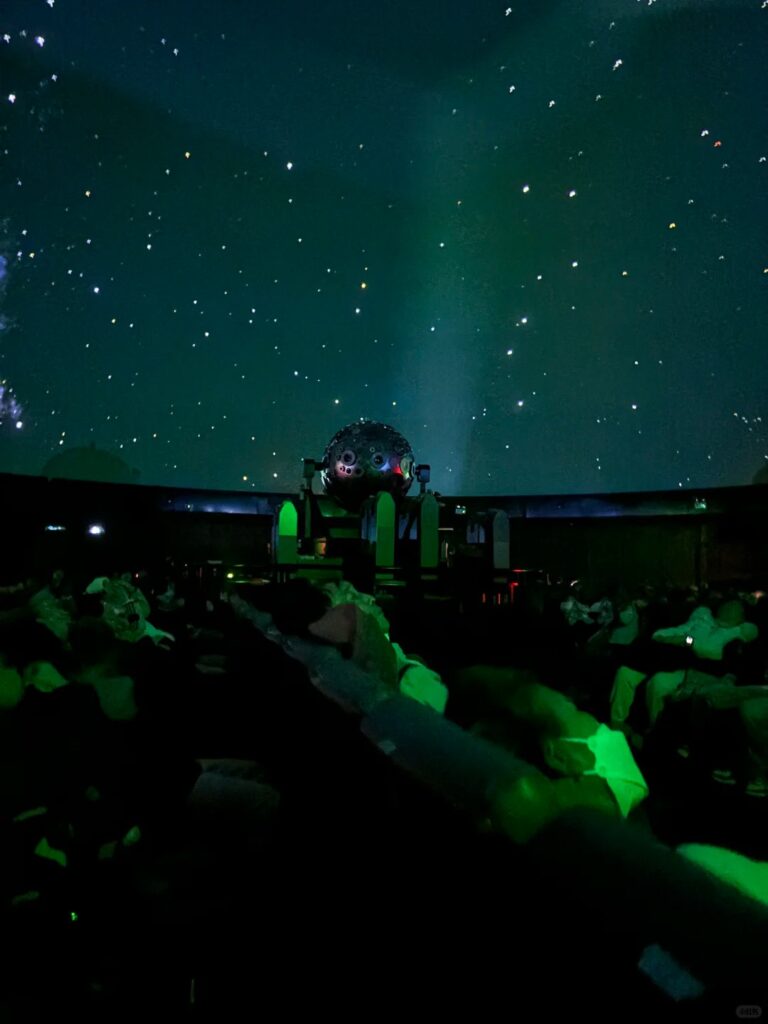
The program changes with the season and usually focuses on the night sky that can actually be seen at that time of year. For example, the session I attended was about the winter sky in the Northern Hemisphere.
If you’re already interested in astronomy, you’ll probably love this. But even if you’re not, there’s something special about lying there quietly and looking up at the stars.
The commentary is in Chinese, so international visitors may miss some of the details, but I don’t think it takes away too much. Even without understanding the narration, you can still relax, take in the sky above you, and feel how vast the universe is.
Fly Through the Milky Way
Also highly recommended
Fly Through the Milky Way is another reservation-only experience that’s definitely worth booking. This is a 6K motion theater experience, and it simulates the feeling of traveling through the galaxy in a spaceship. The visuals give you a strong sense of the scale and mystery of the Milky Way, and it’s one of the museum’s most immersive attractions. I thought it was stunning.
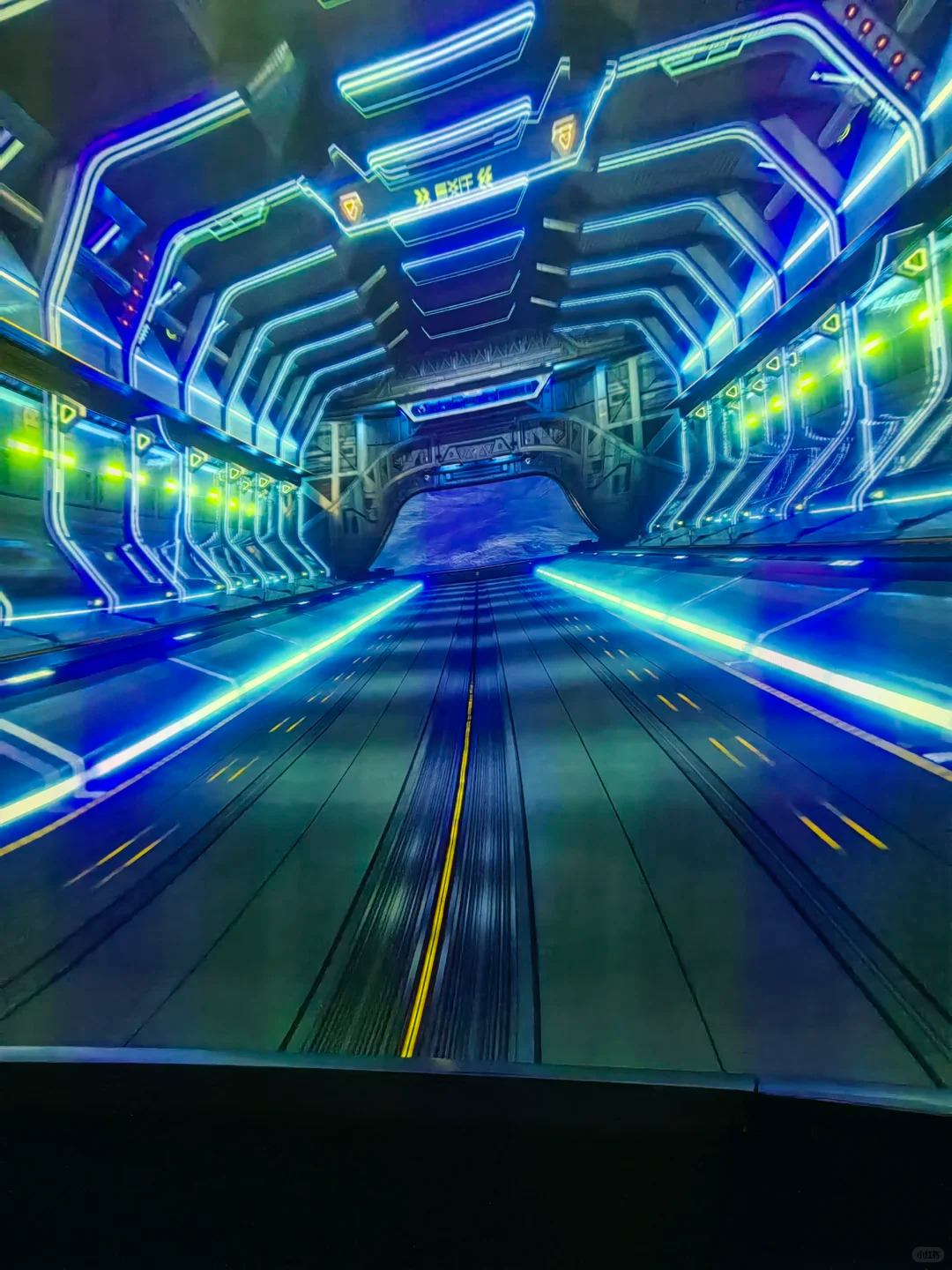
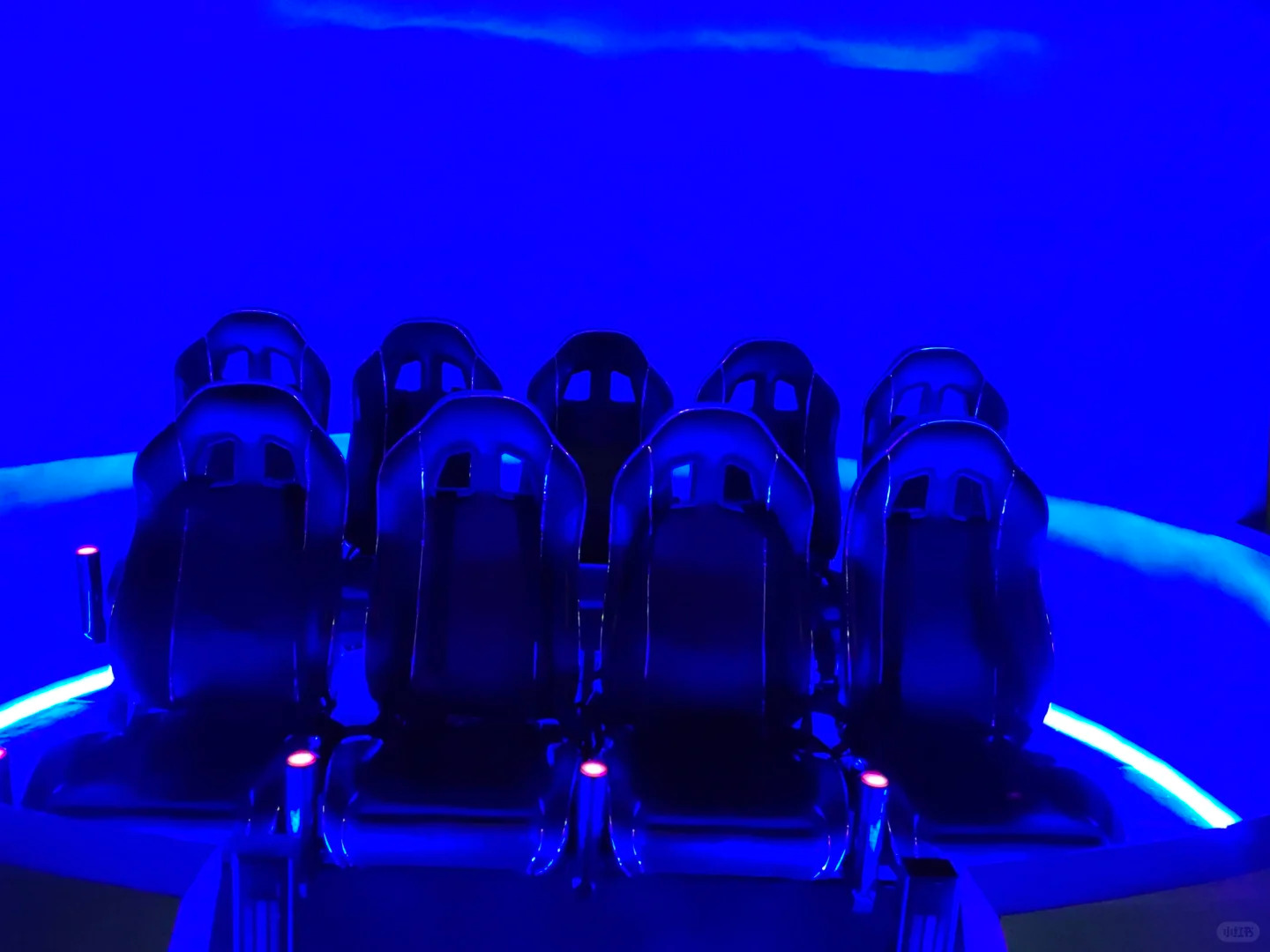
There’s usually a showing every 30 minutes, and it’s very popular, so this is definitely one to reserve as soon as you enter.
The story and narration are in Chinese, but even if you don’t understand the language, that doesn’t matter too much. The visual impact is strong enough on its own that I’d still absolutely recommend it to international visitors.
Mission to Mars
Recommended
Mission to Mars is another experience I recommend. As the name suggests, it focuses on Mars exploration.
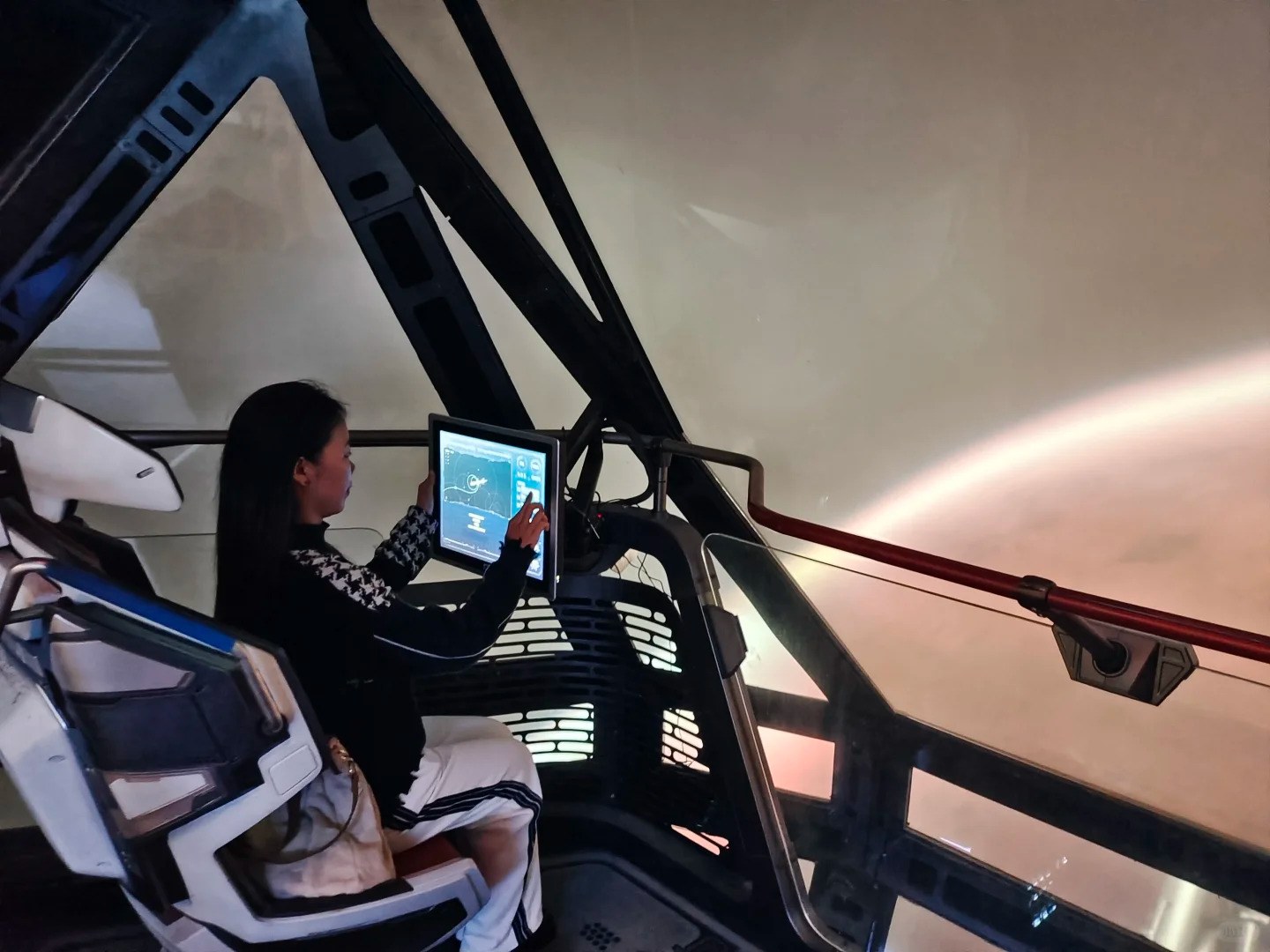
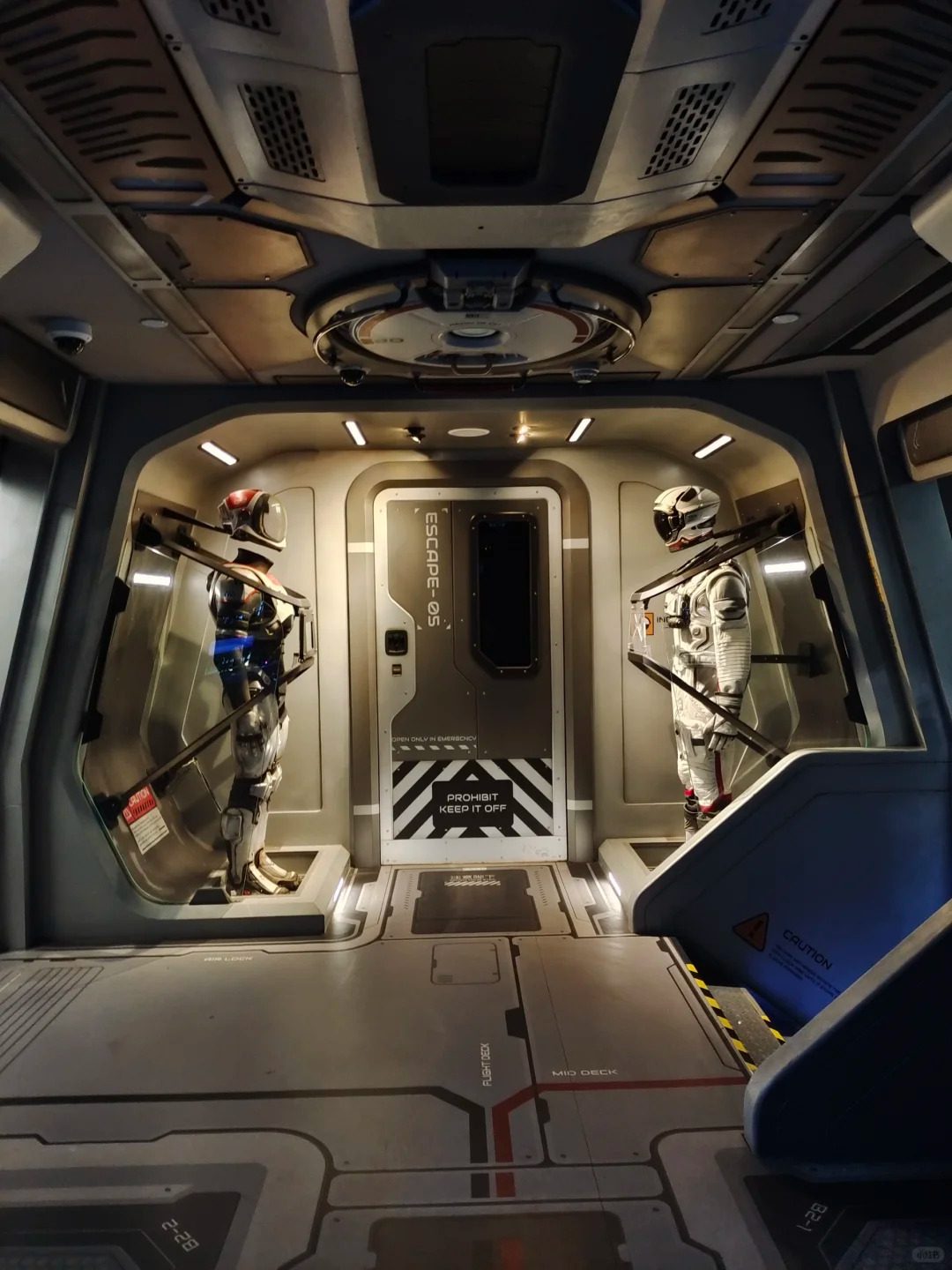
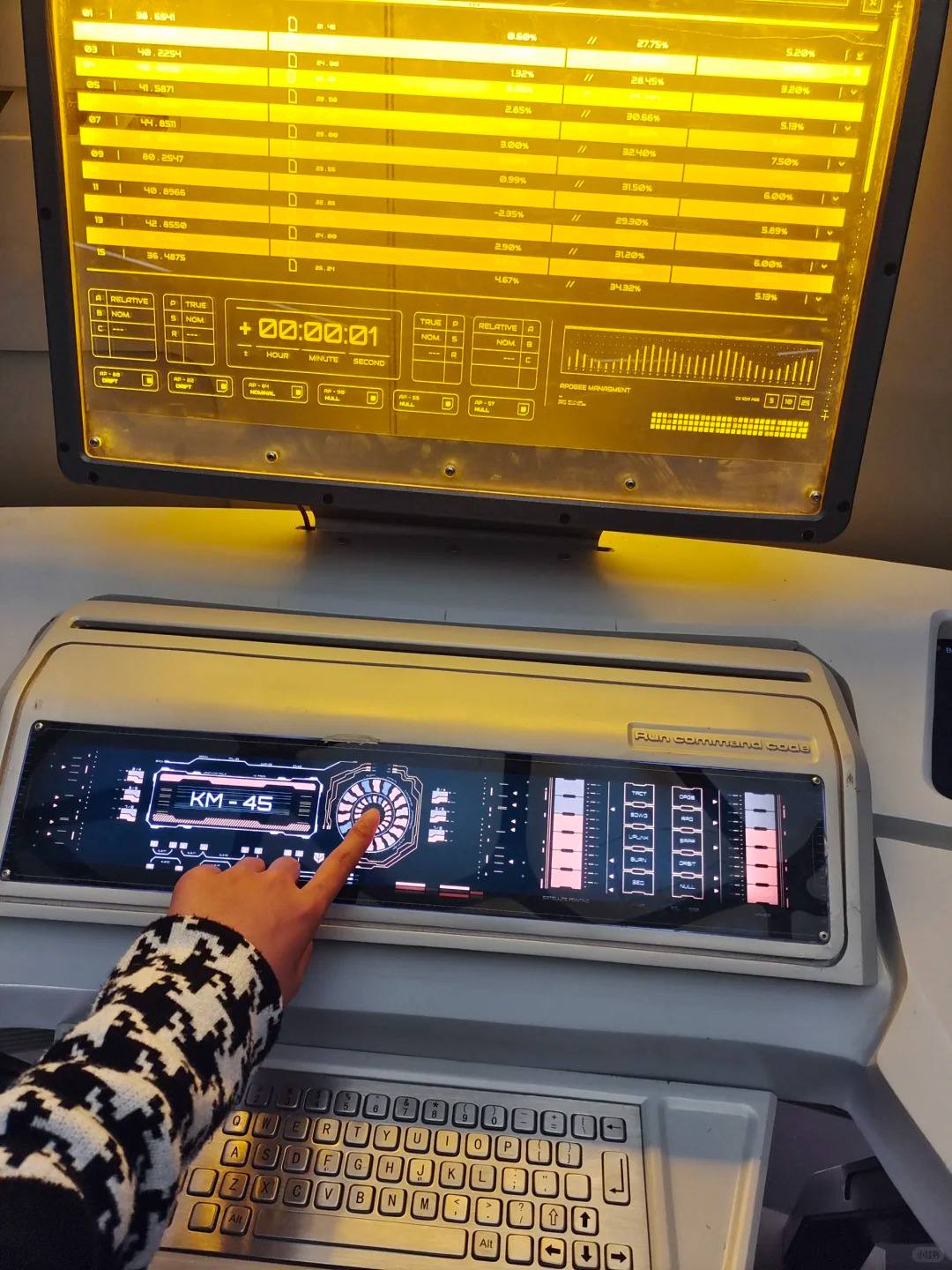
It combines simulated tasks and science activities in an immersive environment to give visitors a sense of why humans want to go to Mars, and what a journey there might involve.
This one works especially well for kids who are already interested in spaceflight, exploration, or future technology. Because the experience is more hands-on, it’s easier for children to connect with and not too abstract.
Dome Theater
Recommended
The reservation-only experiences described above are free, but the Dome Theater requires a separate ticket, which costs 40 RMB per person.
The theater shows astronomy films using an 8K ultra-high-definition dome projection system, and the experience is highly immersive. It feels as though you’re surrounded by the universe.
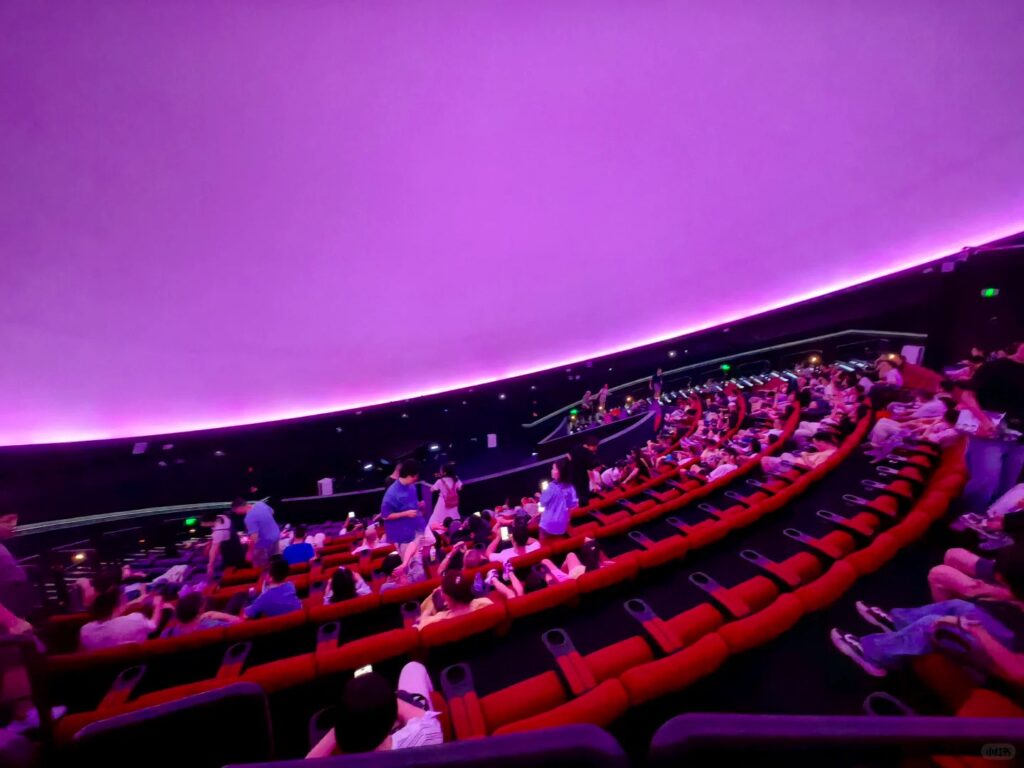
The two main films currently being shown are Sky and Voyager. I’ve seen both, and if I had to choose, I would certainly pick Voyager.
Sky depicts the evolution of the universe from the Big Bang to the present day, which is of course a meaningful subject, but the pacing is fairly slow and the overall viewing experience is not particularly thrilling. I actually noticed a few people in the audience nodding off. I wouldn’t recommend Sky unless you’re particularly interested in the topic.
Voyager, on the other hand, is much more powerful. It gives you a sense of the scale of the universe, while capturing the loneliness of Voyager on its groundbreaking journey through deep space. In the end, when the Golden Record is discovered by an alien civilization, the imagined scene left a surprisingly strong impression on me.
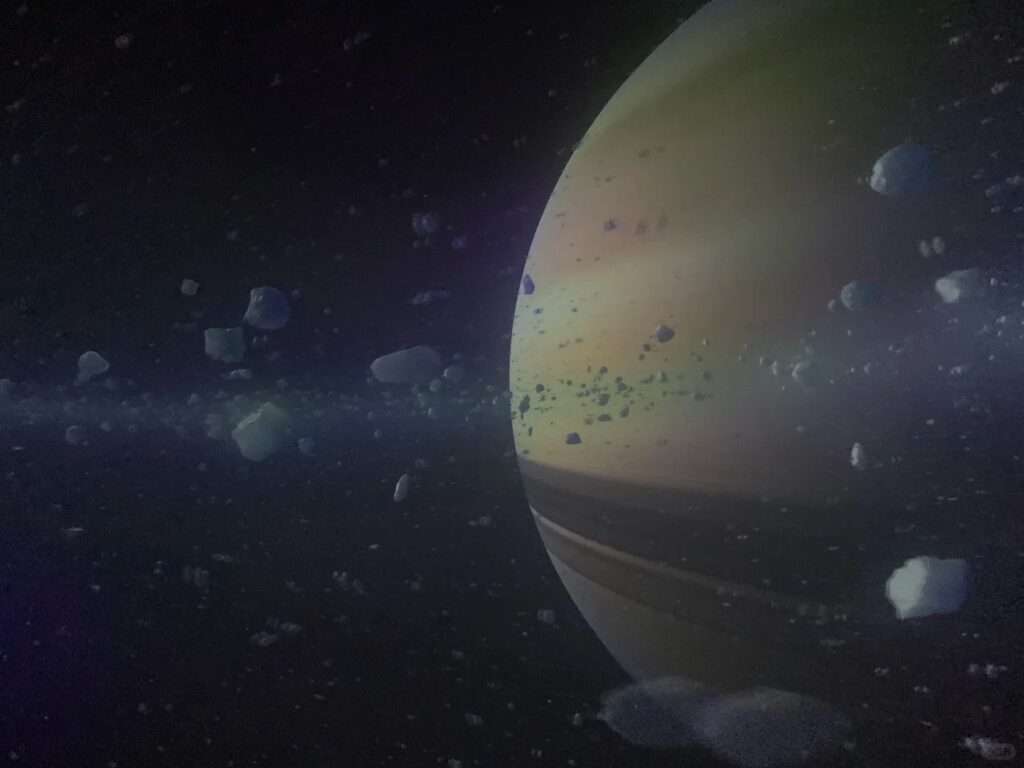
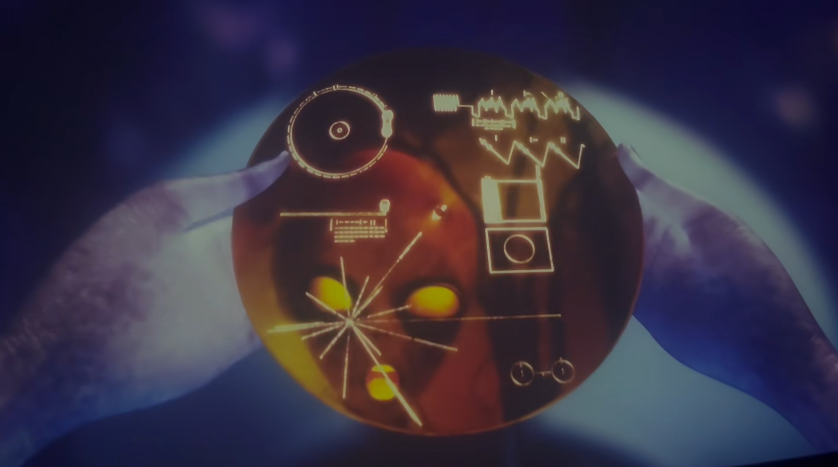
So if the showtimes line up with your itinerary for the day, Voyager would be my top pick in the Dome Theater.
The Best Way to Visit: Follow the Museum’s Intended Route
The Shanghai Astronomy Museum has three floors, and the experience makes the most sense if you follow the museum’s layout.
Of course, if you’ve booked a theater show or a timed experience, you may need to double back, but if you don’t have any fixed reservations to work around, simply following the main exhibition route is the easiest and most enjoyable way to visit. It also makes it less likely that you’ll miss the highlights.
Start in the Main Hall
As soon as you walk into the museum, you’ll notice one of the most striking features in the building: the Foucault pendulum in the center of the main hall.
It isn’t just an architectural feature, but actually one of the classic scientific demonstrations used to show that the Earth is rotating. It appears to be just a pendulum swinging back and forth, and the direction of the swing gradually appears to shift relative to the floor. In reality, because the Earth itself is constantly turning, the pendulum isn’t really changing direction—the ground beneath it is moving.
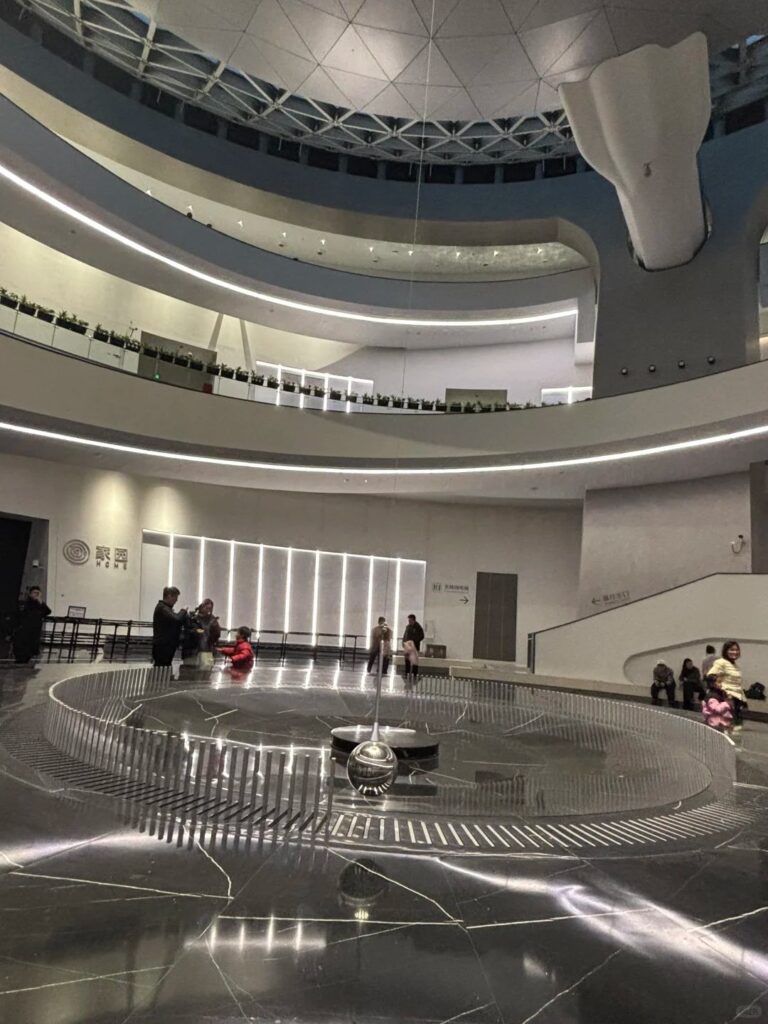
To make it easier to see, there’s a ring of small pins set up around the pendulum. As time passes and the swing shifts far enough, the pendulum will knock one of the metal pins over. If you only stop for a few seconds, you might not notice much. But if you stand there for a little while and watch carefully, there’s a good chance you’ll see one of the pins get hit. Personally, this visual helped me to better understand the Earth’s rotation in a unique way.
Many visitors stop here for a while right after entering, partly because it’s visually appealing, and also because there’s something satisfying about waiting to see the pendulum knock down one of the pins.
Part One: Home
After stopping to watch the Foucault pendulum in the main hall, the best area to begin is called Home.
This part begins with Earth, the place we know best, then gradually moves outward to the Moon, the solar system, and eventually the wider universe. It’s a very natural introduction, and it does a good job of easing you into the bigger ideas that come later.
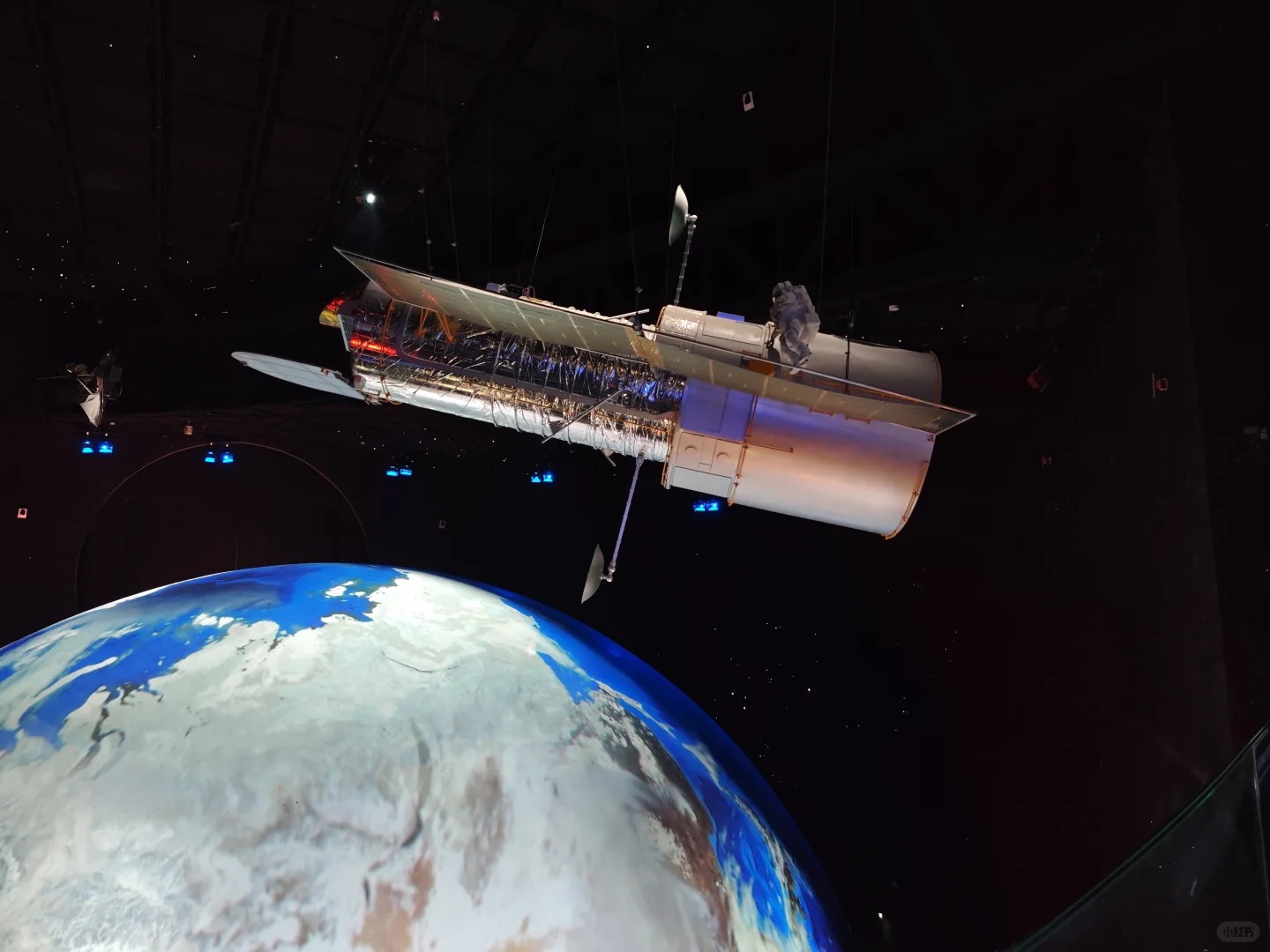
The technology here is modern and very effective. One of the first things that caught my eye was the huge model of the Earth suspended in the exhibition space.
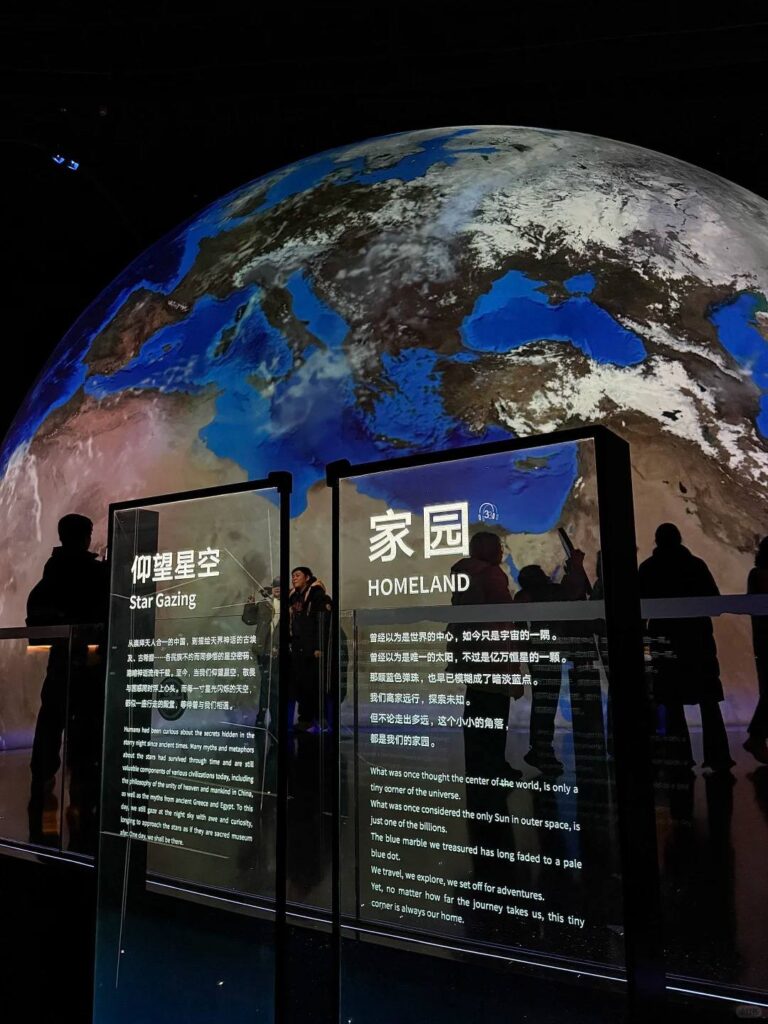
Together with the surrounding exhibits, it makes it easier to understand how the Earth, the Moon, and the rest of the solar system relate to one another. For kids especially, this is a great starting point.


For me, this was also one of the sections that made a few concepts click. I’d always only partly understood things like solar and lunar eclipses, the phases of the Moon, and why we always see the same side of it from Earth. But with the museum’s moving, three-dimensional displays, those ideas felt much easier to understand.
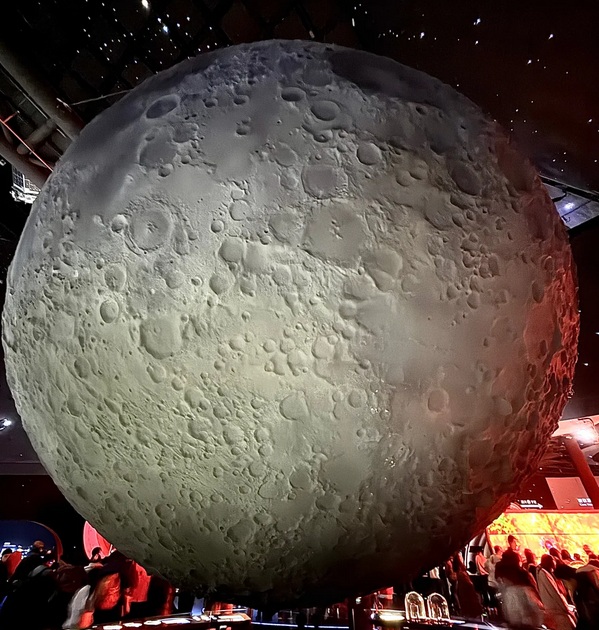
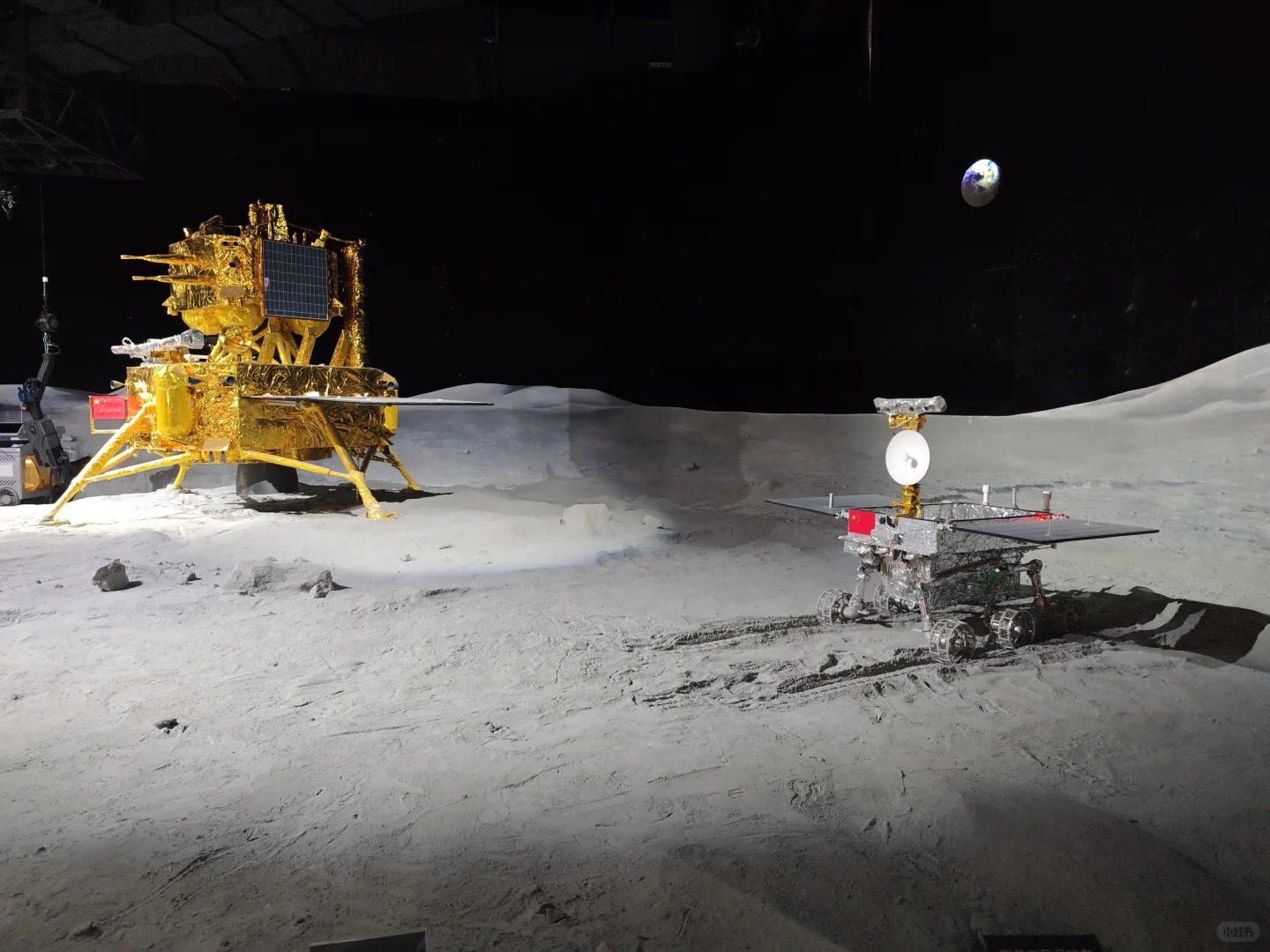
I was also especially struck by the section on the far side of the Moon. Seeing the densely packed craters and impact marks makes you think about just how long the Moon has been exposed to the violence of space.
Beyond the Earth and the Moon, this area also introduces the Sun, Jupiter, Saturn, and several other parts of the solar system. And because there are so many hands-on exhibits, the Home section manages to feel both educational and easy to enjoy. For children, it’s a good place to build a basic understanding of the solar system and get a more concrete sense of how the Sun and the eight planets fit together.
Part Two: The Universe
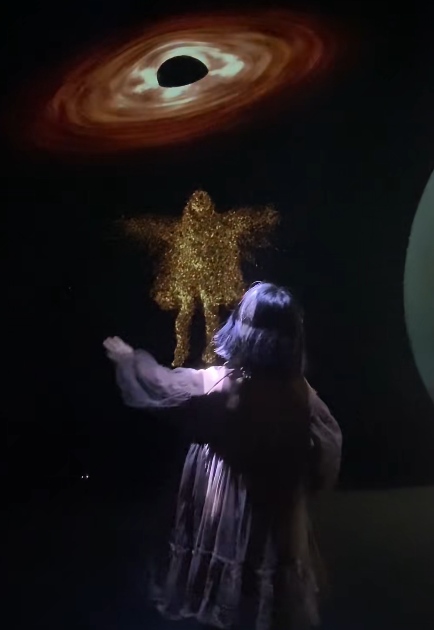
Once you move on from Home to The Universe, the exhibits scale toward bigger and more complex ideas: how stars are born and evolve, what kinds of planets might exist in habitable zones around them, and concepts like black holes, supernovae, galaxies, and nebulae. Compared with the previous section, this part feels deeper, stranger, and more likely to spark your imagination.
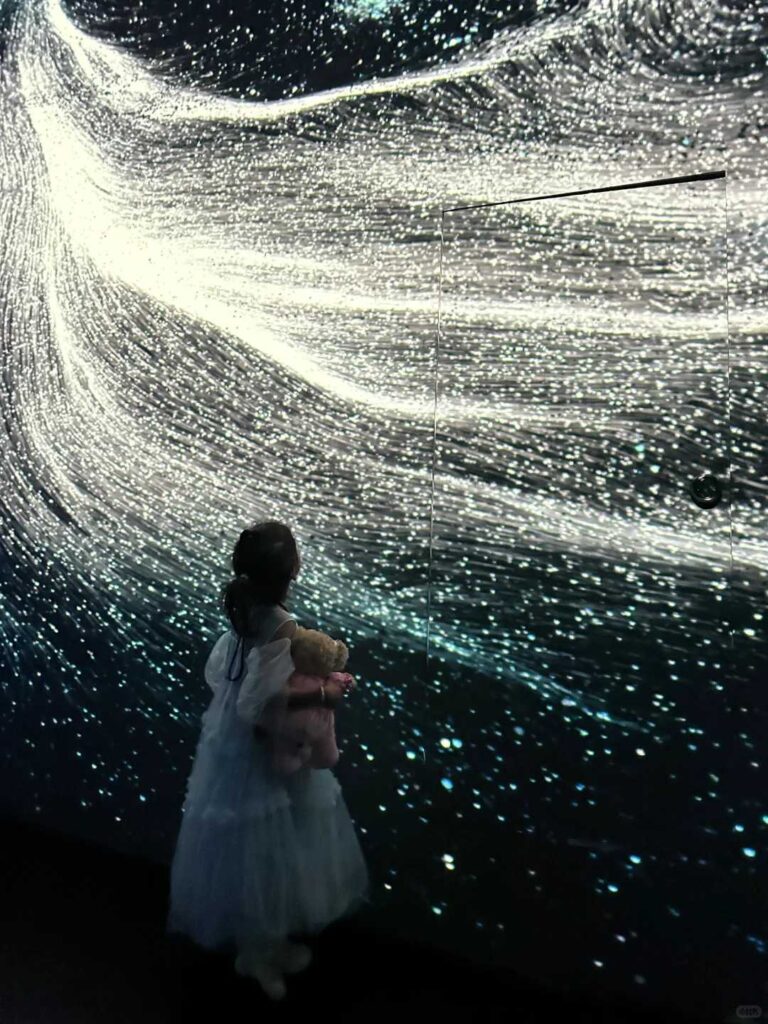
There were a few things here that stood out to me. One of them was the animated presentation about the asteroid impact that led to the extinction of the dinosaurs. It starts with a dinosaur fossil, then gradually connects the story to the asteroid impact near the Gulf of Mexico, showing how that single event changed the fate of the dinosaurs and reshaped life on Earth. It’s done in a very engaging way. When I was there, I noticed a lot of kids completely absorbed, and I found this part especially memorable.
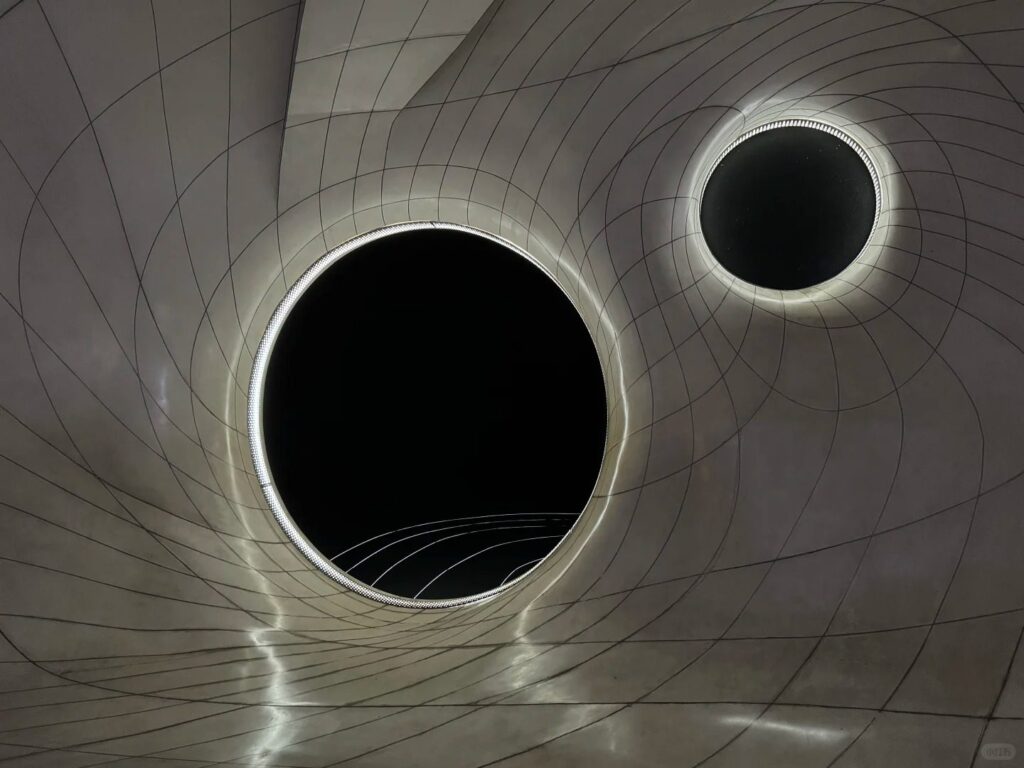
I was also struck by the design of the black hole section. One of the exits is made to look like a black hole itself, and you walk into it, pass through a short corridor, and suddenly emerge in a completely different exhibition space. I thought that was a really clever piece of design. Black holes are already one of the most mysterious things in the universe, so “walking into” one and coming out somewhere new gives you a sense of stepping into the unknown.
Part Three: The Journey
Home is about Earth and the solar system, The Universe is about the wider cosmos, and The Journey is about how humans gradually learned to observe the sky, build instruments, travel into space, and imagine what future life beyond Earth might look like.
The part that impressed me most in this section was a passageway designed to look like the inside of a spacecraft. It’s built into the main visitor route, so you naturally walk through it as you move through the exhibition.
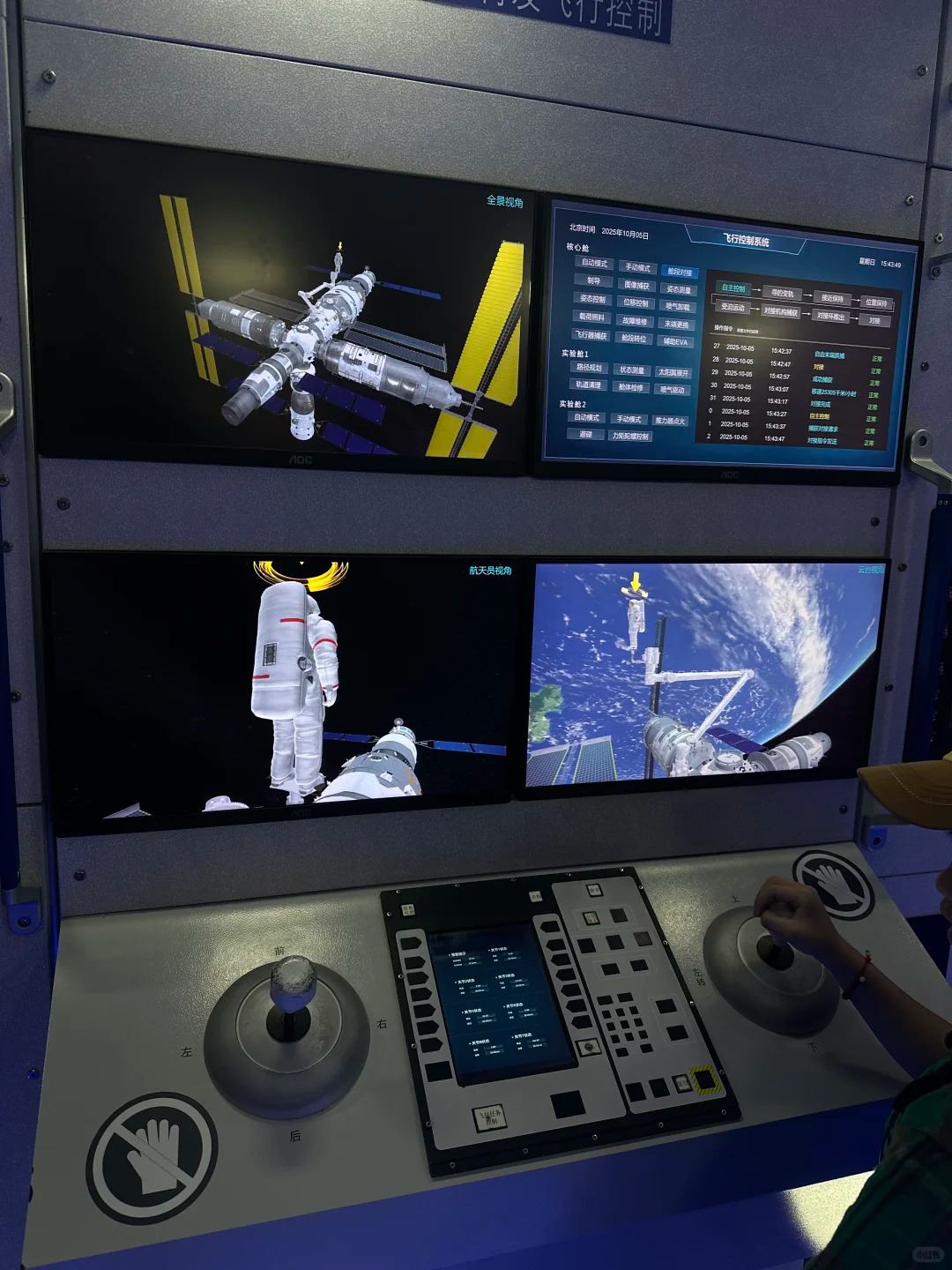
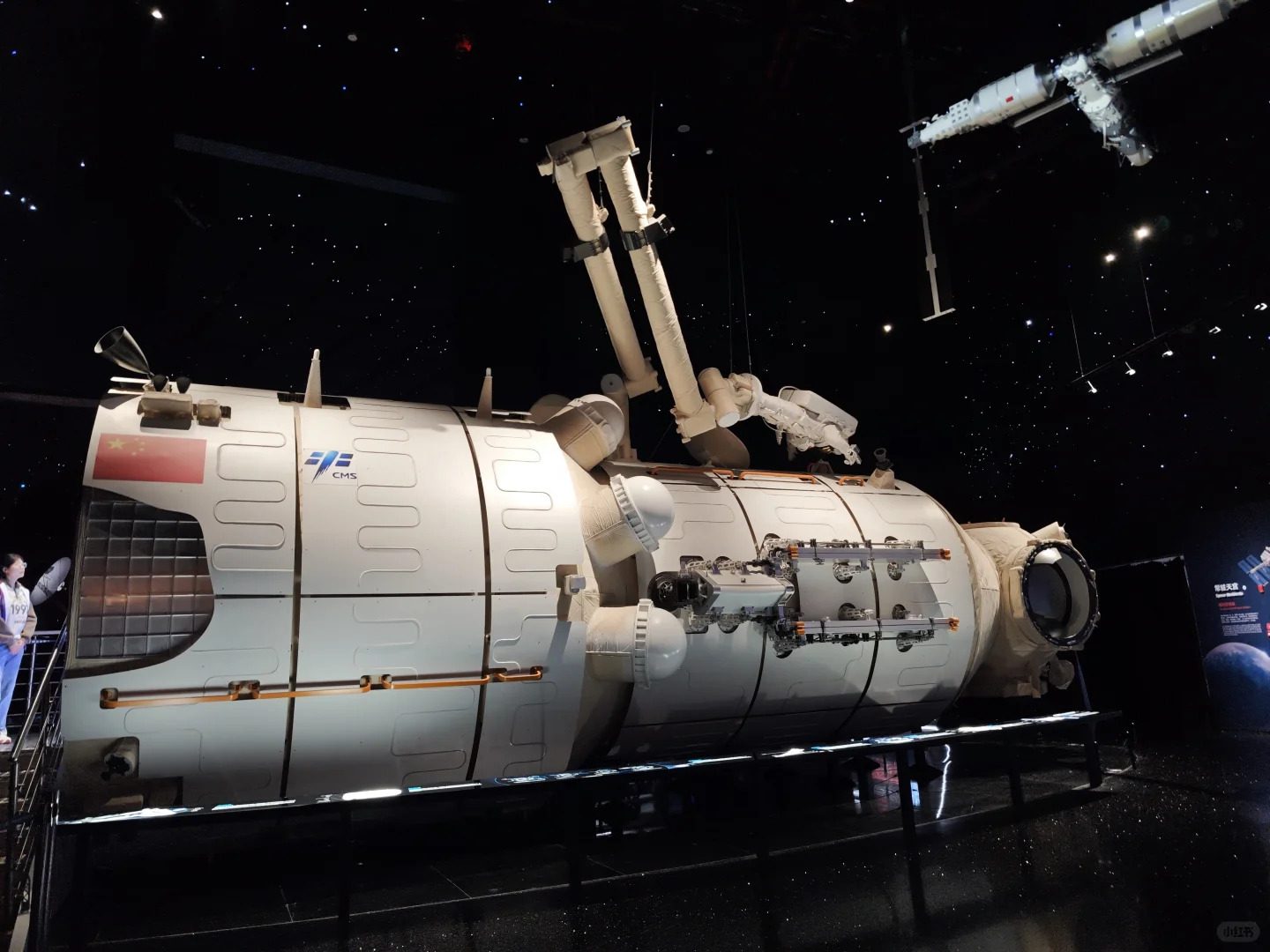
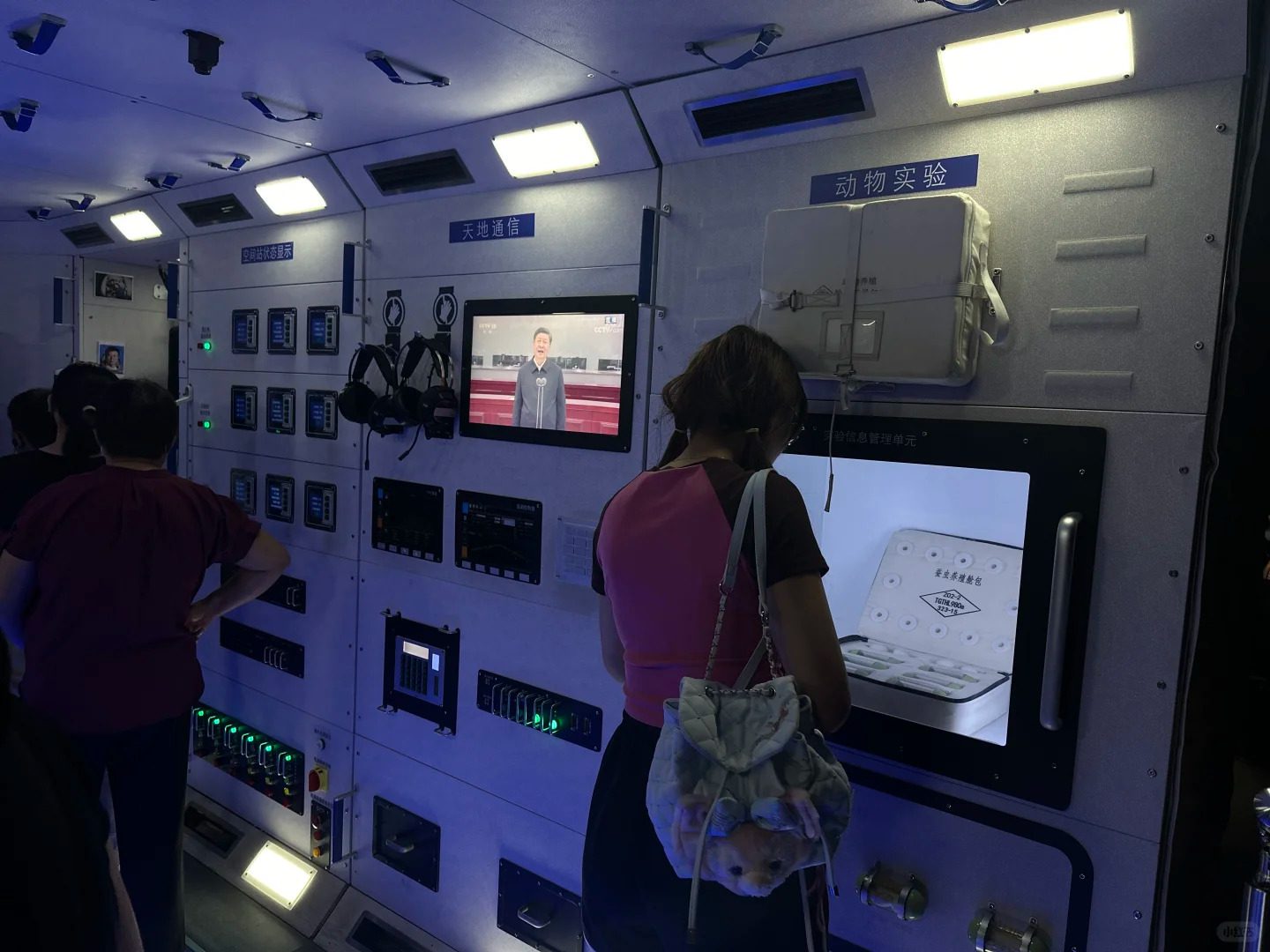
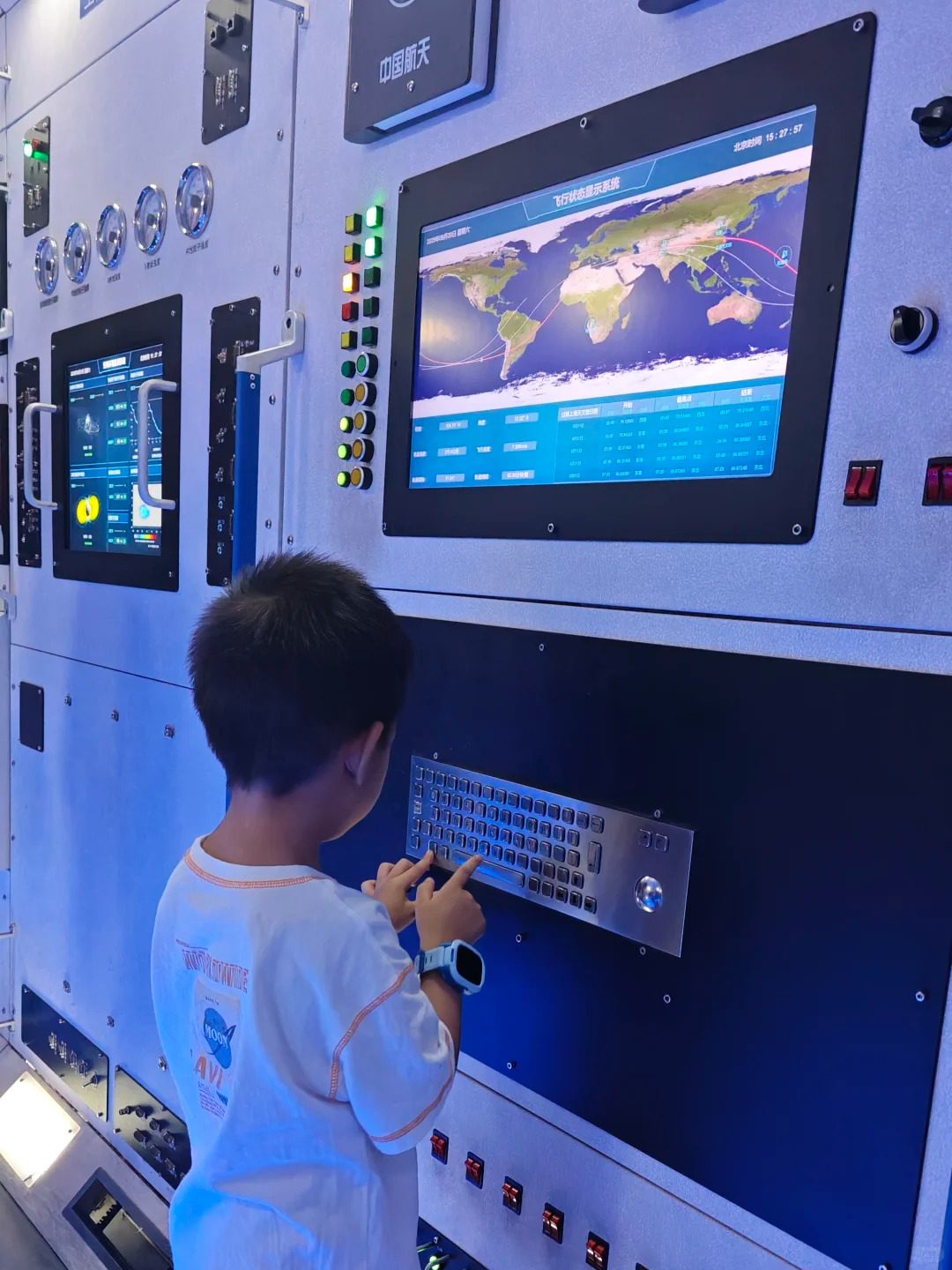
Once you’re inside, you can see different spaces astronauts live and work in during orbit: sleeping quarters, the bathroom, exercise equipment, the food they eat, and the electronic gear they rely on every day. The full-scale recreation makes it easy to imagine what daily life in space might actually be like. And for kids who have ever dreamed of becoming astronauts, it’ll probably be one of the most exciting parts of the museum.
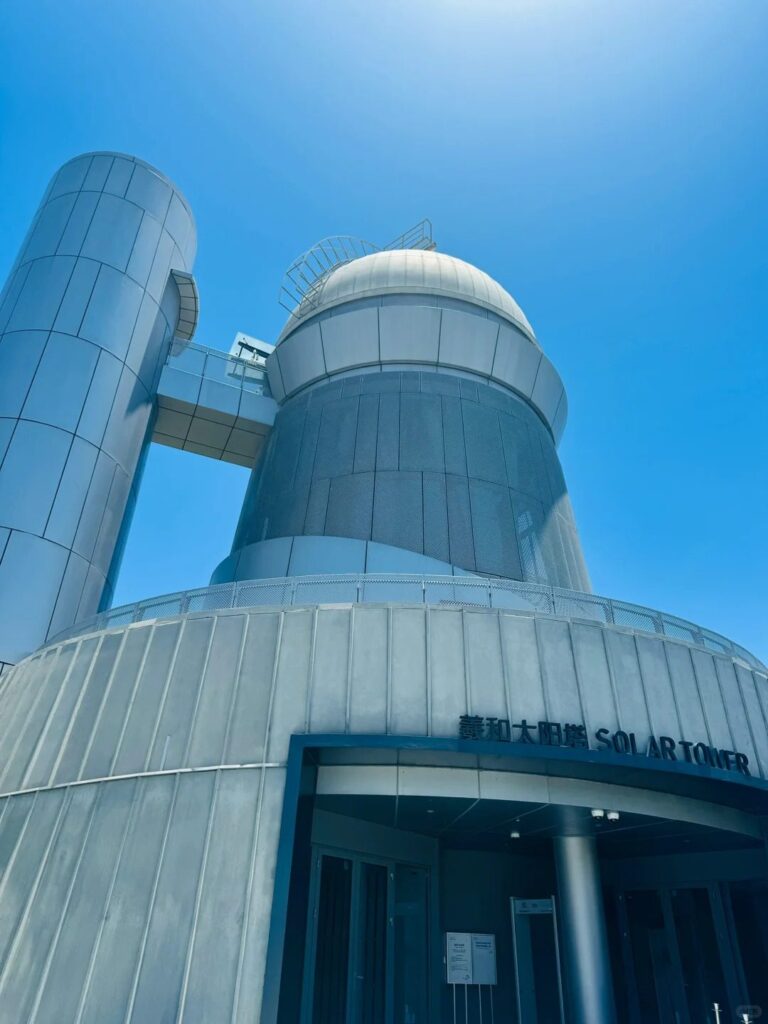
In addition to the indoor exhibitions, there are also a few outdoor facilities, including the Xihe Solar Tower and the Wangshu Observatory, which the museum has described as one of its signature astronomy-education facilities. I didn’t have enough time to visit those outdoor areas when I went, so I can’t offer much detailed personal advice on them. But if you have extra time, I think they’re worth exploring.
Observation experiences and stargazing activities are not available every day, so if you’re especially interested, be sure to check the museum’s announcements in advance to see what will be open during your visit. The museum’s official channels regularly publish updates on exhibitions, activities, and science-theater programming, and those are the best source for current offerings.
Food and Breaks
This isn’t a museum you’ll want to rush through, so I recommend planning for a break.

On the B1 level, there’s a dining area called Galaxy Supply Station. It’s a good place to sit down, have a light meal or a coffee, and recharge before heading back into the galleries.
Final Thoughts
By this point, I’ve covered most of the big things you’ll want to know before visiting the Shanghai Astronomy Museum. As for the smaller details, and the exhibits I haven’t mentioned here, I think those are best left for you to discover for yourself.
One last pro-tip: if you can, try to book a morning entry slot. There’s a lot to see here, and even a standard visit can easily take half a day. If you also want to add theater programs, the dome theater, or other timed experiences, then spending a full day here is realistic.
And because the museum is so far from central Shanghai, another option is to stay near Dishui Lake the night before and visit the museum the next morning. The proximity to the museum makes the day feel more relaxed and cuts down on a long trip from downtown.
If this guide makes you want to visit but you just can’t fit it into this trip, the museum and its parent institution have also promoted digital and online viewing experiences periodically, so it’s worth checking the official site to see what’s currently available. Those options aren’t the same as visiting in person, of course, but they can still get you excited about the museum before a future trip.
Read More:
Things to Do in Shanghai
Where to Stay in Shanghai
Shanghai Science and Technology Museum – A Family Visitor’s Guide
Shanghai Museum East Branch Guide